Category: electronic rock


John Carpenter is a director, screenwriter, producer, editor and composer most commonly known for working in some of the most beloved and influential, horror and science fiction films of the 70s and 80s, including Dark Star (1974), Assault on Precinct 13 (1976), Halloween (1978),The Fog (1980), Escape from New York (1981)The Thing (1982), Christine (1983), Starman (1984), Big Trouble in Little China (1986), Prince of Darkness (1987), and They Live (1988) — with the Halloween theme being one of the most recognizable themes in movie history.

Last year, Carpenter released his first album of non-soundtrack based music, Lost Themes to critical praise from an impressive array of major media outlets including The Guardian, The New York Times, The Times, Uncut, The Wire, The Los Angeles Times, NPR, Pitchfork, Vanity Fair, Newsweek, Billboard, Entertainment Weekly, Artforum, The Wall Street Journal, Rolling Stone and others. Additionally, the album was one of the most commercially successful albums released in Sacred Bones Records history, as the album debuted on the Top 100 Charts in both the UK and US.

Unsurprisingly, the album, which was recorded with his son Cody Carpenter and the fameddirector, producer and composer’s godson Daniel Davies, the album confirms the fact that John Carpenter’s sound and aesthetic was not only ahead of its time but manages to be timeless and powerfully influential — with the work of artists like Red Traces, Umberto and others being deeply indebted to John Carpenter and his film scores. Now interestingly enough Carpenter closed out the last half of 2015 with the release of Lost Themes Remixed, an album that featured remixes from the likes of Zola Jesus, Silent Servant, Foetus‘ JG Thirwell, Skinny Puppy‘s ohGr, PAN Records‘ Bill Kouligas, and Uniform.

The incredibly prolific Carpenter will be releasing a sequel to Lost Themes,  Lost Themes II which is slated for an April 15 release through Sacred Bones Records. The material on Lost Themes II is inspired by a change in the creative process with Cody Carpenter, Daniel Davies and the acclaimed producer writing, working revising and recording in the same studio — and with all three collaborators working together, the result was a more focused effort, completed on a compressed schedule, in a similar fashion to Carpenter’s early films. Additionally, the material is much more nuanced and lush, as the trio of collaborators added acoustic and electric guitar to flesh out the material, as well as add texture.

Lost Themes II‘s first single “Distant Dream” pairs John Carpenter’s unmistakable minimalist synths with live drums, bursts of angular guitar and bass chords, and swirling electronics in a moody and tense composition that sounds as though it could be part of a taut, psychological thriller set in a dystopian future.
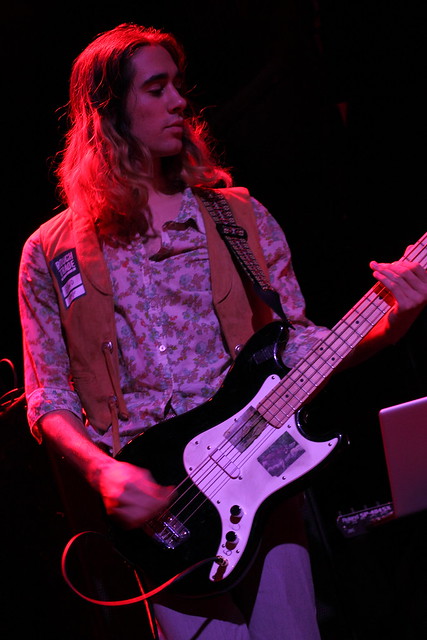
 

Comprised of Rishi Dihr (lead vocals, sitar, bass), Jean-Gabriel Lambert (drums, backing vocals), and Miles Dupire (drums, backing vocals), Montreal, QC-based psych rock trio Elephant Stone have developed a national profile across their native Canada, as well as a profile Stateside for a vintage psych rock sound reminiscent of  The Beatles, The Kinks and others, as it the Canadian trio’s material employed elements of traditional Eastern instrumentation — i.e., the sitar — with Western songwriting. And as a result, over the past few years, Elephant Stone has become a JOVM mainstay artist.

The 2014 release of the Canadian trio’s third full-length effort, The Three Poisons, revealed a band that was in the process of a major change in sonic direction. Unlike the band’s first two albums, the material on Three Poisons pushed sitar to the background — and when it was employed, it was mainly to add texture and color. Now, if you were frequenting this site towards the end of last year, you may recall that I wrote about “The Devil’s Shelter,” a song that featured a guest spot from The Black Angels‘ Alex Maas. The members of Elephant Stone pair tense, undulating synths, shimmering sitar and guitar chords, and propulsive rhythm with Dihr’s vocals for the song’s verses and Maas’ vocals to craft a song that feels (and sounds) ominous and murky, while channelling The Black Angels “Don’t Play With Guns.”

The Montreal-based trio’s latest single “Where I’m Going” continues where the trio’s experimentation left off — while suggesting that the band’s newest sonic direction has been inspired by the likes of Primal Scream (in particular, I think of “Autobahn 66” and
“Detroit”  as Dihr’s ethereal cooing with shimmering guitar chords, a tight and propulsive, motorik groove, four-on-the-floor drumming and layers of shimmering and undulating synths in what may arguably be the most dance-floor ready songs that they’ve released to date — all while remaining as psychedelic as ever. Interestingly, the band have been working on their fourth full-length effort, and if the last two singles they’ve released are indicative of its sound, the members of Elephant Stone are set to push their sound — and in turn, psych rock — in new directions.

The band will be on tour throughout March, and it includes an NYC date. Check out the tour dates below.


ELEPHANT STONE TOUR DATES
03/10 Toronto ON – Sneaky Dee’s (Tickets)
03/11  Indianapolis IN – Joyful Noise (Tickets)
03/12  Little Rock AR – Vino’s (Tickets)
03/14  Austin TX – SXSW
03/18  Memphis TN – Hi-Tone (Tickets)
03/19  Cincinnati OH – MOTR (Info)
03/20  Brooklyn NY – Baby’s All Right (Tickets)
04/14  Montreal QC – La Sala Rossa (Tickets)

Currently comprised of Jon Davison (vocals), Steve Howe (guitar), Billy Sherwood (bass), Geoff Downes (keys) and Alan White (drums), the London, UK-based prog rock quintet Yes can trace their origins to when founding members Chris Squire (bass) and Jon Anderson (vocals) formed the band back in 1968. Much ink has been spilled throughout the band’s nearly 50 year run but what I will say that the legendary act has not only been pioneers of prog rock but they’ve also managed to be remarkably successful — 9 of the band’s 22 full-length albums have reached the top 10 in either the UK or US with two reaching number 1 in the UK. And the band has sold 13.5 million albums in the US alone. In the early 80s, Yes’ “Owner of a Lonely Heart” was a mega-hit song — and a song that I remember quite fondly as a child.

Now, if you’ve been frequenting this site over the past 13 months or so, you may recall that I’ve written about Berlin, Germany-based producer, electronic music artist and DJ Lennart Richter. Prolifically releasing a series of singles through renowned electronic music labels Sleazy G, East Project, G-Mafia Records, GUN PWDR, Ensis Records, Blue Dye, Mondal Recordings and others, Richter quickly developed a reputation across his native Germany and internationally for exploring the gamut of electronic music subgenres including deep house, G house, nu-disco and several others with a slick, crowd-pleasing, club-rocking production. And as a result, Richter can claim several Beatport Top 25 releases under his belt, and his last EP, Berlin Brawling landed at #10 on the Beatport Indie Dance/Nu Disco Charts.

The Berlin-based electronic music artist, producer and DJ closed out 2015 with the release of “Hold Up,” a nu-disco and house track comprised of layers of shimmering and cascading synths, propulsive drum programming led by explosive cymbal shots and a looped vocal sample that comes in and out of the haze. Sonically, the song reminded me quite a bit of Octo Octa’s “His Kiss” an “Please Don’t Leave” off his fantastic Between Two Selves — or in other words, it manages to possess both a bracing iciness and a thoughtful soulfulness. Richter builds on the success of the past year with the release of a remix of Yes’ “Owner of a Lonely Heart” that retains the vocal sample but pairs it with what sounds like ukulele, handclap-led percussion, swirling electronics and slowly cascading synths, which essentially turns the electro rock song into a slickly produced, densely layered, mid-tempo club banger — while retaining something of the song’s original feel and spirit.

New Video: Check out the Love Triangle at the Center of the Video for Gosh Pith’s “K9”

So if you had been frequenting this site over the course of 2015, Detroit, MI-based duo Gosh Pith have become JOVM mainstays while gaining a rapidly growing national profile for a sound and songwriting approach that generally focused on capturing […]


Al Tompkins, the creative mastermind behind goth/industrial act Dark Matter Noise (DMN) is a grizzled, Seattle music scene veteran and quietly kept mainstay. As the story goes, Tompkins went to high school with Chris Cornell and college with Matt Cameron — before Cornell and Cameron met and formed Soundgarden. Tompkins’ first band Ebb and Flow received a great deal of airplay for a goth soundtrack tune that the renowned producer and audio engineer Jack Endino recorded as part of a test to get a job at Reciprocal Recording, where Nirvana eventually recorded Bleach. Tompkins next band, Strange Bulge recorded an album which had guest appearances by Ten Minute Warning and Mother Love Bone‘s Greg Gilmore and the aforementioned Jack Endino and Matt Cameron. Tompkins fourth band Yeast recorded split singles with Nirvana, Helios Creed and Coffin Break among others and opened for the likes of Mudhoney, Soundgarden, and The Fluid. Tompkins then pursued an interest in metal with a stint with Resonator, who opened for the likes of The Gits, Napalm Death, The Pleasure Elite and others.

Tompkins latest project Dark Matter Noise (DMN) was created out of his desire to fully experiment with an electronic sound — and to change up his songwriting approach, after spending years within the indie rock scene. The project’s second and forthcoming album Blackwing is slated for a March 18 release, and the the album has Tompkins producing the album, as well as performing most of the instrumentation on the effort, except for contributions from Electric Hellfire Club‘s Eric Peterson, Vladimir Potrosky contributed songwriting on “End of Line,” and Charlie Drown contributed vocals on “Open Wide” and “Hell’s Frozen.” Sonically speaking, the album’s first single and title track “Darkwing” sounds as though it draws from Ministry, Depeche Mode and early Nine Inch Nails as layers of buzzing guitars, industrial clang and clatter, propulsive and forceful drum programming and drumming and swirling electronics are paired with guttural yet crooned vocals. And although the song and the material on the album is reportedly inspired by a number of very dark things –the dissolution of a marriage, the lost of years of recordings and demos and so on — there’s a sense of resilience just underneath the murky surface.


Over the course of 2015, Detroit, MI-based duo Gosh Pith have become JOVM mainstays while gaining a rapidly growing national profile for a sound and songwriting approach that generally focused on capturing a specific feeling or sensation, rather than capturing a concrete narrative. Interestingly over that same period, the duo has been experimenting with their sound and songwriting approach with their sound gradually becoming warmer and R&B-leaning with guitar becoming much more prominent on later releases.

Now you may recall that the duo closed out what turned out to be a huge 2015 with the release of “Gold Chain,” the first single and title track off the duo’s forthcoming EP, Gold Chain, which is slated for a February 25 release through B3SCI Records and with a set opening up for Girlyboi at Rough Trade. The EP’s second and latest single “K9” continues where the first single left off as skittering drum programming, wobbling bass, guitar chords fed through reverb and delay pedals and sultry hip-hop and R&B inspired vocals in a way that subtly hints at Timbaland — but much more atmospheric. And much like the preceding single, the song is a a “ratchet” love song, in which the narrator and the object of his affections being in love and doing sleazy things together because they enjoy them.


Comprised of Broken Social Scene‘s Lisa Lobsinger, The Beauties‘ Paul Pfisterer and Transistor Sound and Lighting Co.’s Martin Davis Kinack, the Toronto, ON-based self-described galactic dream pop trio Laser quickly won the attention of major media outlets such as Nylon, Spin and BUST Magazine with the release of “Leaving It Too Late” and “Do We All Feel It” the first two singles off the trio’s soon-to-be released debut full-length album Night Driver. Reportedly, the band’s sound — and in turn, the sound of their debut effort — takes cues from electronic and atmospheric albums and late night, country drives from Lobsinger and Pfisterer’s Toronto home to Kinack’s remote “studio in the forest.” And as a result the material on the album meshes electronic and analog elements and was written as though it were particularly designed to be the soundtrack for a introspective and meditative drive into the country.

Night Driver‘s third and latest single “Disconnect” pairs Lobsinger’s sultry yet ethereal vocals with twinkling synths, boom-bap drum programming, angular guitar played through gentle reverb, equally angular bass and a steady, motorik groove in a song that possesses brooding atmospherics while radiating both an effortless cool and a comforting warmth; after all, the song is about the disconnect (and resulting confusion) within an intimate relationship and puts in terms in a way that says “we’ve all been there at some point — and holy shit does it ever suck the life out of a relationship that may have been going well up to that point.”


The Insurrectionists is the solo recording project of  young, up-and-coming 20-something, New York-based singer/songwriter and multi-instrumentalist Casey K, who began playing the guitar when he had turned 10. Using songwriting as an outlet for his frustrations and pain of growing up in a broken home, The Insurrectionists actually began as a full-fledged band featuring Casey K., his brother and a friend in 2005 before eventually morphing into its current solo format. But whether as a trio or as a solo act, the project has been largely influenced by a diverse array of acts and genres including Nirvana and Brand New while incorporating elements of piano ballads and piano rock, as well as synths and electronic music.

With the 2013 release of his debut EP, SquarePeg/RoundHole and several other singles, Casey K. has received praise for anthemic alt rock/indie rock with driving rhythms and lyrics that explore and discuss the modern condition — including the hellish company of people, messy lust and desire and more. “Diet Coke,” the first single off The Insurrectionists’ soon-to-be released album, I Gave You The Moon But You Wanted The Stars will likely cement Casey K.’s burgeoning reputation for writing a song with an anthemic and infectious hook, earnest vocals and driving rhythms — but it also sounds as though it draws from New Radicals “You Get What You Give” but with a harder, grittier edge, while possessing a dreamy feel. The song suggests that the young singer/songwriter and multi-instruemtalist has an innate ability to craft an infectious radio-friendly hook that also manages to be subversive.


]


Comprised of  Juan Ledesma, Charlie Woods, Alex Lopez, and Robert Villar, the Miami, FL-based indie dance pop quartet Krisp formed back in 2011, and over the past few years they’ve developed a reputation for a groove-based, 80s inspired synth pop sound that possesses elements of indie electro pop, chill wave and indie rock.

Their debut EP, Mamani Vice was released in 2012 to critical praise from the likes of Earmilk and Indie Shuffle, and as a result they’ve opened for the likes of LCD Soundsystem‘s Nancy Whang, Miami Horror, Junior Boys, Blood Orange and Holy Ghost! among others, which has expanded their profile nationally. Their follow-up EP Sonic Monarch which South Florida-based talent house Gummdrops will be releasing in January will be comprised of material that is a subtle change of sonic direction. As the band’s Alex Lopez mentioned to the folks at Indie Shuffle, “On our first EP, Mamani Vice, we used a lot of synths and electric drums. For the new material on Sonic Monarch EP, it’s more organic, because its instrument-driven. We’re still using Charlie Wood’s synths, but not Juan’s or mine. We’ve got a funk/indie/electronic style going.”

The EP’s first single “167” pairs layers of  atmospheric, shimmering and cascading synths, four-on-the-floor drumming, angular funk guitar chords, a sinuous bass line and plaintive vocals in a song that sounds indebted to 80s New Wave and post-punk — in particular, the song reminds me quite a bit of an atmospheric and propulsive version of The Fixx’s “The Sign of Fire,”and “Red Skies at Night” with a slight surf rock leaning; it’s a danceable and goofily fun song that manages to evoke watching American Bandstand in the mornings and singing along to your favorite songs.


Since the release of their fantastic, full-length sophomore effort, Leave Me Midnight a couple of years ago, the Chicago-based duo  My Gold Mask have become JOVM mainstays as I’ve spilled quite a bit of virtual ink about the duo and their work. Of course, in case you are new to the site — or just need your memory refreshed, some backstory is necessary:  Comprised of Jack Armondo (guitar, vocals) and Gretta Rochelle (vocals, percussion),  the duo spent time in Brooklyn and Baton Rouge, LA respectively, before relocating to Albuquerque, NM. Strangely enough, despite running in the same social circles, it wasn’t until Armondo and Rochelle finally relocated to Chicago, where they had a chance encounter at a rooftop party.

And as the story goes, the duo’s conversation quickly turned to music and their mutual love of Italian giallo films. In 2009, after completing a couple of short-lived rock projects involving other local musicians, Armando and Rochelle retreated and spent time experimenting with new sounds and broadening their artistic voices and the end result was their now-critically acclaimed duo My Gold Mask. Writing and recording their material in Chicago’s dimly-lit warehouse district has in some way influenced their overall sound and aesthetic. Assisted by long-time producer and collaborator Balthazar del Ley,  their sound seemed to subtly nod towards Phil Spector’s famed “Wall Of Sound” production style of the 60s — that is layers of instrumentation with cascading and swirling reverb.

Since the release of Leave Me Midnight, My Gold Mask have released a series of singles that have revealed a band expanding upon and refining the sound that won the duo national attention, and in a similar fashion to Yeah Yeah Yeahs It’s Blitz! — in particular, “Zero” and “Heads Will Roll.” “Battles,” the first single off the duo’s paired undulating synths, industrial clang and clatter, brief but explosive blasts of guitar, four-on-the-floor drumming  and anthemic hooks with Rochelle’s plaintive and ethereal vocals. And as you can imagine, the addition of electronics gave their soaring sound a futuristic and club-friendly sheen (which interestingly enough adds a some light to their dark and brooding material).

The album’s latest single “Connect” continues the album’s overarching change in sonic approach as synths and electronics play a big role; however, with “Connect” the approach is more of a gentle and subtle refinement. The soaring and anthemic hooks the duo are known for are still there but in this case, they’re paired with angular and buzzing power chords, electronic bleeps and bloops, swirling atmospheric synths and live drumming paired with electronic drums. Much like the album’s previous single, the song’s narrator bares their anxieties, obsessions and fears with an unadorned frankness to anthemic, shimmering dance rock.


New Audio: Zenith Myth’s Cinematic New Single “Shadow Fortune”

Zenith Myth is the solo recording project of Los Angeles-based producer, electronic music artist and multi-instrumentalist, Mike Edwards. And Edwards’ sophomore effort with the Zenith Myth project, Eclipsed V is reportedly a shift towards a more […]