Category: electronica

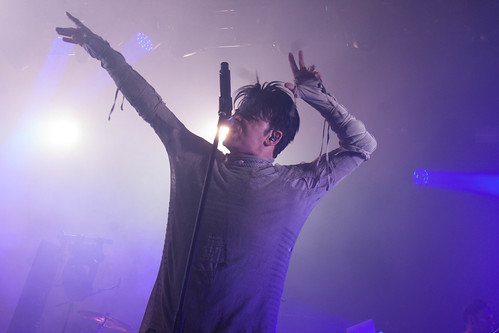
New Video: The Mournful Sounds and Visuals of TR/ST’s “Destroyer”

The Toronto, ON-based JOVM mainstay Robert Alfons, best known for his industrial pop recording project TR/ST has released two critically and commercially successful, full-length albums — his self-titled debut received praise from Vice, Pitchfork and The Guardian, as well as a  Juno Award nomination. Joyland, Alfons’ sophomore effort was a major chance in sonic direction, with the material being much more pop orientated and radio friendly sound while possessing a club friendly, muscular thump. And as you may recall, after a lengthy world tour to support Joyland, Alfons managed to write and record a series of singles, including the menacing,  Snap!’s “Rhythm Is A Dancer”-like “Slug,” which I wrote about several years ago. 

Interestingly, the renowned Toronto-based producer and electronic music artist will be releasing his highly-anticipated third, full-length effort, which is slated for release sometime in 2018 and will feature the previously released single “Bicep.” His latest single finds the renowned Canadian producer pairing organic instrumentation — here being, piano, drums and horn (albeit, what sounds like a horn sample) with a slick and lush electronic production featuring thumping beats, samples and looping machines and a soaring hook over which Alfons contributes his mournful and aching baritone. 

Directed by Justin Tyler Close and famed choreographer Ryan Heffington, the recently released video for “Destroyer,” features Heffington in his first starring role, as an intense man, who’s barely holding it together as we’re introduced to him intently walking towards the camera and running elsewhere, before seeing him expressively dancing in a number of different locales in and around the Silver Lake section of Los Angeles. At one point, he runs into a man with motorcycle helmet, who he paralyzes with mere words — sticks and stones may break your bones, and words may kill you, too. Influenced by detailed conversations between each collaborator have influenced a rather symbolic set of visuals based around a desperate, last ditch effort to save a failing relationship. Heffington’s movement manage to express joy remembered, self-reflection, turmoil, ache and longing, further emphasizing the song’s overall vibe.  

Late last month, I wrote about Kalli Ma, an up-and coming, London-based electro pop production and artist duo, who with the release of their debut single  “Promises,,” quickly received attention across the UK and elsewhere, as the single revealed that the duo’s signature sound has been largely inspired by  techno, minimal wave and post punk. And as you may recall, their latest single “High Shot” found the duo employing both analog and digital synthesizers in a propulsive and kaleidoscopic, club banger, reminiscent of Soft Metals‘ Lenses, Factory Floor, Simian Mobile Disco, The Chemical Brothers and others, complete with layers of arpeggiated synths, tweeter and woofer rocking beats and a sinuous and sultrily sung hook.

Building upon the buzz they’ve received across the UK and elsewhere, the duo enlisted British producer Bird of Paradise to remix the song and while retaining the propulsive, tweeter and woofer rocking beats and arpeggiated synths and sultry hook of the original, the remix turns the song into an industrial house-leaning track full of the enormous clang and clatter of Kraftwerk’s “Metal on Metal” while expanding the song’s motorik-like groove and adding some cosmic ray bursts to the proceedings.

New Video: Up-and-Coming, British, Electronic Duo Kalli Ma Releases Kaleidoscopic Visuals for Propulsive, Club Banger “High Shot”

Kalli Ma is an up-and-coming, London-based electro pop production and artist duo, who have received attention across the UK with the release of their debut single “Promises,” an attention grabbing single that revealed that the British duo’s signature sound inspired by techno, minimal wave and post punk. The duo’s latest single “High Shot,” which sees the band employing the use of both analog and digital synthesizers in a propulsive, kaleidoscopic and club banger that’s reminiscent of Soft Metals’ Lenses, Factory Floor, Simian Mobile Disco, The Chemical Brothers and others, complete with layers of arpeggiated synths, tweeter and woofer rocking beats and a sinuous and sultrily sung hook. 

Directed by Katia Ganfield, the recently released video follows actor Alexander Arnold, best known for roles in British shows like Skins, My Cousin Rachel and The Salvation through a wild and trippy day around London with stops at several bars and pubs, including one where he just misses encountering the members of Kalli Ma. 

New Video: Benin City Releases a Poignant Ode to London’s Disappearing Nightlife Scene

Comprised of Joshua Idehen (vocals, spoken word), Shanaz Dorsett (vocals) and multi-instrumentalist Tom Leaper, the London-based trio Benin City have received both national and international attention for a sound that meshes Afro-pop, hip-hop, spoken word and electronica in a seamless, club banging fashion. Interestingly, the trio’s forthcoming sophomore effort Last Night is slated for a April 6, 2018 release through Moshi Moshi Records, and the album reportedly is an ode to London’s nightlife and club scenes with the trio commenting on what their hometown’s nightlife scene has meant to them while expressing anger, frustration and weariness over a rapidly disappearing scene. 

Certainly, as a New Yorker with some of my favorite venues and bars seemingly every few weeks, it leaves larger universal questions– what does it mean for your hometown and its culture? With nightlife being both an escape from the daily grind and its increasing horror, and a way for weird kids to find a supportive, loving, alternative family, it leaves some universal questions for anyone who loves nightlife and/or clubbing — namely, what does it mean for my city culturally and spiritually for these places to disappear because of gentrification? With a significant portion of the nightlife scene, they’ve found the supportive and loving family that has eluded them their entire lives, where do they find that sense of belonging and purpose — if their favorite club or bar closes? 

With each individual member of Benin City spending the past decade of their lives in London’s nightlife scene as artists, ravers, bartenders, bouncers, bar backs and scenesters, drinkers and partiers, the album’s material emphasizers a larger sense of inconsolable loss. As the trio’s Joshua Idehen explains, “London nightlife has been our way out, our release, our daily escape. We’ve been clubbers, barmen, part / full-time drinkers. We’ve served cocktails and downed shots. We’ve found ourselves on dancefloors and lost our dinners on nightbusses. We’ve laughed, we’ve cried, we’ve engaged in dumb drunken squabbles and we’ve found ourselves in strangers’ houses. We’ve danced to songs we didn’t know the name of. We made landmarks out of hidden corners of London: Passing Clouds, Ghetto, Trash Palace, Plastic People, Vibe Bar, Cable, Crucifix Lane. Those places, and the stories they held are gone for good as London becomes pricier and ever more grey. On this album are some of those stories: this is an ode to London’s nightlife.”

Last Night’s latest single “All Smoke, No Fire” consists of a minimalist, propulsive and club banging production featuring stuttering beats, an eerily repetitive and chiming synth line and an enormous yet sinuous hook over which Idehen and Dorsett rhyme about prototypical club situations and while noting that there’s a sense of needing nightlife to survive with one’s dignity and sanity intact even if the bouncer is an asshole or someone spilled their drink on you; but underneath that there’s a sense of anger and frustration over another beloved place disappearing forever.  

Directed by Shaun Grant, the recently released video foe “All Smoke, No Fire” features nighttime footage of the London area and friends of the trio meeting in front of closed clubs, beloved landmarks and libraries, with the some of their friends speaking about the loss of their scene with a poignant and devastating honesty. 

New Video: The Funky Retro-futuristic Visuals and Sounds of Austin’s Neosho

Comprised of Missouri-born Jackson Bennett (vocals, production) and Oklahoma-born Justin Bernard Williams (production, samplers, synths, saxophone), the Austin, TX-based electronic music production and artist duo Neosho can trace their origins to when the duo met on an online forum for introspective, extroverted Ableton artists called solipsism. Once Bennett  and Williams realized that they were different types of weird, they tentatively agreed to start a band — and initially, they started out as a duo and later expanded into a quartet on two different occasions before finally settling as a duo. Interestingly, the duo derive their name from the river and town Neosho, which is on the border of Oklahoma and Missouri. 

Sonically speaking the duo have received attention across Austin for a strutting and swaggering sound based around driving grooves, boom bap-like drum programming, stuttering samples, shimmering synths and soulful blasts of horns as you’ll hear on “Time Traveler,” a single off the duo’s recently released debut effort Borderline — and while reminding listeners of Detroit’s Griz and others, the song reveals a duo whose sound draws from hip hop, house music and John Carpenter soundtracks.

Directed by the duo’s Justin Bernard Williams, the recently released video consists of computer generated animation cut with footage of a jeans and cowboy boot wearing man walking forward and backwards, as though they entered a wormhole. It’s trippy yet swaggering visuals that emphasize the song’s swaggering nature. 

Currently comprised of Lawrence, KS-born, New York-based producer and multi-instrumentalist Dave Liang, who cut his teeth as a producer with Bad Boy Records, and multi-disciplinary artist Sun Yunfan, the Brooklyn-based electronic duo The Shanghai Restoration project was initially began as a solo recording project that received attention for organically meshing Chinese instrumentation and hip-hop — although with subsequent releases, Liang increasingly expanded upon his sound, drawing upon choral music, downtempo electronica and folk. Interestingly enough, in 2010, Liang met Shanghai-based jazz vocalist Zhang Le, with whom he released a series of contemporary interpretations of Chinese jazz standards that caught the attention of NPR’s All Songs Considered.  The following year, Liang met Sun Yunfan and the two started collaborating on music videos and live performance visuals before eventually working on songwriting and production, including Liang’s ongoing collaboration with Zhang Le, Life Elsewhere, an album, which was well-received in China and nominated for several national awards.  

The duo’s latest effort R.U.R. derives its title from a 1920’s Czech play Rossum’s Universal Robots from which the word robot originates. Self-produced and recorded in New York over the past year or so, the album, imagines a post apocalyptic world in which humans have been replaced by robots, who have been trying to understand what led to their predecessors’ extinction. Via a time capsule, the robots learn about humanity’s must noble and profound endeavors such as art, agriculture, science, philosophy and so on, as well as humanity’s worst attributes such as narcissism, materialism, greed, environmental devastation — and as they’re looking at the time capsule, they begin to wonder if the universe will ever see and experience those rather peculiar beings again.

Sonically speaking, the album is reportedly a shift in sonic direction from being whimsical towards a much more introspective approach with the duo setting to find some sort of balance within chaos, with the duo experimenting with a dissonant and polyrhythmic approach featuring atonal analog synth lines, household items being sampled, Malaysian rainforest insects, China’s omnipresent in-store marketing chants and the sounds of outer space. In fact, the album’s latest single “Spooky Party” features  breezy, Tropicalia and African-inspired polyrhythm paired with arpeggio analog synths and stuttering beats — and while being decidedly retro-futuristic, it may be the most dance floor friendly track they’ve released to date.


New Video: Mount Kimble’s Playful Visuals and New Single Pushes Their Attention-Grabbing Sound in Trippy New Directions

Comprised of Kai Campos and Dominic Maker, the London and Los Angeles-based production and electronic music artist duo Mount Kimbie can trace their origins to when the. St. Austell, Cornwall-born Campos and the Brighton-born Maker met while studying at London Southbank University, where Campos was having another go at school and Maker was studying film.  And with 2009’s Maybes EP and Sketch on Glass EP, and their  2010’s full-length debut Crooks & Lovers, the duo quickly rose to national attention for pushing dubstep into new, exciting directions, including using field recordings to form major elements of their material paired with glitchy synths and electronics, as well as elements of post-punk and other genres — with some critics hailing them as the pioneers of post-dubstep. Unsurprisingly, Crooks & Lovers appeared on over 30 different “Best of 2010” lists, including NME, Mixmag, Resident Advisor, Pitchfork and Drowned in Sound — and along with that NME listed them at number 22 of their 30 Artists for 2011. Adding to a growing profile, the duo have frequently collaborated with James Blake, King Krule and Micachu and have remixed the The Big Pink, Foals, The xx and Andreya Triana among others.
 
By 2012, the band signed with renowned electronic label, Warp Records, who released their critically applauded breakthrough album Cold Spring Fault Less Youth the following year and their third album Love What Survives, which was released earlier this year. Interestingly, their latest album marks two different and important milestones for the duo — their first studio album in four years and the first album with the duo as a Transatlantic duo with one member in London, the other in Los Angeles. The album’s latest single “You Look Certain (I’m Not So Sure),” feat. Andrea Balency finds the duo pushing their sound in completely new directions — in this case, nodding at breezy surf pop, psych pop and industrial electronica while retaining the glitchy synths and boom bap beats that first caught the attention of the blogosphere while pairing that with Balency’s coquettish and ethereal vocals. And while seemingly self-assured, the song bristles with the narrator’s awareness of their insecurities and faults. 

Directed by Rosie Marks and Frank Lebon, the recently released video is set in Miami and focuses on (and even emphasizes) the insecurities one has while in a new place — especially when you’re someone from far away, trying to figure out what the hell is going on and how you fit in. 

With the release of his 2015 full-length debut Elaenia, London-based composer, producer and keyboardist Sam Shepherd and his solo recording project Floating Points quickly rose to international acclaim for a sound that effortlessly meshed 70s jazz fusion, free jazz and glitchy electronica in a way that simultaneously nodded at Return to Forever‘s Romantic Warrior and Bonobo’The North Borders. Shepherd followed that with the expansive, mind-altering yet accessible Kupier, featuring singles “Argente” and “Kupier,” which he performed live at KEXP last year.

Continuing a rather prolific period, Shepherd followed the release of Kupier with Reflections — Mojave Desert, a short film and soundtrack featuring a series of tracks recorded in (and inspired by) the Mojave Desert. His latest single is the sprawling, “Ratio,” a track that he’s developed  and refined as part of his solo, live electronic set at festivals he’s played around the world — and the end result is a slow-burning house music-inspired track that clocks in at a little under 19 minutes and features a production centered around glitchy and stuttering beats, pulsating synths and ethereal synths. And while arguably being one of his most patient compositions/productions, Shepherd’s latest effort reveals a patient, almost painterly quality as sounds are thoughtfully and gently layered upon one another.

The full track was officially released on all digital platforms and is also available on vinyl as a deconstructed mix with the A side featuring the track in two parts — the first nine minutes being identical to the digital version, followed solely by the organ section of the second half. The B side in contract will feature the beats, drum and baseline of the second half of the track in isolation. Releasing the track in such a fashion was deliberately done so that DJs could create their own mixes by bringing the song’s different elements together in whatever way fit their own style.


.


Ted Feighan is a Cleveland, OH-born and-based multi-instrumentalist, producer, electronic music artist and visual artist, whose solo recording project Monster Rally is inspired by vintage exotica and tropical imagery — and with Monster Rally, Feighan has developed a reputation for a sound centered around collaged samples collected from his vast vinyl archives.

Flowering Jungle, Feighan’s forthcoming Monster Rally album is slated for a December 15, 2017 release through Gold Robot Records, and the album is reportedly inspired by the sounds, visuals and animals of roughly half a century’s with of travel and nature documentaries, and reportedly the album was written as a sort of companion piece to exploring new and exotic landscapes, wildlife and communities. And the album’s artwork, devised by Feighan, who specializes in found paper collages will also reportedly mirror the concept by featuring portraits of jungle birds in flower-adorned “nests” superimposed over the abstracted flag of the “flowering jungle.”  But more importantly for this site, the album’s first single “Sunny Sloth” is a breezy yet slickly produced song centered around a series of looped, lush and shimmering guitar chords, stuttering boom-bap drum programming and trippy psych rock-like hooks. And while subtly kaleidoscopic, the song lushness evokes rainwater hitting against verdant greenery and the incredible array of colorful animals you’d come across.


TÂCHES (pronounced TASH) is an electronic music artist and producer, who has released material through a number of renowned electronic music labels such as Desert Hearts, Different Recordings, CRD, Nervous, Kitsune and Majestic Casual — and in fact, that material won him attention across electronic music circles for a sound and approach that’s been described as romantic, exotic and flamboyant; however, with his latest EP Move Mountains TÂCHES the producer and artist reportedly moving towards a much more accessible sound and approach, partially influenced by a relocation from Los Angeles, CA to Spain, as well as moving towards his new label home, Glitter Cowboy Records.

“I Still Think About You,” the EP’s opening track is reportedly influenced by a holiday camp teen crush and the track features a swooning yet minimalist-leaning production consisting of shimmering, arpeggio synths, soulful vocal samples, propulsive beats and brief bursts of Spanish-styled guitar to create a song that manages to be club rocking while being genre mashing as the song nods at breezy Tropicalia and house music.


New Audio: Andrew Hung Returns with a Plaintive Ode to Pushing Buttons to Get What You Want

Perhaps best known as one-half of renowned electronic music duo Fuck Buttons with Benjamin John Power, Worcester, UK-born, Bristol UK-based electronic music artist, multi-instrumentalist and producer Andrew Hung much like his bandmate has focused on a number of various side projects including  Dawn Hunger, a band he founded with Clarie Inglis (vocals) and musician Matthew de Pulford, production work, co-producing   Beth Orton‘s Kidsticks, as well as releasing solo material with his debut EP, Rave Cave. 

Now, as you may recall, Hung’s full-length debut Realisationship is slated for an October 6, 2017 release through Lex Records and album track “Animal,” found Hung exploring a more organic, lo-fi-like sound featuring a gorgeous and lush string arrangement, buzzing power chords, hard-hitting electronic beats and slashing synths paired with Hung’s primal, punk rock howling.  As Hung explains in press notes “Animal is a warning that oppression brings about consequences; we have bred fear and now we are reaping its effects. We cannot address the external without first addressing the internal.”

Interestingly, “Elbow,” Realisationship’s latest single may arguably be one of the more personal songs on the album, as it’s influenced by an experience Hung had as a small child. As the Worcester-born, Bristol-based electronic music artist, multi-instrumentalist explains in press notes, “Once when I was a small child and wanted to get a fake nose-ring from this shitty shopping-centre stall in Kidderminster but being young, I was really afraid of buying it. Consequently I stood there for a long while trying to pluck up the courage to get said fake nose-ring before the woman came out from behind the stall and told me to fuck off. I went home crying . . . ‘ Elbow’ is about pushing buttons. As for the stall, when my sister found out, she took me back and gave the woman a right bollocking.” 

Sonically speaking the song consists of a mischievous and almost childlike production featuring layers of twisting, turning and twinkling synths, swaggering, hip-hop-like drum patterns,  trippy blasts of guitar and swirling electronics paired with Hung’s plaintive and yearning vocals to simultaneously express the frustration, fears and humiliation of youth — well, of life, generally. But sometimes, you have to break out of your shell and take a ridiculous risk for the things that you really want in life, and the song serves as a reminder of that. 

New Videos: Sudden Beach Returns with a Creepy Minimalist Yet Cinematic New Single Paired with Equally Creepy Visuals

Last year, I wrote about the rather mysterious Istanbul, Turkey-based and currently Berlin, Germany-based multi-instrumentalist, producer and electronic music artist Sudden Beach.  And as the Turkish-born, German-based multi-instrumentalist, producer and electronic music artist told me in an email last year, the music he has created was meant to evoke suddenly coming upon a beach while traveling a long distance on a desert road; however, his debut single “The Beast” reminded me quite a bit of John Carpenter‘s retro-futuristic soundtracks and Pink Floyd‘s “On The Run” as the single consisted of layers of undulating synths, cascading shimmering synths and samples of children yelling and talking.
Now, as you may gather, a little over a year has passed since I last had written about Sudden Beach — as it turned out, the multi-instrumentalist, producer and electronic music artist recently relocated to Berlin and after the complex visa process was finally able to focus on music with his latest single “The Reason,” a single, which will further cement his reputation for crafting an icy, retro-futrustic, synth-based, cinematic sound thanks to a production that features layers of twinkling arpeggio synths that twist and turn around each other. 

The accompanying video, created by the artist is based on edited footage from the 1999 major motion picture Outer Space and the visuals are specifically mean to be psychedelic and downright creepy, further emphasizing the song’s creepy vibes. 

Pete Sanderson is a New South Wales, Australia-based multi-instrumentalist, producer and electronic music artist, best known as Obvious Creature, who specializes in an ambient and atmospheric synth-based pop sound, complimented by hazy yet gorgeous memories and mathematically precise, drum programming —  and as you’ll hear on “Time,” the first single off It Ain’t Much Better In Here, Kid, Sanderson’s sound manages to nod at Trans Europe Express-era Kraftwerk and Brian Eno.


Chris Lamaro is an up-and-coming Australian multi-instrumentalist, producer and electronic music artist, best known as Diskodisco. And as Diskodisco, Lamaro specializes in a cinematic yet dance floor friendly retro-futuristic sound that seemed indebted to John Carpenter soundtracks, Giorgio Moroder‘s 80s output, Umberto and The Chemical Brothers‘ “It Began In Afrika,” as Lamaro pairs layers of propulsive, arpeggio synths, with layers of shimmering synths and a computerized vocal sample which spells out DISKO, as you’ll hear on “The Darkest Magic,” the first single off his forthcoming debut EP, The Game Within The Game.

Slum Sociable is an up-and-coming Melbourne, Australia-based electronic duo, who will be releasing their full-length debut on October 13, and as you’ll hear on the album’s first single “Castle,” the duo specializes in a sound that draws from and possesses elements of jazz, electronica, contemporary electro pop, hip-hop and electro soul paired with earnest and soulful vocals. And while some have compared the Aussie electronic duo’s sound to Animal Collective and Bonobo, there’s a subtle hint at J. Dilla, Portishead and Gnarls Barkley.