Comprised of Iyad Moussa “Sadam” Ben Abderahmane, Tahar Khaldi, Hicham Bouhasse, Abdelkader Ourzig and Haiballah Akhamouk, the Tamanrasset, Algeria-based quintet Imarhan formed back in 2008 and are among a newer generation of Tuareg musicians that haven’t fought in the armed conflicts that have devastated Saharan Africa over the past 3 or 4 decades. Unsurprisingly, the members of Imarhan have been mentored by members of the internationally renowned Tuareg collective Tinariwen, while developing their own reputation across both the Tuareg world and elsewhere for pairing the ancestral tamashek poetry and rhythms of their elders with the contemporary sounds that reflect their urban upbringings, listening to a wide variety of music from across the globe.
With the 2016 release of the Algerian quintet’s critically applauded, self-titled debut album, they quickly became a buzz-worthy act with a growing internationally recognized profile which found them opening for a number internationally renowned touring acts including Kurt Vile, the aforementioned Tinariwen, Songhoy Blues and Mdou Moctor at venues across the US, the European Union and China. Imarhan’s highly-anticipated sophomore album Temet officially drops today and the Patrick Votan and Eyadou Ag Leche-produced album derives its name from the Tamashek word for “connections,” — and interestingly enough, the album reportedly is meant as an urgent wake up call to the listener, reminding them (and us, of course) that we are all deeply connected and without unity and understanding, we will never solve the world’s most urgent and pressing problems — i.e., environmental destruction, inequality, racism, growing strife and conflict, etc. As the band’s Ben Abderahmane said in press notes some time ago, “People should love each other. They need to know each other, we need to know each other, everyone should get to know their neighbor. We need to have the same approach as our elders,” he continues. “You will stumble across an old man who knows the world and will hand down his knowledge to his children.”
Now, if you’ve been frequenting this site over the past few months, you may recall that the album’s first single “Azzaman” was a meditative, hypnotic yet subtly contemporary take on the region’s desert blues sound that nods at psych rock — while thematically the song focuses on the passing of time and the handing over of a heritage and traditions by each successive generation, and the importance of leaving the right legacy. But along with that, the song makes a point of connecting different cultures of mixing the old and the new in a sensible way. Temet‘s second single “Tamudre” consists of a hypnotic and downright propulsive groove, punctuated with layers of percussion (both drumming and handclaps), call and response vocals and some impressive guitar work. Naturally, the song manages to remind me quite a bit of Tinariwen’s “Sustanaqqam” and “Adounia Ti Chidjret” but with a loose, bluesy vibe.
Temet’s latest single “Ehad Wa Dagh” features a stomping, dance floor-friendly, trance inducing, disco-like groove paired with some incredibly dexterous guitar pyrotechnics, making the song a funky and bold modernization of the desert blues that finds the band retaining familiar elements — the call and response vocals and the propulsive rhythms.
Directed by Visions Particulières, the recently released neon colored video focuses on Tamanrasset’s nightlife with members of the band arriving at a local nightclub to play a show — throughout it’s an explosion of colors, lights, and superimposed footage of the band members playing over an overhead of Tamanrasset. It’s a fitting psychedelic stomp.
Category: African Diaspora Music
New Video: Swedish-born Multi-Instrumentalist and Electronic Music Artist Thornato Connects New York and Ghana In Visuals for Club-Banging New Single “Back It Up”
Thor Partridge is a Swedish-born Cypriot, whose mother encouraged his interest in music at a very young age; in fact, it was common to hear traditional Greek, African and Caribbean music in his home. As the story goes, Partridge’s family relocated to New York when he was a child, and he eventually studied classical piano, jazz guitar and bluegrass banjo. Partridge quickly showed a penchant and interest in production and remixing, when he found that he couldn’t help tinkering with classical piano arrangements.
As an electronic music artist, multi-instrumentalist, and producer, who writes, records and performs as Thornato, Partridge quickly received international attention with the release of 2016’s groundbreaking, electronic music/drum ‘n’ bass EP Things Will Change. Building upon a rapidly growing profile, Partidge’s full-length album Bennu found the up-and-coming multi-instrumentalist becoming a go-to collaborator and producer, contributing to Bollywood scores, as well as playing clubs across the globe.
Friday will mark the release of the Swedish Cypriot’s latest EP Back It Up and the EP’s latest single, title track “Back It Up,” finds the up-and-coming producer, collaborating with Ghanian vocalist Zongo Abongo in a song that lovingly draws from the sounds of the African Diaspora as the song draws from several distinct genres and styles, including 90s Jamaican dancehall, Afro-pop, Champeta, and Dembow in a way that’s simultaneously seamless yet nostalgic, anachronistic yet incredibly post-modern — and perhaps most important of all, the song manages to be a breezy and infectious club banger with quite a bit of thump.
Directed by Justin Conte, the video features Ghanian vocalist Zongo Abongo and dancer Soraya Lundy connecting across the Atlantic Ocean with a bright orange landline phone, essentially sharing a sensual dance between New York and Accra.
New Video: Introducing the Hypnotic Grooves and Visuals of Niamey, Niger’s Tal National
Currently composed of Almeida (guitar), Babaye (guitar), Tafa (guitar), Massaoudo (vocals), Souleymane (vocals), Maloumba (vocals), Seidou (vocals), Dalik (vocals), Yac Tal (bass), Essa (bass), Omar (drums), Souleymane (drums), Aboullay (drums), Sgt. Maty (drums, vocals), the Niamey, Niger-based collective Tal National features a rotating cast of collaborators that represents their homeland’s diverse array of cultures with members from their homeland’s Songhai, Fulani, Hausa and Tuareg populations. Interestingly, the collective have developed a reputation for joyous and hypnotic, West African guitar music that draws from the diverse musical cultures of Niger as their work possesses elements of highlife, Afrobeat, kora, Tuareg blues, Malian griot, Hausa rolling 12/8 rhythms and so on, as well as American psych rock delivered with virtuoso precision and unrelenting energy.
The band’s 2013 debut effort was released through FatCat Records to critical acclaim from the likes of The New York Times, The Guardian, The Independent, Mojo, Vice and The Wire, with frenetic live sessions on NPR, KEXP and WBEZ. Building upon a growing international profile, the band received praise from the likes of Pitchfork, Afropop Worldwide, The Fader, The Quietus, The Boston Globe and NPR.
Released last Friday, Tantabara, Tal National’s third album continues their ongoing collaboration with Chicago, IL-based engineer Jamie Carter on production and engineering duties, and the album which was recorded in the collective’s hometown of Niamey, Niger. Unsurprisingly, the album find the collective furthering their expressed mission of making a global audience dance to their hypnotic grooves, all while focusing on capturing the energy and vibe of their live sound to tape. Much like their counterparts, the collective have managed to create a huge sound of extremely limited resources, which frequently means that the members of the collective record in a remote, recording rid in a dusty, makeshift studio, working with minimal recording equipment and instruments on the verge of disrepair. Interestingly, the collective credits their songwriting and recording process to adding to their overall communal spirit, with opening their home up as a studio as a way for everyone within the group to be involved; in fact, Tantabara’s 8 tracks features 8 different vocalists — 7 of whom are full-time members.
Additionally, the album finds the collective looking back on a busy and influential period of time spent honing their live and recorded sound drawing from a number of Stateside tours, live sets at WOMAD Festival and Roskilde Festival and their legendary 5 hour plus live shows at their Niamey nightclub.
Tantabara’s latest single “Akokas,” much like the bulk of their work is centered around a tight danceable yet trance-like groove, some blistering and virtuoso guitar work and complex polyrhythm but at its core is much-needed celebration of diversity, acceptance and tolerance — and along with that, two larger, universal messages: that music is a powerful, unifying force and that there’s love, freedom, acceptance on the dance floor, if you let go of your preconceived notions and let the moment.
The recently released video for “Akokas” features wild and psychedelic visuals of the band’s members performing the song, capturing the band’s ebullient and euphoric spirit and the song’s trippy grooves.

Live Footage: Imarhan Perform Album Single “Tamudre” in Upcoming Documentary on Taureg Life
Comprised of Iyad Moussa “Sadam” Ben Abderahmane, Tahar Khaldi, Hicham Bouhasse, Abdelkader Ourzig and Haiballah Akhamouk, the Tamanrasset, Algeria-based quintet Imarhan formed back in 2008 and are among a newer generation of Tuareg musicians, who have yet to fight in the conflicts that have devastated Saharan Africa over the past 3 or 4 decades. Interestingly, the band has been mentored by members of internationally renowned Tuareg collective Tinariwen, while developing a reputation across the Tuareg world and elsewhere for pairing the ancestral tamashek poetry and rhythms of their elders with the much more contemporary sounds that reflect their urban upbringings, listening to a wide variety of music from across the globe.
With the 2016 release of the Algerian quintet’s critically applauded, self-titled debut album, they quickly became a buzz-worthy act with a growing internationally recognized profile that found them opening for a number internationally renowned touring acts including Kurt Vile, the aforementioned Tinariwen, Songhoy Blues and Mdou Moctor at venues across the US, the European Union and China. Building upon a growing profile, Imarhan’s forthcoming and highly-anticipated sophomore album Temet is slated for a February 23, 2018 release through City Slang Records — and the Patrick Votan and Eyadou Ag Leche-produced album derives its name from the Tamashek word for “connections,” which shouldn’t be surprising as the album reportedly is an urgent wake up call to the listener, meant to remind them that we are all deeply connected and without unity and understanding, that we will never be able to solve our world’s most urgent and pressing connections — i.e., environmental destruction, inequality, racism, growing strife and conflict, etc. As the band’s Ben Abderahmane said in press notes some time ago, “People should love each other. They need to know each other, we need to know each other, everyone should get to know their neighbor. We need to have the same approach as our elders,” he continues. “You will stumble across an old man who knows the world and will hand down his knowledge to his children.”
Now, if you’ve been frequenting this site over the past few months, you may recall that the album’s first single “Azzaman” was a meditative, hypnotic yet subtly contemporary take on the region’s desert blues sound that nods at psych rock — while thematically the song focuses on the passing of time and the handing over of a heritage and traditions by each successive generation, and the importance of leaving the right legacy. But along with that, the song makes a point of connecting different cultures of mixing the old and the new in a sensible way. Temet’s second single “Tamudre” consists of a hypnotic and downright propulsive groove, punctuated with layers of percussion (both drumming and handclaps), call and response vocals and some impressive guitar work. Naturally, the song manages to remind me quite a bit of Tinariwen’s “Sustanaqqam” and “Adounia Ti Chidjret” but with a loose, bluesy vibe.
As for the recently released live footage, the Parisian, independent filmmaker Vincent Moon set out of Algeria earlier this year, equipped only with a camera. ‘I never ever film with an object in mind,” Moon explains in press notes. “It’s more about letting it go and let[ting] the object materialize by itself. Interestingly, in this case, wound up being the members of Imarhan, who at the time, were in the middle of working on the material, which would comprise Temet. Moon followed the band for two weeks, documenting hours of music, conversations and pictures in Tamanrasset and within the neighboring mountain ranges, specially the Assekrem (Tamashak for “World’s End”) within the larger Hoggar Mountains in Southern Algeria. The end result is an hour-long documentary film Children of Tam, which is a portrait of the band and of the Tuareg people, capturing these proud people in their daily lives — and interesting enough, the documentary features live footage of the band performing album single “Tamudre” in their hometown.
New Audio: Seun Kuti and Egypt 80 Team Up with The Legendary Carlos Santana on a Funky and Powerful New Single
Lagos, Nigeria-born and-raised multi-instrumentalist, bandleader and singer/songwriter Seun Kuti is the youngest son of the legendary and controversial Afrobeat pioneer Fela Kuti. And as the story goes when Seun was nine, he expressed a desire to perform with his father — and within a short time, Seun started performing with his father’s backing band Egypt 80. Much like his older brother, Femi, Seun Kuti has followed the political and social ethos of his late father, continuing to push their father’s pro-Black, pan-African/pan-African Diaspora, anti-colonialist, sociopolitical messages to wider, international audiences. Oddly enough, during Fela’s life, he was in many ways the bane of the Nigerian political establishment, as he bravely called out the hypocrisy, inequality, inequity, corruption and brutality that they and their fellow countrymen faced on a daily basis — while pointing out that corruption and brutality is always the same.
However, with increasing international attention on both Fela and his sons over the past 20 years, the Kutis have managed to walk a careful tightrope of siding with the little guy and courageous speaking truth to power at all costs, including risk of life and limb while also becoming unofficial ambassadors to Nigeria, their proud and beautiful people and their culture. Around the time, I started this site, I caught Femi Kuti and Positive Force at Irving Plaza and there was a proud contingency of Nigerians, who spoke of Femi and his father with proud, reverential terms, at one point referring to Femi as “Professor!” “Speak Professor, Speak!” They would exclaim whenever Femi would say something that resonated with them. In some way, I was reminded of how older Jamaicans speak of Bob Marley.
Fela died in 1997 when Femi was 35 and Seun was just 14. Almost immediately upon his father’s death, Seun took over the frontperson duties of his father’s legendary backing band, a band that features members of his father’s backing bands Afrika ’70 and Egypt 80 — many of whom were with Fela, when he was speaking out about the Nigerian government at a time, when doing so could mean risking jail, brutal beatings an/or death. And interestingly enough, Seun’s 2008 debut effort Many Things was produced by Martin Meissonnier, who produced two of Fela’s albums.
Now, as you may know live, Seun Kuti has developed a reputation for sets being a fair mix of his own original material, along with covers of his father’s material, and because his father rarely (if ever) performed songs he recorded in the studio live, Seun covering his father’s material is often seen as an opportunity for fans to hear songs like “Water Get No Enemy,” “Shuffering and Shmiling,” “Colonial Mentality” and “Army Arrangement” live — and with a dynamism that rivals that of his late father.
Seun Kuti’s fourth album with Egypt 80, Black Times is slated for a March 2, 2018 release through British label Strut Records, and the new album reportedly finds Seun and company honoring the revolutionaries who have come and gone before while being a much needed rallying cry for the torchbearers to come. And to further emphasize that theme, the album finds Seun and the legendary Egypt 80 collaborating with a list of acclaimed musicians and artists, including Carlos Santana and Robert Glasper, among others. As Seun Kuti explains in press notes, Black Times is a true reflection of my political and social beliefs. It is an album for anybody who believes in change and understands the duty we have to rise up and come together. The elites always try to divide the working class and the poor people of the world. The same oppression felt by workers in Flint, Michigan is felt by workers in Lagos and Johannesburg.
The funky yet blistering album title track and first single “Black Times” features the imitable guitar work of Carlos Santana in a song that’s meant to shine a black light on society, exposing its rot, immorality and hypocrisy while pointing out the need for Black folk all over the world to band together and demand justice and inequality for all people. But beyond that it suggests that everyone needs to take a serious look at themselves and their world in order to truly begin to change it — and while it may be hard work, it’s necessary work to make the world better.
Akuba Records is a new label, whose mission is to bring listeners the very best deep, cosmic, soulful and funky disco music out of their Africa, and their debut release is a split release between He’s The Man and Atik-A. The A side single He’s The Man’s “Squeeze Me Tight” is an old school club banger, reminiscent of Parliament Funkadelic, Heatwave and oddly enough 45:33-era LCD Soundsystem, as the track features propulsive drumming, a sinuous bass line, an enormous brass section, soulful Lou Rawls-like vocals, complete with a sultry backing section, arpeggiated keys and trippy analog effects — with the end result being something both tribal and cosmic.
With the release of 2004’s, critically applauded sophomore effort Totobonalokua, the collaborative trio Toto Bona Lokua, comprised of French singer/songwriter Gerald Toto, Cameroonian jazz musician Richard Bona and Congolese singer/songwriter Lokua Kanza received international attention in world music circles for a sound that effortlessly blended traditions, cultures and languages — and interestingly enough, the album was a commercial success in France, despite little promotion and no tour dates.
Since the release of Totobonalokua, the members of the trio have pursued a series of diverse solo projects, which kept them incredibly busy but throughout that period of time, each member of the trio would be regularly be asked by fans and the press when they would reunite to make a new album — or if they were plans to do so. Interestingly enough, although the trio’s paths seldom crossed, they managed to keep in touch, and as as the story goes, Gerald Toto eventually suggested that it might be time to get together and write new album. Of course, his collaborators and friends Bona and Kanza readily agreed. Understandably, it took some time to synchronize the schedules of three very busy people but eventually they found some time to write and record their forthcoming effort Bondeko, which derives its names from the Lingala word for “friendship” or “fraternity.”
Slated for a January 19, 2018 release through French record label Nø Førmat, Bondeko reportedly picks up where its predecessor left off but with the material managing the delicate balance of being nuanced and finely crafted, virtuosic yet spontaneous, playful yet profound — and they do so while retaining the gorgeous layered harmonizing and boundary blurring sound that won them international attention. In fact, Bondeko‘s first single “Ma Mama” finds the trio meshing the breeziness of Bossa nova with traditional African vocal chants in a way that will remind some listeners of Bobby McFerrin and of Crosby Stills and Nash; but perhaps more importantly, the trio manage to bridge the African Diaspora with a unique vision that’s both playful and compellingly profound.
New Video: JOVM Mainstays IBEYI Return with Strikingly Gorgeous Visuals for New Single “I Wanna Be Like You”
Over the past three or four years, I’ve written quite a bit about French-Cuban twin sibling act Ibeyi (proounbed ee-bey-ee), who have become JOVM mainstays and an internationally applauded act. And as you may recall, Lisa-Kainde and Naomi Diaz’s self-titled, full-length debut thematically focused on the past as it drew upon the loss of their legendary father Anga Diaz, their relationship with each other, their origins, and a connection to their roots– while sonically meshing elements of contemporary electro pop, hip-hop, jazz, the blues, Cuban folk music and Yoruba folk music in a way that brought Henry Cole and the Afrobeat Collective‘s Roots Before Branches to mind.
The duo’s highly-anticipated sophomore effort Ash was released today and the reportedly the album’s material finds the duo writing some of the most personal, visceral and politically charged material they’ve released to date — and while continuing to be firmly rooted in the Afro-Cuban culture that has influenced their personal and creative lives, the material thematically focuses on who the Diaz sisters are now, in a period in which the world has seemingly turned upside down, and issues of racial, gender and sexual identity continue to be at the core of society’s most vexing sociopolitical issues.
Ash’s fourth and latest single “I Wanna Be Like You” pairs the Diaz Sister’s gorgeous harmonies with a sparse and hyper modern production consisting of Afro-Cuban percussion emphasized with stuttering beats, whistling and shimmering synths and an effortlessly slick and soulful hook but much like it’s predecessors, the song continues a further exploration of the sisters identity within a world in which identity, and being true to it is desperately needed.
Directed by Remi Besse, the recently released video for “I Wanna Be Like You” continue a lengthy string of striking visuals that emphasize the Diaz Sisters unique role as twins and as separate individuals, with their distinct personalities and moods — and of course, throughout they also remind the listener and viewer that they have a profound intimacy.
New Video: JOVM Mainstays Ibeyi Team up with Mala Rodriguez on Sensual New Single “Me Voy”
This weekend will be the among the busiest weekends I’ve had in some time, as I’ll be covering The Meadows Music and Arts Festival, so I don’t know how much I’ll be able to post — but it’ll be absolutely fucking worth it; however, in the meantime, let’s get to the business at hand, right?
Now, over the past three or four years, the French-Cuban twin sibling duo Ibeyi (pronounced ee-bey-ee) have become both internationally applauded and JOVM mainstays. And as you may recall, the duo comprised of Lisa-Kainde Diaz and Naomi Diaz derive their name from the Yoruba word for twins — ibeji. The Diaz Sisters’ self-titled full-length debut was released in 2015 to critical praise, and the album thematically focused on the past — the loss of their legendary father Anga Diaz, their relationship with each other and their origins and a connection to their roots, with the album sonically meshing elements of contemporary electro pop, hip-hop, jazz, the blues and traditional Yoruba folk music in a way that brought Henry Cole and the Afrobeat Collective‘s Roots Before Branches to mind.
Up until recently some time had passed since I had written about the Diaz sisters but as it turns out, they had spent the better part of last year writing and recording the material that would eventually comprise their highly anticipated sophomore, full-length effort Ash, which is slated for a September 29, 2017 through XL Records. The album’s first single “Away Away,” lyrically and thematically focuses on accepting pain as a part of life, and recognizing that it’s a necessary part of life, while celebrating life for its complicated entirety. Of course, sonically speaking, the track further cements their reputation for resoundingly positive messages sung with their gorgeous harmonizing paired with slick and swaggering electronic production. However, the material overall reportedly finds the Diaz sisters writing some of the most visceral, politically charged material they’ve released to date — and while being firmly rooted in Afro-Cuban culture and history, the material thematically centers on the present — who the Diaz sisters are now, after a year in which the world has turned upside down, and issues of racial, gender and sexual identity are at the core of our most vexing political issues.
“Deathless,” Ash‘s second single found the Diaz sisters collaborating with Kamasi Washington, who contributes saxophone lines that mange to be mournful, outraged, proud, bold and riotous — within a turn of a phrase. Thematically speaking, the song is inspired by an outrageous and humiliating experience Lisa-Kainde had when she was 16 — she was wrongly arrested by French police for a crime she didn’t commit. Throughout the song is a sense of fear, knowing that the police could practically do anything they wanted without reprisal; of righteous rage that’s palpable yet impotent in the face of a power that can crush you at will; of the recognition that you can never escape racism or unfair treatment; and the shame of being made to feel small and worthless while knowing that it’ll happen repeatedly throughout your life. As Lisa Kainde explains in press notes I was writing Deathless as an anthem for everybody!” For every minority. For everybody that feels that they are nothing, that feels small, that feels not cared about and I want them to listen to our song and for three minutes feel large, powerful, deathless. I have a huge amount of respect for people who fought for, what I think, are my rights today and if we all sing together ‘we are deathless, ’they will be living through us into a better world.”
“Me Voy,” Ash’s latest single finds the Diaz sisters collaborating with Mala Rodriguez, the Latin Grammy Award-winning rapper known for sensual and provoking lyrics, in a slickly produced and sensual club banger in which Naomi Diaz’s bata is interacted with big, club rocking beats and swooning electronics finds the Diaz sisters singing lyrics completely in Spanish for the first time. As Naomi Diaz explains “English, Spanish and Yoruba inspire us to write different kinds of music and lyrics.” “We needed to sing in Spanish to set a sensual tone for this song. When women feel sensual, not only is it sexy, but also powerful,” adds Lisa-Kaindé Diaz.
Directed by Manson and produced by Canada, the recently released music video features Ibeyi and Mala Rodriguez playing prominent roles. Beginning with the women hanging out together and singing the song, splits time between the women dancing sensually to the beat in front of strobe light or singing the song in a surreal, Adam and Eve-like backdrop.
New Video: JOVM Ibeyi Returns with Highly Symbolic Visuals for Their Soulful and Swaggering Collaboration with Kamasi Washington “Deathless”
Now, if you’ve been following me on Instgram, Twitter and/or Facebook you’d know that the past 24 hours or so for me in the JOVM world have been insane and ridiculous amount of debauchery — thanks in part to attending High Waisted’s High Waisted at Sea 4. There’ll be more on that show at some point in the future, as I have to catch up on a shit-ton of photos, posts and correspondence. But more important, let’s get to the important business of the day, right?
Over the past three or four years, the French-Cuban twin sibling duo Ibeyi (pronounced ee-bey-ee) have become both internationally applauded and JOVM mainstays. And as you may recall, the duo comprised of Lisa-Kainde Diaz and Naomi Diaz drives their name from the Yoruba word for twins — ibeji.
But perhaps more important, the Diaz sisters are the daughters of renowned percussionist Anga Diaz, best known as a member of Buena Vista Social Club, and for collaborating with Ibrahim Ferrer, Ruben Gonzalez and Compay Segundo. Anga Diaz died when Lisa-Kainde and Naomi were 11, and upon his death, they studied Yoruba folk songs and the cajon, an Afro-Carribean drum, which their father had specialized in throughout most of his musical career.
Interestingly enough, while Yoruba is primarily spoken throughout Nigeria and Benin, it’s been spoken in some fashion in Cuba since the 1700s when the slave trade brought Africans to the Caribbean. And when the Diaz sisters began studying their late father’s musical culture and heritage, it gave them a greater understanding of him and where he came from, but it also put them directly in touch with their ancestral history. Unsurprisingly, the Diaz sisters’ self-titled full-length debut, which was released to critical praise back in 2015 thematically deal with the past — the loss of their father, their relationship, their father’s and their own origins and roots; in fact, their sound and aesthetic managed to seamlessly mesh contemporary electro pop, hip-hop, jazz, the blues and traditional Yoruba folk music in a way that reminded me quite a bit of Henry Cole and the Afrobeat Collective‘s Roots Before Branches in the sense that both albums conscientiously made a deeply spiritual and musical connection between the African Diaspora in the West and the motherland.
Now, up until recently some time had passed since I had written about the Diaz sisters but as it turns out, they had spent the better part of last year writing and recording the material that would eventually comprise their highly anticipated sophomore, full-length effort Ash, which is slated for a September 29, 2017 through XL Records. The album’s first single “Away Away,” lyrically and thematically focuses on accepting pain as a part of life, and recognizing that it’s a necessary part of life, while celebrating life for its complicated entirety. Of course, sonically speaking, the track further cements their reputation for resoundingly positive messages sung with their gorgeous harmonizing paired with slick and swaggering electronic production. However, the material overall reportedly finds the Diaz sisters writing some of the most visceral, politically charged material they’ve released to date — and while being firmly rooted in Afro-Cuban culture and history, the material thematically centers on the present — who the Diaz sisters are now, after a year in which the world has turned upside down, and issues of racial, gender and sexual identity are at the core of our most vexing political issues.
“Deathless,” Ash’s second and latest single finds the Diaz sisters collaborating Kamasi Washington, who contributes a saxophone lines that mange to be mournful, outraged, proud, bold and riotous — within a turn of a phrase. Thematically speaking, the song is inspired by an outrageous and humiliating experience Lisa-Kainde had when she was 16 — she was wrongly arrested by French police for a crime she didn’t commit. Throughout the song is a sense of fear, knowing that the police could practically do anything they wanted without reprisal; of righteous rage that’s palpable yet impotent in the face of a power that can crush you at will; of the burgeoning recognition that you can never escape racism or unfair treatment; and the shame of being made to feel small and worthless while knowing that it’ll happen repeatedly throughout your life. As Lisa Kainde explains in press notes I was writing Deathless as an anthem for everybody!” For every minority. For everybody that feels that they are nothing, that feels small, that feels not cared about and I want them to listen to our song and for three minutes feel large, powerful, deathless. I have a huge amount of respect for people who fought for, what I think, are my rights today and if we all sing together ‘we are deathless, ’they will be living through us into a better world.”
Sonically speaking, the song pairs the Diazes’ gorgeous, bluesy singing and harmonizing with an uneasy yet ambient production consisting of whirring electronics, stuttering boom bap-like drum programming, punctuated by Kamasi Washington’s imitable horn sound.
Directed by Eric Morris, the recently music video features highly symbolic visuals as it features the Diaz sisters giving birth to their dopplegangers in a what that resembles Russian nesting dolls — and naturally, it emphasizes the continued struggle for minorities and women to get a fair spot at the table.
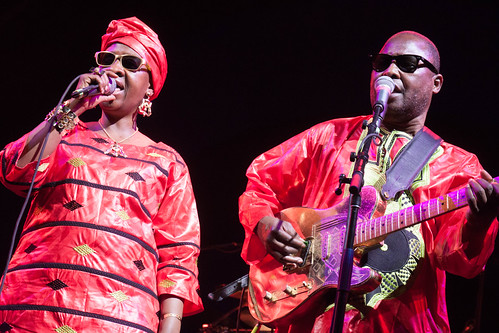

Now known as the Federal Republic of Somalia, Westerners view the country as being a lawless, dysfunctional and broken country, split and reeling for a brutal and bloody civil war, and while that has been true over the past 25-30 years, what most people have forgotten is that for roughly a millennia, the Eastern African nation was one of antiquity’s major trading posts with several power Somali empires dominating regional trade, including the Ajuran Empire, the Adal Sultanate, the Warsangali Sultanate, and the Geledi Sultanate. And as a major trading post, the cultures of the Arabian Peninsula, Persia, India, Southeast Asian and China, all of whom conducted trade with the Eastern African nation, managed to influence and slowly worked their way into Somalia’s rich and unique musical culture.
The British and Italian empires through a series of treaties with Somalia’s historical empires and sultanates during the late 19th century gained greater control of parts of the coast, establishing the colonies of British Somaliland and Italian Somaliland while Mohammed Abdullah Hassan’s Dervish State fought and defeated the British four times before a crushing defat by the British in 1920. Italy acquired full control of the northeastern, central and southern parts of the country after defeating the Majerteen Sultanate and the Sultanate of Hobyo — and their occupation of the country lasted until 1941 when the British took over with a military administration. British Somaliland would remain a protectorate of the British while Italian Somaliland became a United Nations Trusteeship under Italian administration, the Trust Territory of Somaliland.
In the 1960s, independence movements across the continent helped redefine the map with Italian Somaliland and British Somaliland uniting in 1960 to form the Somali Republic under a civilian government. Sadly, democratic government didn’t last long; by 1969, the Supreme Revolutionary Council led by authoritarian Mohamed Siad Barre seized power and established the Somali Democratic Republic. Now, here’s where things musically for us begin — in 1988 on the eve of bloody, two decade civil war Siad Barre launched a series of punishing air strikes in Somalia’s northern section, now known as Somaliland in an attempt to squash a rumbling independence movements in the region. Unsurprisingly, one of the targets Siad Barre targeted was the regional radio station Radio Hargeisa, as a way to prevent the organization of further resistance. Knowing that an attack on their radio station and their hometown was imminent, a handful of radio operators, tastemakers and historians recognized that they needed to preserve more than 50 years of modern Somali music — and it meant finding a way to remove thousands upon thousands of cassette tapes, records and master reels and then dispersing them to neighboring countries like Djibouti and Ethiopia, sometimes burying the tapes deep under the ground to protect them from airstrikes, fire, and so on.
The Somali Civil War broke out in 1991 and Mohamed Siad Barre’s government collapsed and as a result a number of armed factions began fighting for influence and control, particularly towards the south. And because of the absence of a central government, Somalia began to be known as a failed state, wth residents returning to customary and religious law in most regions. There were a few autonomous regions towards the north, including Somaliland and Puntland. The early part of the millennium saw the creation of several fledging and sputtering federal administrations including the Transitional Federal Government in 2004, which reestablished national institutions as as the military and in 2006 with the assistance of Ethiopian troops, assumed control of the Eastern African nation’s southern conflict zones from the Islamic Courts Union, which eventually splintered into several radical groups such as Al-Shabaab. Al Shabaab in particular continued to battle the Transitional Federal Government and the African Union Mission in Somalia (AMISOM) for control of the region.
By 2012, insurgent groups had lost most of the territory they had seized and a political process providing benchmarks for the establishment of a permanent democracy was launched, and it included a provisional constitution, which reformed Somalia as a federation. The end result was the Federal Government of Somalia, the first permanent central government in over 20 years was formed and a period of reconstruction began in Mogadishu.
Remember those buried audio recordings I mentioned earlier? Well they were excavated and recalled from their foreign shelters very recently, Some of those recordings are now kept in the 10,000 cassette tape achieve of the Red Sea Foundation, the largest known collection of Somali music and cassettes in the world in Somaliland’s capital Hargeisa. Ostinato Records, best known for the preservation, digitalization, and distribution of obscure world music was able to digitized a significantly large portion of the Red Sea Foundation’s archives, choosing 15 songs as part of their latest compilation of African music Sweet as Broken Dates: Lost Somali Tapes from the Horn of Africa. And while revealing the diversity of styles and sounds of Somali musicianship, the compilation also provides a glimpse of life in Mogadishu in the 1970s and 1980s, when the coastal capital was referred to as the “Pearl of the Indian Ocean.” At the time bands like Iftiin, Sharero and Dur Dur played at some of East Africa’s glitziest nightclubs, while Waaberi Band played packed to the rafter sets at the national theater. Nightlife, music, culture and art were enormous — and interestingly while there were renowned male vocalists like Mahmud “Jerry” Hussen, Somali music of the 70s and 80s were best known for beloved female vocalists Faadumo Qaasim, Hibo Nuura, Sahra Dawo and a collection of truly empowered, prolific women; in fact, half of the compilation features songs sung by and written by women.
Strangely enough, this cultural and musical golden age occurred under a socialist, military dictatorship, which effectively nationalized the country’s music industry. The state owned a thriving scene and essentially music was recorded for and by national radio stations, and it was on distributed and disseminated through public broadcasts or live performances. Privately owned labels were non-existent and the work of a generation of artists was never made available for mass release — and until recently, hadn’t been heard outside of Somalia and its immediate neighbors. Adding to a rather strange period of history, during the height of the Cold War, Somalia had been supported by the Soviets and then US in the Ethio-Somali War — and with a decade of US backing, American soul and funk captured the imagination of Somali youth and musicians.
The Ostinato Records team then spent the better part of year traveling to Mogadishu, Hargeisa, Djibouti and across the Somali Diaspora in parts of Europe, the US and the Middle East to track down the musicians, songwriters, composers, government officials, scenesters, radio personalities and other folks, who had played a role during the 1970s and 1980s and got their stories down in a 15,000 word liner note booklet.
As the folks at Obstinato Records explain in press notes ” Alongside the story of Somalia’s music before the civil war, the selection is also focused on the pan-Somali sound. Spread over much of the Horn of Africa, Somali language and culture transcend arbitrary borders. Somali singers from Djibouti were at home in Mogadishu.” They continue by saying that “this compilation seeks to revive the rightful image, history, and identity of the Somali people, detached from war, violence, piracy, and the specter of a persistent threat.”
The compilation’s first single Danan Hargeysa’s “Uur Hooyo (Mother’s Womb)” feat. Mohamed “Huro” Abdihashi was recorded and released in 1987, and the breezy and summery track manages to nod at the trippy psychedelia of 70s dub and soul as a shuffling rhythm is paired with explosive and expressive horn blasts, synths that possess a cosmic sheen, and a strutting bass line. And if there’s one thing the song does evoke is a far simpler time of laughter, constantly flowing wine and beer, of dancing until the sun came up and walking home in a drunken and elated shuffle with arms draped over the shoulders of your comparisons softly singing the songs you heard in the nightclub throughout the night. The language, the scales and the melodies may be somewhat alien to many Westerners, but it’s the wistful tone — albeit in retrospect perhaps? — that should feel familiar. It’s the sound of youth before inevitably being altered permanently by life’s complexities, ambiguities and horrors.