Category: dance music


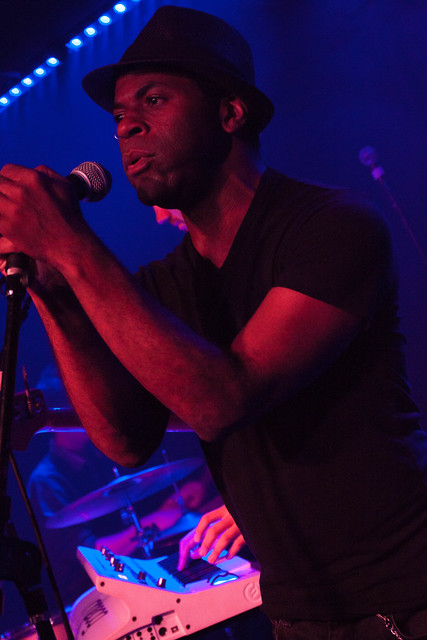
Largely centered around the production and multi-instrumentalist duo of Josh “J” Lloyd-Watson and Tom “T” McFarland, the London-based neo-disco/funk/dance music collective Jungle released their breakthrough, self-titled, full-length debut to critical and commercial success back in 2014, thanks in part to album singles “Platoon,” “Busy Earnin‘” “Time,” “The Heat,” and “Julia” — and it all happened much to the surprise of the collective’s founding members.

After a lengthy two plus year period touring to support their debut, the collective’s much-anticipated sophomore album For Ever is slated for a September 14, 2018 release through XL Recordings, and as Watson and McFarland note, while their full-length debut was conceived as a sort of imaginary soundtrack to the places they had never been, For Ever is reportedly inspired by the real life experiences of seeing and being in the places they had dreamt of for most of their lives. As the story goes, Watson and McFarland set up camp in Los Angeles to write and record the material that would eventually comprise their sophomore album, and over time their long-held romanticism of California and the Californian Dream clashed with the reality of actually living there, feeling adrift and alone — and the sensation was compounded by the the breakups of long-term relationships. Returning to London, they teamed up with well-regarded, up-and-coming producer Inflo, who helped them create an album devised as a “post-apocalyptic radio station playing break up songs.”

For Ever‘s first single is the glittering and stomping “Heavy California,” which features a club rocking production consisting of a sinuous bass line, a boozy and expressive guitar line, soaring falsetto vocals, shimmering synths and an infectious hook  but underneath the breezy, strobe light and dance floor friendly vibes, there’s a mix of heartache and defiance — the sort that comes up after a breakup, where you may say to yourself “well, fuck them, I don’t need them!”

With the release of the album’s first two singles, the act announced a lengthy world tour throughout the Fall and Winter. Unfortunately, at the moment they don’t have any New York area dates but check out the tour dates below.

Tour Dates
Sep 19Reeperbahn Festival, Hamburg, Germany
Sep 23Life Is Beautiful, Las Vegas NV, USA
Sep 25The Majestic, Ventura CA, USA
Sep 26The Glasshouse, Pomona CA, USA
Sep 28The Black Sheep, Colorado Springs, USA
Sep 29Aggie Theatre, Fort Collins CO, USA
Sep 30 Boulder Theatre, Boulder CO, USA
Oct 03Auditorio Blackberry, Mexico City, Mexico
Oct 05Austin City Limits, Austin TX, USA
Oct 07Republic, New Orleans LA, USA
Oct 08House Of Blues, Dallas TX, USA
Oct 09House Of Blues, Houston TX, USA
Oct 12Austin City Limits, Austin TX, USA
Oct 14Treasure Island, Oakland CA, USA
Oct 31Sentrum Scene, Oslo, Norway
Nov 02Noisey Festival, Copenhagen, Denmark
Nov 03Vasateatern, Stockholm, Sweden
Nov 05Tavastia Club, Helsinki, Finland
Nov 06Rock Cafe, Tallinn, Estonia
Nov 08Palladium, Riga, Latvia
Nov 09Compensa Hall, Vilnius, Lithuania
Nov 10Progresja, Warsaw, Poland
Nov 12Roxy, Prague, Czech Republic
Nov 13Majestic Music Club, Bratislava, Slovakia
Nov 15Muffathalle, Munich, Germany
Nov 16Les Docks, Lausanne, Switzerland
Nov 17Kantine, Köln, Germany
Nov 19Gibson, Frankfurt, Germany
Nov 20Doornroosje, Nijmegen, Netherlands
Nov 21Tivoli Vredenburg, Utrecht, Netherlands
Nov 22Trix Hall, Antwerp, Belgium
Feb 13UEA, Norwich, UK
Feb 15Academy 1, Manchester, UK
Feb 16O2 Academy, Leeds, UK
Feb 18Olympia Theatre, Dublin, Ireland
Feb 21Alexandra Palace, London, UK
Feb 23Aeronef Club, Lille, France
Feb 24Olympia, Paris, France
Feb 26Stereolux, Nantes, France
Mar 01Palladium Los Angeles CA, USA
Mar 07Roseland, Portland OR, USA
Mar 08Showbox, Seattle WA, USA
Mar 09The Vogue, Vancouver BC, Canada
Mar 12First Avenue, Minneapolis MN, USA
Mar 16Danforth, Toronto ON, Canada
Mar 20Union Transfer, Philadelphia PA, USA
Mar 21930 Club, Washington DC, USA
Mar 22Orange Peel, Asheville NC, USA
Mar 23 Marathon Music Works, Nashville TN, USA

New Video: Congolese DIY Collective KOKOKO! Returns with a Raunchy Club Banger

Bordered by Central African Republic and South Sudan to its north; Uganda, Rwanda, Burundi and Tanzania to its east; Zambia and Angola to the south; the Republic of the Congo to its west; and the Atlantic Ocean to its southwest, the Democratic Republic of the Congo is the second largest country by area in Africa and the eleventh largest by area in the entire world — and by with a population of 78 million people, the most populated officially Francophone country in the entire world, the fourth most populated nation in African and the seventeenth most populated country in the world.

Humans first settled within the expansive territory of the Democratic Republic of the Congo roughly 90,000 years ago, although various Bantu speaking tribes began migrating into the region in the 5th century and again in the 10th century. From the 14th to the 19th century, the territory was split into three different territories — to the West, the Kingdom of Kongo ruled for close to 500 years; while the central and Eastern sections were ruled by the Luba and Lunda kingdoms, which ruled from roughly the 16th century to the 19th century.

In the 1870s, European exploration of the Congo region was first carried out and led by Henry Morton Stanley, who was sponsored by King Leopold II of Belgium and by 1885, Leopold had formally acquired the rights to the Congo territory, making the land his private property. Ironically naming the territory the Congo Free State, the colonial military unit the Force Publique forced much of the local population into producing rubber and from 1885-1908 millions of Congolese died from exploitation and disease. Despite initial reluctance, the Belgian government formally annexed the Free State and the territory became the Belgian Congo.

Between the late 1950s and mid 1960s, revolutionary movements swept much of Africa, reshaping the map; in fact, The Democratic Republic of the Congo achieved independence in June 1960 as the Republic of the Congo, with Patrice Lumumba, a Congolese nationalist, becoming the country’s first Prime Minister and Joseph Kasa-Vubu, becoming the country’s first president. Within a few months, the provinces of Katanga, Moise-Tshombe and South Kasai attempted to secede and by September 1960, Lumumba was dismissed from office by Kasa-Vubu with encouragement by the US and Belgium after Lumumba sought assistance from the Soviet Union with what has since been known as the Congo Crisis. By mid September of that year, Lumumba was arrested by forces loyal to Army Chief of Staff Joseph-Desire Mobutu, who gained de facto control of the country through a coup d’etat. By early 1961 Lumumba was executed by Belgian-led Katangese forces.

In 1965 Mobutu, who later renamed himself Mobutu Sese Seko, officially came into power through a second coup d’etat, running the country, which he renamed as Zaire as a one-party state, with his Popular Movement of the Revolution as the country’s sole legal party for more than 30 years. By the early 1990s, Sese Seko’s government had begun to weaken and by the middle of the decade, growing disenfranchisement among the country’s eastern Congolese Tutsi population led to Zaire’s invasion by their Tutsi-ruled neighbor Rwanda, which began the First Congo War and eventually led to the end of Mobutu Sese Seko’s 32 year stranglehold on the country.

In May 1997, Laurent-Desire Kabila, a leader of South Kivu province-based Tutsi forces became President of the country and reverted the nation’s name to the Democratic Republic of the Congo. Unfortunately, tensions between Kabila and the Rwandan and Tutsi presence led to the Second Congo War from 1998-2003, which involved nine different African nations and 20 different armed groups and eventually resulted in the deaths of 5.4 million people. Naturally, the decade long period of civil war and instability devastated the country and the larger region. And if you add several centuries of commercial and colonial exploitation, which continues to this very day, extreme poverty, inequality and inequity and a lack of infrastructure, you understandably wind up with a population that’s desperate and struggling to survive.

Led by Makara Bianco and featuring production from prolific French producer débruit, KOKOKO! is a pioneering Kinshasa, Democratic Republic of the Congo-based DIY electronic collective inspired by a growing spirit of protest and unrest among Kinshasa’s young people, who have begun to both openly question centuries-old norms and taboos and or openly denounce a society that they perceived as paralyzed by fear. In fact, the collective’s name literally means KNOCK KNOCK KNOCK! with the collective viewing themselves as the sound of a new generation boldly, loudly and defiantly banging on the doors and walls, yelling “OUR TIME IS NOW!” The members of the collective operate in a wildly inventive DIY fashion, creating self-designed and self-made instruments from recycled junk and claptrap — and they built a recording studio out of old mattresses, found wood and a ping pong table. (If that isn’t punk as fuck, I don’t know what is.) Fueled by the underlying notion that desperate survival fuels creativity, the collective received international attention with their Tokoliana EP, an urgent, forward-thinking, way out in left field effort featuring a sound that nodded at disco, post-punk, hip-hop, reggae, retro-futuristic funk, Afro-futurism and traditional regional music — but from a sweaty, grimy, post-apocalyptic future in which the ghetto and club are one and the same. 

ICI released the Congolese collective’s second EP TONGOS’A late last year, and the EP finds the collective further exploring themes of survival in the desperate and uneasy political and social climate of their homeland — sometimes focusing on small, deeply human pleasures and concerns; in fact, the EP’s first track, title track “Tongos’a (which translates roughly into ’til the morning light”) is a sweaty and raunchy club banger on the necessity of getting laid properly, rooted around skittering drum programming, thumping beats and a looped guitar and bass line that’s derived from the Mongo tribe repertoire, making the song a mischievous mix of the old and the new. 

Directed by débruit, Markus Hofko, Renaud Barret, the recently released video for “Tongos’a” stars a local dance act “l’homme capote” comprised of Mbuyi Tickson, Makoka, and Riyana sweaty and grinding seductively to the song, capturing the song’s raunchy, club-friendly vibe. 

New Audio: JOVM Mainstays NVDES Returns with a Breezy and Hook-Driven New Single

Now, if you’ve been frequenting this site over the past year or so, you’ve likely been made familiar with the Los Angeles-based collective and JOVM mainstays NVDES, and as you may recall the collective, fronted by founding member and primary songwriter Josh Ocean with the release of 2016’s Life’s  With Lobsters received over 10 million streams across all digital platforms, landed on Spotify’s Global Viral Chart, and as a result of rapidly growing buzz, the project’s debut saw praise from The Fader, Nylon and others for glitchy, breezy and anthemic pop.

Building upon the buzz of their full-length debut, the act released the  La NVDITÉ EP earlier this year and from the EP’s first three singles, the breakneck Sound of Silver-era LCD Soundsystem-like “Turning Heads,” the breezy, yet anthemic “Dancer From New York, and the glitchy and angular “Sugar,” Ocean and company have continued to further cement their reputation for crafting off-kitller, genre-defying pop that will remind some listeners of Damon Albarn and Gorillaz.   

“May and June”  La NVDITÉ EP’s fourth and latest single continues in the same vein of its predecessors with the single revealing a carefully crafted, slickly produced and hook-driven song that finds the act drawing from thumping, contemporary pop, funk, Tropicalia and 60s French pop in a mischievously seamless fashion — but underneath the seemingly post-modern irony and scuzzy pop vibes is a swooning and earnest Romanticism. 

New Video: The Sensual Visuals and Sounds of French Electro Pop Act Juveniles Latest Single “Someone Better”

With the release of their 2012 debut EP We Are Young through renowned French electronic music label Kitsune Records, the-then French electronic production and artist duo Juveniles, which featured Thibault Doray and its sole remaining member Jean-Sylvan Le Gouic, best known as Jean Sylvain quickly received attention for slick, hypermodern, super-computerized, dance floor-friendly productions. Building upon a rapidly growing profile among electronic music circles, the duo released their 2013 Yuksek-produced full-length debut, which expanded the then-duo’s profile across the European Union, Southeast Asia, China and South America.

Since the release of the project’s full-length debut, the project has gone through several significant changes — Doray left the project, leaving it solely under the helm of Sylvain and his sophomore full-length effort Without Warning, which officially was released today through Paradis/Capitol Records finds Sylvain releasing music on a new label after several years with Kitsune Records. Produced and recorded by Joakim at Crowdspacer Studios here in NYC, Without Warning finds the French electronic music artist going through a radical change in sonic direction and approach as he abandons the fully computerized sound of his previously released work to embrace a much more human approach, complete with organic instrumentation, featuring contributions from The Juan Maclean’s, Holy Ghost!’s and Yeasayer’s Christopher Berry (drums) and Big Data’s Ben Campbell (bass), along with pre-digital and traditional mixing and production techniques.

Without Warning’s latest single “Someone Better” features a sinuous and propulsive bass line paired with blocks of arpeggio organ and synth chords, four-on-the-floor drumming, and Sylvain’s sensual and seductive crooning with some of the sharpest, most dance-floor friendly hooks I’ve heard in quite some time. And while arguably being one of the warmest, most soulful, the French electronic music artist has released to date, the song clearly draws from classic disco, bearing a resemblance to Cheryl Lynn’s “Got To Be Real,” Sylvester’s “You Make Me Feel (Mighty Real)” but with a subtly modern production sheen.

Produced by Rodrigo Huarte, the recently released music video for “Someone Better” is comprised of a behind the scenes look at anti-hero cop movie in which its main character has a highly-stylized and dramatic love affair with a presumed “hooker with a heart of gold” type character and while the actors “on screen” play up a steamy relationship that they clearly don’t have — at various points, you can tell that both actors are wondering when they’re getting paid or thinking about what they’re doing once the scene is finally over — behind the scenes, two members of the crew, discretely hook up as the rest of the crew films the movie’s key love scene.

New Video: Introducing the Infectious Positivity of Ivory Coast-born Tel Aviv-based Elisee Akowendo

Yves Elisee Samuel Akowendo, best known as Elisee Akowendo is an Ivory Coast-born, Tel Aviv, Israel-based singer/songwriter and multi-instrumentalist, who grew up in a very religious and very musical home. “I come from a Christian family where music has a very important place,” Akowendo says in press notes. “Every morning, noon and evening, we sang gospel songs.” And as a boy, a young Akowendo discovered his love of rhythm as a drummer at his local church’s youth band, which paved a way of a lifelong passion for music. “I was constantly listening, composing and singing,” the Ivory Coast-born, Tel Aviv-based artist explains in press notes. Interestingly, as the story goes, Akowendo’s church group was invited to tour Israel — and while on our, he realized that he had to make a life altering choice: continue pursuing a master’s degree in business or follow his lifetime dream of becoming a professional musician. The Ivory Coast-born, Tel Aviv-based artist decided to follow his dream and remain in Israel.

Understandably, the transition wasn’t easy for Akowendo as he didn’t speak or understand Hebrew; however, his church and a growing ex-pat Ivory Coast community provided him with a great deal of support. “I met great people, made new friends, and hoped that maybe here I could live from music,” Akowendo said in press notes. Within a short period of time, Akowendo crossed paths with APE Records producer Tamir Muskat, who had discovered the Ivory Coast-born, Israeli-based musician and his band Groove Ambassadors on YouTube. As Muskat recalls, “I was surfing through videos and became mesmerized by this amazing African drummer. Then I saw him jump out from behind the drum kit, and grab the mic. It blew me away. I knew immediately that I wanted to work with him.”

Muskat connected with Akowendo and played him some beats and the duo just immediately connected over music and their mutual passion for creating music; however, for Akowendo, he hadn’t written lyrics before and it was a major challenge for him — an his latest single “I Dey Shina” is the first time that the Ivory Coast-born, Israeli-based artist has written lyrics. And interestingly enough, while he admits that he feels equally comfortable singing in French as he does rhyming in English, much of his latest single is sung in his native dialect, Baoule. “Sometimes it’s easier to express certain emotions in your native language,” he explains of his decision to sing in his native tongue.

Considering the embittering negativity of our world, the song manages to convey an infectious and much-needed positivity; in fact, as Awokendo explains the song was about him looking at his life, seeing how he was living his dream — and thanking God for the fact that he could actually live his dream, while showing others that sometimes we need to be reminded about how we should grateful for what we have. But he also adds that the song also suggests that if you have a dream that you shouldn’t give up on it; that we should invest as much positive energy as possible into our dreams every single second of every day. Additionally, he goes on to say that he hopes to pass along a much bigger message into the world — that we can all live together in peace, if we love and help one another.

Emphasizing such an infectious and positive message is a club-banging production that sounds as though it draws from British grime, soca and industrial electronica as it features stuttering drum programming, hot flashes of hi-hat, some metallic clang and clatter and ambient electronics with an anthemic hook.

Directed by Bonamaze, the recently released music video also radiates a infectious positivity as it features the Ivory Coast-born, Israeli-based artist singing and dancing with an international crew of dancers, complete with bright colors. And honestly, it’s just a ton of fun.

New Video: Acclaimed World Dance Music Act Balkan Beat Box’s Swaggering Hip-Hop Influenced Visuals for “Chin Chin”

Currently comprised of founding members Ori Kaplan (saxophone), Tamir Muskat (production, percussion) and Tomer Yosef (vocals), the Tel Aviv, Israel-born, Brooklyn-based world, dance music trio Balkan Beat Box can trace its origins to Kaplan and Muskat meeting as teenagers in Brooklyn. As the story goes, both grew up immersed in music; Kaplan had been a klezmer clarinetists while Muskat was a drummer in a punk rock band — and the founding duo began collaborating together on a project, which would mesh the styles and sounds of Mediterranean and Balkan folk music with dub and thumping, club-banging hip-hop and dancehall beats. This is largely inspired by the fact that both Kaplan and Muskat had long felt that the traditional music they were long familiar with was a bit stodgy and outdated and didn’t adequately reflect the experiences of living in an increasingly globalized culture; however, fusing it traditional sounds with contemporary sounds was a way of bringing new relevance to old music, as well as a way of introducing old dance sounds to contemporary audiences. By 2006, Tomer Yosef was recruited as the group’s frontman and the lineup was completed.

And since their formation over a decade ago, the Brooklyn-based trio have maintained a long-held reputation not just for their wild genre mashing, deep digging in the crates grooves, but for a enormous club-banging beats paired with incendiary flows that call for riots and demonstrations in the streets and a for getting sweating on the dance floor — or perhaps suggesting that dance music and funk can fuel and inspire the next revolution. Interestingly throughout the course of five full-length albums, the trio have collaborated with a group of frequent and trusted collaborators and associates — and to add to a growing profile, the act has had their material sampled by Jason Derulo, Diplo, who used a sample for a Mac Miller song, had their music appear in FIFA ’17 and in Popstar: Never Stop Never Stopping and have collaborated both as a unit and individually with platinum-ceritifed selling artist Asaf Avidan, Yemenite pop trio A-WA, Stargate and Fifth Harmony. But no matter what their work is rooted in a political urgency and authenticity; however, the band’s most recent effort Shout It Out finds the trio expanding upon their songwriting and creative process. As the members of the band explain in press notes when the members of the band gathered in the studio for the Shout It Out sessions, they played freely with collaborators for several days straight and then sampled what they felt was the best and boldest grooves, much like a DJ digging in the crates for the most interesting, weirdest material they could find. “A lot of weird things came out,” Kaplan exclaims in press notes. “We wold listen to jams and go ‘oh, here’s a moment, let’s sample it!” and they would build a track up from four bars or so.” And as Muskat explains of the material on the album “We are known to be that band to shout out things that bother us, but this time ew went inward and more personal. This album is us revealing who we are as people and what’s going on in our personal life.”

Shout It Out’s latest single “Chin Chin” has the trio pairing a slick, dance floor friendly production featuring looped klezmer-leaning, horn sample with stuttering drum programming, tweeter and woofer rattling 808 beats, distorted vocal samples and an enormous drop with Yosef rhyming about money — from the violent and desperate things people would do for it, the expensive and glittering possessions people buy with it. And in some way thematically and sonically, the song sounds as though it draws from M.I.A.’s “Paper Planes” as it points out that money is what makes the world go around, while also reminding us that we live in a world in which people will sell themselves, their children, their children’s future’s for short term gain.

The recently released music video visually draws from crime movies like Snatch and Lock Stock and Two Smoking Barrels and hip-hop videos, and as a result, it further evokes the swaggering, stomping groove of the song.


Comprised of  Juan Ledesma, Charlie Woods, Alex Lopez, and Robert Villar, the Miami, FL-based indie dance pop quartet Krisp formed back in 2011, and over the past few years they’ve developed a reputation for a groove-based, 80s inspired synth pop sound that possesses elements of indie electro pop, chill wave and indie rock.

Their debut EP, Mamani Vice was released in 2012 to critical praise from the likes of Earmilk and Indie Shuffle, and as a result they’ve opened for the likes of LCD Soundsystem‘s Nancy Whang, Miami Horror, Junior Boys, Blood Orange and Holy Ghost! among others, which has expanded their profile nationally. Their follow-up EP Sonic Monarch which South Florida-based talent house Gummdrops will be releasing in January will be comprised of material that is a subtle change of sonic direction. As the band’s Alex Lopez mentioned to the folks at Indie Shuffle, “On our first EP, Mamani Vice, we used a lot of synths and electric drums. For the new material on Sonic Monarch EP, it’s more organic, because its instrument-driven. We’re still using Charlie Wood’s synths, but not Juan’s or mine. We’ve got a funk/indie/electronic style going.”

The EP’s first single “167” pairs layers of  atmospheric, shimmering and cascading synths, four-on-the-floor drumming, angular funk guitar chords, a sinuous bass line and plaintive vocals in a song that sounds indebted to 80s New Wave and post-punk — in particular, the song reminds me quite a bit of an atmospheric and propulsive version of The Fixx’s “The Sign of Fire,”and “Red Skies at Night” with a slight surf rock leaning; it’s a danceable and goofily fun song that manages to evoke watching American Bandstand in the mornings and singing along to your favorite songs.


Bloodline is an extremely mysterious production group who have received quite a bit of buzz across electronic music and electronic dance music circles for a sound that’s deeply influenced by 90s house, as you’ll hear on their slickly produced latest single “Tribute,” a song  club-rocking classic house song comprised, looped vocal samples, layers of staccato synths and tweeter and woofer rocking beats. Sonically, the song manages to bear an uncanny resemblance to a club banging, house music standard, Inner City‘s “Good Life.”

The mysterious production group’s debut effort, EP1 has received quite a bit of attention, as it reached Traxsource‘s Top 10 List, and building upon that buzz, the group will be releasing its follow up, EP2 shortly.


New Audio: Escort’s Latest Single Channels Some Beloved Party Anthems

I’ve probably written about the New York-based neo-disco/electronic dance music/funk collective Escort, so much here on JOVM, that you probably feel as though you’ve known them — and have seen their career grow. The collective founded by […]

New Audio: Sam Sparro’s Uplifting Dance Track “Hands Up”

Australian electronic music artist, vocalist, songwriter and producer Sam Sparro first came to international attention with the release of his debut single “Black and Gold” and his self-titled debut album. His sophomore effort, Return to […]