Category: Psych Rock

Initially forming under the name Apteka, the Chicago, IL-based psych rock quartet Pink Frost, currently comprised of founding members Adam Lukas (vocals, guitar) and Paige Sandilin (guitar) and newest members Alex Shumard (bass) and Jesse Hozeny (drums), have released 2011’s debut Gargoyle Days (under the name Apteka) and 2014’s Sundowning to critical praise both locally and nationally from  Pitchfork, SPIN Magazine, Noisey, Magnet Magazine, and Chicago Reader for a sound that had been compared favorably to RIDE, Smashing Pumpkins, Dinosaur, Jr. and Deerhunter. And adding to a growing national profile, the band had material from Sundowning placed in the major motion picture, The Lookalike and TV series such as The Vampire Diaries and CSI: Miami.

Now, if you had been frequenting this site over the past 2 years or so, you may recall that the Chicago-based band released a painstakingly remixed and re-mastered edition of their debut effort, from the original analog masters to better reflect their live sound at the time — and with artwork reflecting the band’s name change, as a both a metaphorical and literal rebirth. And at the time, I wrote about Gargoyle Days‘s second single, the seemingly  The Posies’ “Ontario,” Foo Fighters‘ “This Is A Call” and The Black Angels’ “Telephone“-inspired “Where Days Go.” However, four years have passed since a full-length album of original material from the critically applauded, Chicago-based psych rockers and in that time, they’ve gone through a series of changes that have influenced the band’s songwriting approach, their overall sound and the material’s thematic concerns. As I mentioned earlier, the band went through a massive lineup change in which the band’s newest members Shumard and Hozeny take prominent roles — and as the band’s Adam Lukas explains in press notes, the album overall addresses a collective sense of abrupt changes. “There is a sentimentality or a sense of loss that permeates most of the songs,” Lukas says. “Whether it’s the loss of truth, the ones you love, your place in the universe, or general sense of meaning in changing landscapes.”

New Minds, the band’s latest album is slated for a June 16, 2017 release and the album reportedly finds the band’s material at points becoming much more introspective — and while the more straight ahead rock-leaning material manages to be heavier and darker, their more spacey, shoegazer-like material manages to be much more introspective and with more delicate melodies. “Bare Roots,” New Minds‘ first single is a power chord-based barn-burner that sounds as though it draws from Black Sabbath and Led Zeppelin, complete with an anthemic hook. And interestingly enough, the song may be the most urgent and forceful song they’ve released to date, echoing our most urgent and forceful time.
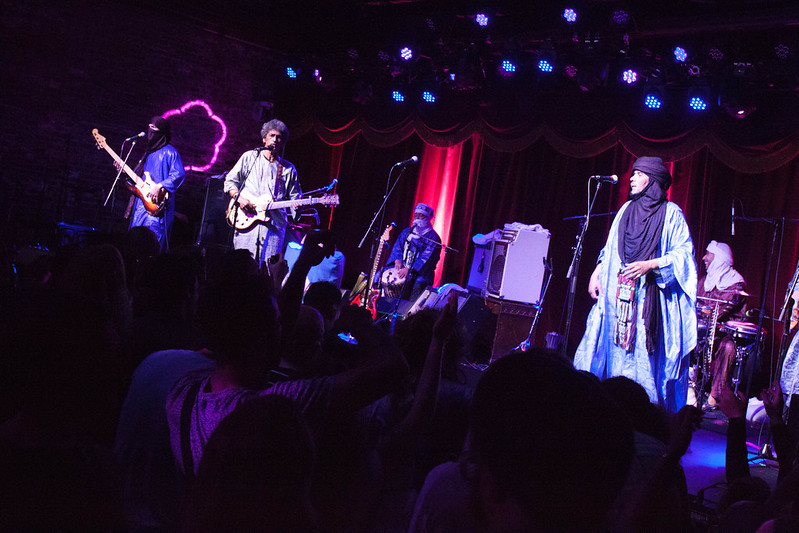
Since their formation in early 2014, the Leeds, UK-based indie rock/psych rock trio The Boxing, comprised of Harrison Warke (vocals, guitar), Henry Chatham (bass) and Charlie Webb (drums), have quickly asserted themselves as part of their hometown’s burgeoning, contemporary indie rock and psych rock scenes, and they’ve already drawn some comparisons to the likes of W.H. Lung, Eagulls and JOVM mainstays The Vryll Society.

The Leeds-based psych rock trio’s latest single “One by One” is a brooding track featuring swirling and shimmering guitar chords, a propulsive motorik groove, led by a sinuous bass line and steady drumming paired with a soaring hook and a whispered croon reminiscent of The Horrors‘ Faris Badwan — and while possessing a modern production sheen, the song as the band’s Harrison Warke explains is an elaboration of their first couple of singles, as it’s the first single that they’ve recorded in a proper studio. Naturally, the studio recording process  gave the members of the band the freedom and ability to experiment and flesh out the overall arrangement in a way that they were unable to do before. And interestingly enough, while the song possesses a contemporary studio sheen, it manages to also nod at the sound of classic shoegaze and 4AD Records‘ early days — while thematically speaking, focusing on “depression and the culture of silence around it,” as Warke explained in press notes; in fact, the song manages to accurately capture the song’s narrator’s free-fall into a deeply overwhelming and crippling depression.

Art Feynman is a Californian-based singer/songwriter and multi-instrumentalist and from “Feeling Good About Feeling Good,” the first single off his full-length debut, Blast Off Through the Wicker, the Californian singer/songwriter and multi-instrumentalist specializes in a genre-defying sound that possesses elements of krautrock, Nigerian Highlife, Afrobeat, trippy psych rock fuzz and Graceland-era Paul Simon pop. And while recorded on four-track tape, Feynman maintained the track’s easy-going, motorik meets Afrobeat groove without he use of loops or drum machines, which points both to dexterous musicianship and careful attention to craft. But perhaps more important, this track may arguably be the funkiest and most unique songs I’ve come across this year.


Over the course of their decade together, the Bay Area-based psych rock band Sleepy Sun — comprised of Bret Constantino (vocals), Evan Reiss (guitar), Matt Holliman (guitar) and Brian Tice (drums) — have released five full-length albums that have established the band’s reputation for crafting material that sounds as though it owes an equal debt to 60s psych rock, classic rock, shoegaze and dream pop, and while at times being warmly familiar, they’ve managed to be put a unique spin upon it. Interestingly enough, with Private Tales, Sleepy Sun’s forthcoming album, the members of the band find themselves taking a much different approach than with their previously recorded albums, and as you’ll hear on the album’s first single “Seaquest,” the members of the Bay Area-based band have gone for a lush, more spacious — hell, much more patient approach with the song revealing nuanced layers and emotions upon repeated listens, while retaining the gorgeous guitar work and soaring hooks that have won them attention. However, whereas the band managed to sound cosmic, the new single evokes placidly (and somewhat aimlessly) sailing off into a gorgeous sunset, and the sensation of just quietly digging your surroundings and your place in the world. And in light of a world and sociopolitical climate that has gone absolutely mad, sometimes you need to take a moment to just exist.


Live Footage: King Gizzard and the Lizard Wizard Perform a Wild, Psych Rock Freakout on Conan

Over the past couple of months, I’ve written a bit about the Melbourne, Australia-based psych rock sextet King Gizzard and The Lizard Wizard. Comprised of Stu Mackenzie (vocals, guitar, and flute), Ambrose Kenny Smith (synths, harmonica), Cook Craig (guitar), Joey Walker (guitar), Lucas Skinner (bass), Eric Moore (drums) and Michael Cavanagh (drums), the Australian psych rock sextet have developed a reputation for incredibly energetic live shows and for being incredibly prolific, as they’ve released 10 full-length, studio albums since 2012 — and with each album, the band has revealed themselves to have a relentlessly experimental song and songwriting approach; in fact, their earliest releases blended elements of 60s surf rock, garage rock and psych rock and their later work featuring elements of film scores, prog rock, folk, soul, Krautrock, heavy metal and proto-metal.

Released earlier this year, the band’s tenth studio album Flying Microtonal Banana found the band delving deeper into trance-inducing done, non-Western musical scales and metronomic rhythms — and in fact, the sound on that album is so profoundly unique and evolved, that it required the members of the band to reinvent their own instruments after they began experimenting with a custom microtonal guitar, made for the band’s frontman Stu Mackenzie. As the band mentioned in press notes on Flying Microtonal Banana they found particular inspiration from the movable frets of a Turkish instrument, the bağlama, a classical lute — and three guitars and a bass were customized for the band to explore wildly different scales and a new set of musical notes not normally heard in Western music. They then customized a keyboard and a mouth organ. Additionally, the material on the album finds the and incorporating the use of a Turkish horn called a zurna, which looks a bit like a clarinet but because it’s a double-reeded instrument, the possess a wobbly sound that Mackenzie says “blends perfectly with the secret notes on the guitar.”

Album single “Rattlesnake” paired a chugging, motorik-like groove and anthemic, chant-worthy hook; but while clearly drawing from prog rock, Krautrock, psych rock, heavy psych, stoner rock and even space rock, the song finds the band putting a familiar Western sound into a decidedly Eastern context — and as a result, it’s not only a wild, mind-altering spin on something familiar and seemingly done to death and then some, while possessing a familiar acid-tinged yet alien, otherworldly sound.

Unsurprisingly, the Melbourne-based psych rockers will follow up on one of the trippiest and more unique sounding albums I’ve heard this year with Murder Of The Universe, a concept album meant to end all concept albums, as the material thematically concerns itself with the downfall of man and the death of the planet — and it evokes the greater sense of fear that we’re foolishly inching closer to our own destruction. As the band’s Stu Mackenzie explains “We’re living in dystopian times that are pretty scary and it’s hard not to reflect that in our music. It’s almost unavoidable. Some scientists predict that the downfall of humanity is just as likely to come at the hands of Artificial Intelligence, as it is war or viruses or climate change. But these are fascinating times too. Human beings are visual creatures – vision is our primary instinct, and this is very much a visual, descriptive, bleak record. While the tone is definitely apocalyptic, it is not necessarily purely a mirror of the current state of humanity. It’s about new non-linear narratives.”

Structurally, Murder of the Universe’s tracks are separated into three chapters and the album’s first single “Chapter 3: Han-Tyumi and the Murder of the Universe” is an epic, 13 minute, shape-shifting, face-melting prog rock song that evokes Biblical visions of the apocalypse — enormous mushroom clouds, pools of fire and blood, death and unceasing war, poverty and misery, featuring a cyborg, who desperately longs to be alive, to simply be.

The Melbourne, Australia-based psych rock band was recently on Conan to perform “Lord of Lightning” is a trippy track that meshes 60s heavy psych rock and prog rock, featuring some blistering guitar work — and it manages to feel like a wild, hallucinogenic freak out while maintaining their reputation to be defiantly, joyously difficult to pigeonhole.

Earlier this month I wrote about the sibling indie rock quartet  Stonefield. Healing from Darraweit Guim, a small rural town in the southeastern Australian state of Victoria, the sibling quartet featuring Amy (drums, lead vocals), Hannah (guitar), Sarah (keys) and Holly Findlay (bass) can trace the origins of the band and their music careers to when they began playing together at a rather young age — ranging from the youngest being seven and the oldest being 15. The band’s first song “Foreign Lover” was recorded by the band’s eldest member, Amy Findlay for a school project — and was then reportedly entered in Triple J’s national, unsigned band competition for youngsters Unearthed High as an afterthought; however, the Findlay Sisters wound up winning the contest, and within an incredibly short period of time, they had two singles receiving regular airplay and an invitation to play at the Glastonbury Festival.

Since then, the members of the sibling quartet have released two EPs and their self-titled, full-length debut and with a growing international profile have toured extensively,  including at some of the world’s largest festivals. Adding to a growing profile, the Australian indie rock quartet  has opened for a variety of renowned acts including Fleetwood Mac, Meat Puppets — and a Stateside tour with fellow countrymen King Gizzard and the Lizard Wizard earlier this year.

Stonefield’s sophomore full-length effort As Above So Below was released earlier this month through Rebel Union Recordings/Mushroom Records and the album’s first single “Changes” was a dreamy and swirling bit of psych rock featuring a propulsive, motorik-like groove and some impressive guitar work, played though massive amount of effects pedals. And while nodding at The Mallard’s Finding Meaning in Deference and The Fire Tapes’ Phantoms, the track reveals a cool-self assuredness that belies their relative youth and some ambitious songwriting. The Australian sibling quartet’s latest single “Sister” is featured both on the “Changes”/”Sister” 7 inch and on their recently released album, and the single is a doom-laden, power chord dirge that sounds as though it were influenced by Black Sabbath and stoner rock. And much like “Changes,” “Sister” reveals some ambitious songwriting by a band, who seems poised to kick ass and take names — right this very second.


Perhaps best known as the frontman of Bay Area-based indie act Sic Alps, Mike Donovan’s latest project Peacers initially began as a solo recording project but has since expanded to feature members of Thee Oh Sees and The Fresh and Onlys. Interestingly, with the release of the project’s Ty Segall-produced, self-titled 2015 debut,  Donovan cemented a reputation for wobbly and scuzzy, outsider psych rock that draws from his hometown’s storied, psychedelia-fueled counterculture as you’ll hear on the jangling,  boogie woogie, Marc Bolan-like single “R.J.D. (Salam)” off their debut.

The band is playing a May 13, 2017 set with Ganglians at Sacramento‘s The Red Museum. Catch them while you can, eh?


Comprised of Ben Roth (vocals, guitar, synth), Lance Umble (bass), Zach Dimmick (guitar, synths) and Jonathan Angle (drums), the Seattle WA and Tacoma, WA-based indie rock quartet bod is arguably one of that area’s more accomplished bands as the band features former and current members of several renowned indie bands including Oberhofer, EZTV, Telekinesis, Sloucher, Crater, and BOAT. The recently released True Cinnamon EP is the second release from the band, since their formation in 2013 and the EP’s material reportedly is an aggressive exploration inwards, a sort of adult re-calibration of their sound and thematic concerns, in which they realize the dark and uncertain realities of a world in constant turmoil — and to be constantly overwhelmed by it while drawing influence from a broad variety of artists including D’Angelo, Deerhoof, Can, Cate Le Bon, Bjork, Big Star and others.

True Cinnamon‘s latest single, EP title track “True Cinnamon” is an anthemic bit of Brit Pop-leaning psych rock that reminds me of The Jesus and Mary Chain and The Stone Roses while nodding at Radiohead and others, thanks to a rousing, arena rock friendly hook and blistering guitar work; however, the song possesses a twisting and turning structure and an explosive sense of unpredictability   — both of which evoke a sense of being awoken from a pleasant dream and experiencing a sudden, world-altering, nightmarish trauma.

Although the band recently released True Cinnamon, they’re finishing up work on a full-length album, produced by Telekineses’ Michael Lerner, slated for a fall 2017 release.


New Video: King Gizzard and The Lizard Wizard Return with an Expansive, Epic, and Blistering New Single

So if you’ve been frequenting this site over the past few months, you may recall that I’ve written about the Melbourne, Australia-based psych rock sextet King Gizzard and The Lizard Wizard. Comprised of Stu Mackenzie (vocals, guitar, and flute), Ambrose Kenny Smith (synths, harmonica), Cook Craig (guitar), Joey Walker (guitar), Lucas Skinner (bass), Eric Moore (drums) and Michael Cavanagh (drums), the Australian psych rock sextet have developed a reputation for incredibly energetic live shows and for being incredibly prolific, as they’ve released 10 full-length, studio albums since 2012 — and interestingly each album revealed a band that has relentlessly experimented with its overall sound and songwriting approach with their earliest releases blending elements of 60s surf rock, garage rock and psych rock and their later work featuring elements of film scores, prog rock, folk, soul, Krautrock, heavy metal and proto-metal.

Released earlier this year, the band’s tenth studio album Flying Microtonal Banana found the band delving deeper into trance-inducing done, non-Western musical scales and metronomic rhythms — and in fact, the sound on that album is so profoundly unique and evolved, that it required the members of the band to reinvent their own instruments after they began experimenting with a custom microtonal guitar, made for the band’s frontman Stu Mackenzie. As the band mentioned in press notes on Flying Microtonal Banana they found particular inspiration from the movable frets of a Turkish instrument, the bağlama, a classical lute — and three guitars and a bass were customized for the band to explore wildly different scales and a new set of musical notes not normally heard in Western music. They then customized a keyboard and a mouth organ. Additionally, the material on the album finds the and incorporating the use of a Turkish horn called a zurna, which looks a bit like a clarinet but because it’s a double-reeded instrument, the possess a wobbly sound that Mackenzie says “blends perfectly with the secret notes on the guitar.”

Album single “Rattlesnake” paired a chugging, motorik-like groove and anthemic, chant-worthy hook; but while clearly drawing from prog rock, Krautrock, psych rock, heavy psych, stoner rock and even space rock, the song finds the band putting a familiar Western sound into a decidedly Eastern context — and as a result, it’s not only a wild, mind-altering spin on something familiar and seemingly done to death and then some, while possessing a familiar acid-tinged yet alien, otherworldly sound.

Unsurprisingly, the Melbourne-based psych rockers will follow up on one of the trippiest and more unique sounding albums I’ve heard this year with Murder Of The Universe, a concept album meant to end all concept albums, as the material thematically concerns itself with the downfall of man and the death of the planet — and it evokes the greater sense of fear that we’re foolishly inching closer to our own destruction. As the band’s Stu Mackenzie explains “We’re living in dystopian times that are pretty scary and it’s hard not to reflect that in our music. It’s almost unavoidable. Some scientists predict that the downfall of humanity is just as likely to come at the hands of Artificial Intelligence, as it is war or viruses or climate change. But these are fascinating times too. Human beings are visual creatures – vision is our primary instinct, and this is very much a visual, descriptive, bleak record. While the tone is definitely apocalyptic, it is not necessarily purely a mirror of the current state of humanity. It’s about new non-linear narratives.”

Structurally, the album’s tracks are separated into three separate chapters and the album’s first single “Chapter 3: Han-Tyumi and the Murder of the Universe” is an epic 13 minute, shape-shifting, felt-melting bit of prog rock that evokes Biblical visions of the apocalypse — including enormous mushroom clouds, pools of fire and blood, death and unceasing war, poverty and misery, featuring a cyborg, who desperately longs to be alive, to simply be. Interestingly enough, this particular song along with the rest of the material on Murder of the Universe reportedly nods at previously released albums I’m In Your Mind Fuzz and Nonagon Infinity as they all share song recurrent themes and motifs and if you’re paying attention you may catch a snippet at a melody or a riff from them. And while nodding at the concept of wormholes in which you can easily move from past, present and future in a seamless yet mind-altering fashion. These ideas aren’t necessarily contrived,” the band’s Mackenzie explains in press notes. “Sometimes they just happen.” Sonically speaking “Han-Tyuni and the Murder of the Universe” manages to nod at King Crimson, Rush and Black Sabbath simultaneously as it features some impressively textured guitar work and sounds — but while being defiantly, joyously difficult to pigeonhole.

Hailing from Darraweit Guim, a small rural town in the southeastern Australian state of Victoria, Stonefield is comprised of siblings Amy (drums, lead vocals), Hannah (guitar), Sarah (keys) and Holly Findlay (bass), who can trace the origins of the band and their music careers to when they began playing together at a rather young age — ranging from the youngest being seven and the oldest being 15. And interestingly enough, the quartet’s rise to both national and international attention started when the band’s first song “Foreign Lover” was recorded by the band’s eldest member, Amy Findlay, for a school project — and then was reportedly entered in Triple J’s national, unsigned band competition for youngsters Unearthed High as an afterthought. The sibling quartet wound up winning the contest and within an incredibly short period of time, they had two singles receiving regular airplay and an invitation to play at the Glastonbury Festival.

Since then, the members of the sibling quartet have released two EPs and their self-titled, full-length debut and with a growing international profile have toured extensively,  including at some of the world’s largest festivals. Adding to a growing profile, the Australia band has opened for a variety of renowned acts including Fleetwood Mac, Meat Puppets — and a recent Stateside tour with fellow countrymen King Gizzard and the Lizard Wizard.

Stonefield’s sophomore full-length effort As Above So Below is slated for release on Friday through Rebel Union Recordings/Mushroom Records and the album’s first single “Changes” is a dreamy and swirling bit of psych rock consisting of a motorik-like groove propelling the song forward and some impressive guitar work, played through massive amounts of effects pedals — and in some way, the song reminds me a bit of The Mallard’s Finding Meaning in Deference and The Fire Tapes’ Phantoms as the members of the Australian quartet play with a cool, self-assuredness that belies their relative youth — while revealing some ambitious songwriting.


Now, if you’ve been frequenting this site over the past couple of years, you’d know that members of the Philadelphia, PA-based heavy psych act Ecstatic Vision, currently comprised of Doug Sabolik, Michael Field Connor, Jordan Crouse, and Kevin Nickles initially formed in 2013 to primarily play “what they wanted to hear.” And with the release of their 2015 debut effort, Sonic Praise, an effort that drew from a wild variety of influences including Krautrock, Fela Kuti, Sun Ra, Hawkwind,  Aphrodite’s Child, Olatunji, Can, and early Amon Duul ll and for primal, psychedelic and intense live sets. Adding to a growing profile, the band toured with an impressive list of internationally renowned acts including Enslaved, YOB and Uncle Acid and The Dead Beats, Earthless, Red Fang, Acid King and others, and followed that with a lengthy European tour that included dates with Bang and Pentagram, as well as a set at the Roadburn Festival.

The Philadelphia-based hard psych band’s much-anticipated, sophomore follow up,  Raw Rock Fury is slated for an April 7, 2017 release through Relapse Records and as the band explained of the album in press notes, “With Raw Rock Fury, we set up to make an album that would remind listeners  of what an unpolished, dangerous rock recording should sound like.” And the album’s first single, “You Got It (Or You Don’t),” which I wrote about last night, is as the band described it as a “searing mash-up of the driving rhythms of Sly and the Family Stone mixed with the sound of Hawkwind playing Funhouse-era Troglodyte Rock.” And in many ways, the new single revealed a wild sense of unpredictability and danger that most contemporary rock sorely lacks. The album’s latest single “The Electric Step” manages to mesh the trippy, cosmic, stoner rock vibe of their debut with a swaggering, raw, unbridled and improvised energy as the band pairs blistering guitar work with guitar chords played through layers and layers of effects pedals, a forceful, propulsive rhythm and howled vocals to create what may be the band’s most explosive, insistent and primal stomp yet.


New Audio: The Anxious and Ambient Sounds and Visuals of Dire Wolves “Fogged Out (Two)”

Currently comprised of Sheila Bosco (drums), Brian Lucas (bass), Kelly Ann Nelson (vocals, wooden flute), Jeffrey Alexander (guitar, wooden sax), Arjun Mendiratta (violin), Laura Naukkarinen (vocals) and Michael Whitaker (flute, sax), the San Francisco, CA/Oakland, CA-based septet Dire Wolves have developed a reputation for crating deeply hypnotic folk-leaning indie rock and for being remarkably prolific, as they’ve released 12 full-length, studio albums since their formation in 2008.

Last month, I wrote about “Cerebration Day,” an expansive, slow-burning, trance-inducing dirge of a single off the Bay Area-based septet’s soon-to-be released 13th full-length effort, Excursions to Cloudland. “Fogged Out (Two),” Excursions to Cloudland’s latest single, will further cement the band’s reputation for crafting trance-inducing and expansive material; in fact, with this single, the band eschews recognizable song structures — i.e. hooks, choruses, bridges, etc. — to focus on establishing a deeply tense yet meditative and enveloping air, primarily based around an arrangement featuring blistering psych rock guitar, played through copious guitar, angular violin stabs, and a propulsive rhythm section. And much like its preceding single, “Fogged Out (Two)” manages to build up to a howling and dizzy churn, while holding back and withholding the anticipated release the listener would expect.

The recently released VHS-based video, created by Caitlin Denny features heavily distorted footage and undulating blasts of color, all of which both further emphasize the song’s dreamy and distracted yet meditative nature, while also suggesting a creeping, anxious dread.

New Video: The Psychedelic and Animated Visuals for Cones’ “Echoes On”

Comprised of San Francisco-born, Los Angeles-based sibling duo Jonathan Rosen, a pop music influenced, acclaimed hand-drawn animator, who has created music videos for a number of renowned artists including Toro y Moi, Eleanor Friedburger and Delicate Steve, whose rock ‘n’ roll dream started in earnest when he played Johnny Thunders for the HBO series Vinyl; and Michael Rosen, who is a classically trained pianist, commercial/film composer and experimental sound artist, Cones can trace their newest project to when they began playing music together, while they were both in NYC as members of Icewater. Eventually the members of Icewater began playing as the session and backing band for the Fiery Furnaces’ Eleanor Friedberger, helping to write, record her latest album New View.

As the story goes, while on tour the Rosens began to conceptual their latest project, a project that would fuse Jonathan’s pop sensibilities with Michael’s lush, atmospheric soundscapes and key-heavy orchestration. And in the summer of 2016, the Rosens, along with a bunch of friends and associates wrote and recorded the material of their debut EP Whatever Your’e Into. And interestingly enough, the EP’s latest single “Echoes On” has the duo pairing Jonathan’s dreamy falsetto with a twangy, psych country arrangement that’s reminiscent of 70s AM radio, Tame Impala and Oracular Spectacular-era MGMT; but with a breezier feel and rousingly anthemic hooks.

The recently released video features Jonathan Rosen’s loose and playful, hand-held animation featuring the duo traveling in a car, wandering around aimlessly, playing the song through a variety of instruments with a fittingly psychedelic and trippy quality.