Category: Psych Rock

New Video: Real Gone Music to Re-Issue a Two Critically Successful Paisley Underground-era Albums

Founded in 1981 as The Sidewalks by founding members and college roommates Matt Piucci (guitar, vocals) and David Roback (guitar ,vocals) Rain Parade expanded to a quintet with the addition of Roback’s brother Steven (bass, vocals), Will Glenn (keys, violin) and then Eddie Kalwa (drums). And with the release of their debut single “What She’s Done to Your Mind” in 1982, the members of Rain Parade quickly established themselves within Los Angeles’ Paisley Underground psych rock scene in the early 80s, a scene which also included The Bangles, one of the more famous and commercially successful bands of the entire scene.

Building on the attention they started to receive, the members of the quintet released their debut effort 1983’s Emergency Third Rail Power Trip, an album that renowned music critic Jim DeRogatis would later write in Turn on Your Mind: Four Decades of Great Psychedelic Rock that “Emergency Third Rail Power Trip is not only the best album from any of the Paisley Underground bands, it ranks with the best psychedelic rock efforts from any era,” as the band’s sound was largely inspired by The Byrds, early Pink Floyd, and others, but with dark and introspective themes.

Shortly after Rain Parade’s debut, David Roback left the band to form a new band Opal, and the band continued as a quartet, releasing 1984’s mini-LP Explosions in the Glass Palace, an album which NME would later praise for its “mind-meltingly beautiful guitar sounds, employed sparingly and dynamically amid dark, dizzy tales of murder, madness and drug paranoia.”

Eddie Kalwa left the band after the release of “You Are My Friend” and was repalced by Marc Marcum (drums) and John Thoman (guitar, vocals) was recruited to fill out the band’s second lineup, just as they were signed to Island Records. The reconstituted quintet released two more albums — Beyond The Sunset, a live album recorded in Japan and 1985’s Crashing Dream before breaking up. And unsurprisingly, the various members of the band went on to other creative pursuits with David Roback later forming Mazzy Star with Hope Sandoval.

In 2012, members of Rain Parade’s original lineup, Matt Piucci, Steven Roback and John Thoman, along with Mark Hanley, Alec Palao and Gil Ray, formerly of Game Theory played a reunion/comeback gig at Cafe Du Nord in San Francisco and that lineup played a number of live shows over the next two years, before Gil Ray’s departure due to cancer. Stephan Junca replaced Ray, who died earlier this year.

Almost 35 years after their initial releases, Real Gone Music will be re-issuing Rain Parade’s seminal and critically applauded first two efforts — Emergency Third Rail Power Trip and Explosions in the Glass Palace both digitally and on CD, with “Look Both Ways,” a track that was cut from the original Stateside release. Remastered by SonicVision’s Mike Milchner and approved by the band’s Matt Piucci and Steve Roback, the remastered re-issue is the first remastering of both efforts since they were initially released on CD back in the early 90s. And along with that the re-ssiue will include expanded liner notes from Paisley Underground critic and history Pat Thomas based on interviews and reminisces from the band’s founding members.

The re-issue’s first single is the jangling and anthemic “This Can’t Be Today,” a track that manages to be anachronistic — while we may know that the band was inspired by 60s psych rock, and it was released in the early 80s, it feels as though it could have been recently released by a contemporary act — i.e. Elephant Stone and others; however, its served with a sobering reminder of the fact that for every Susanna Hoff and The Bangles, there are countless bands, who receive some relative level of success before quickly disappearing. Should Rain Parade have been bigger? Perhaps but the re-issue is a key document of what was going on in the Paisley Underground scene. 
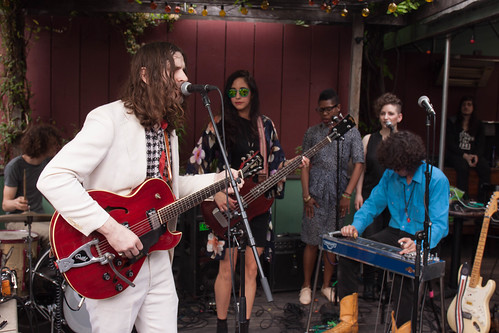
Now, if you’ve been frequenting this site over the past three or four years, you may recall that I’ve written a handful of posts featuring the Chicago, IL-based psych rock band Secret Colours. When the band released their self-titled debut and their sophomore album Peach, the band’s initial lineup was a sextet; however, by the time they went into the studio to record Positive Distractions Part 1 and Positive Distractions Part 2, the band went through a massive lineup change that left Tommy Evans (vocals, guitar) and Justin Frederick (drums) as the only members remaining from the original lineup. The duo of Evans and Frederick recruited two long-time Chicago music scene friends Eric Hehr (bass) and Mike Novak (bass) to fill out the band’s second lineup. Naturally, as a quartet, the band went through a decided change in sonic direction, partially out of necessity, and partially as a result of being artists, who do evolve as life pushes them forward; in fact, the band most likely recognized that they had two responses — strip down previously perceived excesses or find an inventive way to recreate their sound with fewer members.

Some time has passed since I’ve written about them, and as it turns out the band has gone through yet another lineup change — and while Evans and Novak have remained, the band has two new members Max Brink (bass) and Matt Yeates (drums), and with their newest lineup the band find themselves subtly pushing their sound in new directions with their latest full-length effort Dream Dream; in fact, the band’s sound draws from psych rock but also from guitar pop and garage rock. And as you’ll hear on their jaunty and jangling new single “Changes in Nature,” the band pairs Evans falsetto with shimmering, pedal effected guitars, a strutting bass line and propulsive drumming with a soaring, rousingly anthemic hook — and this shouldn’t be surprising as the soon is a swooning and sweetly urgent love song, along the lines of XTC‘s “Mayor of Simpleton” but with a subtly lysergic vibe.


.


New Video: JOVM Mainstays King Gizzard and the Lizard Wizard Return with Hallucinogenic Visuals for the Face-Melting Epic “Lord of Lightning vs. Balrog”

Over the past couple of months, the Melbourne, Australia-based psych rock sextet King Gizzard and The Lizard Wizard have quickly become JOVM mainstays. And considering the wild variety of things that I’ll write about in any given day, week or month that shouldn’t be terribly surprising. The act, comprised of Stu Mackenzie (vocals, guitar, and flute), Ambrose Kenny Smith (synths, harmonica), Cook Craig (guitar), Joey Walker (guitar), Lucas Skinner (bass), Eric Moore (drums) and Michael Cavanagh (drums), the Australian psych rock sextet have developed a reputation for incredibly energetic live shows and for being incredibly prolific, as they’ve released 10 full-length, studio albums since 2012 — and with each album, the band has revealed a relentlessly experimental song and songwriting approach; in fact, their earliest releases blended elements of 60s surf rock, garage rock and psych rock and their later work featuring elements of film scores, prog rock, folk, soul, Krautrock, heavy metal and proto-metal.

Released earlier this year, the band’s tenth studio album Flying Microtonal Banana found the band delving deeper into trance-inducing done, non-Western musical scales and metronomic rhythms — and in fact, the sound on that album is so profoundly unique and evolved, that it required the members of the band to reinvent their own instruments after they began experimenting with a custom microtonal guitar, made for the band’s frontman Stu Mackenzie. As the band mentioned in press notes on Flying Microtonal Banana they found particular inspiration from the movable frets of a Turkish instrument, the bağlama, a classical lute — and three guitars and a bass were customized for the band to explore wildly different scales and a new set of musical notes not normally heard in Western music. They then customized a keyboard and a mouth organ. Additionally, the material on the album finds the and incorporating the use of a Turkish horn called a zurna, which looks a bit like a clarinet but because it’s a double-reeded instrument, the possess a wobbly sound that Mackenzie says “blends perfectly with the secret notes on the guitar.” And as you may remember, album single “Rattlesnake” paired a chugging, motorik-like groove and anthemic, chant-worthy hook; but while clearly drawing from prog rock, Krautrock, psych rock, heavy psych, stoner rock and even space rock, the song finds the band putting a familiar Western sound into a decidedly Eastern context — and as a result, it’s not only a wild, mind-altering spin on something familiar and seemingly done to death and then some, while possessing a familiar acid-tinged yet alien, otherworldly sound.

Unsurprisingly, the Melbourne-based psych rockers will follow up on one of the trippiest and more unique sounding albums I’ve heard this year with Murder Of The Universe, a concept album meant to end all concept albums forever, as the material thematically concerns itself with the downfall of man and the death of the planet — and it evokes the greater sense of fear that we’re foolishly inching closer to our own destruction. As the band’s Stu Mackenzie explains “We’re living in dystopian times that are pretty scary and it’s hard not to reflect that in our music. It’s almost unavoidable. Some scientists predict that the downfall of humanity is just as likely to come at the hands of Artificial Intelligence, as it is war or viruses or climate change. But these are fascinating times too. Human beings are visual creatures – vision is our primary instinct, and this is very much a visual, descriptive, bleak record. While the tone is definitely apocalyptic, it is not necessarily purely a mirror of the current state of humanity. It’s about new non-linear narratives.”

Structurally, Murder of the Universe‘s tracks are separated into three chapters and the album’s first single ““Chapter 3: Han-Tyumi and the Murder of the Universe” offered an incredible taste of what listeners should expect from the entire album, as it’s a 13 minute, shape-shifting, face-melting prog rock song that evokes Biblical visions of the apocalypse — enormous mushroom clouds, pools of fire and blood, death and unceasing war, poverty and misery, featuring a cyborg, who desperately longs to be alive, to simply be.

Now, as you may also recall earlier this year, the Australian psych rock collective was on Conan to perform an abridged version of their latest single “The Lord of Lighting vs. Balrog,”a nearly 14 minute hallucinogenic, heavy psych and prog rock-inspired shape shifter of a song that features face-melting guitar riffs while detailing an epic, mythical battle between the Lord of Lighting and Balrog, in which the fate of the universe and all living things will depend on; but just underneath is a sobering meditation on the nature of life and death. And yes, the resemblance to Black Sabbath is both uncanny and fucking awesome.

Created by Jason Galea and Ben Jones, the recently released video for “The Lord of Lighting vs. Balrog” is gloriously, defiantly hallucinogenic while drawing from 60s videos, complete with an extended sequence of the band performing in a haunted forest with rapid fire cuts; in fact, the cuts are so rapid that if you suffer from photo-sensitive epilepsy that it’s suggested that you not watch.

New Video: The Playful and Menacing Visuals for Cool Ghouls’ “(If I Can’t Be) The Man”

With the release of 2014’s A Swirling Fire Burning Through the Rye, the San Francisco, CA-based psych rock/indie rock quartet Cool Ghouls, comprised of Pat Thomas, Ryan Wong, Pat McDonald, and Alex Fleshman, received a growing national profile for a sound that’s clearly indebted to The Byrds, Crosby, Stills, and Nash, Neil Young, Creedence Clearwater Revival and classic psych rock as their material is generally comprised of jangling guitar chords, simple yet propulsive percussion and layered, multi-part harmonies. Last year’s Animal Races further cemented their growing profile and reputation for crafting jangling guitar rock straight out of 1966-1970 or so; in fact, you may recall that last year I wrote about album singles “Sundial” and “Spectator.”

Currently, the band is on tour to support Animal Races and a limited release, tour-only cassette Gord’s Horse but interestingly enough, Animal Races’ latest single is the twangy, Grateful Dead and Everybody Says This Is Nowhere-era Neil Young–leaning bit of psych rock “(If I Can’t) Be The Man.”

Directed, shot and edited by Ry Pieri, the recently released video for “(If I Can’t) Be The Man” features the members of Cool Ghouls as cheap beer drinking clowns in a park and it’s all fun and games until the drunkenness turns rather dark.

Over the past couple of months, I’ve written about the up-and-coming, Halifax, UK-based indie rock trio The Orielles. Comprised of 21-year Sidonie B. Hand-Halford (drums), her 18-year old sister Esmé Dee Hand-Halford (bass, vocals) and their 17-year-old best friend Henry Carlyle Wade (guitar, vocals), the trio have quickly developed a reputation as being one of Northern England’s “most exciting local bands of recent years,” and one of their hometown’s best-kept musical secrets — and interestingly enough, the trio can trace their origins to when the Hand-Halford sisters met Wade at a house party and bonded over a shared love of Stateside-based 90s alt rock and indie rock.

With a growing reputation and profile preceding them, Heavenly Recordings head Jeff Barrett caught the band opening for their new labelmates The Parrots in late 2016 and immediately signed them to the label. And this year looks to be a hug year for the British upstarts as they just recently finished their first UK/EU tour, and their epic, 8 plus minute track “Sugar Taste Like Salt,” which draws from psych rock, New Wave and post-punk with lyrics that reference Quentin Tarantino’s Deathproof captured both the attention of the blogosphere and this site as it reminded me quite a bit of The Mallard‘s Finding Meaning in Deference, complete with the self-assuredness and confidence of a bunch of seasoned pros.

The Halifax, UK-based trio’s latest single “I Only Bought It For The Bottle” continues in a similar vein as its predecessor as it finds the band pairing ironically delivered vocals with a psych rock and indie rock-leaning arrangement featuring swirling and shimmering guitar chords played through effects pedals, a persistent and propulsive rhythm section consisting of a boom-bap-like drumming and a tight bass line to hold it all together. Interestingly enough, lyrically speaking, the song reveals a hilarious yet astute sense of cultural and critical observation that belies their relative youth. As the band’s Esmé Dee Hand-Halford explained in press notes “The track is loosely based upon [the] Nicolas Winding Refn film The Neon Demon as it talks about the idea of how beauty has become a currency and that we no longer desire substance, yet seek things based on appearance and face value. The microcosm of this idea comes through the lyrics, which explain a story of how the subject bought a bottle because it looked really nice and tasty, but it actually tasted like shit.” Certainly, in an age where the crude, ostentatious, ignorant know-nothings have the power of over millions of lives and yet repeatedly remind everyone of their idiocy, greed and selfishness, the song is absolutely fitting.


New Video: The Contemplative Visuals for Sleepy Sun’s “Seaquest”

Over the course of their decade together, the Bay Area-based psych rock band Sleepy Sun — comprised of Bret Constantino (vocals), Evan Reiss (guitar), Matt Holliman (guitar) and Brian Tice (drums) — have released five full-length albums that have established the band’s reputation for crafting material that sounds as though it owes an equal debt to 60s psych rock, classic rock, shoegaze and dream pop. And while their sound is warmly familiar, they’ve managed to put their unique spin on it.

Interestingly enough, with Private Tales, Sleepy Sun’s forthcoming album, the members of the band find themselves taking a much different approach than with their previously recorded albums, and as you’ll hear on the album’s first single “Seaquest,” the members of the Bay Area-based band have gone for a lush, more spacious — hell, much more patient approach with the song revealing nuanced layers and emotions upon repeated listens, while retaining the gorgeous guitar work and soaring hooks that have won them attention. However, whereas the band managed to sound cosmic, the new single evokes placidly (and somewhat aimlessly) sailing off into a gorgeous sunset, and the sensation of just quietly digging your surroundings and your place in the world. And in light of a world and sociopolitical climate that has gone absolutely mad, sometimes you need to take a moment to just exist.

Directed by Brandon Moore and shot on location on the Miguelito, sailing across the San Francisco Bay and in a private pool in Lafayette, CA, the video captures the members of the band, enjoying each other’s company and their own thoughts as their boat sails across the sun-dappled bay on a gloriously sunny day — and it may be one of most beautiful moments anyone could ever ask for. But towards the video’s conclusion, things take a gorgeous yet dark turn as the members of the band and their boat presumably become overtaken by the sea with waterlogged instruments being an eerie metaphor for nature and time’s inexorable march forward.

Initially forming under the name Apteka, the Chicago, IL-based psych rock quartet Pink Frost, currently comprised of founding members Adam Lukas (vocals, guitar) and Paige Sandilin (guitar) and newest members Alex Shumard (bass) and Jesse Hozeny (drums), have released 2011’s debut Gargoyle Days (under the name Apteka) and 2014’s Sundowning to critical praise both locally and nationally from  Pitchfork, SPIN Magazine, Noisey, Magnet Magazine, and Chicago Reader for a sound that had been compared favorably to RIDE, Smashing Pumpkins, Dinosaur, Jr. and Deerhunter. And adding to a growing national profile, the band had material from Sundowning placed in the major motion picture, The Lookalike and TV series such as The Vampire Diaries and CSI: Miami.

Now, if you had been frequenting this site over the past 2 years or so, you may recall that the Chicago-based band released a painstakingly remixed and re-mastered edition of their debut effort, from the original analog masters to better reflect their live sound at the time — and with artwork reflecting the band’s name change, as a both a metaphorical and literal rebirth. And at the time, I wrote about Gargoyle Days‘s second single, the seemingly  The Posies’Ontario,” Foo Fighters‘ “This Is A Call” and The Black Angels’Telephone“-inspired “Where Days Go.” However, four years have passed since a full-length album of original material from the critically applauded, Chicago-based psych rockers and in that time, they’ve gone through a series of changes that have influenced the band’s songwriting approach, their overall sound and the material’s thematic concerns. As I mentioned earlier, the band went through a massive lineup change in which the band’s newest members Shumard and Hozeny take prominent roles — and as the band’s Adam Lukas explains in press notes, the album overall addresses a collective sense of abrupt changes. “There is a sentimentality or a sense of loss that permeates most of the songs,” Lukas says. “Whether it’s the loss of truth, the ones you love, your place in the universe, or general sense of meaning in changing landscapes.”

New Minds, the band’s latest album is slated for a June 16, 2017 release and the album reportedly finds the band’s material at points becoming much more introspective — and while the more straight ahead rock-leaning material manages to be heavier and darker, their more spacey, shoegazer-like material manages to be much more introspective and with more delicate melodies. “Bare Roots,” New Minds‘ first single is a power chord-based barn-burner that sounds as though it draws from Black Sabbath and Led Zeppelin, complete with an anthemic hook. And interestingly enough, the song may be the most urgent and forceful song they’ve released to date, echoing our most urgent and forceful time.

Since their formation in early 2014, the Leeds, UK-based indie rock/psych rock trio The Boxing, comprised of Harrison Warke (vocals, guitar), Henry Chatham (bass) and Charlie Webb (drums), have quickly asserted themselves as part of their hometown’s burgeoning, contemporary indie rock and psych rock scenes, and they’ve already drawn some comparisons to the likes of W.H. Lung, Eagulls and JOVM mainstays The Vryll Society.

The Leeds-based psych rock trio’s latest single “One by One” is a brooding track featuring swirling and shimmering guitar chords, a propulsive motorik groove, led by a sinuous bass line and steady drumming paired with a soaring hook and a whispered croon reminiscent of The Horrors‘ Faris Badwan — and while possessing a modern production sheen, the song as the band’s Harrison Warke explains is an elaboration of their first couple of singles, as it’s the first single that they’ve recorded in a proper studio. Naturally, the studio recording process  gave the members of the band the freedom and ability to experiment and flesh out the overall arrangement in a way that they were unable to do before. And interestingly enough, while the song possesses a contemporary studio sheen, it manages to also nod at the sound of classic shoegaze and 4AD Records‘ early days — while thematically speaking, focusing on “depression and the culture of silence around it,” as Warke explained in press notes; in fact, the song manages to accurately capture the song’s narrator’s free-fall into a deeply overwhelming and crippling depression.

Art Feynman is a Californian-based singer/songwriter and multi-instrumentalist and from “Feeling Good About Feeling Good,” the first single off his full-length debut, Blast Off Through the Wicker, the Californian singer/songwriter and multi-instrumentalist specializes in a genre-defying sound that possesses elements of krautrock, Nigerian Highlife, Afrobeat, trippy psych rock fuzz and Graceland-era Paul Simon pop. And while recorded on four-track tape, Feynman maintained the track’s easy-going, motorik meets Afrobeat groove without he use of loops or drum machines, which points both to dexterous musicianship and careful attention to craft. But perhaps more important, this track may arguably be the funkiest and most unique songs I’ve come across this year.


Over the course of their decade together, the Bay Area-based psych rock band Sleepy Sun — comprised of Bret Constantino (vocals), Evan Reiss (guitar), Matt Holliman (guitar) and Brian Tice (drums) — have released five full-length albums that have established the band’s reputation for crafting material that sounds as though it owes an equal debt to 60s psych rock, classic rock, shoegaze and dream pop, and while at times being warmly familiar, they’ve managed to be put a unique spin upon it. Interestingly enough, with Private Tales, Sleepy Sun’s forthcoming album, the members of the band find themselves taking a much different approach than with their previously recorded albums, and as you’ll hear on the album’s first single “Seaquest,” the members of the Bay Area-based band have gone for a lush, more spacious — hell, much more patient approach with the song revealing nuanced layers and emotions upon repeated listens, while retaining the gorgeous guitar work and soaring hooks that have won them attention. However, whereas the band managed to sound cosmic, the new single evokes placidly (and somewhat aimlessly) sailing off into a gorgeous sunset, and the sensation of just quietly digging your surroundings and your place in the world. And in light of a world and sociopolitical climate that has gone absolutely mad, sometimes you need to take a moment to just exist.


Live Footage: King Gizzard and the Lizard Wizard Perform a Wild, Psych Rock Freakout on Conan

Over the past couple of months, I’ve written a bit about the Melbourne, Australia-based psych rock sextet King Gizzard and The Lizard Wizard. Comprised of Stu Mackenzie (vocals, guitar, and flute), Ambrose Kenny Smith (synths, harmonica), Cook Craig (guitar), Joey Walker (guitar), Lucas Skinner (bass), Eric Moore (drums) and Michael Cavanagh (drums), the Australian psych rock sextet have developed a reputation for incredibly energetic live shows and for being incredibly prolific, as they’ve released 10 full-length, studio albums since 2012 — and with each album, the band has revealed themselves to have a relentlessly experimental song and songwriting approach; in fact, their earliest releases blended elements of 60s surf rock, garage rock and psych rock and their later work featuring elements of film scores, prog rock, folk, soul, Krautrock, heavy metal and proto-metal.

Released earlier this year, the band’s tenth studio album Flying Microtonal Banana found the band delving deeper into trance-inducing done, non-Western musical scales and metronomic rhythms — and in fact, the sound on that album is so profoundly unique and evolved, that it required the members of the band to reinvent their own instruments after they began experimenting with a custom microtonal guitar, made for the band’s frontman Stu Mackenzie. As the band mentioned in press notes on Flying Microtonal Banana they found particular inspiration from the movable frets of a Turkish instrument, the bağlama, a classical lute — and three guitars and a bass were customized for the band to explore wildly different scales and a new set of musical notes not normally heard in Western music. They then customized a keyboard and a mouth organ. Additionally, the material on the album finds the and incorporating the use of a Turkish horn called a zurna, which looks a bit like a clarinet but because it’s a double-reeded instrument, the possess a wobbly sound that Mackenzie says “blends perfectly with the secret notes on the guitar.”

Album single “Rattlesnake” paired a chugging, motorik-like groove and anthemic, chant-worthy hook; but while clearly drawing from prog rock, Krautrock, psych rock, heavy psych, stoner rock and even space rock, the song finds the band putting a familiar Western sound into a decidedly Eastern context — and as a result, it’s not only a wild, mind-altering spin on something familiar and seemingly done to death and then some, while possessing a familiar acid-tinged yet alien, otherworldly sound.

Unsurprisingly, the Melbourne-based psych rockers will follow up on one of the trippiest and more unique sounding albums I’ve heard this year with Murder Of The Universe, a concept album meant to end all concept albums, as the material thematically concerns itself with the downfall of man and the death of the planet — and it evokes the greater sense of fear that we’re foolishly inching closer to our own destruction. As the band’s Stu Mackenzie explains “We’re living in dystopian times that are pretty scary and it’s hard not to reflect that in our music. It’s almost unavoidable. Some scientists predict that the downfall of humanity is just as likely to come at the hands of Artificial Intelligence, as it is war or viruses or climate change. But these are fascinating times too. Human beings are visual creatures – vision is our primary instinct, and this is very much a visual, descriptive, bleak record. While the tone is definitely apocalyptic, it is not necessarily purely a mirror of the current state of humanity. It’s about new non-linear narratives.”

Structurally, Murder of the Universe’s tracks are separated into three chapters and the album’s first single “Chapter 3: Han-Tyumi and the Murder of the Universe” is an epic, 13 minute, shape-shifting, face-melting prog rock song that evokes Biblical visions of the apocalypse — enormous mushroom clouds, pools of fire and blood, death and unceasing war, poverty and misery, featuring a cyborg, who desperately longs to be alive, to simply be.

The Melbourne, Australia-based psych rock band was recently on Conan to perform “Lord of Lightning” is a trippy track that meshes 60s heavy psych rock and prog rock, featuring some blistering guitar work — and it manages to feel like a wild, hallucinogenic freak out while maintaining their reputation to be defiantly, joyously difficult to pigeonhole.

Earlier this month I wrote about the sibling indie rock quartet  Stonefield. Healing from Darraweit Guim, a small rural town in the southeastern Australian state of Victoria, the sibling quartet featuring Amy (drums, lead vocals), Hannah (guitar), Sarah (keys) and Holly Findlay (bass) can trace the origins of the band and their music careers to when they began playing together at a rather young age — ranging from the youngest being seven and the oldest being 15. The band’s first song “Foreign Lover” was recorded by the band’s eldest member, Amy Findlay for a school project — and was then reportedly entered in Triple J’s national, unsigned band competition for youngsters Unearthed High as an afterthought; however, the Findlay Sisters wound up winning the contest, and within an incredibly short period of time, they had two singles receiving regular airplay and an invitation to play at the Glastonbury Festival.

Since then, the members of the sibling quartet have released two EPs and their self-titled, full-length debut and with a growing international profile have toured extensively,  including at some of the world’s largest festivals. Adding to a growing profile, the Australian indie rock quartet  has opened for a variety of renowned acts including Fleetwood Mac, Meat Puppets — and a Stateside tour with fellow countrymen King Gizzard and the Lizard Wizard earlier this year.

Stonefield’s sophomore full-length effort As Above So Below was released earlier this month through Rebel Union Recordings/Mushroom Records and the album’s first single “Changes” was a dreamy and swirling bit of psych rock featuring a propulsive, motorik-like groove and some impressive guitar work, played though massive amount of effects pedals. And while nodding at The Mallard’s Finding Meaning in Deference and The Fire Tapes’ Phantoms, the track reveals a cool-self assuredness that belies their relative youth and some ambitious songwriting. The Australian sibling quartet’s latest single “Sister” is featured both on the “Changes”/”Sister” 7 inch and on their recently released album, and the single is a doom-laden, power chord dirge that sounds as though it were influenced by Black Sabbath and stoner rock. And much like “Changes,” “Sister” reveals some ambitious songwriting by a band, who seems poised to kick ass and take names — right this very second.