Category: Soul Music

New Video: Camille Trust Returns with a Swaggering, Feminist Anthem

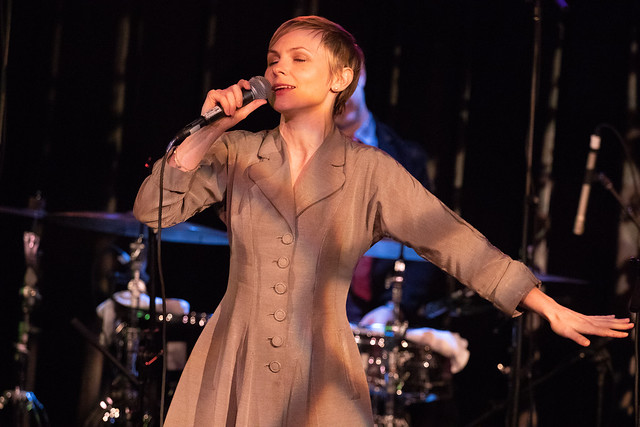
Throughout the past handful of years, I’ve written a bit about Camille Trust, an up-and-coming Tampa, FL-born, New York-based soul/pop artist. And as you may recall, Trust has cited the likes of Janis JoplinLauryn Hill and Etta James; however from with her energetic, dynamic stage presence and raw, unvarnished honesty, her work to me, seems much more indebted to Mary J. Blige.

2018 has been a big year for the Tampa-born, New York-based soul/pop artist, as she released her long-awaited debut EP No Other Way. Trust closes out the year with the release of “Freak,” a sultry track that draws from both classic soul, contemporary pop and hip-hop simultaneously as its centered by a Gwen StefaniHollaback Girl” meets Mark Ronson‘s “Uptown Funk” meets Rick James-like performance from Trust, handclap-led hook, a horn arrangement reminiscent of Earth Wind and Fire. But more important, the song is a brash, boldly feminist anthem in which the song’s narrator talks about wanting and needing raunchy, nasty, freaky sex from her object of affection.

Directed by Tanima Mehrotra and featuring choreography by Camille Trust and Ivy Ledon, the recently released video features Trust and a series of different backing dancers shot in a series of dressed in bold, bright colors in front of equally bold, bright backgrounds — before pulling out to reveal the behind the scenes, with Trust taking off earrings and getting ready for a successive video. Much like the song, it’s brash, sensual, playful and captures the artist’s swaggering and undeniable confidence and presence.


Alexis Evans is a young, up-and-coming Bordeaux, France-born soul singer/songwriter and guitarist. He discovered traditionally black music and soul music as a child and learned to play the guitar from his father, an English-born, French-based musician. At the young age of 17, Evans released his debut “Jumping to the Westside” which was awarded the Cognac Blues Passions prize — and as a result, he wound up performing in the International Blues Challenge in Memphis. With the release of 2016’s full-length debut Girl Bait, the young, French singer/songwriter built up a national and international profile with live sets at RDV Erdre Nantes, Rhino Jazz St. Etienne, Lyon Ninkasi, Club Nubia Paris, Festivals Relache Bordeaux, Jazz a Vienne and festival stops across the England, Wales, Estonia and Switzerland.

From album single “Keep the Good Time (On Your Mind)” I can see why.  Evans and his backing band specialize in a warmly familiar take on the classic soul sound — it’s part Muscle Shoals, part Northern Soul, part Daptone Records, centered around Evans effortless, soulful beyond his youthful vocals, big, rousing hooks and a muscular, power ballad-like arrangement. The guy can flat out sang and play that soul like it was 1963.

Evans recently signed to renowned Italian soul label Record Kicks Records, who will be releasing his sophomore album sometime next year. I’m personally looking forward to hearing more from this young, exceptional talent.


Raymond James Mason is a Long Island, NY-born, Brooklyn-born trombonist and singer/songwriter. As the story goes, Mason picked up the trombone at a very young age, and as a teenager, he studied classical performance and jazz studies at my alma mater NYU, where he studied with Brian Lynch, Lenny Pickett, Alan Ferber and Elliot Mason. Upon graduating, Mason quickly became an in-demand musician, playing across a wide variety of genres; but he’s best known for being a member of renowned local Afrobeat act Antibalas, which eventually led to him becoming a member of the Daptone Records/Dunham Records in-house band, playing with the likes of Sharon Jones and the Dap Kings, Charles Bradley and the Menahan Street Band, Lee Fields and the The Expressions and many others. Additionally, Mason has performed and or recorded with the likes of Alicia Keys, David Byrne, Randy Newman, Erykah Badu, The Roots, Arcade Fire, Ed Sheeran, Janelle Monae, Lukas Graham, Nile Rodgers, Tame Impala, Maren Morris, Earth Wind and Fire, Mark Ronson and and more. Unsurprisingly, he very busy Mason learned from these artists while honing his own compositional and vocal skills, patiently waiting for his moment to step out in the spotlight.

Back in October 2016, Mason reached out to Daptone Records house band member, longtime friend and Dala Records founder Billy Aukstik to set up at a casual recording session. At the time, Aukstik was recording out of an old East Village brownstone basement, equipped with only a Tascam 388 8-track tape recorder and a few old ribbon microphones. Aukstik and Mason assembled an all-star squad of local soul musicians, including Alex Chakour, who has played with Charles Bradley and Sharon Jones; Freddy DeBoe, who has played with Charles Bradley and Sharon Jones; Joe Harrison, who has played with Nick Hakim and Charles Bradley; and Morgan Price, who has played with Antibalas to record a couple of Mason’s compositions — two of which wound up becoming the A and B sides of Mason’s solo debut, “Back When”/”No Clue.”

A side single “Back When” is a strutting and swaggering bit of a soul pop centered around an arrangement of Arp Omni bass synth, fuzzy guitar lines and a steady backbeat — and while thematically the song is a universal tale of lost opportunity and what could have beens, it’s a decidedly contemporary take on the Dala Records sound, as it nods at contemporary soul, hip-hop and psych pop in a way that brings Tame Impala, Nick Hakim and others to mind. “No Clue,” the B side single is centered around fuzzy power chords and a garage rock vibe, while thematically the song focuses on a dysfunctional and confusing relationship. Both singles reveal an an up-and-coming artist, who’s actively and earnestly pushing the sonic boundaries of soul.


Live Session: Bells Atlas on Audiotree Live

Now, over the past couple of years, I’ve written quite a bit about the Oakland, CA-based futuristic soul act Bells Atlas. And as you may recall, the act which is comprised of Derek Barber (guitar) Geneva Harrison (drums, percussion, keys) Sandra Lawson-Ndu (vocals, percussion, keys) and Doug Stuart (bass, vocals, keys) of Derek Barber (guitar) Geneva Harrison (drums, percussion, keys) Sandra Lawson-Ndu (vocals, percussion, keys) and Doug Stuart (bass, vocals, keys)  have received attention for a forward-thinking, kaleidoscopic and lush sound that draws from indie rock, 90s R&B, Afro pop, Afro-futurism, jazz, electro pop and experimental pop. Adding to a rapidly growing profile, the members of the Oakland-based act has opened for the likes of Hiatus Kaiyote, Badbadnotgood, Bilal, Meshell Ndegeocello, W. Kamau Bell, Angelique Kidjo and others, as well as Bermuda Triangle, the side project of Alabama Shakes‘ Brittany Howard. Along with that, they spent 2016 as the touring band for NPR’s Snap Judgement.

Released earlier this year, the acclaimed futuristic soul act’s latest EP SALT AND SOAP is inspired by cleansing rituals and preservation methods, with the understanding that when you’re not accustomed to releasing your most personal stories, the idea is then to take a moment to prepare for a shift — for a new way of being open. Interestingly, during the creative process for their latest EP, the band stumbled upon a new songwriting process that incorporated the use of sampling grainy phone memo recordings of Geneva Harrison drumming as the bedrock of each song of the EP — and in turn, their full-length album The Mystic, which is slated for a March 2019 release. Focusing on spontaneity and sometimes even humor, the aim developed into writing music that was cinematic yet personal while highlighting each member’s individual skills and talent within the larger whole.

A few weeks ago the members of Bells Atlas were invited to Audiotree Live to do a live session centered around the material of the SALT AND SOAP EP including “Downpour,” a paradoxically slick yet lo-fi, lush and lysergic groove-driven track that recalled Drakkar Nowhere, Pavo Pavo and Erykah Badu; “Be Brave,” a sinuous and fluidic track centered around an incredibly dexterous and percolating bass line, driving percussion and rapidly morphing tone and time changes; the incredibly sultry “NCAT,” centered around shimmering and bubbling arpeggiated synths, stuttering drumming and a rolling bass, as well as two other tracks I haven’t written about — “Overshare” and “Find Where You Rise.” Throughout the live session, the material proves to be a perfect foil for Lawson-Ndu’s vocals, which manage to express a visceral vulnerability and human need, awe, strength and resiliency within a turn of a phrase.

Interestingly, during the session the band’s Lawson-Ndu speaks about her own deep, personal experience and love of sci-fi and fantasy and how they’ve influenced her to consider those genres through the experiences of being a woman of color.

Throwback: Happy 70th Birthday Charles Bradley!

Throughout a significant portion of this site’s 8-plus year history, I’ve written quite bit about longtime JOVM mainstay Charles Bradley. Bradley led a remarkable life, overcoming unimaginable adversity and heartache throughout his life to achieve success and […]

New Audio: Melbourne Australia’s The Putbacks Release a Blazing Western-tinged Bit of Psych Soul

Comprised of founding members Rory McDougall (drums), Tom Martin (guitar) and Mick Meager (bass), Simon Mavin (Hammond organ) with Justin Marshall, funk and soul, instrumental act The Putbacks feature some of Melbourne, Australia’s most accomplished musicians as members of the band have played with Hiatus Kaiyote, The Bombay Royale, D.D. Dumbo, Swooping Duck, The Meltdown and The Black Arm Band.   The band which can trace its formation back to the early 00s has long been the unofficial house band of Australian label  HopeStreet Recordings, taking cues from the legendary house bands of 60s and 70s soul and funk studios — in particular, The MGs, The Meters and The Wrecking Crew, as well as film composers of David Axelrod and Adrian Younge.

With the release of a handful of 7 inches through HopeStreet, the band received attention across their native Australia; however, it was Dawn, their 2014 collaboration with Australian Aboriginal soul singer/songwriter Emma Donovan that found the members of The Putbacks with a growing international profile, as the album received attention outside of their homeland. Since the release of Dawn, the individual members of the acclaimed band have bee busy with a number of projects while managing to find the time to write and record their soon-to-be released Paul Bender-produced self-titled debut, slated for a November 9, 2018 release Now, as you may recall, the album finds the band collaborating with a number of internationally renowned artists including singer/songwriter and neo-soul pioneer Bilal and violins and arrangements from Miguel Atwood-Ferguson. The album’s first single, the cinematic, film-noir-ish “The Ways” was a scorching bit of psych school featuring Bilal that recalled  The Roots and Hot Buttered Soul-era Isaac Hayes but with an improvised, free-flowing air.
“Oranges,” the self-titled album’s latest single sound as though Ennio Morricone managed to compose an unreleased psychedelic Western Sci Fi soundtrack — thanks in part to the composition being centered around a blistering Western-influenced riff that begins with the organ and a thumping backbeat, with the other instrumentations playing off the riff. Of course, the end result is a hypnotic and propulsive groove that also manages to nod at Tinariwen and others, complete with a larger-than-life vibe and sensibility. 

Now, if you’ve been frequenting this site over the past 12-18 months of its eight-plus year history, you’ve come across a handful of posts about the Paris-born, London-based singer/songwriter Sophie Baudry, whose solo recording project Million Miles is the culmination of a life-long love affair with soul music.

After completing her studies at  Berklee College and a stint as a recording engineer and studio musician in New York, Baudry returned home to London, where she felt an irresistible pull to write and record her own original music, largely inspired by Ray Charles and Bill Withers. On a whim, Baudry took a trip to Nashville, where she spent her first few days wandering, exploring and reaching out to strangers, as though she were saying “I ’m new here. I’m a songwriter and I’m looking for like-minded people to collaborate with.” While in Nashville, the French-born, British-based singer/songwriter wound up having chance meetings with two local songwriters and producers Robin Eaton and Paul Eberson and within about an hour or so of their meeting, they began writing the material that eventually became Baudry’s Million Miles’ debut EP Berry Hill, which was recorded over the course of a year during multiple sessions at Robin Eaton’s home studio in the Berry Hill neighborhood of Nashville. And from EP singles “Can’t Get Around A Broken Heart” and “Love Like Yours,” Baudry quickly received attention across the blogosphere, as well as this site, for an easy-going yet deliberately crafted, Sunday afternoon, Soul Train-like soul that nodded equally at the aforementioned Bill Withers and Erykah Badu and Jill Scott.

Baudry’s much-anticipated sophomore EP Good Luck, Honey is slated for a November release, and from the soulful EP single “Honey,” the track revealed an artist, who has become increasingly self-assured in her songwriting and approach, but maintaining a lived in, emotional honesty that’s rare for most contemporary pop. Good Luck, Honey‘s later single ” Just Dumb Luck” will further cement Baudry’s growing reputation for crafting effortless yet honest soul; but interestingly, the track finds the French-born, British-based singer/songwriter’s sound leaning in a much more rootsy take on soul that recalls Sandra Rhodes’ Where’s Your Love Been and Bonnie Raitt. As Baudry explains in press notes, “‘Just Dumb Luck”‘ is about how sometimes in life things just happen. They do. It’s not always all calculated through some algorithm, or perhaps there’s a universe’s algorithm that orchestrates it all… But I believe in luck and also creating your own luck. And by creating your own luck I mean going out there, being open minded, listening to people, to their story, and building your own as you go along. It’s a song about appreciating the moment, acknowledging the luck you’ve been having so far and just going with it and see where it takes you…”

Baudry will be playing an intimate set at Rockwood Music Hall on November 1, 2018. Fans should expect to hear material from the new EP, as well as the countless singles I’ve written about on this site.


Over the past few years, the Akron, OH-based funk septet Wesley Bright and The Honeytones, currently featuring Wesley Bright (vocals), Jonathan Fields (drums), Matthew Derubertis (bass), Jimmy Parsons (guitar), Nathan-Paul Davis (sax), Matt Garrett (trumpet) and Max Brady (trombone) have become a regional favorite among soul music fans and vinyl collectors — thanks in part to Bright’s vocals, which have been compared to Al Green and Otis Redding and to the group’s sound, which attempt to bridge the gap between classic soul and the modern sound. The band has gone through some changes both in personal and sound, and the act’s latest Leroi Conroy-produced 45 RPM single “Happiness”/”You Don’t Want Me,” which was released through Colemine Records reportedly represents the band’s new sonic direction. And while still clearly indebted to classic soul, the stomping and strutting “Happiness” brings to mind the G.E.D. Soul Records artists DeRobert and the Half-Truths and AJ and the Jiggawatts, as the song balances plaintive and earnest sweetness with a gritty toughness. It’s a song in which its narrator is fed up with a love interest, who he feels is playing with him and his emotions when all he wants is to love, be loved and be happy. “Happiness” has arguably one of the best bass lines I’ve heard this entire year paired with a horn section that brings to mind Daptone Records, Hannah Williams and the Affirmations and others.

The B-side “You Don’t Want Me” is a slow-burning soul number that nods at Otis Redding and Muscle Shoals, as it’s centered around a arrangement of bluesy and twangy guitar, a shuffling bass line and organ line, and Bright’s easygoing vocals, which manage to evoke plaintive ache, stubborn pride and longing within a turn of a phrase. From these two tracks, I think we’ll be hearing much more about Wesley Bright and his Honeytones.


New Audio: Dunham Records Release a Stomping and Swooning Love Song off the Soon-to-be Released Posthumous Charles Bradley Album

Throughout a significant portion of this site’s 8-plus year history, I’ve written a bit about JOVM mainstay, Charles Bradley, the late, Brooklyn-based soul singer. Now, as you may recall, Bradley led a remarkable life, overcoming unimaginable adversity to achieve success and international acclaim late his life  — thanks in part to the release of documentary Charles Bradley: Soul of America, three full-length albums 2011’s No Time For Dreaming, 2013’s Victim of Love and 2016’s Changes, and a powerful, heartfelt live show.  Interestingly during his relatively short recording career, Bradley wound up playing a larger-than-life role in pop culture: Bradley was a prominent figure in the Daptone Records live documentary, Living on Soul filmed during the Daptone Records Soul Revue shows back in 2014 at the legendary Apollo Theater; performed on Netflix’s Luke Cage; was the signing voice of Minstrel Krampus on American Dad; and he had tracks featured on a number of films and TV shows, including the title tracks for Netflix’s Big Mouth, HBO’s Barry and more.

And although those successes came late in his life, none of them should be surprising because what drew so many fans, critics and others towards him was the fact that for him, Bradley and felt and understood that the great pain and tribulations of his life were a cry for  universal love, brotherhood and empathy. He preached it passionately and constantly — and as many would say, it seemed that he believed that if he loved harder, more passionately, and just more — if we all just loved each other a bit more — we could make the world a much better place. Certainly, in a seemingly dark and cynical world in which humanity is inching towards its annihilation, we could use more Charles Bradleys, more Sharon Joneses, too.

November 5, 2018 would have been Charles Bradley’s 70th birthday and in celebration of the man, his life and his music, Dunham Records will posthumously release his fourth and final album Black Velvet on November 9, 2018.  Featuring 10 tracks lovingly curated by his friends, bandmates and family, the album chronologically spans Bradley’s recording career — but instead of a greatest hits-like anthology or a rehashing of say, several different versions of known and beloved songs, the album focuses on deeper, mostly unreleased cuts recorded during the sessions from each of Bradley’s three albums. The album will include highly sought-after and beloved covers including his takes on Nirvana‘s “Stay Away,” Neil Young‘s “Heart of Gold,” Rodriguez‘s “I’ll Slip Away,” and an alternate full-band electric version of “Victim of Love,” among others.

Of course, in many ways, the album documents the friendship and collaboration shared between Bradley and longtime collaborator, producer and co-writer Tommy Brenneck. As Brenneck explains, Black Velvet‘s first single “I Feel A Change” was recorded during the Victim of Love sessions. “Horns and organ were recorded later adding a haunting beauty to the otherwise a cappella intro. The lyrics are 100% Charles. Personal yet abstract. Directly from the heart. He truly loved the expression ‘going through changes’ and this was a few years before we would record our rendition of Sabbath‘s ‘Changes‘ with the Budos. Sadly Charles never got to hear the finished version of this beautiful song.” “I Feel a Change” was classic Charles Bradley — the Screaming Eagle of Soul’s imitable vocals passionately expressing desire, frustration and heartache within a turn of a phrase, pleading in a deeply confessional fashion to you. Of course, Bradley’s vocals are paired with a slow-burning, sensual arrangement that feels eerily spectral yet urgent and necessary.

Interestingly, while searching for material to include on Black Velvet, Brenneck stumbled upon the album’s latest single, having forgotten that it had even existed — although the track was recorded around 2007 during the recording sessions for Bradley’s No Time for Dreaming. Featuring members of the Menahan Street Band, the single is a revealing look into the Bradley’s early sound while being a stomping, two-stepping love song centered around sweet, old-school lyrics and Bradley’s heartfelt vocals.  As Brenneck notes, “For some reason I always thought we hadn’t finished the vocal track but, to my surprise, not only was it finished, it was a powerful performance by Charles and the band is on fire to boot… Why it didn’t make No Time For Dreaming? I have no idea.” With every single off the new album, I’m reminded of the fact that although the man may no longer be with us, that his spirit is still vital and with us when he need it the most. Long live Charles Edward Bradley, y’all! Long live Charles Edward Bradley!

New Video: Dunham Records Release a Funky Single from Charles Bradley’s Posthumous “Black Velvet”

Throughout the bulk of this site’s 8 plus year history, I’ve written a lot about the Charles Bradley, the late, Brooklyn-based soul singer and JOVM mainstay who led a remarkable life, overcoming difficult and overwhelming adversity achieve success and international acclaim late in his life, thanks in part to the release of the documentary Charles Bradley: Soul of America, three full-length albums 2011’s No Time For Dreaming, 2013’s Victim of Love and 2016’s Changes, and a powerful, heartfelt live show.  Interestingly, Bradley throughout his relatively short recording career wound up playing a larger-than-life role in pop culture; Bradley was a prominent figure in the Daptone Records live documentary, Living on Soul filmed during the Daptone Records Soul Revue shows back in 2014 at the legendary Apollo Theater; performed on Netflix’s Luke Cage; was the singing voice of Minstrel Krampus on American Dad; and he had tracks featured on a number of films and TV shows, including the title tracks for Netflix’s Big Mouth, HBO’s Barry and more.

And honestly, although those successes came late in his life, none of them should be surprising because what drew so many fans, critics and others towards him was the fact that understood that the great pain and tribulations of his life were a cry for  universal love, brotherhood and empathy. He preached it passionately and constantly — and as many would say, it seemed that he believed that if he loved harder, more passionately, and just more — if we all just loved each other a bit more — we could make the world a much better place. Certainly, in a seemingly dark and cynical world in which humanity is inching towards its annihilation, we could use more Charles Bradleys, more Sharon Joneses, too.

November 5, 2018 would have been Charles Bradley’s 70th birthday and in celebration of the man, his life and his music, Dunham Records will posthumously release his fourth and final album Black Velvet on November 9, 2018.  Featuring 10 tracks lovingly curated by his friends, bandmates and family, the album chronologically spans Bradley’s recording career — but instead of a greatest hits-like anthology or a rehashing of say, several different versions of known and beloved songs, the album focuses on deeper, mostly unreleased cuts recorded during the sessions from each of Bradley’s three albums. The album will include highly sought-after and beloved covers including his takes on Nirvana‘s “Stay Away,” Neil Young‘s “Heart of Gold,” Rodriguez‘s “I’ll Slip Away,” and an alternate full-band electric version of “Victim of Love,” among others.

Of course, in many ways, the album documents the friendship and collaboration shared between Bradley and longtime collaborator, producer and co-writer Tommy Brenneck. As Brenneck explains, Black Velvet‘s first single “I Feel A Change” was recorded during the Victim of Love sessions. “Horns and organ were recorded later adding a haunting beauty to the otherwise a cappella intro. The lyrics are 100% Charles. Personal yet abstract. Directly from the heart. He truly loved the expression ‘going through changes’ and this was a few years before we would record our rendition of Sabbath‘s ‘Changes‘ with the Budos. Sadly Charles never got to hear the finished version of this beautiful song.”

“I Feel a Change” is classic Charles Bradley — the Screaming Eagle of Soul’s imitable vocals passionately expressing desire, frustration and heartache within a turn of a phrase, pleading in a deeply confessional fashion to you. Of course, Bradley’s vocals are paired with a slow-burning, sensual arrangement that feels eerily spectral yet urgent and necessary. The album’s second single “Luv Jones” is arguably the funkiest and most ecstatic track on Black Velvet, a track centered by an explosive horn line, a propulsive rhythm section, burst of organs and Bradley’s vocals crooning about love and needing his love in that old school fashion. Certainly, in light of the fact that we often live in such a dark, cynical and place, we need more sweet, good natured love songs. The man may not be with us but his spirit is forcefully vital and with us, just when we need it the most. Long live Charles Edward Bradley, y’all! Long live Charles Edward Bradley!

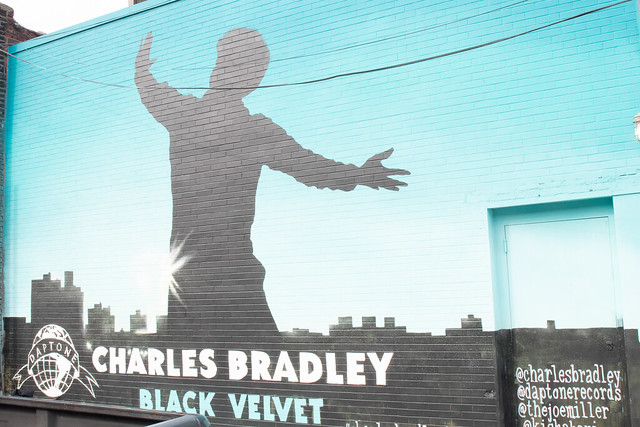
To celebrate Charles Bradley’s life and music, a number of Charles Bradley-themed murals will be painted in a number of cities across the world and the recently released accompanying video features a mural painted by Joe Miller in Chicago shot in time-lapse. 

New Video: The Putbacks Team Up with Bilal on a Trippy and Cinematic Bit of Psych Soul

Comprised of founding members Rory McDougall (drums), Tom Martin (guitar) and Mick Meager (bass), Simon Mavin (Hammond organ) with Justin Marshall, funk and soul, instrumental act The Putbacks feature some of Melbourne, Australia’s most accomplished musicians — as members of the band have played with Hiatus Kaiyote, The Bombay Royale, D.D. Dumbo, Swooping Duck, The Meltdown and The Black Arm Band; in fact, the band, which formed back in the early 00s is the unofficial house band of renowned Australian label HopeStreet Recordings, and they reportedly take their cues from the house bands of 60s and 70s soul studios — in particular, The MGs, The Meters and The Wrecking Crew, as well as film composers of David Axelrod and Adrian Younge.

The release of a number of 7 inches through their now-long-time label home began receiving attention across Australia; but it was their 2014 collaboration with Australian Aboriginal singer/songwriter Emma Donavan, Dawn which resulted in a growing national and international profile. And since then the members of The Putbacks had been extremely busy with a number of individual projects while finding time to write and record, their forthcoming Paul Bender-produced self-titled debut, which is slated for a November 9, 2018 release. Interestingly, the album finds the band collaborating with a number of renowned artists including singer/songwriter and neo-soul pioneer Bilal and violins and arranger Miguel Atwood-Ferguson. 

The album’s first single “The Ways” is an incredibly cinematic and film noir-ish bit of psych soul centered around twinkling and arpeggiated keys, scorching guitar lines, played through delay and effect pedal paired with Bilal’s dreamy yet husky vocals singing stream-of-consciousness vocals — all within an expansive song structure. The entire song sounds as though it draws from The Roots and Hot Buttered Soul-era Isaac Hayes simultaneously but with an improvised, free-flowing air.