Category: Soul Music

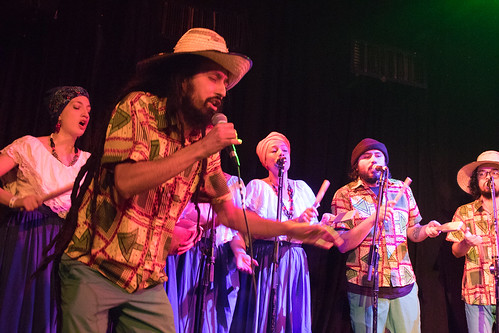
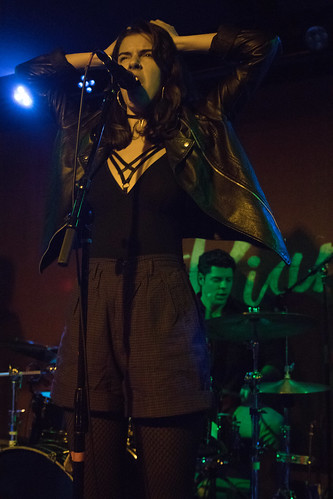
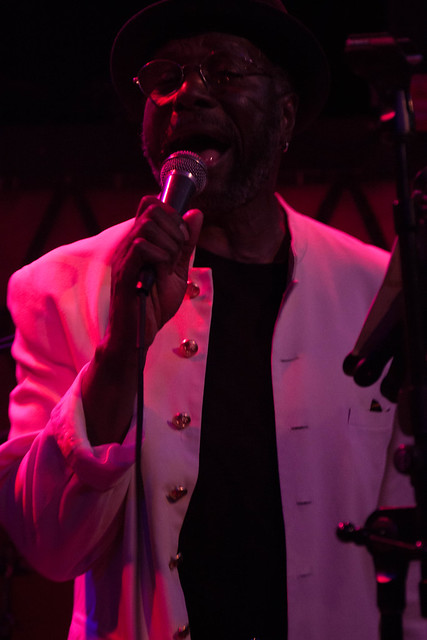
Live Footage: Marta Ren and the Groovelets Performing an Acoustic Version of Album Track “Smiling Faces”

Perhaps best known for being the frontwoman of the renowned Portuguese breakbeat outfit The Bombazines with whom she recorded and released two full-length albums, as well as contributing her vocals to a number of nationally known acts across Portugal, the Porto, Portugal-born and based vocalist Marta Ren has been a part of her homeland’s music scene since the mid-1990s. However, Ren has long been inspired by the funk and soul sounds of the 60s and over the past couple of years, she decided that it was time for her to go solo and front her own soul and funk-based project under her own name, before eventually hooking up with her backing band The Groovelets.

Now, if you had been frequenting this site over the last few months of last year, you’d recall that Ren and the Groovelets’ debut effort Stop Look Listen was released to critical praise and received airplay from from BBC Radio 6′s Craig Charles, Radio France‘s Francis Viel. Adding to a growing international profile Acid Jazz Records‘ Eddie Piller has also championed Ren and her Groovelets. “So Long” Stop Look Listen’s barn-burning third single was a visceral bit of soul that balanced fury and sensuality with a decided late 60s/early 70s psychedelic feel — in some way nodding at Nancy Sinatra’s “These Boots Are Made For Walking” and James Bond soundtracks.

The Portuguese soul act recently recorded an acoustic rendition of the slow-burning and sensual album track “Smiling Faces” for French radio — and although the live, acoustic rendition leans slightly towards a hushed, jazz standard-like arrangement, the song which features a swaggering, Thelonious Monk-like bass line, some bluesy guitar playing, gentle drum tapping and some ethereal yet soaring organ while allowing room for Ren’s aching vocals, which simultaneously express the longing and profound loneliness of a deeply lovelorn narrator, who recognizes how difficult love can be, especially when they are incredibly unlucky in love — and others seem to constantly stumble upon it.

New Video: El Michels Affair’s Soulful and Cinematic Take on the Wu-Tang

Comprised of founding member, bandleader and primary arranger Leon Michels (saxophone), Homer Steinweiss (drums), Nick Movshon (bass), Thomas Brenneck (guitar), Sean Solomon (guitar), Tobias Pazner (keyboards), Michael Leonhart (trumpet) and Todd Simon (trumpet), the El Michels Affair is a Brooklyn-based All-Star, instrumental soul act featuring members from several renowned, locally-based acts including The Arcs, Menahan Street Band, The Shacks, Sharon Jones and the Dap Kings, and Lee Fields and the Expressions. After the release of their 2005 debut Sounding Out the City, the band was paired with Raekwon for a concert organized by Scion and it eventually led to a tour that featured several members of the Wu-Tang Clan. And interestingly enough, touring with the members of the Wu inspired the El Michels Affair’s sophomore effort Enter the 37th Chamber, soul-based, instrumental interpretations of the material off Wu-Tang’s seminal debut Enter the 36 Chambers.

Unsurprisingly, Enter the 37th Chamber has proven to be the band’s most commercially successful album to date, introducing the band to a much wider audience. It’s been several years since the band has released new material, as the members of the band have been extremely busy with their primary gigs, they had some time to reconvene to write and record Return to the 37th Chamber, their breakthrough sophomore effort’s long-awaited follow up. And much like its predecessor, the material will further cement the band’s reputation for soul music interpretations of the Wu Tang’s material for a live band, while paying homage to RZA’s imitable, hazy production; in fact, Michels in his role as producer, recorded the album straight to analog tape, sometimes hitting six generations of tape before it was ready for mixing. Adding to the album’s overall sound, the material possesses the occasional psychedelic flourish, John Carpenter-like synths, power chord-friendly guitar work, the enormous horn sections and traditional Chinese instrumentation in place of most of the vocals and guest spots from Lee Fields and The Shacks’ Shannon Wise. Essentially, while being a tribute to one of hip-hop’s most interesting, challenging producers and artists and his sound, the album finds the members of El Michels Affair picking up on and expanding the cinematic aspects of RZA’s production.

Of course, while Enter the 37th Chamber paid tribute to Enter the 36 Chambers, the El Michels Affair tackles some of the Wu’s beloved classics such as “4th Chamber” and “Wu Tang Ain’t Nuthin ta Fuck Wit,” as well as deeper cuts like Ol’ Dirty Bastard‘s “Snakes,” Raekwon’s “Verbal Intercourse,” and Wu-Tang’s contribution to St. Ide’s legendary early 90s ad campaign, “Shaolin Brew.” Now, as you may remember earlier this month, I wrote about Return to the 37th Chamber’s first single “Tearz.” And that single, which featured guest spots from the aforementioned Lee Fields and Shannon Wise managed to sound as though it paid equal respect to the Wendy Rene original song from which the song’s backing sample came from as it did to the Wu Tang’s own use of the sample — but with subtly psychedelic flourishes.

Return to the 37th Chamber’s latest single “Iron Man” is a cinematic reworking of “Iron’s Theme (Interlude)” off Ghostface Killah’s Supreme Clientele, that expands upon the original’s groove to make it a full-length song — but with martial arts and psychedelic film sound effects.

Directed by artist El Oms, who met Leon Michels though The Arcs and has become a fan of the El Michels Affair, the animated video is a fittingly a martial arts, revenge saga, complete with a couple of trippy flashbacks and a shit ton of bloody mayhem — and I bet it would be make Quentin Tarantino proud. As El Oms explains in press notes “Making this video really brought me back to my younger days. I grew up watching martial art movies and listening to Wu-Tang and when I heard El Michels Affair’s Enter The 37th Chamber I was blown away by the way the album captured those elements and still sounded original. So being able to work on Return To The 37th Chamber was truly amazing. I try to capture those same elements on the ‘Iron Man’ video and give it this originality but still have the old traditional martial arts movie feel to it.”

Comprised of three siblings, twins Alexis (bass) and Zandy Fitzgerald (guitar), along with their brother Darius (drums) and cousin Jasmine Mullen (vocals, guitar), The New Respects are a Nashville, TN-based blues rock act, that has been heavily influenced by the gospel music they were surrounded by — but also by a healthy amount of secular and pop artists including Aretha Franklin, Alabama Shakes, John Mayer and others. Produced by Leagues‘ Jermey Lutito, the Nashville, TN-based quartet’s debut EP Here Comes Trouble is slated for a March 10, 2017 release through Credential Recordings and with the release of the EP’s first single “Trouble,” which has seen recent placements on ESPN’s Major League Soccer coverage, Fox Sports’ Road To The Octagon and TNT’s NBA coverage, as well as praise from NPR World Music Cafe‘s Jewly Hight. And unsurprisingly, as a result, The New Respects’ debut EP may arguably be one of the most highly-anticipated EPs of the first few months of 2017.

Here Comes Trouble‘s second and latest single “Money” is a gritty yet funky and soulful that not only displays The New Respect’s genre-defying sound — a sound which effortlessly meshes blues, arena rock, pop and hip-hop; but it also reveals a band that has an uncanny ability to write an swaggering and anthemic, power chord friendly hook paired with a sinuous bass line, a darting yet funky guitar line, thunderous drumming and Mullen’s powerhouse, pop belter vocals. Sonically speaking “Money” will likely remind listeners of The Black Keys, Robert Randolph and The Family Band and others and while that would be a fair comparison, lyrically the song has struck me as an ironic take on “If I Was a Rich Girl” that not only points out that being filthy rich won’t buy you more time, nor would it buy you much in the way of happiness.  In fact, the song suggests two things that seem to be an anathema in our consumer world — that having money and a lot of possessions actually distracts you from life’s true purpose: to love someone else and to be here now.

Directed by Ry Cox, the artfully shot, recently released music video follows the members of the band as they break into the home of some rich guy as he’s away to play music and invite friends and other associates to the house, along with footage of the band languidly enjoying the fruits of greed and power as they sing the song’s hook. And while being kind of trippy, the video ends with the band disappearing before the rich man’s return.

The quartet will be opening for Robert and The Family Band throughout March. Check out tour dates below.

Tour

Supporting Robert Randolph & The Family Band

3/15 — Cincinnati, OH @ The Ballroom @ Taft

3/16 — Cleveland, OH @ Beachland Ballroom

3/17 — Chicago, IL @ Lincoln Hall

3/18 — Madison, WI @ Majestic

3/20 — Kansas City, MO @ Knuckleheads

3/22 — Fort Collins, CO @ Aggie

3/24 — Boulder, CO @ Fox Theatre

3/25 — Denver, CO @ Gothic Theatre

3/26 — Aspen, CO @ Belly Up

Perhaps best known as a member of Charles Bradley’s backing band The Extraordinaires, the late, great Sharon Jones’ backing band The Dap Kings, Lee Fields’ backing band, The Expressions, Antibalas and The Budos Band, who has also collaborated with Mark Ronson and others, the Chicago, IL-born, New York-based trumpeter Billy Aukstik began writing his own soul-inspired compositions and founded Brooklyn-based indie soul label Dala Records. And since founding the label, Aukstik has produced the debut efforts of a handful of locally-based artists including singer/songwriter, John Fatum, The Rad Trads, Michael Harlen, Patrick Sargent and Camellia Hartman, as well as his own solo work under the moniker Billy the Kid.

Dala Records’ latest rlease “Breathing Hard (Over You)”/”Honey Bee” is a split 7 inch single featuring labelmates Camellia Hartman and its founder Aukstik, backed by the Dala Records house band, The Soulful Saints. Hartman is an East Village-born and raised vocalist and multi-instrumentalist, who as a child studied the Suzuki method on violin, bass and guitar at rock ‘n’ roll day camp, trombone in middle school band and a capella in high school — and her contribution to the split 7 inch, “Breathing Hard (Over You)” was recorded and mixed on an 8 track tape machine, which further emphasizes the classic Motown meets Northern soul production. And while making the song sound as though it could have been released as a 45rpm single back in 1964, the production manages to give Hartman’s tender yet playfully coquettish vocals room to express an aching yet somewhat girlish longing and desire.

Aukstik’s contribution “Honey Bee” is a twangy, slow-burning, 70s AM rock meets Muscle Shoals-leaning bit of soul that features Aukstik’s tender falsetto over an arrangement featuring lap steel guitar, Farfisa organ, Maestro Rhythm King drum machine, fuzzy guitar chords and a sinuous hook — and while nodding at psych rock, the song to my years reminds me a bit of Sandra Rhodes’ sadly forgotten Muscle Shoals meets Nashville solo debut, Where’s Your Love Been.

.


Now, if you had been frequenting this site over the last part of 2016, you may recall coming across a post on the Oakland, CA-based soul pop quintet Bells Atlas. Comprised of Derek Barber (guitar) Geneva Harrison (drums, percussion, keys) Sandra Lawson-Ndu (vocals, percussion, keys) and Doug Stuart (bass, vocals, keys), the quintet specializes in a sound that’s kaleidoscopic, lushly layered and difficult to pigeonhole as it incorporates elements of indie rock, Afro pop jazz and electro pop. Their trippy, shimmering and atmospheric “Spec and Bubbles” revealed a song that structurally owed a debt to  Hiatus Kaiyote as the song consisted of several, twisting and morphing sections held together by stuttering drumming, a sinuous bass line and Lawson-Ndu’s sultry cooing.

The Bay Area quintet’s latest single “NCAT” will further cement their burgeoning reputation for crafting slow-burning, atmospheric and soulful pop as the song consists of shimmering and bubbling arpeggio synths, stuttering drumming and a rolling bass line paired with Lawson-Ndu’s sultry yet ethereal vocals. And by far, the song may arguably be the sexiest song they’ve released to date, as Lawson-Ndu’s vocals express a visceral, vulnerability and human need — and in some way, the song nods at Quiet Storm-era R&B, Snoop Dogg‘s “Sexual Eruption” and the aforementioned Hiatus Kaiyote.


Growing up listening to an eclectic variety of music including Patti Labelle, Jill Scott, Bob James, Stevie Wonder, D’Angelo, Bjork and The Black Crowes among others, up-and-coming, Edmonton, AB-born, Toronto, ON-based soul artist Tanika Charles quickly developed a reputation locally as an emerging solo artist, whose puts a modern spin on the classic Motown soul sound — frequently meshing it with swaggering, hip-hop-like beats and deeply, confessional and honest lyrics, reminiscent of Mary J. Blige, Kelis and others. And as a result, within Canada’s soul scene, Charles has largely been considered her country’s next big thing; in fact, interestingly enough, over the past couple of years Charles transformed from being an emerging solo artist to being a commanding performer and bandleader, as well as one of the scene’s staples. Adding to a growing national profile, Charles has collaborated with Estelle, Lauryn Hill and Macy Gray, and has made regular appearances on CTV, Global and CBC Radio.

Produced by Slakah the Beatchild, best known for collaborating with Drake, Charles’ latest single “Soul Run” is the first single off her self-titled, full-length album, slated for an April 7, 2017 release through Italian soul label, Record Kicks, and the single will further cement the Edmonton-born, Toronto-based singer/songwriter’s burgeoning reputation for crafting confessional lyrics based around her own personal experiences with “Soul Run” based around Charles’ experience of feeling trapped in an emotionally abusive relationship in rural Canada — until she decided to “borrow” her then fiancée’s car and left for Toronto to start her music career, never looking back. Considering the personal nature of the song, Charles as the song’s narrator expresses regret over her own foolishness that wound up with her being hopelessly trapped in an abusive and fucked up relationship and desperate desire to get away and start over. You can almost picture Charles, jumping into the car with whatever possessions she could manage and hitting the road without an idea of where she was going or what would happen — and yet feeling true freedom to do whatever she wanted.


New Video: The Cinematic Visuals for Lee Fields and The Expressions “Special Night”

If you’ve been frequenting this site over the past couple of years, you’ve likely come across a handful of posts featuring soul singer Lee Fields. Fields has had a nearly 50 year music career, which he can trace back to his first recorded efforts released back in 1969 — and as a result, he has toured with a number of nationally and internationally known acts including Kool and the Gang, O.V. Wright, Hip Huggers, and others. However, despite sharing bills with a number of renowned acts, Fields has largely toiled in a level of obscurity to most audiences with the exceptions of crate diggers seeking deep, funky grooves from the late 60s to mid 70s or so and obsessively completist soul music fans and record collectors. Fortunately for the likes of Fields, Sonny Knight, the late and utterly fantastic Sharon Jones, Charles Bradley, the late, great Chuck Brown and others the soul music revival has allowed them to achieve a measure of attention and fame that had long eluded them — or in the case of both Chuck Brown and Sonny Knight, an opportunity to receive attention outside of their particular hometown. And along with that there have been an increasing number of contemporary acts and labels both nationally and internationally releasing new, original material that pushes what soul music should sound like and concern itself with thematically in very different directions.

Along with this latest backing band, The Expressions, which features some of New York’s finest soul musicians — members of the band have been members or have split time with the world famous Dap Kings, Charles Bradley’s backing bands The Extraordinaires and The Menahan Street Band and others — Fields captured the attention of the blogosphere and new fans with 2009’s My World, 2012’s Faithful Man and 2014’s Emma Jean through Truth and Soul Records. And with those three albums Fields and company increasingly pushed their overall sound and lyrical concerns in different directions — Emma Jean featured a gorgeous soulful cover of Leon Russell’s “Out In The Woods,” which managed to draw parallels to Fields’ own experience of arriving in New York as a 17 year-old with only $20 in his pocket and big dreams. Interestingly Fields’ fourth album with The Expressions Special Night mostly focuses on the intricacies of romantic and personal relationships with one exception — album single “Make The World.” a stomping, early 70s James Brown-indebted bit of funk soul, about the need for people to unite and get things right. The album’s latest single, album title track “Special Night” is a slow-burning and tender, psych soul and Quiet Storm-leaning love song in which the song’s narrator expresses being grateful and lucky to stumble upon a wonderful lover, and how he was going to show his lover how grateful he was. Lucky and rare are those who find that kind of love. May we all know that kind of love at some point in our lives.

Directed by Nick Walker, the recently released video for “Special Night” possesses a relatively simple concept — as we follow Lee Fields, using a free-floating dolly shot in a sunny, Southern California grapevine, and of a gorgeous backdrop with a hot air balloon in the background. It’s a subtly trippy yet cinematic video.

Comprised of founding member, bandleader and primary arranger Leon Michels (saxophone), Homer Steinweiss (drums), Nick Movshon (bass), Thomas Brenneck (guitar), Sean Solomon (guitar), Tobias Pazner (keyboards), Michael Leonhart (trumpet) and Todd Simon (trumpet), the El Michels AffairT is a Brooklyn-based All-Star, instrumental soul act featuring members from several renowned acts including The Arcs, Menahan Street Band, The Shacks, Sharon Jones and the Dap Kings, and Lee Fields and the Expressions. After the release of their 2005 debut Sounding Out the City, the band was paired with Raekwon for a concert organized by Scion  and it eventually led to a tour that featured several members of the Wu-Tang Clan. Interestingly, touring with the members of the Wu-Tang led to the band’s sophomore effort Enter the 37th Chamber, an effort that consisted of soul-based, instrumental interpretations of the Wu-Tang Clan’s influential debut Enter the 36 Chambers. 

Unsurprisingly, Enter the 37th Chamber has introduced the band and its members to a much wider audience, while being their most commercially successful effort to date. Although the members of El Michels Affair had been busy with their primary gigs, they reconvened to record Return To The 37th Chamber, the highly-anticipated follow- up to Enter the 37th Chamber — and reportedly while reinterpreting and arranging Wu-Tang songs for a live band, Return to the 37th Chamber also pays homage to RZA‘s imitable, hazy production; in fact, Michels in his role as producer, recorded the album straight to analog tape, sometimes hitting six generations of tape before it was ready for mixing. Adding to the album’s overall sound, the material possesses the occasional psychedelic flourish, John Carpenter-like synths, power chord-friendly guitar work, the enormous horn sections and traditional Chinese instrumentation in place of most of the vocals — or in other words, the material balances RZA’s imitable and influential aesthetic with El Michels Affair’s burgeoning reputation for cinematic and swaggering soul.

As far as the material on the new album, the renowned instrumental soul act tackles some of the Wu’s beloved classics such as “4th Chamber” and “Wu Tang Ain’t Nuthin ta Fuck Wit,” as well as deeper cuts like Ol’ Dirty Bastard‘s “Snakes,” Raekwon’s “Verbal Intercourse,” and Wu-Tang’s contribution to St. Ide’s legendary early 90s ad campaign, “Shaolin Brew.” And unlike the previous album, the band invites some of their Big Crown Records labelmates to contribute guest spots; in fact, the first single off the “Tearz”/”Verbal Intercourse” 7 inch — and first single off the forthcoming album features Lee Fields and The Shacks’ Shannon Wise contributing vocals for the El Michels Affair rendition of “Tearz,” a rendition that pays as much homage to the Wendy Rene sample as it does to the Wu Tang while being subtly psychedelic.


Currently comprised of Brendan O’Connell (keyboard, guitar, primary songwriter and bandleader), Stefanie Berecz (vocals), Chris Corsale (guitar), Greg Nergaard (bass), Lucas Gillan (drums), Caleb Mitchell (trumpet), and Jim Schram (saxophone, horn arrangements), the Chicago, IL-based soul and pop septet The Right Now received attention nationally with the release of their 2012 sophomore Gets Over You. And although it’s been a while since I’ve written about them, the members of the band went through a series of personal and personnel changes that influenced a changing songwriting approach and sound; in fact, the band’s third full-length effort Starlight, slated for a February 24, 2017 finds the band branching out from the soul-revivalist sound that first captured national attention with material that still draws from soul and R&B, as well as disco and pop.

With numerous personal and personnel changes, the members of the band found that getting the material’s sound right was much more important than rushing music out that didn’t feel right or properly express what they wanted to express. As bandleader and primary songwriter Brendan O’Connell explains in press notes “Our goal was to fine-tune the songs and production to make every note count, every chorus big and memorable, and craft something really special. While I love what we achieved on our last album, I felt it was important to transcend the ‘retro-soul’ genre and concentrate on writing the best songs I could for Stef’s [Stefanie Berecz] voice.”

Whereas Gets Over You‘s material was primarily about love and heartbreak, and finding a way to move forward with one’s life, the material on Starlight was deeply influenced by the sociopolitical climate of the US over the past 12-18 months or so, and while drawing on the classic soul and pop tropes of heartbreak, the material lyrically and thematically also draws from the social and political issues of our tense, fraught time, as well as on addiction and recovery. As for the album’s title, when the band came up with it, it felt instantly right. “The night sky is something that connects and unifies everyone on this planet, regardless of all the perceived differences that we may have,” the band explains in press notes. “We’ve been fortunate enough to travel all over the country as musicians and have found that people share more in common values than one might think. Starlight is also useful to think of in terms of an ancient system of navigation — or a guide.”

Interestingly, the album was recorded three different times — once with Iron and Wine’s and Andrew Bird’s Neil Strauch, the second time the band self-produced it, and the third and final time was with Vijay Tellis-Nayak. And although there were numerous stops and starts, each new take on the material served as a roadmap to what they wanted to achieve. Now, as I mentioned earlier the band went through a different songwriting and recording process with their soon-to-be released third album being their first proper pop album — and the members of the band have excitedly embraced the change. Says O’Connell, “Starlight is the album where we embraced being a pop band more than a soul band—a welcome and liberating shift in approach that wasn’t really discussed or ordained but just manifested itself naturally.”

“Too Late” the album’s first single is a swaggering, soul-pop number with an infectiously anthemic yet heartbreaking hook bolstered by a sinuous horn line. And while being a bit of a tell-off to a deceitful, ungrateful lover, who the song’s narrator is glad to be rid of, the song also manages to possess the bitter and lingering resentments of promises said and unfilled, of time passing and being lost, of things that should have been said but for a variety of reasons hadn’t been said. But even with all of that being, the song’s narrator is a modern woman after all, and as a result, the song reveals a fully-fleshed out woman, who recognizes her own strength, resolve and power — and in many ways, the song will remind you of women you know and admire.


Gabriel Garzón-Montano is a Brooklyn-born-and-based singer/songwriter and multi-instrumentalist, whose aesthetic and influence reflect not just his French-Colombian heritage and the wild, multiculturalism that’s familiar to a native New Yorker, as his own music draws from Bach sonatas, cumbia, funk, soul, but also the influence of his mother, who was a member of the Philip Glass Ensemble in the 1990s. As Garzón-Montano explains in press notes his mother is the reason he loves music, and her rigorous classical instruction along with her painstaking attention to detail, which influenced his creative process.

Garzón-Montano’s long-awaited full-length effort Jardín comes on the heels of a three year period of intense touring, writing and recording. The 2014 release of his debut EP Bishouné: Alma del Hula caught the attention of Lenny Kravitz, who invited the Brooklyn-born-and-based multi-instrumentalist and singer/songwriter to open for him during that year’s European tour. After playing Wembley Arena, Garzón-Montano received a call notifying him that his song “6 8” would be sampled on Drake‘s If You’re Reading This, It’s Too Late — and as a result, Garzón-Montano quickly found himself with a rapidly growing international profile, which resulted in tours opening for Glass Animals and his renowned Stones Throw Records labelmate Mayer Hawthorne.

Jardín was recorded with his mentor, analog recording guru Henry Hirsch at Waterfront Studios in Hudson, NY last year and during the recording sessions Garzón-Montano tracked drums, bass, guitar, piano and synths directly to 2-inch tape, and then added percussion, digital programming and several layers of his own vocals to create the album’s overall lush sound — a sound that reportedly nods at Stevie Wonder‘s Journey Through the Secret Life of Plants. As Garzón-Montano explains in press notes “I wanted to make music that would remind people how beautiful life is – how delicate their hearts are. A garden is full of life, and growth, and beauty. I named the album Jardín hoping for it to create a space for healing when people put it on. I’ve always wanted to make music that is healing, comforting, and funky.” But just underneath the surface may arguably be some of the Brooklyn-born-and-based singer/songwriter and multi-instruemtalist’s most politically charged material he’s written to date, as the songs on the album reportedly focus on the struggles and uncertainties of living in America today, the complications and joys of love, and so on.

Jardín’s first single “Crawl” reveals a sound that effortlessly meshes hip-hop, 90s neo-soul and contemporary pop as ambient synths, tweeter and woofer rattling beats, twinkling keys, a wobbling bass line and Garzón-Montano’s sultry vocals are wrapped around an infectious, swaggering and carefully crafted hook and slick production.


New Video: The Furious Funky and Punk Rock-Inspired Soul Sounds of Omaha’s High Up

Featuring sibling and founding duo Christine Fink (vocals) and renowned singer/songwriter Orenda Fink, arguably be known for her stint in Azure Ray and for a solo career, along with Greg Elasser, Josh Soto and Eric Ohlsson, the Omaha, NE-based punk/soul/funk collective High Up can trace its origins to when its frontwoman Christine Fink would perform at local karaoke bars across Muscle Shoals, AL. As the story goes the first time that Orenda Fink caught her sister sing at nearby Sheffield, AL’s Old Town Tavern, Orenda was blown away by how Christine brought the entire house down. Several years later, Christine moved to Omaha to be closer to her sister Orenda — and Orenda began to see that no matter where her sister performed, the crowd turned into putty in her hands — with people lining up to buy her drinks, shake her hand or make requests of their favorite soul songs.

However, after a while Christine began to feel depressed and aimless as her life became an increasingly dreary shuffle between uninspiring minimum wage jobs and the thrill of her weekend performances wore off. One night, the siblings had a conversation about the future– particularly Christine’s future — and Orenda insisted that her sister should try to pursue a career in music, as performing for people was what made her the happiest.

After several discussions the Fink Sisters decided to start their own band with the premise that sonically speaking the project would draw from a variety of influences including Janis Joplin, Sam Cooke and the Muscle Shoals sound, Screamin’ Jay Hawkins, The Velvet Underground — and doing so in a way that would showcase Christine’s soulful pop belter vocals and Orenda’s carefully crafted songwriting. The Finks then recruited Elasser, Soto and Ohlsson to further flesh out the project’s sound. And to my ears at least, the band’s sound as you’ll hear on their latest single “Two Weeks” off their soon-to-be released self-titled EP manages to sound like Iggy Pop’s “Lust for Life” but filtered through furious Muscle Shoals-meets James Brown funk, and a bit of ska for good measure. Adding to the fury behind the song, the song’s narrator speaks of a specific situation that should feel familiar to anyone, who has slaved at a miserable job — the ecstatic joy of telling your employer “Fuck you! I quit!”

And although the narrator admits that being broke and not knowing when you’ll see money sucks, being reminded of your dignity and self respect is a powerful thing — and that going out there without a safety net and risking everything to achieve your dreams is an admirable thing. Interestingly, the recently released music video follows a protagonist, who quits a miserable job to pursue a music career but in her own way, following her own vision.

New Video: The Classic Soul Sounds and Visuals of Nick Waterhouse’s “It’s Time”

Nick Waterhouse is a Santa Ana, CA-born, San Francisco, CA-based singer/songwriter and guitarist, who first took up gutiar when turned 12. And as teenager, he found himself increasingly interested in more obscure and ecletic Americana and blues outside of the pop and contemporary rock his peers were listening to; in fact, he’s cited Bert Berns, Mose Allison, John Lee Hooker and Van Morrison among his earliest musical influences. However, Waterhouse’s musical career started in earnest when he was a member of an Orange County-based band Intelligista, an act that was compared to The Animals and High Numbers-era The Who. After the band split up, Waterhouse went on to attend San Francisco State University — and while studying, he continued pursuing music with very little luck.

As he was purising a music career, Waterhouse was simultaneously getting more involved in San Francisco’s DJ scene; in fact, he had quickly become a fixture at tthe all-vinyl Rooky Ricardo’s Record Shop eventually taking up a job with the store. Publicly, the San Francsico-based singer/songwriter and guitairst has cited that his time working under the store’s owner, Richard Vivian was deeply influential, as it put the then-aspriing musician i touch with the city’s soul club scene — while developing a friendship with The Allah-Las’ Matthew Corriea.

His debut 7 inch “Some Place”/”That Place” was recorded at the Distillery Studio in Southern California with backing band billed as the Turn-Keys, featuring The Fabulous Souls’ Ira Raibon on saxophone. The single was hand-pressed with letterpress printed labels, and because of the single’s overall response and its rairty, collectors have snapped it up. And on the strength of that single, Waterhouse was able to assemble his own backing band The Tarots and a trio of backing vocalists The Naturelles, with whom he played shows with Ty Segall, The Strange Boys, White Fence and The Allah-las. And in between touring across North America and Europe, the California-based singer/songwriter produced The Allah-Las 2012 debut effort. He then followed taht up with the release of his first two singles as a frontman and bandleader.

Waterhouse’s third full-length effort, Never Twice was released earlier this year thorugh Innovative Leisure Records and the album finds him collaborating once again with producer Michael McHugh, who has worked with Black Lips, Ty Segall, and The Allah-Las. As the story goes, McHugh was Nick’s first producer — and as Waterhouse was about to record the material that would comprise Never Twice, Waterhouse enlisted McHugh to recrate and capture the sound of Nick’s youth while in bands in Huntington Beach.

After McHugh was on board, Waterhouse being calling his favorite musicians to join him — Bob Kenmotsu, who contributed his flute; Ralph Carney, who has played with Tom Waits and Elvis Costello contributed sax; Will Blades, a protege of Dr. Lonnie Smith, contributed organs; a highly-accomplished batch of horn planers, bassists and guitarists join in; and Leon Bridges contributed vocals on the album’s lead single “Katchi.” The album’s latest single “It’s Time” will further cement Waterhouse’s burgeoning reptuation for crafting old school, jazzy soul with an incredibly uncanny period specificity — in this case, sounding as though it were released in the mid 1950s/early 1960s, thanks to a careful attnetion to craft while adding his name to a growing list of contemporary artists, who specailzie in the classic soul sound.

Directed and edited by Laura-Lynn Petrick, the video shot on what apears to be old Super 8 Film, and follows Waterhouse as she wanders around New York and features live footage of the Californian and his backing band playing live sets — and with the grainy, old-timey footage, it adds to the song’s old school aesthetic.

New Video: Chicano Batman Covers the Strange and Conflicting Feelings that Friendship Inspires in Their Most Soul-Leaning Song to Date

Comprised of Eduardo Arenas (bass, vocals), Carlos Arévalo (guitar), Bardo Martinez (vocals, organ, guitar) and Gabriel Villa (drums, percussion), the Los Angeles, CA-based quartet Chicano Batman have developed a reputation for specializing in a sound that draws from Brazilian tropicalia, psychedelia and classic soul and for a growing national profile, as they’ve played a number of this country’s major music festivals including Coachella and Bonnaroo, as well as opening for a number of renowned acts such as Jack White, Alabama Shakes, The Claypool Lennon Delirium, Gogol Bordello and others. However, with the band’s forthcoming album Freedom Is Free — slated for a March 3, 2017 through ATO Records — the band reportedly decided to lean heavily towards a classic soul and R&B leaning sound. And in order to achieve that goal, the band enlisted the help of Leon Michels, best known for El Michels Affair, The Arcs, has played with Sharon Jones and the Dap Kings, The Black Keys and The Menahan Street Band and has had his work sampled by Jay-Z and Ghostface Killah.

Freedom Is Free’s latest single “Friendship (Is A Small Boat In A Storm)” clearly draws from slow-burning, classic soul and R&B but has a subtle bit of rock ‘n’ roll at its heart as it dimly nods at early The Who and The Kinks — if they had employed the use of soaring organ chords and backing vocalist. And as a result, the song possesses an old school, shuffling two step. Interestingly, the song lyrically and thematically speaks to the complex and complicated nature of friendship, with its narrator recognizing that human relationships while pleasurable and necessary, can frequently be fraught with bitterness and betrayal. As the band’s Bardo Martinez explains in press notes “This is a song of betrayal in the most mundane sense. It’s about the trials and tribulations of friendship but a personal reflection on the painful realities of human relationships.”

Directed by Alan Del Rio Ortiz, the recently released music video follows a series of relationships that highlight how quickly a relationship can go from being the best thing that could ever happen to you, to quickly souring and leading to some sort of betrayal — sometimes minor but quite frequently deeply heartbreaking.

New Video: The Heartbreaking Claymation Visuals for Sharon Jones and the Dap-Kings Christmas Original “Please Come Home For Christmas”

Interestingly, over the past week Sharon’s family, friends and fans gathered in Brooklyn and Augusta, GA to remember her and celebrate her life. And in an almost prescient sense of timing, the Rudolph the Red Nosed Reindeer-styled Claymation video for “Please Come Home For Christmas” was posthumously released — although it was finished and planned for release before Jones’ death last month. Arguably because of Jones’ death, the ache, longing and loneliness and the narrator’s hope that her suffering and loneliness will soon to be over, the song just manages to possess a deeper and visceral heartbreak.

Adding to the song’s ache, the video follows a profoundly lonely old man, who is constantly reminded that doing the holiday season that out of some occurrence of fate or bad luck is alone — that is until he takes a chance and is warmly welcomed by the one person, he desperately missed the most. God, it’s kind of dusty in here.