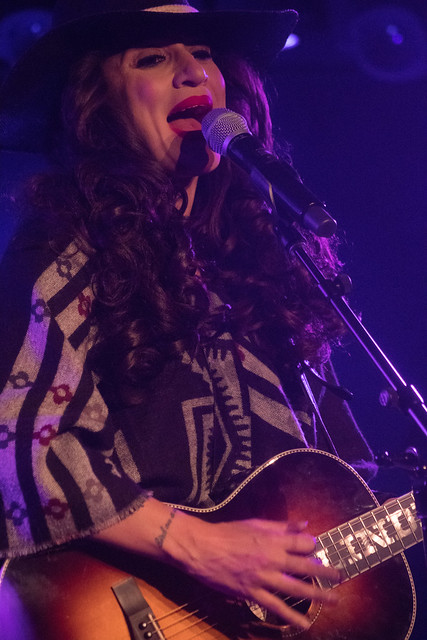
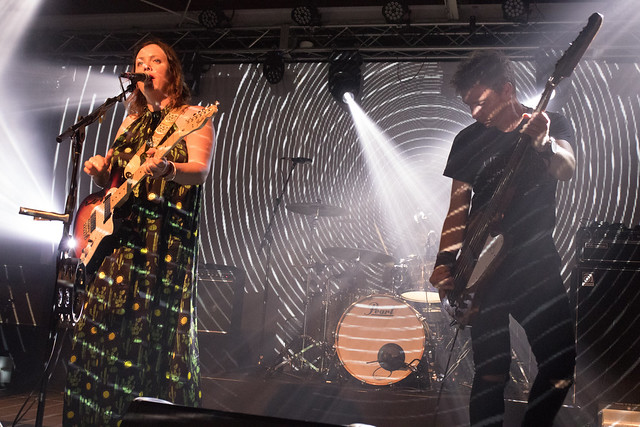
Currently comprised of founding member and frtonwoman Natalie Carol (vocals, guitar) and Shawn Morones (guitar, vocals), along with newest members Neil Wogensen (bass, vocals) and Mike DeLuccia (drums), the Los Angeles, CA-based indie rock band Valley Queen can trace their origins back to their formation in 2014. With the release of a handful of singles, the band’s profile rapidly rose — and it resulted in a relentless touring schedule with an increasing amount of time spent on the road. Although the band found their groove, the stress was way too much and the band went through the first of many lineup changes that found Carol continuing onward with a series of session musicians.
Despite the lineup changes, the band eventually found themselves becoming buzz worthy, playing bigger clubs; however, for the Valley Queen’s founder and frontwoman, the chemistry that she had felt and began to depend on to create and perform was missing. They landed a record deal — a dream that countless bands desperately wish to achieve; but as Carol began to recognize, the band was much more than her concentrating on writing lyrics while session musicians were being paid to play and record the material as directed. What she had long desired was for the band to be what it originally was about — the chemistry and relationships between the members of the band, all of which helped the band land their record deal in the first place.
As the story goes, before writing and recording the material that would eventually comprise their Lewis Pesacov-produced, soon-to-be released full-length debut Supergiant, Carol called Doot, who couldn’t re-join the band; however, Mike DeLuccia joined. Then Carol called Shawn Morones, who after a series of lengthy conversations, before decided that re-joining the band would be worth the risks involved.
Interestingly, Pesacov, who has worked with Best Coast, Fool’s Gold, Nikki Lane, FIDLAR and JOVM mainstays The Orielles, continues to cement his reputation for raw production that focus on the urgency of the album’s material and the musicians’ performances. And for the members of Valley Queen, the experience writing and recording was ultimately about the collective exploring and creating together. Now, as you may recall, earlier this year I wrote about album title track “Supergiant,” and the album’s latest single “Chasing the Muse” continues in a similar vein — 70s AM rock inspired indie rock with an earnest emotional heft that comes from living a full and messy life, complete with its frustrations, crushing defeats and small victories. Ultimately, both tracks are centered around Carol’s powerhouse Linda Ronstadt-like vocals, a deliberate attention to craft and some exceptional and passionate musicianship.
Valley Queen will be touring to support their new effort and the initial batch of tour dates are below.
VALLEY QUEEN TOUR DATES
July 5-8 Winnipeg, MB – Winnipeg Folk Festival
July 28 Los Angeles, CA – The Moroccan Lounge
August 01 San Francisco, CA – Cafe du Nord
August 02 Davis, CA – Sophia’s Thai Kitchen
August 03-05 Happy Valley, OR – Pickathon
August 07 Seattle, WA – Sunset Tavern
August 08 Spokane, WA – The Bartlett
August 09 Missoula, MT – Top Hat Lounge
August 11 Denver, CO – Lost Lake Lounge
August 12 Salt Lake City, UT – Kilby Court
August 15 San Luis Obispo, CA – SLO Brew
Over the past few months, I’ve written a bit about Lafayette, CA-born, Nashville, TN-based singer/songwriter and guitarist Nicki Bluhm, and although she began her career as a solo artist releasing two albums, 2008’s Toby’s Song and 2011’s Driftwood (which was re-released a year later), Bluhm may be best known for a six year stint as the frontwoman of Nicki Blum and The Gramblers, an act that included her ex-husband Tim Bluhm, with whom she also released a duet album, aptly titled Duets in 2011. Interestingly, Bluhm’s Matt Ross-Spang-produced full-length effort To Rise You GottaFall was released earlier this year, and the album, which is her first solo album in over six years was primarily written in and influenced by one of the most difficult and life-altering experiences of her life — a period in which she got divorced and her band went on hiatus. She then followed that with a seemingly spur of the moment move to Nashville.
Bluhm, who has frequented Music City for a number of songwriting sessions was deeply inspired by her time in the city, and how could she or any songwriter not be? After all Johnny Cash,Willie Nelson, Waylon Jennings, Reba McEntire, Townes Van Zandt and dizzying list of songwriters have all claimed Nashville as a homebase at some point or another. “When I could come to Nashville on writing trips, it was just percolating . . . it was intoxicating,” Bluhm says in press notes. Around the same time, Bluhm met renowned producer, engineer and mixer Matt Ross-Spang, who was in town working on another album, and as the story goes, Ross-Spang and Bluhm quickly hit it off. “I really needed someone who was going to take the reins and have a vision for the album and he really did,” Bluhm says of meeting Ross-Spang. “My ex-husband had been my musical director, co-writer, and producer on all my records except one and I was looking for someone to step into that leadership roll, which Matt did very gracefully. I was looking for a clean slate; the only baggage I wanted to bring into the studio were the words to the songs I was singing. I wanted it to be a fresh experience; I didn’t want to even have history with anyone in the room that would pull me into old habits or ways of thinking. So we agreed we’d record in Memphis.”
Recorded at Sam Phillips Recording, the Rise You Gotta Fall sessions were primarily centered around the live tracking of a backing band of accomplished musicians that included Will Sexton (guitar), Ross-Spang (guitar), Ken Coomer (drums, percussion), Al Gamble (Hammond B3), Rick Steff (piano), Dave Smith (bass), Reba Russell (backing vocals), Susan Marshall (backing vocals), Sam Shoup (string arrangements) and a number of special guests. “We really just recorded live and we didn’t do that many takes of each song,” Bluhm says of the sessions. “The final versions we ended up with were all one take. It was really refreshing to go analog. It minimized over thinking and second-guessing; forced us all to stay in the moment and play from the heart. . . Throughout the session there was a lot of listening and trusting. Matt really spends time curating his sessions and who he decides to bring in; he knows how to keep the vibe right. What you are hearing is, as Jerry Phillips would say, ‘not perfection but captured moments in time.’” Bluhm adds, “These songs are quite personal. They are the conversations I never got to have, the words I never had the chance to say, and the catharsis I wouldn’t have survived without.”
“I had lost my partner in so many ways,” Bluhm recalls in press notes, “my musical partner, my life partner, my creative partner, and all of a sudden I was left on my own, to start my own engine. It was really intimidating and scary,” she says “but I had support from my management, my agent, my friends and family, and ultimately I just had this guttural drive that I didn’t even know I had in me. I was on auto-pilot, ready to move forward and take the steps I had to take to keep moving forward.” Unsurprisingly, album title track, “To Rise You Gotta Fall” is an effortlessly self-assured track that’s indebted to Memphis and Muscle Shoals-era soul, and as a result the single reminded me quite a bit of Nicole Atkins‘ Goodnight Rhonda Lee and Natalie Prass, thanks to a “you-are-there-in-that moment” immediacy and a fully-fleshed out narrator, who has the resiliency and determination that comes from living a complex, messy life, full of struggles, heartbreak, setbacks, small victories and crushing losses. And as the song points out, life will find a way to kick your ass in ways both large and small — and yet, you’ll always wind up in the exact place you needed to be at that particular moment.
To Rise You Gotta Fall‘s second single is the aching ballad “Battlechain Rose,” which was co-written by renowned singer/songwriter Ryan Adams and as Bluhm told American Songwriter, the song was inspired by a restless night in which her mind wouldn’t stop turning with thoughts of the past, of what she could have and should have done differently, of her inability to move forward and of her despair of knowing that relationship has become a phantom limb of regret and heartache. Coming from such a personal place, the album’s material thematically and lyrically focuses on the aftermath of the messy dissolution of a longtime relationship — there’s hurt, accusations, betrayal, anger, hatred and foolishness and yet, the album’s narrator won’t let an embittering situation change her, her outlook or anything about who she essentially is. It’s the strength and wisdom I’ve seen primarily in women, who after a breakup with someone can say “Yes, it hurts. I will cry until my heart burst — and then I’ll cry a bit more. But I’ll be okay. I’ve seen better and I’ve seen worse; but goddamn it, I won’t be fooled like that again.”
I recently spoke to Nicki Bluhm via email for this Q&A, and in typical fashion we chatted about a number of subjects — from how she got into music, her influences, how her creative process has changed with her latest album, how the writing of the album has been necessary for her mental health, writing with Ryan Adams, her tour earlier this year with The Wood Brothers and much more. But before we get to that, I will remind you that Bluhm has been touring with a backing band to support To Rise You Gotta Fall and the tour includes a July 25, 2018 stop at the Bowery Ballroom. Check out the remaining tour dates below — and then one of the most fun and honest interviews I’ve done in some time after the jump.
Tour Dates
July 13 – Atlanta, GA @ Atlanta Botanical Gardens
July 14 – Charlotte, NC @ Knight Theater
July 19 – Scranton, PA @ Peach Music Festival
July 20 – Alexandria, VA @ Hamilton
July 22 – Cambridge, MA @ The Sinclair
July 25 – Floyd, VA @ FloydFest
July 25 – New York, NY @ Bowery Ballroom
July 26 – Philadelphia, PA @ The Foundry
July 29 – Nashville, TN @ 3rd & Lindsley
___
WRH: How did you get into music — and when did you know it was your calling?
Nicki Bluhm: I started singing in the shower at a very early age…for my goldfish Ginger who lived in the bathroom. She had the pleasure of hearing me perfect ‘The Star Spangled Banner’ over many years of steamy rehearsals. Beyond that it was a very organic pathway. In my twenties I was encouraged to sing by a man I admired and respected musically and that encouragement brought me to where I am today; writing, singing and performing my songs. The sheer joy and catharsis that singing brings me is enough to know that it’s what I’m meant to be doing right now.
WRH: Who are your influences?
NB: There are so many. As a young girl growing up on 80’s radio, Whitney Houston‘s voice made a big impression and mesmerized me like no other. I studied every note she sang. As I got older I was turned on to other musicians like Bonnie Raitt,Joni Mitchell, Linda Ronstadt and Sandy Denny (to name a few.) I have so much admiration for these women and the mark they have left and continue to leave on me.
WRH: Who are you listening to now?
NB: I have a habit of listening to the same records over and over and over. I started collecting vinyl in my late teens and 20’s and bought a lot of cheap records which turned out to be mostly records recorded pre 1970. I could listen to JJ Cale non-stop for the rest of my life and be satisfied. That said, I am trying to listen to more contemporary music. Some of my favorite artists right now are Mapache, Khruangbin, and Hiss Golden Messenger.
WRH: You spent a lengthy stint with your ex-husband in The Gramblers and To Rise You Gotta Fall is your first solo album in about 7 years or so. Hopefully, it’s the first of many, many, many more. How has your creative process changed since then?
NB: For the first time I went outside my comfort zone in all ways imaginable. I co-wrote with strangers in Nashville, recorded with a new producer (Matt Ross-Spang) and musicians I had never met in Memphis and basically forced myself to let go of anything familiar so I could invite new energy into what I was doing.
WRH: I’ve listened to this album quite a bit — maybe 15-16 times since its release, and what I find remarkable is that there’s an unmistakable simpatico between you, the session players and the backing vocalists. I know you had met producer and guitarist Matt Ross-Spang before the sessions but curiously, did you know any of the session players before that?
NB: First of all, THANK YOU! It’s funny, I felt that same “simpatico” right off the bat with the musicians and strangely enough I had never met them. Sometimes the stars align and fate brings you exactly what you need. That’s how I felt about this recording session and everyone involved. There is no denying it was meant to be.
WRH: Part of the album is influenced by your relocation to Nashville. How has Nashville treated you?
NB: What I love about Nashville is that you don’t have to explain what it is you do to anybody. Everyone just gets it. That has been a nice shift for me. The only downside is that because everyone is in the industry it’s tough to develop friendships because we’re all gone on tour all the time!
WRH: Nashville has had a long and rich history of some incredible songwriters who have lived there at some point. I can’t imagine any songwriter not being in awe of the fact that Johnny Cash, Willie Nelson, Dolly Parton, Waylon Jennings walked down some of the streets they did or drank in some of their favorite bars. The city is also the home of JOVM mainstay Nicole Atkins, Ron Gallo and a long list of contemporary artists — but I was curious: are there any Nashville-based artists that the rest of the country should know but hasn’t yet?
NB: Funny you mention Nicole…we are actually texting right now…haha. There are SO many incredibly talented artists in Nashville. In my short time here I have barely scratched the surface. I was lucky enough to co-write with an incredible songwriter Simon Gugala. Writing with him has been a highlight for me here so far. I also love going to Santa’s Pub for the Sunday night country set that is put on by Carter Brallier. He had a gal by the name of Emily Nenni who just put out a record called Hell of a Woman. I haven’t listened to the record yet but her live performance was impressive and I dug her voice and vibe.
WRH: The album is deeply influenced by one of the most difficult periods of your life — with the songs detailing the sense of loss, hatred, betrayal, regret and heartache that often come about after the bitter end of a long term and significant romantic relationship, and the resolve to move on as best as you could. To me, there’s a bit of a hopeful undertone — that the song’s narrators will do more than just survive, that she’d be the type to thrive no matter what. While the album is centered within personal, it’s a universal experience. Curiously, was there any point when you were writing the album, that you may have been like “wait, maybe this is TMI?” or said “I can’t wait until that SOB hears this!”?
NB: Honestly, writing these songs saved me. I can’t tell you how important it was for me to get these ruminating thoughts out of my head. It was something I needed to do for my mental health. People have different ways of coping with trauma; what helps me is writing. I had no intention of being spiteful in the process but I had to speak my truth and remain authentic to myself and my experience. Music has helped me get through so many difficult periods of my life, it’s made me feel less alone in my struggles. This record and these songs are my contribution to that sentiment. If hearing what I went through brings someone comfort, I have accomplished what I set out to do.
WRH: The album features two co-writes with Ryan Adams, if I remember it correctly. How did that come about? How was like to work with him?
NB: We became friends through mutual admiration and began working together on some stuff. There is no rhyme or reason to the way Ryan operates. Our time together was spontaneous and could never be repeated but I am forever grateful for the songs that came out of our time together. He has a way of pulling words from the ether like no one I’ve ever known before.
WRH: “Battlechain Rose,” is one of those Ryan Adams co-writes. How did the concept for the video come about?
NB: My dear friend and neighbor Scot Sax is also an incredible singer/songwriter, video producer, and everything else creative (if there is such a thing as artistic ADD he has it) and when I played him the song his wheels started turning. When Scot has a vision he executes it and that’s what he did for the music video. We were exploring the dimensions between reality and dream realms; past and future; knowing and the unknown. The contrast of color and black and white was a way to address this dynamic. The younger heart being guided and nurtured by her predecessor. here is a lot of symbolism that is left to be interpreted by the viewer.
WRH: I saw you open for The Wood Brothers at The Vic Theatre in Chicagoback in April. That was a fantastic show, too. You played a solo set in which you accompanied yourself on guitar with stripped down versions of much of the album’s material before touring with a live, backing band throughout the summer. Was it particularly difficult to re-arrange songs in such a stripped down fashion from their recorded fashion? And after playing with a backing band for many years, was it nerve wracking to be out on a stage on your own?
NB: Yes! I could sing in front of thousands of people and not bat an eye but put a guitar in my hands and I become a deer in headlights. It was something I needed to get over; something I needed to prove to myself I could do alone. It was important for me to face that fear and get past it. I’m a pretty big proponent of doing things that scare you; I’ve been scaring myself a lot these past few years. But once you’re on the other side of fear and you see that something wasn’t so scary after all, you’re motivated to keep striving and putting yourself out there. Growing is hard and painful…not much different than the physical growing pains you had as a kid. Growing pains as an adult are more emotional but none the less real!
WRH: “Things I’ve Done” is a one of my favorite songs on the album. To my ears, it sounds as though it were influenced by Bonnie Raitt in some way — I think of “Something to Talk About,” in particular. Did her work influence anything on the album?
NB: That was a song I co-wrote with Scot Sax (mentioned earlier) and Steve Poltz (both my neighbors in Nashville.) Bonnie Raitt is certainly a huge influence on me but interestingly enough was not on my mind during the creation process of this song. Perhaps she was subconsciously…the subconscious is powerful. What I love about her is the ease and naturalness she brings to whatever she does. It’s possible that Scot was channeling her but you’d have to ask him about that.
WRH: How was it like to tour and play with The Wood Brothers?
NB: Aside from being incredible musicians, The Wood Brothers are some of the kindest musicians I have met in the business. They took such great care of me when I was out with them and every night they invited me out on stage to sing with them which was a true honor. They are such humble and relatable humans, I feel so grateful to call them friends.
WRH: What’s next for you?
NB: Touring my ass off! It’s time to take these songs on the road and share them with the world. We’re doing extensive touring this summer in the US and will be going overseas this fall. All the while writing new songs as I continue to feel all the feels life has to offer me at this stage in my life. I’m curious to see what songs come out of me next!
Now, if you’ve been frequenting this site over the past couple of years, I’ve written quite a bit about the critically applauded, JOVM mainstay Meshell Ndegeocello– and as you may recall, the singer/songwriter, rapper and bassist was born Michelle Lynn Johnson in Berlin, Germany and was raised in Washington, DC. When she turned 17, she adopted the name Meshell Ndegeocello, with the surname, as she has explained meaning “free like a bird in Swahili.”
In the late 80s, Ndedgeocello gigged around DC’s go-go circuit, playing with a number of local acts including Prophecy, Little Bennie and the Masters, and Rare Essence before unsuccessfully trying out for Living Colour’s bassist spot, after Muzz Skillings left the band. Deciding to go solo, Ndegeocello eventually caught the attention of Madonna, who signed the singer/songwriter, rapper and bassist to her Maverick Records. Most readers will remember her commercially successful collaborative coverof Van Morrison‘s “Wild Night,” with John Mellencamp, a single that peaked at #3 on the BillboardCharts in 1994 and “If That’s Your Boyfriend (He Wasn’t Last Night)” peaked at #73 later that year. Adding to a rapidly rising profile, she collaborated with the legendary Herbie Hancock on a track for Red Hot Organization’s AIDS awareness, tribute compilation Stolen Moments: Red Hot + Cool, which was named Time Magazine‘s “Album of the Year.” Her coverof Bill Withers‘ “Who Is He (And What Is He to You)” was a #1 Dance Hit in 1996 and was briefly featured in the major motion picture Jerry Maguire, and she landed Dance Top 20 hits with “Earth,” “Leviticus: Faggot,” and “Stay.” Along with that she collaborated with Madonna, playing bass on “I’d Rather Be Your Lover,” and contributing a verse at the last minute, after Tupac Shakur had criminal charges filed against him. Ndegeocello has also collaborated with Chaka Khan, rapping on “Never Miss the Water,” a single that landed #1 on Billboard‘s Dance Club Charts and peaked at #36 on the Hot R&B/Hip-Hop Singles Chart. Additionally, Ndegeocello has collaborated with the likes of Basement Jaxx,Indigo Girls, Scritti Politti,The Blind Boys of Alabama, The Rolling Stones, Alanis Morrissetteand Zap Mama.
Throughout her lengthy career, Ndegeocello has managed the rare feet of achieving commercial success while arguably being one of the most uncompromising and iconoclastic artists of the past 25 years — all while being credited as being at the forefront of the neo-soul sound, thanks in part to a genre defying and difficult to pigeonhole sound that draws from hip-hop, classic soul, jazz, rock, reggae and singer/songwriter pop. Over the past few years, Ndegeocello has been rather busy — she wrote and composed a musical influenced by James Baldwin’s The Fire Next Time, titled Can I Get a Witness?: The Gospel of James Baldwin and released a gorgeous tribute album to the legendary Nina Simone, which featured collaborations with fellow JOVM mainstay Cody ChesnuTT and others.
Ventriloquism, Ndegeocello’s later album was released earlier this year, and the album finds the renowned singer/songwriter and bassist covering songs by TLC, Janet Jackson, Tina Tuner, Prince and others, who have been influential to her and her work — but with her unique take. As the renowned singer/songwriter and bassist explains in press notes, “Early on in my career, I was told to make the same kind of album again and again, and when I didn’t do that, I lost support. There isn’t much diversity within genres, which are ghettoizing themselves, and I liked the idea of turning hits I loved into something even just a little less familiar or formulaic. It was an opportunity to pay a new kind of tribute.” Ventriloquism’s first single was a coverof Force MD‘s smash hit “Tender Love,” that found Ndegeocello turning the slow-burning, 80s piano ballad into a folksy, Harvest-era Neil Young/Fleetwood Mac track, complete with shuffling drumming, twinkling Fender Rhodes and harmonica. Though she eschews some of the song’s cheesiness, which makes it endearing in its own right, Ndegeocello’s cover retains the song’s earnestness — pointing out that a well-written pop song can reach for something downright timeless.
The album’s latest single is a cover of Ralph Tresvant’s “Sensitivity,” that briefly nods at Sting’s “Englishman in New York,” as it’s centered around loose, bluesy guitar chords, shuffling drumming and a New Orleans brass band-like bridge — and while retaining the song’s sultry nature, Ndegeocello manages to pull out and further emphasize the song’s tenderness. Much like its predecessor, the new single continues Ndegeocello’s commentary on society’s narrow expectations on what music created by and performed by black artists should sound like and be like.
Directed by the Cass Bird, the recently released video for “Sensitivity ” was specifically released in conjunction with the end of Pride Month — and in our dark and uncertain age, the video is a much-needed burst of joy and humanity, as the video was specifically cast to focus on faces, body types and identities that are less conventional, less celebrated and often misunderstood, capturing these people at their most vital, most joyful and most human — whether dancing, tenderly embracing, kissing and loving. Certainly, the world would be a much better place if there was more love and more gentle and human moments.
Earlier this year, I wrote about the Houston, TX-based indie rock/indie pop act Wild Moccasins, and as you may recall, the act which is led by its founding duo Zahira Gutierrez (vocals, keys) and Cody Swann (guitar, vocals), and features Avery Davis (drums) Nicholas Cody (bass) can trace their origins back to 2007 when its founding duo started writing songs together, about a year into their romantic relationship. And although Wild Moccasins has gone through a number of lineup changes throughout its history, the band initially wrote and recorded indie rock-inspired work centered around dance pop-like guitar lines and tight vocal harmonies; however, with the release of 88 92, the Houston-based quartet had begun to increasingly incorporate synths and other New Wave influences into their work — and that has continued with their recently released Ben H. Allen-produced Look Together.
As the members of the band note, Allen inspired a much different approach to their writing and recording process, and the result is an album that finds the band blending the guitar driven elements of their early work with 80s and 90s synth pop and New Wave; but unlike their previously recorded material, the album thematically, lyrically and emotionally is centered around the the volatility, heartache and confusion of the dissolution of a longtime romantic relationship — in the case, the romantic relationship between Gutierrez and Swann. But along with that, the album focuses on the difficulties of repairing a relationship after a breakup, of fresh starts and shedding past insecurities.
As both Gutierrez and Swann note, the breakup of their romantic relationship and its immediate aftermath were extremely difficult as it occurred as the band was in the middle of a lengthy tour. They would spend the countless hours driving from city to city in the tour van in silence; on stage they’d painfully stare each other down; and they’d exchange exaggerated and embittered he-said-she-saids through songs. Although countless bands with a romantic couple at their center have split up, the former lovers decided to choose a way to reconcile their differences by working towards a common musical goal. Songwriting has been engrained within Gutierrez and Swann’s relationship and while being emotionally vulnerable with a former romantic partner was initially difficult, they also found that it helped clear the air between them. “I think we look back on that time and take some comfort in knowing that we went through that together,” says Swann. “It needed to happen in order for us to have this resolve.”“Yeah, it needed to happen,” Gutierrez adds. “Now, when I sing the songs, I find myself breathing a sigh of relief.”
“No Muse,” Look Together’s second single was a slickly produced, shimmering New Wave-like song with an infectious, arena friendly hook — but underneath the self-assuredness of its performance, the song bristles with the bitter and aching hurt of someone who realizes that they’ve been used, and that they’ve had enough of it all. As Gutierrez explains “‘No Muse’ is about feeling like men use women as muses in the wrong context. A lot of women have had the experience of being taken advantage of or had men in power try to take control of what they do, so this song encourages women to be their own muses. Because of what the song represents to me, I decided it was best for me to direct the video and sought out a female cinematographer (Rachel Bays) to shoot it in order to remove any sort of male gaze. I felt it was important to see the video through the eyes of a woman.”
“Longtime Listener,” Look Together’s latest single while being a mid-tempo ballad continues in a similar vein as its predecessor as its centered around a simmering New Wave-like arrangement and soaring hooks; however, emotionally the song focuses on the overwhelming and confusing push and pull of emotions in the immediate aftermath of a longtime breakup, as well as the lingering ghosts of memories, smells and so on. But much like Fleetwood Mac’s “You Can Go Your Own Way,” the song is a bit of a kiss off — in which the song’s narrator is busy putting on a brave face. And while being an aching ballad on what once was and can’t be again, and a bit of a kiss off, there’s the subtle reminder that there was this amazing connection that the narrator once had that’s become part of a messy but well-lived life — and perhaps just as important, that she will move forward and love again.
Directed by the band’s Zahira Gutierrez and Cody Swann, the video begins with Gutierrez sitting impatiently by the phone before answering it. Her bandmates continually hand her phones that she picks up, answers and hangs up and at her most overwhelmed, Gutierrez and her similarly dressed bandmates go off to perform the song. It’s surreal but it captures the song’s ache and bitterness.
Throughout the course of this site’s history, I’ve written a quite a bit about the Gold Coast, Australia-based multi-instrumentalist and producer Emily Hamilton and San Mei, which began as a bedroom recording project but quickly received attention from this site and a number of major media outlets including NME, Indie Shuffle, NYLON and Triple J. Interestingly, Hamilton’s debut EP Necessary found Hamilton incorporating more organic instrumentation, reportedly drawing a bit from Black Rebel Motorcycle Club, Cat Power, and Feist. Essentially, the EP’s material saw Hamilton moving away from the bedroom recorded synth pop that first captured the attention of the blogosphere towards fuzzy yet incredibly self-assured, power chord-based dream pop,
Hamilton met songwriter, producer and musical phenom Oscar Dawson, who has worked with Holy Holy, Alex Lahey, Ali Barter, British India, Robbie Millerand Joyride at BIGSOUND last year, and the pair immediately hit it off. According to Hamilton, taking Dawson on as a producer and collaborator found the duo refining ideas, exploring different soundscapes and laying down the foundation for her — and in turn, San Mei’s — sonic progression. As Hamilton explains in press notes “[Dawson and I] hit it off straight away and it seemed like he understood where I was coming from, even if I had trouble conveying certain ideas in the demos I made at home.”
“Wonder” is the first single since the release of Necessary, and while the single continues along a somewhat similar vein as the EP, it also manages to be a subtle refinement of her sound and songwriting that finds Hamilton creating an anthemic track, centered around a razor sharp, radio friendly hook, fuzzy shoegazer rock-like power chords and propulsive drumming — but interestingly, the song is arguably one of her most earnest songs, as it evokes the swooning, butterflies in the stomach sensation when someone who’s unknown to you captures your attention and you can’t quite pin down why. That unknown person becomes part of a mysterious daydream to you, in which you begin to wonder everything about them — and yet, there’s a part of you that isn’t certain if you want them to become more than just some brief, intoxicating illusion.
Directed by Jennifer Embelton, the recently released video for “Wonder” is centered on performance footage shot in an empty studio with a red background: the video begins with Hamilton getting up from the floor, and strumming the introductory chords before slowly pulling out to reveal Hamilton and her backing band. The video ends with the backing band packing up to go home while Hamilton remains in the studio, alone and in her dreams.
Currently comprised of founding member Emma DeCorsey (vocals, guitar), Turner Stough (bass) and Eric Kuby (drums), the Brooklyn-based indie rock trio I Am The Polish Army can trace its origins to back to the when DeCorsey first considered the strength of her voice and the purpose behind the music floating around in her head back in 2005. And between those early moments in which DeCorsey was trying to figure out what she should be doing musically and when the band finished its full-length debut My Old Man, the band had gone through several different iterations that failed, her home studio equipment was stolen and she scrapped the original ideas and material for what would be their debut and rewrote the bulk of it. But when she befriended Stough and Kuby, the direction of her life seemed permanently altered.
As the story goes, within three months of their first rehearsal together, the trio was in the studio with acclaimed engineer Charles Burst, who has worked with the likes of Neko Case, Psychic Ills and Crystal Stilts were working on the material that would comprise My Old Man. Driven by a desire to reinvent the material that DeCorsey wrote, the members of the band broke down each song to its essential elements and reshaped them in the mold of bands like Veruca Salt and The Breeders — bands that were heroes to a teenaged DeCorsey.
Thematically and sonically, its material is meant to walk a careful tightrope between an enormous emotional weight and a redemptive catharsis, and unsurprisingly, the album which features songs that growl, punch, tear and ache draws from some of the harrowing, life-shattering experiences of its creator; in fact, My Old Man’s latest single”Throat” while being a 90s alt rock-inspired power chord ripper, draws from a deeply troubling and unexpected physical violation from someone the narrator trusted and cared about very deeply, focusing on the surreal moment when you’ve recognized that the person you’ve cared about wants to kill you — and that you may have to kill them to survive. Naturally, that particular violation will destroy your sense of security and trust in yourself — after all, you trusted and cared about someone, who tried to do you killed you — and in others. And for the rest of your, you find yourself much more deliberate and careful in your involvements and attachments to others; the fears and uncertainties linger. The song is steeped in the adrenaline, the fear and the weird recollections — in particular, the feel of snow on the narrator’s skin.
As the band’s Emma DeCorsey writes in a personal statement on the song “‘Throat’ takes place on the early morning of December 21, 2008. I was crazy about a guy who refused to have a physical relationship with me, only over text. We’re having a text/sext moment at about 1:00am and I’m about to call it and go to sleep. At the same exact another sometime rock star I’d been vaguely involved with decides to show up in my life again and insists on coming to visit me in Sunset Park, a neighborhood in Brooklyn that’s pretty far away from the main scene. It was 3:00am and I couldn’t say no, something it took me years to be able to do. Turns out he likes to strangle women. It was snowing. I get frostbite easily. I’m not sure how I got rid of him.”
Directed by Bon Jane, the recently released video for “Throat” is split between footage of DeCorsey walking around and commuting across the Lower East Side and Williamsburg in a ballroom gown, full of both determined and furious intent and desperation and multiple hands that touch her face and neck in a sensual fashion before getting a bit more aggressive. After watching the video multiple times, it struck me that throughout that DeCorsey was desperately escaping the camera, who was stalking her.
With the release of 2014’s full-length debut Sateen, the Cincinnati, OH-based quartet Electric Citizen, currently comprised of husband and wife duo, Laura Dolan (vocals) and Ross Dolan (guitar), along with Nick Vogelpohl (bass) and Nate Wagner (drums), received attention across the blogosphere and elsewhere for a sound that owes a debt to Led Zeppelin, Black Sabbath, early 70s Rush and others. Building upon a growing profile, the band went on a busy schedule of touring both nationally and internationally with several renowned acts, including Fu Manchu, Wolfmother, The Budos Band, and Pentagram.
The Cincinnati heavy psych rock/heavy metal quartet’s sophomore effort, 2016’s sophomore effort Higher Time found the band expanding upon their sound, as they were crafting muscular and anthemic hooks around prog rock-like structures — within concise songs that typically clocked in at around 3 minutes or so. Additionally, the album found the band’s Lauran Dolan stepping up into more of a frontperson role, which was reflected in their live shows to support their sophomore effort, as she strutted, stomped and swaggered with a larger-than-life confidence. And unsurprisingly, the album was released to massive critical applause from the likes of Consequence of Sound, who placed it on their 20 Most Anticipated Albums of 2016.
Slated for a September 28, 2018 release through RidingEasy Records, Electric Citizen’s forthcoming, third full-length effort Helltown derives its name from the neighborhood in which the members of the band live, practices and where the album was written recorded and mixed. Although now more prosaically known as Northside, Helltown earned its name in the early 1800s. thanks to a reputation for the rowdy taverns frequented by the neighborhood’s factory workers and immigrants. And while being an ode to the band’s neighborhood and its buried past, the album reportedly is a sonic return to form with the band employing a grittier sound along the lines of their 2014 debut. Adding upon the overall homecoming theme, the band returns to their original lineup. As the band’s Laura Dolan says in press notes, “In many ways this album is a realignment to the first,” Laura says. “We experimented a lot on the second album, some of which we learned we didn’t like.”
“Hide It In The Night,” Helltown’s first single is centered around Black Sabbath and Led Zeppelin power chords, thundering drumming, arena rock friendly hooks and Laura Dolan’s rock star belter vocals — and while heavily indebted to its influences, the track will further cement the Cincinnati-based band’s reputation for tough, gritty, power chord rippers with an anthemic, larger-than-life feel.
Over the course of their first three albums, 2012’s Creatures of an Hour, 2013’s Strange Pleasures and 2016’s Dead Blue, the London-based duo Still Corners, comprised of vocalist Tessa Murray and multi-instrumentalist, producer and songwriter Greg Hughes, have developed a reputation for crafting incredibly atmospheric and moody dream pop/synth pop centered around Murray’s smoky vocals and shimmering atmospherics.
Deriving its name from the sultry Texas summer days and nights and slated for an August 17, 2018 release through their own Wrecking Light label, the duo’s fourth album Slow Air was written in Austin, TX, and the album reportedly finds the band making a decided return to early form, as the band leans heavily towards arrangements that emphasize both eclectic and acoustic guitars, live drumming and a minimal use of synthesizers. Recorded in a new studio designed by Hughes, the recorded sessions inspired a minimalist and fluid approach in which they used a variety of old and new microphones while making sure that they didn’t overthink the process; in fact, they’ve managed to keep the inevitable mistakes on the album to remind the listener of the material’s emotionality — and the fact that living, breathing, feeling humans made it. Interestingly, the band recorded and mixed the album in three months, the fastest they’ve ever done, and as you’ll hear on the “Black Lagoon,” the song possesses a previously unheard urgency while retaining the shimmering and moody atmospherics that they’ve been known for. As Tessa Murray says of the album in press notes, “we wanted to hear beautiful guitar and drums and an otherworldliness, something about indefinable, along with a classic songwriting vibe. We’re always trying to get the sound we hear inside of ourselves, so we moved fast to avoid our brains getting in the way too much. The name Slow Air evokes the feel of the album to me, steady, eerie and beautiful.”
Directed and filmed by the members of Still Corners on a small handheld cinema camera, the recently released and stunningly cinematic video follows Murray and Hughes as they they travel across the deserts of Texas, Arizona and California to the ocean in a classic, white convertible Mustang. And goddamn it, is it gorgeous.
Phantastic Ferniture is the garage rock/guitar pop side project (of sorts) of acclaimed singer/songwriter Julia Jacklin and the band features some of her closest friends, Elizabeth Hughes and Ryan K. Brennan can trace their origins to a birthday gathering in a Sydney, Australia-based bar to celebrate Jacklin’s 24th birthday. At some point a group hug manifested itself amid pinball participants with all ten of the group hug’s participants drunkenly promising to form a band together. “Only four of us remembered,” Hughes recalls. The band’s core and founding members bonded over a mutual love and appreciation for fern-related puns and leisurewear, and they would meet up whenever their individual schedules would allow, writing songs and playing smatterings of live dates to an increasingly devoted audience.
Eventually, Jacklin, Hughes and Brennan decided that Phantastic Ferniture wasn’t a side project, and they should focus on writing and recording an album together, centered around the fact that the band would be a lot more spontaneous and less technical than their individual. “That was the fun part,” Jacklin says in press notes. “Ryan never played drums in bands, Liz had never been a lead guitarist, Tom didn’t play bass and I’d never just sung before.” Hughes adds “We wanted a low level of expertise, because a lot of good music comes from people whose passion exceeds their skill.”
Slated for a July 27, 2018 release through Transgressive Records, Phantastic Ferniture’s self-titled debut finds the band adopting a mantra of not overthinking — of focusing on the urgency of the moment, while being whimsical. “Gap Year,” the second single off the band’s full-length debut is a 90s alt rock-like track that to my ears reminds me a little bit of early PJ Harvey as the rollicking and expansive track is centered around buzzing power chords, a propulsive rhythm section and a soaring hook — and in some way, the track may inspire some listeners to loosen up and venture off someplace to experience and see things, and to discover themselves. But as the band’s Elizabeth Hughes says about the song, “This song is about just doing what you need to do, with no expectation of any kind of return. It’s about trusting your instincts and not seeking validation …Julia and I are performing our hearts out to absolutely no one at one …The lack of audience doesn’t dull our enthusiasm, and we know our companionship and community will be enough of a reward. It’s poignant because we grew up in the mountains, both desperate for a stage.”
Directed by Nick Mckk and Phantastic Ferniture, the recently released and incredibly cinematic visuals for the song features the band’s Jacklin and Hughes performing an dancing and while not seeming desperate for an audience and for a stage, the viewer will immediately pick up on the isolation of their surroundings, and the companionship that the duo has.
Over the past few months, I’ve written a bit about the Brooklyn-based indie rock quartet Russian Baths, and as you may recall, with the release of their debut single “Ambulance,” the band comprised of Luke Koz, Jess Ress, Evan Gill Smith and Jeff Widner, quickly received attention for a sound that the band has said nods at Big Black, 70s space rock, Big Muff and British post punk among others; however, “Slenderman,” the first single off Penance, which was released earlier this year, nodded at brooding, 120 Minutes-era MTV alternative rock, as the song featured the familiar alternating quiet, loud, quiet song structure and rousingly anthemic hooks while “What’s In Your Basement” was an mosh-pit worthy song that nodded at Bleach and In Utero-era Nirvana and Finelines-era My Vitriol.
Interestingly, “Poolhouse,” Penance‘s latest single is an expansive, shoegazer rock-like song that manages to bring Sonic Youth to mind, as the band employs the use of jangling dissonance to create a an eerily gorgeous song that feels immense and downright oceanic. As the members of the band explain, “‘Poolhouse’ is about an existential crisis. It’s about feeling so overwhelmed that you can’t see the way out. It’s about moments of clam and hope being submerged in waves of pressure. It’s about losing your breath because of fear.”
Shot in an uncomfortably intimate close up that features the band’s frontwoman Jess Ress as she’s doused in continuous steams of water, the recently released video for “Poolhouse” evokes of submersion that the song focuses in, with the video’s protagonist struggling to keep calm.
Savannah Wellman is a Vancouver, British Columbia, Canada-based singer/songwriter and musician, whose solo recording project SAVVIE as Wellman described in an email to me “is sexy, gritty rock ‘n’ roll, delving into the murky depths of lust, love, and everything in between.” Wellman’s latest single “Creature of Habit,” is the follow up to 2015’s debut effort Night Eyes, and the power chord-based, arena rock and radio friendly hook-driven single was produced by John Raham, who has worked with The Belle Game, Dan Mangan, and Dralms sounds as though the Canadian singer/songwriter was drawing from The Black Keys, as well as JOVM mainstays The Coathangers and Anna Rose. As the Vancouver-based singer/songwriter explains in press notes “everyone has their vice, and ‘Creature of Habit’ begs the question — is that a bad thing? is it worth fighting? Sometimes it most definitely is, but sometimes we need to hold on to what makes us happy.”
Directed by Nakasone Folk, the video as Wellman told Billboard is “a take on the idea of struggling with trying to be different. It kind of takes us through a cleansing, the idea of wanting to let go and cleanse yourself of these habits that you might hold onto, but at the end seeing in your reflection that they never really leave you. It’s still a a part of you, and maybe in some cases, it’s not all that bad. Some habits can get the best of you, and sometimes they’re the release you need.” And as a result, the video features a lot of inky and murky blacks, brilliant and heavenly whites, and mystical cleansing rituals; it’s sexy but darkly so and fitting.
Over the past few years, I’ve written quite a bit about the Baltimore-based indie rock act Beach House. And as you may recall, the duo, which is comprised of founding and primary members Victoria Legrand (organ, vocals) and Alex Scally (guitar, vocals) have released a number of critically and commercially successful, including 2015’s Depression Cherry and Thank Your Lucky Stars, which were written and recorded within a two-and-a-half year period between 2012-2014. And while they were individual efforts, they were meat to be viewed as companion pieces that build upon similar themes and an overall sound centered around sparse and atmospheric arrangements of organ, guitar and Legrand’s ethereal vocals.
The Baltimore-based indie rock act’s seventh, full-length album 7 was released last month through Sub Pop Records in North America, Bella Union Records in Europe and Mistletone Records in Australia and New Zealand, and the recording sessions found the band working with Spacemen 3‘s Sonic Boom (a.k.a. Peter Kember) as a producer — but not in the traditional sense, as he helped the band in their attempts to start anew by shedding conventions and ensuring that the album’s material would be fresh, alive and protected from the tendency of overproduction and perfectionism. Additionally, the album features Beach House’s most recent live drummer James Barone, who as Legrand and Scally say helped “keep rhythm at the center of a lot of these songs.”
“Throughout the process of recording 7, our goal was rebirth and rejuvenation. We wanted to rethink old methods and shed some self-imposed limitations. In the past, we often limited our writing to parts that we could perform live,” Legrand and Scally explain. “On 7, we decided to follow whatever came naturally. As a result, there are some songs with no guitar, and some without keyboard. There are songs with layers and production that we could never recreate live, and that is exciting to us. Basically, we let our creative moods, instead of instrumentation, dictate the album’s feel.
“In the past, the economics of recording have dictated that we write for a year, go to the studio, and record the entire record as quickly as possible. We have always hated this because by the time the recording happens, a certain excitement about older songs has often been lost. This time, we built a ‘home’ studio, and began all of the songs there. Whenever we had a group of 3-4 songs that we were excited about, we would go to a ‘proper’ recording studio and finish recording them there. This way, the amount of time between the original idea and the finished song was pretty short.”
As the act admits, the societal sense of instability, uncertainty and chaos was deeply influential on the album’s material. “Looking back, there is quite a bit of chaos happening in these songs, and a pervasive dark field that we had little control over. The discussions surrounding women’s issues were a constant source of inspiration and questioning. The energy, lyrics and moods of much of this record grew from ruminations on the roles, pressures and conditions that our society places on women, past and present.” They go on to say that in a general sense, “we are interested by the human mind’s (and nature’s) tendency to create forces equal and opposite to those present. Thematically, this record often deals with the beauty that arises in dealing with darkness; the empathy and love that grows from collective trauma; the place one reaches when they accept rather than deny.”
So far, Beach House has released a handful of singles off the album — “Lemon Glow,” a jangling and atmospheric track centered around Legrand’s ethereal vocals; the shoegazer-like “Dive,” one of the most expansive and ambitious tracks they’ve released; and “Dark Spring,” a shoegazer-like single featuring woozy power chords, twinkling keys and a soaring hook. 7‘s latest single “Black Car” finds the duo pushing away from their well-known formula as its centered around twinkling and arpeggiated keys, atmospheric synths, paired with Legrand’s vocals.
Directed by Alistair Legrand, the recently released video for “Black Car,” fittingly features a black car — a Cadillac, I think — shot in a sumptuous and cinematic black and white, as it rides around desolate, late night streets.
Now, over the past couple of years, I’ve written quite a bit about the Brooklyn-based psych rock/indie rock trio Sunflower Bean, and as you can recall, the band comprised of founding members Nick Kivlen (guitar, vocals) and Jacob Faber (drums), along with Julia Cumming (bass, vocals) can trace their origins to when Kivlen and Faber were both members of Turnip King. At the time Kivlen and Faber had been spending a great deal of time away from their then-primary project jamming together, before deciding that that they should start their own project. Kivlen, who knew Cumming through mutual friends was recruited to join the band — although Cumming was a member of Supercute! with Rachel Trachtenberg.
The band quickly became a buzz-worthy act with a run of attention grabbing, critically applauded sets during 2014’s CMJ Festival, which they promptly followed up that year’s Rock & Roll Heathen EP AND 2015’s Show Me Your Seven Secrets EP — and thanks to the success of singles like “Tame Impala” and “2013,” the band quickly rose to national and international prominence. Adding to a rapidly growing profile, the trio toured across the US and the UK as a headliner, and as an opener for Wolf Alice, Best Coast and The Vaccines, before 2016’s Matthew Molnar-produced, full-length debut Human Ceremony. After spending the better part of that year with a roughly 200 date world tour, the members of the band initially planned to take a well-earned, extended break; however, by December, the trio wound up in Faber’s Long Island basement with song ideas that eventually became their Jacob Portrait and Matt Molnar co-produecd sophomore album Twentytwo in Blue, which was released earlier this year through Mom + Pop Records. Since its release, the album has been a commercial and critical success — the album debut in the Top 40 in the UK, hit #5 on Billboard’s Top New Artists chart, and earned praise from Paste, NME and others.
Coincidentally, the album’s release was 22 months after the release of their full-length debut, while marking when each of the members turn 22. The album’s first single “I Was A Fool,” revealed a radical change in sonic direction with the band leaning heavily towards 70s AM rock — in particular, Fleetwood Mac. The album’s first official single and second overall, the stomping and anthemic “Crisis Fest,” was arguably the most politically charged single the band has ever written and recorded, as it focuses on the uncertain and politically volatile period it was written, with the song being an urgent call to action to young people to get out there, get involved and make the world right once and for all. And goddamn it, it’s necessary. “Twentytwo,” the album’s third single was a breezy feminist anthem, focused on fighting against society’s expectations and demands upon women as well as the abuses of powerful men.
Since their sophomore album’s release, the members of Sunflower Bean have been busy extensively touring and playing sold out dates both internationally and nationally, along with a run of appearances across the national festival circuit that will include stops at Voodoo Festival, Pickathon, SummerStage, XPoNential, before returning to the EU, the UK and Asia. The fall will see Sunflower Bean the band opening for Interpol; but in the meantime, the folks at Audiotree invited the members of Sunflower Bean to to perform the mesmerizing, Heart-like “Memoria,” a track that finds the band balancing a swaggering, self-assuredness with a wistful ache.