Tag: Erykah Badu

New Video: JOVM’s Newest Mainstay Million Miles Finds Herself in a “Girl-Meets-Boy” Driven Love Triangle in Visuals for Sultry Single “Honey”

Over the past year or so, I’ve written a bit about Paris-born, London-based singer/songwriter Sophie Baudry, whose solo recording project Million Miles is the culmination of a life-long love affair with soul music. After completing her studies at  Berklee College and a stint as a recording engineer and studio musician in New York, Baudry returned home to London, where she felt an irresistible pull to write and record her own original music, largely inspired by Ray Charles and Bill Withers.

Now, as the story goes, on a whim Baudry took a trip to Nashville, where she spent her first few days wandering, exploring and reaching out to strangers, as though she were saying “I ’m new here. I’m a songwriter and I’m looking for like-minded people to collaborate with.” While in Nashville, the French-born, British-based singer/songwriter wound up having chance meetings with two local songwriters and producers Robin Eaton and Paul Eberson and within about an hour or so of their meeting, they began writing the material that eventually became Baudry’s Million Miles’ debut EP Berry Hill, which was recorded over the course of a year during multiple sessions at Robin Eaton’s home studio in the Berry Hill neighborhood of Nashville. And from EP singles “Can’t Get Around A Broken Heart” and “Love Like Yours,” Baudry quickly received attention across the blogosphere, as well as this site, for an easy-going yet deliberately crafted, Sunday afternoon, Soul Train-like soul that nodded equally at the aforementioned Bill Withers and Erykah Badu and Jill Scott.

Earlier this summer, I wrote about the folksy and effortlessly soulful “If Only,” a hook-driven song centered around a loose, jam-like arrangement of funky, Bill Withers-ike strummed guitar, twinkling keys and gentle yet propulsive drumming and a funky bass line. While evoking the swooning pangs of meet-cute first love, the song is actually from the perspective of a narrator, who’s over it in some way, and too busy to care one way or the other — or so she tells herself. Baudry’s highly-anticiapted sophomore EP is slated for a November release through AntiFragile Music, and her latest single “Honey” is the first official single off the forthcoming EP,  and the song is arguably one of the sultriest and most soulful tracks the French-born, British-based singer/songwriter has released to date — and while still drawing from Still Bill-era Bill Withers, the track reveals an artist, who has become increasingly self-assured in her songwriting and approach, but maintaining a lived in, emotional honesty that’s rare for most contemporary pop. As Baudry explains in press notes, the song is “about unconditional love and dedication to someone, who isn’t very interested in committing in any way. In this kind of situation, no matter what, if you’re in love, you’re in love, and you’d do everything and anything to make it work, even if it means doing crazy things and losing yourself . . . ”

Directed by Tom Ewbank, the recently released video is set in an old-fashioned American diner, where Baudry works as a waitress. The video finds its protagonist caught in an unwanted love triangle, as she falls for an attractive customer, who isn’t all that interested in committing or doing much of anything. Throughout the video, Baudry self-assuredly seems to tell her love interest “look, fool, I’m dope and you need to recognize.”
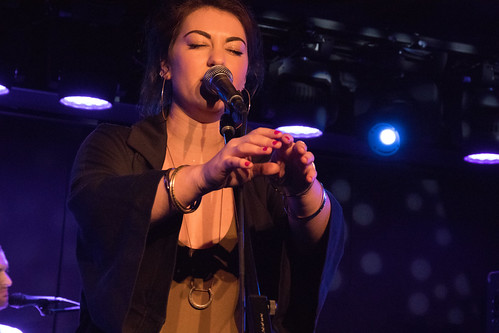
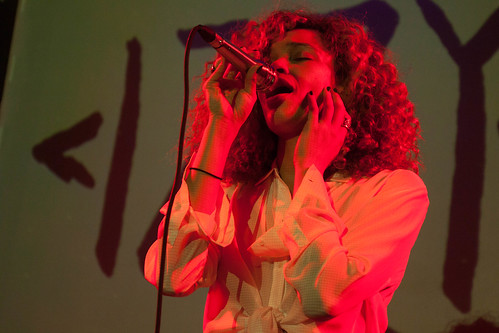
 

With the release of 2006’s full-length debut Olessi: Fragments of an Earth released through Stones Throw Records, the Los Angeles-based singer/songwriter, musician and producer Georgia Anne Muldrow quickly established herself as a key member of her hometown’s avant-garde hip-hop/jazz/soul scene; in fact, while on Stones Throw Records, Muldrow befriended and collaborated with Madlib, Oh No, MED, Wild Child, DJ Romes and her future partner Dudley Perkins, also known as Declaime.

Along with Perkins, Muldrow co-founded SomeOthaShip Connect Records in 2008 and through their label, the Los Angeles-based singer/songwriter, musician and producer released forward-thinking, genre-defying material under a number of monikers and  including Ms. One, Pattie Blingh & The Akebulan 5, Blackhouse, an electro fusion project with DJ Romes and the critically renowned jazz project Jyoti, which garnered Jazz Album of the Year honors at Gilles Peterson’s Worldwide Awards back in 2011 for Ocotea.  Since then Muldrow has developed a reputation as a musician’s musician, who has been praised and championed by Yasiin Bey, BilalErykah Badu with whom she collaborated of Badu’s New Amerykah Part Two and Robert Glasper, with whom she collaborated with on the Miles Ahead soundtrack.

Fittingly, Muldrow signed with Brainfeeder Records and her first Brainfeeder release is the Mike & Keys-produced “Overload,” a somewhat anxious yet swooning track centered around a slick and retro-futuristic and soulful production featuring stuttering beats, arpeggiated keys and an infectious hooked paired with Muldrow’s effortlessly soulful, Erykah Badu-like vocals — and while being clearly indebted to the neo-soul sound of the late 90s and early 00s, the song is about “the process of building loving relationships in spite of the malfunctions of Western Society.”


I’ll be pretty busy today, as I’ll be in Coney Island for an annual rite of summer here in New York City — The Mermaid Parade. I’m sure that there’ll be some Instagram posts until I actually get a chance to edit the photos — but in the meantime, let’s get to the business at hand, right? Now, over the past 18 months or so, I’ve written quite a bit about the Paris-born, London-based singer/songwriter Sophie Baudry, whose solo recording project Million Miles is the culmination of a life-long love affair with soul music.

After completing her studies at  Berklee College and a stint as a recording engineer and studio musician in New York, Baudry returned to London, where she felt an irresistible pull to write music inspired by Ray Charles and Bill Withers.  On an inspired whim, Baudry, took a trip to  Nashville, where she spent her first few days wandering, exploring and reaching out to strangers, as though she were saying “I ’m new here. I’m a songwriter and I’m looking for like-minded people to collaborate with.” As the story goes, Baudry wound up having chance meetings with local songwriters and producers Robin Eaton and Paul Eberson and within an hour or so of their meeting, they began writing material that eventually became the French-born, British-based singer/songwriter’s Million Miles debut EP, Berry Hill, which was recorded over the course of a year during multiple sessions at Robin Eaton’s Berry Hill home studio. And from EP singles “Can’t Get Around A Broken Heart” and “Love Like Yours,” Baudry quickly received attention across the blogosphere, as well as this site, for an easy-going yet deliberately crafted, Sunday afternoon, Soul Train-like soul that nodded equally at the aforementioned Bill Withers and Erykah Badu and Jill Scott.

Baudry’s latest single is the folksy and effortlessly soulful “If Only,” and while being a fitting vehicle for her equally effortless vocals, the hook-driven track is centered around a loose, jam-like arrangement of  funky, Bill Withers-ike strummed guitar, twinkling keys and gentle yet propulsive drumming and a funky bass line and while being an incredibly self-assured track that reveals an artist who is expanding upon her sound and approach, the song evokes the swooning pangs of meet-cute first love, but from the perspective of a narrator, who is over it and too busy to care — or so she tells herself. In some way, the song’s narrator takes on a tough veneer to protect herself from the inevitable. We’ve all been there at some point in our lives and as a result, the song manages to be warmly familiar sonically and thematically.


New Video: Nana Adjoa Returns with the Mesmerizing and Intimate Sounds and Visuals for “Three”

Over the past few months I’ve written quite a bit about  Nana Adjoa, an up-and-coming Dutch-Ghanian singer/songwriter, who began to receive attention across the European Union and elsewhere with the release of her debut Down at the Root, Part 1, and as you may recall Adjoa was accepted at the prestigious Amsterdam Conservatory, where she would study jazz  — electric bass and double bass; however, she found the experience to not be what she had always imagined it would.  “It was very much like school,” she says in press notes. “We thought we wanted to go to the most difficult department, that we wanted to be the best, but it wasn’t a very fun experience.” Interestingly, around the same time, the Amsterdam-born and-based singer/songwriter began to experience a growing divide between the restrictive and theoretical compositions she was studying and the melodic, free-flowing music she’d play while outside of the school environment. Adjoa quickly began to realize that pursing a solo career was the direction she needed to take, and so she formed a band and record her original songs, which has resulted in the attention grabbing Down At The Root Part 1 and the soon-to-be released Down At The Root Part 2.

“Honestly,” Down at the Root Part 2‘s first single was an effortless and breezy affair that seemed indebted to Simply Bill-era Bill Withers, Erykah Badu, Jill Scott and others, driven by an infectious hook and a lush melody. The EP’s second single, “Part Of It,” much like its predecessor was centered around a lush and plaintive melody, a sinuous and propulsive bass line, and arguably the most straightforward and honest lyrics of the entire EP, with the song focusing on the desire to fit in when you’re an outsider. “Three,” the EP’s aptly titled third single is a stripped down and intimate song in which Adjoa’s lovely and tender vocals are accompanied by simply strummed guitar and some fluttering electronics, which will further the Dutch-Ghaniaan singer/songwriter’s reputation for writing mesmerizing and effortlessly soulful, and thoughtful pop. 

New Audio: Nana Adjoa Returns with an Atmospheric, Soulful, and Straightforward New Single from Forthcoming EP

Last month, I wrote about Nana Adjoa, an up-and-coming Dutch-Ghanian singer/songwriter, who began to receive attention across the European Union and elsewhere with the release of her debut Down at the Root, Part 1. Now, as you may recall Adjoa’s was accepted at the prestigious Amsterdam Conservatory, where she would study jazz (electric bass and double bass); however, she found the experience to not be what she had always imagined it would.  “It was very much like school,” she says in press notes. “We thought we wanted to go to the most difficult department, that we wanted to be the best, but it wasn’t a very fun experience.” Around the same time, the Amsterdam-born and-based singer/songwriter began to experience a growing divide between the restrictive and theoretical compositions she was studying and the melodic, free-flowing music she’d play while outside. Adjoa began to realize that pursing a solo was the direction she needed to take, and so she formed a band and record her original songs, which has resulted in the attention grabbing Down At The Root Part 1 and the forthcoming Down At The Root Part 2.

“Honestly,” Down at the Root Part 2‘s first single was an effortless and breezy affair that seemed indebted to Simply Bill-era Bill Withers, Erykah Badu, Jill Scott and others, as the song reveled a self-assured artist beyond her years, who can craft a song that’s driven by an infectious hook and a lush melody — and as Adjoa explained in press notes, the song is what she considers an “outsider track” that grew from a simple piano backing into its current, vibey, jazz-soul arrangement. “I didn’t even think it was going to make the record because it felt so different from the rest,” the Dutch-Ghanian singer/songwriter says. “I guess it’s about how people are scared of the possibility of something bad happening. And that fear is really strange because you don’t know what’s going to happen. You never know what’s going to happen.”

Down At The Root, Part 2’s second and latest single is the slow-burning and atmospheric “Part Of It,” a track centered around a lush and plaintive melody, a sinuous and propulsive bass line and arguably the most honest and straightforward lyrics of the EP I’ve heard, as the song focuses on the desire and need to fit in when you’re a complete outsider.


New Video: Up-and-Coming Dutch Singer/Songwriter Nana Adjoa Releases Symbolic Visuals for Soulful Single “Honestly”

If you follow me through the various social media platforms, you’d know that I’ve had an absolutely epic time during my first two days in the Windy City — and everyone I’ve met has been a wonderful and kind ambassador to their hometown. Man, right now, I feel as though Chicago can’t do me wrong. But on to the business end of things  . . . 

Nana Adjoa is an up-and-coming Dutch-Ghanaian singer/songwriter, whose father emigrated to Amsterdam in the 1980s and eventually married the Amsterdam-born and-based singer/songwriter’s “very Dutch” mother. Growing up, Adjoa spent a portion of her childhood in the rough and tumble, working class Biljmer neighborhood, a section once described by a local police chief a “national disaster area.” In press notes, Adjoa describes her upbringing as being fairly liberal until her parents’ divorce and their subsequent embrace of Christianity. “The second part off my growing up was with some Christian values, but by this point, I was getting to the age of making up my own mind,” the Dutch-Ghanaian singer/songwriter recalls in press notes. “It was a bit too late for me.” Eventually, there was a rift within her family with the Christians (Nan’s father, mother and brother) on one side and the non-Christians (Nana, her sister and the rest of the extended family) on the other. Understandably religion, as well as questions about her own gender identity and of being a black person in an extremely white environment have been regularly occurring themes and concerns in her work. “In fact, I think I still unconsciously use a lot of Christian ideas and metaphors in my music,” she adds.

Adjoa was accepted at the prestigious Amsterdam Conservatory to study jazz (electric bass and double bass); however, she found the the experience to not be what she had always imagined it would. “It was very much like school,” she says. “We thought we wanted to go to the most difficult department, that we wanted to be the best, but it wasn’t a very fun experience.” Around the same time, the Amsterdam-born and-based singer/songwriter began to experience a growing divide between the restrictive and theoretical compositions she was studying and the melodic, free-flowing music she’d play while outside. Adjoa began to realize that pursing a solo was the direction she needed to take, and so she formed a band and record her original songs, which has resulted in the attention grabbing Down at the Root Part 1 and the forthcoming Down at the Root Part 2.

“Honestly,” Down at the Root Part 2‘s first single is an effortless, neo soul affair that nods at Simply Bill-era Bill Withers, Erykah Badu, Jill Scott and others, as the song reveals a quietly self-assured singer/songwriter beyond her relative youth, who can craft a song that’s driven by an infectious hook and a lush melody; but as Adjoa explains, the song is an “outsider track” that grew from a simple piano backing into its vibey, jazz-like arrangement. “I didn’t even think it was going to make the record because it felt so different from the rest,” Nana says. “I guess it’s about how people are scared of the possibility of something bad happening. And that fear is really strange because you don’t know what’s going to happen. You never know what’s going to happen.”

Directed by Bear Damen, the recently released video for “Honestly” features Adjoa and her backing band, as the backing musical act for a surrealistic play; but underneath that are much deeper interpretations — including, the vulnerability of having someone capture your heart, and knowing that with a cruel or thoughtless act, that they can crush it. 


Nana Adjoa is an up-and-coming Dutch-Ghanaian singer/songwriter, whose father emigrated to Amsterdam in the 1980s and eventually married the Amsterdam-born and-based singer/songwriter’s “very Dutch” mother. Growing up, Adjoa spent a portion of her childhood in the rough and tumble, working class Biljmer neighborhood, a section once described by a local police chief a “national disaster area.” In press notes, Adjoa describes her upbringing as being fairly liberal until her parents’ divorce and their subsequent embrace of Christianity. “The second part off my growing up was with some Christian values, but by this point, I was getting to the age of making up my own mind,” the Dutch-Ghanaian singer/songwriter recalls in press notes. “It was a bit too late for me.” Eventually, there was a rift within her family with the Christians (Nan’s father, mother and brother) on one side and the non-Christians (Nana, her sister and the rest of the extended family) on the other. Understandably religion, as well as questions about her own gender identity and of being a black person in an extremely white environment have been regularly occurring themes and concerns in her work. “In fact, I think I still unconsciously use a lot of Christian ideas and metaphors in my music,” she adds.

Adjoa was accepted at the prestigious Amsterdam Conservatory to study jazz (electric bass and double bass); however, she found the the experience to not be what she had always imagined it would. “It was very much like school,” she says. “We thought we wanted to go to the most difficult department, that we wanted to be the best, but it wasn’t a very fun experience.” Around the same time, the Amsterdam-born and-based singer/songwriter began to experience a growing divide between the restrictive and theoretical compositions she was studying and the melodic, free-flowing music she’d play while outside. Adjoa began to realize that pursing a solo was the direction she needed to take, and so she formed a band and record her original songs, which has resulted in the attention grabbing Down at the Root Part 1 and the forthcoming Down at the Root Part 2.

“Honestly,” Down at the Root Part 2‘s first single is an effortless, neo soul affair that nods at Simply Bill-era Bill Withers, Erykah Badu, Jill Scott and others, as the song reveals a quietly self-assured singer/songwriter beyond her relative youth, who can craft a song that’s driven by an infectious hook and a lush melody; but as Adjoa explains, the song is an “outsider track” that grew from a simple piano backing into its vibey, jazz-like arrangement. “I didn’t even think it was going to make the record because it felt so different from the rest,” Nana says. “I guess it’s about how people are scared of the possibility of something bad happening. And that fear is really strange because you don’t know what’s going to happen. You never know what’s going to happen.”


Live Footage: Million Miles’ Sultry and Jazzy Cover of Frankie Valli and the Four Seasons’ “Beggin'”

Over the past year, I’ve written a bit about the Paris-born, London-based singer/songwriter Sophie Baudry, whose solo recording project Million Miles is the culmination of a life-long love affair with soul music. After completing her studies at  Berklee College and a stint as a recording engineer and studio musician in New York, Baudry returned to London, where she felt an irresistible pull to write music inspired by Ray Charles and Bill Withers. On an inspired whim, Baudry decided to make a trip to Nashville, where she spent her first few days wandering, exploring and reaching out to strangers, as though she were saying “I ’m new here and I’m a songwriter and i’m looking for people to collaborate with.” As the story goes, Baudry wound up having chance meetings with local songwriters and producers Robin Eaton and Paul Eberson and within an hour or so of their meeting, they began writing material that eventually became the French-born, British-based singer/songwriter’s Million Miles debut EP, Berry Hill, which was recorded over the course of a year during multiple sessions at Robin Eaton’s Berry Hill home studio. And from EP singles “Can’t Get Around A Broken Heart” and “Love Like Yours,” Baudry quickly received attention across the blogosphere, as well as this site, for an easy-going yet deliberately crafted, Sunday afternoon, Soul Train-like soul that nodded equally at the aforementioned Bill Withers and Erykah Badu and Jill Scott.
Recently, Mahogany Sessions invited the French-born, British singer/songwriter to participate in their Covers series in which she contributes a sultry and jazzy soul-like cover of Frankie Valli and the Four Seasons’ “Beggin'” that sounds as though it nods more towards Brown Sugar-era D’Angelo, giving the classic song a modern interpretation without erasing the song’s plaintive and urgent need. 

New Video: Lion Babe’s Glamorous and Sultry Ode to Ballroom Culture

With the release of their full-length debut Begin, which featured guest spots from Pharrell Williams and Childish Gambino and album singles “Treat Me Like Fire” and “Jump Hi,” and the Sun Joint Mixtape the New York-based electro pop/neo-soul duo Lion Babe, comprised of Jillian Hervey (vocals) and Lucas “Astro Raw” Goodman (production), quickly established themselves for a swaggering and contemporary house music take on neo-soul.

“Rockets,” the duo’s latest single, a collaboration with Moe Moks will further cement the duo’s reputation for their swaggering take on neo-soul as the song features a minimalist production consisting of a sinuous yet jazz-like bass line, tweeter and woofer rocking beats, twinkling vibraphone and a ridiculous infectious hook that has the duo’s sound nodding at Erykah Badu and Jill Scott — but with a subtle, cosmic glow. As the duo told Noisey, the song is about creating “good times in a crazy world.” Certainly, when everything seems to be completely falling to shit, you have to find a way to make the best of things.

Directed by Chalalai Fischbach and Jett Cain, the recently released video for “Rockets” is an ode to classic ballroom culture that effortlessly meshes grit, glamour and sultry seductiveness in a way that nods at the 20s and house music, as everyone has elaborate costumes; however, the video’s last two and a half minutes or so showcases Hervey’s and Goodman’s own creative direction as it features a sparkly dance routine over DJ Moma and Guy Furious’ uptempo remix of the original song. 

New Video: Up-and-Coming Singer/Songwriter Malia Releases Ode to Enjoying Life’s Simple Things

Malia is a up-and-coming Seattle, WA-born, Los Angeles, CA-based singer/songwriter and guitarist, who at a young age was drawn to music. Although she was extremely shy, she loved to signing and always participated in choir while in school; but because she frequently suffered from crippling insecurity and self-doubt, she initially didn’t pursue her lifelong passion. “For some reason I didn’t allow myself to dream musically, I always told myself that being a singer was too far-fetched and I wasn’t good enough anyway,” the Seattle-born, Los Angeles-based singer/songwriter explains.

Putting her passion aside, Malia upon graduation from high school, decided to move to California, where she attended college and ultimately graduate with honors, obtaining a BA in Political Science. “I just went through the motions, I never did anything with music throughout those years, I just told myself I would continue on through the education system.” As the story goes, several years later, while working and enduring through several short-term, unfitting and unfulfilling jobs, she found herself in an existential crisis, in which she realized that everything in her life had to change.

“That’s when I sat down and had the first, honest conversation I’d had with myself in years. I asked myself ‘What makes you truly happy, fears aside?’ . . . and I knew that answer was and always had been music. I had been running from my happiness for years, in fear of what people may say, reaffirming on the regular that my musical skills were not good enough to make it,” Malia recalls. And from that point on, she started to focus on pursuing music. She bought out guitar and taught herself how to play.  “I sought out people to jam with and learn from, and fell into a very fitting situation hanging out at a studio in Hollywood. Every day, I worked on my guitar skills and eventually began to play some small shows. I was able to record my first EP at the studio with the help of friends.”
 
After a West Coast tour with Syd, Malia decided to surprise fans with the early release of the Late Bloomer EP, which features singles “Simple Things” and “Dirty Laundry,” a collaboration with her recent tourmate Syd.  Reportedly, the EP reveals an artist with a newfound confidence and self-assuredness, and from the aforementioned EP single “Simple Things,” Malia specializes in an easy-going, thoughtfully crafted soul that simultaneously nods at Bill Withers, Erykah Badu, Jill Scott and others while being an ode to slowing down, taking a breath and enjoying the simple things in life and with others. But interestingly enough, the song also suggests that by simplifying one’s life that it leads to a deeper sincerity and happiness in one’s life and relationships; after all, modern life can be complicated enough. 
 
Co-directed by Mali and Quentin Lamont and shot and edited by Dana Rice, the recently released video for the song captures the easygoing, summer afternoon vibe of the song while featuring the young artist hanging out, writing and goofing off — with an enormous, endearing smile. 

New Video: Up-and-Coming Soul Act Million Miles Returns with Visuals for Bittersweet and Swooning New Single

Paris-born, London-based singer/songwriter Sophie Baudry is the creative mastermind behind the up-and-coming soul project, Million Miles, and interestingly enough the project is the culmination of a life-long love affair with soul music. After studying at Boston’s renowned Berklee College and a stint working as a recording engineer and studio musician in New York, Baudry returned to London and felt an irresistible pull to create her own music inspired by likes of Ray Charles and Bill Withers.  

On an inspired whim, Baudry wound up in Nashville, TN. The French-born, British-based singer/songwriter spent her first few days in Nashville wandering, exploring and reaching out to strangers as though she were saying, “I’m new here and I’m a songwriter and i’m looking for people to collaborate with.” Baudry had chance meetings with local songwriters and producers Robin Eaton and Paul Eberson, and within an hour or so, they began writing material together. 

Now, if you’ve been frequenting this site over the past couple of months, you may recall that Baudry’s Million Miles debut, Berry Hill EP was recorded over the course of a year during multiple sessions at Robin Eaton’s Berry Hill home studio. And the effort reportedly focuses on the journeys taken and lessons learned in the singer/songwriter’s life; in fact, EP single “Can’t Get Around A Broken Heart” revealed that Baudry specialized in an easy-going, effortless singer/songwriter/balladeer-based soul reminiscent of  Bill Withers and Sandra Rhodes’ sadly under-appreciated and seemingly forgotten debut Where’s Your Love Been. And much like Withers and Rhodes, Baudry revealed a rare ability to express joy and heartache within a turn of a phrase, just underneath the Sunday afternoon vibes.
The EP’s latest single “Love Like Yours” will further cement Baudry’s growing reputation for crafting easy-going yet deliberately crafted soul that while influenced by Bill Withers also manages to nod at early Erykah Badu and Jill Scott; however, whereas the previous single focused on crushing heartache, the EP’s latest single is the antithesis — or perhaps even the begging of the songwriter’s story, as the song’s narrator expresses joy and relief over finding — finally! — that profound love she’s been looking for. Of course, deep down, we all know the perverse irony in these sort of love songs — that love, like everything else isn’t forever, and that it can be as disappointing and frustrating. And yet, what would our lives be without that constant search, without those impermanent yet so important moments of joy? 

As Baudry explains of the video treatment, “We shot this video at home on a rainy day. I filmed footage on a trip to LA and loved projecting it on the wall at home when I was writing or recording, it’s really quite inspiring. The song has always been a favourite of mine as lyrically its quite personal and really reminiscent of a specific time in my life, so I wanted to keep that feeling throughout the video, keeping everything really intimate and what’s more intimate than home.”


New Audio: Charlotte Day Wilson Returns with her Most Soulful and Radio Friendly Single to Date

Charlotte Day Wilson is a  Toronto, ON-based internationally renowned singer/songwriter, who initially began her musical career as the frontwoman of local renowned jazz, funk and soul act The Wayo — and with the release of “After All,” Wilson quickly emerged as an up-and-coming talent within her hometown’s soul, funk and jazz scene, eventually collaborating with the likes of BADBADNOTGOOD and River Tiber. Now, if you had been frequenting this site last year, you’d know that with the release of her full-length debut CDW, which featured critically applauded singles “After All,” “Work” and “Find You,” that Wilson established herself as a singer/songwriter and producer, who would pair thoughtful and personal lyrics that betray a wisdom and experience far beyond her years, with minimalist, electronic production.

“Doubt,” Wilson’s latest single manages to simultaneously be her first bit of new material in over a year and while being a teaser for much more material next year, the song is a bit of sonic left turn sonic direction with Wilson pairing her soulful vocals with a production that nods at Bilal, Erykah Badu and others, as it features fluttering synths, a sinuous bass line, jazz and ballad-inspired drumming with warm blasts of guitar and a soaring hook. And while arguably being one of the most radio friendly songs she’s released to date, the song’s narrator expresses a deep, crippling uncertainty over her own worthiness that feels and sounds like the thoughts and feelings of a fully-fleshed out and confused woman that you may have known at some point.

Live Footage: Bilal and The Roots Perform Politically-Charged Single “It Ain’t Fair” on NPR Tiny Desk Concert

Currently comprised of founding members Tariq  “Black Thought” Trotter (vocals), Ahmir “Questlove” Thompson (drums), along with Kamal Gray (keys), “Captain” Kirk Douglas (guitar), Damon Bryson, a.k.a. Tuba Gooding, Jr. (sousaphone, tuba), Mark Kelley (bass), James Poyster (keys), Stro Elliot (production, sampling), The Roots can trace their origins back to when its founding duo met while attending The Philadelphia High School of the Creative and Performing Arts. As the story goes, Trotter and Thompson would busk on street corners — with Thompson playing bucket drums and Trotter rhyming over Thompson’s rhythms, and by 1989, the played their first organized gig at their high school’s talent show under the name Radio Activity.

After a series of name changes including Black to the Future and The Square Roots, the duo eventually settled on The Roots, after discovering that a local folk group went by The Square Roots.  As they were building up a local profile, the duo expanded into a full-fledged band with the addition of Josh “The Rubberband” Adams, who later went on to form The Josh Abrams Quartet; MC Malik Abdul “Malik B.” Basit-Smart, Leonard Nelson “Hub” Hubbard (bass); Scott Storch (keys); MC Kenyatta “Kid Crumbs” Warren, who was in the band for the recording sessions for Organix, the band’s full-length debut; and MC Dice Raw, who made cameos on later albums. And although the band has gone through a number of lineup changes since the release of their debut, The Roots throughout the course of their critically applauded, 10 independently released albums, two EPs and two collaborative albums have developed a reputation for a sound that effortlessly meshes live, organic instrumentation featuring a jazz, funk and soul approach with hip-hop, essentially becoming one of the genre’s first true bands. Additionally, throughout their lengthy history together, the members of The Roots have developed a long-held reputation for collaborating with a diverse and expanding list of artists across a wide array of genres and styles, revealing an effortless ability to play anything at any time.

Of course, unless you’ve been living in a remote Tibetan monastery or in a cave, The Roots have been the house band for NBC’s Late Night with Jimmy Fallon from 2009-2014 and for presently being the house band The Tonight Show Starring Jimmy Fallon, further expanding their profile into the national and international consciousness. And while being extraordinarily busy, the members of The Roots have been busy working on their 9th Wonder and Salaam Remi-produced 17th full-length album End Game, as well as contributing a politically charged track to the Detroit soundtrack, “It Ain’t Fair,” a collaboration with the renowned soul singer/songwriter Bilal.

Born Bilal Sayeed Oliver, Bilal is a Philadelphia, PA-born, New York-based soul singer/songwriter, best known by the mononym Bilal. Throughout his career, he’s received praise for his wide vocal range, work across multiple genres, his live performances and for collaborating with the likes of Kendrick Lamar, Common, Erykah Badu, Jay-Z, Beyonce, Guru, Kimbra, J. Dilla, Robert Glasper, Esperanza Spalding, the aforementioned The Roots and others with his full-length debut 1st Born Second, which featured contributions from Soulquarians and production from Dr. Dre and J. Dilla being a commercial and critical success, peaking at number 31 on the Billboard 200 charts and receiving comparisons to Marvin Gaye, Stevie Wonder, Sly & The Family Stone, Prince and Curtis Mayfield.  Although since then, the renowned singer/songwriter has developed an increasing reputation for his work becoming much more avant-garde and genre-defying.

Interestingly enough, Ahmir “Questlove” Thompson, Tariq “Black Thought” Trotter and Damon Bryson, a.k.a. Tuba Gooding, Jr. of The Roots and Bilal, along with a horn section went down to NPR Tiny Desk in Washington, DC to perform “It Ain’t Fair,” a deeply reflective song that thematically and lyrically makes a thoughtful nod towards Marvin Gaye’s What’s Going On?, Syl Johnson’s Is It Because I’m Black? and others, as its creators unflinchingly and fearlessly call out a societal construct that denies a group of people the equality, dignity and decency that they too deserve. The song’s creators manage to empathetically offer a glimpse into the hearts and souls of those who love this country and would like to stand for the flag but simply can’t until the evils of inequality, racism and supremacy no longer exist — and when this great country actually lives up the ideals it claims it stands for. 

As I mentioned on Facebook, I was recently in Philadelphia for business related to my day job, and as I walked from my hotel in Center City through Old City, past The Liberty Bell and Independence Hall, I recognized that I was walking on many of the streets that the Framers once walked on, as I’ve done several times before. I could picture ol’ Ben Franklin, Thomas Jefferson, George Washington, John Hancock, James Madison, Alexander Hamilton and so on, in their powered wigs and wool coats during that hot summer of 1776. And the song managed to remind me of the bitter and uneasy sadness I had begun to feel, remembering that the Framers, who could write about man’s inalienable rights given to him by God, didn’t see those same rights applying to anyone, who remotely looked like I do (or anyone, who wasn’t a man, or a property owner, etc.); that their independence, their revolution was never mine. The Declaration of Independence, the Constitution, the pledge allegiance to the flag just didn’t apply to me.

If I go back just five generations ago, my ancestors on both sides of my family were slaves. Five generations ago wasn’t that long ago in the overall scheme of things — we’re talking about the parents of my great-grandparents. And on the streets of the City of Independence, I thought of the unfathomable horror and suffering they went through to justify someone else’s desire to be superior — and naturally, the song reminds me quite a bit of a lifelong bitter pill that’s so very difficult to swallow.