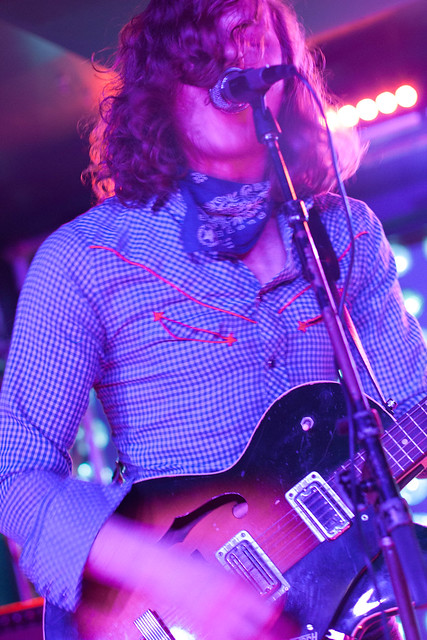
Tag: High Waisted

New Video: JOVM Ibeyi Returns with Highly Symbolic Visuals for Their Soulful and Swaggering Collaboration with Kamasi Washington “Deathless”

Now, if you’ve been following me on Instgram, Twitter and/or Facebook you’d know that the past 24 hours or so for me in the JOVM world have been insane and ridiculous amount of debauchery — thanks in part to attending High Waisted’s High Waisted at Sea 4. There’ll be more on that show at some point in the future, as I have to catch up on a shit-ton of photos, posts and correspondence. But more important, let’s get to the important business of the day, right? 

Over the past three or four  years, the French-Cuban twin sibling duo Ibeyi (pronounced ee-bey-ee) have become both internationally applauded and JOVM mainstays. And as you may recall, the duo comprised of Lisa-Kainde Diaz and Naomi Diaz drives their name from the Yoruba word for twins — ibeji.

But perhaps more important, the Diaz sisters are the daughters of renowned percussionist Anga Diaz, best known as a member of Buena Vista Social Club, and for collaborating with Ibrahim Ferrer, Ruben Gonzalez and Compay Segundo. Anga Diaz died when Lisa-Kainde and Naomi were 11, and upon his death, they studied Yoruba folk songs and the cajon, an Afro-Carribean drum, which their father had specialized in throughout most of his musical career. 

Interestingly enough, while Yoruba is primarily spoken throughout Nigeria and Benin, it’s been spoken in some fashion in Cuba since the 1700s when the slave trade brought Africans to the Caribbean. And when the Diaz sisters began studying their late father’s musical culture and heritage, it gave them a greater understanding of him and where he came from, but it also put them directly in touch with their ancestral history.  Unsurprisingly, the Diaz sisters’ self-titled full-length debut, which was released to critical praise back in 2015 thematically deal with the past — the loss of their father, their relationship, their father’s and their own origins and roots; in fact, their sound and aesthetic managed to seamlessly mesh contemporary electro pop, hip-hop, jazz, the blues and traditional Yoruba folk music in a way that reminded me quite a bit of Henry Cole and the Afrobeat Collective‘s Roots Before Branches in the sense that both albums conscientiously made a deeply spiritual and musical connection between the African Diaspora in the West and the motherland. 
Now, up until recently some time had passed since I had written about the Diaz sisters but as it turns out, they had spent the better part of last year writing and recording the material that would eventually comprise their highly anticipated sophomore, full-length effort Ash, which is slated for a September 29, 2017 through  XL Records. The album’s first single “Away Away,” lyrically and thematically focuses on accepting pain as a part of life, and recognizing that it’s a necessary part of life, while celebrating life for its complicated entirety. Of course, sonically speaking, the track further cements their  reputation for resoundingly positive messages sung with their gorgeous harmonizing paired with slick and swaggering electronic production. However, the material overall reportedly finds the Diaz sisters writing some of the most visceral, politically charged material they’ve released to date — and while being firmly rooted in Afro-Cuban culture and history, the material thematically centers on the present — who the Diaz sisters are now, after a year in which the world has turned upside down, and issues of racial, gender and sexual identity are at the core of our most vexing political issues. 

“Deathless,” Ash’s second and latest single finds the Diaz sisters collaborating Kamasi Washington, who contributes a saxophone lines that mange to be mournful, outraged, proud, bold and riotous — within a turn of a phrase. Thematically speaking, the song is inspired by an outrageous and humiliating experience Lisa-Kainde had when she was 16 — she was wrongly arrested by French police for a crime she didn’t commit. Throughout the song is a sense of fear, knowing that the police could practically do anything they wanted without reprisal; of righteous rage that’s palpable yet impotent in the face of a power that can crush you at will; of the burgeoning recognition that you can never escape racism or unfair treatment; and the shame of being made to feel small and worthless while knowing that it’ll happen repeatedly throughout your life. As Lisa Kainde explains in press notes I was writing Deathless as an anthem for everybody!” For every minority. For everybody that feels that they are nothing, that feels small, that feels not cared about and I want them to listen to our song and for three minutes feel large, powerful, deathless. I have a huge amount of respect for people who fought for, what I think, are my rights today and if we all sing together  ‘we are deathless, ’they will be living through us into a better world.”

Sonically speaking, the song pairs the Diazes’ gorgeous, bluesy singing and harmonizing with an uneasy yet ambient production consisting of whirring electronics, stuttering boom bap-like drum programming, punctuated by Kamasi Washington’s imitable horn sound. 

Directed by Eric Morris, the recently music video features highly symbolic visuals as it features the Diaz sisters giving birth to their dopplegangers in a what that resembles Russian nesting dolls — and naturally, it emphasizes the continued struggle for minorities and women to get a fair spot at the table. 

New Video: The Artful and Menacing Visuals for The Parrots’ “A Thousand Ways”

Adding to a growing international profile, last year NME named the Spanish trio as one of SXSW’s “buzziest bands” and since then the members of The Parrots have been incredibly busy — they’ve released a critically applauded EP Weed for The Parrots, have toured relentlessly and played an incredible 14 shows at this year’s SXSW (in which they were later signed by renowned indie label Heavenly Recordings). Building on the growing buzz around the band, the trio spent a week at Paco Loco Studios in El Puerto de Santa Maria in Cadiz, Spain, where they recorded their latest effort Los Ninos Sin Miedos. And if you had been frequenting this site earlier this year, you may recall that I wrote about album single “Let’s Do It Again,” a single reportedly inspired by the members of the band drinking beers and Horchata, eating Moroccan delicacies and feelings of deep friendship and loyalty and as a result the song possesses a shuffling, intoxicated feel of elation and adventure — the sort that would come about when you’ve drunkenly stumbled along a new best friend. Sonically, the single furthered their reputation for crafting raw, shaggy garage rock that channeled the sounds of 1961-1965.

As the band explains, their latest single “A Thousand Ways” draws from the key moment in one’s teenage years, when you are probably most tempted by the forbidden and unknown, and you then avoid responsibilities and complex responsibilities. “This is the moment when, along with your friends, childhood dies,” the band says. Interestingly, the latest single continues along the same veins of the album’s previously released single while nodding at other contemporary garage rock acts like Raccoon Fighter and others, as the band pairs Garcia’s howled vocals mangling the English language with an unvarnished and wild earnestness with buzzing guitars and a propulsive backbeat. And the band does this while evoking a stoner elation and paranoia.

Directed by frequent collaborator Pablo Amores, the recently released video for “A Thousand Ways” is a cinematically shot video that’s one part perfume ad, one part art film, one part Stanley Kubrick’s A Clockwork Orange that ends in a gorgeous and surreal fashion.

Comprised of Aaron Lloyd Barr (vocals, guitar), who doubles as a visual artist by day; Eric Arikian (bass), a member of Let’s Be Loveless and Ben Reynolds (drums), a member of Slang King, Del Caesar is a New York-based indie rock trio that specializes in a power chord riff and anthemic hook-driven, swaggering garage rock sound, adding themselves to a growing list of both locally and nationally known acts, including the likes of High Waisted, Raccoon Fighter, White Mystery and others. And while possessing the necessary swagger that the genre requires, the band’s material is rooted not in the rock ‘n’ roll lifestyle but in ordinary, everyday experiences — relationship problems, having big ambitions and dreams, the working for the man doldrums, etc. paired with gritty and grungy riffs, a driving backbeat and howled lyrics, recorded in mono and straight to tape, as you’ll hear on “Like They Always Say,” the first single off the band’s forthcoming EP, EP 2 slated for a November 11, 2016 release through the band’s own label Reheated Spaghetti Records.

What I personally love about the single is the fact that much like their contemporaries, their material sounds as though it could have been recorded and released in 1965, down to its “nah, nah, nah” hook. And while drawing from the same youthful exuberance and spirit, the single manages to evoke the very basics of what rock ‘n’ roll always has been about — a bunch of cats hanging around, stumbling onto something that sounds kind of cool and pairing them with lyrics based on their own frustrations and observations.


New Video: Party and Fuck Around with Madrid’s Indie Rock Sensations The Parrots

Recorded at Paco Loco Studios in El Puerto de Santa Maria in Cadiz, Southern Spain, The Parrots’ latest single is reportedly inspired by the members of the band drinking beers and Horchata, eating Moroccan delicacies and feelings of deep friendship and loyalty and as a result the song possesses a shuffling, intoxicated feel of elation and adventure — the sort that would come about when you’ve drunkenly stumbled along a new best friend. Sonically, the song will further cement the Spanish trio’s growing reputation for raw and shaggy garage rock as Garcia’s passionate howls are paired with a shuffling and jangling garage rock chords, propulsive drumming and a throbbing bass line, and in some way the song sounds as though it could have easily been released in 1962 or so.

Directed by Pablo Amores, the recently released music video features the members of the Spanish quartet drinking 40s, looking for the next party and goofing off in the streets — and it serves as a reminder that the Spanish quartet are a wild, rollicking party.

Featuring primary and founding members Courtney Ewan (singer/songwriter) and frequent collaborator Andy Bishop,  Twin River wrote the material of their soon-to-be released sophomore effort Passing Shade, an effort whose name draws from a lengthy dream sequence in Patti Smith‘s memoir M Train while they were over 3,00 miles apart — Ewan had relocated to Montreal while Bishop remained in his hometown of Vancouver. Initially, the material took the form of stripped-down, heartbroken ballads about lost love and as Ewan explains in press notes “I always write on an acoustic guitar, which I think is the vestigial influence of being 15 and playing acoustic guitar in the basement because my mom wouldn’t let me have an amp. Nine times out of ten, when we get the band together, we end up increasing the tempo.” In fact, when Ewan and Bishop got together to flesh out the original demos, the material turned into a barn-burning rock numbers with infectious pop hooks with a subtle hint of atmospherics — and done in way that manages to channel both 60s psych pop and garage rock and the contemporary fascination with that sound.

“Knife,” Passing Shade‘s latest single is a jangling and muscular garage rock song featuring gorgeous shimmering guitar chords and a classic psych rock guitar solo and a propulsive rhythm section paired with Ewan’s vocals which evoke vulnerability and heartbreak simultaneously. From this single, I think the act will throw themselves into a growing list of contemporary garage rock and psych rock acts including High Waisted, Raccoon Fighter, The Coathangers and several others — and the band does so with a cool, swaggering self-assuredness that belies the heartache, yearning and badassery at the core of the song.

New Video: Party with Seattle-based Surf Rock Trio Acapulco Lips

Comprised of Austin,TX-born, Seattle WA-based Maria-Elena Juarez (vocals, bass), Seattle, WA-born and based Christopher Garland (guitar) and Grenoble, France-born, Seattle, WA-based Davy Berruyer (drums), Seattle, WA-based surf rock/indie rock trio Acapulco Lips specialize in a […]

Comprised of Diego Garcia (vocals, guitar), Alejandro de Lucas (bass) and Daniel “Larry” Balboa (drums), Madrid, Spain-based trio The Parrots quickly became an DIY underground sensation with the release of a demo, which was released without much promotion and little fanfare; in fact, the video for “I Did Something Wrong” off their Aden Arabie EP initially received over 15,000 YouTube hits — and caught the attention of music bloggers across Europe and the rest of the world for a sound that drew from old school, garage rock and psych  rock but with a loose, boozy feel. And unsurprisingly, the band’s sound compares favorably to the likes of Thee Oh Sees,  Black Lips, Raccoon Fighter, High Waisted, White Mystery and others.

Last year, NME named the Spanish trio as one of SXSW‘s “buzziest bands” and since then the members of The Parrots have been incredibly busy — they’ve released a critically applauded EP Weed for The Parrots, have toured relentlessly and played an incredible 14 shows at this year’s SXSW (in which they were later signed by renowned indie label Heavenly Recordings). Building on the growing buzz, the trio will be releasing their latest single “Let’s Do It Again.”

Recorded at Paco Loco Studios in El Puerto de Santa Maria in Cadiz, Southern Spain, The Parrots’ latest single is reportedly inspired by the members of the band drinking beers and Horchata, eating Moroccan delicacies and feelings of deep friendship and loyalty and as a result the song possesses a shuffling, intoxicated feel of elation and adventure — the sort that would come about when you’ve drunkenly stumbled along a new best friend. Sonically, the song will further cement the Spanish trio’s growing reputation for raw and shaggy garage rock as Garcia’s passionate howls are paired with a shuffling and jangling garage rock chords, propulsive drumming and a throbbing bass line, and in some way the song sounds as though it could have easily been released in 1962 or so.