Earlier this month, I wrote about the Stockholm, Sweden-based psych rock band Marble Mammoth. Featuring members, who have played in The Unisex, and have collaborated with The MC5s Mike Davis and The Hellacopters‘ and Imperial State Electric’s Nicke Anderson, the band quickly developed a reputation across their native Sweden for a sound that meshes the bluesy power chords of Led Zeppelin with the dreamy, psychedelia of the likes of Tame Impala — although their previously released single “Wrecked Ship” reminded me of JOVM mainstays Goat and Black Sabbath, thanks to some blistering guitar pyrotechnics paired with soaring organ chords and rousingly anthemic hooks. Unsurprisingly, the Swedish rock band’s latest single “Glitter Amongst Gravel” continues in a similar vein, further cementing their reputation for crating material with incredibly dexterous guitar pyrotechnics and incredibly ambitious and expansive song structures, complete with twisting and turning organ chords — but it may be among the most gritty and prog rock-like songs they’ve released to date.
Marble Mammoth is a Stockholm, Sweden-based psych rock band that features members, who have played in The Unisex and have collaborated with The MC5s Mike Davis and The Hellacopters’ and Imperial State Electric’s Nicke Anderson — and with the recent release of their self-titled EP, the band has quickly developed a reputation for a sound that meshes the bluesy power chords of Led Zeppelin with the dreamy, psychedelia of the likes of Tame Impala — although the band’s latest single “Wrecked Ship” reminds me much more of JOVM mainstays Goat and Black Sabbath as the song features some blistering guitar pyrotechnics paired with soaring organ chords and anthemic hooks, but within an expansive, twisting and turning song structure that nods at voodoo, Latin rock and psych rock, while lyrically the song evokes the anxious awareness that the end is coming — and quickly.
Directed and edited by Milja Rossi, the recently released hallucinatory video for the song features the black clad members of the band performing the song near a lake in glorious sunshine and quick cuts to volcanos erupting, explosions and other natural phenomenon shot at weird angles to evoke an abstractness and the influence of hallucinogens.
Comprised of Terra Lopez and Dani Fernandez, the Los Angeles, CA-based electro pop duo Rituals of Mine can trace their origins back to 2009, when they initially formed under the name Sister Crayon. After years of relentless touring up and down the West Coast, playing house shows, DIY venues, basement rooms and other small, local establishments, the duo built up a loyal fanbase, and as a result the duo began to build a growing regional and national profile, touring with The Album Leaf, Built to Spill, Antemasque, Le Butcherettes, Maps & Atlases, Doomtree and others. Adding to a growing profile, the duo’s first two independently released and critically applauded albums 2011’s Bellow and 2013’s Cynic helped to further cement the duo’s reputation for crafting cathartic material centering around tweeter and woofer rocking beats, soulful vocals and trip hop-inspired production.
The Wes Jones-produced, third full-length album Devoted was released in 2015 to critical applause — with the album landing on a number of indie “Top Ten Albums of 2015″ lists; but despite the album’s success, 2015 was a harrowing and difficult year for the Los Angeles, CA-based electro pop act’s Terra Lopez, as her father committed suicide and several months later, her best friend Lucas Johnson died in a tragic accident. Reeling from grief, the duo felt the need to put the Sister Crayon name to rest, and landed on their new name Rituals of Mine.” Terra writes “It was a mantra that I repeated under my breath on a daily basis when the loss I was experiencing felt too heavy at times. Music, the act of creating, performing, touring, writing, singing, experimenting – all the rituals we have created to get through life.”
Because of its extremely limited release, Warner Brothers Records decided to re-master and re-release Devoted when the duo signed with the label last February. Re-mastered by Tom Coyne, who has worked with Led Zeppelin and Adele, the 2016 re-release features previously unreleased remixes and B-sides. Recently, the members of Rituals of Mine released a live, stripped down video for album single “Armor,” which features Madame Gandhi, a former drummer in M.I.A.’s backing band.
Filmed by the Bay Area-based French Press Films with lighting by The Steel Hip (Moonlight), the video features the collaborators headbanging and rocking out intensely to their swaggering and percussive live version. And while swaggering, the live version manages to maintain the original’s cathartic vibe with a “you-are-there” intimacy and immediacy. As the duo’s Terra Lopez explains in press notes, “We’ve been long time fans of Kiran (Madame Ghandi) and we’ve all wanted to do a track together so when the idea came around to do a stripped down, percussive heavy live video for “Armor,” we were all so down. This track is raw, it hits heavy and it’s our version of an electronic/punk track. It’s one of my favorite tracks of ours to perform live and this version with Madame Ghandi is so fun and dynamic plus it’s just badass to see women head banging and having a good time together. French Press Films were so incredible to film with — they wanted to do something different visually for a live video so they set up a track in the Madden football building in the Bay Area and shot it beautifully. Huge thanks to them and the team for this. They kill it every time.”
Over the past year or so, the Portland, OR-based doom metal quartet, R.I.P has added themselves to a lengthy and eclectic list of mainstay artists I’ve written about throughout the history of this site. And as you may recall, the Portland-based doom metal quartet have long operated off the belief that heavy metal crawled up out of the gutter, where it writhed to life in the grit and grime of the streets — and unsurprisingly, the band dubbed their scuzzy and grimy approach to doom metal as “street doom;” however, interestingly enough if you heard Black Leather” and “Tremble,” off their full-length debut In The Wind, the band’s sound seemed to be indebted to Black Sabbath, Led Zeppelin, Hawkwind and Soundgarden.
Street Reaper, R.I.P.’s highly-anticipated sophomore effort is slated for an October 13, 2017 release through RidingEasy Records, and the album is reportedly inspired by Rick Rubin‘s legendary and influential 80s productions — think The Beastie Boys, Run DMC and LL Cool J among others — and Murder Dog Magazine, and as a result, the members of the band have crafted material with a streamlined and punishingly, raw ferocity, meant to evoke the days when metal and hip-hop were reviled by the mainstream the work of thugs intent on destroying the very fabric of America and its youth. And unlike their debut, Street Reaper reveals a subtly expanded songwriting approach, rooted in their belief that doom metal shouldn’t be pigeonholed into a particular tuning or time signature but rather, a particular mood that inspires doom — in this case, terror, uncertainty, chaos, war, etc.
Unsurprisingly, the material on Street Reaper is influenced not by doom metal’s typical sci-fi, fantasy or mysticism but within an inescapable, horrible and fearful present, full of what seems to be the impending collapse of democracy as we know it in the US, of economic failure, dwindling resources, increasing inequity and inequality, nuclear war, civil war, and a primal fight for survival; in fact, album single “The Other Side” may have arguably been the the Portland-based band’s most blistering and impassionaied playing — and while it may be a desperate howl into a growing void, there’s a feral urgency within the material that sets them apart from their contemporaries.
“Unmarked Grave,” continues in a similar vein as its predecessor as it features blistering, impassioned, face-melting power chords, a motorik groove, forceful drumming, an arena friendly hook and howled vocals, and while being equally urgent, the material manages to sound as though it were indebted to Badmotorfinger-era Soundgarden, Queens of the Stone Age and Ozzy Osbourne, complete with a sweaty, whiskey and hallucinogen-fueled frenzy.
Hannah Williams is a Bristol, UK-born and based singer/songwriter and soul artist, who can trace the origins of her own musical career to growing up in an extremely musical family; Williams’ father was a musician and minister at the local church, and her mother, recognizing that she had some talent, allowed Williams to join the church choir when she was 6. Unsurprisingly, like a a lot intensely musical homes, Williams learned how to read music before she could actually read words.
With the release of her 2012 full-length debut Hill of Feathers, Williams exploded into the both national and international scenes, thanks in part to the success of album single “Work It Out,” which received attention across the blogosphere and airplay on radio stations across the US, Australia and the European Union; in fact, at one point, “Work It Out” was the most downloaded song in Greece, and according to her label, Record Kicks Records, the video has — as of this point — received over 1.5 million plays on YouTube. Adding to a growing international profile, Williams has played sets at some of Europe’s biggest festivals including Shambala Festival, Valley Fest, Wilderness Festival, Cambridge Jazz Festival and Larmer Tree Festival,as well as some of Europe’s well-known clubs including Hamburg, Germany‘s Mojo; Manchester, UK’s Band on the Wall; Camden, UK‘s Jazz Cafe and others with the likes of Sharon Jones and The Dap Kings, Cat Power, and Charles Bradley.
Williams’ sophomore effort Late Nights and Heartbreak, which was produced by The Heliocentrics’ Malcolm Catto, and marked both the first time Williams has worked with Catto, as well as the first recorded output with her backing band, the Bristol-based soul unit, The Affirmations, comprised of James Graham (organ, piano and Wurlitzer), Adam Holgate (guitar), Adam Newton (bass), Jai Widdowson-Jones (drums), Nicholas Malcolm (trumper), Liam Treasure (trombone), Victoria Klewin (baritone saxophone) and Hannah Nicholson (backing vocals). And as you may recall, the album, which featured singles like the fierce, Dusty Springfield-like torch song “Tame in the Water” and psychedelic soul rendition of “Dazed and Confused” that managed to draw from equally from the original version written by Jake Holmes, Led Zeppelin’s legendary cover and The Temptations’ “Papa Was A Rolling Stone” as well as some of the most personal and heartfelt material I came across last year, was one of my favorite albums in 2016, decidedly taking the top spot on last year’s Best of List.
Recently, the Bristol-born and-based soul artist and her backing band have received greater international attention after renowned, smash hit producer NO I.D. convinced Jay-Z to use the hook of album title track “Late Nights and Heartbreak” for the superstar artist’s album title track “4:44,” making his track a personal statement of his infidelity in response to Beyonce’s Lemonade. Of course, as you hear on Williams’ “Late Night and Heartbreak,” the song focuses on infidelity but also on the narrator’s crippling and confounding inability to figure out their own desires, their fears of vulnerability and heartbreak and their deception both to themselves and their partner. But at the core of the song is something that the song’s narrator and the most people don’t want to readily admit — that it’s difficult to face yourself and your own life with the sort of unflinching honesty that you may have for others. And as a result of the song coming from a deeply personal and lived-in place, it packs an unexpected and devastating wallop, especially if you’ve been on either side of a troubled, deception-filled relationship.
Directed by Nick Donnelly, who has worked on videos for the Wu-Tang Clan, Martha Reeves and Akala and DJ Khaled, the recently released video for “Late Nights and Heartbreak” was filmed in Williams’ hometown and focuses on the sort of deeply troubled relationship at the heart of the song. As Williams explained to Complex, the video “depicts the realisation that sometimes the most burning love is for ones’ own passion, and when a human relationship gets in the way it will lead to heartbreak.”
If you were frequenting this site over the course of last year, you have come across a couple of posts featuring the the Portland, OR-based doom metal quartet, R.I.P. And as you may recall, the Portland-based quartet has long operated off the belief that heavy metal crawled up out of the proverbial gutter, where it writhed to life in the grit and grime of the streets — and unsurprisingly, the band dubbed their scuzzy and grimy approach to heavy metal and doom metal as “street doom.” But interestingly enough, the first two singles off their RidingEasy Records released debut In The Wind, “Black Leather” and “Tremble,” the Portland-based metal quartet’s sound seemed to be indebted to Black Sabbath, Led Zeppelin, Hawkwind and Badmotorfinger, Superunknown and Down on the Upside-era Soundgarden.
Street Reaper, R.I.P.’s sophomore effort is reportedly inspired by Rick Rubin’s legendary and influential 80s productions — think The Beastie Boys, Run DMC and LL Cool J among others — and Murder Dog Magazine, revealing a streamlined and punishingly, raw ferocity meant to evoke the days when metal and hip-hop were reviled by the mainstream the work of thugs intent on destroying the very fabric of America and its youth. Interestingly, unlike the preceding album, the band’s songwriting approach subtly expanded, based on their belief that doom metal shouldn’t be tried into a particular tuning or a time signature but on a particular mood — in this case, terror and dread. Unsurprisingly, the material on Street Reaper is influenced by and evokes the sensibility of our extremely fucked up times instead of focusing on sci-fi or fantasy or mysticism, and as you’ll hear on Street Reaper’s latest single, “The Other Side,” the doomy vibes are rooted in an inescapable and fearful present, full of the possibility of the impending collapse of democracy here in the US, of economic failure, nuclear war, dwindling resources, and a downright primal fight for survival.
Naturally, the song finds the band playing at their most blistering and impassioned — it may be a desperate howl into the void, but there’s an uncommon urgency that will set the Portland-based quartet apart from their contemporaries.
Initially forming under the name Apteka, the Chicago, IL-based psych rock quartet Pink Frost, currently comprised of founding members Adam Lukas (vocals, guitar) and Paige Sandilin (guitar) and newest members Alex Shumard (bass) and Jesse Hozeny (drums), have released 2011’s debut Gargoyle Days and 2014’s Sundowning to critical praise both locally and nationally from Pitchfork, SPIN Magazine, Noisey, Magnet Magazine, and Chicago Readerfor a sound that had been compared favorably to RIDE, Smashing Pumpkins, Dinosaur, Jr. and Deerhunter. And adding to a growing national profile, the band had material from Sundowning placed in the major motion picture, The Lookalike and TV series such as The Vampire Diaries and CSI: Miami.
If you had been frequenting this site over the past 2 years or so, you may recall that the Chicago-based band released a painstakingly remixed and re-mastered edition of their debut effort, from the original analog masters to better reflect their live sound at the time — and with artwork reflecting the band’s name change, as a both a metaphorical and literal rebirth. And at the time, I wrote about Gargoyle Days’ second single, the seemingly The Posies’ “Ontario,” Foo Fighters‘ “This Is A Call” and The Black Angels’ “Telephone“-inspired “Where Days Go.” However, four years have passed since a full-length album of original material from the Chicago-based psych rockers and in that time, they’ve gone through a series of changes that have influenced the band’s songwriting approach, their overall sound and the material’s thematic concerns. Now, as I hinted at earlier, the band went through a massive lineup change — and as the band’s Adam Lukas explains in press notes, Gargoyle Days addresses a collective sense of abrupt changes. “There is a sentimentality or a sense of loss that permeates most of the songs,” Lukas says. “Whether it’s the loss of truth, the ones you love, your place in the universe, or general sense of meaning in changing landscapes.”
The recently released New Minds, reportedly finds the band’s material at points becoming much more introspective — and while the more straight ahead rock-leaning material manages to be heavier and darker, their more spacey, shoegazer-like material manages to be much more introspective and with more delicate melodies. “Bare Roots,” New Minds’ first single was a power chord-based barn-burner that sounds as though it draws from Black Sabbath and Led Zeppelin. And while continuing in a similar, power chord-based, arena rock vein, the album’s latest single “Seek and Recover” manages to nod at 90s alt rock — in particular Foo Fighters, as the song manages to pair a polished studio sound, a radio-friendly accessibility and an arena rock swagger, completed with rousing hooks.
Initially forming under the name Apteka, the Chicago, IL-based psych rock quartet Pink Frost, currently comprised of founding members Adam Lukas (vocals, guitar) and Paige Sandilin (guitar) and newest members Alex Shumard (bass) and Jesse Hozeny (drums), have released 2011’s debut Gargoyle Days (under the name Apteka) and 2014’s Sundowning to critical praise both locally and nationally from Pitchfork, SPIN Magazine, Noisey, Magnet Magazine, and Chicago Readerfor a sound that had been compared favorably to RIDE, Smashing Pumpkins, Dinosaur, Jr. and Deerhunter. And adding to a growing national profile, the band had material from Sundowning placed in the major motion picture, The Lookalike and TV series such as The Vampire Diaries and CSI: Miami.
Now, if you had been frequenting this site over the past 2 years or so, you may recall that the Chicago-based band released a painstakingly remixed and re-mastered edition of their debut effort, from the original analog masters to better reflect their live sound at the time — and with artwork reflecting the band’s name change, as a both a metaphorical and literal rebirth. And at the time, I wrote about Gargoyle Days‘s second single, the seemingly The Posies’ “Ontario,” Foo Fighters‘ “This Is A Call” and The Black Angels’ “Telephone“-inspired “Where Days Go.” However, four years have passed since a full-length album of original material from the critically applauded, Chicago-based psych rockers and in that time, they’ve gone through a series of changes that have influenced the band’s songwriting approach, their overall sound and the material’s thematic concerns. As I mentioned earlier, the band went through a massive lineup change in which the band’s newest members Shumard and Hozeny take prominent roles — and as the band’s Adam Lukas explains in press notes, the album overall addresses a collective sense of abrupt changes. “There is a sentimentality or a sense of loss that permeates most of the songs,” Lukas says. “Whether it’s the loss of truth, the ones you love, your place in the universe, or general sense of meaning in changing landscapes.”
New Minds, the band’s latest album is slated for a June 16, 2017 release and the album reportedly finds the band’s material at points becoming much more introspective — and while the more straight ahead rock-leaning material manages to be heavier and darker, their more spacey, shoegazer-like material manages to be much more introspective and with more delicate melodies. “Bare Roots,” New Minds‘ first single is a power chord-based barn-burner that sounds as though it draws from Black Sabbath and Led Zeppelin, complete with an anthemic hook. And interestingly enough, the song may be the most urgent and forceful song they’ve released to date, echoing our most urgent and forceful time.
Now, if you had been frequenting this site over the past couple of years, you’ve likely come across a handful of posts on Permanent Records’ and RidingEasy Records’ collaborative proto-metal, pre-stoner rock compilations Brown Acid: The First Trip, Brown Acid: The Second Trip and Brown Acid: The Third Trip. Each edition of the compilation has been based on RidingEasy Records founder Daniel Hall and Permanent Records co-owner Lance Barresi extensive and painstaking research and curation — with both Hall and Barresi spending a great deal of time tracking down the songs’ creators, most often bands that haven’t written, played or recorded together in 30 or 40 years, and encouraging them to take part in the process. As Permanent Records’ Barresi explained in press notes, “All of (these songs) could’ve been huge given the right circumstances. But for one reason or another most of these songs fell flat and were forgotten. However, time has been kind in my opinion and I think these songs are as good now or better than they ever were.” Naturally, by having the original artists participate as much as possible, it can give the artists and their songs, a real second chance at attention and success — and as a fan and critic, it also helps fill in the larger picture of what actually was going on around the margins during the 60s and 70s.
Following the critical and commercial success of the first three volumes, Riding Easy Records and Permanent Records will be releasing the fourth volume of 60s and 70s proto-metal and pre-stoner rock Brown Acid: The Fourth Trip fittingly on April 20, 2017. Much like the previous three volumes, the fourth edition is based on Barresi’s and Hall’s exhaustive, painstaking research and curation, and as both men discovered, the well of privately released hard rock, heavy psych and proto-metal 45s is incredibly deep; in fact, they’ve barely scratched the surface. Most of the singles they stumbled on for the fourth volume of Brown Acid were either barely released or never properly distributed with two of the album’s 10 tracks being previously unreleased — until now.
Earlier this year, I wrote about Brown Acid: The Fourth Trip‘s first single Kanaan’s “Leave It,” a towering and explosive, barnburner that features some incredible guitar pyrotechnics paired with swaggering vocals fed through a bit of reverb and delay, a sinuous bass line and propulsive drumming. and while the song possesses a free-flowing, booze and psychedelics fueled improvisational feel, the song manages a tight, motorik-like groove that holds the song together. The compilation’s latest single is a swaggering and expansive “Coming Back,” by Zekes. Clocking in at a little over 8 minutes, the song finds the band nodding at Led Zeppelin 1-era Led Zeppelin and Steppenwolf‘s “Magic Carpet Ride” but with a percussive, cowbell-led funkiness and a summer of love refrain “Love is the answer” to close out what may arguably be one of the funkiest tracks on the fourth edition.
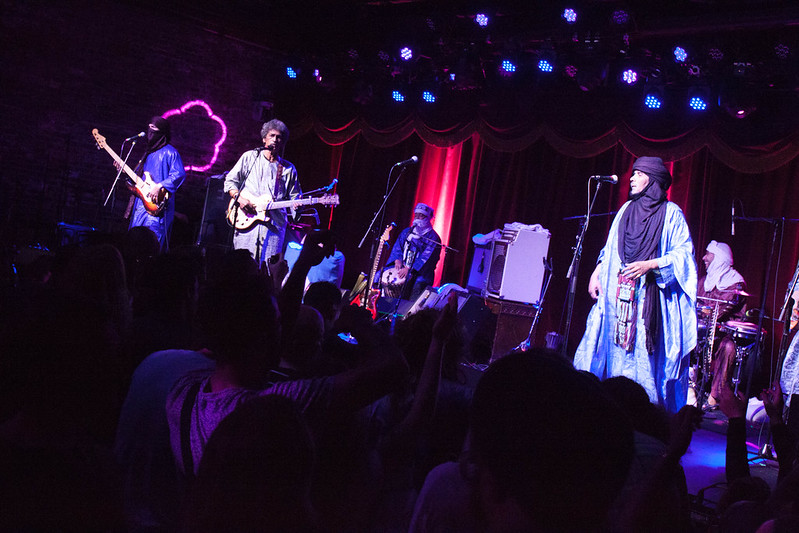
The recently released music video for “Sastanàqqàm” is reportedly inspired by real life events. When the members of the band returned to their homeland in 2006 they spent some time wandering around looking for old friends, associates, family members, neighbors and the like. Roughly 1,000 miles away from their homeland in Northern Mail, the members of Tinariwen came across six young musicians who hailed from M’Hamid el Ghizlane. These boys were the only boys that the members of the collective came across during their visit; but they immediately saw a reflection of themselves, their dreams and aspirations in the music they heard the boys play. In the subsequent years, the boys from M’Hamid el Ghizlane learned the Tinariwen catalog note for note, word for word although they couldn’t speak a word of Tamashek. When the members of the band returned to the town to record the material, which would comprise Elwan, their disciples had displayed a mastery of Tinariwen’s catalog — and the members of the band recognized that they had passed the torch on to their young disciples; in fact, the band decided to invite their disciples to be in the music video for “Sastanàqqàm,” symbolically standing in for the members of the band. The video follows as some of Tinariwen’s elder members wrapped new turbans around the heads of their young disciples, symbolically marking the passage from boyhood and manhood; but also marking how music can be transmitted across generations and influence young men and women to pick up instruments and speak truth to power. Let that serve as a reminder that music and art hold great power — a power that even the most autocratic demagogue can’t possibly stop.
Over the years, I’ve written quite a bit about the internationally renowned Saharan blues/Saharan rock collective Tinariwen, an act that can trace its origins to the late 197s when its founding member, guitarist Ibrahim Ag Alhabib, who as the story goes had been inspired to learn the guitar from an old Western film, in which a cowboy played guitar, joined a small group of Tuareg rebels living in refuge camps throughout Libya and Algeria. Interestingly, Ag Alhabib and his fellow rebels had been influenced by the radical chaabi protest music of Moroccan groups like Nass El Ghiwane and Jil Jilala; Algerian pop rai; and western artists like Elvis Presley, Led Zeppelin, Carlos Santana, Dire Straits, Jimi Hendrix, Boney M, and Bob Marley, and started writing music that meshed the traditional folk music of their people with Western rock, reggae and blues-leaning arrangements
After relocating to Tamanrasset, Algeria, Ag Alhabib started a band with Alhassane Ag Touhami and brothers Inteyeden Ag Ablil and Liya Ag Ablil that had played traditional Tuareg music with both Western and traditional instrumentation and arrangements at weddings, parties and other occasions across the Algeria, Libya and Mali. When this quartet started, they didn’t have a name; however, people across the region, who had seen them play had began calling the quartet, Kel Tinariwen, which in the Tamashek language (the tongue of the Taureg people) translates roughly as “The People of the Deserts” or “The Desert Boys.”
In 1980, Libyan dictator, Muammar Gaddafi released a decree inviting all young Tuareg men, who were living illegally in Libya to receive full military training, as part of his dream of forming a Saharan regiment, comprised of the best young Tuareg fighters to further his territorial ambitions in Chad, Niger, and elsewhere across Northern Africa. Al Alhabib and his bandmates answered the call and received military training. Whether or not the founding members of the band truly believed in Gaddafi’s military ambitions would be difficult to say — but on a practical level, a steady paycheck to support yourself and your family back home certainly is an enticement. Five years later, Ag Alhabib, Ag Touhami and the Ag Ablil brothers answered a similar call by leaders of the Libyan Tuareg movement, who desired an autonomous homeland for their people, and wound up meeting fellow musicians Keddou Ag Ossade, Mohammed Ag Itlale (a.k.a “Japonais”), Sweiloum Ag Alhousseyni, Abouhadid Ag Alhousseyni, and Abdallah Ag Alhousseyni — all who had sang and played guitar. At this point, the lineup of Tinariwen was completed and the members of the collective began writing songs about the issues and concerns of their people.
The members of the band built a makeshift studio and then vowed to record and then distribute music for free for anyone who supplied them a blank cassette tape. And perhaps unsurprisingly, their DIY cassettes were highly sought after and were traded throughout Saharan Africa.
In 1989 the members of the collective had left Libya and relocated to Ag Alhabib’s birthplace of Tessalit, Mali; however, by the next year Mail’s Tuareg population revolted against the Malian government, with some members of the collective participating as rebel fighters. After a peace agreement known as the Tamanrasset Accords were reached in early 1991, the members of Tinariwen left the military and devoted themselves to music full-time, and by the following year, some of the members of the band went to Abidjan, Ivory Coast to record a cassette at JBZ Studios, which they followed up with extensive gigs for their fellow Tuaregs across Saharan Africa, which helped further establish the band’s reputation by word-of-mouth.
After collaborating with renowned French world music ensemble Lo’Jo, the members of Tinariwen started to receive greater international attention outside of Saharan Africa, including their first British live set at Africa Oye, one of the UK’s largest African music/African Diaspora festival. Building on the increasingly buzz they were receiving, the band released their first full-length effort, The Radio Tisdas Sessions, their first recording to be released outside of their native Northern Africa. As the collective has pushed forward throughout the years, it has gone through lineup changes, incorporating a younger generation of Tuareg musicians, some who weren’t even born during some of the military conflicts of the older generation or whose lives were impacted by the fighting during the 1990s, including bassist Eyadou Ag Leche, percussionist Said Ag Ayad, guitarist Elaga Ag Hamid, guitarist Abdallah Ag Lamida, and vocalists Wonou Walet Sidati and the Walet Oumar sisters.
As the collective started to see greater international attention, they’ve toured regularly across the European Union, North America, Japan and Australia, often playing at some of the world’s biggest and highly renowend music festivals including Glastonbury, Coachella, Roskilde, Les Vieilles Charrues, WOMAD, FMM Sines Thomand Printemps de Bourges. And although they employ both Western instrumentation and traditional instrumentation and arrangements, their sound has always managed to evoke the surreal and brutally harsh beauty of the Saharan Desert, the poetry and wisdom of a rough and tumble, rebellious and proud people whose way of life is disappearing thanks to encroaching Westernization and technology. And most recently yet another bloody and contentious war has splintered several nations across the Tuareg territory — including devastating wars across Mail and Libya. Now, if you had been frequenting this site over the past couple of months, you’d likely recall that the Tuareg collective’s forthcoming album Elwan (which translates into English as The Elephants) is slated for a February 10, 2017 release, and the album thematically focuses both on the disappearing traditions of the Tuareg people and of being forced into a reluctant and begrudging exile — with the realization that many of the collective’s members may never see their homeland again.
With Elwan‘s third and latest single “Assawt” the band’s frontman, guitarist and founding member Ag Alhabib turns the focus to the women of the Sahara, strong women who in his words are “searching for their freedom” and “who toil for the revolution,” recognizing their role and place in the long and often bloody fight for a Tuareg homeland. Ag Alhabib’s mournful yet soulful vocals are paired around a shuffling and snaking acoustic guitar line, a sinuous bass line, propulsive handclap-led percussion with the band joining in on a harmonized and anthemic hook. Interestingly, while drawing from the Tuareg tradition, the song also manages to subtly nod at the sounds of Mali, Nigeria and elsewhere as it continues to cement the collective’s reputation for crafting tight grooves.
The band and their label have done a kind favor by providing an English translation of the song’s lyrics, which you can check out below.
That’s the voice of the Tamashek women Searching for their freedom. Those are the thoughts of the old women Living in a Sahara devoid of water, Desiccated and miserable, My wish is for it to stop being subservient. This is a message for those Who toil for the revolution.
The band will be embarking on a North American tour, which will include two NYC area dates at Brooklyn Bowl. Check out the tour dates below.
30 MARCH 2017 – SOLANA BEACH, CA : BELLY UP TAVERN
31 MARCH 2017 – LOS ANGELES, CA : THE FONDA THEATRE
01 APRIL 2017 – BERKELEY, CA : THE UC THEATRE
02 APRIL 2017 – PORTLAND, OR : REVOLUTION HALL
04 APRIL 2017 – SEATTLE, WA : BENAROYA HALL
05 APRIL 2017 – VANCOUVER, BC : CHAN CENTRE FOR THE PERFORMING ARTS
7 APRIL 2017 – SALT LAKE CITY, UT : THE STATE ROOM
08 APRIL 2017 – DENVER, CO: SWALLOW HILL MUSIC ASSOCIATION
10 APRIL 2017 – MINNEAPOLIS, MN : CEDAR CULTURAL CENTER
11 APRIL 2017 – CHICAGO, IL : OLD TOWN SCHOOL OF FOLK MUSIC
12 APRIL 2017 – TORONTO, ONT : MASSEY HALL
13 APRIL 2017 – MONTREAL, QC : PLACE DES ARTS
14 APRIL 2017 – BOSTON, MA : ROYALE
15 APRIL 2017 – BROOKLYN, NY : BROOKLYN BOWL
16 APRIL 2017 – BROOKLYN, NY : BROOKLYN BOWL
18 APRIL 2017 – PHILADELPHIA, PA : UNION TRANSFER
19 APRIL 2017 – WASHINGTON, DC : BARNS AT WOLF TRAP
21 APRIL 2017 – PITTSBURGH, PA : CARNEGIE OF HOMESTEAD HALL
With the election of Richard Nixon, the hippie era had come to a screeching halt; however, just as the hippie era ended in the States, young people across what was then known as the white minority ruled Rhodesia — now known as Zimbabwe — had created a rock ‘n’ roll counterculture that drew inspiration from the hippie era’s message and ideals, as well as the sounds of Jimi Hendrix, Led Zeppelin, Deep Purple and others. And unsurprisingly, the young folks in their scene had dubbed their music “heavy” because they felt and believed in its impact — and their music began to resonate across to its neighbor in Zambia and as far North as Nigeria. And at its peak, in the mid-1970s, the country’s heavy rock scene had united thousands of young progressives across all racial and social backgrounds, openly defying the country’s harsh segregation laws and secret police, while making a bold stand for democratic changes that would benefit all.
As I’ve mentioned frequently on this site, including as late as yesterday, the technological advances brought forth by computers and the Internet have made discovering new and extremely rare, lost music from known and little known artists much easier. And it’s also contributed to a proliferation of extremely niche-based labels, who are willing to take careful, thoughtful and taste-making risks. As a result, a number of these labels have spent at least a portion of their time introducing and re-introducting artists, whose work was either so far ahead of its time, that audiences at the time just couldn’t grasp it upon its initial release — and yet, now has proven to fill in a historical gap; or the work of regionally favored artists, whose work should have seen a bigger audience but somehow just never broke out; and in the case of “world music,” releasing work from artists based in regions and countries that Westerners being biased Westerners hadn’t been paying attention to and really should have been. To add to my point, at the time of Zimbabwe’s heavy rock scene’s existence, a quartet by the name Wells Fargo was at the forefront of their homeland’s scene — and for the first time ever will be released the band’s renowned album Watch Out outside of Zimbabwe.
Interestingly, Watch Out‘s first single, album title track “Watch Out” was largely considered their counterculture’s anthem and while clearly drawing from Axis: Bold as Love and Electric Ladyland-era Hendrix, there are hints at 60s garage rock and folk-leaning blues and while pointing out the dangers of what was clearly uncertain and fucked up times for them, there’s clear sense of hope and possibility; after all, the storm that’s coming over the horizon will inevitably end. But with some strange days ahead for us here in the States, let the example of these Zimbabweans be a reminder that music and art are weapons — and when you have them on your side, you wield incredible power, the sort of power that wannabe autocratic demagogues like Donald Trump actually do fear. So artists, go out and lead the charge!
Over the past few days, as 2016 was coming to a close, I had been looking a bit back at the past when I stumbled across this live footage of Tinariwen performing at the Bataclan in Paris, back in November.
Led by its founding member, composer and bassist Ezra Gale and featuring Rick Parker (trombone), Alex Asher (trombone), Jon Lipscomb (guitar) and Madhu Siddappa, the Brooklyn-based trombone-led dub quintet Super Hi-Fi can trace their origins to a rather unlikely beginning. Gale, who was a founding member of acclaimed San Francisco-based Afrobeat act Aphrodisia, an act that once played at Fela Kuti‘s famed Lagos, Nigeria-based night club The Shrine, had relocated to Brooklyn and was collaborating with Quoc Pham in Sound Liberation Front when Gale was asked to get a band together for Pham and Gale’s then-monthly Afro-Dub Sessions parties in Williamsburg. Much like DJ Turmix’s Boogaloo Party, the Afro-Dub Sessions Party would pair the live band fronted by Gale with the dub’s top-flight producers and DJs including Victor Rice, Prince Polo, Subatomic Sound System, the Beverley Road All-Stars and others.
When Gale founded Super Hi-Fi, the project was initially intended to translate the improvisatory mixing process of dub to the live show; however, with the 2012 release of their critically applauded debut effort Dub to the Bone, a busy touring schedule in which they opened for nationally known acts like Rubblebucket, Beats Antique and John Brown’s Body, followed by the release of their Yule Analog Vol. 1 and Vol. 2, the project began to cement its growing reputation for crafting a unique and expansive take on dub and reggae.
With the recent release of Super Hi-Fi Plays Nirvana, the Brooklyn-based dub quintet push the boundaries of reggae and dub by paying tribute to Nirvana. And in typical Super Hi-Fi fashion, the members of the band manage to create their own take on the iconic Seattle-based trio’s material with renowned dub producers, Sao Paulo, Brazil‘s Victor Rice; Venice, Italy‘s Doctor Sub; and Brooklyn’s Prince Polo — all of whom are frequent collaborators with the band — assisting to further bend and morph the band’s sound in trippy and psychedelic ways, which help take fairly familiar songs into bold, new territory.
Adding to the uniqueness of the release, Very Special Recordings, a small, boutique Brooklyn-based label founded by Super Hi-Fi’s Ezra Gale, that specializes in releases cassettes that showcase the diverse of their borough’s and city’s music scene. Interestingly, while we all live in a world of Spotify playlists and streamable music that one never really owns, cassettes have seen something of a renaissance of late with several artists and labels releasing cassette only releases — and in some way, it’s a response against not just streaming services but against the trend towards technophilia for the sake of technophilia. While being relatively cheap to make and sell, a cassette tape does require a bit of effort — you’d have to go to a physical record store to purchase your favorite band’s new record and then bring it home to play; have a label or friend mail or give you a tape; and at the very least, you’ll probably listen to the whole tape, if not an entire side once. Plus, let’s not forget, that unless your favorite song is the first song or last song of a side, finding it can be a frustrating and time-consuming experience. And yet, if you remember buying cassettes at your local record store, as I do, it’s an experience that frankly I sometimes miss very dearly.
I recently spoke to Super Hi-Fi’s Ezra Gale about Super Hi Fi Plays Nirvana, how the arranging and re-arranging process differs from Gale’s normal songwriting process, the band’s upcoming releases and more. Check it out below.
__________________
WRH: In the Q&As for The Joy of Violent Movement, we almost always begin with some fairly introductory stuff for readers. So let’s begin, shall we?
WRH: How did the members of the band meet?
Ezra Gale: I had an idea for a two trombone band and placed a Craigslist ad for trombone players which got exactly two responses, from Alex Asher and Ryan Snow, who became our first two trombone players. Everybody else I just met through other musicians.
WRH: How would you describe your sound?
EG: It’s dub, but I don’t know if it’s reggae.
WRH: Who are you listening to right now?
EG: The last album I bought was Bowie‘s last album, Blackstar, which is just incredible.
WRH: Seminal albums like Nirvana’s Nevermind, U2’s Achtung Baby, A Tribe Called Quest’s The Low End Theory and Midnight Marauders, R.E.M.’s Automatic For The People, Soundgarden’s Badmotorfinger, Superunknown and Down On The Upside, Pearl Jam’s Ten, Vs. and Vitalogy and others reaching important milestone anniversaries, it’s a bit surprising to me that to my knowledge more bands haven’t seriously begun to tackle them with more covers and more tribute albums, especially if you consider how many Led Zeppelin, Pink Floyd, and Beatles tribute albums have been released over the years. Why haven’t there been more Pearl Jam, U2, R.E.M. tributes and covers? And how did you come upon paying tribute to Nirvana?
EG: I really don’t know about those other bands, for us we started playing a version of “Something In the Way” a couple years ago, and we all sort of got the idea that maybe a whole album of Nirvana tunes could be interesting.
WRH: Much like your fantastic Christmas albums, Super Hi-Fi Plays Nirvana features a couple of very well-known songs such as In Utereo’s “Heart Shaped Box,” and their famous Unplugged cover of “Where Did You Sleep Last Night?” as well as some rather deeper cuts such as “Verse Chorus Verse,” their Incesticide cover of “Love Buzz” Nevermind’s “Something In The Way” and “Polly.” What inspired you to choose those songs to tackle instead of something more tried and true?
EG: Well, initially I wanted to do all really obscure ones. Nirvana is a band whose famous songs have been played to death and I don’t know if anyone really needs to hear another version of “Smells Like Teen Spirit”, for example. But I know them from when Bleach came out and they were just this really great, intense band from Seattle that not many people knew- my college band even opened for them then, randomly. So I wanted to spotlight some of those lesser-known songs of theirs. But then, I think i was riding my bike and I suddenly started hearing “Heart Shaped Box” in this really slow, weird way, so we ended up doing that one. Ultimately it’s just about giving each song a different treatment and finding something new to do with it, no matter how many times you’ve heard it before.
WRH: How do you go about re-arranging material that’s fairly familiar in a way that adds your particular spin to it — while maintaining something familiar? And how does the process of re-arranging material differ from your normal songwriting process?
EG: It is different than a normal songwriting process. This album was very similar to our two Christmas albums (“Yule Analog” Vols. I and II), in that the goal was to take familiar material and make it sound different. And like in arranging those Christmas songs, I made some rules for myself doing it, which were that the melody line had to be the same, but everything else around it could change. So the rhythms are obviously very different, but also, Nirvana was a band with only one singer and we have two trombones, so in a lot of these versions the second trombone part is made up- like in “Verse Chorus Verse”, “Heart Shaped Box” and “Where Did You Sleep” especially. And also the chords are quite different in some of these, “Polly” and “Where Did You Sleep” especially are pretty different chord changes than the Nirvana versions.
My attitude towards cover versions is just that there’s no point in doing them if all you’re doing is to play it like the original version. No matter how great the original song is, I don’t ever want to regurgitate what someone else has done- go listen to the original if you want that. At the same time, I think it should be recognizable as the original song, somehow. So the challenge of taking material and sort of shaping it into something different that still has echoes of the original song is something I really enjoy doing.
WRH: While doing a little research for this interview, I learned that you’re currently working on your sophomore full-length effort, as well as Beatles/Police 45 for Record Store Day. Could you tell us a little bit about those projects?
EG: Yes, we are about 80% done with the mixing for the new full-length album, which is going to be called “The Blue and White” and it will be our second LP of all-original music. It’s quite different I think, there are lots of vocals and different sounds for us. It was recorded and mixed all onto tape too, which has been a real pain in some ways (!) but is so, so worth it- it sounds amazing I think. It will be out in the springtime sometime I think, on vinyl, somehow or other, we haven’t figured out yet.
And then the single is done and will be released on Electric Cowbell Records for Record Store Day in April, it’s the Beatles’ “I’m Only Sleeping,” which was actually recorded for our “Dub to the Bone” album but left off it, and a version of The Police‘s “Hole In My Life” which we recorded for the new album, both extremely whacked-out and different versions, I can’t wait to play it for people.
WRH What’s next for the band?
EG: We haven’t been playing live that much the last few months because I’ve been so focused on finishing these albums, so once we’re done completely with the new LP I’m looking forward to playing a lot more in the new year.