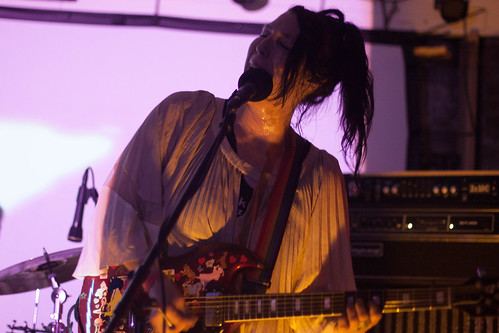
Comprised of San Francisco-born, Los Angeles-based sibling duo Jonathan Rosen, a pop music influenced, acclaimed hand-drawn animator, who has created music videos for a number of renowned artists including Toro y Moi, Eleanor Friedburger and Delicate Steve, whose rock ‘n’ roll dream started in earnest when he played Johnny Thunders for the HBO series Vinyl; and Michael Rosen, who is a classically trained pianist, commercial/film composer and experimental sound artist, Cones can trace their newest project to when they began playing music together, while they were both in NYC as members of Icewater. Eventually the members of Icewater began playing as the session and backing band for the Fiery Furnaces’ Eleanor Friedberger, helping to write, record her latest album New View.
As the story goes, while on tour the Rosens began to conceptual their latest project, a project that would fuse Jonathan’s pop sensibilities with Michael’s lush, atmospheric soundscapes and key-heavy orchestration. And in the summer of 2016, the Rosens, along with a bunch of friends and associates wrote and recorded the material of their debut EP Whatever Your’e Into. And interestingly enough, the EP’s latest single “Echoes On” has the duo pairing Jonathan’s dreamy falsetto with a twangy, psych country arrangement that’s reminiscent of 70s AM radio, Tame Impala and Oracular Spectacular-era MGMT; but with a breezier feel and rousingly anthemic hooks.
The recently released video features Jonathan Rosen’s loose and playful, hand-held animation featuring the duo traveling in a car, wandering around aimlessly, playing the song through a variety of instruments with a fittingly psychedelic and trippy quality.
Currently comprised of Sheila Bosco (drums), Brian Lucas (bass), Kelly Ann Nelson (vocals, wooden flute), Jeffrey Alexander (guitar, wooden sax), Arjun Mendiratta (violin), Laura Naukkarinen (vocals) and Michael Whitaker (flute, sax), the San Francisco, CA/Oakland, CA-based septet Dire Wolves have developed a reputation for crating deeply hypnotic folk-leaning indie rock — and for being incredibly prolific, as they’ve released 12 full-length albums since their formation 2008.
The Bay Area-based band’s forthcoming, 13th release Excursions to Cloudland will reportedly further cement the band’s reputation for crafting hypotonic, trance-inducing music — but on the album’s second and latest single, the expansive and slow-burning “Cerebration Day,” the single while slowly building up steam, manages to evoke the sensation of spinning without getting too dizzy; it also simultaneously manages to be ethereal yet grounded within the earthly realm, celebratory but with a bit of menace just under the surface.
Samuel Joseph Kim is a Canadian-born, San Francisco, CA-based singer/songwriter producer and multi-instrumentliast, arguably best known as a member of San Francisco-based band Museums and for a solo recording experimental side project, Mount Vermont. He also works as a freelance soundtrack composer, who has clients like Canon,Deloitte, TED, and others. Kim also recently released material under his own birth name — and that music as he describes on his website “is an evolving blend of organic guitars and electronic experimentation. Whatever the instrumentation or approach, it retains its melodic and emotive nature: haunting, intimate and sincere.”
“Gone” the EP opening single off Kim’s 2016 effort Lost/Found EP is a hazy post-punk-inspired song featuring a sinuous bass line, lush, swirling layers of shimmering synths and precise drum programming paired with Kim’s crooning vocals. Sonically speaking, the song nods at The Harrow, the 4AD Records sound, Siouxsie and the Banshees, Joy Division and others and while possessing a similar swooning and urgent Romanticism — and much like its (presumed) influences, the song focuses on visceral and profound heartache and confusion that has enveloped its narrator.
Now, if you had been frequenting this site towards the end of last year, you may recall that I wrote about San Francisco, CA-based electronic music artist and producer, Jacob Monague and his latest solo recording project Tsutro. Tsutro is a bit of a sonic departure from Montague’s work as a member of BRANCHES and his previous solo work, which had placements on a number of popular TV shows including — America’s Got Talent, The X Factor, One Tree Hill and others, as well as the film trailers for The Secret Life of Walter Mitty, Afternoon Delight, and Love Is Strange as Montague’s latest project draws from a diverse array of influences such as pop, worldbeat, future garage and downtempo. And with a batch of his latest singles, the San Francisco-based producer and artist collaborates with a different vocalist, which gives each song a completely different feel and tone.
The third single of his initial batch of singles “Say Something” is a breezy and coquettish track featuring both Roxi Pianko and Montague’s vocals over a slick and dreamy production featuring twinkling keys and synths, strummed guitar and stuttering drum programming. Now while, the previous single I wrote about “Back to You” feat. Sunday Lane was reminiscent of the sensual yet bracingly chilly house of Octo Octa’s Between Two Selves, “Say Something” sounds inspired by Swedish dream pop — but with a swooning Romanticism.
With the release of their first three EPs, Gold, Better Off, and Broken Machine, and their full length debut Palace of Industrial Hope, the San Francisco, CA-based indie rock quintet The New Up — comprised of ES Pitcher (vocals, guitar), Noah Reid (guitar, vocals), Hawk West (automation), Nick Massaro (bass) and Art McConnell (drums) –developed a reputation for genre defying sound that possesses elements of garage rock and electro pop paired with lyrics that focus on philosophical concerns. And while the band has drawn comparisons to Yeah Yeah Yeahs and The Kills, their sound reminds me of Dirty Ghosts.
As the story goes, when it came time to start working on the material that would comprise the San Francisco-based quintet’s forthcoming, sophomore effort Tiny Mirrors, the members of the band launched an Indiegogo crowdfunding campaign to obtain the necessary funds to create and build their own recording studio, which the band felt was necessary to realize their creative vision for the album — with label or studio interference. Then they covered a secluded Mendocino County, CA barn into a state-of-the-art recording facility and enlisted Jack Frost who has worked with Antartica and BlackRock to produce the recording sessions and Sean Beresford, who has worked with Chuck Prophet, The Donnas and Vanessa Carlton to mix the album.
Now, if you had been frequenting this site towards the end of last year, you may recall that I wrote about album single “Black Swan,” a slinky and slickly produced track in which shimmering and atmospheric electronics, slashing and angular guitar chords and a sinuous bass line are paired with ES Pitcher’s sensual vocals — singing lyrics that reveal the narrator’s urgent, carnal need, the need (and desire) to lose one’s self, if even for a little bit, her increasing frustration with people and human relationships and empty, soulless hookups. But at the core of the song is the sort of loneliness and dissatisfaction that being in a large city frequently inspires within people. The album’s latest single “No Fly Zone” continues on a similar vein as its preceding single as shimmering synths and processed beats are paired with Pitcher’s cooing, shimmering guitar chords in a moody and sensual song that sonically and structurally reminds me of Antics-era Interpol.
With the release of the We’re Set EP, which featured standout singles “Wild” and “Surfer Girl,” the San Francisco, CA-based indie rock/garage rock quartet The Band Ice Cream, comprised of Kevin Fielding (vocals, guitar), Joe Sample (vocals guitar), Bryce Fernandez (bass) and Louie Rappoport (drums), quickly developed a national reputation for a fuzzy, scuzzy alt rock-leaning sound that draws from Nirvana, The Strokes, The White Stripes, The Orwells,Pavement and Link Wray — and for opening for the likes of Hinds, Night Beats, Adult Books, SWMRS, The Aquadolls and others. Adding to a growing profile, the band’s last EP caught the attention of legendary producer and sound engineer Bruce Botnick, who’s best known for his work with The Doors and The Beach Boys, and along with San Francisco underground rock legend Mike Carnahan worked with the band on their forthcoming full-length debut Classical Trained, slated for a March 10, 2017.
Classically Trained‘s latest single “Seventeen” manages to evoke the awkwardness and uncertainty of being a stupid teenage kid while looking back at it with a wistful nostalgia over that period’s seeming simplicity and deep friendships– and without as many devastating mistakes, poor choices, unending complications and uneasy compromises. And while the band has developed reputation for scuzzy garage rock, the band’s latest single manages to be clearly indebted to power pop, thanks to anthemic hooks and some guitar pyrotechnics; but in an expansive, and meandering song structure that possesses both a muscular insistence and a mischievous and ironic wit.
Nick Waterhouse is a Santa Ana, CA-born, San Francisco, CA-based singer/songwriter and guitarist, who first took up gutiar when turned 12. And as teenager, he found himself increasingly interested in more obscure and ecletic Americana and blues outside of the pop and contemporary rock his peers were listening to; in fact, he’s cited Bert Berns, Mose Allison, John Lee Hooker and Van Morrison among his earliest musical influences. However, Waterhouse’s musical career started in earnest when he was a member of an Orange County-based band Intelligista, an act that was compared to The Animals and High Numbers-era The Who. After the band split up, Waterhouse went on to attend San Francisco State University — and while studying, he continued pursuing music with very little luck.
As he was purising a music career, Waterhouse was simultaneously getting more involved in San Francisco’s DJ scene; in fact, he had quickly become a fixture at tthe all-vinyl Rooky Ricardo’s Record Shop eventually taking up a job with the store. Publicly, the San Francsico-based singer/songwriter and guitairst has cited that his time working under the store’s owner, Richard Vivian was deeply influential, as it put the then-aspriing musician i touch with the city’s soul club scene — while developing a friendship with The Allah-Las’ Matthew Corriea.
His debut 7 inch “Some Place”/”That Place” was recorded at the Distillery Studio in Southern California with backing band billed as the Turn-Keys, featuring The Fabulous Souls’ Ira Raibon on saxophone. The single was hand-pressed with letterpress printed labels, and because of the single’s overall response and its rairty, collectors have snapped it up. And on the strength of that single, Waterhouse was able to assemble his own backing band The Tarots and a trio of backing vocalists The Naturelles, with whom he played shows with Ty Segall, The Strange Boys, White Fence and The Allah-las. And in between touring across North America and Europe, the California-based singer/songwriter produced The Allah-Las 2012 debut effort. He then followed taht up with the release of his first two singles as a frontman and bandleader.
Waterhouse’s third full-length effort, Never Twice was released earlier this year thorugh Innovative Leisure Records and the album finds him collaborating once again with producer Michael McHugh, who has worked with Black Lips, Ty Segall, and The Allah-Las. As the story goes, McHugh was Nick’s first producer — and as Waterhouse was about to record the material that would comprise Never Twice, Waterhouse enlisted McHugh to recrate and capture the sound of Nick’s youth while in bands in Huntington Beach.
After McHugh was on board, Waterhouse being calling his favorite musicians to join him — Bob Kenmotsu, who contributed his flute; Ralph Carney, who has played with Tom Waits and Elvis Costello contributed sax; Will Blades, a protege of Dr. Lonnie Smith, contributed organs; a highly-accomplished batch of horn planers, bassists and guitarists join in; and Leon Bridges contributed vocals on the album’s lead single “Katchi.” The album’s latest single “It’s Time” will further cement Waterhouse’s burgeoning reptuation for crafting old school, jazzy soul with an incredibly uncanny period specificity — in this case, sounding as though it were released in the mid 1950s/early 1960s, thanks to a careful attnetion to craft while adding his name to a growing list of contemporary artists, who specailzie in the classic soul sound.
Directed and edited by Laura-Lynn Petrick, the video shot on what apears to be old Super 8 Film, and follows Waterhouse as she wanders around New York and features live footage of the Californian and his backing band playing live sets — and with the grainy, old-timey footage, it adds to the song’s old school aesthetic.
Led by its founding member, composer and bassist Ezra Gale and featuring Rick Parker (trombone), Alex Asher (trombone), Jon Lipscomb (guitar) and Madhu Siddappa, the Brooklyn-based trombone-led dub quintet Super Hi-Fi can trace their origins to a rather unlikely beginning. Gale, who was a founding member of acclaimed San Francisco-based Afrobeat act Aphrodisia, an act that once played at Fela Kuti‘s famed Lagos, Nigeria-based night club The Shrine, had relocated to Brooklyn and was collaborating with Quoc Pham in Sound Liberation Front when Gale was asked to get a band together for Pham and Gale’s then-monthly Afro-Dub Sessions parties in Williamsburg. Much like DJ Turmix’s Boogaloo Party, the Afro-Dub Sessions Party would pair the live band fronted by Gale with the dub’s top-flight producers and DJs including Victor Rice, Prince Polo, Subatomic Sound System, the Beverley Road All-Stars and others.
When Gale founded Super Hi-Fi, the project was initially intended to translate the improvisatory mixing process of dub to the live show; however, with the 2012 release of their critically applauded debut effort Dub to the Bone, a busy touring schedule in which they opened for nationally known acts like Rubblebucket, Beats Antique and John Brown’s Body, followed by the release of their Yule Analog Vol. 1 and Vol. 2, the project began to cement its growing reputation for crafting a unique and expansive take on dub and reggae.
With the recent release of Super Hi-Fi Plays Nirvana, the Brooklyn-based dub quintet push the boundaries of reggae and dub by paying tribute to Nirvana. And in typical Super Hi-Fi fashion, the members of the band manage to create their own take on the iconic Seattle-based trio’s material with renowned dub producers, Sao Paulo, Brazil‘s Victor Rice; Venice, Italy‘s Doctor Sub; and Brooklyn’s Prince Polo — all of whom are frequent collaborators with the band — assisting to further bend and morph the band’s sound in trippy and psychedelic ways, which help take fairly familiar songs into bold, new territory.
Adding to the uniqueness of the release, Very Special Recordings, a small, boutique Brooklyn-based label founded by Super Hi-Fi’s Ezra Gale, that specializes in releases cassettes that showcase the diverse of their borough’s and city’s music scene. Interestingly, while we all live in a world of Spotify playlists and streamable music that one never really owns, cassettes have seen something of a renaissance of late with several artists and labels releasing cassette only releases — and in some way, it’s a response against not just streaming services but against the trend towards technophilia for the sake of technophilia. While being relatively cheap to make and sell, a cassette tape does require a bit of effort — you’d have to go to a physical record store to purchase your favorite band’s new record and then bring it home to play; have a label or friend mail or give you a tape; and at the very least, you’ll probably listen to the whole tape, if not an entire side once. Plus, let’s not forget, that unless your favorite song is the first song or last song of a side, finding it can be a frustrating and time-consuming experience. And yet, if you remember buying cassettes at your local record store, as I do, it’s an experience that frankly I sometimes miss very dearly.
I recently spoke to Super Hi-Fi’s Ezra Gale about Super Hi Fi Plays Nirvana, how the arranging and re-arranging process differs from Gale’s normal songwriting process, the band’s upcoming releases and more. Check it out below.
__________________
WRH: In the Q&As for The Joy of Violent Movement, we almost always begin with some fairly introductory stuff for readers. So let’s begin, shall we?
WRH: How did the members of the band meet?
Ezra Gale: I had an idea for a two trombone band and placed a Craigslist ad for trombone players which got exactly two responses, from Alex Asher and Ryan Snow, who became our first two trombone players. Everybody else I just met through other musicians.
WRH: How would you describe your sound?
EG: It’s dub, but I don’t know if it’s reggae.
WRH: Who are you listening to right now?
EG: The last album I bought was Bowie‘s last album, Blackstar, which is just incredible.
WRH: Seminal albums like Nirvana’s Nevermind, U2’s Achtung Baby, A Tribe Called Quest’s The Low End Theory and Midnight Marauders, R.E.M.’s Automatic For The People, Soundgarden’s Badmotorfinger, Superunknown and Down On The Upside, Pearl Jam’s Ten, Vs. and Vitalogy and others reaching important milestone anniversaries, it’s a bit surprising to me that to my knowledge more bands haven’t seriously begun to tackle them with more covers and more tribute albums, especially if you consider how many Led Zeppelin, Pink Floyd, and Beatles tribute albums have been released over the years. Why haven’t there been more Pearl Jam, U2, R.E.M. tributes and covers? And how did you come upon paying tribute to Nirvana?
EG: I really don’t know about those other bands, for us we started playing a version of “Something In the Way” a couple years ago, and we all sort of got the idea that maybe a whole album of Nirvana tunes could be interesting.
WRH: Much like your fantastic Christmas albums, Super Hi-Fi Plays Nirvana features a couple of very well-known songs such as In Utereo’s “Heart Shaped Box,” and their famous Unplugged cover of “Where Did You Sleep Last Night?” as well as some rather deeper cuts such as “Verse Chorus Verse,” their Incesticide cover of “Love Buzz” Nevermind’s “Something In The Way” and “Polly.” What inspired you to choose those songs to tackle instead of something more tried and true?
EG: Well, initially I wanted to do all really obscure ones. Nirvana is a band whose famous songs have been played to death and I don’t know if anyone really needs to hear another version of “Smells Like Teen Spirit”, for example. But I know them from when Bleach came out and they were just this really great, intense band from Seattle that not many people knew- my college band even opened for them then, randomly. So I wanted to spotlight some of those lesser-known songs of theirs. But then, I think i was riding my bike and I suddenly started hearing “Heart Shaped Box” in this really slow, weird way, so we ended up doing that one. Ultimately it’s just about giving each song a different treatment and finding something new to do with it, no matter how many times you’ve heard it before.
WRH: How do you go about re-arranging material that’s fairly familiar in a way that adds your particular spin to it — while maintaining something familiar? And how does the process of re-arranging material differ from your normal songwriting process?
EG: It is different than a normal songwriting process. This album was very similar to our two Christmas albums (“Yule Analog” Vols. I and II), in that the goal was to take familiar material and make it sound different. And like in arranging those Christmas songs, I made some rules for myself doing it, which were that the melody line had to be the same, but everything else around it could change. So the rhythms are obviously very different, but also, Nirvana was a band with only one singer and we have two trombones, so in a lot of these versions the second trombone part is made up- like in “Verse Chorus Verse”, “Heart Shaped Box” and “Where Did You Sleep” especially. And also the chords are quite different in some of these, “Polly” and “Where Did You Sleep” especially are pretty different chord changes than the Nirvana versions.
My attitude towards cover versions is just that there’s no point in doing them if all you’re doing is to play it like the original version. No matter how great the original song is, I don’t ever want to regurgitate what someone else has done- go listen to the original if you want that. At the same time, I think it should be recognizable as the original song, somehow. So the challenge of taking material and sort of shaping it into something different that still has echoes of the original song is something I really enjoy doing.
WRH: While doing a little research for this interview, I learned that you’re currently working on your sophomore full-length effort, as well as Beatles/Police 45 for Record Store Day. Could you tell us a little bit about those projects?
EG: Yes, we are about 80% done with the mixing for the new full-length album, which is going to be called “The Blue and White” and it will be our second LP of all-original music. It’s quite different I think, there are lots of vocals and different sounds for us. It was recorded and mixed all onto tape too, which has been a real pain in some ways (!) but is so, so worth it- it sounds amazing I think. It will be out in the springtime sometime I think, on vinyl, somehow or other, we haven’t figured out yet.
And then the single is done and will be released on Electric Cowbell Records for Record Store Day in April, it’s the Beatles’ “I’m Only Sleeping,” which was actually recorded for our “Dub to the Bone” album but left off it, and a version of The Police‘s “Hole In My Life” which we recorded for the new album, both extremely whacked-out and different versions, I can’t wait to play it for people.
WRH What’s next for the band?
EG: We haven’t been playing live that much the last few months because I’ve been so focused on finishing these albums, so once we’re done completely with the new LP I’m looking forward to playing a lot more in the new year.
Best known as a founding member and frontman of the Fresh & Onlys, and the creative mastermind behind Magic Trick, Tim Cohen has quietly developed a reputation for being a critically applauded yet somewhat unheralded songwriter. Now, if you’ve been frequenting this site for a bit you may know that 2016 has been extremely busy for Cohen as he spent time touring both with Magic Trick and Fresh and Onlys, splitting time between touring and a domestic life with his partner and newborn daughter and working on Magic Trick’s fourth album Other Man’s Blues, which was released earlier this year. And you may recall that I wrote about Other Man’s Blues‘ first single “First Thought,” a shuffling and twangy country blues that nods at psych rock and gospel while sounding as though it could have been released somewhere between 1972-1975. Lyrically, the song dealt with self-doubt, uncertainty and the acceptance of both — but with a wry, mischievous wit.
Cohen also managed to find the time to write his solo debut Luck Man which was written and recorded in his attic and El Studio after a recent relocation to San Francisco, a city he once called home several years before. Much like his previously released material with the Fresh and Onlys , Cohen’s material under his own name is deeply influenced by personal experience as a delivery driver, his own daily travels and Van Morrison‘s Veedon Fleece; however, unlike other songwriters Cohen tends to eschew focusing on the prototypical overarching topics such as love, hope and despair to focus on quietly complex and fully fleshed characters with detailed backstories, failed dreams, dashed hopes and perseverance through it all. As Cohen mentions in press notes “I like to think I’m leaving bits of wisdom behind, but I don’t possess the wisdom for longer than it takes to make a song. I inherit it momentarily, write it down, attach a melody that fits the words in rhythm, and then record it.”
“John Hughes” the first single off Luck Man is a warm and jangling bit of guitar pop that reveals a narrator, who possess a deeply questioning and uncertainty anxiety about himself, his talents and even his place in the world — and Cohen does so with a novelist’s attention to psychological detail, as he captures his narrator’s innermost thoughts with an unflinching yet empathetic honesty.
However, with his latest solo recording project Tsutro, Montague’s sound draws from a diverse array of influences including pop, worldbeat, future garage, ambient and downtempo. And with his debut as Tsutro, Montague’s sound reveals a new sonic approach in which the Bay Area-based producer and artist carefully chose a vocalist that would work with a particular aesthetic in mind, sampled a few phrases and then carefully built up a new arrangement around that sample; so while seeming like a remix and a rework of sorts, the material Montague has crafted manages to feel as though it’s a crafted original song in which a producer has collaborated with a vocalist. In fact, with his latest single as Tsutro “Back To You,” you hear shimmering aqueous-like synths paired with stuttering drum programming paired with Sunday Lane‘s plaintive and tender vocals reminiscing and mourning over an ex-lover in a radio-friendly, house-music-leaning electro pop song that reminds me quite a bit of Octo Octa‘s Between Two Selves as it evokes a lonely, late night ache and a falling into a bracingly cold bath.
Led by San Francisco, CA-based singer/songwriter Young Lee and featuring a rotating cast of collaborators including members of indie rock bands such as WATERS, Hazel English’s backing band, Doe Eye, There’s Talk, and Elsa y Elmar, The Soonest have released a handful of EPs at traditional recording studios that have won attention both locally and regionally for a layered and moody, 80s post-punk/post-rock leaning sound; in fact, Lee was asked to write the score to the documentary Weaving Shibusa.
Mixed by Greg Francis and mastered by TW Walsh, the project’s recently released full-length debut effort, Doors to the City was recorded in an empty Bay Area church, and the high wooden ceilings helped create the enormous, wall of sound like sound that you’ll hear on Doors to the City’s first single “Start a War,” a single that pairs Lee’s lilting and dramatic vocals with layers upon layers of angular guitar chords, a forceful, motorik-like groove consisting of a sinuous bass line and propulsive drumming, and an anthemic hook. Sonically, the song manages to channel Crocodiles and Heaven Up Here-era Echo and the Bunnymen — including deeply urgent and visual lyrics that describe an uneasy and fraught relationship.
Over the course of the band’s three albums and several lineup changes of collaborators, friends and musicians, the band’s material has gone through a variety of changes — but it’s the the band’s forth full-length effort Ojos Del Sol that may be arguably be the most radical turn in sonic direction, while returning to familiar themes of searching and personal discovery — themes that have come up a number of times in Mendoza’s own life, whether as the daughter of Mexican immigrants connecting with her ancestry and searching for spiritual meaning that goes much further than organized religion. In fact, as Mendoza explains in press notes, the material on the album thematically is a “cerebration of family and community” — but a community of shared humanity.
Interestingly, the album’s first single “Libre” finds Mendoza and company at their most self-assured but in one of the breeziest and pop-leaning songs as they pair an infectious and anthemic hook with an arrangement that includes what sounds like xylophone, a mischievous and sinuous bass line, a steady backbeat, Mendoza’s gorgeous vocals along three part harmonies in English and Spanish, a rolling, African folk music-like guitar line in a song that evokes a sense of almost childlike wonder and joy, while making a connection both to Mendoza’s ancestral homeland and Africa in a way that subtly channels Paul Simon’s Graceland.
The recently released video accompanying the song is a lush, cinematically shot video using impossibly verdant greens, bright reds, and a seemingly primal and ecstatic dance routine in the fields just featuring women wearing ancient-inspired costumes, masks and the like. And while being swoon worthy, the video manages to make a vital connection between the primal and ancient and the modern, between celebrating spring and summer and fertility, and a celebrating a community of strong like-minded women simultaneously.
If you’ve been frequenting this site over the past two or three months or so, you’ve likely come across a couple of posts about Chasms, a San Francisco, CA-based duo comprised of Jess Labrador and Shannon Madden that specializes in crafting sparse, minimalist (and moody) dirges that feature Labrador’s hauntingly ethereal vocals accompanied by her shimmering guitar work paired with propulsive and pummeling drum programming, swirling electronics and bursts of feedback and industrial clang and clatter — and in some way their sound and songwriting approach draws from shoegaze, drone, dream pop, doom metal and ambient electronica simultaneously.
Now, over the course of the past couple of months, the duo have released two singles off their soon-to-be-released full-length debut On The Legs of Love Purified — the slow-burning and smoky “We’ll Go,” which under the seemingly placid surface reveals a sense of unease and discomfort and the shimmering and gauzy “Black Ice.” The album’s third and latest single “Beyond Flesh” much like the album’s first single “Black Ice” sounds as though it could have been released during 4AD Records heyday as the duo pairs Labrador’s ethereal wails with shimmering power chords, layers of stormy feedback and thundering drum programming — all feed through a bit of reverb. And while stunningly beautiful, the song possesses an aching yearning.
The duo will be embarking on a tour through October and November, which will include a November 16, 2016 stop at Brooklyn’s Shea Stadium. Check out tour dates below.
Tour Dates
10.07 Portland, OR @ Lovecraft %
10.08 Seattle, WA @ Blue Moon
10.09 Eugene, WA @ Wandering Goat
10.10 Sacramento @ Press Club #
10.11 San Francisco, CA @ The Knockout ^
10.13 La Puente, CA @ Bridgetown DIY ~
10.14 San Diego, CA @ The Whistle Stop *
10.15 Long Beach, CA @ 4th St. Vine
10.16 Los Angeles, CA @ The Echo (Part Time Punks) +
10.29 Berkeley, CA @ KALX (Live Session + Interview)
The album’s latest single “Black Swan” is a slinky and slickly produced track in which shimmering and atmospheric electronics, slashing and angular guitar chords and a sinuous bass line are paired with ES Pitcher’s sensual vocals — singing lyrics that reveal the narrator’s urgent, carnal need, the need (and desire) to lose one’s self, if even for a little bit, her increasing frustration with people and human relationships and empty, soulless hookups. And at the core of the song is the growing loneliness that being in a large city can inspire in all of us.
Directed by Hassan Said, the recently released, sensual video for the song was shot in one continuous take and is inspired by a true (and very fucked up) story — and it features a couple of incredibly cinematic sequences including the video’s incredibly drunk protagonist stumbling around a bar and club while on the verge of vomiting and being followed by an (presumably) obsessed and deranged woman, who fakes being attacked to bring the object of her obsession closer to her.