Originally released on Downtown Records back in 2009, a decade after his celebrated and beloved solo debut, Black on Both Sides, Yasiin Bey‘s sophomore album The Ecstatic was widely regarded as his strongest work in years. The album earned near-universal praise for its lyrical breath and eclectic production and received a Grammy Award nomination for Best Rap Album, anchored around a globe-spanning sound shaped by a collection of visionary producers including Madlib, J. Dilla, Oh No, Preservation, Mr. Flash, The Neptunes‘ Chad Hugo and Georgia Anne Muldrow. The album also featured guest spots from Slick Rick and Talib Kweli.
The acclaimed and beloved emcee recently teamed up with Rhymesayers Entertainment, who will release a re-issue of The Ecstatic on all physical formats on tomorrow, August 14, 2026. This reissue marks the first time Yasiin Bey’s landmark sophomore album has been made available for worldwide distribution in over 15 years. The reissue brings the album’s jazz, soul and Middle Eastern-inspired sound back to the analog format, allowing listeners to experience tracks like “Supermagic,” and the Grammy Award-nominated “Casa Bey” with the warmth and depth the production deserves.
Among the physical format variants of The Ecstatic is a deluxe package pressed on double LP 180-gram black vinyl, and a translucent red 7″ vinyl single featuring the previously unreleased bonus tracks “The Size” and “The Tournament.” The reissue package will also include a 120-page hardcover book, designed and laid out by Frolab featuring photos from legendary filmmaker and photographer Cognito, who documented a two-year span of Yasiin Bey creating and promoting the original 2009 release, along with lyric quotes and some of his handwritten notes from the era. And of course, all vinyl orders will receive instant digital downloads of the full album. Fans are also encouraged to visit CasaBey.com for news and special announcements from Yasiin Bey, as well as The Ecstatic apparel.
The album will also be available through exclusive streaming partner Quboz.
To celebrate the release of the reissue, the acclaimed and beloved emcee shared a new, Cognito-directed video for album track “Priority” featuring never before seen footage of Yasiin behind the scenes in the studio, on the road and more. I turned 30 that year, so looking at this footage of a young Yasiin Bey is very much like looking back into my entire 30s. “After culling images that would eventually make it into the deluxe edition photobook + vinyl, I created a music video for ‘Priority’ too,” Cognito says. ” I used clips pulled from over 70 hours of mini DV footage I captured during those years – from the first studio visit in LA when yasiin was recording the album, to press appearances for the initial release, to out on the road for The Ecstatic Tour across the US and all the way to South Africa.”
Summer Festival season is coming, y’all! And that means festival announcements. So let’s get to it, right?
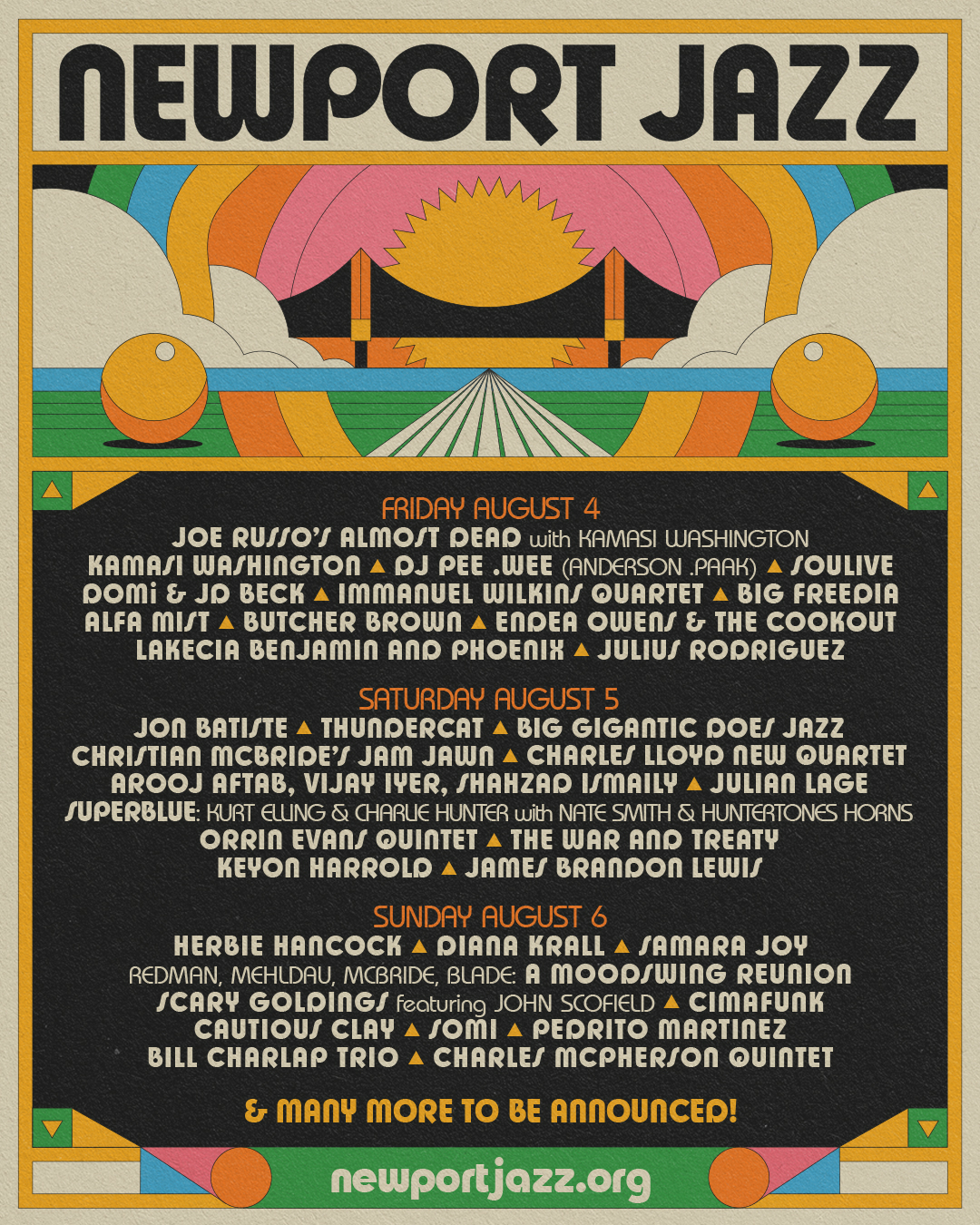
Newport Jazz Festivalwill be returning to Rhode Island’s Fort Adams State Park for its 69th edition. This year’s edition will continue the festival’s long-held tradition of hosting once in a lifetime performances that can only come as a result of Newport’s unique alchemy of intimacy and artistic community.
3-day, 2-day and single-day tickets, as well as 3-day, 2-day and single-day parking passes are currently available through DICE. Full pricing is listed below. Children under 10 are free with a maximum of 2 children attending per ticketed adult. Children 10 and over will need to purchase a full priced admission ticket. For more information go to https://dice.fm/promoters/3gng
TICKET PRICING
3-Day Full Price General Admission: $281.19 (includes fees)
2-Day Saturday & Sunday General Admission: $193.64 (includes fees)
Single-Day General Admission: $100.94 (includes fees)
3-Day Parking: $69.01 (includes fees)
2-Day Parking: $46.35 (includes fees)
Single-Day Parking: $25.75 (includes fees)
NEWPORT JAZZ 2023 LINEUP
Friday
Joe Russo’s Almost Dead with Kamasi Washington
Kamasi Washington
DJ Pee .Wee (Anderson .Paak)
Soulive
DOMi & JD Beck
Immanuel Wilkins Quartet
Big Freedia
Alfa Mist
Butcher Brown
Endea Owens & The Cookout
Lakecia Benjamin and Phoenix
Julius Rodriguez
Saturday
Jon Batiste
Thundercat
Big Gigantic Does Jazz
Christian McBride’s Jam Jawn
Charles Lloyd New Quartet
Arooj Aftab, Vijay Iyer, Shahzad Ismaily
Julian Lage
Superblue: Kurt Elling & Charlie Hunter with Nate Smith & Huntertones Horns
Orrin Evans Quintet
The War and Treaty
Keyon Harrold
James Brandon Lewis
Sunday
Herbie Hancock
Diana Krall
Samara Joy
Redman, Mehldau, McBride, Blade: A Moodswing Reunion
Red Hot has been producing great music to promote diversity and equal access to health care since 1990. The first project was the Cole Porter tribute Red Hot + Blue, quickly followed by Red Hot + Dance, No Alternative, Stolen Moments: Red Hot + Cool, and Red Hot + Rio. Over the past 15 years Red Hot produced two successful projects with Aaron and Bryce Dessner – Dark Was The Night and Day of the Dead – along with a tribute to Arthur Russell and several other projects.
The 20th anniversary reissue is remastered and features two hours of bonus material, including a previously unreleased cover of “Sorrow Tears & Blood” by Bilal, an acoustic version of “Trouble Sleep” with Baaba Maal accompanied by the late and legendary kora player Kaouding Cissoko, and an extended version of Sade’s “By Your Side” by Stuart Matthewman. The original release had to be heavily edited to fit the time limit of a physical CD, and the reissue also features a wealth of bonus material, including extended versions of many album tracks, along with early mixes, acapallas, instrumentals, and much more.
And lastly, the folks at Red Hot have released the album on digital streaming platforms for the first time ever.
Just to refresh your memories a bit: Fela Kuti was — and still is — one of the most important African musicians, bandleaders and activists of his time. Sadly, Kuti died at age 58 in 1997 of causes related to HIV/AIDS, two years before Red Hot began the project.
The idea for the Red Hot Fela tribute came from Questlove during sessions for Red Hot’s Gershwin tribute compilation, which featured a collaboration between The Roots and the late and legendary Bobby Womack. Questlove suggested that Red Hot do a cover of Sly Stone’sThere’s a Riot Goin On but they couldn’t secure the rights.
The ongoing HIV/AIDS crisis in Africa, along with a love of Fela Kuti’s work transformed the project into what we now know. Red Hot secured the rights to Fela’s music, as well as his master recordings, which allowed for both covers and sampling. Questlove kicked things off with a superstar session at Electric Lady Studios covering “Water Get No Enemy,” with a band led by D’Angelo and Fela’s son Femi Kuti, along with members of the Soultronics — James Posner, Pino Pallodino and the aforementioned D’Angelo and Questlove — and Femi’s backing band Positive Force. Nile Rodgers, Macy Gray and Erykah Badu joined the session, although Badu’s vocal didn’t make the final mix. Red Hot producer Beco Dranoff brought in legendary Brazilian artist Jorge Ben Jor to the session a bit too late to join in, but he recorded the basic track of what would become “Shuffering and Shmiling” in another room at Electric Lady overseen by producer Andres Levin.
Red Hot spent the the next two years recording material around the world and at the Fun Machine studio that Andres Levin built in the SoHo office of Funny Garbage, the digital design company co-founded and run by Red Hot’s co-founder and creative director John Carlin. Coincidentally, the Baaba Maal session for Trouble Sleep,” the first session at Fun Machine was on September 10, 2001. 24 hours later, the World Trade Center, which could be seen from the studio windows was attacked. It was a tragic and tumultuous time, but the recordings continued and by the end of the year, there was a joyous celebration of Fela’s music and life about to be released.
The 20th anniversary of Red Hot + Riot is a cause for celebration, but also a sober reflection on the continued devastation of HIV/AIDS, particularly as Sub-Saharan Africa is disproportionately affected by the HIV epidemic: Sub-Saharan Africa currently accounts for 71% of people living with HIV, a devastating reality where 75% of global HIV-related deaths and 65% of new infections occur. I think these numbers will give you a better sense of HIVs impact on Sub-Saharan Africa: Of the 38.3 million people living with HIV worldwide, 27.3 million are in Sub-Saharan Africa. 7.8 million of the 27.3 million infected people are in South Africa, including 6,.3 million young adults and children. 11% of the global population is in Africa but it accounts for over 71% of the global impact in terms of infections and mortality.
The stigma around men who have sex with other men, women’s lack of resources and agency and the vilification of sex workers and drug addicts halt all progress that can be made to aid the HIV/AIDS epidemic. Frequently, ignorance is used to distance the culture from undesirable and uncomfortable topics like intimate partner violence, sex education, the LGBQT+ community and women’s lack of agency and access to proper care.
Tragically, young women and girls bear the brunt of the impact from cultural silence and their pain and misfortune is passed onto future generations. The HIV/AIDS epidemic’s root is the intersection of structural and cultural setbacks in awareness, acceptance, understanding and treatment.
Red Hot celebrates the 20th anniversary reissue by sharing the expanded album’s first single, “Sorrow Tears and Blood,” off the bonus material, a joyous yet righteous, pan-African Diasporic take on the original that sees its talented crew of collaborators — Bilal, Zap Mama and Common — seamlessly meshing elements of jazz, neo-soul, hip-hop and Afrobeat. As Black folk — hell, as people — we need to be concerned with what’s going on in the Motherland, the very cradle of all of us.
Today is February 28, 2021. It’s the last day of February and of Black History Month. Throughout the past month, I’ve featured Black artists across a wide and eclectic array of greens and styles — with the hopes that this series will serve as a sort of primer on the Black experience and on Black music.
While we’re at it, let’s remember the following:
Black culture is American culture — and Black music is American music.
America’s greatest and beloved contributions to the world are Black music styles — the blues, jazz, rock ‘n’ roll and hip-hop.
Black art matters.
Black lives matter — all of them, all of the time.
Gil Scott-Heron is sort of a spiritual godfather to hip-hop and neo-soul — and I can make a fair argument that Public Enemy, Common, Talib Kweli and Mos Def, a.k.a Yasin Bey are indebted to the legend’s work, which threw together spoken word poetry, jazz, the blues and rock in a difficult to pigeonhole mix. And although he hasn’t been with us in about a decade, his work is still an incisive, unnerving look at race in America and globally.
The Detroit, MI-based hip-hop quartet Clear Soul Forces, comprised of E-Fav, L.A.Z., Noveliss, and producer/emcee Ilajide, quickly developed a rotation for lyrically and sonically drawing from 70s street poets and boom-bap era hip-hop, adding their name to a list to exceptionally dope artists from the Motor City. The quartet can trace their origins to a 2009 all-nighter at a Detroit recording studio. The four emcees scraped up the money to record material individually. Coincidentally, Royce Da 5’9″ was finishing work on his album Street Hop in the room next door, and the four emcees jumped at the chance to spit a few rhymes for him. As the story goes, the four young emcees then spent the next nine hours in an epic cypher in which each individual emcee traded bars while an impressed Royce Da 5’9″ intensely listened. Once they finished, the renowned, elder Detroit-based emcee suggested that the young quartet should become a group.
By the following year, the members of Clear Soul Forces began making a name for themselves in Detroit’s underground hip-hop scene with the release of their debut mixtape Clear Soul Radio. The ended 2010 with the completion of their home studio The Complex, where they recorded The Departure EP. Adding to a growing national profile, the act played sets at A3C Festival, the 35 Denton Festival and SXSW, where they played the the Rappers I Know Showcase with Tanya Morgan, H.I.S.D., Just Blaze, The Alchemist, Talib Kweli and Freeway, and followed it up with videos for “The Greatest” and “Strangers In The Night.”
2012 saw the release of the Detroit-based quartet’s full-length debut Detroit Revolution(s), which was reportedly influenced by a large mural on the side of a local apartment building — and by the end of the year, they were selected by Red Bull as a featured artist in the beverage company’s Sound Select program. Now, it’s been a while since I’ve personally written about the act, but if you’re a true hip-hop head, you’d know that the members spent some time working on individual creative pursuits; in fact, you may recall that I wrote about a single off L.A.Z’s solo effort No Paperwork, “Celestial Vibes.” But interestingly enough, the act announced two things — their return and that they’d be releasing a new album, Still slated for a February 22, 2019 release. “They Shootin,'” the first single manages to be a bit of a return to form for the act as its centered around a warm 90s inspired hip hop production featuring a smooth and jazzy organ line and thumping beats that’s roomy enough for each individual emcee to trade bars. And while each emcee has a different flow and vocal range, they all manage to self-assuredly display incredibly dexterous wordplay and rhyme schemes.
Directed by Xerox Vision, the recently released video for “They Shootin'” serves as a visual re-introduction to the group while effortlessly blending real-life violence with actual consequences with video game mayhem. As the act’s Ilajide explains in press notes, “The inspiration came from the stigma that when it gets hot the murder rate goes up,” he says. “Couple that with the fact that they always shootin’ in Detroit, it was perfect to spin it like a respawn in an online match on multiplayer video games.” His ba ndmates share the sentiment while noting that for all of them, it was natural reference video games and gaming. As children of the 90s, they all owned various consoles, played a ton of games — and were aware of the fact that crime was high and rampant, making the video and track an organic result of their shared experiences.