Tag: The Guardian

New Video: The Mournful Sounds and Visuals of TR/ST’s “Destroyer”

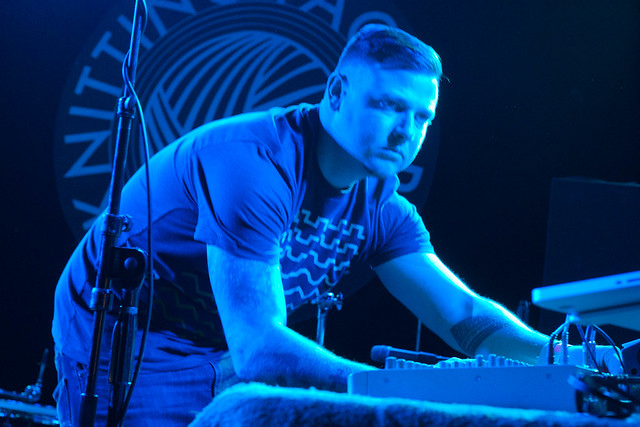
The Toronto, ON-based JOVM mainstay Robert Alfons, best known for his industrial pop recording project TR/ST has released two critically and commercially successful, full-length albums — his self-titled debut received praise from Vice, Pitchfork and The Guardian, as well as a  Juno Award nomination. Joyland, Alfons’ sophomore effort was a major chance in sonic direction, with the material being much more pop orientated and radio friendly sound while possessing a club friendly, muscular thump. And as you may recall, after a lengthy world tour to support Joyland, Alfons managed to write and record a series of singles, including the menacing,  Snap!’s “Rhythm Is A Dancer”-like “Slug,” which I wrote about several years ago. 

Interestingly, the renowned Toronto-based producer and electronic music artist will be releasing his highly-anticipated third, full-length effort, which is slated for release sometime in 2018 and will feature the previously released single “Bicep.” His latest single finds the renowned Canadian producer pairing organic instrumentation — here being, piano, drums and horn (albeit, what sounds like a horn sample) with a slick and lush electronic production featuring thumping beats, samples and looping machines and a soaring hook over which Alfons contributes his mournful and aching baritone. 

Directed by Justin Tyler Close and famed choreographer Ryan Heffington, the recently released video for “Destroyer,” features Heffington in his first starring role, as an intense man, who’s barely holding it together as we’re introduced to him intently walking towards the camera and running elsewhere, before seeing him expressively dancing in a number of different locales in and around the Silver Lake section of Los Angeles. At one point, he runs into a man with motorcycle helmet, who he paralyzes with mere words — sticks and stones may break your bones, and words may kill you, too. Influenced by detailed conversations between each collaborator have influenced a rather symbolic set of visuals based around a desperate, last ditch effort to save a failing relationship. Heffington’s movement manage to express joy remembered, self-reflection, turmoil, ache and longing, further emphasizing the song’s overall vibe.  
New Video: JOVM Mainstays Pavo Pavo Return with Hazy and Dreamy Visuals for “No Mind”

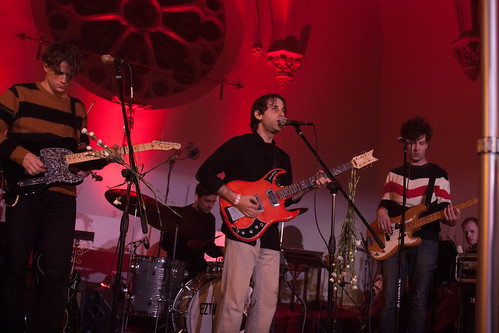
If you’ve been frequenting this site over the past 12-18 months or so, you’ve likely come across a handful of posts featuring the Brooklyn-based experimental pop/psych pop act  Pavo Pavo. Deriving their name from the name of southern constellation Pavo, which is Latin for peacock, the members of the band Eliza Bagg (violin, synths, vocals), Oliver Hill (guitar, synths and vocals). Nolan Green (guitar, vocals), Austin Vaughn (drums) and Ian Romer (bass) can trace its origins to when the members of the quintet were studying at Yale University. And since their formation, individual members of the band  have collaborated with the likes of a number of renowned and accomplished bands including Here We Go Magic, John Zorn, Dave Longstreth, Porches, Olga Bell, Lucius, Roomful of Teeth and San Fermin among others. Now, as you may recall their “Ran Ran Run”/”Annie Hall” 7 inch was praised by a number of media outlets and blogs, including Stereogum, who praised their sound as being “weightless pop music that sounds like it was beamed down from a glimmering utopian future.” Although, I’d mention that while clearly nodding at 60s psych pop and 80s New Age, just underneath the glimmering surface, there’s a subtle hint at unease, anxiety, rot and dysfunction. 
The band’s full-length debut Young Narrator in the Breakers was released last year through Bella Union Records and according to the members of Pavo Pavo, the material thematically describes both the magic and panic of adult life, with the understanding that much like getting caught in a vicious breaker while swimming at the beach, you have to stop fighting and ride it out until you can get to shore safely. And unsurprisingly, the album was met with critical applause with Pitchfork describing the album as “a lovelorn alien reaching out from the farthest reaches of the galaxy” and The Guardian describing the album to “Brian Wilson running amok in the BBC radiophonic workshop.” 

“No Mind,” Young Narrator in the Breakers’ latest single is a deceptively straightforward track. Although it hews very close to hazy 60s psych pop, the song is a swooningly wistful and lovelorn song that seems much more bittersweet than their previous releases while retaining their incredibly crafted sound centered on Bagg’s and Hill’s gorgeous boy/girl harmonizing, soaring, vintage analog synths and sharp hooks. “No Mind” may arguably be the most human of their tracks, as there’s a real ache over 

Directed by the band’s longtime friend Jon Appel, the video started as a concept devised by the band’s Eliza Bagg. Bagg’s concept began as a take on the prototypical performance-based music video; but featuring an abstract narrative and dance choreography. Reportedly, she pictured a bleak, digital space with her own character being a sort of rebellious siren of truth, dancing and singing songs of real connection while the rest of her band grew increasingly complacent and robotic within the video’s highly artificial and colorful confines. Appel guided Bagg and her bandmates through the process of adapting and bringing her ideas to life — and as a result, the video builds off the characters of the other videos off Young Narrator, an amalgamation with Bagg returning to the sunshine on a white cloud chrysalis. And while being a hazy, almost lysergic-tinged dream, the video possesses a tender and surreal beauty. 

Comprised of Ella Thompson and Graeme Pogson, GL is a Melbourne, Australia-based electronic music production and artist duo, who with the release of 2013’s Love Hexagon EP and their full-length debut Touch developed a reputation for specializing in a sound that’s very much a contemporary take on disco, funk, boogie, soul and house music, and as a result the Australian electronic music duo quickly earned international attention from The Guardiani-DThe FADERV Magazine, XLR8R and others, as well as played sets at New Zealand’s St. Jerome’s Laneway Festival and Splore Festival while nationally they’ve opened for Nick Murphy fka Chet Faker and played a successful headlining national tour to support their full-length debut.

Building upon a growing national and international profile, which resulted in a busy touring schedule, the duo locked themselves away in the studio to write and record the double A-sided single “Destiny”/”Reflect,” and as the duo explain “‘Reflect’ is an extended jam we made at TFS Studio in North Fitzroy, Melbourne. We wanted to try a long form exploration piece. Listen out for the delightful keyboard solo by Harvey Sutherland! Lyrically, it’s about searching inward, when the outside gets a bit much.” Interestingly enough, the song while being decidedly introspective manages to be joyous, suggesting that searching inward can be a profound solace in a cruel world or as George Clinton once wisely sung “The kingdom of heaven is within.” Of course, sonically, the song will further cement the duo’s reputation for crafting a sound that draws so much  from 80s and 90s house music and 80s synth soul that it brings to mind The WhispersIt’s A Love Thing,” “And The Beat Goes On,” and “Rock Steady,” Evelyn “Champagne” King’s “Love Come Down” and Cherelle‘s “Saturday Love” as Pogson pairs a production featuring layers of shimmering and cascading synths, a sinuous bass line, tribal drumming, bursts of shimmering keys and a soaring hook with Thompson’s self-assured vocals. Simply put, it’s arguably one of the most DJ-leaning, club rocking tracks I’ve written about in several months; in fact, if I were DJ’ing, I’d make sure to fit this one into a set.


Over the past 12-18 months or so, you might recall that the Spanish-born, Berlin-based singer/songwriter and pop artist Sofi de la Torre quickly became a JOVM mainstay artist. de la Torre can trace the origins of her musical career to when she first began writing songs when she was 14 — and after stints in  Los Angeles and  London, where she signed a publishing deal with Sony/ATV and then wrote and recorded her full-length debut. As the story goes, after the release of her debut, de la Torre went through an extensive period of reflection, self-discovery and re-invention, which began with the JOVM mainstay artist experimenting with her sound and songwriting approach. Interestingly, her early experimentation eventually lead her to collaborate with Finnish songwriting and production team Jonas Karlsson and Axel Ehnström and the critically applauded “Vermilion,” which was featured on The Guardians playlist and on Grimes’ blog.  The track was then remixed by deep house producers Crom and Thanh and played by Tiesto on his BBC Radio 1 program –- adding to an already growing international profile across the European Union.

Along with a growing international profile, de la Torre has developed a reputation for being rather prolific, releasing two critically applauded EPs That Isn’t You and Mess; in fact, at one point Mess steadily climbed the the Hype Machine charts and was featured in Spotify’s Weekend Buzz playlist. Now, although it’s been a little bit of time since I’ve personally written about her, de la Torre has been rather busy, writing and recording her latest EP Another. Not Me. I’m Done, and the EP’s latest single “D.G.I.T. (Don’t Get It Twisted)” is a collaboration featuring Blackbear and Taylor Bennett that further cements de la Torre’s reputation for deeply personalized songwriting — in this case, writing a song in which its narrator recognizes that because of her selfishness and immaturity, that she almost took a great thing for granted. And as a result, the song possesses a sense of vulnerability, regret and hopefulness — the hope that she hasn’t screwed it all up and hasn’t permanently lost a good thing. But along with that, the song pairs slick yet minimalist production consisting of tribal-like percussion, swirling electronics with de la Torre’s ability to craft a razor sharp, radio-friendly hook.


New Video: The Moody Visuals for The Away Days “Places To Go”

With the release of their How Did It Start? EP to critical praise both nationally and internationally from the likes of The Guardian, SPIN Magazine,and Noisey, as well receiving airplay from renowned Seattle, WA-based radio station KEXP, the Istanbul, Turkey-based quartet The Away Days quickly established a reputation for being a the forefront of an extremely Western-influenced indie music scene, thanks in part for a sound that’s largely inspired by The Cure, Tame Impala and others. And adding to a growing international profile, the members of the Turkish indie rock quartet have toured across the UK, played at two consecutive SXSW Festivals and have played festival dates opening for Portishead, Massive Attack, Belle and Sebastian and others.

Now, if you’ve been frequenting this site over the past couple of years, you may recall that the Istanbul-based quartet have released a handful of singles that have received international attention — including this site — since the release of their debut EP. However, the band’s long-awaited full-length debut Dreamed at Dawn was released earlier this year, and landed at number 5 on the Turkish album charts, marking it both a commercial success and the highest ever chart position for a Turkish indie rock album. The Turkish indie rock band’s commercial and critical success in their homeland and elsewhere shouldn’t be surprising as Dawn’s first two singles “Less Is More” and “World Horizon” paired atmospheric and moody yet lush instrumentation and ethereally shimming synths with material that thematically and lyrically drew from the band members’ own lives in a society in which their creative desires and efforts are viewed as being suspicious and seditious.

“Places to Go,” Dreamed at Dawn’s third and latest single continues along a similar vein as its two preceding singles as it’s a lush and plaintive song featuring shimming guitar chords played through a bit of reverb and delay pedal, an angular and propulsive bass line, twinkling synths and a rousingly antthemic hook,. and in some way, sonically the song manages to mesh dance floor friendly post-punk, electro pop and shoegazer rock; however, despite the seemingly upbeat tone, the song is a look into their lives and their cohorts as it touches upon the weight their homeland’s young people feel from an oppressive and seemingly capricious regime that demands oppression and a restlessness from the lack of meaningful opportunities.

Interestingly, the recently released music video for the song is based upon a deceptively simple concept of the band performing the song in a dramatically lit studio but throughout there are vivid bursts of animation that explode across the screen.

New Video: The Action-Packed, Comic Video for Homeboy Sandman’s “Talking (Bleep)”

New York-born and based emcee Homeboy Sandman is arguably one of hip-hop’s most prolific, inventive and uncompromisingly challenging artists, and unsurprisingly over the course of this site’s history, the New York-based emcee has been a JOVM mainstay. Now, since […]

With the release of their 2010 self-titled EP and their 2012 full-length debut Differance, South Korean trio Jambinai, comprised of   Bongi Kim (haegum — a Korean fiddle-like instrument), Ilwoo Lee (guitar and piri — a Korean flute, made of bamboo) and Eun Young Sim (geomungo, a Korean zither), the trio have developed a rapidly growing national and international reputation for an intense, adventurous, headbanging worthy take on traditional Korean instrumental music. As the story goes, the trio met while studying traditional music at Korea National University of Arts, and they quickly bonded over a desire to present traditional music in a new way, “to communicate with the ordinary person, who doesn’t listen to Korean traditional music,” as the band’s principle composer and writer Ilwoo explains in press notes. Interestingly, Jambinai’s approach eschews several generations of Korean modernists and post-modernists, who Lee notes have based their sound and approach around Western classical music, jazz, jazz fusion to create a prog rock/experimental rock sound.

And while shocking Korean audiences, the trio have also been critically and commercially successful as their full-length Differance was nominated for Best Crossover Album and Best Jazz and Crossover Performance at the 2013 Korean Music Awards, and won Best Crossover Album — and as a result, the band used the album’s success as a springboard for several international tours as a quintet featuring  Jihoon Ok (bass) and Jae Hyuk Choi (drums) that have seen praise from a number of major Western outlets including The Guardian and others.

A Hermitage, the trio’s forthcoming sophomore effort and Bella Union Records debut is slated for a June 17 release, and the album’s latest single “They Keep Silence” is a tense, throbbing and furious song full of angular and stabbing chords paired layers upon layers of feedback and distortion in a composition that consists of downtuned and punishing power chord-heavy sections and brief and quite sections of respite and introspection. Sonically, the song sounds as though it draws from Tool and Ministry  — or simply put it kicks ass, takes names and kicks more ass just to ensure that you got the point. In fact, the song seems to tape into a universal feeling of anger and isolation of people, who are growing both impatient and suspicious of the forces that are controlling and influencing their daily lives.


New York-born and based emcee Homeboy Sandman is arguably one of hip-hop’s most prolific, inventive and uncompromisingly challenging artists, and unsurprisingly over the course of this site’s history, the New York-based emcee has been a JOVM mainstay. Now, since  signing with renowned indie hip-hop label Stones Throw Records in 2011, the Boy Sand has recorded and released 3 full-length albums and 6 EPs — with the most recent release being a collaboration with Aesop Rock titled Lice. And with each effort, Homeboy Sandman along with a growing list of collaborators have managed to push the boundaries of what contemporary hip-hop should be, sound like and concern itself with thematically; in fact, few contemporary emcees can tackle sociopolitical issues with such a creative and witty use of wordplay and incredibly complex rhyme schemes.

Simultaneously, Homeboy Sandman has developed a reputation as being a highly sought-after social and cultural critic who has an thought-provoking pieces published in Gawker, Huffington Post and The Guardian among others. And as the New York-based emcee explains in press notes ,”I don’t want to write something to be a conversation piece. It has to help change something.”

Kindness for Weakness, the Boy Sand’s forthcoming full-length effort is slated for a May 6, 2016 release through Stones Throw Records, and the album’s title is informed by the New York-based emcee’s personal saying that “mistaking kindness for a weakness is a weakness I need to have more kindness for.” Reportedly, the album thematically focuses on Homeboy Sandman’s discomfort within his own comfort zone and addresses his personal insecurities, rapper stereotypes and morality among others. “Talking Bleep,” Kindness For Weaknesses‘ first single was produced by Edan and pairs a warm, glitchy and psychedelic-leaning soul sample with some scratching with Homeboy Sandman’s ridiculous flow. Throughout the song, the New York-based emcee discusses a series of ridiculous situations that have recently occurred to him including fans who desperately want to him to continue releasing the same exact songs without considering the fact that as an artist, his sole duty is to evolve and challenge himself, and in turn his fans; Huffington Post asking him to write about his thoughts about a rap beef, after he had written and then published a controversial article linking mass media and private prisons; producers who want him to guest spot for free or very little money; corny emcees who try to give him career advice; and more. It’s arguably Homeboy Sandman’s most incisive and riotously funny song while being pointedly and thoughtfully sociopolitical with playful inner and outer rhymes.

Simply put Homeboy Sandman is one of my favorite contemporary emcees and although he’s not as commercially successful as the likes of Drake, Meek Mill, Fetty Wap or Wocka Flocka Flame, that may be a boon to those who love real hip-hop with dope emcees, who actually have something significant to say, rhyming over insane productions. Real hip-op will thankfully never, ever die; it’s just more difficult to find when listeners are inundated with bullshit.


i


Influenced by The Strokes, The Clash, Haim, Velvet Underground, Courtney Love, Charli XCX and Mazzy Star and comprised of siblings Marika Justad and Miro Justad, and Toby Kuhn, Seattle, WA-based trio Tangerine was formed back in 2012. And in a short period of time, the Seattle-based trio quickly rose to national and intentional prominence from the likes of NME, The Guardian, Vice Noisey, Rookie Mag and others for a sound that draws from 90s alt rock, 80s New Wave, indie rock, R&B and pop; in fact the band’s sound has been compared favorably to the likes of Best Coast, Camera Obscura and Speedy Ortiz — as shimmering guitar chords are paired with tight pop-leaning hooks.

The trio’s latest EP Sugar Teeth was released earlier this year through Swoon Records and the material is reportedly inspired by life on the road as a touring band and the artists they toured with, who coincidentally were major influences on the band — while exploring youthful rebellion, a chaotic and dysfunctional relationship and a wistful nostalgia over faded friendships. And the EP’s second and latest single “Tender” will continue to cement the band’s reputation for shimmering guitar-based surfer rock-leaning pop that sounds as though it draws from The Go-Gos  — complete with a similar bittersweet playfulness wrapped around infectiously pop-leaning hooks.

The band is currently on a rather extensive tour that includes several SXSW sets and a late April NYC area stop at Cake Shop. Check out tour dates below.

Tour Dates
3/16/2016 – Austin, TX @ SCRATCH HOUSE
3/18/2016 – Austin, TX @ Westin Hotel in Downtown Austin
3/20/2016 – Austin, TX @ Spider House (day party)
3/22/2016 – San Diego, CA @ The Hideout
3/24/2016 – Reno, NV @ Holland Project
3/25/2016 – Boise, ID @ Treefort Festival
4/2/2016 – Pullman, WA @ Washington State University
4/16/2016 – Spokane, WA @ Observatory
4/17/2016 – Boise, ID @ Neurolux
4/18/2016 – SLC, UT @ Kilby Court
4/20/2016 – Sioux Falls, SD @ Total Drag Records
4/21/2016 – Des Moines, IA @ Vaudeville Mews
4/22/2016 – Chicago, Ill @ Emporium
4/23/2016 – Detroit, MI @ UFO Factoy
4/24/2016 – Toronto, ON @ Smiling Buddha
4/26/2016 – Providence, RI @ Aurora
4/27/2016 – Boston, MA @ Middle East
4/28/2016 – New York, NY @ Cake Shop
4/30/2016 – Richmond, VA @ Hardywood Park Craft Brewery
5/1/2016 – Raleigh, NC @ Neptune’s
5/2/2016 – Ashevile, GA @ Tiger Moungain
5/4/2016 – Athens, GA @ Georgia Theater , Rooftop
5/5/2016 – New Orleans, LA @ Siberia
5/6/2016 – Houston, TX @ Walter’s
5/10/2016 – Los Angeles, CA @ TBA
5/11/2016 – San Francisco, CA @ Rickshaw Stop
5/12/2016 – Eureka, CA @ Shanty Tavern
5/13/2016 – Portland, OR @ The Know
05/27-30/2016 – George, WA @ Sasquatch Festival


Last year, the renowned director, screenwriter, producer and composer John Carpenter released his first album of non-soundtrack-based music, Lost Themes to critical praise from an impressive array of major media outlets including The GuardianThe New York TimesThe TimesUncutThe WireThe Los Angeles TimesNPRPitchforkVanity FairNewsweekBillboardEntertainment WeeklyArtforumThe Wall Street Journal, Rolling Stone and others. And as a result, the album was one of the most commercially successful albums released in Sacred Bones Records history, as the album debuted on the  Top 100 Charts in both the UK and US. Unsurprisingly, the album, which was recorded with Carpenter’s son Cody Carpenter and his godson Daniel Davies strongly confirms what cinephiles, sci-fi fans and Carpenter files have asserted for countless years — that the director’s work was not only years ahead of its time but that his work has managed to continually influence contemporary electronic music. In fact, artists like Red Traces and Umberto have released works that frequently seem indebted to Carpenter and his film scores.

Building on the buzz and success that Carpenter and Sacred Bones Records received after the release of Lost Themes, the director and the indie record label released Lost Themes Remixed, an album that featured remixes from the likes of  Zola JesusSilent ServantFoetus‘ JG Thirwell, Skinny Puppy‘s ohGr, PAN Records‘ Bill Kouligas, and Uniform. (In fact, if you’ve been frequenting this site over the past few months, you might recall that I wrote about Uniform’s dance-floor ready remix of Carpenter’s “Vortex” and Zola Jesus and Dean Hurley’s techno-leaning rework of “Night.” But interestingly enough, Carpenter has been incredibly prolific, as Sacred Bones and Carpenter will be releasing a sequel to Lost Themes Lost Themes II on April 15.

The material on Lost Themes II is inspired and informed by a change in the creative process with Cody Carpenter, Daniel Davies and the acclaimed producer writing, working revising and recording in the same studio — and with all three collaborators working together, the result was a more focused effort, completed on a compressed schedule, in a similar fashion to Carpenter’s earliest films. Additionally, the material is much more nuanced and lush, as the trio of collaborators added acoustic and electric guitar to flesh out the material, as well as add texture. Last month, I wrote about Lost Themes II‘s first single,  “Distant Dream” pairs John Carpenter’s unmistakable minimalist synths with live drums, bursts of angular guitar and bass chords, and swirling electronics in a moody and tense composition that sounds as though it could be part of a taut, psychological thriller set in a dystopian future. Lost Themes II‘s second and latest single “Angel’s Asylum” pairs layers of dramatic and twinkling and undulating synths and ambient electronics with buzzing power chords and four-on-the-floor drumming in a composition that has the trio quickly building upon a theme but with subtle variations until a gently strummed acoustic guitar section paired with ambient electronics and synths and a gentle layer of twinkling synths form the composition’s coda. In many ways the song goes from an extremely dark and rock-like intensity to an ethereal beauty that arches heavenward at the end.

Swedish singer/songwriter and multi-instrumentalist David Alexander and his solo dream pop/electro-pop Summer Heart has received international attention for a wistfully nostalgic, 60s psych pop-leaning, lo-fi sound that compares favorably to Caribou‘s earliest material, Washed Out, In Ghost Colours-era Cut Copy, Painted Palms and others; in fact, his 2011 Please Stay EP received praise from The Guardian and The Star topped Hype Machine‘s charts. In his native Sweden, Alexander has a reputation for being a pioneer of Sweden’s burgeoning dream pop movement, a movement that includes MoonbabiesThe Land BelowHey ElbowBlind Lake and Emerald Park.

Interestingly, Alexander’s international profile has grown as several of his songs have appeared in TV series — including the NBC series, Whitney, which brought him the attention of millions of American TV viewers. Now, if you were frequenting this site last year, you might recall that I wrote about “Nothing Can Stop Us Now,” a song that consisted of jangling guitars, washboard-led percussion, layers of ethereal vocals and cascading synths with a warm buzzing summer afternoon warmth. His latest single “The Forbidden” off his forthcoming EP also named The Forbidden is a slow-burning and shoegaze-leaning single that pairs Alexander’s ethereal cooing with shimmering guitars and synths played through gentle amounts of reverb  and jazz-like drumming. And although the song evokes the sensation of waking up from a pleasant dream, just underneath its placid surface is a wistful melancholy that will remind the listener that all things will eventually dissipate.

Alexander along with a backing band featuring some of his dearest friends will be making Stateside appearances at SXSW and Williamsburg Brooklyn’s The Knitting Factory later this month. Check out tour dates below.


SXSW:

Wednesday 16th March

The Townsend – 1:05am


Saturday 19th March

Icenhauer’s – 1am


NYC:

Wednesday 23rd March

Live In Brooklyn – The Knitting Factory –

http://www.ticketweb.com/t3/sale/SaleEventDetail?dispatch=loadSelectionData&eventId=6437785


John Carpenter is a director, screenwriter, producer, editor and composer most commonly known for working in some of the most beloved and influential, horror and science fiction films of the 70s and 80s, including Dark Star (1974), Assault on Precinct 13 (1976), Halloween (1978),The Fog (1980), Escape from New York (1981)The Thing (1982), Christine (1983), Starman (1984), Big Trouble in Little China (1986), Prince of Darkness (1987), and They Live (1988) — with the Halloween theme being one of the most recognizable themes in movie history.

Last year, Carpenter released his first album of non-soundtrack based music, Lost Themes to critical praise from an impressive array of major media outlets including The GuardianThe New York TimesThe TimesUncutThe WireThe Los Angeles TimesNPRPitchforkVanity FairNewsweekBillboardEntertainment WeeklyArtforumThe Wall Street Journal, Rolling Stone and others. Additionally, the album was one of the most commercially successful albums released in Sacred Bones Records history, as the album debuted on the Top 100 Charts in both the UK and US.

Unsurprisingly, the album, which was recorded with his son Cody Carpenter and the fameddirector, producer and composer’s godson Daniel Davies, the album confirms the fact that John Carpenter’s sound and aesthetic was not only ahead of its time but manages to be timeless and powerfully influential — with the work of artists like Red Traces, Umberto and others being deeply indebted to John Carpenter and his film scores. Now interestingly enough Carpenter closed out the last half of 2015 with the release of Lost Themes Remixed, an album that featured remixes from the likes of Zola JesusSilent ServantFoetus‘ JG Thirwell, Skinny Puppy‘s ohGr, PAN Records‘ Bill Kouligas, and Uniform.

The incredibly prolific Carpenter will be releasing a sequel to Lost Themes Lost Themes II which is slated for an April 15 release through Sacred Bones Records. The material on Lost Themes II is inspired by a change in the creative process with Cody Carpenter, Daniel Davies and the acclaimed producer writing, working revising and recording in the same studio — and with all three collaborators working together, the result was a more focused effort, completed on a compressed schedule, in a similar fashion to Carpenter’s early films. Additionally, the material is much more nuanced and lush, as the trio of collaborators added acoustic and electric guitar to flesh out the material, as well as add texture.

Lost Themes II‘s first single “Distant Dream” pairs John Carpenter’s unmistakable minimalist synths with live drums, bursts of angular guitar and bass chords, and swirling electronics in a moody and tense composition that sounds as though it could be part of a taut, psychological thriller set in a dystopian future.


Typically, the majority of most Americans — hell,  most Westerners, really — are largely unfamiliar with music scenes and artists outside of the usual bastions of popular music — i.e., the US. the UK, Australia, France, Germany, Sweden, Iceland and maybe a few outside of that sphere, such as Nigeria, South Africa, Mali and a few others. Now, if you’ve been frequenting JOVM over the past couple of years, there has been a increasing focus on presenting and covering artists from diverse backgrounds from all over the globe. And interestingly enough, one of those acts has been the Istanbul, Turkey-based indie rock/dream pop quartet The Away Days. Inspired by The Cure, Tame Impala and others, the quartet have developed a reputation in their homeland as being among the forefront of a Western-inspired indie rock scene. Their How Did It Start? EP was released to critical praise internationally from the likes of Seattle‘s renowned indie radio station KEXP, The Guardian, SPIN Magazine, Noisey, and the blogosphere. And with a growing international profile, the quartet went on a tour of the UK and made an appearance at SXSW.

It’s been close to 18 months since I’ve last written about them but in that time, they’ve been working on the material, which would eventually comprise their long-awaited and forthcoming full-length debut, slated for release sometime next year. The yet unnamed debut’s first single “Less Is More” is a lush and atmospheric song that features plaintive vocals paired with four-on-the-floor drumming, shimmering guitar chords, brief bursts of cascading synths, a sinuous bass line and soaring, anthemic hooks that sounds indebted to 80s New Wave and post-punk.

2016 looks to be a big year for the Turkish quartet as the band has been confirmed to make a return appearance at SXSW in March and will be announcing additional tour dates to support their debut. Hopefully, there will be a New York tour date or two!