Tag: Tom Petty

Live Footage: Acclaimed Singer/Songwriter Dylan LeBlanc Performs “Renegade” at FAME Studios

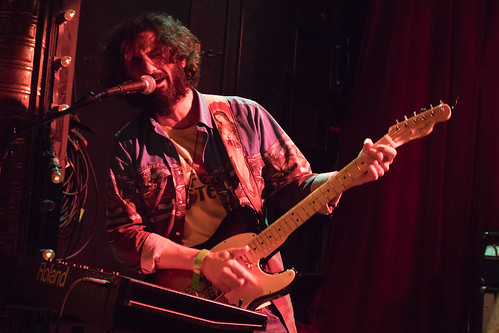
Dylan LeBlanc is Shreveport, LA-born and based singer/songwriter and guitarist, who grew up in a very musical home. LeBlanc’s father was a country singer/songwriter. who performed in various bars and clubs across the region. At a very young age, LeBlanc acquired a unique musical education, in which he frequently spent late nights watching his father and other musicians record at the studios, where his father play as a studio musician. Naturally, the Shreveport-born and-based singer/songwriter and musician was intrigued and became a musician himself, eventually playing in his first band, an alternative rock band by the name of Jimmy Sad Eyes Blue with another local musician Daniel Goodwill. 

As the story goes, Goodwill inspired LeBlanc to begin writing his own music. After spending a few years with Jimmy Sad Eyes Blues, LeBlanc was forced to attend rehab. Following rehab, LeBlanc decided to pursue music full-time instead of returning to high school. He joined Muscle Shoals Punk Rock band, replacing its lead singer, who left the band to join Sons of Roswell — and as a member of the band, Dylan toured throughout the region. A few years later, he co-founded the band Abraham, a band that also featured Alabama Shakes’ Ben Tanner, who at the time was also the house engineer at FAME Studios. 

When LeBlanc turned 19, he left Abraham to pursue a solo career. He signed with Rough Trade Records, who released his full-length debut, 2010’s Paupers Field, which featured “If The Creek Don’t Rise,” a collaboration with Emmylou Harris. To support the album, the Shreveport-born and-based singer/songwriter and guitarist opened for the likes of Lucinda Harris, The Civil Wars, Laura Marling, George Ezra and Calexico. Building upon a growing profile, LeBlanc’s sophomore album 2012’s Cast the Same Old Shadow was released to critical praise, with The Guardian calling the album’s songs “as beautiful as they are bleak,” and the album itself, “eerie rather than unsettling.” That year, LeBlanc opened for Bruce Springsteen, First Aid Kit, The Drive By Truckers and Alabama Shakes. 

Dylan LeBlanc’s third full-length album, the John Paul White-produced 2016’s Cautionary Tale featured Alabama Shakes’ Brittany Howard and was praised by the likes of NPR and No Depression. Supporting that album, he wound up touring with the likes of Anderson East, The Wood Brothers and others. 

Interestingly, LeBlanc’s fourth album, the recently released Dave Cobb-produced Renegade finds the Shreveport-born and-based singer/songwriter and guitarist and his backing band attempting to write the sort of songs that matched the atmosphere that they were bringing live. “So, I started with ‘Renegade,’ which was fitting since I felt myself going in a new, more intense direction with this record. In the studio, I let go almost absolutely and let Dave Cobb do his work. It was a different experience for me-how focused Cobb was and how quickly we would get live takes down, mostly in one or two takes and never more than three. It left me spinning at how quickly it all came together. Over the course of ten days Renegade was complete and ready for mastering. And I couldn’t be more excited to share it with you.”

“Renegade” the album title track and first single off the recently released album is a shuffling and atmospheric, minor key rocker, centered around an atmospheric hook, shimmering, pedal effected guitars and LeBlanc’s lilting falsetto, and while clearly being indebted to Damn the Torpedoes-era Tom Petty, the carefully crafted reveals a novelistic attention to psychological depth, as it tells the story of two star-crossed lovers — one, who seems desperate to leave, the other, who is desperate to stay. 

Directed by Alysse Gafkjen, the recently released video was filmed at Muscle Shoals’ legendary FAME Studios. Interestingly, the live session was a sort of homecoming for LeBlanc, who who began working at the studio when he was 16 — and where he later began recording his own music. “It was surreal and brought me back to a time and place that I had almost forgotten,” LeBlanc says of the sessions. “The only place where time always seems to stand still.” 


Earlier this year, I wrote about Photo Ops, the folk-tinged, dream pop recording project of Los Angeles, CA-based singer/songwriter Terry Price. And as you may recall, Price began Photo Ops as a way to find meaning within an onslaught of of traumatic and life altering events — a sudden and serious medical condition, his father’s death and the breakup of his longtime band Oblio. All of those things wound up inspired 2013’s Photo Ops debut, How to Say Goodbye.

Building upon a growing profile, 2016’s Patrick Damphier-produced sophomore album Vacation was released to critical praise with several songs off the album making appearances in film and TV, including the trailer for the motion picture People, Places, Things, several episodes of ABC’s Blood & Oil and CW’s Valor — and as a result, the album and its material amassed several million streams on Spotify. Adding to a big year, Price eventually signed a publishing deal with Secretly Canadian.

Like countless sensitive and thoughtful souls, Price was shaken and dazed by the 2016 election. He quit touring for Vacation, went dark on social, left Nashville, where he had lived for 15 years and relocated to Los Angeles. “I needed to shed my skin,” Price recalls in press notes. “I needed to look outside myself for inspiration,” Price explains. “It’s a matter of survival to know that there is beauty in the world. So that’s my mission now: to show that there still is beauty in the world. I honestly don’t know how else to write right now.”

Slated for release later this year, Price’s third Photo Ops effort, Pure at Heart was partially inspired by his listening and careful study of  Bob Dylan‘s Sirius XM show, Bob Dylans’s Theme Time Radio Hour while driving through the Southwest. “They were mostly old songs. What struck me was the spirit that was behind them. They’re just people in a room with a microphone, so they would have to self-correct and really conjure a spirit in the moment. Something about that felt so vital to me. It sounds like a time and place,” Price says. And as a result, the forthcoming album, which continues Price’s ongoing collaboration with Patrick Damphier is based around a production that emphasizes a sense of immediacy that’s a sort of Jack Kerouac-like first thought, best thought fashion. Along with that, the arrangements throughout the album’s material are also based around immediacy and ease with Price using an intentionally limited set of instruments: one acoustic guitar, one electric guitar, a vintage, 60s Ludwig drum kit, a stand-up piano, a Hofner bass and a small Casiotone keyboard. And although for this album Price is working remotely with the Nashville-based Damphier, the album’s songs were recorded as soon as they were written.

Reportedly, one of the biggest and most noticeable changes throughout the album is in Price’s voice, as the album features Prince singing with a relaxed, easy-going, upper register. “It’s partly an accident of location,” Price explains. “In Nashville, I had a garage. I could go out and make as much noice as I wanted. In L.A., you have to be more thoughtful about your neighbors.” Unsurprisingly, the need to sing quietly opened up the opportunity to experiment with space and restraint.

Now, as you may recall, the buoyant, at Full Moon Fever-era Tom Petty-like “July” featured an infectious hook while its narrator sighs with a mix of clinically and highly ironic detachment and compassion over the end of a major relationship centered with the understanding that all things must end at some point. “Palm Trees,” Pure at Heart‘s latest single is a breezy and twangy, 70s AM rock-inspired track — and while bittersweet and wistful, the track finds its narrator following a wandering train of thought on a beach without judgement of interpretation, as though he were observing and meditating on the fleeting and pointless nature of everything around him. (You can small the salt in air, see the palm tress waving back and forth in the breeze . . .) “One nice thing about L.A. is that when you go to the beach, you are forced to reckon with profound wealth on display,” Price explained to Buzzlands.la. “This song is about trying to disentangle natural beauty from conspicuous consumption. And missing your friends.”


Model Citizen is an 18-member Brooklyn-based band that features a core group of collaborators, Mark Ciani (songwriting, production, keys), Matt Musty (drums), Alvaro Kapaz (guitar), Ryan Gleason (bass) and Fernando Lodeiro (engineering and production), who have collaborated together on two full-length albums released under different names — Stone Mountain Station‘s Electric Sile_ce and The Alternative Facts‘ Don’t Worry, Babe. Josh Logan, a former contestant on The Voice joins the project along with a rotating cast of players to fill out the band’s lineup. Interestingly, the Brooklyn-based collective’s newest album The Next Life is slated for release in July, and the album will further cement Ciani’s long-held reputation for kaleidoscopic exploration of genre and sub-genre  — with the album’s material bouncing across a dozen different styles and genres.
Interestingly, The Next Life‘s latest single is the Springsteen meets Tom Petty meets Foo Fighters meets blue-eyed soul-inspired “Magic Trick.” Centered around a soulful horn arrangement, enormous power chords, a propulsive rhythm section, a rousingly anthemic hook and some soulful crooning, the single reveals a deliberate attention to old school craft while being a politically charged song, that features its narrator openly calling out hypocrisy, bullshit and racism in everything he sees and is surrounded by.


New Video: Nashville’s Rock Eupora Releases a Lyrical and Wistful Visual Focusing on Enjoying the Moment

Clayton Waller is a Mississippi-born, Nashville-based singer/songwriter and multi-instrumentalist, who through the release of three full-length albums with his solo recording project Rock Europa has developed a reputation locally for crafting infectious and anthemic indie rock centered around punchy guitars, catchy melodies, heartfelt sincerity and a defiantly DIY ethos.  Interestingly, Waller’s fourth, full-length self-titled album thematically is centered around Waller contending with the challenges of a 20 something searching for his own place in the world — and unlike his previously released albums, it was recorded in a professional studio, which has led to what reportedly may be his most polished, ambitious and adventurous albums he has worked on to date.

“Inbetween,” the latest single off Waller’s fourth Rock Europa album is centered around jangling power chords, a sinuous bass line, Waller’s plaintive vocals and a soaring hook. And while nodding at Tom Petty and Fleetwood Mac, the song and its restless narrator expresses several different things — a longing to belong to something; the feeling of always rushing around and never having enough time to actually sit down and think about anything; and the feeling of being hopelessly disconnected from everything and everyone, when you’re desperate for any connection; but you don’t know how to do so. 

“Neither here nor there: that’s a tough place to be. Sometimes I only feel halfway present. It’s hard for me to live in the now — I’m always looking for the next best thing, always en route,” Waller says of his latest single in press notes. “I get so caught up trying to plan and control my future that I miss a lot of realtime fulfillment.

“It’s safe to say that most of us stay too busy – which I think is partly a reaction to what we value as a culture. We associate worth and meaning with accomplishments. I think it’s good to be driven, but I think it’s more important to be present. I’ve been trying to love myself (and others) right where I am and without qualifications or conditions. I believe that humans are inherently valuable! And if that’s the case, maybe the in-between is what it’s all about”

Shot and edited by Noah Tidmoore, the recently released video was shot on what appears to be Super 8 film and follows a group of friends, who are heading off to the lake for a boating trip — but one of them is a ghost, who lingers a bit uncomfortably on the margins, while his friends  are having a wonderful time, enjoying themselves, their youth and the moment. And once he dives in the lake and loses his ghostly sheet, Waller finds himself in the very moment with his friends. 

Photo Ops is the folk-tinged, dream pop recording project of Los Angeles, CA-based singer/songwriter Terry Price. Price began Photo Ops as a way to find meaning within an onslaught of traumatic and life altering events — a sudden and series medical condition, the death of his father and the breakup of his longtime band Oblio. Naturally, all of those things wound up inspiring his Photo Ops debut, 2013’s How to Say Goodbye. 2016’s Patrick Damphier-produced Vacation was released to critical praise. Several songs off the album were licensed for film and TV, including the trailer for the motion picture People, Places, Things, several episodes of ABC’s Blood & Oil and CW’s Valor — and as a result, the album and its songs amassed several million streams on Spotify. He eventually signed a publishing deal with Secretly Canadian.

Like countless people, Price was shaken and dazed by the 2016 election. He stopped touring for his sophomore effort, went dark on social media and left Nashville, where he lived for 15 years and relocated to Los Angeles. I needed to shed my skin,” Price says in press notes. In fact, the change of scenery became a sudden need both creatively and spiritually for the acclaimed singer/songwriter. “I needed to look outside myself for inspiration,” Price explains. “It’s a matter of survival to know that there is beauty in the world. So that’s my mission now: to show that there still is beauty in the world. I honestly don’t know how else to write right now.”

Slated for release later this year, Price’s third Photo Ops effort, Pure at Heart was partially inspired by Price’s time listening and studying Bob Dylan‘s Sirius XM show, Bob Dylans’s Theme Time Radio Hour while driving through the Southwest. “They were mostly old songs. What struck me was the spirit that was behind them. They’re just people in a room with a microphone, so they would have to self-correct and really conjure a spirit in the moment. Something about that felt so vital to me. It sounds like a time and place,” Price says. And as a result, the forthcoming album, which continues Price’s ongoing collaboration with Patrick Damphier is based around a production that emphasizes a sense of immediacy that’s a sort of Jack Kerouac-like first thought, best thought fashion. Along with that, the arrangements throughout the album’s material are also based around that same sense of arrangement with Price using an intentionally limited set of instruments: one acoustic guitar, one electric guitar, a vintage, 60s Ludwig drum kit, a stand-up piano, a Hofner bass and a small Casiotone keyboard. And although for this album Price is working remotely with the Nashville-based Damphier, the album’s songs were recorded as soon as they were written.

Reportedly one of the biggest and perhaps most noticeable changes throughout the album’s material is in Price’s voice with the Los Angeles-based singer/songwriter at points throughout the album singing in a relaxed, easy-going upper register. “It’s partly an accident of location,” Price explains. “In Nashville, I had a garage. I could go out and make as much noice as I wanted. In L.A., you have to be more thoughtful about your neighbors.” Unsurprisingly, the need to sing quietly opened up the opportunity to experiment with space and restraint. But let’s move on a bit, eh?

Pure at Heart’s latest single is the buoyant “July.” Nodding a bit at Full Moon Fever-era Tom Petty and 70s AM rock, the song is centered around an arrangement of bouncing and propulsive bass, shimmering guitar, a breezy and infectious hook and Price’s plaintive and ethereal vocals. Throughout the song, its narrator sighs with a mix of clinical and ironic detachment and compassion over the end of a relationship. But interestingly enough, the song’s viewpoint doesn’t come from moving on and forward with someone else; it’s actually from the astute recognition that all things end at some point or another, no matter what you do.


Lyric Video: Lost Leaders Release an Anthemic Tom Petty-Inspired Single

Westchester County, NY-based indie act Lost Leaders features two extremely accomplished local musicians: Bryon Issacs (vocals, bass), who was a touring member of The Lumineers, a member of Ollabelle and a member of the legendary Levon Helm’s backing band; and Peter Cole (vocals, bass), who was a member of Lava Baby — and while both Issacs and Cole have collaborated with each other in some way or another over the years, Lost Leaders can officially trace their origins to Isaac’s time with Levon Helm.  

The act’s full-length debut was released in 2014, and the album featured the attention-grabbing single “I’m Gonna Win,” a track that received airplay on radio stations across the country and appeared on several Best Singles of the Year lists. Adding to a growing profile, the duo played a number of live sessions on radio stations and they were covered by Relix, No Depression, Huffington Post and others. Since then, the world has gone absolutely mad and they released an EP, which they’ll follow up with their forthcoming full-length album, the David Baron-produced Promises Promises. Recorded at Sun Mountain Studios in The Catskills, the album finds the duo drawing from Tom Petty, The Ranconteurs and Americana — and while the album’s latest single “Extra-Ordinary” brings to mind Damn The Torpedoes-era Tom Petty, the track which is centered around jangling and bluesy guitar chords, enormous, arena friendly hooks but unlike the material that influenced it, the song possesses a deep-seated and modern anxiety — the fear that you’re sinking into complacency and mediocrity, essentially becoming as boring as everyone else. However, the song seems to suggest that all anyone can do is keep fighting the good fight.  

Over the last half of 2016, I had written quite a bit about the Philadelphia, PA-based indie rock quartet Oldermost, and as you may recall, the band led by its creative mastermind and primary songwriter Bradford Bucknam received attention from this site and elsewhere for a 70s AM radio rock sound that immediately brought to mind  Nick Drake, and Wish You Were Here-era Pink Floyd with the release of singles like “Honey With Tea”  “Finally Unsure” and a gorgeous cover of  Graham Nash’s I Used To Be A King,” that emphasized the song’s bittersweet nature.

Now, up until recently, some time had passed since I had written about the band, which had spent the better part of last year writing and recording their fourth, full-length album, How Could You Ever Be The Same?, which is slated for a July 13, 2018 release through AntiFragile Music. Reportedly, the album finds the band continuing to move towards more complex sonic territory while the material carefully blends neuroticism and mysticism. Album single “The Danger of Belief” was a rollicking and anthemic track centered around a twangy guitar line, a propulsive bass line and shuffling drumming that seemed to draw from Tom Petty while possessing the intimacy of old friends, who have the same arguments, know how to needle each other, and yet they wouldn’t have it any other way. “Same To Me,” the album’s second album is a wistful track that brings to mind, a dusty, beer soaked honky tonk at 3am or so, when you’re left with that last half pint of beer, that last bit of whiskey and the lingering ghosts of regret; in this case, the song focuses on how relationships subtly change as the people within them change — but oddly enough, they’re rooted in a comfortable routine, and old memories.


Over the last half of 2016, a lifetime and a half ago, based on our current sociopolitical climate, I had written about the  months, Philadelphia, PA-based indie rock quartet Oldermost. And as you may recall, the band led by its creative mastermind and primary songwriter Bradford Bucknam received attention from this site and elsewhere for a 70s AM radio rock sound that immediately brought to mind  Nick Drake, and Wish You Were Here-era Pink Floyd with the release of singles like “Honey With Tea” and “Finally Unsure” and a gorgeous cover of  Graham Nash’s “I Used To Be A King,” that emphasized the song’s bittersweet nature.

Now, it’s been some time since I’ve personally written about the band; but as it turns out they’ve spent some time writing and recording their fourth full-length album How Could You Ever Be The Same?, which is slated for a July 13, 2018 release through AntiFragile Music, and interestingly enough the album reflects the band’s continuing move towards more complex sonic territory while thematically walking a tightrope between a blend of neuroticism and mysticism. Interestingly, the album’s latest single “The Danger of Belief” is a rollicking and anthemic track centered around a twangy guitar line, a propulsive bass line and shuffling drumming — and while seemingly drawing from Tom Petty, the song possesses the intimacy of old friends, who have the same arguments and know how to needle each other, and they couldn’t have it any other way. But underneath that is a bittersweet meditation on belief and in believing in anything too much; it’ll break your heart, just like everything else will.

Dan Sultan is an acclaimed Fitzroy, Australia-born, Melbourne, Australia-based singer/songwriter and guitarist, who started playing guitar when he was four and wrote his first song when he turned 10. As the story goes, his mother’s friend gave the young Sultan an old electric guitar, and he began playing gigs at local pubs. In 2000, Sultan met a fellow singer/songwriter and guitarist Scott Wilson at a Williamstown, Australia pub and the duo began writing songs together. As Wilson recalled in an interview “What struck me at first was that he [Sultan] could play piano and guitar, and he was a great foil for what I was doing . . . After a while playing together, he said, ‘Can I Sing this one?’ I said, ‘Do you know the words?’ . . . [he had a] mighty voice. A lot people can play guitar . . . not many can sing like that.”

Sultan’s  Scott Wilson-produced, full-length solo debut, the genre-defying Homemade Biscuits was released in early 2006 and consisted of tracks written by Wilson or co-written by Sultan and Wilson, and a featured number of local musicians and collaborators, including Lazare Agneskis, Neil Gray, Elijah Maiyah, Lochile McKlean and Ben Wicks. Sultan’s debut also featured two attention grabbing tracks — “Your Love Is Like a Song,” which won a 2007 Deadly Award for Single Release of the Year, and “Rosyln,” a song Sultan wrote about his mother, who was a member of the Aboriginal “stolen generations,” which he performed during 2007’s National Day of Healing concert. Adding to a growing profile that year, Paul Kelly invited Sultan to record a cover of Kev Carmody’s “This Land Is Mine” for a compilation tribute album of Carmody’s work titled Cannot Buy My Soul — and with a backing band of Eugene Ball (trumpet), Ben Gillespie (trombone), Joshua Jones (bass), Peter Marin (drums), Ash Naylor (guitar) and Gina Woods (keys), Sultan and company played Australia’s festival circuit over the next two years or so, including set at the Sydney Festival and the Queensland Music Festival.

Sultan’s sophomore album 2009’s Get Out While You Can was a massive, commercial success as it charted on the ARIA Albums Chart Top 100, eventually reaching #1 on the independent Australian charts and was a Triple J featured album. Along with that, Sultan won ARIA Music Awards for Best Male Artist and Best Blues & Roots Album, and Australian Independent Records Awards for Best Independent Artist and Best Independent Blues & Roots Music Music.

In early 2014, Sultan opened for Bruce Springsteen‘s Melbourne and Hunter Valley shows during his Australian tour, which Sultan promptly followed up with the release of his third full-length album Blackbird, an album that reached #4 on the ARIA Albums Charts and spent 13 weeks in the Top 50 — and the album won a Best Rock Album Award at that year’s ARIA Awards. Building upon an impressive year, Sultan released the Dirty Ground EP, which reached the ARIA Albums Chart Top 100. Sultan’s fourth album, 2017’s Jan Skubiszewski-produced Killer was nominated for three ARIA Awards — Best Male Artist, Best Rock Album, and Best Independent Release.

Interestingly, Sultan’s soon-to-be released Killer Under a Blood Moon was recorded over the course of four days and while it continues Sultan’s commercially and critically successful collaboration Skubiszewski, the EP finds the duo collaborating with some of their country’s brightest and talented, up-and-coming artists, including  A.B. OriginalCamp CopeMeg Mac and Gang of Youths‘ Dave Le’aupepe to reinterpret a series of tracks from Sultan’s fourth album as a way to give his material new bodies, new ways of being while having a good time doing so. Now, as you may recall, last month I wrote about Sultan’s reworking of “Drover,” which featured Gang of Youth’s Dave Le’aupepe taking over vocal duties on a swaggering, arena rock-friendly blues centered around power chords, stomping beats, a looped choral sample and a muscular and anthemic hook reminiscent of The Black Keys.

The EP’s latest single is a reworking of Killer‘s album title track “Killer” that features Meg Mac — and while the original is a shuffling yet anthemic rock song with an infectious hook, the EP’s rework turns the song into a Fleetwood Mac/Tom Petty and Stevie Nicks-styled duet that retains the hook and melody but adds a sultriness to the song’s heartfelt vibe.


New Audio: The Men Release a Raw Punk Rock-Inspired Bruiser from Forthcoming Seventh Full-Length Album “Drift”

Although they have one of the more difficult to Google names I’ve come across in quite some time, the Brooklyn-based punk rock/post-hardcore/psych rock/post-punk act The Men, currently comprised of founding duo Mark Perro (vocals, guitar, keys) and Nick Chiericozzi (vocals, guitar), along with Rich Samis (drums) and Kevin Faulkner (bass, lap steel) formed back in 2008, and since their formation, they’ve released six, critically applauded albums — 2010’s Immaculada, 2011’s Leave Home,  2012’s Open Your Heart, 2013’s New Moon, 2014’s Tomorrow’s Hits and 2016’s Devil Music. Despite going through a few lineup changes during their ten year history, each successful album has found the band incorporating increasingly diverse elements and influences while expanding upon their sound — 2012’s Open Your Heart, which may be among the band’s more accessible albums found the band incorporating surf rock, country music and pop structures; 2013’s New Moon found the band incorporating classic rock and country rock influences, and was described by one critic as “akin to Dinosaur, Jr. on a serious Tom Petty kick;” Tomorrow’s Hits found the band employing punk rock and classic rock influences; and Devil Music was considered a necessary reset by the members of the band.

The band’s forthcoming, seventh, full-length album Drift marks their tenth year as a band and a proud return to their longtime label home Sacred Bones Records, and interestingly, Drift finds the New York-based quartet exploring the openness that its predecessor helped them find while continuing with an experimental bent — with most of the material not featuring a prominent appearance by an electric guitar; however, the album’s first single “Killed Someone” is a raw, rowdy, bruising mosh-pit worthy song, reminiscent of JOVM mainstays Ex-Cult and Nots.

Drift is slated for a March 2, 2018 release. The band will be e

New Video: The Lush Swooning and Psychedelic Visuals and Sounds of Jonathan Wilson’s “Loving You”

Jonathan Wilson is a Los Angeles, CA-based singer/songwriter, multi-instrumentalist and producer, who has collaborated with the likes of Father John Misty, Lucius, Karen Elson and Conor Oberst, contributed guitar and vocals as a member of the backing and touring bands for Roger Waters‘ Grammy nominated Is This The Life We Really Want?, and throughout that same period, the highly sought after Wilson has released two albums which have garnered comparisons to the Laurel Canyon troubadours of the 1960s and 1970s — in particular Crosby, Stills and Nash, Neil Young, Dennis Wilson, Tom Petty and others; however, Wilson’s third and forthcoming album, Rare Birds, which is slated for a March 2, 2018 release through Bella Union Records is reportedly one of the singer/songwriter, multi-instrumentalist and producer’s most ambitious, “maximalist” works to date featuring contributions from collaborators Father John Misty and Lucius, as well as Lana Del Rey and New Age musician Laraaji.

While much of the album’s material thematically and lyrically find Wilson meditating on a failed relationship and its aftermath, he has insisted in press notes that it’s not meant to specifically be a concept album. “It’s meant more as a healing affair, a rejuvenation, a reconciliation, for others, and for me. I wanted to balance personal narrative with the need I feel for calming, healing music. I think we need journeys in sound, psychedelic gossamer-winged music, to incite hope, positivity, longing, reckless abandon and regret. It’s all in there.” Late last year, I wrote about the album’s first single “Over The Midnight,” which brought to mind Peter Gabriel 3, Security and So-era Peter Gabriel, Kate Bush and Tears for Fears  while nodding at the lush psych pop of Tame Impala; but the song is underpinned by a swooning Romanticism, as it’s about a sacred and profoundly safe space where lovers could exist and freely be in love, escaping a world on the verge of collapse.

Rare Birds’ latest single “Loving You” continues in a similar vein as its predecessor as its a lush yet deeply meditative track with the bittersweet tinge of regret of someone, who’s looking back at a major relationship in his life, and of all the things he felt and believed that he should have or could have done. And as a result, it evokes the lingering ghosts of a man, who’s lived a messy and complicated life. Wilson says in press notes about the song, “One day, one of my musical heros Laraaji came into my studio to just experiment and record some music. I had the ditty ‘Loving You’ lying around, (it was a song I wrote from a feeling or inflection of a word I heard John Lennon emote in one of his songs) and I then put down a simple little drum machine beat along with the piano and vocal that you hear now. Laraaji then beautifully chanted over the song, one take … then he played his cosmic zither, undulated gracefully with his ipad, and truly shaped the scope of the track. I then added a specific drum/cymbal treatment used throughout Rare Birds, my funky Crumar bass, Lana Del Rey, a few other things and boom that was the genesis of the new album Rare Birds, that song set the tone.”

Directed By Matthew Daniel Siskin, the recently released video for “Loving You” will also continue Wilson’s run of pairing trippy and beautiful visuals to lush instrumentation. In this case the video features the renowned New Age multi-instrumentalist Laraaji floating over some gorgeous natural scenery — at points holding an old TV monitor that features a meditative Wilson singing the song. Later on, Wilson’s face and on that old TV monitor is seen in a number of New York locales, including an airport, a train station, a Manhattan intersection and so on. And interestingly, the visuals manage to further emphasize the swooning nature of the song.

New Video: The Trippy Psychedelia Meets New Age Visuals for Jonathan Wilson’s Lush New Single “Over The Midnight”

Jonathan Wilson is a Los Angeles, CA-based singer/songwriter, multi-instrumentalist and producer, who has collaborated with the likes of Father John Misty, Lucius, Karen Elson and Conor Oberst, contributed guitar and vocals as a member of the backing and touring bands for Roger Waters’ Grammy nominated Is This The Life We Really Want?, and throughout that same period, the highly sought after Wilson has released two albums which have garnered comparisons to the Laurel Canyon troubadours of the 1960s and 1970s — in particular Crosby, Stills and Nash, Neil Young, Dennis Wilson, Tom Petty and others; however, Wilson’s third and forthcoming album, Rare Birds, which is slated for a March 2, 2018 release through renowned indie label Bella Union Records is reportedly one of the singer/songwriter, multi-instrumentalist and producer’s most ambitious and downright “maximalist” works to date featuring contributions from collaborators Father John Misty and Lucius, as well as Lana Del Rey and New Age musician Laraaji.

While much of the album’s material thematically and lyrically find Wilson meditating on a failed relationship and its aftermath, he has insisted in press notes that it’s not meant to specifically be a concept album. “It’s meant more as a healing affair, a rejuvenation, a reconciliation, for others, and for me. I wanted to balance personal narrative with the need I feel for calming, healing music. I think we need journeys in sound, psychedelic gossamer-winged music, to incite hope, positivity, longing, reckless abandon and regret. It’s all in there.” And interestingly enough, the album’s first single “Over The Midnight” finds Wilson pairing British, early 80s synth pop with layered instrumentation that may bring to mind Peter Gabriel 3, Security and So-era Peter Gabriel, Kate Bush and Tears for Fears but while nodding at the lush psych pop of contemporaries like Tame Impala — but with a swooning romanticism; after all, the song is about a sacred and profoundly safe space where lovers could exist while escaping a world on the verge of collapse.

Directed by Andrea Nakhla and featuring animation by Clara Luzian, the recently released video for “Over The Midnight” draws from New Age concepts of consciousness and awareness of one’s connectedness to the larger universe around them and to others.


Live Footage: Xiu Xiu Covers ZZ Top on AV Club “Undercover”

I’ve long been a fan of The Onion AV Club, as I think they’ve consistently offered some of most incisive and hilarious criticism of movies, movies and pop culture, written by some of the country’s smartest critics and writers. And it shouldn’t be surprising that for a long time I longed to write for them. Now, since moving exclusively to the interwebs, the folks at The Onion AV Club created the Undercover video series.  The concept behind the video series is pretty interesting — every season, the website’s writers and editors devise a list of songs that they would love to hear some contemporary artist or band cover.

The website’s staff then invites artists and bands over to their Chicago studio, where the invited band chooses a song from the AV Club’s list for that particular session — and then the band or artist records it in a live session. Here’s where things get truly interesting: Once a song is chosen and then covered, it’s crossed off their list, reducing the number of songs anyone else can cover that season, so if an artist or band is invited later on in their season, their choices may be much more limited than a band that was invited earlier. By doing that, it prevents having several invited artists or bands from covering the same sets of songs over and and over and over again.

And while revealing the influences and tastes of many contemporary acts, it also forces artists out of their confront zones, sometimes to a gloriously weird result — such as  They Might Be Giants’ boisterous  cover of Chumbawamba’s “Tubthumping” and Screaming Females‘ feral, punk rock cover of Taylor Swift’s “Shake It Off,” Gwar’s thrash punk covers of Billy Ocean’s “Get Outta My Dreams (And Into My Car),”  and  Pet Shop Boys’ “West End Girls,” which are so fucking awesome, that you need to check them out below) or to the “oh shit, I never thought that artist could pull that song,” like  Sharon Van Etten and Shearwater’s collaborative cover of Tom Petty and Stevie Nicks’ “Stop Draggin’ My Heart Around.” And as you can imagine, sometimes the covers are straightforward — and other times, the band or artist brings a unique, never thought of take. Adding to the unpredictability of the series, they’ve had Shearwater cover Bowie’s Lodger in its entirety.
Now, if you’ve been frequenting this site throughout the course of this very strange year, you may recall that to start off the eighth season of Undercover, The A.V. Club invited the Seattle, WA-based indie rock blogosphere darlings Minus the Bear to their newly redesigned Chicago studio, where they played a forceful and lovingly straightforward cover of Fugazi’s “Waiting Room.” Adding to a pretty interesting season of covers, The A.V. Club invited renowned and incredibly prolific experimental indie rock act Xiu Xiu into the studio, where they contributed a tense, manic, almost Devo “(I Can’t Get No) Satisfaction”-like cover of ZZ Top’s smash hit “Sharp Dressed Man,” complete with a wild drum accompaniment that brings new life to an oft covered song. 

Along with their John Congleton-produced 11th full-length effort FORGET, which was released earlier this year, the members of Xiu Xiu will be releasing a split 7 inch with Italian band (r) and it’ll feature both bands covering ZZ Top. 

As Xiu Xiu’s Jamie Stewart explains in press notes, “It took me a long time to come around to ZZ Top. When I was a kid i thought they were a joke band and their beards and campy sexuality freaked me out. Later on Xiu Xiu tours we would and still do always listen to the Black Flag tour diary Get In The Van wherein Henry Rollins mentions playing ZZ Top to all the punks in England, telling them it was the new Exploited record and watching them cry. 

This was funny and I thought hmmm .  . .

Then after watching a long jag of music documentaries, Billy Gibbons, of ZZ Top, time and time again was a commentator. He was always incredibly smart, clearly deeply devoted to the history of music and insane looking.  

We were asked by the AV Club cover’s series to play a song from a list they had chosen. Everything on the list was a bunch of 90s RnB that I was never into or lame-o indie rock EXCEPT for ‘Sharp Dressed Man.’

The stars had aligned. I had no idea what a radical guitar part it was and what a pleasure it was to learn, by the end of the song I had to have 4 different fuzz and distortion pedals on to make it as zonked out as it needs to be. 

Walking down the streets of Torino on tour and talking with dear friend and long time collaborator Fabrizio Palumbo of (r) and his husband Paul Beauchamp. I mentioned we were covering the song. They said very matter of factly, “‘Xiu Xiu as ZZ Top and (r) as ZZ Bottom. Let’s do a split 7 inch.’”

He sent in his perfect minimal, experimental, goth, cabaret version of ‘Gimme All Your Lovin.’ A perversion made in heaven was born. “