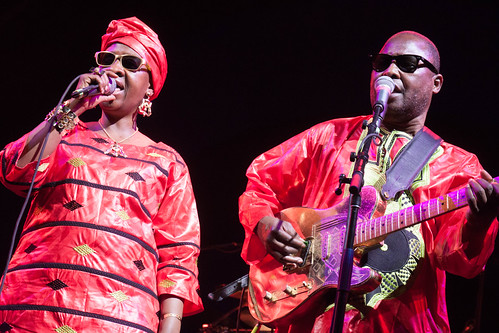
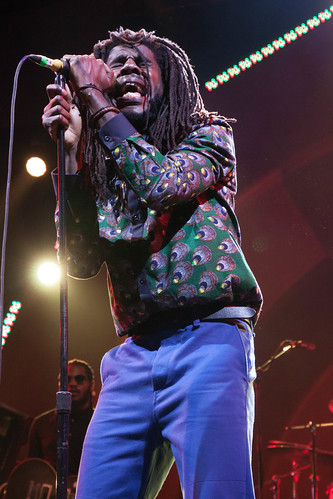
I’ve written quite a bit about the internationally acclaimed Algerian Tuareg pioneers of the Desert Blues and JOVM mainstays Tinariwen over the past couple of years. And as you may recall, the act can trace its origins back to the late 1970s when the band’s founding member, Ibrahim Ag Alhabib (guitar) joined a small group of Tuareg rebels living in refugee camps in Libya and Algeria. The rebels Ag Alhabib hooked up with had been influenced by radical chaabi protest music of groups like Nass El Ghiwane and Jil Jilala, Algerian pop rai, and western artists like Elvis Presley, Led Zeppelin, Carlos Santana, Dire Straits, Jimi Hendrix, Boney M, and Bob Marley — and they started writing music that meshed the traditional folk music of their people with Western rock, reggae and blues-leaning arrangements.
Upon relocating to Tamanrasset, Algeria, Ag Alhabib started a band with Alhassane Ag Touhami and brothers Inteyeden Ag Ablil and Liya Ag Ablil that had played traditional Taureg music at various weddings, parties and other occasions across both Algeria and Libya. As the story goes, when the quartet had started, they didn’t have a name; but people across the region, who had seen them play had begun calling them Kel Tinariwen, which in the Tamashek language (the tongue of the Taureg people) translates roughly as “The People of the Deserts” or “The Desert Boys.”
In 1980, Libyan dictator, Muammar Gaddafi issued a decree inviting all young Tuareg men, who were living illegally in Libya to receive full military training, as part of his dream of forming a Saharan regiment, comprised of the best young Tuareg fighters to further his territorial ambitions in Chad, Niger, and elsewhere across Northern Africa. Al Alhabib and his bandmates answered the call and received military training. Whether or not the founding members of the band truly believed in Gaddafi’s military ambitions would be difficult to say — but on a practical level, a steady paycheck to support yourself and your family certainly is an enticement. Five years later, Ag Alhabib, Ag Touhami and the Ag Ablil brothers answered a similar call by leaders of the Libyan Tuareg movement, who desired an autonomous homeland for their people, and wound up meeting fellow musicians Keddou Ag Ossade, Mohammed Ag Itlale (a.k.a “Japonais”), Sweiloum Ag Alhousseyni, Abouhadid Ag Alhousseyni, and Abdallah Ag Alhousseyni — all who had sang and played guitar. At this point, the initial lineup was completed and the members of the collective began writing songs about the issues and concerns of their people.
Then the members of the band built a makeshift studio, vowing to to record and distribute music for free to anyone, who supplied them a blank cassette tape. Within a short period of time, the band’s cassette tapes were highly sought-after and were popularly traded throughout Saharan Africa.
In 1989 the collective had left Libya and relocated to Ag Alhabib’s birthplace of Tessalit, Mali; but by the next year, Mail’s Tuareg population revolted against the Malian government — with some members of the collective participating as rebel fighters in that conflict. After the Tamanrasset Accords were reached and agreed upon in early 1991, the members of Tinariwen, who had fought in the conflict had left the military and devoted themselves to their music full-time. In R1992, some of the members of the band went to Abidjan, Ivory Coast to record a cassette at JBZ Studios, which they followed up with extensive gigs for their fellow Tuaregs across Saharan Africa, which helped furthered the reputation they had developed primarily by word-of-mouth.
A collaboration with renowned French, world music ensemble Lo’Jo helped expand the band’s profile outside Saharan Africa. They also played a live set at Africa Oye, one of the UK’s largest African music/African Diaspora festival. Building on the increasing buzz, the band released their full-length debut The Radio Tisdas Sessions, which was their first recorded effort to be released outside of Saharan Africa. Interestingly, since their formation back in the late 70s, the collective have gone through a series of lineup changes, gradually incorporating younger generations of Tuareg musicians, many who haven’t seen the military conflicts that their elders have, including bassist Eyadou Ag Leche, percussionist Said Ag Ayad, guitarist Elaga Ag Hamid, guitarist Abdallah Ag Lamida, and vocalists Wonou Walet Sidati and the Walet Oumar sisters.
Despite their lineup changes, Tinariwen has become internationally known, as a result of regular touring across the European Union, North America, Japan and Australia, frequently playing some of the world’s biggest festivals and biggest music venues and clubs. But one thing has been consistent throughout — they’ve continued with a sound that evokes the harsh and surreal beauty of their homeland, centered around the poetry and wisdom of a rough and tumble, proud and rebellious people, whose old-fashioned way of life is rapidly disappearing as a result of technology and encroaching Westernization.
Additionally, a contentious and bloody series of infighting and wars between the various religious and ethnic groups across the region have splintered several nations throughout the region — including most recently Mali and Libya, where members of Tinariwen have proudly called home at various points of the band’s history. Unsurprisingly, the band’s last full-length effort, 2017’s Elwan (which translates into English as “The Elephants”) thematically focuses on the impact of Westernization and technology has had on their people and their way of life, their exile as a result of the religious and ethnic infighting that has destroyed their homeland, their longing for their ancestral homeland, the uncertain future of their homeland — and the tacit understanding that some of the band members may never see their homeland ever again.
Slated for a September 6, 2019 release through Anti- Records, the acclaimed JOVM mainstays’ forthcoming album Amadjar, reportedly is as close as listeners can get to the proverbial soul of the band as it was recorded in a natural setting.
Accompanied by their French production team, who arrive in an old camper can that has been converted into a makeshift studio, the Saharan Africa JOVM mainstays’ journey to the Mauritanian capital of Nouakchott takes about 12 days or so. Every evening, the caravan stopped to set up camp and the band went to work under the stars to prepare for the recording sessions, talking through things, and letting their guitar motifs, thoughts and long buried songs come. Then, during a final two-week camp in the desert around Nouakchott, the band, joined by The Mauritanian griotte Noura Mint Seymali and her guitarist husband, Jeiche Ould Chigaly, recorded their songs under large tent in a few live takes, without headphones or effects.
Once recorded, a host of Western musicians added additional instrumentation including the Bad Seeds’ Warren Ellis, who contributed violin; Micah Nelson, the son of the legendary Willie Nelson and a member of Neil Young‘s backing band, contributed mandolin and charango; Sunn O)))‘s Stephen O’Malley contributes guitar; Cass McCombs, who contributes guitar; and Rodophe Burger.
Lyrically and thematically, the album explores the continuing political, social, humanitarian and environmental problems faced in their home country of Mali and continues Tinariwen’s pursuit to highlight the plight and issues of their people through their music. The album continues the band’s ongoing work of highlighting the plight of the Tuareg community — from the collapse of infrastructure and public services, climate change and the ongoing political and military conflicts that have plagued their homeland since it gained independence in 1960.
Amadjar’s latest single is a gorgeous yet brooding track centered around looping and shimmering acoustic guitar, explosive blasts of pedal effected electric guitar, handclap led-percussion and bursts of soaring violin. And much like its predecessor, “Taqkal Tarha,” the song is an effortless synthesis of something far more ancient and seemingly older than time with a subtly contemporary feel. I’ve seen a translated version of song’s incredibly poetic lyrics — and in translation, they indirectly evoke Revelations, The Upanishads and other religious texts, as it paints a picture of the end of the world. And yet, the song’s narrator finds himself confronted by the fact that he’s got his trusty camel and the endless road ahead.
Over the past couple of years of this site’s nine year history, I’ve written quite a bit about the internationally renowned Algerian Tuareg pioneers of Desert Blues and JOVM mainstays Tinariwen. The act can trace its origins back to the late 1970s when the band’s founding member, Ibrahim Ag Alhabib (guitar) joined a small group of Tuareg rebels living in refugee camps in Libya and Algeria. The rebels Ag Alhabib hooked up with had been influenced by radical chaabi protest music of groups like Nass El Ghiwane and Jil Jilala, Algerian pop rai, and western artists like Elvis Presley, Led Zeppelin, Carlos Santana, Dire Straits, Jimi Hendrix, Boney M, and Bob Marley — and they started writing music that meshed the traditional folk music of their people with Western rock, reggae and blues-leaning arrangements.
Upon relocating to Tamanrasset, Algeria, Ag Alhabib started a band with Alhassane Ag Touhami and brothers Inteyeden Ag Ablil and Liya Ag Ablil that had played traditional Taureg music at various weddings, parties and other occasions across both Algeria and Libya. As the story goes, when the quartet had started, they didn’t have a name; but people across the region, who had seen them play had begun calling them Kel Tinariwen, which in the Tamashek language (the tongue of the Taureg people) translates roughly as “The People of the Deserts” or “The Desert Boys.”
In 1980, Libyan dictator, Muammar Gaddafi issued a decree inviting all young Tuareg men, who were living illegally in Libya to receive full military training, as part of his dream of forming a Saharan regiment, comprised of the best young Tuareg fighters to further his territorial ambitions in Chad, Niger, and elsewhere across Northern Africa. Al Alhabib and his bandmates answered the call and received military training. Whether or not the founding members of the band truly believed in Gaddafi’s military ambitions would be difficult to say — but on a practical level, a steady paycheck to support yourself and your family certainly is an enticement. Five years later, Ag Alhabib, Ag Touhami and the Ag Ablil brothers answered a similar call by leaders of the Libyan Tuareg movement, who desired an autonomous homeland for their people, and wound up meeting fellow musicians Keddou Ag Ossade, Mohammed Ag Itlale (a.k.a “Japonais”), Sweiloum Ag Alhousseyni, Abouhadid Ag Alhousseyni, and Abdallah Ag Alhousseyni — all who had sang and played guitar. At this point, the initial lineup was completed and the members of the collective began writing songs about the issues and concerns of their people.
Then the members of the band built a makeshift studio, vowing to to record and distribute music for free to anyone, who supplied them a blank cassette tape. Within a short period of time, the band’s cassette tapes were highly sought-after and were popularly traded throughout Saharan Africa.
In 1989 the collective had left Libya and relocated to Ag Alhabib’s birthplace of Tessalit, Mali; but by the next year, Mail’s Tuareg population revolted against the Malian government — with some members of the collective participating as rebel fighters in that conflict. After the Tamanrasset Accords were reached and agreed upon in early 1991, the members of Tinariwen, who had fought in the conflict had left the military and devoted themselves to their music full-time. In R1992, some of the members of the band went to Abidjan, Ivory Coast to record a cassette at JBZ Studios, which they followed up with extensive gigs for their fellow Tuaregs across Saharan Africa, which helped furthered the reputation they had developed primarily by word-of-mouth.
A collaboration with renowned French, world music ensemble Lo’Jo helped expand the band’s profile outside Saharan Africa. They also played a live set at Africa Oye, one of the UK’s largest African music/African Diaspora festival. Building on the increasing buzz, the band released their full-length debut The Radio Tisdas Sessions, which was their first recorded effort to be released outside of Saharan Africa. Interestingly, since their formation back in the late 70s, the collective have gone through a series of lineup changes, gradually incorporating younger generations of Tuareg musicians, many who haven’t seen the military conflicts that their elders have, including bassist Eyadou Ag Leche, percussionist Said Ag Ayad, guitarist Elaga Ag Hamid, guitarist Abdallah Ag Lamida, and vocalists Wonou Walet Sidati and the Walet Oumar sisters.
Despite their lineup changes, Tinariwen has become internationally known, as a result of regular touring across the European Union, North America, Japan and Australia, frequently playing some of the world’s biggest festivals and biggest music venues and clubs. But one thing has been consistent throughout — they’ve continued with a sound that evokes the harsh and surreal beauty of their homeland, centered around the poetry and wisdom of a rough and tumble, proud and rebellious people, whose old-fashioned way of life is rapidly disappearing as a result of technology and encroaching Westernization.
Additionally, a contentious and bloody series of infighting and wars between the various religious and ethnic groups across the region have splintered several nations throughout the region — including most recently Mali and Libya, where members of Tinariwen have proudly called home at various points of the band’s history. Unsurprisingly, the band’s last full-length effort, 2017’s Elwan (which translates into English as “The Elephants”) thematically focuses on the impact of Westernization and technology has had on their people and their way of life, their exile as a result of the religious and ethnic infighting that has destroyed their homeland, their longing for their ancestral homeland, the uncertain future of their homeland — and the tacit understanding that some of the band members may never see their homeland ever again.
Slated for a September 6, 2019 release through Anti- Records, the acclaimed JOVM mainstays’ forthcoming album Amadjar reportedly is as close as listeners can get to the proverbial soul of the band as it was recorded in a natural setting. Accompanied by their French production team, who arrive in an old camper can that has been converted into a makeshift studio, the Saharan Africa JOVM mainstays’ journey to the Mauritanian capital of Nouakchott takes about 12 days or so. Every evening, the caravan stopped to set up camp and the band went to work under the stars to prepare for the recording sessions, talking through things, and letting their guitar motifs, thoughts and long buried songs come. Then, during a final two-week camp in the desert around Nouakchott, the band, joined by The Mauritanian griotte Noura Mint Seymali and her guitarist husband, Jeiche Ould Chigaly, recorded their songs under large tent in a few live takes, without headphones or effects.
Once recorded, a host of Western musicians added additional instrumentation including the Bad Seeds’ Warren Ellis, who contributed violin; Micah Nelson, the son of the legendary Willie Nelson and a member of Neil Young’s backing band, contributed mandolin and charango; Sunn O)))’s Stephen O’Malley contributes guitar; Cass McCombs, who contributes guitar; and Rodophe Burger.
Lyrically and thematically, the album explores the continuing political, social, humanitarian and environmental problems faced in their home country of Mali and continues Tinariwen’s pursuit to highlight the plight and issues of their people through their music. The album continues the band’s ongoing work of highlighting the plight of the Tuareg community — from the collapse of infrastructure and public services, climate change and the ongoing political and military conflicts that have plagued their homeland since it gained independence in 1960.
Interestingly, Amadjar’s latest single is the gorgeous, acoustic track “Taqkal Tarha.” Centered around a shimmering and looping acoustic guitar line, a propulsive bass line, percussion that evokes a galloping horse and call and response vocals paired with Micah Nelson’s playing, the song manages to be an effortless synthesis of an ancient sound — one that’s older than time itself, with something far more contemporary (albeit subtly so).
Over the past few months, I’ve written a bit about Lafayette, CA-born, Nashville, TN-based singer/songwriter and guitarist Nicki Bluhm, and although she began her career as a solo artist releasing two albums, 2008’s Toby’s Song and 2011’s Driftwood (which was re-released a year later), Bluhm may be best known for a six year stint as the frontwoman of Nicki Blum and The Gramblers, an act that included her ex-husband Tim Bluhm, with whom she also released a duet album, aptly titled Duets in 2011. Interestingly, Bluhm’s Matt Ross-Spang-produced full-length effort To Rise You GottaFall was released earlier this year, and the album, which is her first solo album in over six years was primarily written in and influenced by one of the most difficult and life-altering experiences of her life — a period in which she got divorced and her band went on hiatus. She then followed that with a seemingly spur of the moment move to Nashville.
Bluhm, who has frequented Music City for a number of songwriting sessions was deeply inspired by her time in the city, and how could she or any songwriter not be? After all Johnny Cash,Willie Nelson, Waylon Jennings, Reba McEntire, Townes Van Zandt and dizzying list of songwriters have all claimed Nashville as a homebase at some point or another. “When I could come to Nashville on writing trips, it was just percolating . . . it was intoxicating,” Bluhm says in press notes. Around the same time, Bluhm met renowned producer, engineer and mixer Matt Ross-Spang, who was in town working on another album, and as the story goes, Ross-Spang and Bluhm quickly hit it off. “I really needed someone who was going to take the reins and have a vision for the album and he really did,” Bluhm says of meeting Ross-Spang. “My ex-husband had been my musical director, co-writer, and producer on all my records except one and I was looking for someone to step into that leadership roll, which Matt did very gracefully. I was looking for a clean slate; the only baggage I wanted to bring into the studio were the words to the songs I was singing. I wanted it to be a fresh experience; I didn’t want to even have history with anyone in the room that would pull me into old habits or ways of thinking. So we agreed we’d record in Memphis.”
Recorded at Sam Phillips Recording, the Rise You Gotta Fall sessions were primarily centered around the live tracking of a backing band of accomplished musicians that included Will Sexton (guitar), Ross-Spang (guitar), Ken Coomer (drums, percussion), Al Gamble (Hammond B3), Rick Steff (piano), Dave Smith (bass), Reba Russell (backing vocals), Susan Marshall (backing vocals), Sam Shoup (string arrangements) and a number of special guests. “We really just recorded live and we didn’t do that many takes of each song,” Bluhm says of the sessions. “The final versions we ended up with were all one take. It was really refreshing to go analog. It minimized over thinking and second-guessing; forced us all to stay in the moment and play from the heart. . . Throughout the session there was a lot of listening and trusting. Matt really spends time curating his sessions and who he decides to bring in; he knows how to keep the vibe right. What you are hearing is, as Jerry Phillips would say, ‘not perfection but captured moments in time.’” Bluhm adds, “These songs are quite personal. They are the conversations I never got to have, the words I never had the chance to say, and the catharsis I wouldn’t have survived without.”
“I had lost my partner in so many ways,” Bluhm recalls in press notes, “my musical partner, my life partner, my creative partner, and all of a sudden I was left on my own, to start my own engine. It was really intimidating and scary,” she says “but I had support from my management, my agent, my friends and family, and ultimately I just had this guttural drive that I didn’t even know I had in me. I was on auto-pilot, ready to move forward and take the steps I had to take to keep moving forward.” Unsurprisingly, album title track, “To Rise You Gotta Fall” is an effortlessly self-assured track that’s indebted to Memphis and Muscle Shoals-era soul, and as a result the single reminded me quite a bit of Nicole Atkins‘ Goodnight Rhonda Lee and Natalie Prass, thanks to a “you-are-there-in-that moment” immediacy and a fully-fleshed out narrator, who has the resiliency and determination that comes from living a complex, messy life, full of struggles, heartbreak, setbacks, small victories and crushing losses. And as the song points out, life will find a way to kick your ass in ways both large and small — and yet, you’ll always wind up in the exact place you needed to be at that particular moment.
To Rise You Gotta Fall‘s second single is the aching ballad “Battlechain Rose,” which was co-written by renowned singer/songwriter Ryan Adams and as Bluhm told American Songwriter, the song was inspired by a restless night in which her mind wouldn’t stop turning with thoughts of the past, of what she could have and should have done differently, of her inability to move forward and of her despair of knowing that relationship has become a phantom limb of regret and heartache. Coming from such a personal place, the album’s material thematically and lyrically focuses on the aftermath of the messy dissolution of a longtime relationship — there’s hurt, accusations, betrayal, anger, hatred and foolishness and yet, the album’s narrator won’t let an embittering situation change her, her outlook or anything about who she essentially is. It’s the strength and wisdom I’ve seen primarily in women, who after a breakup with someone can say “Yes, it hurts. I will cry until my heart burst — and then I’ll cry a bit more. But I’ll be okay. I’ve seen better and I’ve seen worse; but goddamn it, I won’t be fooled like that again.”
I recently spoke to Nicki Bluhm via email for this Q&A, and in typical fashion we chatted about a number of subjects — from how she got into music, her influences, how her creative process has changed with her latest album, how the writing of the album has been necessary for her mental health, writing with Ryan Adams, her tour earlier this year with The Wood Brothers and much more. But before we get to that, I will remind you that Bluhm has been touring with a backing band to support To Rise You Gotta Fall and the tour includes a July 25, 2018 stop at the Bowery Ballroom. Check out the remaining tour dates below — and then one of the most fun and honest interviews I’ve done in some time after the jump.
Tour Dates
July 13 – Atlanta, GA @ Atlanta Botanical Gardens
July 14 – Charlotte, NC @ Knight Theater
July 19 – Scranton, PA @ Peach Music Festival
July 20 – Alexandria, VA @ Hamilton
July 22 – Cambridge, MA @ The Sinclair
July 25 – Floyd, VA @ FloydFest
July 25 – New York, NY @ Bowery Ballroom
July 26 – Philadelphia, PA @ The Foundry
July 29 – Nashville, TN @ 3rd & Lindsley
___
WRH: How did you get into music — and when did you know it was your calling?
Nicki Bluhm: I started singing in the shower at a very early age…for my goldfish Ginger who lived in the bathroom. She had the pleasure of hearing me perfect ‘The Star Spangled Banner’ over many years of steamy rehearsals. Beyond that it was a very organic pathway. In my twenties I was encouraged to sing by a man I admired and respected musically and that encouragement brought me to where I am today; writing, singing and performing my songs. The sheer joy and catharsis that singing brings me is enough to know that it’s what I’m meant to be doing right now.
WRH: Who are your influences?
NB: There are so many. As a young girl growing up on 80’s radio, Whitney Houston‘s voice made a big impression and mesmerized me like no other. I studied every note she sang. As I got older I was turned on to other musicians like Bonnie Raitt,Joni Mitchell, Linda Ronstadt and Sandy Denny (to name a few.) I have so much admiration for these women and the mark they have left and continue to leave on me.
WRH: Who are you listening to now?
NB: I have a habit of listening to the same records over and over and over. I started collecting vinyl in my late teens and 20’s and bought a lot of cheap records which turned out to be mostly records recorded pre 1970. I could listen to JJ Cale non-stop for the rest of my life and be satisfied. That said, I am trying to listen to more contemporary music. Some of my favorite artists right now are Mapache, Khruangbin, and Hiss Golden Messenger.
WRH: You spent a lengthy stint with your ex-husband in The Gramblers and To Rise You Gotta Fall is your first solo album in about 7 years or so. Hopefully, it’s the first of many, many, many more. How has your creative process changed since then?
NB: For the first time I went outside my comfort zone in all ways imaginable. I co-wrote with strangers in Nashville, recorded with a new producer (Matt Ross-Spang) and musicians I had never met in Memphis and basically forced myself to let go of anything familiar so I could invite new energy into what I was doing.
WRH: I’ve listened to this album quite a bit — maybe 15-16 times since its release, and what I find remarkable is that there’s an unmistakable simpatico between you, the session players and the backing vocalists. I know you had met producer and guitarist Matt Ross-Spang before the sessions but curiously, did you know any of the session players before that?
NB: First of all, THANK YOU! It’s funny, I felt that same “simpatico” right off the bat with the musicians and strangely enough I had never met them. Sometimes the stars align and fate brings you exactly what you need. That’s how I felt about this recording session and everyone involved. There is no denying it was meant to be.
WRH: Part of the album is influenced by your relocation to Nashville. How has Nashville treated you?
NB: What I love about Nashville is that you don’t have to explain what it is you do to anybody. Everyone just gets it. That has been a nice shift for me. The only downside is that because everyone is in the industry it’s tough to develop friendships because we’re all gone on tour all the time!
WRH: Nashville has had a long and rich history of some incredible songwriters who have lived there at some point. I can’t imagine any songwriter not being in awe of the fact that Johnny Cash, Willie Nelson, Dolly Parton, Waylon Jennings walked down some of the streets they did or drank in some of their favorite bars. The city is also the home of JOVM mainstay Nicole Atkins, Ron Gallo and a long list of contemporary artists — but I was curious: are there any Nashville-based artists that the rest of the country should know but hasn’t yet?
NB: Funny you mention Nicole…we are actually texting right now…haha. There are SO many incredibly talented artists in Nashville. In my short time here I have barely scratched the surface. I was lucky enough to co-write with an incredible songwriter Simon Gugala. Writing with him has been a highlight for me here so far. I also love going to Santa’s Pub for the Sunday night country set that is put on by Carter Brallier. He had a gal by the name of Emily Nenni who just put out a record called Hell of a Woman. I haven’t listened to the record yet but her live performance was impressive and I dug her voice and vibe.
WRH: The album is deeply influenced by one of the most difficult periods of your life — with the songs detailing the sense of loss, hatred, betrayal, regret and heartache that often come about after the bitter end of a long term and significant romantic relationship, and the resolve to move on as best as you could. To me, there’s a bit of a hopeful undertone — that the song’s narrators will do more than just survive, that she’d be the type to thrive no matter what. While the album is centered within personal, it’s a universal experience. Curiously, was there any point when you were writing the album, that you may have been like “wait, maybe this is TMI?” or said “I can’t wait until that SOB hears this!”?
NB: Honestly, writing these songs saved me. I can’t tell you how important it was for me to get these ruminating thoughts out of my head. It was something I needed to do for my mental health. People have different ways of coping with trauma; what helps me is writing. I had no intention of being spiteful in the process but I had to speak my truth and remain authentic to myself and my experience. Music has helped me get through so many difficult periods of my life, it’s made me feel less alone in my struggles. This record and these songs are my contribution to that sentiment. If hearing what I went through brings someone comfort, I have accomplished what I set out to do.
WRH: The album features two co-writes with Ryan Adams, if I remember it correctly. How did that come about? How was like to work with him?
NB: We became friends through mutual admiration and began working together on some stuff. There is no rhyme or reason to the way Ryan operates. Our time together was spontaneous and could never be repeated but I am forever grateful for the songs that came out of our time together. He has a way of pulling words from the ether like no one I’ve ever known before.
WRH: “Battlechain Rose,” is one of those Ryan Adams co-writes. How did the concept for the video come about?
NB: My dear friend and neighbor Scot Sax is also an incredible singer/songwriter, video producer, and everything else creative (if there is such a thing as artistic ADD he has it) and when I played him the song his wheels started turning. When Scot has a vision he executes it and that’s what he did for the music video. We were exploring the dimensions between reality and dream realms; past and future; knowing and the unknown. The contrast of color and black and white was a way to address this dynamic. The younger heart being guided and nurtured by her predecessor. here is a lot of symbolism that is left to be interpreted by the viewer.
WRH: I saw you open for The Wood Brothers at The Vic Theatre in Chicagoback in April. That was a fantastic show, too. You played a solo set in which you accompanied yourself on guitar with stripped down versions of much of the album’s material before touring with a live, backing band throughout the summer. Was it particularly difficult to re-arrange songs in such a stripped down fashion from their recorded fashion? And after playing with a backing band for many years, was it nerve wracking to be out on a stage on your own?
NB: Yes! I could sing in front of thousands of people and not bat an eye but put a guitar in my hands and I become a deer in headlights. It was something I needed to get over; something I needed to prove to myself I could do alone. It was important for me to face that fear and get past it. I’m a pretty big proponent of doing things that scare you; I’ve been scaring myself a lot these past few years. But once you’re on the other side of fear and you see that something wasn’t so scary after all, you’re motivated to keep striving and putting yourself out there. Growing is hard and painful…not much different than the physical growing pains you had as a kid. Growing pains as an adult are more emotional but none the less real!
WRH: “Things I’ve Done” is a one of my favorite songs on the album. To my ears, it sounds as though it were influenced by Bonnie Raitt in some way — I think of “Something to Talk About,” in particular. Did her work influence anything on the album?
NB: That was a song I co-wrote with Scot Sax (mentioned earlier) and Steve Poltz (both my neighbors in Nashville.) Bonnie Raitt is certainly a huge influence on me but interestingly enough was not on my mind during the creation process of this song. Perhaps she was subconsciously…the subconscious is powerful. What I love about her is the ease and naturalness she brings to whatever she does. It’s possible that Scot was channeling her but you’d have to ask him about that.
WRH: How was it like to tour and play with The Wood Brothers?
NB: Aside from being incredible musicians, The Wood Brothers are some of the kindest musicians I have met in the business. They took such great care of me when I was out with them and every night they invited me out on stage to sing with them which was a true honor. They are such humble and relatable humans, I feel so grateful to call them friends.
WRH: What’s next for you?
NB: Touring my ass off! It’s time to take these songs on the road and share them with the world. We’re doing extensive touring this summer in the US and will be going overseas this fall. All the while writing new songs as I continue to feel all the feels life has to offer me at this stage in my life. I’m curious to see what songs come out of me next!
Currently comprised of founding members Willy Vlautin (vocals, acoustic guitar and electric guitar) and Dave Harding (bass, backing vocals), along with Sean Oldham (drums, percussion, vibes and backing vocals), Dan Eccles (guitar) and Paul Brainard (pedal steel, piano, acoustic guitar, trumpet, backing vocals), the Portland, OR-based alt country quintet Richmond Fontaine can trace its origins back to 1994 when the band’s founding duo met at Portland Meadows Racetrack, where they bonded over betting on the ponies and their mutual love of Husker Du, Willie Nelson, X, The Blasters and The Replacements, and they quickly decided to collaborate together. After a lineup change with the band expanding to a quintet, they developed reputation for a sounda that frequently meshed elements of rock, country, punk, folk and Americana paired with Vlautin’s narrative-like songwriting, which resulted in praise from the likes of nationally and internationally recognized media outlets including Uncut, Q Magazine, Mojo, The Independent, The Sun and others.
Interestingly, over the past decade, the band’s Vlautin has developed a reputation as a critically applauded and commercially successful novelist with his debut novel The Motel Life winning a Silver Pen Award from the State of Nevada and landed on the The Washington Post’s Top 25 Books of 2007 — and later, the book was adapted into the critically acclaimed motion picture, TheMotel Lifewhich starred Emile Hirsch, Stephen Dorff, Dakota Fanning and Kris Kristofferson. Vlautin’s 2008 sophomore novel, Northline was a San Francisco Chronicle Top Ten Bestseller. 2010’s Lean on Pete won the Ken Kesey Award for Fiction and was named Hot Press’ book of the year. 2014’s The Free continued an incredible run of prolificacy which included the band’s 9 preceding full-length albums, an instrumental soundtrack for Northline, two live albums and an EP.
After a three year hiatus from recording, the members of Richmond Fontaine returned to the studio with their long-time producer and collaborator John Askew to write and record, 2016’s You Can’t Go Back If There’s Nothing To Go Back To, which was released by one of my favorite labels, Fluff and Gravy Records across North America and Decor Records across Europe. And if you’ve been frequenting this site over the past couple of years, you may recall that I wrote about album single “Wake Up Ray,” a jangling bit of old school country-influenced alt country with Vlautin’s novelistic attention to detail, which managed to created a very real, lived in world in which the song’s characters wake up every single day to a lonely life and an even lonelier house that they’ve learned to hate — and yet they’re aware that because of the choices they made, that their position (if not, their very fate) is largely inescapable. But underneath the surface, is a wistful and mournful recognition of life and love’s impermanence.
Following the release of You Can’t Go Back If There’s Nothing To Go Back To, the members of the band formally announced that it would be their final traditional album and tour; however, as the band’s Vlautin was putting the finishing touches on his fifth novel, Don’t Skip Out on Me which is slated for a February 13, 2018 release through HarperCollins, he was able to round up the band to record an instrumental, companion soundtrack, and while a digital download of the soundtrack will be bundled with the book, Richmond Fontaine’s long-time label home felt that it deserved it’s own release — February 16, 2018 with an extremely limited vinyl release both in the States and in Europe, through Decor Records.
Soundtrack single “Horace And The Trophy” while clearly nodding to classic, 60s and 70s Renegade Country, 70s AM rock possesses an obvious cinematic quality, as though it should be part of the soundtrack of a deliberate, thoughtful road trip movies, featuring rugged, heartbroken and rootless loners crisscrossing the continent, fleeing a troubled past or an uncertain future.
Several months ago, I was invited to be a panelist on a Baby Robot Media hosted panel titled “Your First PR Campaign” at this year’s Mondo.NYC conference in Lower Manhattan, a conference created by some of the original organizers of the beloved and sadly defunct CMJ Marathon. In fact, after speaking at the panel, I along with several colleagues went to a nearby bar, where I watched my beloved Yankees lose a confounding and infuriating heartbreaking Game 2 of the American League Division series against the then-defending League Champion Cleveland Indians. At some point, I went from networking and mingling mode to yelling and cursing at the TV – and I couldn’t tell if these people, who I had worked with in some capacity for much of JOVM’s history were amused, knowing how much of a Yankee fan I am or if they were horrified. But the postseason when your team is in it is another thing altogether. I’ve frequently told a story about sitting in Clem’s with my dear friend and colleague Natalie Hamingson after watching the New York Rangers lose Game 7 of that year’s Conference Finals to the Tampa Bay Lightning at home, in which I went into a furious 45 minute, expletive laced tirade. About half way through, the bartender at the time said to Natalie, “I don’t think I’ve seen him that angry before.” In my mind, I thought “if I was at home, I would be throwing things at my TV,” but that’s another issue altogether.
Thanks in part to built-in travel days within the postseason schedule, and the weather actually holding up in early October, I was able to squeeze in some live music coverage at this year’s Mondo.NYC. Because I had spoken at Baby Robot Media’s PR campaign panel and worked with them for a good 6-7 years or so, the company’s co-founders had personally invited me to come out to the showcases they were hosting at Piano’s during the weekend. Admittedly, I just wasn’t able to do any research prior to the actual live music, so I went into everything with no expectations and a clear mind as to what I might be seeing – and interestingly enough, I wound up being pleasantly surprised by the variety of the acts I caught throughout that particular weekend. However, in a weekend with several impressive acts – including British folk singer/songwriter Hannah Scott, New York-based Americana singer/songwriter Mieka Pauley, Austin, TX-based Americana act Fairbanks and the Lonesome Light and Kellindo Parker, best known as Janelle Monae’s sideman, there was one decidedly clear champion of the weekend, the classically trained, Sebastian, FL-born, Somerville, MA-based singer/songwriter Hayley Thompson-King.
Thompson-King’s solo debut album Psychotic Melancholia was released earlier this year through Hard to Kill Records, and the album is a “Sodom and Gomorrah concept album” that in some way is an amalgamation of several different sources and wildly disparate sources. The overall concept of the album is largely influenced by her childhood obsession with the stories of the so-called wicked women in the Bible. “I was the skeptical kid with her hand up in Sunday school,” Thompson-King recalls in press notes. “Also, I spent weekends performing with my church youth group called Clowns for Christ. I guess you could say I was obsessed with getting to the bottom of what exactly would send one to hell. I consider myself agnostic at this point, but I’m still inspired by the questions I had as a kid about disobedience, and about the characters I was taught to believe were evil, like Lot’s Wife and Judas and Lucifer. Upon revisiting these stories, I was inspired by their questioning. I thought they were strong and exciting, and I could put myself in their shoes.” Along with that, the album’s material draws from the Sebastian, FL-born, Somerville, MA-based singer/songwriter and guitarist’s small. Southern town upbringing, in which her father was a team-roper and trained cutting horses, and she grew up riding and showing American Quarter horses. “I spent a lot of time in the dually listening to country music,” Hayley Thompson-King recalls. “And then I went to opera school.” And lastly, the material which references Romantic period art also draws from her classical training at the New England Conservatory of Music, where she earned a Master’s in Operatic Performance.
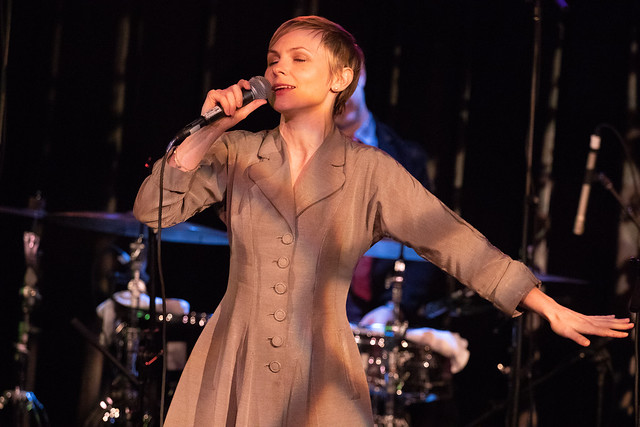
And while having an operatic sweep with seemingly larger than life characters with oversized emotions, the album’s songs interestingly enough manage to possess a deeply personal and introspective nature. “I write about real things that have happened in my life,” Thompson-King says in press notes. “My relationships, like with my folks, the people I love, but using the landscape and stories of outside characters. They’re all about me, I guess, but it’s easier to write if I’m looking at a third party. So I look at myself as another character.” But perhaps more important, that voice, man; while there have been some comparisons to operatically trained vocalists like Pat Benatar and Heart‘s Ann Wilson, as well as Linda Ronstadt, which are all pretty damn reasonable, Thompson-King’s vocals throughout the album switch from feral howls and yelps, the sort of defiant, and self-contained resiliency and pride that only women possess, a world weary ache from a messy life, full of bad (if not completely fucked up) decisions, dysfunctional relationships with shitty, irresponsible lovers and good, decent ones – before ending with a gorgeous and sparse rendition of Schumann’s “Wehmut,” which translates in English to “Melancholy” and features Thompson-King singing in operatic German “Ich kann wohl manchmal singen / als ob ich fröhlich sei / Doch heimlich Tränen dringen / Da wird das Herz mir frei” (“Sometimes I may be singing as if I were full of joy, But secretly the tears are flowing and then my heart feels free”). Photo by Simon Sinard. Styled by Rachel Rule Walker.
Simply put, it’s a powerful and incredibly self-assured debut but it’s arguably among my favorites released this year. Now, as you can imagine this year has been incredibly busy as I’ve had to manage the responsibilities of an involved day job with that of this blog, but several weeks ago I spoke to the incredibly thoughtful and charming Hayley Thompson-King via email about Psychotic Melancholy, her classical training and how it’s influenced her own creative work, how much the Sun Records sound has influenced her on this album and more in a rather revealing interview. Check it out below.
__________
WRH: You grew up in the tiny town of Sebastian, Florida near Melbourne and Vero Beach, and as the impressively detailed press notes I was provided mentioned, you spent great deal of your youth riding and showing American Quarter horses and your father was a team roper, who trained cutting horses. It’s understandable that you would have grown up listening to a helluva lot of country music; but I understand that you’re a classically trained opera singer, who went to opera school, which defies the stereotype of the country singer/songwriter. How did you get into opera? Did you have any of your friends or others make fun of you for singing classical opera? How has your classical training influenced you and your work? When did you realize that you needed to write for yourself?
Hayley Thompson-King: I’ve always had classical leanings…When I was about 12, I basically woke up one day and my voice had changed…like I hit puberty and all of a sudden I had a ton of vibrato and could speak Italian (just kidding about the second part 🙂 But, ya, it was very natural for me to sing classical music. No one made fun of me! (…to my face…At least not for that!) I feel grateful that I had the opportunity to attend college and then graduate school. I think besides being able to control my voice and all it’s little nuances, the training has helped me to be able to analyze music. To dig into what the composer and lyricist are trying to convey and then honoring that…which is great for country music because it’s tradition to sing other people’s songs. I take every note and every lyric very seriously and when I break from that, it’s intentional… As a songwriter, it’s sort of a blessing and a curse…it takes me a long time to compose the “right” song because every note and every word have to serve the plot…It’s challenging for me to rattle off something visceral like Louie Louie (one of the greatest songs of all time, in my opinion).
Realizing I wanted to go down this path- what feels like performance art; using my brain, my feelings, experiences, and my body to express something- came about 7 years ago. I became tired of waiting for someone else to tell me when or whether or not I could make art. So, I wrote, produced and released my first record (an entirely analog production) called Save The Rats; it was the first release on my label, Hard To Kill Records.
HTK: Please don’t judge me, but I am LOCKED on Traditional Holiday Favorites: Christmas Music of the 40’s, 50’s and 60’s on Sirius XM…I have no excuse.
WRH: How would you describe your sound to those unfamiliar with you and your work?
HTK: I like to say it’s Psychedelic Country or Alt-Classical. Some folks have said Garage Country or even Riot Girl.
WRH: Earlier this year, I stopped by both of Baby Robot Media’s Mondo.NYC Showcases at Piano’s without any expectations of anything and honestly without researching any of the artists or anything, and out of all of the very talented artists, you and your backing band blew me away. I’m a jaded New York-based music journalist, so I don’t say that often! One of the things that I noticed that you and your backing band seemed incredibly road tested. How did you meet your backing band and how long have you been playing together?
HTK: Oh, that is very kind of you to say! I have about 5 musicians who I work with regularly (2 guitarists, 1 drummer and 2 bass players). Everyone who plays with me has one instruction from me: serve the song. I don’t need them to be perfect or play it like the record, I just want to play together in the moment and serve the song.
That show, I had my original bass player (who played on the record) Chris Maclachlan. Chris is a classically trained singer and bassist for seminal Boston band from the 80’s called Human Sexual Response. He’s been with me the longest…we started as a duo and that was when we began incorporating classical repertoire. I had Rob Motes on drums and Nick Mercado on guitar. My other Bass player Ben Voskeritchian is in a band along with Rob and Nick called These Wild Plains from Boston. Their whole band approached me with the idea to go on the road opening me and then backing me up. They are fantastic musicians, they listen to everything I do and respond…I feel really lucky to have them in the band. And my other guitar player (who played on the record and also engineered and co-produced) is Pete Weiss.
WRH: I’ve listened the album a number of times and sonically it’s like you and your backing band manage to bridge honky tonk country with the Sun Records/early rock sound — I can’t help but think of Elvis Presley, Johnny Cash, Roy Orbison, Jerry Lee Lewis, and so on because the album’s material has this raw, feral quality to me. Was that intentional? And how much has that particular period influenced you?
HTK: It’s funny you bring that up…and I’m so glad you pulled that thread. I’m also a college professor on the side 🙂 And I’m preparing for a course right now in Rock and Roll History so listening to A LOT of Elvis. I think ‘feral’ is the perfect term. That music was highly intelligent the way Nature is… and I think results from a feeling of being bound. There is a release and it doesn’t feel contrived, but rather instinctive. AND, most exciting, the audience was effected that way! In my music, I’m working completely instinct-driven, so, yes, I’d say those artists have influenced me.
WRH: The album reportedly stems from your childhood obsessions with the Bible’s wicked women, doubters and questioners, questioning what exactly made them “evil,” and in some way viewing them in a very different, empathetic prism in which you put yourself in the shoes of Lot’s wife, Judas and Luficer among others while tying that together with your own personal experiences. When I read that in the very detailed press notes about you and the album, my immediate thought was “holy shit, that’s pretty heady — for anything these days.” When you began writing the material for the album, did you begin with that overarching theme, crafting material so that it would hew to it — or was it something that came about subconsciously and organically as you were writing?
HTK: As far as the concept for the record, one day as Pete (Weiss) and I were working on pre-production, he said jokingly, “this sounds like a Sodom and Gommorah concept album”. So, that kind of stuck because it was a way to talk to people about what the hell is going on in this body of work. But, truly this was not something that I was in control of… I was guided and sensed it was divine intervention. My entire life, I’ve been haunted by these characters because, it seems to me, they were pawns in a game… Isn’t Judas the real martyr? I realize that this might come across as blaspheme, but I’m resigned to burning in whatever hell being a reasonable person gets you sent to.
WRH: You and your backing band spent the closing months of 2016 and the early months of this year writing and then obsessively revising and then recording the material that wound up comprising Psychotic Melancholia. How much revising and tweaking went into the writing sessions? And when did you know that you had finished, fully-fleshed out songs?
HTK: Pete (Weiss) and I got together in little pre-production sessions before we went into the studio and tweaked some of the songs… those sessions involved adding a chord here or there, some arrangement choices, and our plan of attack for mic-ing/live recording/vocals. Most of the songs were fully formed at that point. Then we went to the studio and a lot of what you hear is live with some minimal editing/overdubs. BUT, a couple of the more kinetic pieces (Lot’s Wife and No Room) needed to be played live in order for us to get the feel… so we booked a couple things and then went back and recorded those… they are mainly live, but what you are hearing is probably the 3rd version of both of those. I just get a feeling when something is right and the band trusts that… so that’s how we work.
“Dopesick,” and “Old Flames” are among my favorite songs on the album. What can I say, a sad song sometimes just works, you know? In any case, there’s a deep and visceral ache to them that comes from very real, lived-in experience, while drawing from some of the country songs I’d expect to hear while in some beer and whiskey soaked honky tonk. What is the story behind those two?
HTK: “Old Flames” is actually a cover song. It was written around 1978 by Hugh Moffatt and Pebe Sebert (Sebert is the mother of Ke$ha!). I only add a cover if I feel a deep connection to it and if I feel I can bring something new to the table…for that one, I had been trying to write about being in love with my partner…I found it VERY challenging to write about joy. I started playing that song and it said the things that I wanted to say about my love. (I’m still trying to write originals about this topic and getting much better at expressing this these days)
“Dopesick” is an old song. I probably wrote it about 5 years ago. It’s also about someone very close to me who was struggling…but, in hindsight, it’s also about me. It’s my favorite song.
WRH: I’ve mentioned this to a number of artists I’ve interviewed but I think that the one of the keys to an exceptional album is when the song order is so perfect that it creates a very specific mood, and if you were to rearrange the songs, it would be a different album with a wildly different mood — closing the album with a rendition of Schumann’s “Wehmut” is an eccentric yet gorgeous and fitting way to close out an album with a huge, operatic sensibility. Did you have any difficulties in arranging the material as it appears on the album or was it something that you always knew?
HTK: It took me about 3 days to do the song order…which, to me, felt long. I was taking into consideration the tempi, flow of the keys and lyrical arch…but really, this was the only way it could be. On the vinyl (which I’m planning to release this spring, but am hoping to get some label support for), each side will end with a Schumann piece….I think the whole thing works beautifully for a record where you listen to one side and then flip:
Side A:
Large Hall, Slow Decay
Dopesick
No Room For Jesus
Soul Kisser
Mondnacht (music -Schumann / poem – Eichendorff)
Mondnacht (Moon Night):
It seemed as if the sky
Had silently kissed the earth,
That she in the shimmer of blossoms
Could only dream of him.
The breeze blew over the fields,
The grain stalks gently surged,
The forests rustled softly,
So starbright was the night.
And my soul unfolded
It’s pinions so wide,
Flew over the silent lands,
As if it were flying home
Side B:
Lot’s Wife
Melencolia I
Teratoma
Old Flames
Wehmut
Wehmut (Melancholy):
Sometimes I may be singing
As if I were full of joy,
But secretly tears are flowing,
And then my heart feels free.
The nightingales will sing,
When spring breezes play outside,
Their melody of yearning
Out of their prison’s tomb.
Then all the hearts are listening,
And everyone is glad,
But none can feel the sorrows,
The bitter grief in song.
WRH: What’s next for you?
Well, we are home working on a couple videos and doing some writing and light recording in January…and teaching my R&R History course at the college of course. We’ll be doing about 3 weeks east of the Rockies in March. I turn in my grades for \ on May 14 and on May 15 we leave for a month long tour in Scandinavia which ends at the Stockholm Americana Festival. I’m pretty excited about spring. I’m hoping to get back to NYC a few times in the next couple months…we’ve had such exciting crowds there (including yourself 🙂 It feels like the audiences really get what we’re doing and like the artistic aspect of it. So, that’s the plan.






![Hayley Thompson-King [Simon Sinard].jpg](https://i0.wp.com/thejoyofviolentmovement.wpcomstaging.com/wp-content/uploads/2017/12/Hayley-Thompson-King-Simon-Sinard.jpg?resize=600%2C600&ssl=1)