Tag: women who kick ass


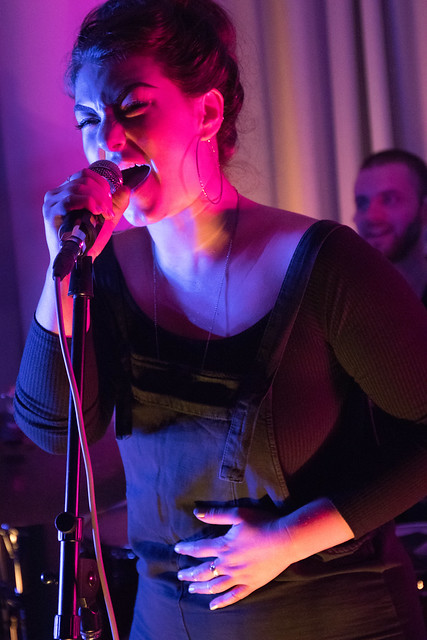
Currently comprised of founding member Natalie Carol (vocals, guitar) and early lineup member Shawn Morones (guitar, vocals), along with newest members Neil Wogensen (bass, vocals) and Mike DeLuccia (drums), the Los Angeles, CA-based indie rock band Valley Queen can trace their origins back to their formation in 2014. With a handful of singles under their belts, the band quickly saw a growing profile, which resulted in a relentless touring schedule and an increasing amount of time away from home — and although the band found their own magical pocket musically, the strain was too much for original lineup members Morones and Doot, who left the band.

Carol continued onward with a series of session musicians and ringers, and while the band continued to play bigger clubs, the chemistry that Carol had felt and began to depend on was missing, With growing buzz surrounding her and her bandmates, the members of Valley Queen landed a record deal — a dream that many bands desperately wish to achiever; however, Carol recognized that the band was much more than her concentrating on lyrics with session musicians being paid to play and record the material as directed; in fact, Carol wanted the band to be about the chemistry and relationships between the members of the band, all of which helped the band land their record deal in the first place.  So before writing and recording the material, which would eventually comprise their Lewis Pesacov-produced full-length debut Supergiant, Carol called Doot, who couldn’t re-join the band; however, Mike DeLuccia joined. Then Carol called Morones, who after a series of lengthy conversations, before decided that re-joining the band would be worth the risks involved.

Interestingly, Pesacov, who has worked with Best Coast, Fool’s Gold, Nikki Lane, FIDLAR and JOVM mainstays The Orielles, continues to cement his reputation for raw production while focusing on the urgency of the album’s material and the musicians performances — and for the band, the album was about the collective whole exploring and creating together. As for the album’s lead single and opening track, Carol says, derive their names from the most massive, luminous, and yet the fastest burning known stars in the universe. “The song ‘Supergiant’ is about how we’re all made up of the same stuff as stars, and I liked the idea of tying the whole album together with that metaphor,” says  Carol. “It takes all the drama you hear on the record-the aggressive, chaotic moments, and the more beautiful or quieter moments-and puts it all into a more galactic perspective.” As a result, “Supergiant” has a noticeably cinematic air while possessing elements of 80s New Wave and 70s AM rock in a way that will bring to mind the likes of Heart and Linda Ronstadt, if they were covering Concrete Blonde, or Heartless Bastards covering — well, just about anyone, as the seemingly anachronistic single is centered around Carol’s soulful belting, well-crafted songs and exceptional musicianship.

Valley Queen will be touring to support their new effort and the initial batch of tour dates are below.

VALLEY QUEEN TOUR DATES
July 5-8 Winnipeg, MB – Winnipeg Folk Festival
July 28 Los Angeles, CA – The Moroccan Lounge
August 01 San Francisco, CA – Cafe du Nord
August 02 Davis, CA – Sophia’s Thai Kitchen
August 03-05 Happy Valley, OR – Pickathon
August 07 Seattle, WA – Sunset Tavern
August 08 Spokane, WA – The Bartlett
August 09 Missoula, MT – Top Hat Lounge
August 11 Denver, CO – Lost Lake Lounge
August 12 Salt Lake City, UT – Kilby Court
August 15 San Luis Obispo, CA – SLO Brew

New Video: Houston’s Wild Moccasins Release an Upbeat Yet Determined Feminist Anthem

Fronted by its founding duo Zahira Gutierrez (vocals, keys) and Cody Swann (guitar, vocals), along with newest members  Avery Davis (drums) Nicholas Cody (bass), and the band’s newest member  Avery Davis (drums), the Houston, TX-based indie rock/indie pop act Wild Moccasins can trace their origins to 2007, a year within its founding members’ romantic relationship. Their initial work was mostly indie rock driven while centered around dance pop-like guitar lines and tight vocal harmonies; but throughout their history together, the band has gone through a number of lineup changes before settling on its current lineup. Interestingly, with the release of 88 92, the Houston-based quartet had begun to incorporate New Wave-like influences with an increasing use of synths, which has continued with their forthcoming Ben H. Allen-produced For Look Together.

Reportedly, Allen inspired a much different approach to their writing and recording process and the end result is an diverse album that finds the band blending the guitar-driven elements of their early work with 80s and 90s synth pop; however, unlike their previous work, the diverse sound of the album also manages to evoke the volatility of the breakup of a longtime relationship — in this case, the romantic relationship between Gutierrez and Swann; but while thematically focusing on repairing relationships, shedding insecurities and fresh starts.

Understandably, the breakup and its aftermath was extremely difficult as the band was in the middle of some extensive touring when their founding members broke up. As Gutierrez and Swann recall, they would spend countless hours in a shared tour van, painfully staring each other down on stage and ultimately exchanging exaggerated and embittered he-said-she-said’s through songwriting. And while countless bands with a romantic couple at their center have split up, the former lovers chose to find a way to reconcile their differences by working towards a common musical goal.  Songwriting has been engrained within the duo’s relationship, and although being emotionally vulnerable with a former partner was initial difficult, they found that it helped clear the air, as well as constructing a bridge between confusion and solidarity. “I think we look back on that time and take some comfort in knowing that we went through that together,” says Swann. “It needed to happen in order for us to have this resolve.”“Yeah, it needed to happen,” Gutierrez adds. “Now, when I sing the songs, I find myself breathing a sigh of relief.”

“No Muse,” For Look Together’s latest single is a slickly produced shimmering synth and guitar-led pop song with an infectious, arena friendly hook — and while self-assured, the track bristles with bitter and aching hurt of someone who’s been used and has had enough. Interestingly enough, as the band’s Gutierrez says of the song and the video, “‘No Muse’ is about feeling like men use women as muses in the wrong context. A lot of women have had the experience of being taken advantage of or had men in power try to take control of what they do, so this song encourages women to be their own muses. Because of what the song represents to me, I decided it was best for me to direct the video and sought out a female cinematographer (Rachel Bays) to shoot it in order to remove any sort of male gaze. I felt it was important to see the video through the eyes of a woman.”  As a result, throughout the video, you see a woman who’s not just determined and free-sprit but has taken control of her own agency in a free-spirited fashion. 

New Audio: Renowned Singer/Songwriter Nicki Bluhm’s Soulful Everyday Look at Small Victories in the Face of Momentous Life Changes

Nicki Bluhm is a Lafayette, CA-born, Nashville, TN-based singer/songwriter, who’s perhaps best known for a six year stint as the frontwoman of The Gramblers, a band that featured her now ex-husband Tim Bluhm (with whom she also released two collaborative albums), and for recent high-profile collaborations with the likes of Phil Lesh, Infamous Stringdusters, Ryan Adams and others.  Slated for a June 1, 2018 release, the Matt Ross-Spang-produced To Rise You Gotta Fall is Bluhm’s first solo album in several years, and the album’s material was written over a difficult and life-altering period in which she got divorced and followed that up with a spur of the moment move to Nashville — and a result, the album is reportedly a deeply personal chronicle of her state of mind during and after such a momentous transition. “These songs are quite personal,” Bluhm says in press notes “They are the conversations I never got to have, the words I never had the chance to say, and the catharsis I wouldn’t have survived without.”

Interestingly, while Bluhm’s relocation to Nashville was a spot of a moment decision, it actually came from the result of a number of writing sessions that had her in the city. As Bluhm notes, the city was inspiring “because of all the songwriting going on here. When I would come to Nashville on writing trips, it was just percolating . . . it was intoxicating.” Around the same time, Bluhm met with renowned producer, engineer and mixer Matt Ross-Spang, who was in town mixing a record, and as the story goes Ross-Spang and Bluhm hit it off immediately.  “I really needed someone who was going to take the reins and have a vision for the album and he really did,” Bluhm says of meeting Ross-Spang. “My ex-husband had been my musical director, co-writer, and producer on all my records except one and I was looking for someone to step into that leadership roll, which Matt did very gracefully. I was looking for a clean slate; the only baggage I wanted to bring into the studio were the words to the songs I was singing. I wanted it to be a fresh experience; I didn’t want to even have history with anyone in the room that would pull me into old habits or ways of thinking.  So we agreed we’d record in Memphis.”

Recorded at Sam Phillips Recording, the sessions were centered around the live tracking of a backing band that featured an accomplished bunch of pros assembled by Ross-Spang that included featuring Will Sexton (guitar), Ross-Spang (guitars), Ken Coomer (drums and percussion), Al Gamble (Hammond B3), Rick Steff (piano) and Dave Smith (bass), with Reba Russell and Susan Marshall (background singers), Sam Shoup (string arrangements) and various special guests. “We really just recorded live and we didn’t do that many takes of each song,” Bluhm says. “The final versions we ended up with were all one take. It was really refreshing to go analog. It minimized over thinking and second-guessing; forced us all to stay in the moment and play from the heart. . . Throughout the session there was a lot of listening and trusting. Matt really spends time curating his sessions and who he decides to bring in; he knows how to keep the vibe right. What you are hearing is, as Jerry Phillips would say, ‘not perfection but captured moments in time.’”
 
“I had lost my partner in so many ways,” Bluhm continues in press notes, “my musical partner, my life partner, my creative partner, and all of a sudden I was left on my own, to start my own engine. It was really intimidating and scary,” she says “but I had support from my management, my agent, my friends and family, and ultimately I just had this guttural drive that I didn’t even know I had in me. I was on auto-pilot, ready to move forward and take the steps I had to take to keep moving forward. When the album finally comes out it’s going to be like setting a caged bird free.”
 
Album title track “To Rise You Gotta Fall” is an incredibly self-assured and effortless track that manages to to be clearly indebted to classic Memphis and Muscle Shoals soul, as well as Goodnight Rhonda Lee-era Nicole Atkins and Natalie Prass, as the single reveals a careful attention to craft pared with a “you-are-there-in-thatmoment” immediacy; but underneath that is a fully fleshed out, living and breathing narrator, who has the resiliency and determination that comes from living a full and incredibly messy life, full of struggles, heartbreak, setbacks, small victories and crushing losses — all while pointing  out that life will always find a way to kick your ass, and that you’ll always be pushed forward towards wherever you need to be at that point in time.
 
Directed by Grammy Award-winning songwriter Scott Sax, the recently released video follows Bluhm as she’s piecing her new life together — mainly through acquiring items on Craigslist and stopping at local thrift shops around Nashville. And throughout Bluhm takes comfort in small things — a cheeseburger and fries from a local burger joint, the friends, who show her love and support, a friend’s cat, a good luck tchotchke that she places on the dash of her car, and with every minor decision, theres’s growing sense of freedom balanced with uncertainty.

New Audio: JOVM Mainstays Wax Idol Release an Anthemic Power Ballad

Over the past few years, I’ve written quite a bit about the  Oakland, CA-based indie rock act Wax Idols, and as you may recall that after 2013’s critically applauded album Discipline + Desire, the band went on hiatus as the band’s founding member, primary songwriter and frontperson Hether Fortune joined the equally acclaimed punk rock band and JOVM mainstays  White Lung. That was followed by a heartbreaking and life-altering divorce, which informed much of the material on the band’s critically applauded, third album, 2016’s American Tragic.

Informed by the one of the saddest and most difficult experiences of Fortune’s life, as Fortune explained that American Tragic wasn’t “. . .a sad album.The whole spectrum of grief is represented here — shock, pain, anger, loneliness, and then finding a way to work through all of that, and not only survive, and thrive. That’s what I was going through. I was kind of trying to save myself.” Fortune wrote and recorded every note and every single chord on the album, and as a result, it gives the album a deeply personal vision and point of view in which the heartbreak and grief at the core of the album is visceral and haunting — especially if you’ve ever experienced the dissolution of a long-term romantic relationship, as it evokes the lingering ghosts and resentments, the push and pull of longing, confusion and hatred towards that person, who may well never be in your life again; but it’s all underpinned by the recognition that if you’ve known love, you may know it again and again and again, and that somehow you’ll pick up most of the pieces and move forward. And while thematically being among the most soberING and thoughtful material Fortune has written, the material sonically is reminiscent of Too True-era Dum Dum Girls, Concrete Blonde, Siouxsie and the Banshees and others.

Slated for a May 16, 2018 release through Etruscan Gold Records, Wax Idols long-anticipated forth Monte Vallier-produced album Happy Ending finds the band heading towards new thematic territory as the album finds the band exploring the abstraction and finality of death from philosophical, political and personal perspectives, continuing on the deeply personal tone and vibe of their critically applauded American Tragic. Additionally, the album finds the band continuing onward after a series of lineup changes with the band’s founding member and primary songwriter Fortune backed by Peter Lightning (guitar, bass, organ, piano), Rachel Travers (drums) and Marisa Prieto (bass, backing vocals) and The Mallard’s Greer McGettrick joining the band after the album was recorded. 

Now, as you may recall Happy Ending’s first single “Scream” was a rousingly anthemic, 80s-inspired post punk track with with a deeply personal, idiosyncratic vision, complete with some impressive guitar pyrotechnics that make the song seem as though the band drawing influence from Boy and October-era U2.  As Fortune told NPR, “Finding inspiration in one of my favorite poems, ‘Do Not Go Gentle Into That Good Night’ by Dylan Thomas, I used this song as a vehicle to meditate on the concept of free will & how one could choose to exercise it even at the brink of death.” She adds, “The protagonist is someone who is young, madly in love AND desperately wants to live — though they know that they will not. They have chosen to use their final seconds, the only breath in their lungs, to scream out the name of the one that they love.” Interestingly, the album’s latest single  the mid tempo power ballad, “Crashing” continues on a similar vein as its predecessor as it’s a swooning and urgent ballad centered around twinkling piano, propulsive drumming and an anthemic hook with some gorgeous guitar work. Much like Motley Crue’s “Home Sweet Home” and others, “Crashing” is the sort of song you can envision earnestly shouting along with a beer held aloft, with the knowledge of life’s fleeting nature.

New Video: Renowned Australian Singer/Songwriter and Guitarist Courtney Barnett Releases Psychedelic Visuals for Expansive Album Single “City Looks Pretty”

With the release of her first two, critically applauded EPs, I’ve Got a Friend Called Emily Farris and How to Carve a Carrot Into a Rose, the Melbourne, Australia-based singer/songwriter and guitarist Courtney Barnett quickly received attention from the North American, British and Australian press witty and rambling, conversational lyrics delivered in an ironic deadpan paired with big, power chord-based indie rock. And although to the casual observer, it may have seemed like overnight success, it actually wasn’t. In fact, Barnett has long been considered one of Melbourne’s best guitarists as once played in Dandy Warhols’ Brent DeBoer’s side project Immigrant Union and had  guest spot on Jen Cloher‘s third album, In Blood Memory.

2015’s full-length effort Sometimes I Sit and Think, Sometimes I Just Sit continued a run of critically applauded releases, and the album’s lead single “Nobody Really Cares If You Don’t Go To The Party” was promoted with a unique promotional campaign that included scores of giant billboards, posters and murals spontaneously posted around the world — and all of them declared the same unattributed statement in the same exact font. As for the song, it found Barnett and her backing band pairing thundering drumming, dense layers of swirling guitar chords and a scorching guitar solo and Barnett’s bemused and ironic deadpan delivery with a rousingly anthemic, arena rock-like hook. “Elevator Operator,” which I also wrote about on this site, was a stomping and shuffling T. Rex-like song that featured twisting and turning organ chords, handclap-led percussion, and a mischievous yet anthemic hook that described incredibly neurotic people, who are beaten down by boring and soulless day jobs, including one character, who escapes to peer over a rooftop for a brief moment of clarity while dreaming he was playing Sim City.  (If you’ve worked at a boring and soul crushing day job, that song may well be your anthem during the workweek.)

Last year, saw the release of Lotta Sea Lice, a critically applauded and commercially successful collaborative album with renowned guitarist and vocalist Kurt Vile; in fact, the album landed at #5 on the Australian charts, #11 on the British charts and #51 on the American charts. Building upon an incredible run of critical and commercial success, Barnett’s third full-length album Tell Me How You Really Feel is slated for a May 18, 2018 release through Mom + Pop Records, Marathon Artists, and Barnett’s own label Milk! Records — and the album’s third and latest single “City Looks Pretty” finds Barnett eschewing traditional song structures in order to focus on a motorik-like groove, razor sharp hooks and an expansive psych rock-like vibe that’s roomy enough for what may be some of Barnett’s most inspired and bluesy guitar work she’s recorded to date. The song lyrically is an exploration of friendship, place and home centered around the irony of friends treating you like a stranger and strangers treating you like their best friend. 

The recently released video by Courtney Barnett features some appropriately psychedelic imagery shot on what looks like digital cameras and an old Super 8, and in some way it brings to mind 120 Minutes-era MTV. 

New Video: Up-and-Coming Toronto-based Post-Punk act Releases Murky Visuals for Angular Album Single “Taking Pictures”

Currently comprised of Bria, Duncan, Lucas and Kris, the up-and-coming Toronto, Ontario, Canada-based post-punk quartet FRIGS have developed a reputation for a difficult to pigeonhole sound and approach that draws from the diverse array of influences each individual member brings  — and for a visceral live show that embraces the mercurial and experimental, as though built upon instinct and feel. 

The Canadian post-punk band’s self-produced full-length debut Basic Behavior was written and recorded over a 16-month period in two locations: the band’s home studio and Union Sound Company, and while lyrically the album is centered around Bria Salmena’s personal experience, the album is reportedly the product of several years of self-discovery as a unit. Naturally, recording at home allowed the band to take much-needed time to explore and experiment with sonic textures and production, and meticulously re-working their material. However, they felt that a degree of urgency was necessary to push them to finalize the album, and with engineer Ian Gomes, the band embraced the limitations of third-party studio time, which gave the sessions a sense of immediacy, and as a result, the album’s material is at points stark, chaotic, reflective and manic — often within a turn of a musical phrase. 

Basic Behavior’s latest single “Taking Pictures” features an arrangement based around propulsive drumming, slashing and angular bass and guitar chords, over which the band’s Salmena coos and howls throughout — while evoking a growing sense of disillusionment and fury without focusing on an actual narrative; in fact, it gives the song a primal and forceful urgency. As the band says of the recently released video for “Taking Pictures,” “We wanted a video that similarly eschewed narrative in order to portray this feeling through distorted perspective, overlapping subjects and a black-and-white pallet.  Adds the video’s director, Christopher Mills “The camera seems to be broken in a glitchy, 360 degree virtual space filled with multiple exposures of FRIGS, occasionally and inadvertently disrupted by glitchy abstract shapes in this dark and moody portraiture. For me, this song is like what Mazzy Star would play before a street fight. The toughness of this music evokes images of Ponyboy Curtis, with all of his friend running around the perimeter of town, looking for trouble. ”

Over the past year or so, I’ve written about the Los Angeles, CA-based post-punk trio and JOVM mainstays Second Still, and as you may recall the trio, comprised of founding members Ryan Walker (guitar) and Alex Hartman (bass) along with Suki San (vocals) released their critically applauded 2017 self-titled, full-length debut, and from singles  “Walls,” “Recover,” “You Two So Alike,” and “Strangers,” the album’s material thematically focused on decidedly post-modern subjects: depression, frustration, anxiety and alienation among a throbbing, seething mass of humanity, with a visceral and urgent emotionality, while sonically seeming to draw from Sixousie and the Banshees and the early catalog of renowned indie label 4AD Records.

Equals, the Los Angeles-based post punk trio’s much-anticipated follow-up EP finds the band expanding upon their sound and songwriting approach, pushing it towards new directions — but while retaining major elements of the sound that first caught the attention of the this site and the rest of the blogosphere. You’ll still hear the chorus and delay pedal effects-based guitar, bass driven grooves and explosive, industrial rock drum machine beats, paired with ethereal and aching vocals and razor sharp hooks; however, the members of the band have begun employing the use of a couple of analog synthesizers, which adds an atmospheric and moody element to the proceedings. Interestingly, as the band explains in press notes, half the EP’s material (the A side) reportedly finds the band leaning towards a decidedly pop-leaning direction and overall lighter sound, while the second half (the B-side) finds the band hewing towards their gloomy, goth-like roots. EP single “Opening” was a melancholy post-punk track that I think will further their growing reputation for crafting 80s-inspired post-punk with slick, contemporary production values; the EP’s second single “Automata” continued on a similar vein, bearing an uncanny resemblance Sixousie and the Banshees’ “Israel,” and “Happy House.”

“In Order,” Equals third and latest single, is centered around arpeggiated synths, a sinuous bass line, shimmering guitar work, San’s Siouxie Sioux-like vocals and their uncanny ability to write a slick and infectious hook; but interestingly enough, the signal finds the band expanding upon their sound, as it’s arguably one of the most propulsive, club ready songs they’ve ever released.


New Video: Chicago’s Ganser Releases Mischievous and Surreal Visuals for “Satsuma”

Over the past couple of months I’ve written quite a bit about the Chicago, IL-based post-punk act Ganser,  and with the release of their debut EP, This Feels Like Living, the members of the Chicago-based act received attention locally for an art rock-leaning post-punk/noise rock sound influenced by Sonic Youth and Magazine.  Now, as you may recall, the band’s full-length debut Odd Talk is slated for release later this month through No Trend Records, and the album’s material reportedly focuses on communication breakdowns, with the song’s narrators desperately seeking meaning in confusion and messiness, as though they were literally sorting through syllables and signals to find the right words to say what they wanted or needed to say.

“Satsuma,” Odd Talk‘s last official single will further cement their reputation for material that thematically can be grimly absurd yet comedic that points at the complexities and frustrations of human relationships paired with angular guitar chords and propulsive drumming that help evoke a sweaty, heart racing anxiety: the sort in which your thoughts are racing and pinballing within your head; but the difference here is that the song focuses on a weary reservation, on avoiding expectations and their inevitable heartache, of not showing your hand when things are uncertain.

Filmed by the renowned photographer Kirsten Micolli and directed and edited by the band, the recently released video for “Satsuma” follow a woman Kate Ziebart as she wanders a post-blizzard Chicago, who’s compelled to dance through the streets. Throughout the course of the video, the woman’s movement varies between graceful and frantic but she turns the mundane and routine to something altogether strange; in fact, her weirdness seems to be infectious, and everyone she passes begins to start acting as weirdly as she is — although the woman is actually completely unaware of her effect on her surroundings or on anyone else. 

Filmed by the renowned photographer Kirsten Miccoli in a post-blizzard Chicago earlier this year and self-directed and edited by the band, the video follows a woman (Kate Ziebart) as she wanders the city, compelled to dance, as she encounters each member of the band in turn as she goes. After being in Chicago, the video not only strikes me as only being possible in Chicago, it manages to evoke the accusatory and sarcastic nature of the song in a mischievously indirect fashion. 

New Video: Brass Against the Machine Returns with a Funky Cover of RATM’s “Guerrilla Radio”

Earlier this year, I wrote about the New York-based collective Brass Against the Machine, and as you may recall, the act currently comprised of founding member Brad Hammonds (guitar, arrangement), Andrew Gutauskas (baritone sax, arrangement), Darius Christian (vocals, trombone), Sophia Urista (vocals), Mariel Bildsten (trombone), Wayne Tucker (trumpet), Oskar Stenmark (trumpet), Steven Duffy (sousaphone), the New York-based collective Brass Against the Machine specializes in covering protest music but with a unique sound and approach, as their sound meshes rock, alternative rock, hip-hop and New Orleans brass — and for repertoire that features covers of Rage Against the Machine, Living Colour, Gil Scott-Heron, Jane’s Addiction, A Tribe Called Quest, Led Zeppelin and a list of others.

[youtube https://www.youtube.com/watch?v=H0kJLW2EwMg&w=560&h=315%5D

The band is prepping for a series of live shows in the NYC area, which you can see below — and to build up buzz for those shows, the collective released an incredibly funky brass-backed interpretation of Rage’s “Guerrilla Radio” — and with vocalist Sophia Urista confidently taking filling the vocal role of Zack de la Rocha, there’s a decided and forceful reminder that women have long been the heart, soul and moral backbone of any resistance movement against corrupt and venal power — but also serves as a reminder, that music is a powerful weapon.

Comprised of Rachel Ratner (vocals, guitar), Dave Ramm (drum), who’s best known as a former member of The Intelligence, and Matt Nyce (bass), the Seattle, WA-based punk band Wimps formed back in 2012 — an with the release of 2013’s debut Repeat released through End of Time Records, a 7 inch record released on the micro-label Help Yourself Records, and 2015’s Super Me EP, the Seattle-based punk trio quickly developed a reputation as one of the area’s best punk bands; in fact, the were voted Best Punk Band of the year, in a Best of Seattle Reader Poll.

Wimps’ third full-length album Garbage People is slated for a July 13, 2018 release through Kill Rock Stars! Records, and the album reportedly finds the band expanding upon their sound with the material employing the use of saxophone, keyboard and cowbell. Also, the album finds the band tackling much more serious concerns — gender pay inequality, the decline of bee populations as a result of climate change, insomnia and wanting to steal a pizza . . . but only if it’s these and so on.  Interestingly enough while expanding upon their sound and lyrical concerns, the album’s latest single, album title track “Garbage People” finds the band drawing influence from DEVO, The B52s, The Breeders and others in a way that feels anachronistic, as it sounds and feels as though it could have been released in 1979, 1999, 2009 or 2018, completing with a sneering, tongue-in-cheek irony.


Currently comprised of founding member Luisa Black (vocals, guitar), August Churchill (guitar), Jonny Naismith (guitar) and Gavin Haag (drums), the New York-based indie rock band, which specializes in a sound that meshes elements of British art work with American garage rock initially began as a solo project of its then San Francisco, CA-based founding member, after the breakup of her previous band The Blacks, and evolved around a series of demos Black wrote while she was living in London. Since then, the band has worked with a rotating cast in which they’re often a trio but occasionally a duo — and interestingly enough, with the release of a handful of EPs, the band has developed  following in the UK and the European Union.

Rich Girls’ recently released full-length debut Black City finds the band pushing their moody minimalist sound into new directions, and while they retain the reverb-drenched guitar-based sound that first won them attention, the album’s material employs the use of vintage, analog synths and marimbas, as well as some ambitious songwriting that finds the band further blurring genre lines as the material swings back and forth between a pop-leaning focus on melody and a punk-leaning focus on urgency.

“Wayne” Black City‘s latest single is a slow-burning and anthemic, ballad that sonically reminds me of Yeah Yeah Yeahs’ “Maps,” Concrete Blonde’s “Joey” and Mazzy Star, thanks in part to a sparse arrangement centered around reverb-drenched power chords, thundering drumming, a soaring hook and Black’s vocals singing heartbreaking lyrics on a post-addiction love; but underneath the song’s ache is the self-assuredness of old pros, who can craft an ambitious, arena rock friendly torch song in a way that feels both profoundly sincere and effortless.