Category: Indie Synth Pop

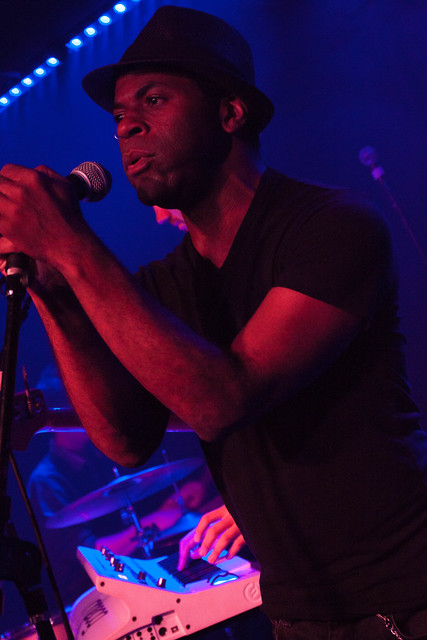
Comprised of Lalin St. Juste (vocals), Akiyoshi Ehara (bass, production), Kasha Rockland (vocals), Mirza Kopelman (percussion), Chris Thalmann (drums), Mahesh Rao (keys, synths), Mirza Kopelman (percussion) and Kumar Butler (sampler),  the San Francisco Bay Area electro pop/R&B act The Seshen can trace their origins to when its founding duo St. Juste and Ehara met in Ghana during a study abroad program and instantly bonded over their shared love of music. After returning home and completing college, the duo lived in Los Angeles before relocating to Ehara’s hometown of Richmond CA, where they started to collaborate together on music and gradually built the band through jam sessions with their closest friends.

The San Francisco Bay Area-based act have received attention across the Bay Area and elsewhere for an aestehtic that draws from a diverse array of influences including Erykah Badu, Jai Paul, James Blake, Radiohead, Broadcast, hip-hop, indie rock, electronica and 70s dub to craft a sound that uncompromisingly defies easy categorization  while carefully and gently walking the tightrope between sounding remarkably contemporary and retro-futuristic; in fact, to my ears, their sound sometimes sounds as though it were influenced by slick and sleek 80s synth-baesd R&B and pop.  And that sound is paired with St. Juste’s soul-baring lyrics drawing from both her own personal experiences and her imagination as the material typically explores femininity, power, illusion and loss. With the release of their 2012 self-titled debut, which was released through Bandcamp, the Bay Area-based octet quickly built a devoted local fanbase. And by 2014, they signed to renowned indie label Tru Thoughts Records, who releaed their critically applauded 2014 EP Unravel, an effort that quickly became a favorite of well-known and highly-regarded DJs and tastemaker media outlets and personalities including  BBC Radio 6‘s Tom Ravenscroft, OkayPlayer, Earmilk and The Line of Best Fit. Building on the growing internationally received buzz, the Bay Area based act released the Unravel Remixes EP, which featured remixes from AK/DK, Astronauts, etc., Uhuru Peak, Tru Thoughts Records’ Jonny Faith and Lost Midas; in fact, the Unravel Remixes EP received airplay from BBC Radio 6’s Lauren Laverne, Nemone, Steve Lacmaq and several others.

The band’s highly-anticipated sophomore, full-length sophomore effort is slated for an October 14, 2016 release through Tru Thoughts Records and the album’s material reportedly reflects a band expanding upon their sound and lyrical content; St. Juste sings lyrics in a stream of consciousness fashion and as you’ll hear on the album’s first single “Distant Heart,” the group pair cascading layers of ambient, squiggling and shimmering synths with stuttering and off-kilter percussion with St. Juste’s plaintive and ethereal vocals to craft a sultry, sensual song that possesses an underlying heartache at it’s core – and in some way the song manages to gently nod at 70s and 80s synth funk and R&B.
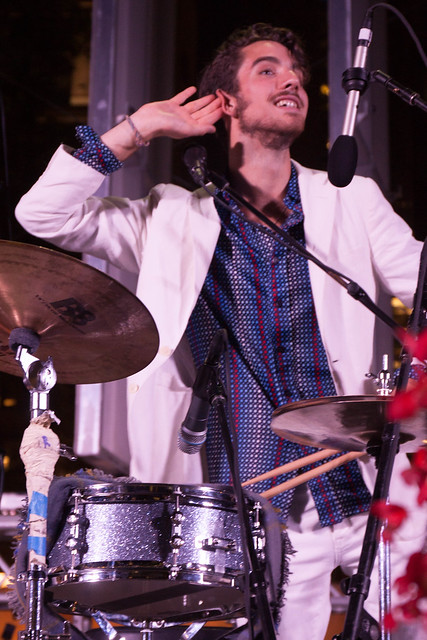


Perhaps best known as a member of the internationally renowned indie electro pop act Miami Horror, Aaron Shanahan’s solo side project Sunday, much like his primary project’s most recent album All Possible Futures possesses a sound that draws from the time they spent writing and recording the album in California. And his latest single “Only,” pairs his tender and plaintive vocals with a breezy production consisting of gentle layers of shimmering and chiming synths, thumping dance-floor friendly drum programming, angular Nile Rodgers-like funk guitar to craft a song that evokes the last precious warm blast of summer, while (gently) nodding at the Cascine Records roster and Random Access Memories-era Daft Punk, as the song possesses a subtle bittersweetness at its core.

As Shanahan explains in press notes “In the aftermath of relationships with other people we can be challenged in reflection to what they meant and what we are. Through these deep interactions and opening of the hearts, we hope that we can learn from lessons given and heal by connecting to something deeper. This song is about process.”

New Video: The Patiently Surreal and Gorgeous Visuals for Mark Pritchard’s Gorgeous Collaboration with Thom Yorke, “Beautiful People”

Warp Records released Pritchard’s latest effort Under the Sun earlier this year, and from all accounts the album has Pritchard maintaining the lush and accessible production style that has won him international attention — but while crafting material that may arguably be the least club and dance-floor ready he’s released to date. Interestingly, one of the album’s singles is”Beautiful People,” a lush and ethereal collaboration with Radiohead’s Thom Yorke that pairs Yorke’s plaintive and aching vocals with a slow-burning production that possesses an almost painterly quality as it consists of an airy and gorgeous, looped flute sample, steady yet tribal-like drum programming and cascading layers of shimmering and undulating synths. In some way sonically speaking, the song meshes the ancient and tribal with the contemporary in a way that’s spectral –and in fact, in some way the song reminds the listener that ghosts linger and have a way of haunting your life in unexpected ways. That shouldn’t be surprising because as Pritchard explained in press notes “The original instrumental to ‘Beautiful People’ is a personal song about loss, hopelessness and chaos, but ultimately the message is love and hope. Thom’s contribution to this collaboration captured perfectly what the piece is about. . .”

The recently released video is a stunningly gorgeous video that follows its hooded, central character as it hikes and explores scenery that possess an otherworldly beauty before revealing that the character is a sort of Thom Yorke avatar. As the camera pans out in a cinematic fashion, it manages to reveal how small and insignificant its central character is the proceedings at hand — that is before some amazing gravity defying action at the end. Much like the song that inspired it, the video possesses a patient yet intense quality.

New Audio: JOVM Mainstays Sylvan Esso Return with a Dance-Floor Ready New Single

Heath and Sanborn return with the first bit of new material in two years with their latest single “Radio,” being the A side of the forthcoming “Radio”/”Jump Kick Start,” which is slated for an November 18 release. “Radio” has quickly become a staple of their live shows and a fan favorite — and interestingly enough, the song is arguably the most brash song they’ve released; but, it also manages to be both a refinement and expansion of the sound that first caught them attention. Heath’s sultry vocals are paired with a slickly propulsive and dance floor-friendly production consisting of layers of cascading synths, wobbling low end, stuttering drum programming, and as a result the song sounds as though it were nodding at Soft Metals’ swooning and sensual Lenses and Giorgio Moroder.

Currently based in New Orleans, Kate Fagan is a ska, punk and new wave musician, who first emerged to local and regional attention as the founding member and frontwoman of Chicago-based ska act Heavy Manners, an act that once opened for the The Clash and The English Beat; but interestingly enough before that Fagan released a cult-favorited New Wave single “I Don’t Wanna Be Too Cool” through local imprint Disturbing Records that was immediately embraced by local club DJs, radio stations and taste-making record stores like Chicago’s Wax Trax, where it became the best-selling release by a local artist ever.  The B-side single “Waiting for the Crisis” also received attention for its politically charged, Reagan-era lyrics, which manage to still resonate today.


As the story goes, Fagan wrote the title track after moving from New York to Chicago in the late 70s. “I pretty much came to visit Chicago and fell in love with the scene and never left,” Fagan recalled in press notes. “At the time I’d been working at New York magazine and was getting dismayed watching the CBGB scene give way to the whole Studio 54/velvet rope thing. So I spontaneously moved to Chicago, which was much more inclusive and everyone wasn’t standing around peering at each other from behind their shades. But eventually I saw that same kind of divisive hipster culture start to creep in. ‘Too Cool’ was my reaction to that.” Along with “Too Cool,” Fagan wrote many of her earliest songs as a solo artist and with Heavy Manners in an intuitive fashion, recording them at Chicago’s Acme Studios, where she’d meet the fellow artists with whom she’d form Disturbing Records.

Although the “Too Cool” single was a cult favorite back in the early 80s, sadly it was thought to be long lost, as the second printing of the album was lost in a house fire that destroyed almost everything Fagan had owned at the time — that is until Manufactured Recordings stumbled upon the original single, along with two unreleased bonus tracks that Fagan recorded with members of My Life With The Thrill Kill Kult and Scarlet Architect. Interestingly, when you listen to the four tracks off the re-issued 7 inch, the songs manage to sound both of its time and incredibly contemporary — in some way you can imagine acts like Colleen Green, Courtney Barnett, Karen O. and several others citing Fagan as an influence, as Fagan’s lyrics possess a wry irony at at their core, as you’ll hear on the aforementioned “Too Cool,” a song that’s reminiscent of both The B52s and Go-Gos. “Waiting for the Crisis” sounds as though it were influenced by Sandinista! and Combat Rock-era The Clash. However, “Master of Passion” and “Come Over” are the most dance floor-friendly, New Order-like songs of the re-issue, featuring shimmering undulating synths, propulsive drum programming paired with Fagan’s sultry and coquettish delivery.

Of course, each track reveals a songwriter, who had an uncanny knack at writing an infectiously catchy hook that you could imagine kids bouncing up and down to in a sweaty club — and does so with a cool, swaggering self-assuredness.


Comprised of primary members Guy Fenech, Oly Marlan and Nick Franklin Sydney, Australia-based indie electro pop/indie rock act Australia independently released their full-length debut Portraits of People, Places and Movies earlier this year to national attention for a sound that channels their homeland’s early 80s pub rock scene and 80s New Wave — in other words, as you’ll hear on Places and Movies‘ latest single “Breathe In,” anthemic hooks paired with propulsive four-on-the-floor-like drumming, angular guitar chords, a sinuous bass line, shimmering and undulating synths and Fenech’s baritone crooning to craft a sound that will remind listeners of INXS‘ “Listen Like Thieves” and In Ghost Colours-era Cut Copy — but with a dance floor-friendly feel.


Growing up in Atlanta, Blake Fusilier didn’t quite fit in with his contemporaries — while many of his peers aspired to sign to LaFace Records and SoSoDef Records, as a teenager Fusilier picked up the violin, dreamt of being the black Itzhak Perlman and was obsessed with the work of Edgar Allen Poe. And much like odd teenagers — especially odd black teenagers —  a young Fusilier learned that sometimes when you’re extremely different, you can be hated and ridiculed, and around that time he began writing his own music. By the time, he relocated to Boston for college, Fusilier had learned to play the bass and was a member of moody rock band RIBS, which eventually rose to national prominence; in fact, they’ve opened for The Joy Formidable and Queens of the Stone Age, and have been written about across the blogosphere. 

As the story goes, as the band was achieving quite a bit of success, someone asked Fusilier about being black and gay, and the singer/songwriter, multi-instrumentalist and producer began to realize that running away from those questions and the world’s perceptions of him was spiritually and emotionally exhausting. From that point forward, he wanted to make music that would not only drain those questions of their power but to make them permanently irrelevant. As Fusilier says in press notes, “I have this theory that if people knew who we really were in their minds, we probably would all have a lot more respect for one another. This applies to everyone: friends and acquaintances and bandmates. I think it’s our duty to ourselves to make sure that those around us have a chance to allow others to see our glorious, true selves. I finally feel like I’m beginning to live by those words. The songs I’m wrapping up have been floating around for years. I had been anticipating the moment when people could actually hear even 20 seconds of my potential.” 

So far the response from the blogosphere and music critics has been wildly positive with one critic in particular describing Fusilier’s sound as being a synthesis of James Brown and Nine Inch Nails — although as soon as I heard his latest single “Make You,” I immediately heard Prince, Jef Barbara, Boulevards, Gordon Voidwell and quite a bit of contemporary electro pop as the former RIBS bassist’s sultry and sensual cooing is paired with a slick, hyper modern production consisting of a sinuous bass line, propulsive drum programming led by finger snaps, layers of buzzing synths and electronics, and an incredibly infectious hook in a club banging song that possess an unresolved sexual tension and a sly and ironic commentary on racial and sexual identity. And it all should be a reminder that you can pair some deeply personal and political messages in dance music — and the most important that music can be one of the most powerful weapons imaginable.  


New Video: Australia’s Two People and Their Gorgeous, Cinematic Visuals for “If We Have Time”

The duo’s second and latest single “If We Have Time,” pairs vocalist Phoebe Lou’s aching vocals with a moodily atmospheric production consisting of swirling electronics, stuttering drum programming, twinkling keyboards and guitar played through reverb. And sonically speaking the song will likely remind a great deal of readers of Portishead and Goldfrapp‘s gorgeous Tales of Us — while thematically being a song that focus on the intangible and fleeting nature of time, as well as on a relationship that is in an uncertain place, and on the verge of dissolution. Both scenarios force people to stop and look into the mirror.

The recently released music video is shot in a gorgeous and expansively cinematic black and white in the desert, complete with long pans and much like Martin Amis’ incredible Time’s Arrow with some performance footage and moody and lyrical footage of a woman walking in the desert going in slow motion or in reverse. It’s a trippy yet visually arresting video.

With the release of “Step Into The Mood,”Los Angeles-based electro pop trio Iconique quickly exploded across the blogosphere and elsewhere as the single was praised by  Gawker and Surviving the Golden Age, was featured on Hype Machine and received radio airplay on KUCI and KCHUNG, thanks to a sound that’s been described by some of my colleagues as a “synthesis of influences like Prince, David Bowie and Chic.” Interestingly, their last single “Sitting Pretty” sonically seemed to draw equally from Roxy Music, The Human League, Howard Jones and others as Leo Paparella’s speak-song and crooning are paired with a sinuous bass line, shimmering synths and propulsive drumming to craft a song that sounded as though it could have easily been released sometime between 1981 and 1983.

Interestingly, as Paparella explained in press notes, “‘Sitting Pretty’ is both a celebration and critique of vanity. There’s very much an innate cruelty to glamor. It operates out of exclusivity, which keeps its scope woefully narrow and out of touch. And I bet that’s why people want it so badly.” And as a result, the song possess a subtle yet palpable sense of menace and anxiousness under the clean, hyper-modern and danceable sheen. Recently Mitch Murder released an elegantly  shimmering, preening and moodier remix that Leo Paparaella describes as a “fantastically power bitch. It makes me want to watch Dynasty, wear Escada, and douse myself in Giorgio Beverly Hills. He captured the tongue-in-cheek haughtiness of the original. Sonically, he moved the song from 1981 to 1987, so she’s older, colder and wiser now. She traded her silicone for saline.”


New Video: The Goofy and Gloriously 80s Public Access TV Visuals for Neon Indian’s “Annie”

With the release of Vega Intl. Night School last year, Palomo and Neon Indian quickly became a JOVM mainstay; in fact, you might recall that I wrote about the album’s first single “Annie,” an immensely slick and crowd pleasing single that lyrically and thematically draws from Michael Jackson’s “Smooth Criminal” and “Dirty Diana” as the song’s narrator is a bit of a lovelorn fool, who can’t find his missing girlfriend either because she suddenly skipped town, never to return — or perhaps much more darkly, because the song’s narrator has had something to do with it. Sonically, the song is comprised of a taut yet sinuous bass line, angular funk guitar chords and shimmering and cascading synth stabs paired with Palomo’s plaintive falsetto, which reminds me quite a bit of Rush Midnight’s +1 EP but funkier.

The recently released music video is a gloriously goofy video shot on grainy VHS tape and splices live footage of Palomo with his backing band in Japan, versions of shitty chatline commercials, footage of Palomo’s character being questioned and then beaten by the police, Palomo doing his best Moonwalker-era Michael Jackson impression, an interview of Palomo’s character being interviewed on a Morton Downey, Jr.-like talk show, complete with shittier special effects and cuts, and a follow-the-bouncing ball crawl on the bottom of the screen. And as a child of the 80s, public access TV actually looked that awful and for a song that draws so much from 80s synth pop, the aesthetic is fitting.