Category: instrumental

New Audio: The Budos Band Return with an Ennio Morricone-like New Single

I’ve written and photographed the acclaimed Staten Island-based instrumental act The Budos Band a number of times over the years, and the act which is comprised of Jared Tankel (baritone sax), Tom Brenneck (guitar), John Carbonella (congas, drums), Mike Deller (organ), Daniel Folder (bass), Andrew Greene (trumpet), Rob Lombardo (bongos, congas), Brian Profilio (drums) and Dame Rodriguez (percussion) initially developed a reputation for a sound that they described as “Afro Soul,” which draws from Ethiopian music with a soul undercurrent, and some sound of the sounds of the 60s; however, with the most band’s most recent releases, their sound has evolved towards what they’ve referred to as “70s Psychedelic Instrumental Music.”

Now, as you may recall, the acclaimed Staten Island-based act’s fifth full-length album, the aptly titled V is slated for an April 12, 2019 release through their longtime label home Daptone Records, and as the band’s Tom Brenneck says in press notes, the band’s forthcoming album feels like the truest sonic representation of the band as the material possesses the rock ‘n’ roll/heavy metal elements off of 2014’s Burnt Offering, as well as songs that could have easily been found on their first three albums.  The album’s first single “Arcane Rambler” featured a composition that nodded at hip-hop, 70s fuck, Afro funk and psych rock — and in a way that found them at arguably their loosest and trippiest.  V’s latest single is the Ennio Morricone-like “Veil of Shadows,” a composition that’s centered around reverb-drenched guitar, shimmering and soaring organs and a big Western/Mexican-like horn arrangement — and as a result, the track possesses a cinematic quality; in fact, to my ears, it sounds as though it should have been part of the soundtrack for Kill Bill. 
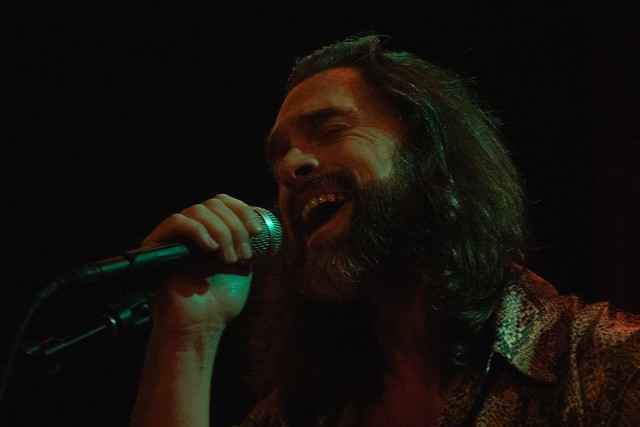
Comprised of Sebastien Bui (keys), Eli Ghersinu (dino bass), Stefan Lilov (broken wah guitar), Yavor Lilov (kicker’s delight/endless kick/bronto kick), Quentin Pilet (bongos), Alain Sandri (congas) and DJ Laxxiste (440 FX), the Geneva, Switzerland-based instrumental act L’Eclair describe their sound in a number of different ways on their Facebook page, including “as if Booker T and the MGs came from Eastern Europe,” an obscure 70s movie soundtrack and as “kraut-exo-soul, brutal funk and Turkish groove.”

The Geneva, Switzerland-based instrumental act’s forthcoming sophomore album Sauropoda is slated for a May 24, 2019 release through Beyond Beyond Is Beyond Records — and the album, which was recorded over the course of two days last October in an undisclosed mountainous location is comprised of deep jams the band road-testing following the recording and release of last year’s breakthrough debut album Polymood. Recorded live and with few overdubs, Sauropoda‘s compositions are reportedly much more organic and capturing the band’s live sound much more accurately than its predecessor.  Interestingly, the album’s trippy and cinematic first single “Endless Dave” it’s a wild yet seamless synthesis of Expensive Shit/He Miss Road-era Fela Kuti, Return to Forever-like jazz fusion, prog rock, dub and spaced out psychedelic and 70s soul that sounds both familiar and unlike anything I’ve heard this year.


New Audio: The Budos Band Release a Funky and Cinematic New Single

I’ve written and photographed the acclaimed Staten Island-based instrumental act The Budos Band a number of times over the years, and as you may recall the which is comprised of Jared Tankel (baritone sax), Tom Brenneck (guitar), John Carbonella (congas, drums), Mike Deller (organ), Daniel Folder (bass), Andrew Greene (trumpet), Rob Lombardo (bongos, congas), Brian Profilio (drums) and Dame Rodriguez (percussion) initially developed a reputation for a sound that they described as “Afro Soul,” which draws from Ethiopian music with a soul undercurrent, and some sound of the sounds of the 60s; however, with the band’s most recent releases, they’ve moved towards what they’ve referred to as “70s Psychedelic Instrumental Music.” 

The acclaimed instrumental act’s fifth album, aptly titled V is slated for an April 12, 2019 release through their longtime label home Daptone Records, and as the band’s Tom Brenneck says in press notes, the band’s forthcoming album feels like the truest sonic representation of the band as the material possesses the rock ‘n’ roll/heavy metal elements off of 2014’s Burnt Offering, as well as songs that could have easily been found on their first three albums.  The album’s latest single, the cinematic  “Arcane Rambler” is centered around a looping and whirring guitar line, boom bap-like percussion, an enormous horn line and a propulsive and incredibly tight groove — and interestingly enough, the composition, which nods at hip-hop, 70s funk and psych rock finds the members of the collective at arguably their loosest and trippiest.

New Audio: Cochemea Gastelum Returns with a Thoughtful and Gorgeous New Composition

Perhaps best known for a 15-year stint as a member of the acclaimed soul act and JOVM mainstays Sharon Jones and the Dap Kings, the California-born, New York-based multi-instrumentalist Cochemea Gastelum simultaneously has a lengthy career as a soloist, bandleader, musical director, composer and ensemble player — including releasing a critically applauded effort as a bandleader, The Electric Sound of Johnny Arrow several years ago. 

With both of his parents being musicians, Gastelum grew up in a rather musical home. And although the multi-instrumentalist, bandleader, musical director and composer can claim Yaqui Mescalero Apache Indian heritage — in fact, his name is Yaqui Mescalero Apache for “they were all asleep” — he grew up without knowing much about his own heritage. Ironically though, he has spent the bulk of his musical career writing, performing and recording various iterations of roots music. 

Slated for a February 22, 2019 release through Daptone Records, Gastelum’s soon-to-be released effort All My Relations find the California-born, New York-based former member of Sharon Jones and the Dap Kings connecting with his roots through music.  “All My Relations is a way for me to explore my roots through music,” the California-born, New York-based saxophonist, bandleader, musical director and composer says in press notes. “Some of it is a memory that is imagined from a time and place I’ve never been (‘Sonora’) or a musical impression of ritual (‘Mitote’). I felt compelled to add the way I feel when I go to ceremony, when I feel connected with my ancestors, to the musical narrative.”

Originally conceived during Sharon Jones and The Dap Kings’ final year of touring, Gastelum along with Daptone Records head and producer Gabriel Roth cast a varied but familial set of local musicians to bring Gastelum’s ideas to life. Unsurprisingly, a large portion of the album was created through improvisation and collective writing, where its  10 musicians created a melodic, percussive conversation. “It was a beautiful experience – people would start playing and we’d work up these arrangements on the spot, then record it,” Gastelum says of the recording sessions. Now, as you may recall, the album title track and first single “All My Relations” featured an arrangement of tribal percussion, chanting, ethereal flute, and a gently propulsive bass line that created a composition that feels ceremonial and suggests that the musicians were aiming for something much more profound and necessary — a connection with the infinite. 

All My Relations’ second and latest single “Al-Mu’Tasim” derives its name from the Arabic phrase “he who seeks shelter in God.” Sonically, the track is reportedly by Moroccan Gnawa music, and as a result the track consists of a composition centered around a looping and expressive horn line, a sinuous and bass line, tribal drumming and a chanted chorus. Sonically, the composition manages to recall the most gorgeous and thoughtful elements of John Coltrane’s A Love Supreme — but with a tribal and ancient vibe. “This track features Gabe [Roth] on the Gimbre. He has some North African ancestry and had a Gimbre that his dad brought him back from Morocco. It’s influenced by Gnawa music from the region,” Gastelum says in press notes. 

New Video: Scott Gilmore Retro-Futuristic Take on Instrumental Synth Pop

Scott Gilmore is a Northridge, CA-based multi-instrumentalist, producer and electronic music artist, who has recorded a handful of critically applauded releases through SFV REC and International Feel. His forthcoming album Two Roomed Motel is slated for a March 1, 2019 release through Crammed Discs, the label home of Juana Molina. And the album’s latest single, album title track “Two Roomed Motel” is a funky and percussive  yet laid-back retro-futuristic synth pop single that subtly recalls Herbie Hancock’s “Rockit,” Holy Ghost!’s Crime Cutz, Return to Forever and the Los Angeles-based, post J Dilla beatmakers. But unlike any of those references, the track finds Gilmore meshing a lo-fi, bedroom recording approach with slick electronic production in a way that’s mischievously anachronistic. 

Directed by Scott Gilmore, and shot and edited by Kenny Gilmore, the recently released video stars Gilmore checking into a hotel room, where he jams and records the song, first using a synthesizer before he gets room service to deliver bongos, a guitar, a keyboard which he then uses to complete the song. At one point, we follow Gilmore as he wanders out on to the streets and walks into a local bar, where he pensively has a drink. It’s a decidedly lo-fi affair centered around a simple concept, much like the song itself. 

New Audio: Melbourne Australia’s The Putbacks Release a Blazing Western-tinged Bit of Psych Soul

Comprised of founding members Rory McDougall (drums), Tom Martin (guitar) and Mick Meager (bass), Simon Mavin (Hammond organ) with Justin Marshall, funk and soul, instrumental act The Putbacks feature some of Melbourne, Australia’s most accomplished musicians as members of the band have played with Hiatus Kaiyote, The Bombay Royale, D.D. Dumbo, Swooping Duck, The Meltdown and The Black Arm Band.   The band which can trace its formation back to the early 00s has long been the unofficial house band of Australian label  HopeStreet Recordings, taking cues from the legendary house bands of 60s and 70s soul and funk studios — in particular, The MGs, The Meters and The Wrecking Crew, as well as film composers of David Axelrod and Adrian Younge.

With the release of a handful of 7 inches through HopeStreet, the band received attention across their native Australia; however, it was Dawn, their 2014 collaboration with Australian Aboriginal soul singer/songwriter Emma Donovan that found the members of The Putbacks with a growing international profile, as the album received attention outside of their homeland. Since the release of Dawn, the individual members of the acclaimed band have bee busy with a number of projects while managing to find the time to write and record their soon-to-be released Paul Bender-produced self-titled debut, slated for a November 9, 2018 release Now, as you may recall, the album finds the band collaborating with a number of internationally renowned artists including singer/songwriter and neo-soul pioneer Bilal and violins and arrangements from Miguel Atwood-Ferguson. The album’s first single, the cinematic, film-noir-ish “The Ways” was a scorching bit of psych school featuring Bilal that recalled  The Roots and Hot Buttered Soul-era Isaac Hayes but with an improvised, free-flowing air.
“Oranges,” the self-titled album’s latest single sound as though Ennio Morricone managed to compose an unreleased psychedelic Western Sci Fi soundtrack — thanks in part to the composition being centered around a blistering Western-influenced riff that begins with the organ and a thumping backbeat, with the other instrumentations playing off the riff. Of course, the end result is a hypnotic and propulsive groove that also manages to nod at Tinariwen and others, complete with a larger-than-life vibe and sensibility. 

New Video: Public Service Broadcasting’s Thoughtful Tribute to the RMS Titanic

Initially begun as the solo recording project of its founding member J. Willgoose, Esq. (guitar, banjo, stringed instruments, samplers, synths) back in 2009, the London-based instrumental prog rock act Public Service Broadcasting expanded to a duo with the addition of Wrigglesworth (drums, piano, electronic musical instruments) — and as a duo, they released an EP, 2012’s The War Room, and two full-length albums, 2013’s Inform-Educate-Entertain and 2015’s The Race for Space, which established their sound — expansive prog rock centered around sampled news programs, field recordings, found footage, old movies (particularly from the British Film Institute archives) and the like; in fact, the band’s The Race for Space, which thematically focused on the Space Race of the 1950s and 1960s may arguably be their most critically and commercially successful album — the album charted at #11 on the UK Independent Charts, before reaching #1 later that week.

The band’s third, full-length album, last year’s Every Valley found the band expanding to a trio with the addition of JF Abraham (lugelhorn, bass guitar, drums, vibraslap and others), while featuring guest vocals from Camera Obscura‘s Tracyanne Campbell, and thematically the album’s material focused on the coal mining industry’s rise and fall in the Welsh Valleys between the 1950s and 1980s. Now. if you’ve been frequenting this site over the past couple of months, you may recall that earlier this year, the newly constituted trio was commission by the BBC to write and record four new pieces, centered on the story of the RMS Titanic, which led to their soon-to-be released EP White Star Liner.

Slated for an October 26, 2018 release through Play It Again Sam Records, the EP thematically and sonically tells the story of the Titanic from its construction to its early, tragic, demise. Focusing on the perspectives of those who built and salted her, the EP will further the band’s reputation for crafting a unique audio-visual experience that provides a new and very different perspective on well-known events. As the band’s J. Willgoose, Esq. says in press notes “I thought it was an interesting challenge to tell the story of the ship’s construction as part of Belfast’s proud industrial history, the spirit of optimism of the pre-war age that she represented, and then an abstract and, I hope, respectful depiction of both the sinking of the ship (represented by the repeated Morse code distress call, C – Q – D) and the discovery of the wreck in 1985.”

The EP’s first official single is the breezy and hopeful motorik-like “White Star Liner,” which captures a sense of hopeful excitement as the completed ship is just about to set sail for America. There’s the sense of a world slowly unifying after a brutal war, of the possibility of increasing world travel meant for the economies of cities like Belfast and others, as larger and larger ships were built. And for a brief moment, the future seemed glorious and full of possibility. The recently released video features the band performing live, cut with the stock footage they use during their live shows. 

New Video: Introducing the Gorgeous and Brooding Sounds and Visuals of Quietwater

Comprised of  classically trained cello Michelle Elliot Rearick  who has collaborated with a diverse list of acclaimed artists including Adele, Nas, Erykah Badu, and H.E.R. and producer and drummer Colin Ingram, who has worked with Living Legends’ Luckyiam, Terra Lopez and Vast Air among others, the California-based duo Quietwater write moody and ethereal compositions featuring classical cello arrangements over hip-hop like breakbeats. The duo’s debut, self-titled EP is slated for a November 16, 2018, and the EP’s latest single “Overcast,” is a cinematic track that will further cement their reputation as its centered around a gorgeous and melancholy cello arrangement and boom bap-like breakbeats that brings the Detroit-born, Los Angeles-based beatmakers and Chilly Gonzales’ The Unspeakable to mind. 

As the duo’s Colin Ingram says of the song and its inspiration, “I was improvising with a couple friends. One friend on guitar, one friend on drums, I was playing a synth. We recorded it. My friend Cory who was playing drums always talked about how much he loved the song. Cory decided to end his life when he was faced with an overwhelming amount of life’s let downs and depression. When I met Michelle the first thing I wanted to do was remake this song we had recorded and honor Cory in a more complete and cinematic way. This song means so much to me and it gives Cory eternal life as far as I’m concerned.”

Interestingly, the recently released video features cinematically shot landscape footage superimposed with psychedelic imagery that manages to emphasize the song’s brooding nature. 


Comprised of Kristian Dunn (double-neck bass/guitar) and Tim Fogarty (drums), the Southern California-based post rock duo El Ten Eleven have developed a reputation for using a dizzying array of effect pedals and looping pedals to create a dense, complex, enormous and incredibly cinematic sound.  And if you’ve been frequenting this site for some time, you’d know that since their formation back in 2002, the band has maintained a steadfast DIY approach throughout their career; however, with their forthcoming, seventh full-length album, and first for Topshelf RecordsBanker’s Hill, the duo enlisted Sonny Dipierri, who has worked with Animal Collective and Dirty Projectors to produce the album, marking the first time that they’ve ever worked with an outside producer.

Slated for an August 10, 2018 release, the album reportedly finds the duo thematically exploring a number of contradictory yet important things — the paradoxical beauty in anxiety, the importance of family and familial bonds, especially in a world that’s gone absolutely mad, as well as the fleeting sensation of satisfaction. Earlier this summer, I wrote about Banker’s Hill first single “Phenomenal Problems,” a single that found the duo deliberately walking a tightrope between meditative introspection and a widescreen, cinematic quality with the composition being centered around  propulsive boom bap-like beats and drumming, enormous, arena rock friendly power chord-based hooks within an expansive song structure.

“We Don’t Have A Sail But We Have A Rudder,” is Banker’s Hill’s latest and last official single and the composition is centered around shimmering and expressive guitar lines, a propulsive bass line and four-on-the-floor drumming — and while retaining the meditative and cinematic quality that has won them attention, the track may arguably be their most straightforward, prog rock-leaning song off the album.

Throughout the fall, you can catch El Ten Eleven on tour. Sadly there aren’t any East Coast dates yet, but if you’re in the Midwest or the West Coast, you should check them out. In the meantime, check out tour dates below.

Tour Dates:
9/05 – Morro Bay, CA @ The Siren
9/06 – Santa Cruz, CA @ Catalyst Atrium
9/07 – San Francisco, CA @ August Hall
9/08 – Reno, NV @ Saint Bar
9/09 – Sacramento, CA @ Harlow’s
9/12 – Bend, OR @ Volcanic Theatre
9/13 – Portland, OR @ Doug Fir
9/14 – Seattle, WA @ The Crocodile
9/15 – Spokane, WA @ The Bartlett
9/18 – Boise, ID @ Neurolux
9/19 – Salt Lake City, UT @ Urban Lounge
9/20 – Ft. Collins, CO @ Washington’s
9/21 – Denver, CO @ Summit Music Hall
9/22 – Santa Fe, NM @ Meow Wolf
11/06 – St. Louis, MO @ The Old Rock House
11/07 – Indianapolis, IN @ HiFi
11/08 – Ann Arbor, MI @ Blind Pig
11/09 – Grand Rapids, MI @ Pyramid Scheme
11/10 – Chicago, IL @ ChopShop
11/13 – Madison, WI @ High Noon Saloon
11/14 – Milwaukee, WI @ Shank Hall
11/15 – Minneapolis, MN @ 7th Street Entry
11/16 – Omaha, NE @ Slowdown
11/17 – Kansas City, MO @ Record Bar
11/29 – Los Angeles, CA @ Teragram Ballroom
11/30 – San Diego, CA @ Casbah
12/01 – San Diego, CA @ Casbah


Live Footage: Renowned Post Rock Duo El Ten Eleven Perform the Meditative Yet Cinematic “Phenomenal Problems” off Forthcoming Album

Comprised of Kristian Dunn (double-neck bass/guitar) and Tim Fogarty (drums), the Southern California-based post rock duo El Ten Eleven have developed a reputation for using a dizzying array of effect pedals and looping pedals to create a dense, complex, enormous and incredibly cinematic sound.  And since their formation back in 2002, the band has been steadfastly DIY in their approach, producing and recording their own records; however, with their forthcoming, seventh full-length album, and first for Topshelf Records, Banker’s Hill, the duo enlisted Sonny Dipierri, who has worked with Animal Collective and Dirty Projectors to produce the album, marking the first time that they’ve ever worked with an outside producer.

Slated for an August 10, 2018 release, the album reportedly finds the duo thematically explore the paradoxical beauty in anxiety, the importance of family and familial bonds, particularly in a world gone absolutely mad, and the fleeting possibility of satisfaction. Interestingly, the album’s first single “Phenomenal Problems” finds the duo deliberately walking a tightrope between an introspective and meditative nature and a widescreen, cinematic quality as the composition is centered around a propulsive boom bap-like beats and drumming, enormous, arena rock friendly power chord-based hooks within a twisting and turning song structure. And while the song will further cement their established reputation for crafting the densely layered and deceptively complex compositions, the new single is a subtle expansion of the duo’s sound and songwriting. 

This recently released live footage captures both the simpatico between Dunn and Fogarty while being a revealing and up-close-and-personal view of the musicians’ technical and musical prowess; after all for a duo, they manage to craft a sound that makes you think that there’s 4, 5 maybe even 6 musicians. 

New Video: French Trio Jean Jean Return with Creepy Visuals for the Cinematic and Anxious “Event Horizon”

Earlier this year, I wrote about the  Paris-based instrumental space rock/math rock/experimental rock trio Jean Jean, currently comprised of Edouard Lebrun (drums, samples), Sebastien Torregrossa (guitar) and their newest member multi-instrumentalist Gregory Hoepffner, and as you may recall although the act has gone through a series of lineup changes in which the band started off as a trio and had a brief period as a duo, before expanding back to a trio with the release of their self-titled debut EP and 2013’s full-length debut Symmetry, which they supported with hundreds of live shows across the European Union, Japan and the US.

Interestingly though, when the band was a trio featuring Lebrun and Torregrossa, they wrote and recorded a follow-up EP that they scrapped because they felt something — or someone — was missing. Lebrun and Torregrossa were initially unsuccessful in their search for a third musician to further flesh out their sound, until their longtime friend Hoepffner, who had been responsible for the band’s visuals signed up to join the band. And as Lebrun recalls in press notes, things immediately clicked. “He [Hoepffner] brought this glue linking the drums and the guitars, adding another level,” Lebrun says.

The band’s recently released album Froidpierre is the first featuring the band as a newly re-constituted trio, and the album, which was recorded in a cabin named Froidspierre (or cold stone) in the French Alps is reportedly a marked departure from their previously released work. “We were tired of complex and festive tracks; we wanted to avoid over-doing things, to stop doing patchwork and have proper songs with real hindsight. The songs are shorter because they were composed with a sense of urgency.” And while these were all very conscious decisions, it was also driven by a sense of urgency as the band’s Lebrun frequently had to take the first night bus from the suburban studio to his home in Paris. As the band collectively mentions in press note, as they were busily writing and recording the material that would comprise their latest effort, each individual member of the band recognized that they had a great creative chemistry and that while something musically powerful was happening during the sessions, something in the air wasn’t quite right.

During the third day of the recording sessions Torregrossa went out on the balcony to smoke a cigarette and suddenly he felt an uncontrollable sense of fear throughout his own body. With a racing heart, he rushed back inside without looking back. The next day, Lebrun managed to be in the exact same spot and he couldn’t shake the persistent feeling that there was a presence behind him. Just as he turned around, he caught what looked like a ghost out of the corner of his eye. Frozen in fear, he stared at this presence and got lost in its inverted human-like silhouette. As Lebrun recalls, it felt as though he were slowly sinking into quicksand until somehow he managed to get away; but he felt unsettled and uneasy throughout the rest of the night. Hoepffner felt a strong sense of discomfort as he was sitting in the studio’s kitchen — so much so that, after a few days, he made sure to never enter a room on his own. At night, he heard someone or something whispering his name. And while he spent time trying to convince himself that someone was trying to play an elaborate prank on him, Hoepffner couldn’t shake having impressions of a wasted life, without any rational explanation. The band’s friend and photographer Maxime slept in a room that was made entirely of stones and was once a former stable, and one night he heard a woman’s voice calling his name, and felt something lean on him, and a cold sensation overtake his entire body.

Sometimes, they all would hear strange noises and banging on the walls that kept them awake most of the night. They  all spoke about something with a beastly scream and of objects suddenly and unexpectedly being knocked down. Although it was only until after the recording sessions were complete that the members of the band shared their own experiences, the sensation of anxious, uncertain dread and fear, of being on the edge, of not being able to trust your senses and your reason. Naturally, these experiences whether consciously or subconsciously managed to influence the sound and tone of the album’s material; in fact, album single “Anada,” evokes an unshakably, dark, menacing, and inexplicable presence lurking behind you, felt but unseen. Froidspierre’s latest single “Event Horizon”  is an incredibly cinematic composition centered around shimmering, arpeggiated synths, buzzing power chords, thumping and propulsive drumming and a soaring hook, and much like its immediate predecessor, the composition evokes an anxious and creeping dread. And unsurprisingly, the gorgeously shot video filmed by the band’s longtime friend, photographer Maxime Leyravaud and the band further emphasizes the creeping dread in the song; of shadowy figures seemingly coming out of the dark — for you.