Category: instrumental

New Video: Immersion Returns with a Krautrock-Inspired New Single

Last month, I wrote about the Brighton, UK-based art rock duo Immersion, and as you may recall, the act, which is comprised of husband and wife duo, Wire‘s Colin Newman and Minimal Compact’s Malka Spigel can trace their origins back to when the duo initially collaborated together in the early 90s on a handful of Colin Newman’s solo albums and later as Immersion.  Slated for a June 15, 2018 release, Sleepless is the follow up to 2016’s critically applauded Analogue Creatures Living on an Island and the forthcoming album is reportedly both an extension of its predecessor’s sound and a leap forward sonically. While still deeply influenced by Tangerine Dream and Popal Vuh with a textured, painterly approach, Newman and Spigel have expanded their sonic palette, to incorporate guitars, drums and bass with analog synths; and in fact, the album features the duo collaborating with Holy Fuck‘s Matt Schulz, and Hexenschuss‘ Gil Luz and Asi Weitz.

“Microclimate,” Sleepless’ first single was an lush yet atmospheric composition consisting of gently arpeggiated synths, simmering guitar chords, swirling electronics and a stuttering bass line — and while being meditative and dreamy, the song possesses an cinematic quality, as though it should be part of the soundtrack of a futuristic, sic-fi-leaning drama. The album’s second and latest single “Propulsiod” is a decidedly krautrock-inspired affair, as it’s centered around an appropriately propulsive, motorik groove with squelching and trembling synths and electronics. As the duo says about the song, “The roots of Immersion lie in abstract techno but somehow over the years we’ve acquired the motorik of krautrock without ever consciously deciding on that direction. ‘Propulsoid’ is a kind of propulsive mythical beast, an unholy alliance of Klaus Dinge’s beats and acid squelch filtered through the ever present MS-10. We guess it’s a kind of dance music! The video was made by us in the same spirit as we make the music and write these words. It’s about speed, light & repetition.” Unsurprisingly, the video features footage of relentless transpiration, movement sped up and occasionally in reverse, which emphasizes the sense of repetition and endlessness to it. 

Newman and Spigel will be touring to support Sleepless and it includes a July 14, 2018 stop at Rough Trade. Check out the rest of the tour dates below.

New Audio: The Death Wheelers Return with a Bruising and Face Melting Single

The Canadian instrumental band The Death Wheelers, comprised of  Max “The Axe” Tremblay, Richard “The Bastard” Turcotte, Sy “Wild Rye” Tremblay and Hugo “Red Beard” Bertacchi have largely been inspired by theaesthetics and ethos of bikesploitation movies such as The Wild Angels, Werewolves on Wheels and Psychomania, as well as Davie Allen, The Cramps, Motorhead, The Stooges and Grand Funk Railroad — and the end result is incredibly sleazy, primal and downright bruising and face melting rock.

Now, as you may recall, the band’s soon-to-be released album  I Tread On Your Grave is slated for a May 11, 2018 release through RidingEasy Records, and the album was devised to serve as the soundtrack for an imaginary B-movie with an incredible plot: Decimated in 1972 by local authorities, all members of The Death Wheelers, a notorious motorcycle club, have been buried at the Surrey cemetery. After some time, the motorcycle club has risen from the grave for their last ride — and of course, they’re hungry for blood, mayhem and violence. This brutal, living dead motorcycle gang travel from coast-to-coast to find and recruit the nastiest, filthiest, trashiest individuals to join their ranks with the goal of assembling a legion of 13 discycles (disciples + cycles, of course) to see revenge on the pigs that dismantled the club and sent the dead members of the club to their graves.” Earlier this year, I wrote about “Black Crack” a raw, swampy and bluesy track that sounded like a bluesy lovechild of  ZZ Top, Howlin’ Wolf and Portland‘s R.I.P thanks to some boozy, guitar pyrotechnics and a forceful immediacy. The album’s latest single “Roadkill 69” features a hilarious sample featuring the iconoclastic actress Divine, known for her insane roles in John Waters’ legendarily perverse films as an apt introduction to a face melting bruiser that sounds as though it were written by Rob Zombie.

\

Currently comprised of Gilbert Elorreaga, Mark Gonzales, Greg Gonzalez, Josh Levy, Sweet Lou, Beto Martinez, Adrian Quesada, John Speice and Alex Marrero, the Austin, TX-based act Brownout was formed ten years as a side project featuring members of the Grammy Award-winning Latin funk act Grupo Fantasma, but interestingly enough, the project has evolved into its own as a unique effort, separate from the members’ primary gigs. Over the past few years, the act has garnered critical praise — they won their third Austin Music Award last year, while composing and arranging work that’s unflinchingly progressive while evoking the influences of WAR, Cymande and Funkadelic. Unsurprisingly, the members of Brownout have been a highly-sought after backing band,  who have collaborated with GZA, Prince, Daniel Johnston and Bernie Worrell, and adding to a growing profile, they’ve made appearances across the major festival circuit, including Bonnaroo, High Sierra Music Festival, Pickathon, Bear Creek Musical Festival, Utopia Festival, Pachanga Fest, and others.

Throughout the course of this site’s history, I’ve written quite a bit about the Austin-based act, and as you may know, the band has released five full-length albums: 2008’s Homenaje, 2009’s Aguilas and Cobras, 2012’s Oozy, 2015’s Brownout Presents: Brown Sabbath and 2016’s Brownout Presents: Brown Sabbath, Vol. II — with their last two albums Latin funk interpretations and re-imaginings of the legendary work of Black Sabbath. Of course, during their run together, Brownout has released a handful of EPs, including 2017’s critically applauded Over the Covers, their first batch of original material in some time.

As a child of the 80s, hip-hop was a nothing short of a revelation to me and countless others. Every day after school, I practically ran home to catch Yo! MTV Raps with Ed Lover and Dr. Dre and BET’s Rap City and during the weekends I’d catch Yo! MTV Raps with the legendary Fab 5 Freddy  — all to catch Run DMC, LL Cool J, Big Daddy Kane, MC Lyte, Queen Latifah, Biz Markie, Das EFX, A Tribe Called Quest, X Clan and Public Enemy among an incredibly lengthy list. (Admittedly, I didn’t watch Rap City as much. Even as a kid, I hated their host and I found their overall production values to be incredible cheap. Plus, I really loathed how they almost always managed to either cut to a commercial or the end credits during the middle of a fucking song — and it was always during your favorite jam. Always.) 28 years ago, Public Enemy released their seminal album Fear of a Black Planet, and unsurprisingly, the album wound up profoundly influencing the future founding members of Grupo Fantasma/Brownout. The band’s Greg Gonzalez (bass) remembers how a kid back in junior high school hipped him to the fact that Public Enemy’s “Bring the Noise” was built on James Brown samples. As a teenager, Beto Martinez (guitar) speaks fondly of alternating between hip-hop and metal tapes on his walkman (much like me). And Adrian Quesada remembers falling in love with Public Enemy and their sound at an early age. “When I got into hip-hop, I was looking for this aggressive outlet . . .,” Quesada says in press notes, “and I didn’t even understand what they were pissed off about, because I was twelve and lived in Laredo . . . but I loved it, and I felt angry along with them.”

So as true children of the 80s and 90s, the members of Brownout, with the influence and encouragement of Fat Beats‘ Records Joseph Abajian have tackled Public Enemy’s Fear of a Black Planet — with their own unique take on the legendary material and sound. And although they were eager to get back to work on new, original material, they couldn’t pass up the opportunity to pay homage to one of their favorite acts. As Abajian says in press notes “I thought their sound would work covering Public Enemy songs.” He adds “it was good to know they were P.E. fans . .  We came up with a track listing and they went to work.”

Understandably, translating sample-based music to a live band turned out to be more challenging than everyone anticipated. Quesada tried to get into the heads of the legendary production team the Bomb Squad in order to reinterpret Public Enemy’s work. “Imagine the Bomb Squad going back in time and getting the J.B.’s in the studio and setting up a couple analog synths and then playing those songs.” And while some songs closely hew to the original, other songs use the breakbeats as a jumping-off point for Mark “Speedy” Gonzales’ horn arrangements, synth work by Peter Stopchinski and DJ Trackstar‘s turntablism. “Our approach is never in the tribute sense,” Adrian Quesada explains. “We’ve always taken it and made it our own, whether it’s the Brown Sabbath thing or this Public Enemy thing.”

Fear of a Brown Planet comes on the heels of several Brown Sabbath tours, and while being an incredibly tight and funky band, the members of the band are incredibly psyched to bring revolutionary music to the people, especially in light of both the current   social climate and that they’re not particularly known for having an overt political agenda. “If there’s any way that we can use the already political and protest nature [of P.E.’s music], we would like to try,” Beto says. “The album’s title, Fear of Brown Planet is definitely a relevant idea today and we’re not afraid to put it out there, because we want to speak out.”

Fear of a Brown Planet‘s first single is Brownout’s take on “Fight the Power,” and while retaining the breakbeats that you’ll remember fondly, their instrumental take is a funky JB’s meets Booker T-like jam, centered around an incredible horn line, bursts of analog synth and sinuous guitar line. As a result, Brownout’s take is warmly familiar but without being a carbon copy; in fact, they manage to breathe a much different life into the song without erasing its revolutionary sound or its righteous fury. Check out how it compares to the original below.

New Video: Wire’s Colin Newman and Minimal Compact’s Malka Spigel Team Up on a Lush and Painterly Track

Comprised of Wire’s Colin Newman and Minimal Compact’s Malka Spigel, the Brighton, UK-based art rock duo Immersion can trace their origins back to when the duo initially collaborated together in the early 90s on a handful of Newman’s solo efforts and later with Immersion. Sleepless which is slated for a June 15, 2018 release is the follow up to 2016’s critically applauded Analogue Creatures Living on an Island and their forthcoming album is reportedly both a logical development and a leap forward — while still deeply influenced by the likes of Tangerine Dream and Popal Vuh with a textured, painterly approach, Newman and Spigel have expanded their sonic palette, to incorporate guitars, drums and bass with analog synths; in fact, the album also features guest appearances from Holy Fuck’s Matt Schulz, and Hexenschuss’ Gil Luz and Asi Weitz. 

Sleepless’ first single, album opener “Microclimate” is an atmospheric yet lush and upbeat composition consisting of gently arpeggiated synths, shimmering guitar chords, gently swirling electronics and a stuttering bass line — and while being dreamy and thoughtful, it’s a decidedly cinematic track that possesses a mysterious quality. 

Live Footage: Rafiq Bhatia Performing “Breaking English”

Rafiq Bhatia is a Hickory, NC-born, New York-based composter, guitarist and producer of East African Indian descent. Before joining Ryan Lott and Ian Chang to expand renowned indie act Son Lux from a solo recording project to a fully fleshed out band, Bhatia released two critically applauded solo efforts — 2012’s Yes It Will and Strata. As a guitarist and producer, Bhatia has worked with an impressive and diverse array of artists including Olga Bell, Sam Dew, Marcus Gilmore, Billy Hart, Heems, Helado Negro, Vijay Iyer, Glenn Kotche, Valegir Sigurðsson, Moses Sumney, David Virelles, Lorde, Sufjan Stevens and others. Adding to a growing profile, he’s recored with the chamber ensembles International Contemporary Ensemble, JACK Quartet and Alarm Will Sound, and he’s had work appear on the soundtracks for the major motion pictures The Disappearance of Eleanor Rigby, Air, and Afflicted.  

Bhatia’s third solo album Breaking English is slated for an April 6, 2018 release through ANTI- Records, and the album reportedly finds the renowned composer, producer and guitarist, who has long been influenced by Jimi Hendrix, John Coltrane, Madlib, as well as mentors and collaborators Vijay Iyer and Billy Hart, meshing avant-garde jazz with textured and sculptured electronic composition and production. Because of his experience as a first-generation son of East African-born, Indian Muslim immigrant parents, who can trace their ancestry back to India, and the influence of mentors like Vijay Iyer and Billy Hart, Bhatia sees music as a way to actively shape and represent his own identity, not limited by anyone else’s prescribed perspective.  Interestingly, the album’s overall theme and its title were inspired by a 2008 trip to India that Bhatia took with his sister and parents — the first time he had ever seen the ancestral homeland. “We were driving towards the Taj Mahal, and noticed as we approached that there was an alarming number of signs advertising ‘Shooting Ranges.’ We grew increasingly curious and concerned about why these signs, which were written in English, were so prevalent — could they be targeted towards American tourists and their obsession with guns?” Bhatia recalled in press notes. “But eventually, we realized that ‘shooting’ was intended in the photographic sense. We had a good laugh about it, but then my dad turned to me quite seriously and asked ‘Eventually there will be likely more English speakers out here than there are in the West. At that point, who will get to decide what constitutes a proper use of English?’”

“’Breaking English’ is a ceremony of a song,” Bhatia continues. “Its central theme revealed itself to me in an improvised performance, fully formed, as though it had always existed. The cyclical form of the piece allows it to shed its skin and present itself anew in successive iterations, even as the core idea — or problem, or experience — stubbornly persists.”

Breaking English‘s latest single, album title track, the atmospheric and soulful “Breaking English” which features skittering drums, a sinuous bass line, blasts of bluesy guitar and a wailing chorus — and in some way, the composition nods at an incredible synthesis of the work of JOVM mainstay Nick Hakim, J. Dilla and Flying Lotus but with a soulful weariness and ache.

New Video: Up-and-Coming Finnish Electronic Music Producer and Artist NightStop Releases Creepy Visuals for Brooding Album Single “Under the Killing Moon”

Last month, I wrote about the  Jyväskylä, Finland-born and-based, up-and-coming Finnish electronic music producer and artist Ere Ek, who started the 80s cyberpunk soundtrack-inspired project NightStop back in 2012. Since then, Ek has seen a growing profile across Europe and Russia’s tight-knit DIY scene, steadily touring and releasing both cassette and vinyl releases. Now, the Chicago, IL-based label No Trend Records, the label home of Ganser, Absolutely Not and others will be releasing a vinyl edition of NightStop’s most recent effort, Dancing Killer on March 30, 2018 — and as you may recall, although the album has already seen a digital release, Ek included a pulsating John Carpenter meets Umberto-like single “Phantasmagoria,” as a bonus digital track for the album. Interestingly, while that track cemented his reputation for crafting brooding and cinematic retro-futuristic electro pop; however, it may arguably be one of the most dance floor friendly tracks he’s released to date. 

Building upon the buzz surrounding the vinyl release of Dancing Killer, the up-and-coming Finnish electronic music producer and artist recently released the incredibly creepy, stop animation based video for “Under the Killer Moon,” by Tommi Niukkanen. As far as the single, it’s a retro-futuristic and broodingly cinematic track featuring layers of shimmering, arpeggiated synths and thumping beats — and while clearly being indebted to the aforementioned John Carpenter and Umberto, it may also be the most menacing track of the entire album. 

New Video: Acclaimed Instrumental Canadian Act Shooting Guns Release Gorgeous Visuals for Atmospheric Album Single “Vampires of Industry”

With the release of their six full-length albums, the Saskatoon, Saskatchewan, Canada-based instrumental psych rock/heavy psych/heavy metal act Shooting Guns have developed a reputation as a critically applauded, multi-award nominated act, known for work that’s largely inspired by Black Sabbath, Spacemen 3, Pink Floyd and others — and for touring over 60,000 miles across their native Canada without international touring.

While their previously released material was the sort of heavy and saturated sounds that was well-suited for horror-comedy files, Flavour Country, the Saskatoon-based instrumental act’s sixth and latest album  which was produced and recorded but the members of the band at their own Pre-Rock Studios features arguably some of the band’s fastest, heaviest and most visceral material they’ve written, recorded and released, as well as some of their most atmospheric; in fact, the album’s latest single “Vampires of Industry” consists of a slow-burning and moody drone paired with twangy and shimmering guitar chords that immediately bring to mind Black Sabbath’s “Planet Caravan,” Directions to See a Ghost-era The Black Angels, and the Silber Records catalog — but with a cinematic, sweep.

Directed by Parker Thiessen, the recently released video for “Vampires of Industry” features a flowing and shimmering, metallic piece of cloth, overtaking  the surrounding forest in a way that evokes the creeping of industrialization over nature in a way that’s gorgeous, surreal and unsettling.

New Video: French Instrumental Trio Jean Jean Releases Creepy Yet Cinematic Visuals for Anxious and Dread-Filled Album Single “Anada”

Currently comprised of Edouard Lebrun (drums, samples), Sebastien Torregrossa (guitar) and their newest member multi-instrumentalist Gregory Hoepffner, the Paris-based instrumental space rock/math rock/experimental rock trio Jean Jean began as a solo recording project before expanding into a duo — and as a duo the project released their 2010 self-titled debut EP, and their 2013 full-length debut Symmetry, which they supported with hundreds of live shows across the European Union, Japan and the States; but as the story goes, the then-duo wrote and recorded a follow up EP that they scrapped because something — or someone — was missing. Lebrun and Torregrossa were initially unsuccessful in their search for a third musician to further flesh out their sound, until their longtime friend Hoepffner, who had been responsible for the band’s visuals signed up to join the band, and as the band’s Lebrun recalls in press notes, things clicked right away. “He [Hoepffner] brought this glue linking the drums and the guitars, adding another level,” Lebrun says.

The band’s recently released album Froidpierre is the first featuring the band as a newly constituted trio, and the album, which was recorded in a cabin named Froidspierre (or cold stone) in the French Alps is reportedly a marked departure from their previously released work. “We were tired of complex and festive tracks; we wanted to avoid over-doing things, to stop doing patchwork and have proper songs with real hindsight. The songs are shorter because they were composed with a sense of urgency.” And while these were all very conscious decisions, it was also driven by a sense of urgency as the band’s Lebrun frequently had to take the first night bus from the suburban studio to his home in Paris. Interestingly enough, as the band notes as they were writing and recording the material that would eventually comprise their latest effort, each member of the band while being aware of the fact that they all had great creative chemistry and something musically powerful was happening, something in the air just wasn’t right.

During the third day of the recording sessions Torregrossa went out on the balcony to smoke a cigarette and suddenly he felt an uncontrollable sense of fear throughout his own body. With a racing heart, he rushed back inside without looking band. The next day, Lebrun managed to be in the exact same spot and he couldn’t shake the persistent feeling that there was a presence behind him. Just as he turned around, he caught what looked like a ghost out of the corner of his eye. Frozen in fear, he stared at this presence and got lost in its inverted human-like silhouette. As Lebrun recalls, it felt as though he were slowly sinking into quicksand until somehow he managed to get away; but he felt unsettled and uneasy throughout the rest of the night. Hoepffner felt a strong sense of discomfort as he was sitting in the studio’s kitchen — so much so that, after a few days, he made sure to never enter a room on his own. At night, he someone or something whispering his name. And while he spent time trying to convince himself that someone was trying to play an elaborate prank on him, Hoepffner couldn’t shake having impressions of a wasted life, without any rational explanation. The band’s friend and photographer Maxime slept in a room that was made entirely of stones and was once a former stable, and one night he heard a woman’s voice calling his name, and felt something lean on him, and a cold sensation overtake his entire body.

Sometimes, they all would hear strange noises and banging on the walls that kept them awake most of the night. They  all spoke about something with a beastly scream and of objects suddenly and unexpectedly being knocked down. Although it was only until after the recording sessions were complete that the members of the band shared their own experiences, the sensation of anxious, uncertain dread and fear, of being on the edge, of not being able to trust your senses and your reason. Album single “Anada” is centered around a thunderous drumming, shimmering and gently undulating synths and guitar — and while being reminiscent of JOVM mainstays Mogwai, The Octopus Project and Remember Remember, the composition evokes an unshakeable, dark, menacing and inexplicable presence that’s lurking behind you, felt but unseen. And as a result, the incredibly cinematic track feels and sounds as though it should be included as part of the soundtrack of a psychological thriller that would capture the anxious dread of our current sociopolitical moment.

Filmed by  Maxime Leyravaud and the members of Jean Jean, and edited by the band’s Gregory Hoepffner, the recently released video features some almost Stanley Kubrick-esque like footage shot during the band’s Fall 2017 Japan tour that’s split between the band capturing portions of everyday Japanese life with a surrealistic touch and the band performing live.

New Audio: The Death Wheelers Release a Sleazy and Ass Kicking Single

Comprised of Max “The Axe” Tremblay, Richard “The Bastard” Turcotte, Sy “Wild Rye” Tremblay and Hugo “Red Beard” Bertacchi, the members of  Canadian band The Death Wheelers have been largely inspired by the aesthetics and ethos of bikesploitation movies such as The Wild Angels, Werewolves on Wheels and Psychomania, as well as Davie Allen, The Cramps, Motorhead, The Stooges and Grand Funk Railroad — with the result being sleazy, primal and bruising, jam-based instrumental rock ‘n’ roll.  

Slated for a May 11, 2018 release through RidingEasy Records, the band’s forthcoming I Tread On Your Grave is an album devised to serve as the soundtrack for an imaginary B-movie with an incredible plot: Decimated in 1972 by local authorities, all members of The Death Wheelers, a notorious motorcycle club, have been buried at the Surrey cemetery. But the time has come and they have risen for their last ride. They’re back from the grave and they’re hungry for blood! Nothing can stop this gang of living dead from recruiting new members as they travel coast to coast to find the filthiest, nastiest, trashiest individuals to join their ranks. Their goal, assemble a legion of 13 “discycles” (disciples+cycles) to seek revenge on the pigs that dismantled the club and send them to their graves. The cycle of violence continues . . . ”

 
I Tread On Your Grave’s latest single “Black Crack” is a raw, swampy, bluesy track that sounds as though it were inspired by ZZ Top, Howlin’ Wolf and Portland’s R.I.P. as it features enormous power chords with some boozy guitar pyrotechnics, thundering drumming paired with a jam-band “you-are-there-in-the-room” immediacy and swagger, while evoking a sense of primal lust and danger — and holy shit, does it kick ass.

New Audio: Rafiq Bhatia’s Atmospheric and Soulful New Single

Rafiq Bhatia is a Hickory, NC-born, New York-based composter, guitarist and producer of East African Indian descent. Before joining Ryan Lott and Ian Chang to expand renowned indie act Son Lux from a solo recording project to a fully fleshed out band, Bhatia released two critically applauded solo efforts — 2012’s Yes It Will and Strata. As a guitarist and producer, Bhatia has worked with an impressive and diverse array of artists including Olga Bell, Sam Dew, Marcus Gilmore, Billy Hart, Heems, Helado Negro, Vijay Iyer, Glenn Kotche, Valegir Sigurðsson, Moses Sumney, David Virelles, Lorde, Sufjan Stevens and others. Adding to a growing profile, he’s recored with the chamber ensembles International Contemporary Ensemble, JACK Quartet and Alarm Will Sound, and he’s had work appear on the soundtracks for the major motion pictures The Disappearance of Eleanor Rigby, Air, and Afflicted.  

Bhatia’s third solo album Breaking English is slated for an April 6, 2018 release through ANTI- Records, and the album reportedly finds the renowned composer, producer and guitarist, who has long been influenced by Jimi Hendrix, John Coltrane, Madlib, as well as mentors and collaborators Vijay Iyer and Billy Hart, meshing avant-garde jazz with textured and sculptured electronic composition and production. Because of his experience as a first-generation son of East African-born, Indian Muslim immigrant parents, who can trace their ancestry back to India, and the influence of mentors like Vijay Iyer and Billy Hart, Bhatia sees music as a way to actively shape and represent his own identity, not limited by anyone else’s prescribed perspective.  Interestingly, the album’s overall theme and its title were inspired by a 2008 trip to India that Bhatia took with his sister and parents — the first time he had ever seen the ancestral homeland. “We were driving towards the Taj Mahal, and noticed as we approached that there was an alarming number of signs advertising ‘Shooting Ranges.’ We grew increasingly curious and concerned about why these signs, which were written in English, were so prevalent — could they be targeted towards American tourists and their obsession with guns?” Bhatia recalled in press notes. “But eventually, we realized that ‘shooting’ was intended in the photographic sense. We had a good laugh about it, but then my dad turned to me quite seriously and asked ‘Eventually there will be likely more English speakers out here than there are in the West. At that point, who will get to decide what constitutes a proper use of English?'”

“’Breaking English’ is a ceremony of a song,” Bhatia continues. “Its central theme revealed itself to me in an improvised performance, fully formed, as though it had always existed. The cyclical form of the piece allows it to shed its skin and present itself anew in successive iterations, even as the core idea — or problem, or experience — stubbornly persists.”

Breaking English’s latest single, album title track, the atmospheric and soulful “Breaking English” which features skittering drums, a sinuous bass line, blasts of bluesy guitar and a wailing chorus — and in some way, the composition nods at an incredible synthesis of the work of JOVM mainstay Nick Hakim, J. Dilla and Flying Lotus but with a soulful weariness and ache.

Currently comprised of founding duo Soulive‘s Alan Evans (drums) and The New Mastersounds’ Eddie Roberts (guitar), along with Chris Spies (keys), Kevin Scott (bass), who’s a member of Jimmy Herring‘s backing band, Adyron de Leon (vocals) and Pimps of Joytime’s Kimberly Dawson, Matador! Soul Sounds can trace their origins to when Evans and Roberts were touring together with their respective main gigs, and as Roberts explains in press notes, “The idea came about one night while we were drinking wine in a bar in DC, when I turned to Alan and asked ‘can we start a band together?’ Alan obviously shared the same sentiment, as we are here today launching the debut album!”

Interestingly, the band is loosely centered around the concept of Spanish bullfighting. A common American misconception of bullfighting is that it’s the feat off one man versus one bull; but rather, bullfighting is largely a team effort in which the matter is backed by his cuadrilla, his team, his corner — and its actually much more like boxing. Additionally, the band’s name is partially a nod at Grant Green’Matador, which both Evans and Roberts had liked immensely. Sonically, Matador! Soul Sounds approach draws from its founders shared musical passions including jazz, funk and soul, but in a subtly different fashion than the individual band leader’s previous work.

The act’s latest single  “Theme for a Private Investigator” finds the act drawing from crispy, Southern fried funk, soul and blues in a way that may remind some listeners of Matthew Stubbs and the Antiguas, as Matador! Soul Sounds nods at the work of Booker T and the MG’s, as well as Muscle Shoals and The Meters while possessing an incredibly cinematic, 70s TV theme song like quality; in fact, you can probably picture the show’s protagonist and his wise-cracking sidekick strutting to their badass car, fighting bad guys, saving the girl and what not to the song, and it makes perfect sense.

The All-Star act’s full-length debut Get Ready is slated for release next week — both digitally and on vinyl, and they’ll be embarking on a national tour to support the album, which will include a March 17, 2018 stop at Brooklyn Bowl. Check out the rest of the tour dates below.
Tour Dates
3/15 @ Rex Theatre – Pittsburgh, PA – tix
3/16 @ Union Stage – Washington, DC – tix
3/17 @ [Pacifico Presents] Brooklyn Bowl – Brooklyn, NY – tix
3/18 @ Fairfield Theatre Company – Fairfield, CT – tix
3/19 @ Brighton Music Hall – Boston, MA – tix
3/21 @ The Ardmore Music Hall – Ardmore, PA – tix
3/22 @ Martyr’s – Chicago, IL – tix – tix
3/23 @ Cervantes’ Other Side – Denver, CO – tix
3/24 @ Fox Theatre – Boulder, CO – tix
3/26 @ Great American Music Hall – San Francisco, CA – tix
3/28 @ Jack London Revue – Portland, OR – tix
3/29 @ Nectar Lounge – Seattle, WA – tix

New Video: Matthew Stubbs and the Antiguas Release Surreal and Psychedelic Visuals for “Bastille Day”

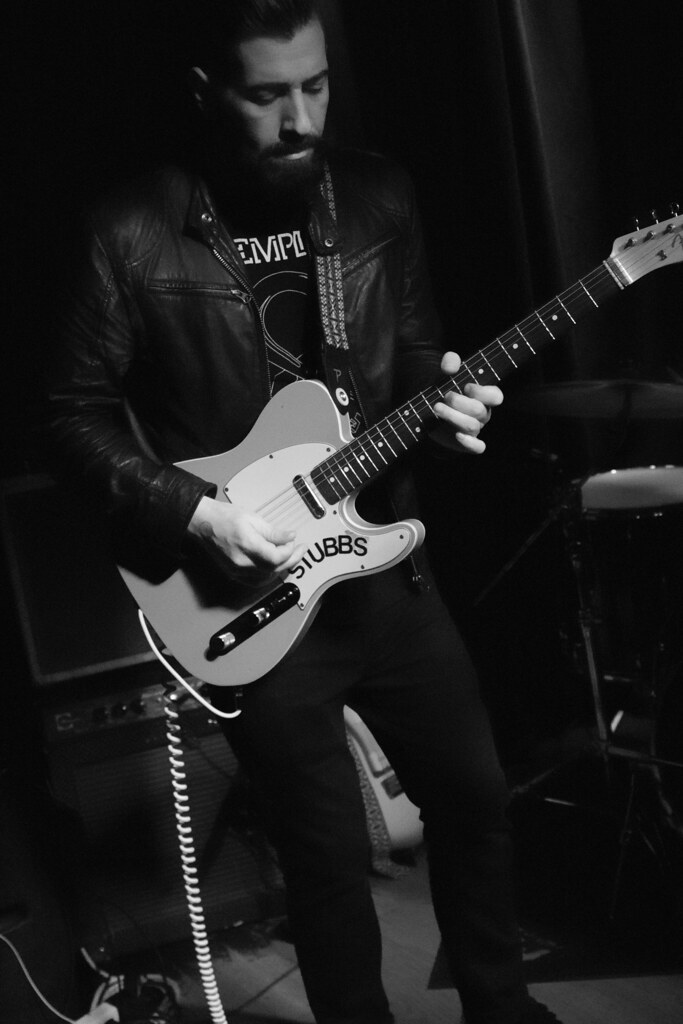
Now, if you’ve been frequenting this site over the past few months, I’ve written a couple of posts on the Boston, MA-based guitarist and songwriter/composer and bandleader Matthew Stubbs. And as you may recall, Stubbs, has split his time as a member of Charlie Musselwhite’s touring band and as a solo artist, who has released two solo, instrumental albums — 2008’s Soulbender released through Vizztone Records and 2010’s Medford and Main released through Chicago, IL-based Blue Bella Records that drew from the  Memphis, TN soul/blues sound. In 2016 Stubbs added bandleader to his resume, with his backing band The Antiguas, which feature Just Lopes (organ), Chris Rivelli (drums) and Marc Hickox (bass)  — and while continuing with the instrumental composition approach of his previously released work, his newest project is influenced by the work of Duane Eddy, Link Wray, and Booker T but meshed with elements of garage rock, B movie soundtracks and Afrobeat, while focusing on putting the energy and vibe of their live sets on wax.

The band’s self-titled debut was released earlier and this year, and as you may recall album singles “Death Grip” and ” Unwinder,” possessed a decidedly retro feel, bringing to mind late 60s and early 70s B movie soumdtracks, complete with a tight groove —with Death Grip” being inspired by the wild, chase scenes in the cult, car racing movies of the 70s while “Unwinder,” found Stubbs and his Antiguas drawing from 60s psych rock and surfer rock and blues, complete with an organ sequence that brings to mind The Castaways’“Liar Liar.” The album’s latest single “Bastille Day” is a greasy and downright funky track that draws from the blues, Afrobeat, dub and rock within what sounds to my ears like a 12 bar blues — and while expanding upon the sound that has caught attention, the composition will further Stubbs’ reputation for crafting slick and trippy hooks.

Directed and edited by Jack LeMay, the recently released video was shot at the Yawkey T stop in the Boston area, and stars Stubbs, waiting for a train when he encounters the absolutely radiant Monishita Ray, dressed in traditional Indian garb. The video turns into a psychedelic experience when the two look into each other — and the rest of the video splits between following Ray as she dances around the train station, Stubbs’ and company’s rehearsal space and other industrial-like locales, adding a surreal sense of beauty to everything in her path, and Stubbs playing the song’s main riff, before getting even trippier.

NightStop is the attention grabbing brainchild of its Jyväskylä, Finland-born and-based mastermind, the up-and-coming Finnish electronic music producer and artist Ere Ek, who started the 80s cyberpunk soundtrack-inspired project in 2012. And since then, Ek has seen a growing profile across Europe and Russia’s tight-knit DIY scene, steadily touring and releasing both cassette and vinyl releases. Interesting Chicago, IL-based label No Trend Records, the label home of Ganser, Absolutely Not and others, recently announced that they will be releasing a vinyl edition of NightStop’s most recent effort, Dancing Killer on March 30, 2018.

Although the album has already seen a digital release, Ek has included a pulsating John Carpenter meets Umberto-like single “Phantasmagoria,” as a bonus digital track for the album — and interestingly, while cementing his reputation for crafting brooding yet cinematic, retro-furturistic electro pop, the track may also be among the most decidedly dance floor ready track he’s released to date. (As a side note, the track derives its name from Roberta Williams’ 1995 horror adventure game Phantasmagoria.)


New Video: Soulive Returns With Soulful and Psychedelic Genre-Defying Composition from Forthcoming Film Soundtrack-Inspired EP

Consisting of Eric Krasno (guitar) and siblings Alan Evans (drums) and Neal Evans (Hammond B3 organ, bass keys, clavinet), the renowned genre-defying funk/jazz New York-based trio Soulive can trace their origins back to when the Evans Brothers began performing in a number of regionally known acts including the jam band Moon Boot Lover and a brief stint with rap act The Elements, which featured Edreys, a.k.a. Billy Drease Williams before they began looking to start a traditional jazz organ trio. And as the story goes, in March 1999, the Evans Brothers invited their high school pay Eric Krasno to jam and record some tracks with them at their home studio in Woodstock, NY, and those sessions wound up comprising their debut EP Get Down! 

Shortly after the release of Get Down! the newly formed band hit the road touring to support it. During that first tour, the trio recorded their full-length debut Turn It Out and the effort, which was released in 2000 through Velour Recordings featured and impressive array of guest musicians including renowned jazz guitarist John Scofield, multi-instrumentalist Oteil Burnbridge, best known for a lengthy stint in the Allman Brothers Band, and saxophonist Sam Kininger, who has collaborated with Lettuce, Dave Matthews Band and others. For an independent act, their full-length debut went on to sell over 65,000 copies, which quickly established the members of Soulive as one of contemporary jazz and funk’s most exciting, new acts. By the fall of 2000, Soulive had signed a record deal with Blue Note Records, with whom they released their sophomore effort Doin’ Something, which featured horn arrangements by the legendary Fred Wesley; their third, full-length album Next, which featured guest spots from Dave Matthews, Amel Larrieux, Talib Kweli and Black Thought. They also collaborated with singer/songwriter Goapele Mohlabane.
Building upon a growing profile, Soulive went on five national tours over the next three years, opening for The Rolling Stones, Dave Matthews Band, The Roots, Common, John Mayer and others, while making appearances at Monterey Jazz Festival and Bonaroo, as well as tours across Japan and the European Union; in fact, one of their Japanese tours wound up becoming their eponymous and highly acclaimed, self-titled live album, released in 2003. And before leaving Blue Note Records, the members of Soulive released the Turn It Out Remixed album, which featured Jurassic 5, DJ Spinna, DJ Krush, J-Live, Wordsworth and The Beatnuts.

2005’s Break Out, the New York-based jazz/funk act’s first album with new label Concord Music Group found the band experimenting with their sound and approach, as they eschewed extended and free-flowing jams for beat-driven instrumentals; but along with that, they collaborated with the legendary Chaka Khan, Ivan Neville, Living Colour’s Corey Glover, Robert Randolph and comedian and multi-instrumentalist Reggie Watts. 2006’s Stewart Lerman-produced No Place Like Soul featured Boston, MA-based reggae/soul artist Toussaint as their lead vocalist; however, after that tour the band decided to return to being a trio. In fact, 2009’s Up Here was something of a return to form for the band with the material mainly being instrumentals with the members of Soulive collaborated with The Shady Horns — the aforementioned Sam Kininger (alto sax) and Rashawn Ross (trumpet) — and Nigel Hall.

Now, I personally became familiar with Soulive with 2010’s Rubber Soulive, an effort that comprised of jazz and funk-inspired renditions of the Beatles catalog — and their annual multi-week residency Bowlive, which featured the band collaborating with an incredibly diverse and dynamic array of artists. Interestingly, the members of the band have been busy with their respective projects — in particular Soulive’s Eric Krasno has been with Lettuce, an increasing production load and his own solo work; however, the members of the band reconvened at Alan Evans’ Iron Wax Studios in late 2017 with a few loosely-sketched ideas and no overarching concept in mind, and began fleshing out ideas as a band. “We trust each other to bring our voices to each other’s ideas,” says Alan Evans, while Krasno adds, “I think Soulive creates our best material using that method.”

The end result is the trio’s long-awaited Cinematics, Vol. 1 EP, which the band will be releasing through their own label Soulive Music on February 23, 2018. Although it’s the first new material from the renowned act in over six years, as you’ll hear on the EP’s first single “Kings March,” Soulive further cements their reputation for a genre-defying sound — in this particular case, the composition draws from 60s funk, psych pop, psych rock, hip-hop and jazz and it finds the band doing so in a fashion reminiscent of El Michels Affair and Wu Tang Clan; but with an incredibly cinematic fashion, as though it could have been part of the soundtrack of a rainy, spy thriller set in Eastern Europe and Miami.

Reportedly, the cinematic quality of the music arose from the trio’s collective instincts writing and recording together. “We didn’t have to talk about anything,” Alan says. “It all unfolded as we were working on it; one song influences the direction of the next, and soon you find yourself going down this path. We want this music to take people on a little journey.” Adds, Eric Krasno, “A cinematic piece of music creates a mood. Film composers like Jerry Goldsmith, David Axelrod, Ennio Morricone and Melvin Van Peebles were all influential in the concept for Cinematics. The idea is to use soundscape and melodic interplay to enhance the feeling and sentiment of a visual and to amplify the emotion that it’s relating.”

The recently released video features rather black and white intimate footage of the band, along with some appropriately psychedelic imagery.