
Influenced by Fleetwood Mac, Carole King, Janis Joplin, The Pretenders, Crosby Stills and Nash, Carly Simon, The Mamas and the Papas and First Aid Kit, Georgie is a 21 year-old, up-and-coming, Nottingham, UK-based singer/songwriter, who caught the attention of the folks at Spacebomb Records — the label home of Natalie Prass and Julien Baker — for a vocal style that sounds straight out of the mid 1960s and for a lyrical bent that belies her years. Her debut single “Company of Thieves” pairs her husky and soulful vocals with a wah-wah pedaled guitar, a strutting horn arrangement, a sinuous bass line, a steady backbeat and an infectious hook in a carefully crafted song that will remind most listeners of Amy Winehouse, Nancy Sinatra and others.
Category: singer/songwriters
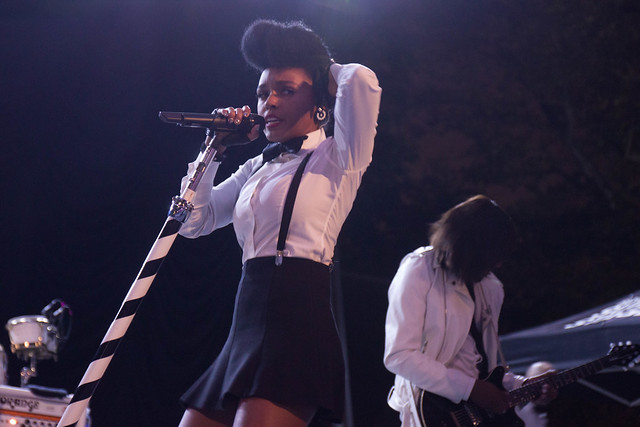
Live Concert Photography: Janelle Monae with Nate Ruess at SummerStage, Rumsey Playfield 9/29/16
Sawyer Gebauer is a Wisconsin-born, Oakland, CA-based singer/songwriter, who has spent a great deal of his musical career moving back and forth between the States and Europe. When he was 19, Gebauer relocated to Sweden, where he founded and formed Brittsommar, a musical project that featured a rotating cast of musicians and received quite a bit of attention across Continental Europe with the release of their 2011 debut effort Day Of Living Velvet. After the release of Brittsommar’s debut, Gebauer relocated to Berlin where he recored 2013’s The Machine Stops in a dilapidated warehouse. Eventually, Gebauer returned to the States, recording the final Brittsommar effort 2015’s Mary Me EP at TRI Studios in San Rafael, CA.
After Brittsommar ended, Gebauer started his latest musical project Catch Prichard, which draws deeply from Americana; in fact, Gebauer has publicly cited Townes Van Zandt and Bruce Springsteen‘s 1995 release The Ghost of Tom Joad as major influences on his latest project, and that he wanted to write and record a collection of stripped down songs based around narrative and melody — and the end result is the soon-to-be released Eskota EP, a five song EP named after the Texas ghost town in which it was recorded.
The first single from the EP “Hometown” is an elegantly simple track featuring Gebauer’s gorgeous and moody baritone, accompanied by his dexterous guitar strumming, and gently padded drumming — and the result is a sparse, spectral song that’s indebted to folk as much as it country, while possessing a narrator’s attention to physical and psychological detail.
New Video: The Lush and Boldly Colored, Primal Visuals for Y La Bamba’s “Libre”
Over the course of the band’s three albums and several lineup changes of collaborators, friends and musicians, the band’s material has gone through a variety of changes — but it’s the the band’s forth full-length effort Ojos Del Sol that may be arguably be the most radical turn in sonic direction, while returning to familiar themes of searching and personal discovery — themes that have come up a number of times in Mendoza’s own life, whether as the daughter of Mexican immigrants connecting with her ancestry and searching for spiritual meaning that goes much further than organized religion. In fact, as Mendoza explains in press notes, the material on the album thematically is a “cerebration of family and community” — but a community of shared humanity.
Interestingly, the album’s first single “Libre” finds Mendoza and company at their most self-assured but in one of the breeziest and pop-leaning songs as they pair an infectious and anthemic hook with an arrangement that includes what sounds like xylophone, a mischievous and sinuous bass line, a steady backbeat, Mendoza’s gorgeous vocals along three part harmonies in English and Spanish, a rolling, African folk music-like guitar line in a song that evokes a sense of almost childlike wonder and joy, while making a connection both to Mendoza’s ancestral homeland and Africa in a way that subtly channels Paul Simon’s Graceland.
The recently released video accompanying the song is a lush, cinematically shot video using impossibly verdant greens, bright reds, and a seemingly primal and ecstatic dance routine in the fields just featuring women wearing ancient-inspired costumes, masks and the like. And while being swoon worthy, the video manages to make a vital connection between the primal and ancient and the modern, between celebrating spring and summer and fertility, and a celebrating a community of strong like-minded women simultaneously.
Earlier this month, I had written about California-born, New York-based singer/songwriter and guitarist Shana Falana. Before relocating to New York in 2006, Falana had spent time in San Francisco‘s D.I.Y. scene in a number of projects and and in a Bulgarian women’s choir. By the time Falana had relocated, the California-born singer/songwriter and guitarist had been struggling through both debilitating drug addiction and money woes, when she had lost part of her index finger in a work-related accident. And while under most normal circumstances such an event may be considered extremely unlucky, the settlement money the California-born, New York-based singer/songwriter received actually provided her a period of financial stability that allowed her the much needed time and space she needed to overcome her addictions and find a new focus in her life and music.
Reportedly, much of the music on Falana’s much-anticipated sophomore full-length effort Here Comes the Wave was conceptualized both during one of the most difficult periods of her life and in the subsequent years that followed, and has been continually refined over the the years. And as result the album thematically is centered around one of the most common dualities of all of our lives, “then and now” or better yet, who we thought we were then and who we were then, who we think we are now and who we are now — and how emotional turmoil can influence our continuous transformation. Interestingly, as Falana has mentioned in press notes on the new album, “Somehow, I knew those songs would serve me well later,” and at least one of Here Comes the Wave‘s songs reportedly foreshadows its creator’s eventual sobriety while other songs reportedly accept the passing of youth, the death of her father and other themes that come up as one gets older.
Interestingly, Here Comes the Wave also manages to be the second collaboration with producer D. James Goodwin, best known for his work with Bob Weir, Whitney and Kevin Morby and with her long-time partner, collaborator and drummer Mike Amari. And the album has Goodwin and Amari playing much larger roles than on Falana’s debut as the collaborative trio went for audacious sounds and heightened moments — and for being bold as possible. Last month, I wrote about the album’s first single “Lie 2 Me,” a single that had Falana and Amari pairing enormous and buzzing power chord-heavy riffs and thunderous drumming with Falana’s anguished howls before ending with an explosive blast of feedback before slowly fading out. Lyrically, the song is full of bitter recrimination, accusation, self-doubt, self-flagellation and dysfunction -–and as a result, the song feels bilious and fucked up while sonically nodding at L7, PJ Harvey and others.
Here Comes The Wave‘s second and latest single “Cloudbeats,” is a gauzy and hopeful bit of shoegaze that sonically nods at A Storm in Heaven-era The Verve, as underneath its shimmering surface is an array of conflicting emotion: the song’s narrator has the wherewithal to look at a future in which she’s sober and has her life together, while openly suggesting to herself, “it’ll get better, trust me — but with the acknowledgement that in order to get there, sometimes one has to go through the sturm und rang of life first. By far, the song manages to be the most viscerally honest and heartfelt portrayal of booth addition and recovery I’ve heard in some time.
If you’ve been frequenting this site over the past couple of years, you’d likely be familiar with La Sera, the recording project of Vivian Girls‘ and All Saints Day‘s Katy Goodman. Initially begun as a solo side project, Goodman’s La Sera found an increasingly growing national profile with the release of her first three critically applauded albums — the project’s self-titled debut, her sophomore effort, Sees the Light and her third effort, Hour of the Dawn. Each subsequent album found Goodman experimenting and expanding upon her sound with Hour of the Down revealing an 80s guitar pop influence, clearly drawing from The Smiths, The Pretenders, and others.
Goodman released her fourth La Sera album, Music For Listening To Music To earlier this year and at its core, the material revealed an artist who has gone through a series of personal and artistic transitions that heavily influenced the material’s lyrical themes and concerns — while further cementing Goodman’s burgeoning reputation for crafting shimmering guitar pop paired with infectious hooks and Goodman’s plaintive, ethereal vocals. One of the biggest personal and creative transitions was that Goodman’s husband Todd Wisenbaker, who may best be known as a member of Music For Listening‘s producer, Ryan Adams‘ backing band and Hour of the Dawn‘s producer, officially joined as a cowriter, guitarist and collaborator. And for a song like “I Need an Angel,” the material manages to nod both at The Smiths’ “This Charming Man,” and Johnny Cash‘s and June Carter Cash‘s “Jackson” thanks in part to the alternating boy-girl verses, and their harmonizing on the song’s hook and chorus.
Goodman and Wisenbaker will be releasing Music For Listening to Music To‘s follow-up and continuation of sorts, Queens EP today and you might remember that earlier this month I wrote about the upbeat, propulsive and shimmering EP title track, which was written while Wisenbaker was on a leisurely stroll through East Hollywood at dusk one night. And as Goodman adds, “To me, the song stands for being an important, passionate, loving person in your own life, every day.” The EP’s second and latest single changes things up quite a bit — mainly because it’s a strutting and swaggering homage/cover of Led Zeppelin‘s “Whole Lotta Love.” And while being a somewhat straightforward cover sonically, Goodman’s vocals add a completely different interpretation and feel to a beloved and familiar song; in fact, her vocals add a feminine sultriness. Interestingly, the La Sera cuts the end section of the original, presumably to be gender neutral — and that decision also adds its own series of interpretations to a familiar and beloved song.
Goodman, Wisenbaker and the members of their backing band will be on tour throughout October to support both Music For Listening Music To and to the Queens EP and it’ll include two NYC area dates — October 22, 2016 at the Mercury Lounge and an early October 23, 2016 at Baby’s All Right. Check out the rest of the tour dates below.
TOUR DATES:
10/07 Pomona, CA @ Glasshouse
10/08 San Diego, CA @ The Hideout
10/09 Phoenix, AZ @ Valley Bar
10/10 Santa Fe, NM @ Meow Wolf
10/12 Austin, TX @ Sidewinder
10/13 Dallas, TX @ Club Dada
10/14 Kansas City, MO @ Riot Room
10/15 St Louis, MO @ Firebird
10/16 Nashville, TN @ High Watt
10/18 Atlanta, GA @ Masquerade
10/19 Chapel Hill, NC @ Pinhook
10/20 Washington, DC @ Song Byrd
10/22 New York, NY @ Mercury Lounge
10/23 Brooklyn, NY @ Baby’s All Right (early)
10/25 Boston, MA @ Brookline Teen Center
10/26 Buffalo, NY @ Mohawk
10/28 Toronto, ON @ Silver Dollar
10/29 Detroit, MI @ El Club
10/30 Chicago, IL @ Empty Bottle
11/01 Denver, CO @ Lost Lake
11/02 Salt Lake City, UT @ Kilby Court
11/03 Reno, NV @ Holland Project
11/04 San Francisco, CA @ Swedish American Hall
11/05 Los Angeles, CA @ Bootleg Theater
New Video: Return to Primal Nature with Noelle Tannen and the Filthy No Nos
“Skin,” the first single off the band’s forthcoming, self-titled, full-length debut, slated for an October 14 release consists of a complex, almost maximalist arrangement that includes key changes, a slow-burning psych jazz intro and coda and ethereal harmonies,followed by a sultry, jazz-leaning section a wild salsa-leaning bridge, complete with call and response vocals, and Cowie’s swaggering and strutting solo. And it’s held together by Tannen’s ridiculously expressive vocals — which manage to be jazzy, soulful, coquettish and mischievous within a turn of a phrase, and her dexterous keyboard work. As Tannen explained in an email “Harmonically, and arrangement wise, while writing this song I really didn’t want to settle for anything. It was all about finding and exploring every possibility. Lyrically the song is about femininity and life and death. Its kind of about how I feel like as a woman in our society everyone is constantly trying to protect you; we are often looked at as the vessel of life and in many ways we are. However, a lot of women live a life with this underlying tone of over protection (Some face it more than others.)”
As Tannen continued, the song and the accompanying video directed and produced by Matthew Speno are both about breaking free from that sense of over-protecting.
“Visually we wanted to tie this concept into different living parts of nature. That’s why we start on solid earth, move to water and the finish with fire. Earth and water are matter and fire is a release of the energy inside those elements,” Tannen explains. Interestingly, the video manages to suggest a primal return to nature as being completely freeing with its characters free of social restraint or concern about appearances.
New Video: The Darkly Comic Visuals for Bridgit Mendler’s Blogosphere Dominating Single “Atlantis”
The slow-burning song pairs Mendler’s breathy coos with a slick, hyper modern production featuring stuttering drum programming, vocoder fed vocals, glitchy electronics, various bleeps, bloops and blips and twinkling synths and a flirtatious verse from Kaiydo. Sonically, the song is reminiscent of Abby Diamond’s “Love to Watch You Leave” while nodding at Timbaland’s revolutionary production — in other words, stuttering and bizarre angles while being airy and coquettish but underneath there’s an aching vulnerability.
The video was produced by Allie Avital, who has produced videos for Chairlift, The Knocks and Autre Ne Veut, and as Bridgit Mendler explains in press notes “We found a concept that has both dark satirical and heart-aching moments. I break into my ex’s house and try to recreate our lost love while he is passed out. Even in the midst of fun and light moments in life, my heart is limp as his hand hits my knee while we dance in the kitchen. I’m a huge fan of Allie’s work but in addition to that, she is a smart and warm-hearted person that went above and beyond to make this project what it is.”
New Video: The Hauntingly Gorgeous Visuals and Sounds of Benjamin’s Brother’s “Room 505”
Benjamin’s Brother is a fairly mysterious British electro folk/electro pop act comprised of a producer and songwriter, who writes and records under the moniker of Benjamin’s Brother and a rotating cast of collaborators and friends who pair haunting and ambient productions with songs that lyrically focus on death, desire and pain, among other subjects. The act’s latest single “Room 505” is an eerily sparse production featuring contemplative piano chords, plaintive, falsetto vocals, stuttering drum programming and brief burst of mournful horns. Sonically, the song reminds me of BRAIDS’ impressive Flourish//Perish but with an aching yearning at its core.
The recently released video features a dancer performing in sparsely arranged room with her doppleganger — but is it all an delusional within her head? Interestingly, the video manages to suggest the internal struggle between our real, internal self and the self we project out toward the world.
Perhaps best known as the haunting and ethereal voice of Mazzy Star, Hope Sandoval has had an equally lengthy solo career, collaborating with a number of artists including Massive Attack and My Bloody Valentine’s Colm O’Coisog in her long-running post Mazzy Star project, Hope Sandoval and The Warm Inventions. Interestingly, Hope Sandoval and The Warm Inventions is a major departure in terms of theme, instrumentation and mood. Whereas Mazzy Star’s sound was shimmering and moodily atmospheric and featured sparse arrangements of guitar and drums, The Warm Inventions’ sound at times is reminiscent of twangy 70s AM radio and soul as you’ll hear on “Let Me Get There,” the first single off the project’s forthcoming third, full-length effort Until the Hunter, slated for a November 4, 2016 release.
Featuring a guest spot from acclaimed and prolific singer/songwriter Kurt Vile, the song consists of the sort of tender, slow-burning, Sunday morning soulful and hypnotic groove that you can two-step to with a lover, paired with soaring and trembling organ keys and Sandoval and Vile’s call and response vocals evoking both the warm, comfortable and playful familiarity of a long-term couple as they’re about to make love or as they’re in the middle of making love — and that sense of curiosity and discovery those first few times you’ve begun to see a lover naked. Interestingly, the song also manages to suggest that when it’s right, a relationship should feel much like musicians who automatically have a sense of simpatico and can intuitively follow wherever the other leads.
New Video: Júniús Meyvant Returns with More Carefully Crafted 60s-Inspired Sounds and Striking Visuals for His Latest Single
With the release of Floating Harmonies’ third and latest single “Beat Silent Need,” the Icelandic singer/songwriter will arguably cement himself as one of the finest, contemporary, blue-eyed soul singer/songwriters on either side of the Atlantic as his sound nods at 60s and 70s soul, paired with thoughtful and heartfelt lyrics. In this case, this particular song focuses on loneliness and the desperate need for love and to be desired, the self-doubt, confusion, misunderstandings and fear that frequently sabotage our relationships, the difficulties of honestly connecting with others and the blind hope that in every subsequent relationship that we’ll somehow get it right — although most of us fail miserably some way or another.
The recently released video begins with a couple in the middle of a bitter argument as the man drops his woman off for a pregnant woman yoga class taught by a neglectful asshole. When the women bolt from their class, they are subsequently chased by both the yoga instructor and our protagonist’s boyfriend. And it ends with the pregnant woman, worriedly driving herself and her companions to a hospital as they all experience labor pains — without the asshole men in their lives.
Over the past couple of months, Philadelphia, PA-based indie rock quartet Oldermost, led by its frontman Bradford Bucknam have received attention across the blogosphere and this site in particular for a sound that draws from Nick Drake, Wish You Were Here-era Pink Floyd and 70s AM radio rock as yo would have heard on the band’s first two singles “Honey With Tea” and “Finally Unsure.”
The band’s third and latest single is a cover of Graham Nash’s “I Used To Be A King.” And as Bucknum explains in press notes “Songs for Beginners is not necessarily a unique find in a record store bin, but the record still feels like a special discovery when you first set on eyes on the simple and somewhat lusterless album cover. ‘I Used To Be A King’ starts with a tempo just slow enough to hold the listener in a state of suspension. You think: there is a release on the horizon. And then Nash sings ‘It’s alright …’ and the song picks up, but only to build more tension and then there is the most rewarding part of the song at the tail end of the chorus—’No one is going to break my heart again’—where the listener experiences that sweet release. This track also seemed like a great opportunity to highlight the string arrangements that have helped make our musical output stand apart. There’s also a sweetness and a melancholy to the song and it takes a healthy dose of both to mix up an Oldermost song.” While being a fairly straightforward cover, it’s a shimmering, gorgeous cover that emphasizes the bittersweet nature of the original.
Kadhja Bonet is a Los Angeles, CA-based singer/songwriter and classically trained multi-instrumentalist — she plays guitar, flute, violin and viola — who has at the start of her recording career has been both private and mysterious, insisting that her audience convene with her on imaginative and musical planes instead of through associations with any particular scene, venue or sound. And in fact, “Nobody Other,” the first single off her forthcoming full-length debut The Visitor sounds as though it were quietly released in the late 60s or early 1970s as Bonet accompanies her stunningly gorgeous vocals with gently strummed guitar, an ethereal flute line along with soaring organs in a sweet love song that evokes walking hand-in-hand with a lover through a fall leaf strewn park and waking from a pleasant dream while nodding at folk, psych folk and jazz. Sonically, the song features an uncommonly unfussy and unadorned production that puts the focus on an elegantly simple arrangement and Bonet’s gorgeous vocals.
If you’ve been frequenting this site for the past couple of years, you’ve likely come across a handful of posts about renowned violinist, vocalist, composer and producer K. Ishibashi and his solo recording project Kishi Bashi. And with the release of two critically applauded full-length efforts — 151a and Lighght — Ishibashi has developed a reputation for decidedly crafted and swooning orchestral pop in which he employed the use of samplers, looping machines and other electronics for a lush and densely layered sound. Ishibashi’s third, full length effort Sonderlust was produced by Grizzly Bear‘s Chris Taylor, engineered by Pat Dillet, who has worked with Angelique Kidjo and David Byrne, and features the contributions of drummer Matt Chamberlain, who has been in the backing bands of Morrissey and Fiona Apple, as well as having a stint in of Montreal, and the album is a radical sonic departure from the sound that first caught the attention of the blogosphere as the material leans heavily towards hook-laden, electro pop as you would have heard on Sonderlust‘s earliest released single “Say Yeah.” Interestingly, this massive change in sonic direction came about from two different sources — the first being that Sonderlust‘s material didn’t come immediately or through his usual creative processes. “As I sat down to write songs last summer, I went to all my usual conduits of creation: violin loops, guitar, piano and I came up with the musical equivalent of fumes,” Ishibashi explained in press notes. “I tried to create orchestral pop recordings that I assume were my forte, and in turn, I found myself standing in front of a creative wall of frightening heights.” Second was that along with a period of creative uncertainty, Ishibashi also faced faced significant changes in his personal life, the sort of changes that had him questioning everything he thought he knew about being in love, loving another and desiring another. And as a result, the album’s material focuses on heartbreak, the difficult struggle to move forward and the how that heartache influences every subsequent relationship.
The album’s latest single “Can’t Let Go, Juno,” is comprised of shimmering and cascading layers of synths, a gorgeous and soaring string arrangement, Ishibashi’s aching and plaintive vocals, propulsive, four-on-the-floor like drums in what may arguably be some of Ishibashi’s most danceable, seemingly straightforward and hook-laden pop-leaning material he’s released to date. However, lyrically speaking, “Can’t Let Go, Juno” focuses on the lingering ghosts of a past relationship that has haunted the song’s narrator, a narrator who recognizes that he’s had a difficult time letting go and moving forward — and as a result, the song possesses a bittersweet sense of unfinished business, all while sounding as though it drew from New Order and Cut Copy.
You can catch Kish Bashi on a lengthy North American tour this fall, and it includes an October 2, 2016 stop at Webster Hall. Check out tour dates and ticket information below.
Tour Dates
9/27: Athens, GA @ Georgia Theatre (tickets)*
9/28: Charlotte, NC @ Visulite (tickets)*
9/30: Carrboro, NC @ Cat’s Cradle (tickets)*
10/1: Silver Spring, MD @ The Fillmore – Silver Spring (tickets)*
10/2: New York, NY @ Webster Hall (tickets)*
10/3: Boston, MA @ Royale (tickets)*
10/4: Philadelphia, PA @ Union Transfer (tickets)*
10/6: Toronto, ON @ MOD Club (tickets)*
10/8: Cleveland, OH @ Beachland Ballroom & Tavern (tickets)*
10/9: Pontiac, MI @ Crofoot Ballroom (tickets)*
10/10: Chicago, IL @ Vic Theatre (tickets)*
10/11: St. Louis, MO @ Delmar Hall (tickets)*
10/12: Minneapolis, MN @ First Avenue Mainroom (tickets)*
10/14: Omaha, NE @ Slowdown (tickets)^
10/15: Englewood, CO @ Gothic Theatre (tickets)^
10/16: Salt Lake City, UT @ Urban Lounge (tickets)^
10/18: Seattle, WA @ The Showbox (tickets)^
10/19: Vancouver, BC @ The Fox Cabaret (tickets)^
10/20: Portland, OR @ Wonder Ballroom (tickets)^
10/21: San Francisco, CA @ The Masonic (tickets)^
10/22: Santa Cruz, CA @ The Catalyst Atrium (tickets)^
10/23: San Diego, CA @ Irenic (tickets)^
10/24: Los Angeles, CA @ The Belasco Theater (tickets)^
10/26: Tucson, AZ @ Club Congress (tickets)+
10/28: San Antonio, TX @ Paper Tiger (tickets)+
10/29: Austin, TX @ Mohawk (tickets)+
10/30: Houston, TX @ White Oak Music Hall (tickets)+
11/1: New Orleans, LA @ One Eyed Jacks (tickets)+
11/2: Atlanta, GA @ Variety Playhouse (tickets)+
* w/ Twain
^ w/ Busman’s Holiday
+ w/ Laura Gibson
Born in California, New York-based singer/songwriter and guitarist Shana Falana spent time in San Francisco‘s D.I.Y. scene and and in a Bulgarian women’s choir before relocating to New York. By 2006, Falana had been struggling through drug addiction and money woes when she lost part of her index finger in a work-related accident. And while under most normal circumstances that might be considered extremely unlucky, the settlement money the California-born, New York-based singer/songwriter received actually provided her a period of financial stability that allowed her the much needed time and space she needed to overcome her addictions and find a new focus in her life and music. Reportedly, much of the music on Falana’s much-anticipated second full-length effort Here Comes the Wave was conceptualized both during one of the most difficult periods of her life and in the subsequent years that followed, and has been continually refined — and as a result, the album manages to thematically be centered around the duality of “then and now,” while sonically covering diverse moods and possessing elements of shoegaze, gothic pop and indie rock. Of course, thematically speaking the material focuses on change, transformation and emotional turmoil; in fact as Falana says in press notes ““Somehow, I knew those songs would serve me well later,” and at least one of Here Comes the Wave‘s songs reportedly foreshadows its creator’s eventual sobriety while other songs reportedly accept the passing of youth, the death of her father and other themes that come up as one gets older.
Interestingly, Here Comes the Wave also manages to be the second collaboration with producer D. James Goodwin, best known for his work with Bob Weir, Whitney and Kevin Morby and with her long-time partner, collaborator and drummer Mike Amari. And the album has Goodwin and Amari playing much larger roles than on Falana’s debut as the collaborative trio went for audacious sounds and heightened moments — and for being bold as possible. The album’s first single “Lie 2 Me” has Falana and Amari pairing enormous and buzzing power chord-heavy riffs and thunderous drumming with Falana’s anguished howls before ending with an explosive blast of feedback before slowly fading out. Lyrically, the song is full of bitter recrimination, accusation, self-doubt, self-flagellation and dysfunction –and as a result, the song feels bilious and fucked up while sonically nodding at L7, PJ Harvey and others.
“