Category: singer/songwriters

New Video: The Hauntingly Gorgeous Visuals and Sounds of Benjamin’s Brother’s “Room 505”

Benjamin’s Brother is a fairly mysterious British electro folk/electro pop act comprised of a producer and songwriter, who writes and records under the moniker of Benjamin’s Brother and a rotating cast of collaborators and friends who pair haunting and ambient productions with songs that lyrically focus on death, desire and pain, among other subjects. The act’s latest single “Room 505” is an eerily sparse production featuring contemplative piano chords, plaintive, falsetto vocals, stuttering drum programming and brief burst of mournful horns. Sonically, the song reminds me of BRAIDS’ impressive Flourish//Perish but with an aching yearning at its core.

The recently released video features a dancer performing in sparsely arranged room with her doppleganger — but is it all an delusional within her head? Interestingly, the video manages to suggest the internal struggle between our real, internal self and the self we project out toward the world.
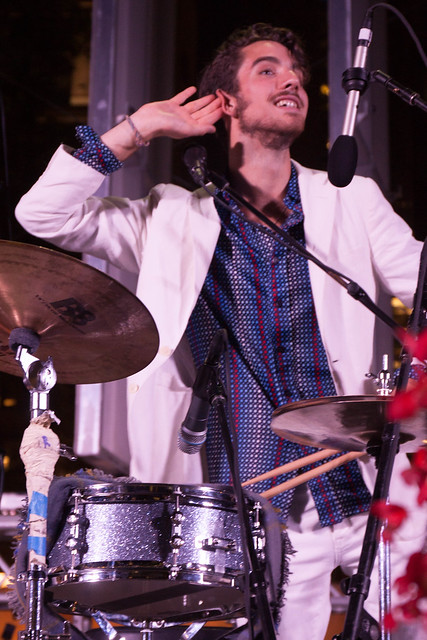
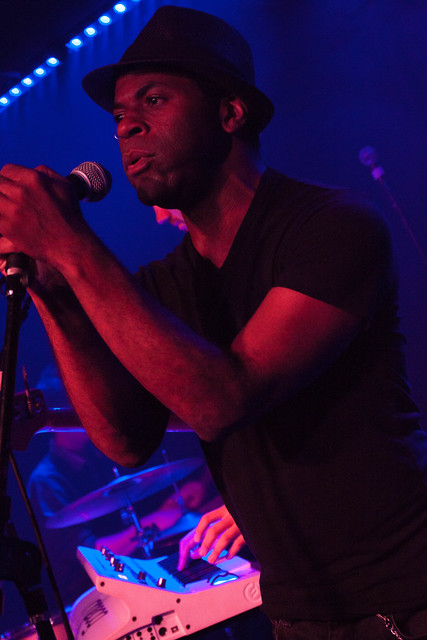
Perhaps best known as the haunting and ethereal voice of Mazzy Star, Hope Sandoval has had an equally lengthy solo career, collaborating with a number of artists including Massive Attack and My Bloody Valentine’s Colm O’Coisog in her long-running post Mazzy Star project, Hope Sandoval and The Warm Inventions. Interestingly, Hope Sandoval and The Warm Inventions is a major departure in terms of theme, instrumentation and mood. Whereas Mazzy Star’s sound was shimmering and moodily atmospheric and featured sparse arrangements of guitar and drums, The Warm Inventions’ sound at times is reminiscent of twangy 70s AM radio and soul as you’ll hear on “Let Me Get There,” the first single off the project’s forthcoming third, full-length effort Until the Hunter, slated for a November 4, 2016 release.

Featuring a guest spot from acclaimed and prolific singer/songwriter Kurt Vile, the song consists of the sort of tender, slow-burning, Sunday morning soulful and hypnotic groove that you can two-step to with a lover, paired with soaring and trembling organ keys and Sandoval and Vile’s call and response vocals evoking both the warm, comfortable and playful familiarity of a long-term couple as they’re about to make love or as they’re in the middle of making love — and that sense of curiosity and discovery those first few times you’ve begun to see a lover naked. Interestingly, the song also manages to suggest that when it’s right, a relationship should feel much like musicians who automatically have a sense of simpatico and can intuitively follow wherever the other leads.


New Video: Júniús Meyvant Returns with More Carefully Crafted 60s-Inspired Sounds and Striking Visuals for His Latest Single

With the release of Floating Harmonies’ third and latest single “Beat Silent Need,” the Icelandic singer/songwriter will arguably cement himself as one of the finest, contemporary, blue-eyed soul singer/songwriters on either side of the Atlantic as his sound nods at 60s and 70s soul, paired with thoughtful and heartfelt lyrics. In this case, this particular song focuses on loneliness and the desperate need for love and to be desired, the self-doubt, confusion, misunderstandings and fear that frequently sabotage our relationships, the difficulties of honestly connecting with others and the blind hope that in every subsequent relationship that we’ll somehow get it right — although most of us fail miserably some way or another.

The recently released video begins with a couple in the middle of a bitter argument as the man drops his woman off for a pregnant woman yoga class taught by a neglectful asshole. When the women bolt from their class, they are subsequently chased by both the yoga instructor and our protagonist’s boyfriend. And it ends with the pregnant woman, worriedly driving herself and her companions to a hospital as they all experience labor pains — without the asshole men in their lives.

Over the past couple of months, Philadelphia, PA-based indie rock quartet Oldermost, led by its frontman Bradford Bucknam have received attention across the blogosphere and this site in particular for a sound that draws from  Nick DrakeWish You Were Here-era Pink Floyd and 70s AM radio rock as yo would have heard on the band’s first two singles “Honey With Tea” and “Finally Unsure.”

The band’s third and latest single is a cover of Graham Nash’s “I Used To Be A King.” And as Bucknum explains in press notes “Songs for Beginners is not necessarily a unique find in a record store bin, but the record still feels like a special discovery when you first set on eyes on the simple and somewhat lusterless album cover. ‘I Used To Be A King’ starts with a tempo just slow enough to hold the listener in a state of suspension. You think: there is a release on the horizon. And then Nash sings ‘It’s alright …’ and the song picks up, but only to build more tension and then there is the most rewarding part of the song at the tail end of the chorus—’No one is going to break my heart again’—where the listener experiences that sweet release. This track also seemed like a great opportunity to highlight the string arrangements that have helped make our musical output stand apart. There’s also a sweetness and a melancholy to the song and it takes a healthy dose of both to mix up an Oldermost song.” While being a fairly straightforward cover, it’s a shimmering, gorgeous cover that emphasizes the bittersweet nature of the original.


Kadhja Bonet is a Los Angeles, CA-based singer/songwriter and classically trained multi-instrumentalist — she plays guitar, flute, violin and viola — who has at the start of her recording career has been both private and mysterious, insisting that her audience convene with her on imaginative and musical planes instead of through associations with any particular scene, venue or sound. And in fact, “Nobody Other,” the first single off her forthcoming full-length debut The Visitor sounds as though it were quietly released in the late 60s or early 1970s as Bonet accompanies her stunningly gorgeous vocals with gently strummed guitar, an ethereal flute line along with soaring organs in a sweet love song that evokes walking hand-in-hand with a lover through a fall leaf strewn park and waking from a pleasant dream while nodding at folk, psych folk and jazz. Sonically, the song features an uncommonly unfussy and unadorned production that puts the focus on an elegantly simple arrangement and Bonet’s gorgeous vocals.


If you’ve been frequenting this site for the past couple of years, you’ve likely come across a  handful of posts about renowned violinist, vocalist, composer and producer K. Ishibashi and his solo recording project Kishi Bashi. And with the release of two critically applauded full-length efforts  — 151a and Lighght — Ishibashi has developed a reputation for decidedly crafted and swooning orchestral pop in which he employed the use of samplers, looping machines and other electronics for a lush and densely layered sound. Ishibashi’s third, full length effort Sonderlust was produced by Grizzly Bear‘s Chris Taylor, engineered by Pat Dillet, who has worked with Angelique Kidjo and David Byrne, and features the contributions of drummer Matt Chamberlain, who has been in the backing bands of Morrissey and Fiona Apple, as well as having a stint in of Montreal, and the album is a radical sonic departure from the sound that first caught the attention of the blogosphere as the material leans heavily towards hook-laden, electro pop as you would have heard on Sonderlust‘s earliest released single “Say Yeah.” Interestingly, this massive change in sonic direction came about from two different sources — the first being that Sonderlust‘s material didn’t come immediately or through his usual creative processes.  “As I sat down to write songs last summer, I went to all my usual conduits of creation: violin loops, guitar, piano and I came up with the musical equivalent of fumes,” Ishibashi explained in press notes. “I tried to create orchestral pop recordings that I assume were my forte, and in turn, I found myself standing in front of a creative wall of frightening heights.” Second was that along with a period of creative uncertainty, Ishibashi also faced faced significant changes in his personal life, the sort of changes that had him questioning everything he thought he knew about being in love, loving another and desiring another. And as a result, the album’s material focuses on heartbreak, the difficult struggle to move forward and the how that heartache influences every subsequent relationship.

The album’s latest single “Can’t Let Go, Juno,” is comprised of shimmering and cascading layers of synths, a gorgeous and soaring string arrangement, Ishibashi’s aching and plaintive vocals, propulsive, four-on-the-floor like drums in what may arguably be some of Ishibashi’s most danceable, seemingly straightforward and hook-laden pop-leaning material he’s released to date. However, lyrically speaking, “Can’t Let Go, Juno” focuses on the lingering ghosts of a past relationship that has haunted the song’s narrator, a narrator who recognizes that he’s had a difficult time letting go and moving forward — and as a result, the song possesses a bittersweet sense of unfinished business, all while sounding as though it drew from New Order and Cut Copy.

You can catch Kish Bashi on a lengthy North American tour this fall, and it includes an October 2, 2016 stop at Webster Hall. Check out tour dates and ticket information below.

Tour Dates
9/27: Athens, GA @ Georgia Theatre (tickets)*
9/28: Charlotte, NC @ Visulite (tickets)*
9/30: Carrboro, NC @ Cat’s Cradle (tickets)*
10/1: Silver Spring, MD @ The Fillmore – Silver Spring (tickets)*
10/2: New York, NY @ Webster Hall (tickets)*
10/3: Boston, MA @ Royale (tickets)*
10/4: Philadelphia, PA @ Union Transfer (tickets)*
10/6: Toronto, ON @ MOD Club (tickets)*
10/8: Cleveland, OH @ Beachland Ballroom & Tavern (tickets)*
10/9: Pontiac, MI @ Crofoot Ballroom (tickets)*
10/10: Chicago, IL @ Vic Theatre (tickets)*
10/11: St. Louis, MO @ Delmar Hall (tickets)*
10/12: Minneapolis, MN @ First Avenue Mainroom (tickets)*
10/14: Omaha, NE @ Slowdown (tickets)^
10/15: Englewood, CO @ Gothic Theatre (tickets)^ 
10/16: Salt Lake City, UT @ Urban Lounge (tickets)^
10/18: Seattle, WA @ The Showbox (tickets)^
10/19: Vancouver, BC @ The Fox Cabaret (tickets)^
10/20: Portland, OR @ Wonder Ballroom (tickets)^
10/21: San Francisco, CA @ The Masonic (tickets)^
10/22: Santa Cruz, CA @ The Catalyst Atrium (tickets)^
10/23: San Diego, CA @ Irenic (tickets)^ 
10/24: Los Angeles, CA @ The Belasco Theater (tickets)^ 
10/26: Tucson, AZ @ Club Congress (tickets)+
10/28: San Antonio, TX @ Paper Tiger (tickets)+
10/29: Austin, TX @ Mohawk (tickets)+ 
10/30: Houston, TX @ White Oak Music Hall (tickets)+
11/1: New Orleans, LA @ One Eyed Jacks (tickets)+
11/2: Atlanta, GA @ Variety Playhouse (tickets)+
*  w/ Twain
^  w/ Busman’s Holiday
+  w/ Laura Gibson


Born in California, New York-based singer/songwriter and guitarist Shana Falana spent time in San Francisco‘s D.I.Y. scene and and in a Bulgarian women’s choir before relocating to New York. By 2006, Falana had been struggling through drug addiction and money woes when she lost part of her index finger in a work-related accident. And while under most normal circumstances that might be considered extremely unlucky, the settlement money the California-born, New York-based singer/songwriter received actually provided her a period of financial stability that allowed her the much needed time and space she needed to overcome her addictions and find a new focus in her life and music. Reportedly, much of the music on Falana’s much-anticipated second full-length effort Here Comes the Wave was conceptualized both during one of the most difficult periods of her life and in the subsequent years that followed, and has been continually refined — and as a result, the album manages to thematically be centered around the duality of “then and now,” while sonically covering diverse moods and possessing elements of shoegaze, gothic pop and indie rock.  Of course, thematically speaking the material focuses on change, transformation and emotional turmoil; in fact as Falana says in press notes ““Somehow, I knew those songs would serve me well later,” and at least one of Here Comes the Wave‘s songs reportedly foreshadows its creator’s eventual sobriety while other songs reportedly accept the passing of youth, the death of her father and other themes that come up as one gets older.

Interestingly, Here Comes the Wave also manages to be the second collaboration with producer D. James Goodwin, best known for his work with Bob Weir, Whitney and Kevin Morby and with her long-time partner, collaborator and drummer Mike Amari. And the album has Goodwin and Amari playing much larger roles than on Falana’s debut as the collaborative trio went for audacious sounds and heightened moments — and for being bold as possible.  The album’s first single “Lie 2 Me” has Falana and Amari pairing enormous and buzzing power chord-heavy riffs and thunderous drumming with Falana’s anguished howls before ending with an explosive blast of feedback before slowly fading out. Lyrically, the song is full of bitter recrimination, accusation, self-doubt, self-flagellation and dysfunction –and as a result, the song feels bilious and fucked up while sonically nodding at L7, PJ Harvey and others.


Perhaps best known as a touring and session guitarist for the likes of renowned pop acts such as Charli XCX and BØRNS,  Los Angeles, CA-based singer/songwriter and guitarist Cecilia Della Peruti has been receiving attention across the blogosphere over  the past few months for her New Wave and post-punk leaning solo recording project, Gothic Tropic. And if you’ve been frequenting this site over those past few months, you may recall that I wrote about her Peruti’s first two singles as a solo artist, “Stronger,” a single that sounded as though it owed a debt to the Go-Gos The B52s and others, and “How Life Goes,” a lush and atmospheric song in which shimmering guitar chords played through reverb and delay pedal are paired with a propulsive and driving rhythm, gently buzzing synths and a bluesy guitar solo that made the song sound as though it drew from Phil Spector’s “Wall of Sound” production, 80s New Wave, shoegaze and power pop.

“Don’t Give Me Up,” is the third and latest single off Peruti’s forthcoming Gothic Tropic full-length debut effort, Fast or Feast, which is slated for an October 28, 2016 release, and the single continues along a similar vein of “How Life Goes” as shimmering guitar chords, atmospheric synths, a funky and sinuous bass line and Peruti’s sultry (yet ethereal) come hither vocals in what may arguably be the project’s slinkiest and sexiest song released to date while drawing from R&B and New Wave in a way that to my ears, reminds me a bit of Mligares‘ “IDYNL” and “Urban Eunuchs” off Violent Light, complete with a plaintive ache at its core.


Bonnie Whitmore (vocals, bass) is a Denton, TX-born, Austin, TX-based singer/songwriter, who can trace the origins of her musical career to when she started playing in her family’s band, Daddy and the Divas. Shortly after that, a teenaged Whitmore picked up gigs playing in several Dallas-Ft. Worth area bands; however, her first professional band The Brent Mitchell Band lead to studio work with an impressive array of artists including Susan Gibson, Shelley King, Mando Saenz, Justin Townes Earle, Hayes Carll, Colin Gilmore and Jimmie Dale Gilmore, Aaron Lee Tasjan and Sunny Sweeney. As a solo artist, Whitmore’s work is influenced by Tom Petty, Bonnie Raitt, Fleetwood Mac, Roy Orbison and The Replacements while drawing from deeply personal experiences — although her her third and latest album Fuck With Sad Girls, which features a backing band comprised of Scott Davis (guitar), who has worked with Band of Heathens and Hayes Carll; Craig Bagby (drums), who has worked with Sherman Colin Herman; and Jared Hall (keys), who has worked with Velvet Underground and Colin Gilmore, the album thematically focuses on the social and cultural stigmas placed on “imperfect” women.


Fuck With Sad Girls‘ latest single is “Fighter,” and the gorgeous song has Whitemore, Davis, Bagby and Hall pairing twinkling keys, accordion, lap steel guitar, gentle pads of percussion and Whitmore’s expressive and plaintive vocals in a song that manages to be psychologically revealing, vulnerable and honest as the song’s narrator admits to living a full, complicated and messy life, a life full of joy, mistakes, regrets, difficult and uneasy decisions and compromises, and throughout the song’s narrator reveals herself to be a resilient, modern woman — the sort of woman you’d likely known and encountered in your own life.


.

New Video: The Surreal, Dream-like Visuals for Sofia Härdig’s “Streets”

Interestingly, the EP’s first single “Streets” possesses an urgent and raw grittiness as slashing guitar chords, squalls of feedback, a throbbing bass line and propulsive drumming are paired with anthemic hooks and Härdig’s sultry vocals to craft a song that sounds as thought it draws from Sonic Youth and Stories from the City, Stories from the Sea-era PJ Harvey — in particular, the song reminds me of a grittier, swaggering version of “Good Fortune.”

The recently released music video for “Streets” follows Härdig as she wanders through a garden, plans a route with an old map and wanders through the streets of Swedish city; but the video manages to possess a surreal, dream-like logic, thanks to the usage of frenetic cuts and lighting.

Magic Trick is the recording project of singer/songwriter Tim Cohen, featuring a rotating cast of collaborators and friends. And if you’ve been frequenting this site for some time, you might recall that I wrote about two singles of Cohen and Company’s third full-length album River of Souls, an effort that at points reminded me quite a bit of Flowers-era Echo and the Bunnymen. Cohen’s fourth Magic Trick album Other Man’s Blues reportedly found the renowned singer/songwriter at a crossroads as it was written and recorded during a year that was split between two completely different lives and world — part of the year with his partner and their newborn daughter, the second part was as a touring musician, touring with Magic Trick and the Fresh & Onlys, and the week he spent recording Other Man’s Blues at Phil Manley‘s Lucky Cat Studios in San Francisco.

As the story goes, Cohen arrived at the studio with a color-coded composition book of songs he had been writing while bouncing to and fro, and the book would have to suffice in lieu of rehearsal time with the 13 musicians — including James Kim (drums),  Beach House‘s James Barone, The Aislers Set’s Alicia Van Heuval and Paul Garcia splitting time on bass, Once and Future Band‘s and Danny James‘ Joel Robinow on keys, The Cairo Gang and The Muggers‘ Emmett Kelly (guitar), backing vocals from Van Heuval, Noelle Cahill and Anna Hillburg, who also plays trumpet, as well as San Francisco-based musicians Dylan, Edrich, Tom Heyman, and Marc Capelle. And although some may think that with such a large roster of musicians, that the sessions were the product of grandiose ambition; but actually, the sessions were the result of an open door policy at the studio in which, friends would stop by, hang out, drink tequila, bullshit and jam together, creating a loose, freewheeling, improvised affair in which the songs were shaped by the session players — and the material reportedly manages to shift from baroque pop, post-punk, R&B, jam rock paired with Tim’s lyrics about family, himself, his experiences and thoughts about being a father and a musician, about life and its perpetual changes.

The album’s latest single “First Thought” is a shuffling and twangy country blues that sounds as though it could have been released sometime between 1972-1975 while gently nodding at psych rock and gospel with an extended jam band coda featuring an impressive guitar solo. And what makes the song impressive is the fact that Cohen and Company manage to make the song feel both completely improvised, as though a bunch of friends were jamming late night over whiskey, tequila and weed, while the song possess a careful attention to craft. Lyrically, the song deals with self-doubt, uncertainty and acceptance but with a wry, mischievous wit, revealing that Cohen is an unheralded songwriter.


Led by its founding member and creative mastermind David Eugene Edwards, Wovenhand much like Edwards’ previous projects have a long-held reputation for intense and anthemic music that showcases Edwards’ Romantic and incredibly dramatic crooning — and for a relentless experimentation and reinvention. His previous project 16 Horsepower  was well-received for a sound based around antique Americana while Wovenhand’s earliest incarnations specialized in hushed ballads; however, with the newest and most current lineup, featuring Planes Mistaken For Stars‘ Chuck French (guitar) and Neil Keener (bass), Ordy Garrison (drums) and Crime and The City Solution‘s Matthew Smith (piano, synth) the band has written and recorded some of the heaviest and most forceful material to date on their latest effort Star Treatment slated for release on September 9, 2016 through Sargent House Records globally — with the exception of Europe.

As Edwards explains, the soon-to-be released album’s title isn’t a reference to our contemporary obsession with celebrity; rather it’s a reference to the concept of astrolatry — or humanity’s enduring interest in the stars of the night sky. “It’s ethereal in its concept,” Edwards says. “There are many layers, as always. I’ve been paying attention to the stars in the sky and in literature, and it’s a theme throughout the album.” He adds, “There’s more love song style on this in general, which is nice. The idea of what love is and how it’s expressed and all these different atmospheres.” Star Treatment‘s first single and opening track “Come Brave” finds the band pairing a propulsive, rumbling and rolling drum beat, enormous power chords, Edwards crooning vocals, a swooning and urgent Romanticism and rousing, arena rock friendly-like hooks with celestial hooks in a song that sounds as though it drew from Crocodiles and Heaven Up Here-era Echo and the Bunnymen, complete with a dark and mysterious fury.

The band will be embarking on a world tour to support the album. Check out tour dates below.

Tour Dates:
08/26   LAS VEGAS, NV @ Hard Rock Hotel & Casino – Psycho Las Vegas 
09/12   COLOGNE, DE @ Gebäude 9 *
09/13   FRANKFURT, DE @ Zoom *
09/15   BERN, CH @ ISC *
09/16   ZURICH, CH @ Bogen F *
09/17   VIENNA, AT @ Flex *
09/18   BUDAPEST, HU @ A38 *
09/20   SALZBURG, AT @ Rockhouse *
09/21   MUNICH, DE @ Ampere *
09/22   LEIPZIG, DE @ UT Connewitz *
09/23   BERLIN, DE @ Heimathafen *
09/24   HAMBURG, DE – Reeperbahn Festival
09/26   ARHUS, DK @ Train *
09/27   OSLO, NO @ John Dee *
09/29   HELSINKI, FI @ Tavastia
09/30   STOCKHOLM, SE @ Nalen *
10/01    LUND, SE @ Mejeriet *
10/02    COPENHAGEN, DK @ Vega Jr. *
10/04    EINDHOVEN, NL @ Effenaar *
10/05    AMSTERDAM, NL @ Melkweg *
10/06    LEUVEN, BE @ Het Depot *
10/07    GENT, BE @ Handelsbeurs *
10/08    CHARLEROI, BE @ L’Eden *
10/10    LILLE, FR @ L’Aéronef *
10/11    PARIS, FR @ La Maroquinerie *
10/13    ORLEANS, FR @ L’Astrolabe *
10/14    GRENOBLE, FR @ La Belle Electrique *
10/15    FEYZIN, FR @ L’Epicerie Moderne *
10/16    TOULOUSE, FR @ La Rex *
10/18    LONDON, UK @ The Dome *
* w/ Emma Ruth Rundle

You might recall that earlier this month, I wrote about California-born, Austin, TX-based singer/songwriter and guitarist Elijah Ford. Ford has quite the musical pedigree as his father, Marc Ford is a former member of Black Crowes. Interestingly enough, the younger Ford toured with his father’s band Fuzz Machine when he was 17 and a few years later, Elijah’s own recording career started in earnest when he hooked up with Oscar and Grammy-winning artist Ryan Bingham, with whom Elijah Ford recorded and toured with for several years before going solo with the 2011 release of his full-length debut Upon Walking and its follow up, an EP Ashes in 2012.

As We Were, Ford’s forthcoming full-length effort is slated for a September 16, 2016 and as you might remember, the album’s first single “The Way We Were” liberally draws from bluesy and boozy old school work, while possessing a finely crafted feel, thanks in part to a soaring and anthemic hook and a shimmying and shuffling sound reminiscent of The Black Crowes, Elvis Costello and others. As We Were’s latest single “Black and Red” will further cement Ford’s burgeoning reputation for finely crafted and rousingly anthemic songs that draw from 70s and early 80s rock; however, in this particular instance, “Black and Red” is sonically reminiscent of Damn The Torpedoes-era Tom Petty and the aforementioned Elvis Costello but with a novelist’s attention to psychological detail and how it impacts one’s character and in turn their relationships with others.