Tag: A Flock of Seagulls

New Audio: Nation of Language Releases a Chilly ’80s Inspired Bop

Nation of Language is a Brooklyn-based synth pop trio — Ian Richard Devaney (vocals, guitars, percussion), Aidan Noell (synth, vocals) and Michael Sue-Poi (bass) — that can trace its origins back to 2016. At the time Devaney and Sue-Poi were members of The Static Joys, a band that became largely inactive after the release of their sophomore album. As the story goes, Devaney was inspired to start a new project after hearing OMD’s “Electricity,” a track he listened to in his childhood while in his father’s car.

What initially stated out as Devaney fooling around on a keyboard quickly evolved to Nation of Language with the addition of Noell and Sue-Poi. Between 2016 and 2019, the act released a handful of singles that helped them build up a fanbase locally and elsewhere. (Now, if you’ve been frequenting this site, you may recall that I caught them open for JOVM mainstays Still Corners a couple of years ago.)

The trio’s debut effort, last year’s Introduction, Presence was released to critical praise, landing on the Best Albums of 2020 lists for Rough Trade, KEXP, Paste, Stereogum, Under The Radar and PopMatters. Nation of Language capped off 2020 with a 7 inch single “A Different Kind of Light”/”Deliver Me From Wondering Why” — and to start off 2021, the rising Brooklyn-based synth pop trio recently released the 7 inch’s B side “Deliver Me From Wondering Why.”

“Deliver Me From Wonder Why” is chilly synth pop bop centered around repetitious and trance-inducing synth arpeggios and a persistent motorik groove that has a decidedly 80s vibe — in particular, you can’t help but think of A Flock of Seagulls, Simple Minds, and others. “‘Deliver Me From Wondering Why’ is a bit of an exploration, rooted in a desire for something repetitious and a bit spacey – something that would make you really want to zone out or go on a long drive on the highway,” Nation of Language’s Ian Richard Devaney says in press notes. “We worked with Nick Millhiser (Holy Ghost!) and it was just a really fun exercise in letting the track carry us wherever it was going to go. The backbone of the steady synth arpeggios and rhythms just leads endlessly forward and lets the mind wander around it.”
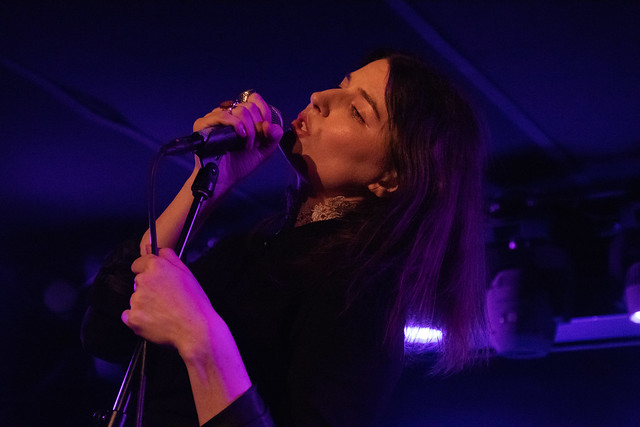
Throughout the course of last year, I wrote quite a bit about Brooklyn-based singer/songwriter Jonny Couch. Couch initially began his music career as a drummer, who played in a number of local punk bands before completely reinventing himself and his music career with 2016’s debut EP Animal Instinct, a soulful take on 80s synth pop that drew comparisons to the legendary Bryan Ferry while receiving praise from Louder Than War and High Times

Last year saw the release of Couch’s Peter Mavrogeorgis-produced full-length debut Mystery Man, an effort that found the Brooklyn-based JOVM mainstay further establishing a sound that’s indebted to and influenced by power pop and New Wave. “My favorite bands are Cheap Trick and Buzzcocks,” Couch said in press notes. But he goes on to explain that his solo work is deeply influenced by Nick Lowe with elements of Duran Duran and The Psychedelic Furs

Couch closes out 2020 with his latest single “Hideaway.” Released earlier this month, the single simultaneously marks the first bit of new, original material from the JOVM mainstay since the release of Mystery Man while continuing upon the synth-pop, power pop and New Wave-inspired sound that won him attention across the blogosphere. Featuring shimmering A Flock of Seagulls-like shimmering synths, twinkling keys, four-on-the-floor and the sort of anthemic hook that Phil Collins would love, “Hideaway” is a sweet love song centered around a classic pop trope: the desire to be in a sort of protective cocoon with your love, far from the madding crowd.

New Video: JOVM Mainstays Moaning Releases a Brooding and Introspective Single

Throughout the past handful of years of this site’s almost ten year history, I’ve managed to spill a lot of virtual ink covering rapidly rising Los Angeles-based post-punk trio and JOVM mainstays Moaning. Now, as you may recall the members of the band — ean Solomon (vocals, guitar), Pascal Stevenson (keys, bass) and Andrew MacKelvie (drums) — have been friends and collaborators in Los Angeles’ DIY scene for the better part of a decade through music and other creative pursuits in different media: Solomon is also a noted illustrator, art director and animator while Stevenson and MacKelvie have played in or produced and engineered acclaimed and rapidly rising acts like Cherry Glazerr, Sasami and Surf Curse.

With the release of 2018’s self-titled, full-length debut, the JOVM mainstays received attention from a number of nationally and internationally known media outlets including The Fader, The Guardian, DIY Magazine, Stereogum, and others for a moody and angular post-punk sound that — to some ears — recalled the likes of Joy Division, Interpol and Preoccupations. The trio’s highly-anticipated Alex Newport-produced and  engineered sophomore album Uneasy Laughter is slated for release tomorrow through Sub Pop Records. Reportedly, the album is a much more collaborative effort than their self-titled debut, and the material find site band brightening the claustrophobic and uneasy sound of their debut a bit, by replacing guitars for synths and beats.

Thematically, the album focuses on the everyday anxieties of being a somewhat functioning human in the madness of our current century — with the material touching upon the deeply personal and the universal. “We’ve known each other forever and we’re really comfortable trying to express where we’re at. A lot of bands aren’t so close,” the band’s Andrew MacKelvie says in press notes. Sean Solomon, who celebrated a year of sobriety during the Uneasy Laughter sessions adds “Men are conditioned not to be vulnerable or admit they’re wrong. But I wanted to talk openly about my feelings and mistakes I’ve made.”

Over the past couple of months I’ve written about three of the album’s previously released singles: the brooding, 80s New Order-like single “Ego,” the cynical A Flock of Seagulls-like “Fall In Love,” and the bleak yet explosive, guitar-driven ripper “Make It Stop.” “Connect the Dots,” Uneasy Laughter’s fourth and latest single is a brooding and atmospheric track, centered around shimmering synths, a soaring hook, Solomon’s achingly plaintive vocals, squiggling blasts of guitar, and an angular and expressive guitar solo. And while continuing a run of New Wave-like material, “Connect the Dots” may arguably be the most personal and introspective songs of the album. “The song is about realizing you need help and being brave enough to ask for it. It’s a misconception that asking for help is a sign of weakness. In reality it’s one of the hardest things you can do,” the band’s Sean Solomon explains in press notes.

Directed by Campbell Logan, the recently released video for “Connect the Dots” uses some mind-bending computer animated graphics. “I created this video with the intention of inspiring self-forgiveness, something I think we should all practice,” Logan says. “Making it gave me the opportunity to practice an approach that I like to call Filmmaking Simulation, which is a process of doing film production using virtual cinematography, set design and performance. The result is photorealistic and mimics live action. We had an extremely quick turnaround on the video, but were able to complete it in a little over a month, and despite these hurdles I’m so proud of it!”

Lyric Video: Moaning Releases an Angular and Uneasy Ripper

Over the past couple of years of this site’s almost ten year history — yeah, 10 years, y’all! — I’ve managed to spill quite a bit of virtual ink covering the rapidly rising Los Angeles-based post-punk trio Moaning.  The members of the band —  Sean Solomon (vocals, guitar), Pascal Stevenson (keys, bass) and Andrew MacKelvie (drums) — have been friends and collaborators in Los Angeles’ DIY scene for the better part of a decade through music and other creative pursuits in different media: Solomon is also a noted illustrator, art director and animator while Stevenson and MacKelvie have played in or produced and engineered acclaimed and rapidly rising acts like Cherry Glazerr, Sasami and Surf Curse.

With the release of 2018’s self-titled, full-length debut, the members of Moaning received attention from a number of nationally and internationally known media outlets including The Fader, The Guardian, DIY Magazine, Stereogum, and others for a moody and angular post-punk sound that — to some ears — recalled the likes of Joy Division, Interpol and Preoccupations. Now, as you may recall, the trio’s highly-anticipated Alex Newport-produced and  engineered sophomore album Uneasy Laughter is slated for a March 20, 2020 release through Sub Pop Records. The album is reportedly a much more collaborative effort than its immediate predecessor, that finds the band actively brightening the claustrophobia and uneasy sound of their debut, with the band trading guitars for synths and beats. 

Thematically, the album focuses on the everyday anxieties of being a somewhat functioning human in the madness of our current century — with the material touching upon the deeply personal and the universal. “We’ve known each other forever and we’re really comfortable trying to express where we’re at. A lot of bands aren’t so close,” the band’s Andrew MacKelvie says in press notes. Sean Solomon, who celebrated a year of sobriety during the Uneasy Laughter sessions adds “Men are conditioned not to be vulnerable or admit they’re wrong. But I wanted to talk openly about my feelings and mistakes I’ve made.”

So far I’ve written about two of the album’s released singles: the brooding, 80s New Order-like single “Ego,” which featured a desperate narrator taking stock of himself and his relationships to others with a brutally unflinching honesty — and the cynical  A Flock of Seagulls-like “Fall In Love,” which featured a dysfunctional narrator, who’s ruled by distortions, self-loathing and the expectations of failure. Interestingly, Uneasy Laughter’s third and latest single is the explosive, guitar-driven ripper “Make It Stop.”  Centered around angular and distorted power chords, an enormous hook and propulsive drumming, the track features a depressed narrator, who’s stuck within his own obsessive compulsive thoughts and can’t seem to find a way out from himself and his own worst instincts.  Certainly, if  you’ve ever been in the throes of depression, the song would feel eerily familiar, evoking the dark and fucked up places your mind can go when things seem bleak. 

“The song is about questioning negative thoughts, but struggling to find a solution. Being stuck in your head,” Moaning’s Sean Solomon says in press notes about the song. “There was a period of time where I thought everyone hated me and was out to get me. Now, I realize no one actually is putting that much energy into thinking about me at all. Depression can be extremely narcissistic. I encourage people, who relate to this song to call someone and ask for help.” 

Directed by the band, the recently released video features an enormous collage the band made. “The whole band made a collage for the video. It was really fun piecing different elements together,” Solomon explains in press notes. “We’ve also added  some extra surprises. The dimensions of the collage are 1920 by 40,000 pixels. It’s a big ass thing!”

New Video: Moaning Releases a Psychedelic, ’80s Inspired, Valentine’s Day Themed, Animated Visual for “Fall In Love”

A couple of years ago, I managed to spill quite a bit of virtual ink covering the Los Angeles-based indie rock/post punk trio Moaning.  The members of the band —  Sean Solomon (vocals, guitar), Pascal Stevenson (keys, bass) and Andrew MacKelvie (drums) — have been friends and collaborators in Los Angeles’ DIY scene for the better part of a decade through music and other creative pursuits in different media — Solomon is also a noted illustrator, art director and animator while Stevenson and MacKelvie have played in or produced and engineered acclaimed and rapidly rising acts like Cherry Glazerr, Sasami and Surf Curse.

Now, as you may recall, with the release of 2018’s self-titled, full-length debut, the members of Moaning received attention from a number of nationally and internationally known media outlets including  The Fader, The Guardian, DIY Magazine,Stereogum, and others for a moody and angular post-punk sound that seemed to recall Joy Division, Interpol and Preoccupations. Slated for a March 20, 2020 release through Sub Pop Records, the Los Angeles-based trio’s highly-anticipated Alex Newport-produced and engineered sophomore album Uneasy Laughter is a much more collaborative effort than its predecessor, an effort that finds the band actively brightening the claustrophobic and uneasy sound that won them attention by trading guitars for synths and beats. 

Thematically, the album focuses on the everyday anxieties of being a somewhat functioning human in the madness of our current century — with the material touching upon the personal and universal. “We’ve known each other forever and we’re really comfortable trying to express where we’re at. A lot of bands aren’t so close,” the band’s Andrew MacKelvie says in press notes. Sean Solomon, who celebrated a year of sobriety during the Uneasy Laughter sessions adds “Men are conditioned not to be vulnerable or admit they’re wrong. But I wanted to talk openly about my feelings and mistakes I’ve made.”

Last month, I wrote about Uneasy Laughter’s first single, the brooding “Ego.” Centered around shimmering synth, a soaring hook and a blistering guitar solo, the song found the band’s sound boldly and confidently moving in the direction of early 80s New Order. Thematically speaking, the song’s narrator desperately takes stock of himself and his relationships to others with a brutally unflinching honesty. The album’s second and latest single “Fall In Love” is centered around propulsive and forceful drumming, shimmering synth arpeggios, Solomon’s ironically detached vocals and a rousingly anthemic hook. Bearing an uncanny resemblance to Flock of Seagulls, the aforementioned New Order and others, the track is a skeptical — if not overtly cynical — take on love and romantic relationships, while featuring a narrator, who has a distorted and self-loathing view of themselves. 

“People my age are skeptical of love because we see how many previous generations got divorced or went through painful experiences,” the band’s Sean Solomon says in press notes. “The song is about being afraid to fall in love because of expecting heartbreak. it’s about hating yourself too much to open yourself up to someone else. It’s a bummer of a song lyrically, but it’s pretty fun to dance to!”

Directed by the band’s Sean Solomon with additional animation by Sarah Schmidt, the recently released video is a psychedelic and fever dream-like depiction of a romance between two young people that seems doomed to fail. “I made the music video in my bedroom a couple of weeks ago,” Solomon recalls in press notes. “It’s a psychedelic depiction of an imaginary romance. It’s inspired by early experimental animations like Belladonna of Sadness and Heavy Metal. Both the song and the video are perfect for everyone feeling like shit this Valentine’s Day.” 


Currently featuring Blake Milliser (vocals), Alex Hamby (guitar, vocals), Zane Emory (guitar, synth, vocals), Tom Hopper (drums, vocals), Myles Hamby (bass, vocals), Bryce Muse (saxophone) and Rachel Fritz (keys, synth), the Tucson, AZ-based indie septet Chateau Chateau formed early last year as a loose, garage pop quartet that rehearsed and wrote songs in an abandoned airplane hanger. After a while, they began to win over an audience of semi-casual, drunkards, who would be passing by on their way to the brewery next door. Shortly, after their formation they expanded to their current lineup — and as a result, by the middle of last year their sound morphed to a glimmering, synth-based hook-driven sound that recalls A Flock of Seagulls and others. Interestingly, the act’s latest single “Evidence” is a crowd-pleasing and anthemic song centered around a buoyant bass line, shimmering synths and Milliser’s crooned vocals. However, underneath the dance floor friendly vibes, the song’s narrator is in the midst of a mental breakdown, giving the song an underlying bitter irony.


New Video: Yumi Zouma Releases a Funky, Dance Floor Friendly, 80s Synth Pop Inspired Jam

Over the past few years, I’ve written quite a bit about the internationally renowned synth pop act Yumi Zouma, and as you may recall the act, which is comprised of Christchurch, New Zealand-born Christie Simpson, Sam Perry, Charlie Ryder and Josh Burgess have been split across various locations across the globe — primarily New York, Paris and Christchurch — after the 2011 earthquake that ravaged both their hometown and the region at large. Primarily writing and recorded by email, the band wasn’t initially meant to be a live band; however, they’ve received attention across the blogosphere and elsewhere for a breezy yet bittersweet, 80s synth pop-inspired sound centered around Christie Simpson’s ethereal vocals. Since the release of their Turntable Kitchen released cover of Oasis’ 1995 full-length effort, (What’s the Story) Morning Glory?, the renowned synth pop act has been busily writing and recording an EP trilogy — with the last part of the trilogy EP III slated for a September 28, 2018 release through Cascine Records.

“In Camera,” EP III’s first single was a swooning bit of synth pop with a soaring hook that sonically nodded a bit at  A Flock of Seagulls‘ “I Ran (So Far Away)“, complete with reverb fed instrumentation, a cinematic vibe and a clean, super more production sheen — and while seemingly effortlessly breezy, the song is underpinned by a deliberate and very careful attention to craft, as the members of the band refine each song until it’s absolutely perfect.  “Crush (It’s Late, Just Stay)” EP III’s latest single is centered around thumping beats, a shuffling guitar line, shimmering and arpeggiated synths and a sultry and sinuous bass line and while being a hook-driven, dance floor friendly song, it manages to sound as though it were released in 1983 or so, as it recalls Cherelle’s “Saturday Love” and others. 

Interestingly, as the band’s Josh Burgess explains in press notes, “This song began life as an experiment recording with a fellow Kiwi (Liam Finn) at his studio in 2015. The studio was aptly named The End as it was situated at the very end of Greenpoint Avenue overlooking Transmitter Park which was arguably one of the best views of Manhattan at the time. The End hosted a few different studios, including Jacob Portrait’s (Unknown Mortal Orchestra, Blouse) who mixed ‘In Camera’ as well as rehearsal spaces (I once walked in on The Congo’s rehearsing!). We smoked on the roof and had a bash at making a song together, which is what we sampled in the verses of ‘Crush’. The working title was ‘First Class Lounge’ because it sounded like some kind of musak that would be playing as background before rich people boarded a Concord. 

Unfortunately, The End had a sad finale courtesy of a fire that ripped through the building. Thankfully no one was hurt, but a lot of the gear was wrecked. My girlfriend lives a couple blocks away and over morning coffees we’ll often stroll through Transmitter looking up at the shell of the studio. Like most things in New York it’s relegated to a memory now, but a lot of great music came out of that building!”

The accompanying video features the classically-inspired artwork of Aiden Koch, set among bold and bright colors, animated by Joseph Brennan — and interestingly, while reminding me of the introductory sequence of an 80s rom com, it manages to evoke the flirtatious nature of the song. 

New Audio: Yumi Zouma Releases a Breezy Yet Bittersweet Summer Jam

Comprised of Christchurch, New Zealand-born Christie Simpson, Sam Perry, Charlie Ryder and Josh Burgess, the members of internationally renowned synth pop act Yumi Zouma have been spread across the world with most of the band’s members relocating to New York and Paris after the massive 2011 earthquake. Primarily writing by email, the project wasn’t initially meant to be a live project — but interestingly enough over the years, they’ve received attention for breezy yet bittersweet 80s synth pop centered around Christie Simpson’s ethereal vocals. Since the release of their Turntable Kitchen released cover of Oasis’ 1995 full-length effort, (What’s the Story) Morning Glory?, the renowned synth pop act has been busily writing and recording an EP trilogy — with the last part of the trilogy EP III slated for a September 28, 2018 release through Cascine Records.
EP III’s first single is the swooning synth pop “In Camera,” a single that will further cement the band’s reputation for crafting summery yet bittersweet pop centered around Simpson’s ethereal vocals, a soaring hook, shimmering synths and guitars. Sonically speaking, the song nods at a bit at A Flock of Seagulls’ “I Ran (So Far Away)”, complete with reverb fed instrumentation but with a cinematic air and a clean, modern production sheen. But interestingly enough, the material is underpinned by a careful attention to craft with the members of the synth pop act revising and bouncing ideas off each other until each song is absolutely perfect.

As the band says in press notes “There’s something really special about the EP format. It’s been so long since we worked on one that we all had forgotten how fun and liberating they can be.”

This EP, both in its material and how it was written and recorded, feels really close to EP I & II. Spread again between three countries, bouncing endless revisions of a song until it’s right, falling asleep on FaceTime trying to write lyrics together and the exhilaration of waking up to NEW SONG VERSION 5 – it threw us back to how we worked on material when we thought no one would ever listen.

We’ve completed our EP family. It’s the little sibling none of us had growing up and none of us knew we could love so much.”

Comprised of husband wife duo Aslyn and Kalen Nash, the Joshua Tree, CA-based synth pop duo DEGA features two accomplished, veteran musicians: Ashlyn had released two solo albums, Lemon Love through Capitol Records and The Dandelion Sessions through Lemonade Records, and she has a stint was a touring keyboardist and backing vocalist for Grammy nominated artist Kesha. Kalen Nash was guitarist and vocalist for Athens, GA-based indie rock act Ponderosa, a band that released their critically applauded, Joe Chiccarelli-produced album Midnight Revival, which was released through New West Records.

Unsurprisingly, the origins of the Nashes latest project can be traced back to 2008 when they first met and eventually fell in love — and although they married in 2011, they were so busy with their own respective musical projects, that they hadn’t seriously considered working together. Eventually, the loneliness of the road led the Nashes to consider a different path. “I remember a phone call when I was out with Kesha and Kalen was on tour with Ponderosa,” recalls Aslyn. “We were a country apart and hadn’t seen each other in months. I told him that we needed to start collaborating so, at the very least, we could see each other more often.”

Ashlyn and Kalen Nash formed DEGA with the idea that they could shed any and all of their preconceived notions about their previous work and freely explore new sounds and musical ideas — in this case anthemic, synth-based indie pop in which they merged their talents and ideas into a unique sound and approach. Now, as you may recall, the duo’s self-titled debut effort is slated for release later on this month through Lemonade Records, and the album reportedly is one of the most personal either has released to date as it focuses on the highs and lows of their lives together; in fact, album single “Phoenix” focuses on Asyln’s pregnancy and miscarriage during the recording sessions. With both Asyln and Kalen touring with their various projects, the duo would record whenever they were both in the same city and had free time, and as result, the album took two years to complete with sessions helmed by  Justin Loucks and Jon Ashley at various studios across the States.

Don’t Call It,” which I wrote about late last year was a carefully crafted yet urgent song that remind some quite a bit of Stevie Nicks’ “Stand Back,” St. Lucia, Washed Out and In Ghost Colours-era Cut Copy as layers of shimmering synths were paired with a sinuous bass line, African-inspired percussion and a soaring hook. The duo’s latest single “Mirrors” continues the 80s vibes of its predecessor — but in this case Purple Rain and 1999-era Prince, as well as A Flock of Seagulls as the song features some blistering guitar work paired with propulsive drumming, layers of shimmering and arpeggiated synths and a rousingly anthemic hook. And while being a remarkably slick, radio friendly track, it reveals some incredibly ambitious and earnest songwriting.


This past weekend has been a very busy one for me, as I’ve taken part in a Baby Robot Media hosted Mondo.NYC panel titled “Your First PR Campaign” and I’ve managed to cover some of the festival — while squeezing in my beloved New York Yankees, who have managed to get into the American League Division Series against the Cleveland Indians. There will be more on Mondo.NYC in the future; but in the meantime, let’s get to some music, eh?

For the better part of a decade, Frankie Rose played a significant role in Brooklyn’s indie rock scene, as an original member of several critically applauded and commercially successful acts including Crystal Stilts, Dum Dum Girls, Vivian Girls and Beverly, as well as a solo artist. And interestingly enough, Rose has been considered a controversial and restlessly creative presence, frequently leaving projects, just as they were beginning to attain some measure of success. Now, if you’ve been frequenting this site over the course of the summer, you may recall that Rose relocated back to her birthplace of Los Angeles with the intention of establishing a new, creative and professional moment in her career; however, the experience of being down and out, and not quite knowing what to do next wound up inspiring her fourth full-length album Cage Tropical, which was co-written with Jorge Elbrecht, known for his work with Tamaryn, Gang Gang Dance, No Joy and my own personal favorite Violens. Album single “Dyson Sphere” managed to sound as though it owed a debt to 80s New Wave — in particular A Flock of Seagulls I Ran (So Far Away),” Siouxsie and The Banshees’Israel” and “Happy House,” immediately came to my mind.

Adding to a run of New Wave-inspired material, Rose is set to release a full-length cover of The Cure‘s critically applauded sophomore effort Seventeen Seconds as part of Turntable Kitchen’s Sounds Delicious vinyl covers series. The first single off Rose’s Seventeen Seconds cover album is a fairly straightforward and moody rendition of one of my favorite Cure songs “A Forest.” And if there’s one thing the Frankie Rose cover should do two things: remind contemporary listeners that a great song can truly be timeless and that The Cure should be considered one of the more important bands of the 1980s.


New Video: The 80s New Wave-Inspired Sounds and Visuals of Frankie Rose’s Latest Single “Dyson Sphere”

For the better part of a decade, Frankie Rose played a significant role in Brooklyn’s  indie rock scene, both as a solo artist and as an original member of critically applauded and commercially successful acts like Crystal Stilts, Dum Dum Girls, Vivian Girls and Beverly; in fact, if you’ve been covering music in this town as long as I have, you may recall that Rose was a largely considered a controversial, restlessly creative presence, frequently leaving projects, just as they were about to attain some measure of success. As the story goes, Rose relocated back to her birthplace of Los Angeles with the intention of establishing a new, creative and professional moment in her career; however, she gradually found herself running short on sleep, money and optimism.  “I moved to LA, drama ensued and I ended up on a catering truck. I was like, how can this be my life after being a touring musician and living off of music. I had really lost my way and I thought I was totally done,” the indie rock artist recalls in press notes.

During those restless nights, Rose spent her time listening to Art Bell’s paranormal-themed archives and her thoughts turned fatalistic — in the sense that she started to feel as though she wasn’t cut out for the music business, and wondering what she was going to do next. “But out of it all, I just decided to keep making music, because it is what I love and what I do — regardless of the outcome,” the indie rock artist says.

Towards the end of her 18 month stint back in Los Angeles, Rose reached out to Jorge Elbrecht, known for his work with Tamaryn, Gang Gang Dance, No Joy and my own personal favorite Violens and began sketching what eventually became the basic outline of what felt like a new album. When Rose returned back to Brooklyn, she had the realization that she had to do it on her own, and naturally it meant working with basically no budget and finding ways to record in-between days; however, Rose credits it as being incredibly useful as it allowed her to experiment with a variety of people, who helped change her creative process and songwriting as a whole. “I got a lot of people from people like Dave Harrington (Darkside), who was helpful in reconstructing the songs, adding dynamics and changing up the rhythms.”

The end result is Rose’s soon-to-be released fourth full-length album Cage Tropical, and as you’ll hear on the album’s latest single “Dyson Sphere,” the material takes on a decidedly spectral yet New Wave-inspired sound, complete with analog synths, an angular and propulsive bass line, angular guitar chords fed through delay and reverb pedals, dramatic percussion and a soaring hook paired with Rose’s ethereally crooned vocals floating over the mix. And although the song is reminiscent of A Flock of Seagulls “I Ran (So Far Away),” Siouxsie and The Banshees’ “Israel” and “Happy House,” it may be the one of the more personal and albums of Rose’s career — and while seemingly dark, there’s an underlying and subtle sense of hope; that the darkest days of one’s creative or personal life certainly aren’t forever.  “It’s all essentially based on what happened to me in Los Angeles and then a return to Brooklyn. Misery turned into something good,” Rose says of the album in press notes. “The whole record to me is a redemption record and it is the most positive one I’ve made.

“I feel like I am finally free from worrying about an outcome. I don’t care. I already lost everything. I already had the worst-case scenario. When that happens, you do become free. In the end, it’s about me rescuing myself via having this record.”

Directed by Daniel Carbone, the recently released video for “Dyson Sphere” is an incredibly 80s New Wave-inspired performance video that features the Brooklyn-based indie artist and her backing band shot in a hazy and moody shadows, complete with trippy fade outs and bursts of color, that should remind anyone who grew up in the 80s of watching warped and over-recorded VHS tape.


Now, if you’ve been frequenting this site over the past three years or so, you’d certainly come across a handful of posts featuring the  Austin TX/Houston, TX-based electro pop act  Night Drive. Comprised of songwriting and production duo Rodney Connell and Bradley Duhon, the Texan electro pop act can trace their origins to some rather unusual, highly soap-opera-like yet very true circumstances: Connell and Duhon had met and bonded after they had discovered the the woman they had both unwittingly had been simultaneously dating tragically died in a car accident. Regardless of the circumstances behind their formation, the duo  has received attention both on this site and elsewhere for a moody, slickly produced New Wave and synth pop sound that draws from Joy DivisionCut CopyBrian EnoThe KnifeThe DrumsLCD SoundsystemDepeche Mode and others. However, the duo’s last single “Rise and Fall” managed to sound as though it were inspired by  A Flock of Seagulls “I Ran (So Far Away)” and Joy Division’s “Love Will Tear Us Apart” — and interestingly enough, the song thematically focused on the slow dissolution of a relationship that according to the song’s narrator seemed to be nearing its inevitable conclusion; but with the recognition that walking away from a relationship is difficult, even when it’s absolutely necessary. And in some way, you can sense the narrator’s unexpressed and deep seated fears about his life, post-relationship.

Last month, the renowned Los Angeles-based production and DJ duo Classixx remixed “Rise and Fall,” turning the moody, synth-based torch song into a breezy, funky, summery, club banger along the lines of Tuxedo, Dam-Funk, 7 Days of Funk and others, as the duo pairs the original vocal track with twinkling electric piano, a sinuous bass line and thumping beats — and as a result, the heartbreak at the core of the song is reduced to the dull throb of having time pass by. As Connell and Duhon explained to the folks at Billboard “Classixx reinterprets the song through the lens of that same person reminiscing about the incident many years later while chilling on a beach and sipping a martini. Sure it was sad and heartbreaking, but it’s hard to stay sad while in the Cayman Islands.”

As Classixx’s Michael David and Tyler Blake explained to Billboard, their remix of Night Drive’s “Rise and Fall” involved them pulling out electric piano and bass and recording one long take jamming over the vocal track. “We were feeling the groove and liked some of the imperfections, so we left them in. Our initial pass was more abstract, but the band [Night Drive] helped us bring it back a little closer to the original material. It was a pretty collaborative effort through email. I like how it still sounds a little rough around the edges though. Sometimes that’s where the charm lies,” the duo’s Tyler Blake added in an emailed statement to Billboard.

The duo’s self-titled debut is slated for a June 16, 2017 release through Roll Call Records and the album’s latest single “Trapeze Artist Regrets,” and the album’s latest single “Trapeze Artist Regrets” will likely remind listeners of Depeche Mode’s “People Are People,” Yaz’s “Situation,” The Human League’s “Don’t You Want Me” and others as the song features an effortlessly slick production consisting of layers upon layers of propulsive, undulating synths and tweeter and woofer rocking beats paired with an infectious, dance floor-friendly hook and emotionally direct lyrics. However, interestingly enough, as the duo admits “‘Trapeze Artist Regrets’ was never supposed to happen. We were writing something else for a short film and became bored, so we changed the bpm, started shifting things around and all of the sudden we had this groove we liked.  We just started working backwards from there. The title came first, a sorta metaphor for disaster; it’s about watching someone you care about make the same mistake over and over again and not being able to do anything about it. Just hoping they pull through.” And as a result, the song possesses a bitter sense of reality, along with the recognition that the narrator’s friend will do something incredibly harmful to themselves and others.


Currently comprised of founding member Mike Score (keys, vocals), Joe Rodriguez, Michael Brahm and Pando, the British new wave/synth pop quartet A Flock of Seagulls initially formed in 1980 — and with their most famous and longest running lineup featuring Mike Score, his brother Ali Score (drums), Frank Maudsley (bass) and Paul Reynolds (guitar), the quartet had some of their biggest success, including a string of international hit singles including their smash hit “I Ran (So Far Away),” “Space Age Love Song,” and “Wishing (If I Had a Photograph of You),” all released in 1982 and 1984’s “The More You Live, The More You Love,” an anthemic pop song featuring angular guitars played with tons of reverb and delay pedal, an equally angular yet funky bass line, and a soaring hook.


Recently, JOVM mainstay artist Rhythm Scholar remixed A Flock of Seagulls’ 1984 hit single and his remix of the 1984 hit song, as futuristic bleeps and bloops, radio transmissions and feedback, along some distorted vocals during the song’s intro, bridge and coda and bigger, more forceful drum programming while retaining the angular guitar chords with reverb and delay, the equally angular bass line and the soaring hook of the original, essentially giving the song a subtle space-age feel — but space-age from what we would imagine 2017 would look like and feel like in 1984.