Tag: Bob Marley

New Audio: Tinariwen Return with a Hypnotic and Triumphant New Single

Last month, I wrote about Elwan’s first single “Tenere Taqqal,” a slow-burning and hauntingly gorgeous song that possessed an understated yet aching longing for a way of life and for a home, which as Thomas Wolfe once wrote and the members of the band recognize, they may never be able to return to and will never have again. And certainly while there’s a tacit acknowledgement within the song that life continues onward as it always does, there’s also a brooding and pensive urgency within the song that comes from the members of the band recognizing that they have a sacred and profound duty of ensuring that something of the old traditions could be preserved and passed on to future generations. The album’s second single “Sastanàqqàm” is as the band’s Abdallah Ag Alhousseyni explains “an ode to the Sahara and its Nomads. It expresses the needs of the traveller as he crosses the desert on his mount. Essential needs: find water and a way to preserve it, find a good mode of transport. But also the love-hate relationship with the desert, the natural elements and the certainty that we will always go back to it.” Pairing those sentiments with a shuffling and deeply hypnotic groove and a propulsive and stomping percussion give the song a hopeful and downright joyous feel. At it’s core it’s the hope and promise of returning to the ancestral homeland — of its smell, of seeing beloved sights, of returning to the place where your ancestors have lived, played, prayed, wandered, hunted and died.

The band and their label have done a kind favor by providing an English translation of the song’s lyrics, which you can check out below.

Sastanàqqàm Lyrics

SASTANÀQQÀM

I QUESTION YOU

TÉNÉRÉ, CAN YOU TELL ME OF ANYTHING BETTER THAN TO HAVE YOUR FRIENDS AND YOUR MOUNT,
AND A BRAND NEW GOATSKIN, WATERTIGHT,
TO FIND YOUR WAY
BY THE LIGHT
OF THE FOUR BRIGHT STARS OF HEAVEN,
TO KNOW HOW
TO FIND WATER IN
THE UNLIKELIEST OF PLACES, AND ENLIST THE MOMENTUM OF THE WIND
TO HELP YOU MOVE FORWARD

TELL ME, TÉNÉRÉ
HOW YOU AND I
CAN REMAIN UNITED,
WITH NO HATE FOR EACH OTHER.
TÉNÉRÉ, I CAN NOW ADMIT THAT
I HAVE TRAVELLED FAR THROUGH THIS WIDE WORLD.
TÉNÉRÉ, I GIVE YOU MY OATH
THAT AS LONG AS I’M ALIVE,
I WILL ALWAYS COME BACK

New Video: Haunting Visuals and Sounds of Tinariwen’s “Tenere Taqqal” Captures a Rapidly Disappearing Way of Life

Interestingly, Tinariwen’s forthcoming full-length effort Elwan (which translates into English as The Elephants) is slated for a February 10, 2017 release, and the album thematically focuses both on the disappearing traditions of the Tuareg people and of being forced into exile — oddly enough as the members of the band were touring the world. And the album’s gorgeous first single “Tenere Taqqal” possesses an understated longing for a way of life and for a home, which as Thomas Wolfe wisely suggested they can never return to and will never get back. And yet there’s a tacit acknowledgment that life must continue onward and that they have a profoundly important duty of ensuring that something of the old traditions can be preserved and passed on to future generations. As a result, the single while being slow-burning and brooding also manages to possess an understated, quiet urgency — all while feeling older than time itself. Every time, I’ve listened to this track I can picture sitting among the Tuareg or the Bedouins at a campfire, as they tell tales of creation or of the great mystics and teachers, who have led flocks of faithful . .

The recently released animated video was directed by Axel Digoix and it vividly depicts the desert’s harshness, cruelty and beauty, and the profound spiritual and physical connection that the Tuareg people have towards it, while pointing out that their traditions and their world is being violently torn apart.

Now, if you’ve been frequenting this site over the past couple of years, you’ve likely come across a number of posts about Detroit, MI-based electro pop duo Gosh Pith. And in that period of time, the act has not only become a JOVM mainstay, they’ve seen a growing national profile for a sound that seamlessly meshes elements of hip-hop, electro pop, stoner rock, indie rock, dub, trap music, drum ‘n’ bass, indie rock and several other related  genres.

Interestingly, the duo’s guitarist and vocalist Josh Smith has a solo side project under the simple mononym Joshua. Influenced by Morrissey, Frank Ocean, Bob Dylan, Bob Marley, Jean-Luc Goddard, Jim Jarmusch and others, Smith’s first single as Joshua is a mash up/cover of The Weeknd‘s “Starboy” and Kiiara’s “Gold,” that he has dubbed “GOLDBOY.” Smith’s mash up/cover retains the glitchy and stuttering production of “Gold” but pairs it with Smith singing The Weeknd’s sultry lyrics. Admittedly, I’m not a big mainstream pop guy but after listening to both songs, my immediate thought was similar to the folks at All Things Go  — “Holy shit, those two songs work together. How come no one has done that before?” Sonically speaking, will further the reputation Smith developed while with Gosh Pith while gently and subtly breaking their mold.

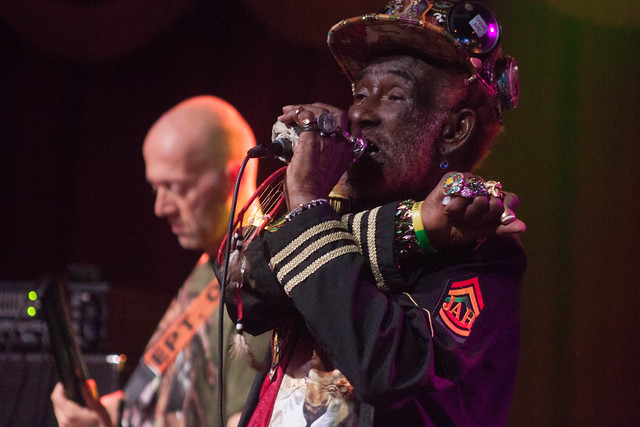
Live Footage: Lee “Scratch Perry”/Preview: Dub Champions Festival: Lee “Scratch” Perry and Subatomic Sound System at Brooklyn Bowl

Perry turned 80 in March, and remarkably the man has managed to remain youthful, vital, challenging, forward-thinking, innovative, eccentric and imitable as ever as over the past decade or so he’s collaborated with the likes of The Beastie Boys, The Orb, Felix Da Housecat and several others while keeping a fairly busy touring schedule.

The reggae legend returns for the annual Dub Champions Festival at Brooklyn Bowl and this year’s appearance continues Perry’s continued tour with Subatomic Sound System to celebrate the 40th anniversary of the release of Super Ape — and to celebrate the legend’s 80th birthday. Of course, in honor of that occasion check out some live footage of the great and incredibly eccentric Mr. Perry.

As a black man, the recent deaths of Philando Castile and Alton Sterling by police officers  as well as the countless other deaths of black children, women and men have been on my mind and very little has offered much comfort from the feelings of fury, bitterness, confusion, horror, profound sadness and numbness I’ve been feeling over the past few days. And as a result, I’ve been obsessed with Syl Johnson‘s aching and bitter lament “Is It Because I’m Black” which my homey Abdul recently put me on to and Bob Marley‘s “War.” I think both songs will say just about everything that I feel about now.

Founded by Ibrahim Ag Alhabib, Tinariwen can trace their origins back to the mid and late 1970s when Alhabib, who had been inspired to learn the guitar from an old Western film, in which a cowboy played a guitar, joined other Tuareg rebels living in refugee camps in Libya and Algeria, who were exploring the radical chaabi protest music of Moroccan groups like Nass El Ghiwane and Jil Jilala; Algerian pop rai; and western artists like Elvis PresleyLed ZeppelinCarlos SantanaDire StraitsJimi HendrixBoney M, and Bob Marley.

While in Tamanrasset, Algeria, Ag Alhabib started a band with Alhassane Ag Touhami and brothers Inteyeden Ag Ablil and Liya Ag Ablil, and they began playing the traditional sounds of the Taureg people at weddings and parties across Algeria and Libya. Interestingly, when they started, the band had no official name but people began calling them Kel Tinariwen, which in the Tamashek language translates roughly as “The People of the Deserts” or “The Desert Boys.”

In 1980, Libyan dictator, Muammar Gaddafi released a decree inviting all young Tuareg men, who were living illegally in Libya to receive full military training, as part of his dream of forming a Saharan regiment, comprised of the best young Tuareg fighters to further his territorial ambitions in Chad, Niger, and elsewhere across Northern Africa. Al Alhabib and his bandmates answered the call and received military training. They answered a similar call in 1985, by leaders of the Libyan Tuareg movement and wound up meeting fellow musicians Keddou Ag Ossade, Mohammed Ag Itlale (aka “Japonais”), Sweiloum Ag Alhousseyni, Abouhadid Ag Alhousseyni, and Abdallah Ag Alhousseyni — all who had sang and played guitar. The musicians joined together in a collective — now known across the world as Tinariwen — in order to write songs about the issues facing their people, built a makeshift stood and vowed to record music for free for anyone who supplied a blank cassette tape. And naturally, as a result their homemade cassette tape series  were highly sought after, and were traded throughout Saharan Africa. (It’s also incredibly punk — perhaps more punk, than anything most Western artists could ever come up with.)

In 1989. the members of the collective had left Libya and relocated to Ag Alhabib’s birthplace of Tessalit, Mali; however, by the next year Mail’s Tuareg population revolted against the Malian government, with some members of the collective participating as rebel fighters. After a peace agreement known as the Tamanrasset Accords were reached in early 1991, the  members of Tinariwen left the military and devoted themselves to music full-time — and by 1992, some of the members of the collective were to Abidjan, Ivory Coast to record a cassette at JBZ Studios, and they occasionally played gigs for far-flung Tuareg communities throughout Saharan Africa, which helped the band gain word-of-mouth popularity among their people.

Tinariwen started to receive international attention after they had began collaborating with the renowned French world music ensemble Lo’Jo — with the result being the highly acclaimed 2001 Festival au Desert in Essakane, Mali. Greater attention came to the band when the play their first UK performance at that country’s largest, free African festival, Africa Oye. And the year was topped by the release of their full-length debut, The Radio Tisdas Sessions, their first recording to be released outside of their native Northern Africa. Coincidentally, this has gone on as the collective has gone through some lineup changes, incorporating a younger generation of Tuareg musicians, musicians who didn’t live during some of the military conflicts of the older generation, including bassist Eyadou Ag Leche, percussionist Said Ag Ayad, guitarist Elaga Ag Hamid, guitarist Abdallah Ag Lamida, and vocalists Wonou Walet Sidati and the Walet Oumar sisters.

As the collective has started to see greater international attention, they’ve toured regularly across the European Union, North America, Japan and Australia, often playing at some of the world’s biggest and highly renowend music festivals including Glastonbury, Coachella, Roskilde, Les Vieilles Charrues, WOMAD, FMM Sines and Printemps de Bourges. And they’ve won over an incredible list of celebrity fans and champions including Carlos Santana, Led Zeppelin’s Robert Plant, U2‘s Bono and The Edge, Radiohead‘s Thom Yorke, Coldplay‘s Chris Martin, Henry Rollins, Brian Eno, and TV on the Radio, among others. And it shouldn’t be surprising because of their hauntingly gorgeous music rooted in the poetry and traditions of the tough, rebellious people of Northern Africa — and in some way, the material captures the vast expanse of the desert as their sound seems to arch heavenward . . .

At the end of last year, the members of Tinariwen played a show in Paris and invited the legendary grand dame of Tamashek culture, Lalla Badi, one of Tuareg culture’s beloved master of the tinde, which is both a percussive instrument covered by taut goatskin, played by women and a poetic repertoire sung at ceremonies and special and intimate occasions. Not only is she considered the paradigm of Tuareg femininity, she has also long been an outspoken advocate for Tuareg culture and causes, as well as being a mentor to the members of Tinariwen in their early incarnation. The end result was a live recording of their Paris show, Live in Paris slated for a November 20 release through Anti- Records.

The first single off the live album “Tinde Final Tinariwen” is a hauntingly gorgeous track that begins with droning guitar chords, propulsive percussion and a collection of male vocals crying and chanting before Badi’s regal vocals joining in on a composition that marries ancient traditions with contemporary sound. Indeed, there’s a forcefulness to the composition but it arches heavenward with lilting, trance inducing beauty that’s awe-inspiring.

Thursday night marks the beginning of the music portion of this year’s Northside Music Festival, and as I mentioned in my Northside Festival Preview, the music portion of the festival features 400 bands and artists […]

As I’ve mentioned in a previous post, I rarely get political here – it’s a music blog after all. But after the grand jury decision the other song I thought of was Bob Marley’s “War” […]