
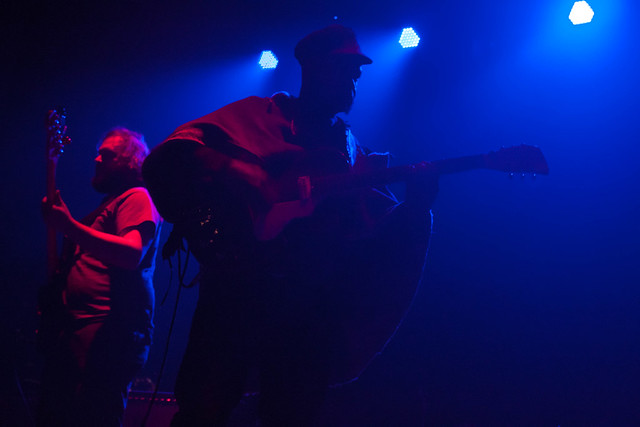
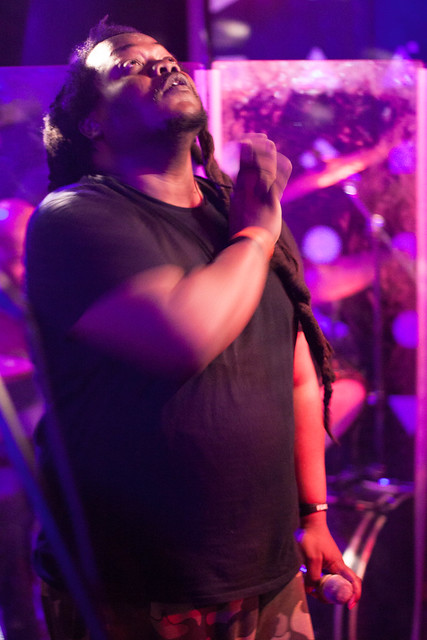
JOVM’s William Ruben Helms celebrates Black History Month and pays homage to Fishbone.
Tag: Fishbone
New Video: Easy Star All-Stars Team Up with Macy Gray on Swooning Rendition of Bowie’s “Rock ‘n’ Roll Suicide”
Founded and led by producer, arranger, multi-instrumentalist and bandleader Michael Goldwasser, Easy Star All-Stars have established themselves as one of the top reggae acts on the international scene for the better part of the past two decades. During that period, they’ve managed to tour in over 30 countries on six continents while bringing together fans of reggae, classic rock, dub, indie rock and pop into one big family through their collection of critically acclaimed reggae tribute albums that includes 2003’s Dub Side of the Moon, 2006’s Radiodread, 2009’s Easy Star’s Lonely Hearts Dub Band and 2012’s Easy Star’s Thrillah — and 2010’s remix album, Dubber Side of the Moon. And before you go off and think that they’re just a tribute band, they’re not; they’ve also released two efforts of original material, 2008’s Until That Day EP and 2011’s First Light.
Continuing their run of reggae tribute albums across classic rock, dub, indie rock and pop, the acclaimed local reggae outfit will tackle David Bowie‘s beloved classic, 1972’s The Rise and Fall of Ziggy Stardust and The Spiders From Mars. Slated for an April 21, 2023 release through their own Easy Star Records, Ziggy Stardub is a reggae re-imagining of the beloved album, featuring guest spots from Macy Gray, Steel Pulse, Maxi Priest, Fishbone, Living Colour‘s Vernon Reid, The Skints, Mortimer, The Expanders, Samory I, and a lengthy list of others.
Pre-order packages of the album are available here, including royal blue colored vinyl along with CD and exclusive t-shirt offerings.
In the lead-up to Ziggy Stardub‘s release on Thursday, I’ve written about three of the album’s previously released singles:
- “Starman,” featuring Maxi Preist. The Easy Star All-Star rendition is a warm and soulful dub take on the original that retains the rousingly anthemic hook everyone and their grandmother knows but places it within a shuffling, reggae riddim paired with warm blasts of Rhodes, some cinematic strings and Maxi Priest’s effortlessly soulful delivery.
- “Moonage Daydream,” featuring Naomi Cowan and the legendary Alex Lifeson. The Easy Star All-Star rendition “Moonage Daydream” is a hazy dub-leaning take that makes loving nods to the original, with a full string seciton and a flute solo from Jenny Hill, that takes the place of Bowie’s recorder solo from the original. Cowan contributes a soulful, rock goddess vocal that I’d argue would make both Bowie and Tina Turner very proud. The song closes out with a trippy and inspired David Gilmour-like guitar solo from the legendary Lifeson.
- “Five Years” featuring the legendary Steel Pulse. Rooted in a soulful and slow-burning reggae riddim, the Easy Star All-Stars rendition lovingly retains the soaring string-driven hooks and choruses, and the weary, apocalyptic sigh-like vibe of the original.
Ziggy Stardub‘s fourth and final pre-release single “Rock ‘n’ Roll Suicide” features the acclaimed, multi-award-winning singer/songwriter, musician and producer Macy Gray. Pairing a deceptively laid-back vibe with strutting riddims and a coolly swaggering horn line with Macy Gray’s imitable and deeply sensitive delivery, the Easy Star All-Star rendition manages to retain the swooning and empathetic commiseration of the origin. Oh, how much all of us at one point or another, just needs to hear “Oh, no you’re not alone!”
“The main key was finding an emotive and groundbreaking vocalist, and we did just that with Macy Gray, who is truly inimitable in every song that she sings, including this one,” Easy Star All-Stars’ Goldwasser explains in press notes.
The Five Guys burger chain recently named Easy Star All-Stars as their Featured Artist of May. The chain will be playing an Easy Star track every hour in every store for the entire month.
Directed by Stefano Bertelli, the accompanying stop-animation video for “Rock ‘n’ Roll Suicide” follows two stray street cats on a journey through a sleepy evening in an intricately made paper town.
New Video: Easy Star All-Stars Team up with Steel Pulse on a Soulful Rendition of Bowie’s “Five Years”
Continuing their run of reggae tribute albums across classic rock, dub, indie rock and pop, the acclaimed local reggae outfit will tackle David Bowie‘s beloved classic, 1972’s The Rise and Fall of Ziggy Stardust and The Spiders From Mars. Slated for an April 21, 2023 release through their own Easy Star Records, Ziggy Stardub is a reggae re-imagining of the beloved album, featuring guest spots from Macy Gray, Steel Pulse, Maxi Priest, Fishbone, Living Colour‘s Vernon Reid, The Skints, Mortimer, The Expanders, Samory I, and a lengthy list of others.
Pre-order packages of the album are available here, including royal blue colored vinyl along with CD and exclusive t-shirt offerings.
Earlier this month, I wrote about two of the album’s previously released singles:
- “Starman,” featuring Maxi Preist. The Easy Star All-Star rendition is a warm and soulful dub take on the original that retains the rousingly anthemic hook everyone and their grandmother knows but places it within a shuffling, reggae riddim paired with warm blasts of Rhodes, some cinematic strings and Maxi Priest’s effortlessly soulful delivery.
- “Moonage Daydream,” featuring Naomi Cowan and the legendary Alex Lifeson. The Easy Star All-Star rendition “Moonage Daydream” is a hazy dub-leaning take that makes loving nods to the original, with a full string seciton and a flute solo from Jenny Hill, that takes the place of Bowie’s recorder solo from the original. Cowan contributes a soulful, rock goddess vocal that I’d argue would make both Bowie and Tina Turner very proud. The song closes out with a trippy and inspired David Gilmour-like guitar solo from the legendary Lifeson.
Ziggy Stardub‘s third and latest single “Five Years” features the legendary Steel Pulse. Rooted in a soulful and slow-burning reggae riddim, the Easy Star All-Stars rendition lovingly retains the soaring string-driven hooks and choruses, and the weary, apocalyptic sigh-like vibe of the original.
Directed by Robert Bartolome, the accompanying video portrays the end of the world — and its eventual rebirth — on a miniature scale. It’s a gorgeous and unsettling reminder of the fate that we’re marching lockstep towards, and of the fact that nature will eventually reclaim everything once we’re all gone.
Continuing their long-held tradition of playing on April 20 — 4/20 y’all! — the acclaimed reggae outfit will be playing an album release show at Sony Hall.
New Audio: Easy Star All-Stars Tackle Bowie’s Ziggy Stardust
Founded and led by producer, arranger, multi-instrumentalist Michael Goldwasser, Easy Star All-Stars have established themselves as one of the top reggae acts on the international scene for the better part of two decades. During that same period of time, they’ve managed to tour in over 30 countries on six continents while brining together fans of reggae, classic rock, dub, indie rock and pop into one big family as a result of their collection of critically acclaimed reggae tribute albums that includes 2003’s Dub Side of the Moon, 2006’s Radiodread, 2009’s Easy Star’s Lonely Hearts Dub Band and 2012’s Easy Star’s Thrillah — and 2010’s remix album, Dubber Side of the Moon. They also have two releases of original material, 2008’s Until That Day EP and 2011’s First Light.
Continuing their run of reggae tribute albums across classic rock, dub, indie rock and pop, the acclaimed local reggae outfit will tackle David Bowie‘s beloved classic, 1972’s The Rise and Fall of Ziggy Stardust and The Spiders From Mars. Slated for an April 21, 2023 release through their own Easy Star Records, Ziggy Stardub is a reggae re-imagining of the beloved album, featuring guest spots from Macy Gray, Steel Pulse, Maxi Priest, Fishbone, Living Colour‘s Vernon Reid, The Skints, Mortimer, The Expanders, Samory I, and a lengthy list of others.
Pre-order packages of the album are available here, including royal blue colored vinyl along with CD and exclusive t-shirt offerings.
But in the meantime, Easy Star All-Stars have shared two singles from the album:
“Starman,” featuring Maxi Preist, who’s one of two British-born acts to have a #1 Billboard here in the States with 1990’s smash hit “Close To You.” By the way, for you trivia heads, the other British act was UB40 with their cover of Neil Diamond’s “Red Red Wine” back in 1983.
“Starman,” is a warm and soulful dub take on the original that retains the rousingly anthemic hook everyone and their grandmother knows but places it within a shuffling, reggae riddim paired with warm blasts of Rhodes, some cinematic strings and Maxi Priest’s effortlessly soulful delivery.
“Moonage Daydream,” which features Naomi Cowan and the legendary Alex Lifeson. Cowan is th daughter of impresario Tommy Cowan, a producer, songwriter and former road manager for Bob Marley — and the internationally beloved reggae vocalist Carlene Davis. Touted as one of the top rising female artists in Caribbean music, Cowan won the Breakthrough Reggae Artist Award at 2019’s Jamaica Reggae Industry Awards. Building upon a buzz-worthy profile, her single “Paradise Plum” has topped several reggae charts and has quickly become a staple in the new wave of reggae. Lifeson is best known as the co-founder, backing vocalist and guitarist of beloved Canadian prog rock outfit Rush. As a member of Rush, Lifeson is in the Rock N’ Roll Hall of Fame, and is included on Rolling Stone‘s list of the “100 Greatest Guitarists of All Time.” Adding to an extensive list of accolades, Lifeson was made an Officer of the Order of Canada back in 1996 and in 2012, he received the Governor General’s Performing Arts Award, Canada’s highest artistic honor.
The Easy Star All-Star cover of “Moonage Daydream” is a hazy dub-leaning take that makes loving nods to the original, with a full string seciton and a flute solo from Jenny Hill, that takes the place of Bowie’s recorder solo from the original. Cowan contributes a soulful, rock goddess vocal that I’d argue would make both Bowie and Tina Turner very proud. The song closes out with a trippy and inspired David Gilmour-like guitar solo from the legendary Lifeson.
“This has been my favorite tune on the Bowie album since I first started listening as a teenager,” Easy Star All-Star’s Michael Goldwasser says in press notes. “In light of that, it’s interesting that it’s the song that I changed most radically by simplifying the chord progression and pedaling on one bass line for the entire track, which gives it somewhat of a hypnotic effect and roots it in reggae tradition.”
Throwback: Black History Month: Death
Today is February 21, 2021. It’s the 21at day of Black History Month. And as I’ve mentioned throughout this series, I’ve been featuring Black artists across a wide and eclectic array of genres and styles — with the hopes that it’ll be a bit of a primer on the Black experience and on Black music.
Of course, I hope that these posts will serve as a reminder of these very important facts:
Black culture is American culture — and Black music is American music.
America’s greatest and beloved contributions to the world are Black music styles — the blues, jazz, rock ‘n’ roll and hip-hop.
Black art matters.
Black lives matter — all of them, all of the time.
etroit-based garage rock/punk rock act Death have one of the most interesting backstories I’ve come across in this site’s 10-plus year history, and it’s worth retelling: Formed by The Hackney Brothers — Bobby (bass, vocals), David (guitar) and Dannis (drums) — in 1971, the band began as an R&B and funk band. But the sibling trio’s lives were transformed after they caught The Who and Alice Cooper in concert. As the story goes, David, the youngest of the sibling trio pushed for a hard rock-like song unbeknownst to them managed to presage punk and post-punk by several years, Of course, a change in sonic direction necessitated a change in band name — to Death, As Bobby Hackney explained in 2010, David’s concept was spinning death from the negative to the positive. “It was a hard sell.”
In 1975, The Hackney Brothers recorded a handful of songs written by David and Bobby at Detroit’s United Sound Studios with engineer Jim Vitti. According to The Hackney Family, Clive Davis funded those recording sessions — but while doing so, repeatedly implored that the band change their name to something much more commercially palatable. The Hackneys refused. Davis pulled his financial support and as a result, the band was left with seven recorded songs instead of the planned for 12. By the following year, the band released an extremely limited release of 500 copies of the “Politicians In My Eyes”/”Keep On Knocking” single, followed by their full-length debut to little fanfare.
By 1977, The Hackneys ended Death and relocated to Burlington, VT where they released two albums of gospel rock as The 4 Movement in the late 70s and early 80s. In 1982, David returned to Detroit while Bobby and Dannis remained, eventually forming the reggae band Lambsbread. Sadly in 2000, David Hackney died of lung cancer. But reportedly before he died, David Hackney told his older siblings that although they were misunderstood and forgotten in their heyday, history would prove them and their work as Death as truly revolutionary and important — even if it was after his own death. In a serendipitous spin of fortune that seems too good to be true, several years after David’s death, Bobby’s sons stumbled upon the original Death masters hidden away in their parents’ attic. Bobby’s sons were so impressed and innpisred bay what they had heard, that they began covering Death’s material during their own sets — and that helped bring attention to their father’s and uncles’ work together.
Drag City Records, re-released Death’s original recordings in 2009, 35 years after its initial recording and release.The band’s sound which effortlessly meshed elements of reggae, garage rock, porto-punk and metal manages to presage the punk movement by three years — all while being an important musical bridge between Parliament Funkadelic and Bob Marley and Bad Brains, Fishbone, Living Colour, Lenny Kravitz, TV on the Radio, Prince and countless others.
Sine the re-release of their demos and full-length debut, the current Death lineup — surviving brothers Bobby (bass, vocals) and Dannis (drums) with Bobbie Duncan (guitar) — have gone on a number of national tours, including making stops across the national festival circuit, winning over new fans with their groundbreaking sound, while further cementing their rightful place in music history.
Punk rock is Black y’all. And being Black is punk as fuck.

Throughout the bulk of this site’s almost 8 year history, I’ve written quite a bit about the Detroit, MI-based proto-punk/punk rock band Death, and as you may recall, the band which featured The Hackney Brothers — Bobby (bass, vocals), David (guitar) and Dannis (drums) — formed back in 1971, and initially they were an R&B and funk-based act — until The Hackneys caught The Who and Alice Cooper live. As the story goes, after those concerts, David, the youngest of the siblings pushed his two older brothers towards a more hard rock-leaning sound; a sound that interestingly managed to presage punk, post-punk and the Afropunk movement while necessitating a name change. And from that point forwards the band went by Death. As Bobby Hackney famously explained in a 2010 interview that David’s concept was to spin death from the negative to the positive. “It was a hard sell,” Bobby Hackney recalled.
In 1975, the Hackneys went into Detroit’s United Sound Studios with engineer Jim Vitti to record a handful of songs written by David and Bobby, and according to the Hackney family Clive Davis funded the recording sessions; but while doing so, he had repeatedly implored and cajoled the band into changing their name into something more commercially palatable. David refused, and his brothers while initially okay with a name change went along with their brother’s vision. Davis pulled out his financial investment, leaving the band with seven of the twelve songs they had planned to record. 1976 saw the extremely limited release of the “Politicians In My Eyes”/”Keep On Knocking” single, which was recorded during the United Sound Studios sessions and their full-length, which was released to very little fanfare.
By 1977, the Hackney Brothers decided it was time to end Death, and then relocated to Burlington, VT where they released two gospel rock/Christian rock albums in the late 70s and very early 80s as The 4 Movement. However, by 1982 David Hackney had returned to Detroit while Bobby and Dannis remained, eventually forming a reggae band Lambsbread. From what I understand there was a point where The Hackney Brothers had discussed reforming Death but unfortunately, David Hackney died of lung cancer in 2000. However, as the two surviving Hackney Brothers claim, David told them shortly before his death that although they were misunderstood and forgotten in their day, history would prove them and their work together as being truly revolutionary — but that it would mostly likely be after his own death. In a wild yet very true spin of serendipitous fortune that seems as though it were written by a screenwriter, Bobby’s sons had stumbled across the original Death masters hidden away in their parents’ attic, several years after David’s death. Bobby’s sons were impressed by their father’s and their uncles’ work that they began covering Death as a loving homage that began to receive attention both nationally and internationally.
As a result of the growing buzz around the band, Drag City Records, re-released Death’s original recordings in 2009, 35 years after its initial recording and release, and from those recordings the material proved David Hackney correct, revealing that Death’s sound and aesthetic managed to be 3 years ahead of the punk revolutionary while simultaneously playing an important role in Black music history, as they managed to fill in the gaps between Parliament Funkadelic, Bad Brains and Fishbone, while presaging the likes of Lenny Kravitz, TV on the Radio, Prince, Unlocking the Truth and a list of others. Since the re-issue of their early demos and their full-length, Death with its current line up featuring the surviving Hackney Brothers — Bobby (bass, vocals) and Dannis Hackney (drums) with Bobbie Duncan (guitar), have had a documentary about their incredible story, released new material and spent time touring and playing on the festival circuit, including an incredible Afropunk Festival set, which has introduced the trio, their story and their sound to eager and appreciative new audiences.
Death’s latest single “Give It Back” was originally written by the band’s Bobby Hackney in 1979 and re-recorded last year but interestingly enough, the song concerns itself with persistent and troubling social and environmental issues that he saw almost 40 years ago, from increasing political, racial and social animus and disarray, global warming and the pollution of our water and air, and a growing sense that dreams and hopes you once had have been lies created by larger powers to keep you involved in a sick and demented system that exploits and destroys human lives and the only home we’ll ever know. The overall theme of the song is as you’ll hear in the lyrics “We’ve taken from this world, now it’s time to give it back” suggesting that there’s only one time to get it right, before we fuck it all up royally — and they pair that with a classic, Detroit rock ‘n’ roll groove that immediately brings The Dirtbombs to mind.
New Video: JOVM Mainstays The Veldt Return with Hallucinogenic Sounds and Visuals for “One Day Out of Life”
Now, if you’ve been frequenting this site over the course of the past 12-18 months or so, you’ve likely come across a handful of posts featuring the pioneering, Raleigh, NC/NYC-based sheogazer rock quintet The Veldt. Currently comprised of founding members, primary songwriters and identical twin brothers Daniel Chavis (vocals, guitar) and Danny Chavis (guitar) and Martin Levi (drums), along with along with Hayato Nakao (bass) and Frank Olsen (guitar), the band can trace their origins back to the Chapel Hill, NC music scene of the late 80s and early 90s — a scene that included Superchunk, arguably the most commercially successful and best known of the acts from that region, Polvo, Dillon Fence, and others.
With the band’s initial lineup featuring the Chavis Brothers and Levi, along with Joseph “Hue” Boyle (bass) and later David Burris, the members of The Veldt managed to be a rarity as a shoegazer rock band that prominently featured black men in a place and time, in which it was considered rather unusual, if not extremely uncommon — and they hailed from the South. Interestingly enough, the band quickly attained “must-see” status and with the 1992 release of their full-length debut Marigolds, the band saw a rapidly expanding national profile as the members of the band were profiled by MTV as a buzz-worthy act. And as a result, the then-Chapel Hill-based band earned a much more lucrative recording contact with Polygram Records, who in 1994 released their highly-acclaimed Ray Shulman produced sophomore effort Aphrodisiac. Thanks in part to being on a major label and to a pioneering sound that meshed elements of old-school soul, shoegaze, Brit Pop and early 90s alt rock, the band found themselves on the verge of international and commercial success opening for the likes of The Jesus and Mary Chain, Lush, Oasis, Cocteau Twins, Pixies, Fishbone, Corrosion of Conformity and others; however, the members of the shoegazer quintet experienced embittering difficulties and infighting with both their label and their management, who repeatedly told the band that they found them “too difficult to market.” And as a result, the band was dropped from Polygram and subsequently from two other labels.
While going through a series of lineup changes, the band released two albums, Universe Boat and Love At First Hate before officially going on a lengthy hiatus in 1998. Now, here’s where things get rather interesting: Several years later, the Chavis Brothers had resurfaced in New York with a new project Apollo Heights, which began to receive attention locally for a sound that effortlessly meshed soul, trip-hop and electronica with shoegazer rock — and for their Robin Guthrie (of Cocteau Twins)-produced debut effort, White Music for Black People, which featured the band collaborating with Guthrie, Mos Def, Deee- Lite‘s Lady Kier, TV on the Radio‘s Dave Sitek, and Mike Ladd. And although the members of The Veldt have toiled in varying amounts of relative obscurity over the past 20+ years, the Chavis Brothers’ and their bandmates’ work has managed to quietly reverberate, becoming much more influential than what its creators could have ever imagined as members of internationally renowned acts Bloc Party and TV on the Radio’s Dave Sitek have publicly claimed the band as influencing their own genre defying sound and aesthetic.
Last year may have been arguably one of the bigger years of the band’s history as the members of the recently reformed band released several singles off the first batch of new original material in almost 20 years, The Shocking Fuzz of Your Electric Fur: The Drake Equation Mixtape — in particular the swooning “Sanctified” and the sultry and moody “In A Quiet Room” which revealed a subtle yet noticeable meshing of the early shoegazer sound of The Veldt with the trip-hop and electronic-leaning sound of Apollo Heights. Building upon the buzz of those singles, the members of The Veldt went on several tours, including one in which they opened for The Brian Jonestown Massacre and others — and much like the resurgence of Detroit-based proto-punkers Death, the Chavis Brothers and company firmly reasserted their place within both Black musical history and within musical history in general, making a vital connection between The Jesus and Mary Chain, The Cocteau Twins, The Verve, Fishbone, Marvin Gaye, Prince and TV on the Radio among others.
The Raleigh and New York-based band began 2017 with the “Symmetry”/”Slow Grind” 7 inch vinyl single, which North Carolina-based indie retail store and label Schoolkids Records will be releasing exclusively for Record Store Day. “Symmetry” was a slow-burning Quiet Storm soul meets shimmering and moody shoegaze single in which Daniel Chavis’ ethereal crooning placidly floats over a stormy mix of swirling electronics, stuttering beats, a propulsive bass line and shimmering guitar chords — and throughout the song there’s a urgent and plaintive yearning that’s forcefully visceral. “Slow Grind” was a swaggering yet dreamy and slow-burning bit of shoegaze featuring staccato bursts of stuttering beats, deep low end, swirling electronics, shimmering guitar chords and distorted vocals to create a sound that evokes the sensation of being submerged in a viscous substance — or being enveloped by sound. Building on the growing attention they’ve received, the band released their third single of 2017 and The Drake Equation Mixtape’s third single “One Day Out of Life” continues in a similar vein as its a atmospheric, slow-burning and soulful bit of shoegaze in which live instrumentation — namely effect pedaled guitar is paired with shimmering undulating synths and swirling electronics over which Daniel Chavis’ plaintive falsetto float over. And much like their previously released material since their reformation, their sound seamlessly meshes Quiet Storm-era R&B sentiment with moody shoegaze.
Produced and directed by Neoilluionsist artist Niilarty De Osu is an equally hallucinogenic day in the life of a woman, as she walks through a subway corridor — based on its length, it could be a few stops, 14th and 7th Avenue? 4th Avenue and 9th Street, Brooklyn? 42nd Street? It’s a haunting and trippy visual compliment to the song.
New Video: JOVM Mainstays and Shoegaze Pioneers The Veldt Return with a Lush Seductive and Moody Record Store Day 7 inch
Now, if you’ve been frequenting this site over the course of the past 12-18 months, you’ve likely come across at least one of a handful of posts featuring the pioneering, Raleigh, NC/NYC-based sheogazer rock quintet The Veldt. Currently comprised of founding members, primary songwriters and identical twin brothers Daniel Chavis (vocals, guitar) and Danny Chavis (guitar) and Martin Levi (drums), along with along with Hayato Nakao (bass) and Frank Olsen (guitar), the band can trace their origins back to the Chapel Hill, NC music scene of the late 80s and early 90s — a scene that included Superchunk, arguably the most commercially successful and best known of the acts from that region, Polvo, Dillon Fence, and others.
With the band’s initial lineup featuring the Chavis Brothers and Levi, along with Joseph “Hue” Boyle (bass) and later David Burris, the members of The Veldt managed to be a rarity as a shoegazer rock band that prominently featured black men in a place and time, in which it was considered rather unusual, if not extremely uncommon — and they hailed from the South. Interestingly enough, the band quickly attained “must-see” status and with the 1992 release of their full-length debut Marigolds, the band saw a rapidly expanding national profile as the members of the band were profiled by MTV as a buzz-worthy act. And as a result, the then-Chapel Hill-based band earned a much more lucrative recording contact with Polygram Records, who in 1994 released their highly-acclaimed Ray Shulman produced sophomore effort Aphrodisiac. Thanks in part to being on a major label and to a pioneering sound that meshed elements of old-school soul, shoegaze, Brit Pop and early 90s alt rock, the band found themselves on the verge of international and commercial success opening for the likes of The Jesus and Mary Chain, Lush, Oasis, Cocteau Twins, Pixies, Fishbone, Corrosion of Conformity and others; however, the members of the shoegazer quintet experienced embittering difficulties and infighting with both their label and their management, who repeatedly told the band that they found them “too difficult to market.” And as a result, the band was dropped from Polygram and subsequently from two other labels.
While going through a series of lineup changes, the band released two albums, Universe Boat and Love At First Hate before officially going on a lengthy hiatus in 1998. Now, here’s where things get rather interesting: Several years later, the Chavis Brothers had resurfaced in New York with a new project Apollo Heights, which began to receive attention locally for a sound that effortlessly meshed soul, trip-hop and electronica with shoegazer rock — and for their Robin Guthrie (of Cocteau Twins)-produced debut effort, White Music for Black People, which featured the band collaborating with Guthrie, Mos Def, Deee- Lite‘s Lady Kier, TV on the Radio‘s Dave Sitek, and Mike Ladd. (Around that time, I remember reading a profile about the Chavis Brothers in the long-defunct New York Press, a publication that a few years later, I wound up briefly writing for, before their demise. )
And although the members of The Veldt have toiled in varying amounts of relative obscurity over the past 20+ years, the Chavis Brothers’ and their bandmates’ work has managed to quietly reverberate, becoming much more influential than what its creators could have ever imagined as members of internationally renowned acts Bloc Party and TV on the Radio’s Dave Sitek have publicly claimed the band as influencing their own genre defying sound and aesthetic.
Last year may have been arguably one of the bigger years of the band’s history as the members of the recently reformed band released the first batch of new material in almost 20 years, The Shocking Fuzz of Your Electric Fur: The Drake Equation Mixtape, an effort, which revealed a subtle yet noticeable meshing of the early shoegazer sound of The Veldt with the trip-hop and electronic-leaning sound of Apollo Heights as you’d hear on the swooning “Sanctified” and the sultry and moody “In A Quiet Room.” Building upon the buzz of those singles and the EP, The Veldt went on several tours, opening for the likes of The Brian Jonestown Massacre and others, and much like the resurgence of Detroit-based proto-punkers Death, the Chavis Brothers and company firmly reasserted their place within Black musical history and within musical history in general, making a a vital connection between The Jesus and Mary Chain, The Cocteau Twins, The Verve, Fishbone, Marvin Gaye, Prince and TV on the Radio among others.
The Raleigh and New York-based band begin 2017 with the “Symmetry”/”Slow Grind” 7 inch vinyl single, which North Carolina-based indie retail store and label Schoolkids Records will be releasing exclusively for Record Store Day. “Symmetry” is a slow-burning Quiet Storm soul meets shimmering and moody shoegaze single in which Danny Chavis’ ethereal crooning placidly floats over a stormy mix of swirling electronics, stuttering beats, a propulsive bass line and shimmering guitar chords — and throughout the song there’s a urgent and plaintive yearning that’s forcefully visceral. The recently released video pairs stock footage from the 1920s, featuring a brooding Flapper-type looking at a mirror and lying down before jelly fish gently undulating in lava lamp-like water take over the screen. We then see two women swimming in perfect symmetry before returning to the video’s initial imagery. And as a result, the video possesses a dream-like logic and vibe.
“Slow Grind” is a swaggering yet dreamy and slow-burning bit of shoegaze featuring staccato bursts of stuttering beats, deep low end, swirling electronics, shimmering guitar chords and distorted vocals to create a sound that evokes the sensation of being submerged in a viscous substance — or being enveloped by sound. The recently released video features a young woman seductively grinding in front of superimposed images of manta rays leaping out of the water and bright, explosions of colors. Certainly with these two releases, and growing attention on the band, I’m looking forward to seeing what else the band will be releasing over the course of this year and onward.
The Detroit, MI-based proto-punk/punk rock band Death can trace their origins back to when The Hackney Brothers — Bobby (bass, vocals), David (guitar) and Dannis (drums) formed the band back in 1971. Initially, they started out as a R&B and funk-based band — that is until The Hackneys caught The Who and Alice Cooper live. After those concerts, David, the youngest of the siblings pushed his two older brothers towards a much more hard rock-leaning sound, which interestingly enough presaged punk and post-punk and a name change — Death. And as Bobby Hackney explained in 2010, David’s concept was spinning death from the negative to the positive. “It was a hard sell.”
In 1975, the Hackney Brothers with engineer Jim Vitti recorded a handful of songs written by David and Bobby at Detroit’s United Sound Studios. And according to the Hackney family, Clive Davis funded the recording sessions but while doing so, had repeatedly implored that the band change their name to something more commercially palatable. When the Hackney’s refused, Davis pulled out, leaving the band with seven recorded songs instead of the planned for 12. By 1976, the band self released in an extremely limited run of just 500 copies, the “Politicians In My Eyes”/”Keep Obn Knocking” single, recorded from those sessions, followed by their full-length debut with very little fanfare.
By 1977, the Hackneys ended the band, and then relocated to Burlington, VT where they released two alums of gospel rock as The 4 Movement in the late 70s and early 80s. However, by 1982 David had returned to Detroit while Bobby and Dannis remained and eventually formed the reggae band Lambsbread. In 2000, David Hackney tragically died of lung cancer but reportedly before he had died David Hackney told his older siblings that although they were misunderstood and forgotten in their day, history would prove them and their work as Death as being truly revolutionary — even if it was after his own death. In a wild spin of serendipitous fortune that seems written by a screenwriter, several years after David’s death, Bobby’s sons had stumbled upon the original Death masters hidden away in their parents’ attic. And Bobby’s sons were so impressed by what they heard, that they began covering Death’s material during their own sets as a loving homage that began to receive attention both to them and their father’s and uncles’ work together.
Drag City Records, re-released Death’s original recordings in 2009, 35 years after its initial recording and release, and from those recordings the material managed to not just up hold up, but to reveal an important historical place both for American music history and for Black music history, as their sound, which effortlessly meshed reggae, proto-punk, metal and punk rock managed to presage the punk movement by 3 years while serving as a convincing bridge between Parliament Funkadelic and Bob Marley and Bad Brains, Fishbone, Living Colour, Lenny Kravitz, TV on the Radio, Prince and a growing list of contemporary acts that include Unlocking the Truth.
Since the re-release of their demos and full-length debut, the current lineup of Death featuring surviving brothers Bobby (bass, vocals) and Dannis Hackney (drums) with Bobbie Duncan (guitar) have had a documentary about their story, released some new material and spent a lot of time touring and playing some of the country’s largest festivals, including Afropunk Festival, introducing their sound and aesthetic to new audiences.
Death’s latest single “Cease Fire” will continue to cement the band’s growing reputations for pioneering sound that meshes punk, metal, funk and soul while being politically charged and urgent as the song features buzzing and crunching guitar chords and some impressive soloing, soaring synths and propulsive drumming and a sinuous bass line while being politically charged — and in particular, their sound and thematic concerns clearly presages the likes of Living Colour and Fishbone, some 10-15 years before they began playing. As the members of the band explain, their newest single “is a continuation of the social conscious voice that Rock ‘N’ Roll music states to all people. If John Lennon were alive in this world today, we are sure he would echo the same sentiments, because we first have to put the guns down and stop the senseless shooting so we can ‘Give Peace A Chance.'”
New Video: JOVM Mainstays The Veldt Return with Sensual and Moody Visuals for “In A Quiet Room”
Now, earlier this year the newly reformed The Veldt released the first batch of new material in almost 20 years with the release of The Shocking Fuzz of Your Electric Fur: The Drake Equation Mixtape an effort which revealed a subtle meshing of the original The Veldt sound with that of Apollo Heights — and the result is a sound that pairs towering and shimmering guitar chords, tweeter and woofer rocking beats and Danny Chavis’ soulful yet ethereal crooning as you would have heard on the swooning “Sanctified” and their sultry yet moody latest single “In A Quiet Room.” And as those two singles and the tour supporting their EP revealed, the band’s sound manages to make a vital and important connection between The Jesus and Mary Chain, The Cocteau Twins, The Verve, Fishbone, Marvin Gaye, Prince and TV on the Radio among others.
Directed by Toshi Kaneiwa, the recently released music video possesses a painterly quality as the gorgeously shot black and white video features a nude woman brooding and posing in a room. And with each shot, you can almost picture an unseen photographer or painter creating a moody portrait.
New Video: The Trippy and Introspective Visuals for The Veldt’s “Sanctified”
Last month, I wrote two rather lengthy posts on the pioneering Raleigh, NC/NYC-based shoegaze quintet The Veldt. Currently comprised of founding members and identical twin brothers Daniel Chavis (vocals, guitar) and Danny Chavis (guitar) along with […]
Earlier, I wrote a lengthy post about pioneering Raleigh, NC/NYC-based shoegaze quintet The Veldt. Currently comprised of founding members and identical twin brothers Daniel Chavis (vocals, guitar) and Danny Chavis (guitar) along with Hayato Nakao (bass), Frank Olsen (guitar), and Martin Levi (drums), the quintet can trace their origins to the vital and quirky Chapel Hill, NC music scene of the late 80s and early 90s — a scene that featured Superchunk (perhaps, the best known out of that entire scene), Polvo, Dillon Fence and others. Initially featuring the Chavis Brothers and Levi along with Joseph “Hue” Boyle (bass) and later David Burris, The Veldt managed to be a rather extreme rarity as shoegaze act prominently featuring black men in a genre, as well as a place and time in which it was considered highly unusual — and honestly still is; however, despite how unusual it seemed, the then-Chapel Hill, NC-based band quickly attained “must-see” status in their home city and a rapidly growing national profile with the release of their debut effort Marigolds.
Their 1994 Ray Shulman-produced sophomore effort Afrodisiac propelled the band towards international recognition and the band wound up opening and touring with the likes of The Jesus and Mary Chain, Lush, Oasis, Cocteau Twins, Pixies, Fishbone, Corrosion of Conformity and others. Unfortunately, throughout their initial run together, the members of the band found with their management and labels who found them “too difficult to market” as their sound meshed elements of old school soul and shoegaze. And unsurprisingly, the band got dropped from their label. Struggling to fund writing, recording, releasing and marketing their work and touring, the band went through several lineup changes before officially going on hiatus in 1998.
Several years later, the Chavis Brothers had relocated to New York and started their post The Veldt project, Apollo Heights, which received quite a bit of buzz locally for a sound that added trip-hop and electronica to their previous mix of shoegaze and soul. In fact, I can clearly remember reading a raving and informative profile of the band in the old New York Press, a few years before I started to write for the publication. And honestly, it shouldn’t be surprising that critics and journalists were raving about the band — their 2007 Apollo Heights debut White Music For Black People was produced by Cocteau Twins’ Robin Guthrie and featured guest spots from Guthrie on guitar, Mos Def, Lady Kier of Deee- Lite, TV on the Radio‘s Dave Sitek, and Mike Ladd.
Sadly, despite their early successes the Chavis Brothers work have been reduced to largely cult-favorite status; but interestingly enough, their work in The Veldt and Apollo Heights has managed to quietly reverberate and influence some highly regarded contemporary musicians — the members of Bloc Party and TV on the Radio’s Dave Sitek have publicly claimed The Veldt as influences on their work and sound, which has proven that the Chavis Brothers had the somewhat bitter misfortunate of being about 20 years ahead of their time; however, with the forthcoming release of The Shocking Fuzz of Your Electric Fur: The Drake Equation Mixtape, their first batch of original material in almost 20 years, the members of the reformed band seek to firmly establish their claim as the forebears and pioneers of a sound and aesthetic that has captured the blogosphere and fans by storm. And interestingly enough, they hop they do so in a similar fashion to the incredible renaissance that the members of Detroit-based proto-punk/proto-metal band Death has seen over the past few years.
“Sanctified,” the first single off The Shocking Fuzz reveals how deeply indebted TV on the Radio’s sound is to The Veldt as towering squalls of guitar chords played through gentle amounts of reverb paired with skittering yet propulsive drum programming and Danny Chavis’ soulful crooning in a tender and swooning song that evokes the feeling of being desperately, madly, stupidly in love — in a way that nods at subtly cosmic version of The Jesus and Mary Chain, if they had been influenced by Fishbone , Marvin Gaye and Prince; in other words, it’s shoegaze that manages to be irresistibly sexy.