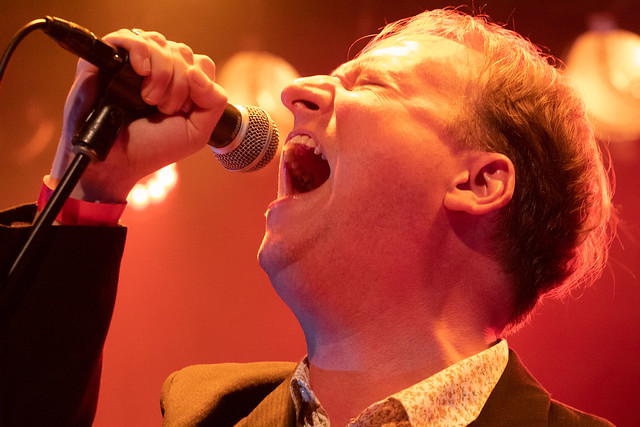
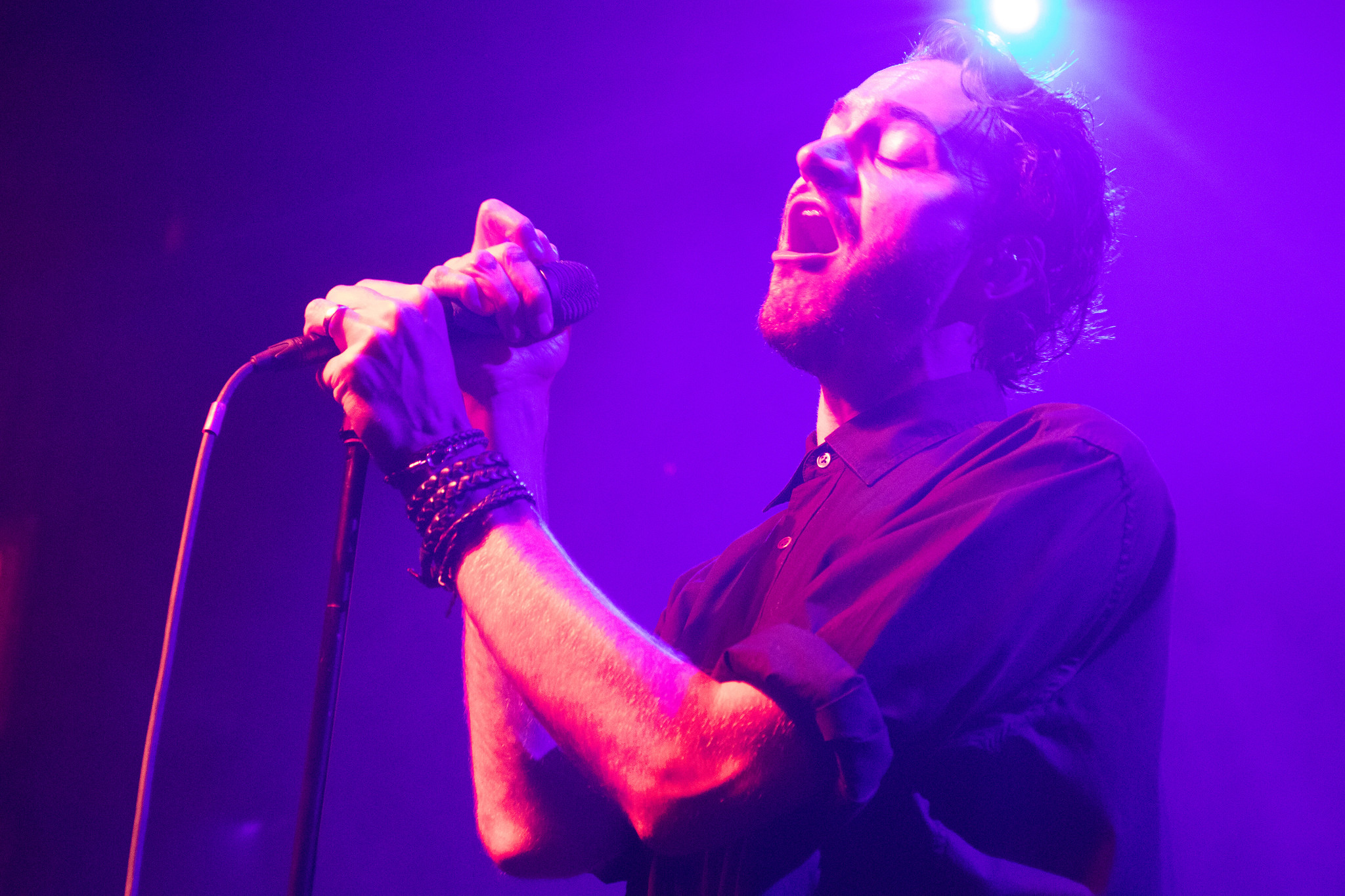
Small Planets is a Los Angeles-based post punk act, comprised of founding trio Jeff Love (guitars), Josh Spincic (bass) and Phil Drazic (drums) with Jessica Hernandez (vocals) and Ryan Silo (guitar) that can trace its origins to when its founding trio caught Slowdive play a show at The Ace Theater back in 2015. After an exhaustive two year search, the band added Jessica Hernandez and Ryan Silo to complete their lineup — and with their lineup finalized, they developed a sound that has been described as Interpol meets Joy Division and The Cure.
Last year, the band went into the studio with Joshua Mazzachi to record their recently released self-titled full-length debut, an album that finds the band writing a love letter to the classic and beloved post-punk sound. “Tonight,” their self-titled debut’s single is a perfect example of the band’s sound: centered around shimmering and atmospheric synths, an angular, a propulsive bass line, dramatic drumming, Hernandez’s ethereal yet plaintive vocals. And while indebted to 4AD Records, the aforementioned The Cure and Joy Division and others, the track is imbued with a subtly modern and loving touch.
Over the past 12-15 months or so, I’ve written quite a bit about the London-based post-punk act White Lies, and as you may recall the act, which is primarily centered around its core and founding trio — Harry McVeigh (vocals, guitar), Charles Cave (bass, vocals) and Jack Lawrence-Brown (drums) — can trace their origins to a band they started while in high school, called Fear of Flying. Although Charles Cave has publicly described Fear of Flying as a “weekend project,” and one of many bands each of the individual members were involved in at the time, Fear of Flying released two Stephen Street-produced double A-side singles released through Young and Lost Club Records.
Building upon the initial buzz surrounding them, Fear of Flying earned opening slots for nationally acclaimed acts like The Maccabees, Jamie T, and Laura Marling. Along with completing one UK tour as an opener, they also played the inaugural Underage Festival. Two weeks before the trio were to start college, they decided that they would take a second gap year and perform new material, which the trio felt didn’t suit their current project. “I felt as though i couldn’t write about anything personal, so I would make up semi-comical stories that weren’t really important to anyone, not even me,” Charles Cave reflected on that period. Fear of Flying broke up in 2007 with a MySpace status that read “Fear of Flying is DEAD . . . White Lies is alive!,” before introducing a new name that the trio felt better represented their newfound maturity — and a much darker sound.
Officially forming in October 2007, the members of the then-newly formed White Lies delayed their first live shows for five months to build up media hype. And as the story goes, a few days after their live debut, the band signed with Fiction Records, who released the band’s first two singles — “Unfinished Business” and “Death,” which quickly drew comparisons to Joy Division, Editors, The Killers and Interpol. And as a result of the attention their first two White Lies singles earned, the trio wound up touring across the UK and North America, including a headlining BBC Radio 1 Big Weekend Festival set, a slot on 2009’s NME Awards tour, as well as a number of appearances across the international festival circuit.
2009 saw the release of the act’s breakthrough, full-length debut To Lose My Life, which was released on the heels of being prominently featured in multiple “ones to watch” polls for that year, including BBC’s Sound of 2009 poll and the BRIT Critics’ Choice Award. Interestingly, the album earned them the distinction of being the first British act that year to land a nubmer one album on the British Charts — and the first album to debut at number one that year.
The band’s third album, 2013’s well-received and commercially successful, Ed Bueller-produced Big TV, an album that debuted at #4 on the UK Charts. Interestingly, the album thematically follows a couple, who leave a provincial area for a big city while touching upon the theme of equality within a romanic relationship. Album single “Getting Even” managed to land at #1 on the Polish Singles Charts.
FIVE, the London-based post-punk trio’s aptly titled with album was released earlier this year through [PIAS] Recordings, and the album manages to find the band deftly balancing an ambitious arena rock friendly sound with enormous hooks and bombast for days with intimate, singer/songwriter pop lyricism that’s earnest and comes from a deeply familiar, lived-in place. Album singles “Time to Give,” “Tokyo” “Jo” and “Believe It” all describe longtime relationships on the brink of collapse or suffering through one or both parties’ dysfunction, complete with the ambivalence, uncertainty and confusion that relationships often entail — paired with some of the biggest, anthemic hooks I’ve heard all year. The album continued a run of commercially successful albums from the band, as it landed on the Top Fifteen of the UK Charts.
White Lies has been busy touring throughout 2019 to support FIVE, including a stop at Irving Plaza earlier this year. During a hiatus from touring, the trio along with producer Andrew Wells went into the studio to record new material, including their latest single “Hurt My Heart.” Interestingly, the track sounds as though it could have been recorded during the FIVE sessions as it prominently features enormous arena rock friendly hooks, thunderous drumming, an earnest vocal performance from the band’s Harry McVeigh. and a blistering guitar solo. But unlike the material off FIVE, the new single focuses on the emotional aftermath of a breakup.
“For ten years we have stayed loyal to the album format – only sitting down to write and then record when it was time for a new complete work,” the band’s primary lyricist and bassist Charles Cave explains in press notes. “Whilst there is a lot of love about that process, it is something of an endurance exercise. We decided it was about time to see what happened if we just wrote a few things with the idea to release music disconnected from an LP; something that could sit within the same universe as Five.”
The Black Fever are an up-and-coming Toronto-based post-punk act, currently featuring Shoe (vocals, guitar), Pat Bramm (bass, back-up vocals), and Dan Purpura (drums), and the band will be releasing their latest full-length album Unarticulated Wants on June 14, 2019. Reportedly, the album’s material thematically reflects the current sociopolitical moment — political instability, growing economic disparity and the everyday dramas of love and life.
The album’s latest single is the mid-tempo hook-driven track “No Work.” Centered around shimmering guitar lines, a motor groove consisting of thumping drumming and a sinus bass line, a slick yet forceful hook paired with Shoe’s plaintive vocals, “No Work” manages to recall Turn On The Bright Lights-era Interpol; but as the band notes, the song possesses an underlying anxiety that comes from the difficulty that many people — in particular, new, college graduates and young professionals — have finding and keeping a decent job in which they could survive.
Earlier this year, I wrote about the acclaimed Los Angeles-based shoegazer act Film School, and as you may recall, the act which is currently comprised of founding member Greg Bertens (vocals, guitar) along with Jason Ruck (keys), Nyles Lannon (guitar), Justin Labo (bass) and Adam Wade (drums) can trace its origins to when Bertens founded the band as a solo project in which he worked with members of Fuck and Pavement for the recording of the band’s full-length debut, 2001’s Brilliant Career. Ruck, Lannon, Labo and Ben Montesano (drums) were all recruited to compete the band’s first permanent lineup later that year.
2003 saw the release of the Alwaysnever EP, an effort that was recorded in Lannon’s bedroom and shortly after the release of the EP, the band went through a series of lineup changes — with the first being Donny Newenhouse replacing Montesano on drums. 2006 saw the release of their self-titled sophomore album, their first through renowned indie label Beggars Banquet. They also provided the music for a series of short films by Demetri Martin, known collectively as “Clearification,” which was used for an ad campaign for Windows Vista.
The band went through another a massive lineup change that featured Lorelei Plotczyk replacing Labo on bass, Dave Dupuis replacing Lannon on guitar, and James Smith replaced Newenhouse on drums and then relocated to Los Angeles before releasing their third full-length album 2007’s Hideout, which was primarily written by Bertens and recorded with Dan Long.
The band’s fourth full-length album Fission, which found the band exploring new sonic territory was released to mixed reviews by fans and critics in 2010. The band played what was considered their last official show the following year and went on an indefinite hiatus for several years before the band’s self-titled era lineup reunited for a one-off show at San Francisco‘s Bottom of the Hillto celebrate Newenhouse’s 40th birthday that focused on early material. Interestingly, the reunion eventually resulted in 2016’s June EP, which found the reunited band returning to their signature spacious sound.
Film School’s fifth, full-length album, last year’s Bright to Deathwas written and recorded as a labor of love, with tempered expectations, since it was the band’s first album in eight years. Recorded over an eight day period in November 2018 on the outskirts of Joshua Tree, CA, the album’s title is derived from text on a piece of art that Bertens had seen as part of an exhibit by Chinese students on the topic of global warming. As they were recording in the sun-blistered environs of Joshua Tree, the phrase “Bright to death” popped into Bertens’ head and it stuck.
Featuring four members of the band’s original lineup and Shudder to Think and Jawbox’s Adam Wade contributing on several songs, the album’s sessions came about almost by accident. As the story goes, Bertens was at a Fourth of July get-together and was grumbling to Justin Labo about a recent bout with writer’s block. In the ensuing months after recording the June EP, work and family responsibilities had seemingly zapped Bertens of his creativity. At the time Bertens joked “The only way, I could write is if I were out in the desert for a week.” A few hours later, Bertens received a phone call from Labo: Labo had the go-ahead from his wife and kids to go to the desert to write and record. Greg’s offhanded remark had awakened “a pent-up lust to make music the way we wanted to,” in Justin’s words. It wasn’t long before Nyles Lannon (guitar/backing vocals, also a dad) and Jason Ruck (synths) were on board, too.
As for the sessions themselves — after Bertens returned from his dawn run, the members of the band would hunker down in a small outbuilding that functioned as a simple studio. “It was perfect,” the band’s Labo said “We set up our laptops and fashioned a makeshift DIY recording setup. It brought us back to [2003] when we recorded the Alwaysnever EP in Nyles’s bedroom.” They would spend all day and most of the night working, taking breaks only to eat and to catch a few hours of sleep. “At some points we had two recording setups going simultaneously,” Labo recalls. “Greg and Nyles might be working on an arrangement or vocals, while me and Jason would be tracking keyboards and bass for another idea. We recorded for eight days straight, right up until the very last moment.”
“Influencer,” the first single off the band’s forthcoming EP slated for release this summer was centered around four-on-the-floor drumming, buzzing and arpeggiated synths, shimmering, pedal effected guitars and anthemic hook — but delivered with an ambivalent and ironic detachment. “Go (But Not Too Far),” the forthcoming EP’s brooding, Turn on the Bright Lights-era Interpol-like latest single — and while being an atmospheric track centered around shimmering, pedal effected guitars, a motorik groove and a sinuous hook, the song possesses a bittersweet and wistful air.
Over the past few months, I’ve written a bit about the renowned, Oxford, UK-based alt rock/shoegazer act Swervedriver, and as you may recall, the act which is primarily centered around their founding duo Adam Franklin (vocals, guitar) and Jimmy Hartridge (guitar, vocals) along with Mikey Jones (drums, vibes) and revolving bassists Mick Quinn and Ben Ellis can trace their origins back to 1989. During their initial run from their founding until 1998, the band released four full-length albums — 1991’s Raise, 1993’s Mezcal Head, 1995’s Ejector Seat Reservation and 1998’s 99th Dream — while going through a number of lineup changes, management changes and different labels.
By 1993, Franklin and Hartridge teamed up with Jef Hindmarsh (drums) and Steve George (bass) and with that lineup, they developed a reputation for a heavier rock sound than their shoegazer counterparts — but over their last five years together, their sound slowly evolved to include elements of psych rock, pop and indie rock. And although Franklin, Hartdige, Hindmarsh and George were the longest tenured lineup in the band’s history, they went on a lengthy hiatus in 1998, in which the individual members went on to pursue a variety of professional and creative pursuits. Franklin embarked on a solo career that would rival Swervedriver’s creative output, including a stint fronting the experimental electro pop/electro folk act Toshack Highway, whose releases ranged from sextet ensemble works to four-track bedroom recordings and then with the more traditionally guitar rock-driven Adam Franklin & Bolts of Melody. Hartridge founded a distribution company. Hindmarsh founded Badearth Management, a music management company that eventually managed Scottish rock act Terra Diablo and others.
In early 2005, Franklin, Hartrdige, Hindmarsh and George reconvened to collaborate with Castle Music to choose songs on what would be a two disc anthology Juggernaut Rides ’89-’98, a compilation that included 33 tracks remastered from the originals DATs. Half of those tracks were non-album tracks, along with four previously unreleased tracks — including the last recordings the band worked on in 1998, “Just Sometimes” and “Neon Lights Glow.” Released to critical applause, Juggernaut Rides ’89 – ’98 helped build up growing interest in the shoegazer pioneers’ work.
2006 was a rather busy year for the members of the band’s longest tenured lineup. Franklin began collaborating with Interpol‘s Sam Fogarino in Magnetic Morning. Hindmarsh went on to publish Rider, which chronicled his experiences and observations on the road touring with the band between 1992 and 1998. Somewhat inspired by the wildly successful 2004 reunion tour of the Pixies, the band reunited for a world tour in 2008 that garnered the attention and acclaim that largely evaded them a decade earlier.
2015’s I Wasn’t Born to Lose You was the first album of new, original material from the band in 17 years, and although they’ve managed to be consistent in their second run, they’ve gone through a series of lineup changes between the 2008 reunion tour and the release of I Wasn’t Born to Lose You.
Now, as you may recall, the band’s second reunion-era album and their sixth altogether, Future Ruins was released earlier this year through Dangerbird Records. Future Ruins’ predecessor, was written and recorded immediately after an Australian tour and inspired by the results, the members of the pioneering shoegazer act decided to repeat the process after a lengthy Stateside tour in which they played Raise and Mezcal Head in their entirety. “That’s a good way to record,” Franklin says in press notes, “because you’ve literally just seen the whites of the audience’s eyes and you’re thinking, ‘If that audience from last night were here now…’ You can’t get too mellow. We came home with 30 different songs.” 10 more days of vocals and overdubs at Brighton UK‘s Seaside Studios with Grammy Award-winning engineer TJ Doherty quickly followed.
The material on Future Ruins finds the band retaining the escapist vibes that they’ve long been known for — but while generally being inspired by the uneasy tension and anxiety of our ongoing sociopolitical moment. Interestingly, the album’s second single “Drone Lover” actually predates the I Wasn’t Born recording sessions. As the band’s Adam Franklin explained in press notes, at the time, ““I have no recollection of where this tune came from. It’s a song that’s been knocking around for a few years, but for some reason had never been presented to anyone until we were in the studio this time and I clicked play on the demo while searching for something else. TJ and Mikey both went ‘what’s this?’ and then ‘so why aren’t we recording it?’ – and so we recorded it. The lyric mentions love but it’s really about war – remote war and killing from a distance whilst chomping on last night’s leftover pizza or something.” The album’s third single, was the shimmering and wistful “The Lonely Crowd Fades In The Air.” As Franklin admits, the band was thinking of The Clash, “even though it doesn’t sound anything like them, but it’s like a punch on the nose from a velvet glove.” Oddly, as I have a day left of my 30s, the song seems to hit me in a personal way, as the song’s narrator thinks about all the directions his life may have taken, if he made different decisions at key points in his life.
The members of Swervedriver are currently on a co-headlining tour with Failure that includes a Friday night stop at Warsaw. You can check out the remaining tour dates below — but I thought I should talk about the album’s first single, album opener “Mary Winter.” Arguably, the darkest single of the three they’ve released, the song is centered around fuzzy and jangling power chords, thunderous drumming and an anthemic hook — and despite the fact that the song sounds as though it could have been released in 1994, the song evokes an uneasy sense of foreboding while lyrically the song sounds indebted to David Bowie’s “Space Oddity,” as the song’s narrator is a space traveler, hurtling away from the world. Whether the narrator is escaping willfully or not, is left for us to decide. In the meantime, everything is fucked up — and while it may seem hopeless, we can’t just escape the planet. So maybe we should start asking ourselves, “What can we do to make it right?” Fittingly, the video employs the use of old space imagery, helping to emphasize a sense of weightlessness and helplessness.
Over the past handful of years, I’ve written quite a bit about the Canadian post-punk act and JOVM mainstays Preoccupations. And as you may recall, the band’s third full-length album New Material was released last year through Jagjaguwar Records, and the album further cements the band’s growing reputation or crafting dark and moody post-punk that touches upon themes of anxiety, uncertainty, creation, destruction and futility while being “an ode to depression. To depression and self-sabotage, and looking inward at yourself with extreme hatred,” the band’s Matt Flegel explained in press notes.
Much like their sophomore album, the band met without having much written or demoed beforehand — and according to the members of the band, it was arguably one of the most collaborative writing sessions they ever had as a band, with the sessions being extremely architectural in nature, as some ideas were (proverbially speaking) being built up while others were torn down to the support beams. Initially they didn’t know what the songs were about or where they were going with them, they had resolved to let the material show and not explicitly not tell; however, the writing and recording sessions reportedly led to a reckoning for the band’s Flegel. “Finishing ‘Espionage’ was when I realized. I looked at the rest of the lyrics and realized the magnitude of what was wrong,” says Flegel. In fact, the murky and angular Manchester/Joy Division-like first single “Espionage,” while being among the most danceable songs they’ve written and released, focuses on a narrator, who has finally become aware of a disturbing penchant for self-sabotage in every aspect of his life. “Antidote,” New Material‘s second single was centered around propulsive, industrial clang and clatter meant to convey a sweaty anxiety; however, the song is actually about how humans forget that they’re walking, talking, shitting animals — animals that have an infinite amount of knowledge within their fingertips but still manage to repeatedly making terrible choices. “Disarray,” the album’s third single was meditative and slow-burning single featuring shimmering guitar chords, an angular and propulsive bass line, organic drumming and boom bap-like drum machine work during the song’s bridge. And while superficially nodding at Turn On the Bright Lights-era Interpol, the song captures something much darker and uncertain — as it was centered around someone, who from their perspective, views everything they’ve ever known to be a lie. The album’s fourth single “Decompose” was an angular and propulsive track that featured twinkling synths, buzzing power chords and an eerie sense of melodicism that underlies the song’s danceable vibe.
Album closer “Compliance” is a decided and stark sonic departure for the band as it’s a climatic wall of industrial clang, clatter and other noise — but two chiming tones peak up and rise upward, giving the instrumental track a yearning nature. Directed by Nicholas Brown and Evan Henderson, the recently released video for “Compliance” is set in a post-apocalyptic world, featuring an enigmatic forest spirit named “Mariah.” As the band explains in press notes, “Mariah has awakened from eons of slumber to a world that has long been abandoned by humans and heavily mutated by their waste and consumption. As Mariah struggles to make sense of this new world, she grieves for the one she has lost forever. The Mariah creature was painstakingly designed and constructed by Brown, portrayed by Henderson, and captured by the haunting and beautiful cinematography of Adam Stewart. Compliance brings a close to this chapter of the band as we look towards the future and marvel at the new heights their [sic] music will take.”
Primarily centered around founding and core members Adam Franklin (vocals, guitar) and Jimmy Hartridge (guitar, vocals) and currently featuring Mikey Jones (drums, vibes) and revolving bassists Mick Quinn and Ben Ellis, the renowned Oxford, UK-based alt rock/shoegazer act Swervedriver formed back in 1989. And during their initial run between 1989 and 1998, the band released four full-length albums — 1991’s Raise, 1993’s Mezcal Head, 1995’s Ejector Seat Reservation and 1998’s 99th Dream — while going through a number of lineup changes, management changes and different labels.
Interestingly by 1993, the band’s lineup settled to include Franklin, Hartridge, Jez Hindmarsh (drums) and Steve George (bass), and with that lineup they developed a reputation for having a much heavier sound than their shoegazer contemporaries — although over the last five years of the band’s initial run, their sound eventually evolved to include elements of psychedelia, pop and indie rock.
The members of Swervedriver’s longest tenured lineup went on a lengthy hiatus in 1998 in which the individual members went on to pursue a variety of professional and creative pursuits. Franklin embarked on a solo career that would rival Swervedriver’s creative output, first fronting he experimental electro pop/electro folk act Toshack Highway, whose releases ranged from sextet ensemble works to four-track bedroom recordings and then with the more traditionally guitar rock-driven Adam Franklin & Bolts of Melody. Hartridge founded a distribution company. Hindmarsh founded Badearth Management, eventually managing Scottish rock act Terra Diablo and others. Interestingly, in early 2005, Franklin, Hartridge, Hindmarsh and George reconvened to collaborate with Castle Music to choose songs on what would be a two disc anthology Juggernaut Rides ’89-’98, which featured 33 tracks remastered from the original DATs. Half of those tracks were non-album tracks along with four previously unreleased tracks — Shake Appeal’s “Son of Mustang Ford” demo and the remainder of Swervedriver’s recordings during 1998, which included “Just Sometimes” and “Neon Lights Glow.” The compilation was critically applauded and in some way, it helped to build up interest in the shoegaze pioneers’ work.
2006 was a busy year for the members of Swervedriver — Franklin began collaborating with Interpol‘s Sam Fogarino in Magnetic Morning. Hindmarsh went on to publish Rider, which chronicled his experiences and observations on the road touring with the band between 1992 and 1998. Somewhat inspired by the successful 2004 reunion of the Pixies, Franklin, Hartridge and Hindmarsh went on an international reunion tour in 2008, garnering the attention and acclaim that evaded them a decade earlier. 2015’s I Wasn’t Born To Lose You was the first album of original material from the band in 17 years — although they managed to remain consistent, as they went through another series of lineup changes between the reunion tour and Born.
Swervedriver’s sixth full-length album and second of their reunion, Future Ruins is slated for a January 25, 2019 release through Dangerbird Records. Having written and recorded I Wasn’t Born To Lose You immediately after their
Australian tour, the band decided to repeat the process after a lengthy Stateside tour, playing Raise and Mezcal Head in their entirety. “That’s a good way to record,” Franklin says in press notes, “because you’ve literally just seen the whites of the audience’s eyes and you’re thinking, ‘If that audience from last night were here now…’ You can’t get too mellow. We came home with 30 different songs.” 10 more days of vocals and overdubs at Brighton UK‘s Seaside Studios with Grammy Award-winning engineer TJ Doherty quickly followed.
The album’s 10 tracks were mixed earlier this year, as the band was touring across Europe. And while the material finds the band retaining the escapist vibes that they’ve been long known for, the album’s material is centered around an uneasy tension, inspired by our current sociopolitical moment. Now, as you may recall, Future Ruins second single “Drone Lover,” actually predated the Future Ruins sessions. Although interestingly enough, as the band’s Adam Franklin explained in press notes, “I have no recollection of where this tune came from. It’s a song that’s been knocking around for a few years, but for some reason had never been presented to anyone until we were in the studio this time and I clicked play on the demo while searching for something else. TJ and Mikey both went “what’s this?” and then “so why aren’t we recording it?” – and so we recorded it. The lyric mentions love but it’s really about war – remote war and killing from a distance whilst chomping on last night’s leftover pizza or something.” Obviously, it’s an incisive commentary on the depersonalized nature of 21st Century techno-warfare — including some hellish and fucked up imagery of bombs falling from the air, and neighborhoods in flames; but centered around buzzing power chords, a steady and propulsive backbeat and an infectious hook that brings an updated take on the beloved 120Minutes alt rock sound.
Future Ruins‘ latest single is the shimmering “The Lonely Crowd Fades In The Air,” a track that Franklin admits found the band thinking of The Clash, “even though it doesn’t sound anything like them, but it’s like a punch on the nose from a velvet glove.” Franklin goes on to say that “the title came from a misheard Supremes lyric and the words came out of that.” Centered around shimmering and fuzzy power chords, the track may arguably be the most nostalgic and wistful track on the album, with the song’s narrator thinking about all the directions his life may have taken, if he made a different decision at some key point in his life. Continuing the album’s overall vibe and feel, there are references to weapons — of one “choosing their weapons wisely” — and a begrudging acceptance of the world being fucked up and broken, it’s a heartbroken sigh.
Dedicated to Buzzcocks‘ Pete Shelley, the recently released video is a mix of footage shot on glitchy VHS camera, and archival footage, which emphasizes the heartache at the core of the song.
Primarily centered around founding and core members Adam Franklin (vocals, guitar) and Jimmy Hartridge (guitar, vocals) and currently featuring Mikey Jones (drums, vibes) and revolving bassists Mick Quinn and Ben Ellis, the renowned Oxford, UK-based alt rock/shoegazer act Swervedriver formed back in 1989. And during their initial run between 1989 and 1998, the band released four full-length albums — 1991’s Raise, 1993’s Mezcal Head, 1995’s Ejector Seat Reservation and 1998’s 99th Dream — while going through a number of lineup changes, management changes and different labels. Interestingly by 1993, the band’s lineup had settled to include Franklin, Hartridge, Jez Hindmarsh (drums) and Steve George (bass), and with that lineup they developed a reputation for a heavier rock sound than their shoegazer contemporaries; but over the last five years of their initial run, their sound evolved to include elements of psychedelia, pop and indie rock.
The members of Swervedriver’s longest tenured lineup went on a lengthy hiatus in 1998 in which the individual members went on to pursue a variety of professional and creative pursuits. Franklin embarked on a solo career that would rival Swervedriver’s creative output, first fronting he experimental electro pop/electro folk act Toshack Highway, whose releases ranged from sextet ensemble works to four-track bedroom recordings and then with the more traditionally guitar rock-driven Adam Franklin & Bolts of Melody. Hartridge founded a distribution company. Hindmarsh founded Badearth Management, eventually managing Scottish rock act Terra Diablo and others. Interestingly, in early 2005, Franklin, Hartridge, Hindmarsh and George reconvened to collaborate with Castle Music to choose songs on what would be a two disc anthology Juggernaut Rides ’89-’98, which featured 33 tracks remastered from the original DATs. Half of those tracks were non-album tracks along with four previously unreleased tracks — Shake Appeal’s “Son of Mustang Ford: demo, the remainder of Swervedriver’s recordings during 1998, which included “Just Sometimes” and “Neon Lights Glow.” The compilation was critically applauded and in some way, it helped to build up interest in the shoegaze pioneers’ work.
2006 was a busy year for the members of Swervedriver — Franklin began collaborating with Interpol’s Sam Fogarino in Magnetic Morning. Hindmarsh went on to publish Rider, which chronicled his experiences and observations on the road touring with the band between 1992 and 1998. Somewhat inspired by the successful 2004 reunion of the Pixies, Franklin, Hartridge and Hindmarsh went on an international reunion tour in 2008, garnering the attention and acclaim that evaded them a decade earlier. 2015’s I Wasn’t Born To Lose You was the first album of original material from the band in 17 years — although they managed to remain consistent, as they went through another series of lineup changes between the reunion tour and Born.
Swervedriver’s sixth full-length album and second of their reunion, Future Ruins is slated for a January 25, 2019 release through Dangerbird Records. Having written and recorded I Wasn’t Born To Lose You immediately after Australian tour, the band decided to repeat the process after a lengthy Stateside tour, playing Raise and Mezcal Head in their entirety. “That’s a good way to record,” Franklin says in press notes, “because you’ve literally just seen the whites of the audience’s eyes and you’re thinking, ‘If that audience from last night were here now…’ You can’t get too mellow. We came home with 30 different songs.” 10 more days of vocals and overdubs at Brighton UK’s Seaside Studios with Grammy Award-winning engineer TJ Doherty quickly followed.
The album’s 10 tracks were mixed earlier this year, as the band was touring across Europe. And while the material finds the band retaining the escapist vibes that they’ve been long known for, the album’s material is centered around an uneasy tension, inspired by our current sociopolitical moment. However, Future Ruins’ second and latest single “Drone Lover” actually predates the Born. As the band’s Adam Franklin explains in press notes. “I have no recollection of where this tune came from. It’s a song that’s been knocking around for a few years, but for some reason had never been presented to anyone until we were in the studio this time and I clicked play on the demo while searching for something else. TJ and Mikey both went “what’s this?” and then “so why aren’t we recording it?” – and so we recorded it. The lyric mentions love but it’s really about war – remote war and killing from a distance whilst chomping on last night’s leftover pizza or something.” Obviously, it’s an incisive commentary on the depersonalized nature of 21st Century techno-warfare — including some hellish and fucked up imagery of bombs falling from the air, and neighborhoods in flames; but centered around buzzing power chords, a steady and propulsive backbeat and an infectious hook that brings an updated take on the beloved 120 Minutes alt rock sound.
The recently released video for “Drone Lover” is an appropriately psychedelic mashup of Ralph Bakshi’s 1973 film Heavy Traffic, Polaroids by Charlie Miller, grainy VHS footage of the band, footage of bombing raids and other detritus. It evokes, the very end of the world as we know it, and no one really giving a fuck because we’re busying looking at porn on our phones.
Now, over the past handful of years of this site’s eight-plus year history, I’ve written quite a bit about the Canadian post-punk act and JOVM mainstays Preoccupations. And as you may recall, the band which is comprised of Matt Flegel (bass, vocals), Mike Wallace (drums), Scott Munro (guitar) and Daniel Christiansen (guitar) initially formed under the name Viet Cong — and by the time their 2014 self-titled full-length debut was released, the members of the band found themselves in the middle of a firestorm centered around cultural appropriation and the usage of terms, names and symbols associated with historical groups and actions that evoke the horrors of war, despotism, authoritarianism, fascism, genocide and the like. Ultimately, the band decided to change their name before the release of their sophomore album — and to re-issue their self titled debut with another name.
Released earlier this year through Jagjaguwar Records, Preoccpuations’ third album New Material further cements the bands growing reputation for crafting dark and moody post-punk that touches upon themes of anxiety, uncertainty, creation, destruction and futility while being “an ode to depression. To depression and self-sabotage, and looking inward at yourself with extreme hatred,” the band’s Matt Flegel said in press notes. Much like their sophomore album, the band met without having much written or demoed beforehand — and according to the members of the band, it was arguably one of the most collaborative writing sessions they ever had as a band, with the sessions being extremely architectural in nature, with some ideas (proverbially speaking) being built up while others were torn down to the support beams.
Initially they didn’t know what the songs were about or where they were going with them, they had resolved to let the material show and not explicitly not tell; however, the writing and recording sessions reportedly led to a reckoning for the band’s Flegel. “Finishing ‘Espionage’ was when I realized. I looked at the rest of the lyrics and realized the magnitude of what was wrong,” says Flegel. In fact, the murky and angular Manchester/Joy Division-like first single “Espionage,” while being among the most danceable songs they’ve written and released, focuses on a narrator, who has finally become aware of a disturbing penchant for self-sabotage in every aspect of his life. “Antidote,” New Material‘s second single was centered around propulsive, industrial clang and clatter meant to convey a sweaty anxiety; however, the song is actually about how humans forget that they’re walking, talking, shitting animals — animals that have an infinite amount of knowledge within their fingertips but still manage to repeatedly make the worst possibly choices. “Disarray,” the album’s third single was meditative and slow-burning single featuring shimmering guitar chords, an angular and propulsive bass line, organic drumming and boom bap-like drum machine work during the song’s bridge. And while superficially nodding at Turn On the Bright Lights-era Interpol, the song captures something much darker and uncertain — as it was centered around someone, who from their perspective, views everything they’ve ever known to be a lie. The album’s fourth single “Decompose” was an angular and propulsive track that featured twinkling synths, buzzing power chords and an eerie sense of melodicism that underlies the song’s danceable vibe.
The JOVM mainstays will close out a busy 2018 with a co-headlining tour with long-time friends Protomartyr that will include a November 28, 2018 stop at Warsaw — and you can check out the rest of the tour dates below. And to celebrate the announcement of the tour, the bands have released a split 7 inch in which each band covers the other. The split 7 inch’s latest track is Preoccupations subtle reworking of Protomartyr‘s “Pontiac 87,” that features a slightly sped up tempo and a lush, studio sheen.
Tour Dates:
Fri. Nov. 23 – Toronto, ON @ Lee’s Palace *
Sat. Nov. 24 – Ottawa, ON @ 27 Club *
Mon. Nov. 26 – Boston, MA @ Brighton Music Hall *
Wed. Nov. 28 – Brooklyn, NY @ Warsaw *
Thu. Nov. 29 – Washington, DC @ Union Stage *
Fri. Nov. 30 – Philadelphia, PA @ The Foundry *
Sat. Dec. 01 – Columbus, OH @ The Basement *
Mon. Dec. 03 – Buffalo, NY @ Mohawk Place *
Tue. Dec. 04 – Ann Arbor, MI @ Blind Pig *
Thu. Dec. 06 – Chicago, IL @ Thalia Hall *
Fri. Dec. 07 – Omaha, NE @ Waiting Room *
Sat. Dec. 08 – Kansas City, MO @ Record Bar *
Mon. Dec. 10 – Denver, CO @ Bluebird *
Wed. Dec. 12 – Salt Lake City, UT @ Metro Music Hall *
Thu. Dec. 13 – Boise, ID @ Olympic *
Fri. Dec. 14 – Portland, OR @ Mississippi Studios *
Over the better part of this year, I’ve written a bit about the Los Angeles, CA-based trio Moaning, and as you may recall, the band which is comprised of Sean Solomon, Pascal Stevenson and Andrew MacKelvie have spent the past few years crafting a moody and angular sound that draws from shoegaze, slacker rock and post-punk — and as a result, the Southern Californian trio has received attention both nationally and internationally from the likes of The Fader, The Guardian, DIY Magazine, Stereogum, and others.
Moaning’s self-titled, full-length debut was released earlier this year through Sub Pop Records, and the album’s fourth single “Artificial” is centered around angular guitar and bass chords, thundering drumming and an anthemic hook — and while recalling Joy Division, Interpol, Preoccupations and others; but just under the surface, the song bristles with a tense an uneasy self-awareness of the narrator’s own artifice, superficiality and ugliness, as well as that of the larger world he lives in.
Interestingly, if you’ve been frequenting this site over the 18 months or so, you’d also recall that Aarhus, Denmark-based recording studio Tapetown Studios and Sound of Aarhus have been inviting national. regional and even internationally recognized touring bands to come into their studios for a live session, which they film and release through the interwebs. And during that time, they’ve invited British indie rockers Ulrika Spacek, Gothenburg, Sweden-based trio Pale Honey, the Bay Area-based JOVM mainstay Tim Cohen and his primary project The Fresh & Onlys, renowned British psych rockers The Telescopes, Malmo, Sweden-based punk rock act Sista Bossen, Copenhagen, Denmark-based indie rock quartet ONBC and a growing list of others. The members of Moaning had stopped by Tapetown Studios during their second European Union tour, and performed an urgent rendition of the attention-grabbing “Artificial” as part of the Tapetown Studio sessions. Check it.
Child of Night is a rather mysterious Columbus, OH-based post-punk act and over the course of two EPs — last year’s Breathless EP and Neither of These Alone Is Enough, the members of the band have quickly developed a reputation for crafting murky, lo-fi synth based post punk that sounds as though it were inspired by Joy Division, Interpol, The Cure and others.
What Remains, Child of Night’s forthcoming EP is slated for a late August release through Altarpiece Records and the EP’s latest single “Sirens” continues on a similar vein as their previously released material — murky, synth based post punk with decidedly goth leanings; however, there’s a subtle refinement of their sound, as there’s a focus on crafting a steady, dance floor friendly groove centered around a propulsive bass line, and four-on-the-floor drumming. It’s as though Antics-era Interpol somehow went a smidge disco and a smudge in the direction of John Carpenter soundtracks.
The recently released video for “Sirens” fittingly looks as though it were filmed on grainy and completely fucked up VHS tape, which in some way evokes lingering ghosts and menacing presences just out of the frame.