Tag: James Brown

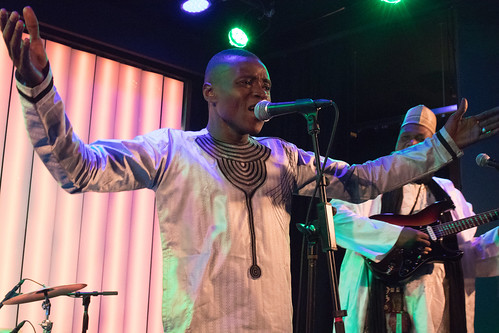
New Video: Introducing the Global-Spanning Sounds of Mayotte’s M’Toro Chamou

Located in the Comoros archipelago off the coast of Southeast Africa, between Northwestern Mozambique and Northeastern Mozambique, the Department of Mayotte is a French overseas region, which consists of two islands — the main island of Grande-Teerre (or Maore), a smaller island of Petite-Terre (Pamanzi) and several islets around the two. 

Initially populated by people from nearby East Africa, Arabs, who brought Islam came later on — and by 1500, a sultanate was established. In the 19th century, Mayotte was conquered by Andriantsoly, former king of Ibonia (which was in modern day Madagascar), and later by the neighboring islands of Moheli and Anjuoan before being purchased by France in 1841.  

With a decisive referendum on the independence  of the Comoros region in 1974, the people of Mayotte voted to politically remain a part of France. Another decisive referendum vote in 2009 led to Mayotte becoming a French Department on March 31, 2011 — and an outermost region of the European Union on January 1. 2014. Although the islands are a politically recognized French territory, the majority of its inhabitants speak Shiamore, a Sabaki language closely related to the languages spoken in the neighboring Comoros Islands, not French. Kibushi, a Malagasy language, which features two dialects — Kibushi Kisakalava and Kibushi Kiantalaotra is also spoken by a significant portion of the population. Interestingly, according to a recent census report, a majority of the population aged 14 and older say that they can speak French — with varying levels of fluency. 

As a new department, the island region currently faces some enormous problems: as of this year, its annual population growth is at 3.8%. Half its population is less than 17 years old. Unemployment is at 35%. 84% of its inhabitants live below the officially recognized poverty line. And as a result of an influx of illegal immigration from its neighbors, 48% of its population are foreign nationals. As you can imagine, much like everywhere else on the planet, things socially and politically on Mayotte are rather turbulent. 

Over the past few years, the Mayotte-born singer/songwriter and guitarist M’Toro Chamou has created a unique sound and musical style that he’s dubbed Afro M’Godro Rock, which meshes the traditional M’Godro, Shigoma and Chengue rhythms of Mayotte with more Western sounds — primarily rock and blues. In fact, he’s deeply influenced by BB King, John Lee Hooker, Nina Simone, Ray Charles and James Brown, among a host of others. Thematically, his work exhorts people to come together as one rather than being torn apart by politics. Interestingly, his most recent album Sika Mila, which translates into English as “Preserve Your Culture” thematically focuses on the rapidly charging Mahoran culture while spreading messages of hope and unity to a fractious people. 

Chamou’s latest single “M’Godro Rebel” is a breezy and anthemic song centered around shimmering acoustic guitar, brief bursts of emphatic electric guitars, propulsive polyrhythm and call and response vocals. And while deeply rooted in traditional sounds, the song finds Chamou’s sound and approach nodding at Bob Marley-like reggae both thematically and sonically. As Chamou explains in press notes, the song is about the discrimination and oppression that limits the people of Mayotte and Black people everywhere. 

Directed by Lenz, the gorgeous shot and recently released video for “M’Godro Rebel” finds both the director and the Mayotte-born singer/songwriter purposefully highlighting the beauty, wealth and strength of African people: the video begins with Chamou and a cast of beautiful black people of all shades wearing 18th Century Rococo — or late baroque — style clothing, in opulent European-inspired settings that makes the first portion of the video seem indebted to the work of Kehinde Wiley. In the West, we rarely see Africa or Africans in such a proud, powerful fashion, let alone other Black people across the Diaspora — and it is defiant, boldly Black as fuck. During the video’s second half, we see the same cast wearing the vividly colored designs of South African designer Laduma Ngxokolo. The video says that Africans have a proud, rich history and an important place in the modern world. Simply put, everything about the video is black excellence.  
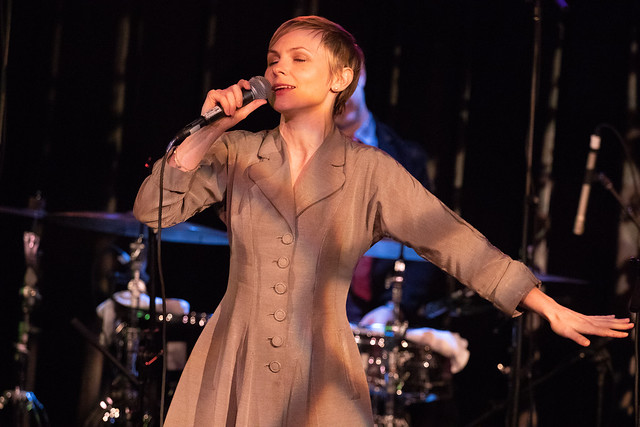
 

Professionally known as Kaleta, Leon Ligan-Majek is a Benin-born, Brooklyn-based singer/songwriter, multi-instrumentalist, bandleader and producer, who leads the up-and-coming local, Afro-funk act Kaleta and Super Yamba Band. Although the project is relatively new to the scene, Ligan-Majek can trace his music career back to Lagos, Nigeria, where Ligan-Majek spent his teenaged years playing in local churches. Eventually, the Benin-born, Brooklyn-based signer/songwriter, multi-instrumentalist, bandleader and producer caught the attention of renowned juju pioneer King Sunny Ade. “I was at Church when I heard King Sunny Ade sound checking one block away. By the time church service was over Sunny Ade’s gig was in full gear,” Ligan-Majek says of his first encounter with King Sunny Ade. “I infiltrated the gathering, snuck into the front row to watch the show. At the strike of the last note, right before Sunny Ade disappeared I went between him and his body guard and told him point blank my desire to play guitar for his band. He invited me to his house. I went the next day with a cassette containing songs and guitar riffs I wrote with him in mind.”

Kaleta went on to spend several years in King Sunny Ade’s backing band, recording four albums with the Juju pioneer before leaving the band to join Afrobeat pioneer Fela Kuti and Egypt 80. Unsurprisingly, the Benin-born, Brooklyn-based singer/songwriter, multi-instrumentalist and producer learned how to fuse elements from an electric array of West African genres and styles — including highlife, juju, Afrobeat, Afro-funk and Afro-dance.

In 1991, Ligan-Majek relocated from Lagos to New York after Fela Kuti and Egypt 80  completed the North American leg of their world tour. And almost as soon as he set foot in New York, he wound up being the co-founder of two Afrobeat ensembles, Akoya Afrobeat and Zozo Afrobeat — and as a member those acts, he had shared stages with the likes of Jimmy Cliff, Yellowman, and Lauryn Hill. “Lauryn Hill was rehearsing in the same music complex when she heard my music from another room,” Kaleta recalls. “She stormed into Zozo Afrobeat’s rehearsal, and two weeks later, I was on tour with her playing guitar and traditional Beninese percussion. . . we performed about 45 dates all over the world.”

While Ligan-Majek’s chops suited him well to back some of biggest names in music, he had an irresistible drive to create his own unique work. He searched for a band of his own but he knew that he needed a perfect combination  — an irrefutable explosion of creative energy that came from a dedicated, like-minded group of musicians. Interestingly, Ligan-Majek credits his ambition and his vision to his older brother’s massive influence. Ligan-Ozavino Pascal was an obsessive music listener, with a passion for funk and soul. And as the story goes, Ligan-Ozavino Pascal occasionally weaponized his record collection to teach his younger brother discipline. When Kaleta misbehaved, his older brother would lock him in his room with a pile of records. The price of his freedom? A careful listen. “I had to submit to his huge love for music,” says Kaleta. “He introduced me to James Brown, Otis Redding, and other American, French and Cuban music.”

The Brooklyn-based Super Yamba Band, comprised of Daniel Yount (drums), Evan Frierson (percussion), Walter Fancourt (sax), Sean Smith (trumpet) have long been students and devoted fans of vintage West African, psychedelic Afro-funk. When they met Kaleta, who sang and played guitar over roots-rhythms while bbringing his infectious style to the project, things clicked. “I loved the way they stick together as a team,” says Kaleta. “Their exuberance. Their love for African music, notably Benin funk… I found out they were listening to my idols, too.” Between the members of the project, it became obvious that they stumbled upon something rare, exciting and in need of further cultivation and exploration. The members of Super Yamba Band had the skill and dedication that Kaleta had long sought for his solo work — and in turn, Kaleta brought the heard-earned wisdom from four decades as a professional musician that he was eager to share with bandmates. 

Since their formation, the band has spent the past couple of years honing their material and playing live shows across town and elsewhere, including an opening set last year for Niger-based Afro funk/Afro pop act Tal National and an appearance at last year’s Barbes and Electric Cowbell Records Secret Planet APAP Showcase. Interestingly, the band’s “Mr. Diva” was remastered and re-released earlier this year — and as the story goes, the band was so encouraged by the success at recreating their live sound in the studio, that they set out to record what would eventually become their forthcoming full-length debut Medaho.


Slated for a September 6, 2019 release through Ubiquity Records, Kaleta and Super Yamba Band’s full-length debut derives its name from the Goun and Fon word for “big brother,” “elder,””teacher” — and the album is dedicated to the memory of Kaleta’s brother Ligan-Ozavino, who died earlier this year. Sonically, the material finds the band unabashedly paying homage to its massive influences, including James Brown, Fela Kuti, Orchestre Poly-Rythmo, El Rego, The Funkees, among others — but interpreting their work, learning from it, deconstructing it when necessary, amplifying it, defying it and pushing it and the sound into the future.

Mèdaho‘s first single is album title track “Mèdaho.” Centered around a looping, wah-wah and other pedal effected guitar lines, a sinuous groove, propulsive percussion and Kaleta’s grunts and howls, the song manages to recall He Miss Road/Expensive Shit-era Fela Kuti, The Payback-era James Brown, as it possesses a similar grit and forcefulness — but unlike the period specific work that has influenced the track features a lysergic haze.

New Audio: Carlton Jumel Smith Releases a Swooning, Classic Soul-Inspired Declaration of Devotion

Last month, I wrote about Carlton Jumel Smith, a New York-based R&B/soul singer/songwriter, who emerged into the international soul scene with the release of his debut single “I Can’t Love You Anymore,” a 70s soul and R&B-inspired track that found him collaborating with the renowned Timmion Records production and house band team Cold Diamond & Mink. Building upon a rapidly growing profile within soul circles, Smith, who cites James Brown, Al Green, The Temptations, Sly Stone, Sam Cooke, Curtis Mayfield, Bobby Womack and Tom Waits as influences on his own work will be releasing his full-length debut 1634 Lexington Avenue through Timmion Records and Daptone Records.

Slated for release later this week, 1634 Lexington Avenue reportedly finds Smith and the Timmion Records crew carrying on in the tradition and sounds of Curtom Records, the Chicago-based studio and label founded by Curtis Mayfield; Memphis soul; and of course, by default Motown for contemporary listeners.  Now, as you may recall, album single “This Is What Love Looks Like!” while centered around a shuffling, two-step groove, a sultry horn line and Smith’s soulful crooning thematically and sonically drew from the classic soul and pop songs of the late 60s and 70s with the song’s narrator expressing his devotion to his life with a sweetness and passion that you’ll rarely here in contemporary music. Continuing in a similar vein as its predecessor, 1634 Lexington Avenue’s latest single “Woman You Made Me” is triumphant declaration of the narrator’s appreciation of the woman in his life, complete with the tacit recognition that love is complicated and hard — and that finding that special someone is both lucky and rare. Sonically, the song seamlessly meshes the classic 60s Motown sound with Isaac Hayes and Curtis Mayfield psych soul.

“I sing the type of R&B and soul that I grew up with and I present it in a fashion that is designed to make one thing of love and loyalty, which as DJ Rogers once said ‘are not for sale,'” Smith says in press notes. 

New York-based R&B/soul singer/songwriter Carlton Jumel Smith emerged into the international soul scene with his debut single “I Can’t Love You Anymore,” a 70s soul and R&B-inspired track that found him collaborating with the renowned Timmion Records production and house band team Cold Diamond & Mink. Building upon a rapidly growing profile, the New York-based soul, who cites the likes of James Brown, Al Green, The Temptations, Sly Stone, Sam Cooke, Curtis Mayfield, Bobby Womack and Tom Waits as influences will be be releasing his full-length debut 1634 Lexington Avenue through Timmion Records and Daptone Records.

Slated for a May 10, 2019 release, 1634 Lexington Avenue reportedly finds Smith and the Timmion Records crew carrying on in the tradition and sounds of Curtom Records, the Chicago-based studio and label founded by Curtis Mayfield; Memphis soul; and of course, by default Motown for contemporary listeners.  Centered around a shuffling, two-step groove, a sultry horn line and Smith’s soulful crooning, 1634 Lexington Avenue‘s latest single “This Is What Love Looks Like!” draws from the classic love songs of the late 60s and 70s — and as a result, the song’s narrator expresses his devotion to his love with a swooning sweetness and passion devoid of the cynicism and selfishness of most contemporary pop.

“Here is a guy that woke up and realized what he had before it was too late and he is only too happy to share this with the world and he proclaims and declares his love for the world to hear,” Smith explains in press notes. “He is talking directly to his girl…but loud enough for everyone to hear because he is so proud of his involvement with her.”

New Video: Up-and-Coming British Singer-Songwriter Yola Celebrates the Hard-Working Little Person with Big Dreams

Over the past few months, I’ve written a bit about the up-and-coming London-based singer/songwriter Yola, and as you may recall she’s led a rather remarkable life — the sort that should eventually be made into an inspiring biopic: She grew up extremely poor and as a child was actually banned from making music. As an adult, she has overcome homelessness, being an abusive relationship, stress-induced voice loss and literally being engulfed in flames in a house fire, and all of those things inspired her Dan Auerbach-proudced full-length debut Walk Through Fire, slated for a February 22, 2019 release through Easy Eye Sound. 

So far, the up-and-coming British singer/songwriter has received praise from a number of major media outlets both nationally and internationally including NPR, Rolling Stone, Wall Street Journal, The Tennessean, Refinery 29, Billboard, American Songwriter, BrooklynVegan, Nashville Scene, Paste and Stereogum. But perhaps much more interesting for you reader, listener and viewer, Yola has had a lengthy career as a backing vocalist, songwriter and guest vocalist on a number of pop hits — and she has opened for James Brown and briefly was a member of the renowned trip hop act Massive Attack before traveling to Nashville to work with Auerbach and a backing band that features musicians, who have worked with Elvis and Aretha Franklin.  

Walk Through Fire’s first single “Ride Out in the Country” was a Muscle Shoals-like take on honky tonk country that to my ears recalled Sandra Rhodes’ under-appreciated Where’s Your Love Been. Centered around twangy guitar chords, lap steel guitar, some Rhodes electric organ, a soaring hook and Yola’s easy-going and soulful vocals, the song is an achingly sad breakup song, written from the perspective of someone reeling from a devastating breakup, complete with the recognition that your former lover has moved on and that maybe you should be doing so too — even if it’s profoundly difficult for you. “Faraway Look,Faraway Look,” the album’s second single was a slow-burning and swooning, Phil Spector Wall of Sound, meets classic Motown Records track that was centered around a soulful, old school arrangement and a soaring hook while being roomy enough for Yola’s incredible vocal range to shine in a well-written and well-crafted song. 

Walk Through Fire’s third and latest single “Love All Night (Work All Day)” is a slick and soulful amalgamation of Motown and Muscle Shoals soul, with a dash of Nashville country and 70s AM rock  and it’s a perfect vehicle for Yola’s warm and effortlessly soulful vocals. Much like the preceding singles, “Love All Night (Work All Day)” comes from hard-fought and hard-earned experience, which gives the material a wisdom and honesty that can be so rare in contemporary pop songs. In this case, the song’s narrator details a  life of working multiple jobs to scrape by, having big dreams and at some point taking an enormous risk to achieve them. And what makes the song remarkable, beyond its well-crafted and well-written nature, is the fact that the song is a celebration of the little person, who’s out there busting their ass to get by, trying to maintain their dignity and sanity in the rat race. Keep on dreaming and keep on hustling. 

Directed by Dan Teef, the recently released video for “Love All Night (Work All Day)” was shot in a South London bar and is centered around a beautiful young, working couple with big dreams. “My new video for ‘Love All Night (Work All Day)’ was shot in a stunning pub in Peckham, South London,” Yola says of the video for her latest single. “I’ve lived all over London (including on the streets in East London at one time) but before that I lived in a shared house in South London and I think the area will always feel like my London home. The song celebrates a way of life. It’s a life I used to live, growing up in Bristol and working multiple jobs to get by as I started out in music. I love listening to music from people who’ve not just been on a conveyor belt to the big time and I think it is important to hear more music from the working class again.  People who, at some point, had no choice but to work all day long and maybe take a risk in pursuit of what they love.”

Currently comprised of the band’s founding duo Julian Ducatenzeiler (vocals, guitar) and Tony Malacara (bass), along with newest members  Shane Stotsenberg (guitar), Cameron Gartung (drums) and Ignacio Gonzalez (organs), the Los Angeles-based garage rock/psych rock act Mystic Braves can trace their origins to when Ducantenzeiler and Malacara formed the band in San Diego in 2011. Since then the band has gone through a series of lineup changes but their current lineup was solidified in 2013 when Ducantenzeiler and Malacara relocated to Los Angeles, where they recruited Stotsenberg and Gartung. As a quartet featuring Ducatenzeiler, Malacara, Stotsenberg and Gartung, the band had begun writing material and touring while searching for a full-time organist  when they found Gonzalez.

Mystic Braves’ fourth album, The Great Unknown is slated for an August 17, 2018 release through Lolipop Records, and the soon-to-be released album found the band recruiting Kyle Mullarky, who has worked with The Growlers and The Allah-Las. The band spent a week at Mullarky’s Topanga Canyon, CA studio exploring new sounds and approaches and cutting demos, and as the band’s Julian Ducatenzelier says in press notes, “We just wanted to work with him to help shape the songs creatively, but he ended up being so great to work with that we just stuck with him.”

After recording somewhere between 30-40 demos at Mullarky’s studio, the band returned to their hometown, holing up in Lolipop Records‘ new office/studio/living quarters in the Boyle Heights section to record the final versions of the songs that would comprise The Great Escape. “We spent three days a week at Lolipop for about a month and a half, all living together, writing, recording, grilling, drinking too much tequila and coffee,” Ducatenzelier recalls. “We decided to get a little experimental—some of the songs came out sort of country and some were super funky, almost like James Brown.”

Sonically, the material channels The Seeds, The Zombies, The Kinks and others — but while earnestly maintaining a unique sense of individuality, which Ducatenzelier attributes to the album’s deeply personal nature. “A lot of this record comes from a breakup,” he explains. “It deals with the end of past relationships, with knowing that things should end, and figuring out how to cope with the loss.”

The album’s latest single “Under Control” is a shimmering bit of lysergic-tinged bubblegum pop centered around some timeless rock ‘n’ roll tropes: the inevitable end of a romantic relationship, the desperate attempt to move forward as time passes by, the acknowledgement that many things in life are unresolved and unfulfilled — and of life’s fleeting nature. Of course, the song naturally has the band balancing between a swaggering and hook-laden arrangement reminiscent of The CastawaysLiar Liar” with an earnest and familiar heartache.

The members of Mystic Braves are currently touring across Europe to support their new album, which they’ll follow up with al lengthy US tour throughout the fall that includes a September 15, 2018 stop at Rough Trade. Check out the tour dates below.


Tour Dates 
August 6 – Molotow – Hamburg, Germany
August 7 – Bestpol – Dresden, Germany
August 9 – Paradiso – Amsterdam, Netherlands
August 10 – Borderline – London, UK
August 11 – Bodega – Nottingham, UK
August 12 – Buddha Blood – Brighton, UK
August 17 – Teragram Ballroom – Los Angeles, CA
August 18 – Velvet Jones – Santa Barbara, CA
August 22 – Casbah – San Diego, CA
August 23 – Wayfarer – Costa Mesa, CA
August 25 – Pappy & Harriets – Pioneertown, CA
August 29 – Harlow’s – Sacramento, CA
August 31 – The Chapel – San Francisco, CA
September 1 – The Loving Cup – Reno, NV
September 7 – High Noon Saloon – Madison, WI
September 8 – The Empty Bottle – Chicago, IL
September 13 – BSP – Kingston, NY
September 15 – Rough Trade – Brooklyn, NY
September 17 – Cafe Nine – New Haven, CT
September 21 – Johnny Brenda’s – Philadelphia, PA
September 22 – DC9 – Washington D.C.
September 26 – White Oak Music Hall – Houston, TX
September 27 – Dada Dallas – Dallas, TX
September 28 – Mohawk – Austin, TX
September 29 – Paper Tiger – San Antonio, TX
September 30 – Ethos Live – Laredo, TX
October 3 – Lowbrow Palace – El Paso, TX
October 4 – Cans – Tucson, AZ
October 5 – Taos Mesa Brewing – Taos, NM
October 6 – Hi Dive – Denver, CO
October 7 – Surfside 7 – Fort Collins, CO
October 9 – Urban Lounge – Salt Lake City, UT
October 10 – Neurolux – Boise, ID
October 12 – Mississippi Studios – Portland, OR
October 13 – Astoria – Vancouver, Canada
October 14 – Sunset Tavern – Seattle, WA

New Video: Righteously Protest with Old School Soul Legend Lee Fields in the New Visuals for “Make The World”

Now, if you’ve been frequenting this site over the past few years, you’ve likely come across a handful of posts featuring Lee Fields and The Expressions — and you might recall that Fields can trace the origins of his almost 50 year music career back to his earliest recorded efforts, released in 1969. And although he’s toured with several renowned funk and soul acts, including Kool and the Gang, O.V. Wright, Hip Huggers, and others, Fields has toiled in a bit of obscurity to most; however, he has been long known to obsessive and completetist record collectors, deep soul fans and those seeking ridiculously obscure yet funky grooves.

Interestingly, over the past 10-15 years or so, the classic soul sound has seen a remarkable resurgence with the likes of Sharon Jones, Charles Bradley, the late, great Chuck Brown and others receiving the fame and attention that had up until recently proven to be elusive. And of course, along with that, there have been an increasing number of contemporary acts all over the world that have been employing that classic and beloved sound. In fact, with the release of 2009’s My World, 2012’s Faithful Man and 2014’s Emma Jean Fields joined by his latest backing band The Expressions won both the attention of the blogosphere and new fans, while pushing their sound and lyrics in new directions; in fact, Emma Jean featured a gorgeous and soulful cover of Leon Russell’s “Out In The Woods,” which also managed to evoke Fields’ own experience of arriving in the NYC area as a 17 year old with only $20 in his pocket and a desire to make a name for himself at all costs.

Fields’ fourth album with The Expressions, Special Night was released last November through Big Crown Records, and the album’s first single “Make The World,” is a stomping, early 70s James Brown-indebted bit of funk with a powerful and positive message that says we need to start getting our acts together, and uniting towards one purpose — getting things right or else we’ll be marching blindly towards our self-destruction. As Fields explains in press notes “The world was designed to last indefinitely. And we’re the only living species on Earth who can alter that process. I’m hoping that song has a chain reaction, helps somebody put into action whatever contribution they can to change what the world is going through.”

Directed by Kate Cunningham, the recently released video for “Make The World” begins with Fields and a small group of backing musicians, as well as a couple of subway performers performing the song at the Bedford Avenue L train stop while waiting for the train. We then see Fields and his band of musicians marching through the 14th Street and 6th Avenue and 14th Street and 7th Avenue stations with a directed and forceful purpose — they’re heading uptown to the Trump International Hotel and Tower at Columbus Circle, to join the President’s Day demonstrations, where they remind the protestors of why they’re there in the first place — to come together and change the world while making eerie parallels to the protests and demonstrations of the 1960s.

Now, if you’ve been frequenting this over the past few years, you’ve come across several posts featuring JOVM mainstay artist Rhythm Scholar, who has developed a reputation for being both incredibly prolific and for a series of genre-mashing remixes stuffed to the gills with both obscure and recognizable samples that are reminiscent of  Paul’s Boutique-era Beastie Boys and Girl Talk. He’s also developed reputation for releasing a series of more straightforward and traditional-leaning remixes, including a breezy and jazzy remix of A Tribe Called Quest’s “Can I Kick It?” consisting of cascading organs, strummed guitar, double bass, warm blasts of funky horn and swirling electronics and a breezy, lounge funk/lounge jazz leaning remix of Tribe’s “Bonita Applebum.” 

Rhythm Scholar returns with a remix of DJ Jazzy Jeff and The Fresh Prince’s 1991 smash-hit “Summertime” and while retaining Will Smith‘s cool delivery and the song’s overall nostalgia-tinged Roy Ayers-like vibe the remix adds bits and snippets of samples from Kool and The Gang, Dexter Wansel, James Brown, Dave Grusin, The Eagles and a few other hidden gems, including some soulfully meandering keys and boom-bap beats.


New Video: The Noirish and Bluesy Sounds and Visuals of KaiL Baxley’s “Killin’ Floor”

KaiL Baxley is a Williston, SC-born, Los Angeles, CA-based singer/songwriter and guitarist, who has seen praise from the likes of NPR and KCRW for a sound that draws heavily from old school soul and Mississippi Delta – – and for songwriting that draws from characters of his life — including an outlaw father, whom he only met once; but whom Baxley insists is a good, decent man; his mother, who was once an inmate at the same state penitentiary James Brown was in — and as Baxley mentions, Brown sang at the prison’s church and later taught a shy, young Baxley how to dance; his wise and very dear grandfather, whose anecdotes and wisdom he still quotes to this day; and the best guitar player, he personally ever met, his small town’s local mechanic. But along with that, his material draws from his own life and experiences. At one point Baxley was a Golden Gloves champion, with a chance of competing for the US Olympic boxing team before a run in with the law and a gunshot wound on his left shoulder sidetracked that dream. Sometime later, as a singer/songwriter and guitarist, Baxley left his small town and drove across the country with a few dollars and his guitar. And when he arrived in Los Angeles, he slept in an RV parked on Selma Blvd to pay for the studio time to record his full-length debut, Heat Stroke/The Wind and the War, an effort that went on to be nominated as NPR’s album of the year.

Building on his growing reputation as a singer/songwriter, Baxley’s sophomore effort A Light that Never Dies was released last year to critical praise from KCRW and NPR, who hailed the album as a reflection of the Williston-born, Los Angeles, CA-based singer/songwriter’s greatest talent — seeing beauty in our darkest and most desperate moments. Interestingly, with the release of “Killin’ Floor” and “High on the Moon” earlier this year, the Williston-born, Los Angeles, CA-based singer/songwriter continues with the bluesy and soulful sound that won him critical praise and national attention.

“Killin’ Floor,” Baxley’s first single of 2017 draws heavily on classic, back water blues, “the acapella, foot stomping kinda thing you find in the rural south where I’m from,” the Los Angeles-based singer/songwriter explains. “The song stems from the feeling of you’re damned if you do and you’re damned if you don’t.” Sonically speaking, the slow-burning song sounds as though it bears the dusty, old-timey imprint of legendary singer/songwriter and producer T. Bone Burnett — thanks in part to a sparse, atmospheric arrangement featuring shuffling guitar chords, brief bursts of soulful organ, gently padded drumming that gives Baxley’s soulful vocals enough room to express a familiar, timeless and visceral ache.

Directed by Ryan Sheehy and based on a general idea that both Sheehy and Baxley came up with about a Black Widow type, driving into the desert to bury the young lover, she just killed, the recently released, cinematically shot video features Baxley’s friend Michelle Forbes as the female lead. And while possessing an old-fashioned sensuality, there’s a palpable sense of dread an unease throughout.

New Video: Atlanta-born Artist Fusilier Releases Politically Charged Visuals for His Sultry Club Banger “Make You”

Starting his musical career as the bassist for the Boston-based indie rock band RIBS, an act that quickly rose to national prominence and opened for The Joy Formidable and Queens of the Stone Age, the Atlanta-born multi-instrumentalist, singer/songwriter and producer Blake Fusilier grew up having a similar experience that I did as a child, teenager and young adult — of not quite fitting in with your contemporaries. As a teenager while many of his peers aspired to sign to LaFace Records and SoSoDef Records, Fusilier picked up the violin, dreamt of being the black Itzhak Perlman and was obsessed with the work of Edgar Allen Poe. And of course, like odd teenagers everywhere — especially very odd, black teenagers — Fusilier quickly learned that when you’re a square peg, you can be equally hated and ridiculed. Around that time, the Atlanta-born multi-instrumentalist, singer/songwriter and producer had begun writing his own material.

As RIBS started to achieve national attention, someone asked Fusilier about his experience being black and gay, and at the time, the Atlanta-born artist began to realize two very important personal truths — that he had been running away from those questions for most of his adult life, and that the world’s perceptions and assumptions of him and about him were spiritually and emotionally exhausting. And from that point forward, Fusilier decided that he wanted and needed to make music that would not only drain those questions about his experience and those of others of their power, but to also make them permanently irrelevant. As Fusilier explained in press notes, “I have this theory that if people knew who we really were in their minds, we probably would all have a lot more respect for one another. This applies to everyone: friends and acquaintances and bandmates. I think it’s our duty to ourselves to make sure that those around us have a chance to allow others to see our glorious, true selves. I finally feel like I’m beginning to live by those words. The songs I’m wrapping up have been floating around for years. I had been anticipating the moment when people could actually hear even 20 seconds of my potential.”

The early response so far to Fusilier’s work has been wildly positive with one critic describing his sound as being a synthesis of James Brown and Nine Inch Nails — although his latest single “Make You,” immediately brings to mind the work of Prince, Jef Barbara, Boulevards, and Gordon Voidwell as Fusilier pairs his sultry and sensual cooing with a slick, hyper modern production featuring a sinuous and propulsive bass line, tambourine-led percussion bolstered by stuttering drum programming, arpeggio synth chords, a funky brass sample and a deeply infectious hook. And while being a sultry, club banger the song possesses an ironic and withering sociopolitical commentary that ridicules and obliterates racial stereotypes in a fashion similar to Sly and the Family Stone’s “Don’t Call Me Nigger, Whitey.”

Certainly, when we have a presidential administration that has emboldened supremacist and racist groups to flourish and be as hateful as they once were, having a wider variety of black voices, frankly discussing their unique experiences — and helping to tear down racist assumptions. But it also should serve as a powerful reminder that pop, dance music and funk have long been full of sociopolitical messages; after all, music, art and comedy are some of the best weapons against autocratic, power hungry governments.

As for the video, the Atlanta-born multi-instrumentalist, producer and singer/songwriter explains “I look at my body and what little I know of my family’s story and can’t help but think that I am a most American thing. I’m talking about the mixture of marriages and what I can only assume to be rapes amongst oppressors, the enslaved and the original inhabitants that gave me my coarse hair, jawline and skin and this name, ‘Fusilier.’ The ‘Make You’ video is a very public exorcism of my inner turmoil knowing that people will always see in me themselves and the other, friend and enemy, lust and aversion.”

New Video: The Cinematic Visuals for Lee Fields and The Expressions “Special Night”

If you’ve been frequenting this site over the past couple of years, you’ve likely come across a handful of posts featuring soul singer Lee Fields. Fields has had a nearly 50 year music career, which he can trace back to his first recorded efforts released back in 1969 — and as a result, he has toured with a number of nationally and internationally known acts including Kool and the Gang, O.V. Wright, Hip Huggers, and others. However, despite sharing bills with a number of renowned acts, Fields has largely toiled in a level of obscurity to most audiences with the exceptions of crate diggers seeking deep, funky grooves from the late 60s to mid 70s or so and obsessively completist soul music fans and record collectors. Fortunately for the likes of Fields, Sonny Knight, the late and utterly fantastic Sharon Jones, Charles Bradley, the late, great Chuck Brown and others the soul music revival has allowed them to achieve a measure of attention and fame that had long eluded them — or in the case of both Chuck Brown and Sonny Knight, an opportunity to receive attention outside of their particular hometown. And along with that there have been an increasing number of contemporary acts and labels both nationally and internationally releasing new, original material that pushes what soul music should sound like and concern itself with thematically in very different directions.

Along with this latest backing band, The Expressions, which features some of New York’s finest soul musicians — members of the band have been members or have split time with the world famous Dap Kings, Charles Bradley’s backing bands The Extraordinaires and The Menahan Street Band and others — Fields captured the attention of the blogosphere and new fans with 2009’s My World, 2012’s Faithful Man and 2014’s Emma Jean through Truth and Soul Records. And with those three albums Fields and company increasingly pushed their overall sound and lyrical concerns in different directions — Emma Jean featured a gorgeous soulful cover of Leon Russell’s “Out In The Woods,” which managed to draw parallels to Fields’ own experience of arriving in New York as a 17 year-old with only $20 in his pocket and big dreams. Interestingly Fields’ fourth album with The Expressions Special Night mostly focuses on the intricacies of romantic and personal relationships with one exception — album single “Make The World.” a stomping, early 70s James Brown-indebted bit of funk soul, about the need for people to unite and get things right. The album’s latest single, album title track “Special Night” is a slow-burning and tender, psych soul and Quiet Storm-leaning love song in which the song’s narrator expresses being grateful and lucky to stumble upon a wonderful lover, and how he was going to show his lover how grateful he was. Lucky and rare are those who find that kind of love. May we all know that kind of love at some point in our lives.

Directed by Nick Walker, the recently released video for “Special Night” possesses a relatively simple concept — as we follow Lee Fields, using a free-floating dolly shot in a sunny, Southern California grapevine, and of a gorgeous backdrop with a hot air balloon in the background. It’s a subtly trippy yet cinematic video.