Tag: New Orleans LA

Initially started as a one-off vehicle to release a record for a friend, Portland, OR-based indie label Fluff and Gravy Records has established themselves as arguably one of the most unique and difficult to pigeonhole labels in the country as they’ve released  albums that have run the gamut from Americana, indie folk, punk rock, indie rock, garage punk, alt country and even British folk from a diverse and eclectic set of artists including JOVM mainstay Drunken Prayer, Hillstomp, Jeffrey Martin, Fernando Viciconte, The Evangenitals, Anna Tivel and several others. To celebrate their fifth anniversary, the Portland-based label is releasing the Five Years of Gravy compilation — and according to the folks at the label, the compilation isn’t a mere retrospective; in fact, it’s a compilation of new and unreleased tracks from 17 of the label’s artists that they feel offers a glimpse of where the label and its artists have been and where they all are going. But the label and its artists also see the compilation as a way of giving back as the proceeds from sales of the album will benefit The Jeremy Wilson Foundation, a musicians’ nonprofit health and services organization that assists individual musicians and their families throughout the Pacific Northwest during medical emergencies — and is supported by fans, musicians and friends. Certainly, the work of charitable organizations such as The Jeremy Wilson Foundation will see even greater importance in light of President-elect Donald Trump’s threatened plans to cut Obamacare and with most musicians being independent contractors, access to affordable healthcare for musicians and their families will be critical.

Now, earlier this year you may recall that I had written about the Argentina-born, Portland, OR-based singer/songwriter Fernando Viciconte, who performs under the mononym Fernando. Viciconte first came to attention as the frontman oft he Los Angeles-based rock band Monkey Paw, and when the band broke up, Viciconte relocated to Portland where he began to focus on a solo career that began in earnest with the 2006 release full-length debut Enter to Exit, an effort which was critically praised by a number of major media outlets including BillboardMagnet (which named Fernando, one of the best, new artists of 2006), PasteThe OregonianNo Depression and MSNBC.com, among a lengthy list of others. Just as Viciconte’s profile and career were  set to explode into the national scene, the Argentina-born, Portland-based singer/songwriter suffered through several major health issues, which nearly resulted in the permanent loss of his voce — and as you can imagine, his health issues prevented him from touring. Fortunately for Viciconte and for us, after going through a number of doctors, it was revealed that his illness was misdiagnosed and the root cause of his issues, a hiatal hernia that caused heartburn and acid reflux, which bathed his vocal vocal chords in his stomach acid, was fixed surgically.

Viciconte’s eighth full-length effort Leave the Radio On was released last year through Fluff and Gravy Records and although the album took three years to complete, the album has the Portland-based singer/songwriter backed by an all-star cast featuring R.E.M.’s Peter Buck, who has been an early champion of Viciconte’s work; Scott McCaughey as well as members of M.Ward and Elliott Smith‘s backing bands, Richmond Fontaine and The Delines. Of course, if you had been frequenting this site, you may recall act I wrote about Leave the Radio On‘s first single “Save Me,” a bitter and aching lament of a song that evoked the lingering ghosts of one’s life — the failed relationships, the misguided decisions and poor judgements and the crushing doubts that seem inescapable and yet, finding a way to move forward with your dignity, sanity and sense of self intact. His contribution to the compilation “No Regrets” continues in a similar vein to “Save Me” as it’s a mournful lament from a narrator, who looks back on his life with an uncommon clarity and honesty, with the song’s narrator sadly admitting that he may be at fault for the mistakes and poor decisions of his life. Sonically, Viciconte’s aching vocals are accompanied with a country-leaning arrangement of steel pedal guitar, acoustic guitar, gently padded drums and twinkling keyboards — and in some way pairing the song’s sentiment with its arrangement makes the song sound as though it could be the soundtrack of lonely men lost in thought and drinking their sorrows away. And much like “Save Me,” “No Regrets” evokes life’s lingering ghosts — but in this case with a weary sense of acceptance.


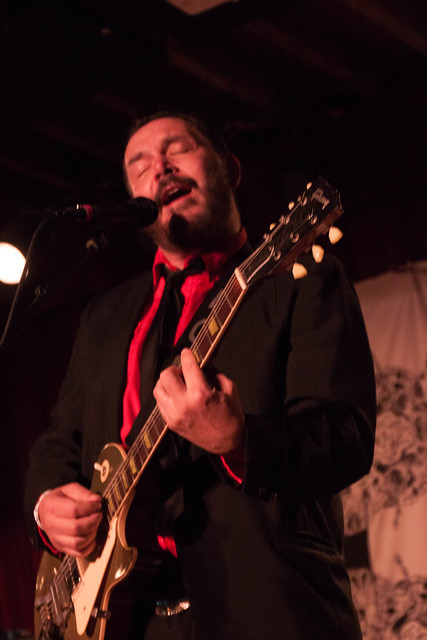
Of course, if you’ve been frequenting this site, you’re probably well acquainted with Drunken Prayer, the recording project of Morgan Christopher Geer, who currently splits time between Portland, ORAsheville, NC and Louisville, KY — and is a touring member of renowned act Freakwater.  Into the Missionfield, Geer’s Drunken Prayer debut was released in 2012 to critical praise both locally and nationally — Portland’s Willamette Week describing Geer as a “barking ringleader with chops between Tom Waits and The Butthole Surfers‘ Gibby Haynes” and the Portland Mercury describing Geer as Warren Zevon’s medium, showing him the world from the great beyond.” Since then Geer has been rather prolific realizing several lyrically and sonically ambitious albums that have been praised for his signature sound — a sound that meshes elements of the blues, country, folk music, 60s psych and soul music and New Orleans-styled funeral dirges paired with lyrics that explore our existence through the prism of the tragicomic. In fact, Geer’s material suggests something that most of us loathe to admit — that life is often bitterly cruel and ironic. And in those moments, the only option you have is to do as the old song says “Laugh and never let the world know that deep down, you’re crying.”


2016 has been a very busy year as Geer released The Devil and the Blues. Featuring Lance Willie (drums) and David Wayne Gay (bass), his former bandmates in The Unholy Trio and former members of The Reigning Sound, as well as guest spots from The Sadies‘ Dallas Good (guitar), Aaron Price (organ, piano and engineering), Anna Trivel (fiddle) and a small horn and section, Geer’s latest effort was Geer’s “party album” — and by party, the material thematically covers and explores sadness, rebellion and redemption in Geer’s signature rowdy, riotous, loutish, proud and somewhat ridiculous fashion. His contribution to the compilation “I Feel Into The Sun,” is an atypical Geer song, as it’s a swooning and infectiously sweet love song with a wicked sense of humor. Yes, underneath all that loutishness and joke cracking is a sweet, aching heart desiring love and its redemption.



New Video: The Trippy and Hypnotic Sounds and Visuals of Bonobo’s “Kerala”

January 13, 2017 will mark the release of Green’s sixth Bonobo effort Migration, and his first full-length release in four years. Fittingly as Green mentions in press notes, the material thematically speaking focuses on migration. “It’’s interesting how one person will take an influence from one part of the world and move with that influence and effect another part of the world. Over time, the identities of places evolve,” the renowned British producer and electronic music artist remarks in press notes. With that in mind, it shouldn’t be terribly surprising that the material possesses a transitory nature — some of the material, including the album’s first single “Kerala” was initially composed while on the road and then was road-tested and revised during Stateside DJ sets. And the album’s guest spots feature a number of artists, who have emigrated themselves, including Canadian-born, Los Angeles-based vocalist Michael Milosh of Los Angeles-based indie pop act Rhye, who recorded his vocal tracks while in Berlin, Germany; Australian-born, Brooklyn-based global, indie pop sensation Nick Murphy, formerly known as Chet Faker, who bonded with the British producer over a shared love of disco; Florida-born, Los Angeles-based Nicole Miglis of Los Angeles-based act Hundred Waters; and the New York-based Moroccan collective Innov Gnawa among others. Adding to the album’s transitory nature, Green also employs the use of found sounds that include a Hong Kong elevator, rainfall in Seattle, an Atlanta-based tumble dryer and a New Orleans fan boat engine.

As for “Kerala,” the single manages to further cement elements of Green’s signature sound while expanding upon it as shuffling and skittering 808s are paired with gorgeous yet arpeggiated and knotted strings. And the song builds up until Green drops a cut and layered vocal sample from Brandy that gives the composition a bit of soulfulness and swooning euphoria while possessing a shimmering and cinematic quality.

Directed by video collective Bison, who has produced videos for Jon Hopkins, London Grammar and Rosie Lowe and starring Gemma Arterton, the video compliments the shuffling and trippy nature of the song by creating slowly staggered looped effects in which Arterton is haunted by both terrors unseen by everyone else around her — until the camera pulls out to see an unidentified flying object hovering at the horizon.

Currently based in New Orleans, Kate Fagan is a ska, punk and new wave musician, who first emerged to local and regional attention as the founding member and frontwoman of Chicago-based ska act Heavy Manners, an act that once opened for the The Clash and The English Beat; but interestingly enough before that Fagan released a cult-favorited New Wave single “I Don’t Wanna Be Too Cool” through local imprint Disturbing Records that was immediately embraced by local club DJs, radio stations and taste-making record stores like Chicago’s Wax Trax, where it became the best-selling release by a local artist ever.  The B-side single “Waiting for the Crisis” also received attention for its politically charged, Reagan-era lyrics, which manage to still resonate today.


As the story goes, Fagan wrote the title track after moving from New York to Chicago in the late 70s. “I pretty much came to visit Chicago and fell in love with the scene and never left,” Fagan recalled in press notes. “At the time I’d been working at New York magazine and was getting dismayed watching the CBGB scene give way to the whole Studio 54/velvet rope thing. So I spontaneously moved to Chicago, which was much more inclusive and everyone wasn’t standing around peering at each other from behind their shades. But eventually I saw that same kind of divisive hipster culture start to creep in. ‘Too Cool’ was my reaction to that.” Along with “Too Cool,” Fagan wrote many of her earliest songs as a solo artist and with Heavy Manners in an intuitive fashion, recording them at Chicago’s Acme Studios, where she’d meet the fellow artists with whom she’d form Disturbing Records.

Although the “Too Cool” single was a cult favorite back in the early 80s, sadly it was thought to be long lost, as the second printing of the album was lost in a house fire that destroyed almost everything Fagan had owned at the time — that is until Manufactured Recordings stumbled upon the original single, along with two unreleased bonus tracks that Fagan recorded with members of My Life With The Thrill Kill Kult and Scarlet Architect. Interestingly, when you listen to the four tracks off the re-issued 7 inch, the songs manage to sound both of its time and incredibly contemporary — in some way you can imagine acts like Colleen Green, Courtney Barnett, Karen O. and several others citing Fagan as an influence, as Fagan’s lyrics possess a wry irony at at their core, as you’ll hear on the aforementioned “Too Cool,” a song that’s reminiscent of both The B52s and Go-Gos. “Waiting for the Crisis” sounds as though it were influenced by Sandinista! and Combat Rock-era The Clash. However, “Master of Passion” and “Come Over” are the most dance floor-friendly, New Order-like songs of the re-issue, featuring shimmering undulating synths, propulsive drum programming paired with Fagan’s sultry and coquettish delivery.

Of course, each track reveals a songwriter, who had an uncanny knack at writing an infectiously catchy hook that you could imagine kids bouncing up and down to in a sweaty club — and does so with a cool, swaggering self-assuredness.


Over the past couple of months, I’ve written quite a bit about New Orleans-based funk and brass septet Cha Wa. Led by its founding members and bandleaders, vocalist/percussionist Irving “Honey” Banister, Big Chief of the Creole Wild West Tribe and drummer Joe Gelini, who have both involved with New Orleans’ Mardi Gras Indian scene for years, the members of the septet have developed a reputation for a sound and aesthetic that combines the Mardi Gras Indian tradition, and the area’s long-held reputation for rhythm and blues and funk. After playing countless shows in their hometown, the septet’s long-awaited debut album Funk ‘n’ Feathers was released earlier this month, and the album reportedly draws from the seminal Mardi Gras Indian-inspired work of the 1970s — Wild Magnolias (backed by The Meters), The Neville Brothers and Dr. John‘s Nite Tripper albums; however, the material also was produced by Galactic’s Ben Ellman, who has also worked with Trombone Shorty, and mixed by San Francisco, CA‘s go-to engineer Count, who has worked with DJ ShadowRadioheadLyrics Born and others.

Released just in time for Mardi Gras, the album’s first single was a loose, stomping and swinging cover of Dr. John’s “All On A Mardi Gras Day” that feels as though you’re following a hot and jamming band with the marching Indians in their costumes marching down the streets of Uptown New Orleans — but with a slick, studio polish that doesn’t scrub away the inherently gritty, street-level funk and the ebullient, let the good time roll-feel within the song.  The album’s second was a raucous, percussive, stomping and absolutely swinging rendition of a Mardi Gras and New Orleans standard “Jock-A-Mo (Iko Iko)” that feels like a non-stop party full of hooting and hollering, and hot keyboard and guitar solos; however, where their rendition of “All On A Mardi Gras” felt as though you were following along in a second line, their rendition of “Jock-A-Mo (Iko Iko)” feels as though it were recorded in a tiny, sweaty and packed club — in some way, you can almost feel the floor shaking from feet stomping in time to the rhythm.

Funk ‘N’ Feathers‘ latest single “UPT” is a written for and dedicated to Uptown New Orleans and much like the album’s previous singles, it’s a raucously ebullient the band creates a funky groove with stomping, tribal percussion, twisting, turning and soaring organ chords, an explosive horn section, a blistering guitar solo and chanted call and response vocals. It’s New Orleans-based funk at its finest, done with an enormous, megawatt smile — and if it doesn’t make you get off your ass and dance and shout, you must have a cold, cold heart.

The band has a number of live dates coming up throughout the next few months. Check out tour dates below.

UPCOMING SHOWS:
04/21- Ogden Museum of Southern Art – New Orleans, LA
04/23- New Orleans Jazz & Heritage Festival – New Orleans, LA
04/30- French Broad River Festival – Asheville, NC
06/04- Michael Arnone’s Crawfish Festival – Augusta, NJ

Last month, I wrote about New Orleans-based septet Cha Wa. Led by its founding members and bandleaders, vocalist/percussionist Irving “Honey” Banister, Big Chief of the Creole Wild West Tribe and drummer Joe Gelini, who have both involved with New Orleans’ Mardi Gras Indian scene for years, the members of the septet have developed a reputation for a sound and aesthetic that combines the Mardi Gras Indian tradition, and the area’s long-held and beloved reputation for rhythm and blues and funk. After playing countless shows in their hometown, the septet’s long-awaited debut album Funk ‘n’ Feathers is slated for an April 1 release, and the album reportedly draws from the seminal Mardi Gras Indian-inspired work of the 1970s — Wild Magnolias (backed by The Meters), The Neville Brothers and Dr. John‘s Nite Tripper albums; however, the material also has a contemporary twist as the album was produced by Galactic‘s Ben Ellman, who has also worked with the likes of Trombone Shorty, and mixed by San Francisco, CA‘s go-to engineer Count, who has worked with DJ ShadowRadioheadLyrics Born and others.

Released just in time for Mardi Gras, the album’s first single was a loose, stomping and swinging cover of Dr. John’s “All On A Mardi Gras Day” that feels as though you’re following a hot and jamming band with the marching Indians in their costumes marching down the streets of Uptown New Orleans — but with a slick, studio polish that doesn’t scrub away the inherently gritty, street-level funk and the ebullient, let the good time roll-feel within the song.  The album’s second and latest single is a raucously percussive, stomping and absolutely swinging rendition of a Mardi Gras and New Orleans standard “Jock-A-Mo (Iko Iko)” that feels like a non-stop party full of hooting and hollering, and hot keyboard and guitar solos; however, where their rendition of “All On A Mardi Gras” felt as though you were following along in a second line, their rendition of “Jock-A-Mo (Iko Iko)” feels as though it were recorded in a tiny, sweaty and packed club — in some way, you can almost feel the floor shaking from feet stomping in time to the rhythm.

The band has a number of live dates coming up throughout the next few months. Check out tour dates below.

UPCOMING SHOWS:

03/05- Howlin’ Wolf – New Orleans, LA
03/31- Lafayette’s – Memphis, TN
04/01- Blue Nile [Album Release Show] – New Orleans, LA
04/07- French Quarter Fest – New Orleans, LA
04/10- d.b.a – New Orleans, LA
04/21- Ogden Museum of Southern Art – New Orleans, LA
04/23- New Orleans Jazz & Heritage Festival – New Orleans, LA
04/30- French Broad River Festival – Asheville, NC
06/04- Michael Arnone’s Crawfish Festival – Augusta, NJ


Led by its founding members and bandleaders singer/percussionist Irving “Honey” Banister, Big Chief of the Creole Wild West Tribe and drummer Joe Gelini, who have both been involved with New Orleans‘ Mardi Gras Indians for years, the members of the funk septet Cha Wa have developed a reputation for a sound and aesthetic that combines the Mardi Gras indian tradition and the area’s reputation for rhythm and blues and funk. And after playing countless shows in their beloved hometown, the septet’s long-awaited debut album Funk ‘n’ Feathers is slated for an April 1, and the album reportedly draws from the seminal Mardi Gras Indian-inspired work of the 1970s — Wild Magnolias (backed by The Meters), The Neville Brothers and Dr. John‘s Nite Tripper albums; however, the material also has a contemporary twist as the album was produced by Galactic‘s Ben Ellman, who has also worked with the likes of Trombone Shorty, and mixed by San Francisco, CA‘s go-to engineer Count, who has worked with DJ Shadow, Radiohead, Lyrics Born and others.

The album’s first single is a loose, stomping and swinging cover of Dr. John’s “All On A Mardi Gras Day” that feels as though you’re following a hot and jamming band with the marching Indians in their featured costumes marching down the streets of Uptown New Orleans — but with a slick, studio polish that doesn’t scrub away the inherently gritty, street-level funk and the ebullient, let the good time roll-feel within the song.  If the song doesn’t make you want to stomp around and dance, then you have a cold, cold heart.

The band has a number of live dates coming up throughout the next few months. Check out tour dates below.

UPCOMING SHOWS:

02/08- Riverwalk – New Orleans, LA [Lundi Gras Celebration]
02/08- Tipitina’s Mardi Gras Stands – New Orleans, LA
02/09- 30×90 – New Orleans, LA
02/27- Universal Studios Orlando – Orlando, FL
03/05- Howlin’ Wolf – New Orleans, LA
03/31- Lafayette’s – Memphis, TN
04/01- Blue Nile [Album Release Show] – New Orleans, LA
04/07- French Quarter Fest – New Orleans, LA
04/10- d.b.a – New Orleans, LA
04/21- Ogden Museum of Southern Art – New Orleans, LA
04/23- New Orleans Jazz & Heritage Festival – New Orleans, LA
04/30- French Broad River Festival – Asheville, NC
06/04- Michael Arnone’s Crawfish Festival – Augusta, NJ

New Video: New Orleans Jazz Greats Team Up in New Quaret, Nolatet

  Renowned vibraphonist Mike Dillon, pianist Brian Haas, bassist James Singleton and drummer Johnny Vidacovich have all collaborated together over the years in a variety of iterations and projects. In fact, Vidacovich and Singleton have […]

If you’ve been frequenting JOVM over roughly the last 15-18 months or so, you may have come across a couple of posts on Scott Reitherman, the creative mastermind behind indie electro pop sensation, Pillar Point and the former frontman of pop act, Throw Me The Statue. With Pillar Point, Reitherman has received national attention for a melancholy yet bouncy electro pop sound primarily comprised of vintage, analog synthesizers, drum kits and sleek bass lines. It’s a sound that’s been compared favorably to several blogosphere darling acts including Washed Out, LCD Soundsystem and others.

While touring to support his solo debut with of Montreal , Reitherman was planning to write and record his sophomore full-length effort, Marble Mouth in his Seattle home when Kevin Barnes unexpectedly invited him to record the album in his home studio. As soon as the tour wrapped up, Reitherman spent several months crafting demos and went to Barnes’ home to flesh out, refine and then record Marble Mouth‘s material with contributions from Washed Out’s drummer Cameron Gardener and Kishi Bashi‘s percussionist Philip Mayer. Reitherman then spent a six month sent in New Orleans writing and refining both the album’s lyrics and vocals. And as Reitherman explained in press notes, New Orleans managed to influence the album’s lyrical direction.“New Orleans was the most meditative and mysterious part of making the record,” Reitherman explained. “I wanted to sink into that city and scrutinize the romantic southern sojourn.”

Marble Mouth’s first single, album opening track “Part Time Love” paired layers of twitchy and cascading synths with propulsive, four-on-the-floor drumming and Reitherman’s ethereal cooing to craft a sound that’s reminiscent of Talking HeadsTobacco and others, while it subtly nodded at Top 40 pop; in other words, the sound is tense, neurotic and incredibly danceable and accessible pop with infectious hooks. The album’s latests single “Dove” pairs confessional R&B/pop-leaning lyrics sung with Reitherman’s achingly plaintive and emotive vocals with house music-leaning production comprised of layers of cascading synths, skittering drum programming, a glitchy and dramatic string sample and swirling electronics in what may be arguably the most club-friendly song of the entire album.

New Video: The Noir-ish Murder-Filled, New Video for Painted Palms’ “Refractor”

Comprised of cousins Reese Donahue and Christopher Prudhomme, the electro pop duo of Painted Palms have almost always used the Internet to collaborate on songwriting — initially out of necessity, as the project started with Donahue based in San […]

Originally, known as the frontman of pop act Throw Me The Statue, Scott Reitherman’s solo recording project Pillar Point has received attention for a melancholy yet bouncy electro pop sound primarily comprised of vintage, analog synthesizers, drum kits and sleek bass lines. As the story goes, Reitherman was planning to write and record his sophomore full-length album in his Seattle home when he received an unexpected invitation to record the album at Kevin Barnes’ home studio, while Reitherman was opening for of Montreal during their US tour.

Once the tour wrapped up, Reitherman spent a few months crafting demos of the material that would wind up comprising Marble Mouth before spending a month at Barnes’ house refining and recording alongside of Washed Out‘s drummer, Cameron Gardener and Kishi Bashi‘s percussionist Philip Mayer.

Reithernan then spent a six period in New Orleans writing and refining both the album’s lyrics and vocals. And as Reitherman explained in press notes, “New Orleans was the most meditative and mysterious part of making the record. I wanted to sink into that city and scrutinize the romantic southern sojourn.”

Marble Mouth‘s first single, album opening track “Part Time Love” pairs layers of twitchy and cascading synths with propulsive, four-on-the-floor drumming and Reitherman’s ethereal cooing to craft a sound that’s reminiscent of The Talking Heads, Tobacco and others, while subtly nodding at Top 40 pop; in other words, the sound is tense, neurotic and incredibly danceable and accessible pop with infectious hooks.

San Francisco-born, New Orleans-based singer/songwriter, producer and composer Abby Diamond initially caught the attention of several blogs with her collaboration with Yugen on “Single Cell,” an icily, minimalist, slow-burning track that featured Diamond’s sultry crooning over gently strummed guitar, and off-kilter syncopated beats, which gave the song a glitchy, stuttering feel.

Diamond saw increasingly attention with a subtle yet brilliant reworking of Froyo Ma‘s “I Live All Alone” that rearranges a sample of Bill Murray’s character from Lost in Translation by having it appear within the song twice, and although Diamond’s reworking retains the original’s hypnotic and forcefully propulsive nature, her soulful vocals drifting over the mix gave the song a sinuous and sensual feel. The New Orleans-based pop artist quickly followed that up with the first single off Down, Down, Deep, “I Love To Watch You Leave,” a song that Diamond wrote when she was 19. Initially produced by her then-boyfriend Luke Todd, the track featured her coquettish vocals over a minimalist production. Producers Liam Shy and Alex Cowan assisted Diamond on a rework that managed to give the breezy original a bit of heft, as the song was given a funky, 80s-inspired R&B groove — the sort of groove that bears an uncanny resemblance to the sample on Biggie’s “Juicy” and the radio version of “One More Chance.

Diamond’s full-length debut, FEMINISTA, which will be co-proudced by Dimaond and Blue Hawaii features collaborations with artists and producers Kyross, weirdinside and others. As Diamond told me via email, the 10 song album will be released in several parts over the course of the next 8 months or so with films, feminist zines to bring about a larger discussion about what feminism means to variety of artists across different media. According to Diamond, “Each music video that I release along with FEMINISTA will be available for download (along with other b-roll film) as well so film makers can make their own films using our footage. The album itself will be free for download online and CDs will be sold inside feminist art zines, which are being created by myself, other female musicians and artists as well as artistic fans who submit work to us. These zines will be reminiscent of Riot Grrrl and other female punk rock zines that helped spread feminist concepts like wildfire in the late 80s and early 90s. The idea is to resurrect this movement within a new context and culture—bringing feminist zines into the pop/electronic scene as a vehicle for all different women who share a similar taste in music to express what it’s like to be a third wave feminist today.” Clearly, the project aims to be bold, brash and enormous. And as Diamond told me, “I see this project as a unique opportunity to look at art through the lens of all different types of feminists.”

The album’s first single “There’s a Light in My Room” is a subtly layered production comprised of wobbling low end, skittering and stuttering beats, ominously swirling electronics, brief bursts of twinkling keys, handclaps and finger snaps that’s spacious enough to allow Diamond’s sultrily soulful vocals to gently drift over the mix. Lyrically, the song reveals a fully-fleshed out and vulnerable narrator, who longs for someone with an urgent, desperate need, and through the length of the song, the narrator walks a tightrope between asserting herself and self-doubt; the sort of self-doubt that comes up whenever anyone puts their heart on the line for another, with the hopes that their affection and desires are reciprocated — while knowing that most of the time, love doesn’t make much sense, and will often be unreciprocated.

With Diamond’s vocals bearing an uncanny resemblance to a young Mariah Carey, the song subtly seems to mesh 90s R&B, soul and pop with incredibly contemporary production in a song that sonically speaking is a marvel, as the song reveals subtle nuance on repeated listens.