Comprised of Los Angeles-based songwriter Jesse Marc and New Orleans-based songwriter and producer Christoph Andersson, who has collaborated with the likes of G-Eazy, Olivia O’Brien, Monopol and others, the Los Angeles/New Orleans-based pop duo JOME can actually trace its origins to when Marc started the project as a solo recording project. And as the story goes, a few minutes after Consequence of Sound posted Marc’s first single as JOME, Marc received an email from Andersson, who asked him Marc if he’d be interested in collaborating together. “I thought it was spam,” Marc recalls in press notes. “It happened too quickly.”
Marc and Andersson met in Venice, CA for an afternoon and quickly recognized that they were on the same page creatively, as both men, who had worked in the realm of pop for some time were yearning to make music with a deeper emotional resonance. “Crystalline,” the duo’s ethereal new single features an ambient-leaning production consisting of a gentle melody, warm bursts of guitar, propulsive, boom bap-like beats paired with dreamy vocals but what sets the duo and this single apart from an extraordinarily crowded electro pop field is that the song reveals a deliberate and careful attention to craft that belies its breeziness. But perhaps more important is that the song carries a simple yet powerful message — that everything in life will settle in due time, if you’re patient.
Now, if you’ve been frequenting this site over the past few months, you’ve likely come across a post featuring the Austin, TX-based punk quartet PLAX. And as you may recall, the band, which is currently comprised of Michael Goodwin, a member of the OBN IIIs and eeetsFEATS; Chris “Anton” Stevenson, a member of Spray Paint, Dikes of Holland and When Dinosaurs Ruled the Earth; Marley Jones, a member of the OBN IIIs and Sweet Talk; and newest recruit Victor Ziolkowski, a member of Skeleton and Nosferatu can trace their origins to when Goodwin approached his longtime friend Stevenston and current OBN IIIs bandmate Jones about the possibility of forming an unconventional, outsider punk band, inspired by Wire and Dawn of Humans. The band’s founding trio quickly went to work writing songs for a demo — they eventually wrote 9 — but they felt were still in need of a vocalist to complete the project. At the time Marley was collaborating with David and Victor Ziolkowksi, the founding members and frontman of Skeleton, a constantly evolving project featuring the Ziolkowski Brothers and a rotating cast of collaborators and friends. Stevenson and Marley then recruited Victor Ziolkowski, who then finalized the project’s lineup.
Last July, the quartet played their first live show with New Orleans punk act Patsy and they quickly followed that by playing with a number of national touring Texas-based bands including Crooked Bangs, Institute and Army and others — and building upon the buzz they were receiving, the band went on a January 2017 attention grabbing tour throughout Texas. And although Stevenson has recently relocated to Melbourne, Australia, the band has continued writing, eventually finishing their full-length debut Clean Feeling, which is slated for an August 11, 2017 release through Super Secret Records.
Wit the album’s first single “Boring Story,” the band revealed that they specialize in a scuzzy and sneering, garage punk that would be be perfectly at home on Goner Records or on Castle Face Records, complete with slashing power chords and punchily delivered vocals — and unsurprisingly, the album’s second single “Night Watch” continued along a similar vein, while nodding at the nightmarishly tense, piss vinegar, and PCP-fueled fury sound reminiscent of Ex-Cult’sCigarette Machine and Negative Growth. “What A Waste,” Clean Feeling‘s third and latest single “What A Waste” is a bruising punk track that evokes the bitter frustration of those who lives have stalled — often beyond their control; and sonically, the single much like its immediate predecessor will continue to cement the band’s burgeoning reputation for crafting scuzzy and forceful garage punk.
Earlier this month, I wrote about the Austin, TX-based punk quartet PLAX, and as you may recall, the band comprised of founding members Michael Goodwin, a member of the OBN IIIs and eeetsFEATS; Chris “Anton” Stevenson, a member of Spray Paint, Dikes of Holland and When Dinosaurs Ruled the Earth; Marley Jones, a member of the OBN IIIs and Sweet Talk; and newest recruit Victor Ziolkowski, a member of Skeleton and Nosferatu can trace their origins to when Goodwin approached his longtime friend Stevenston and current OBN IIIs bandmate Jones about the possibility of forming an unconventional, outsider punk band, inspired by Wire and Dawn of Humans. The band’s founding trio quickly went to work writing songs for a demo — they eventually wrote 9 — but they felt were still in need of a vocalist to complete the project. At the time Marley was collaborating with David and Victor Ziolkowksi, the founding members and frontman of Skeleton, a constantly evolving project featuring the Ziolkowski Brothers and a rotating cast of collaborators and friends. Stevenson and Marley then recruited Victor Ziolkowski, who then finalized the project’s lineup.
Last July, the quartet played their first live show with New Orleans punk act Patsy and they quickly followed that by playing with a number of national touring Texas-based bands including Crooked Bangs, Institute and Army and others — and building upon the buzz they were receiving, the band went on a January 2017 tour throughout Texas. And although Stevenson has recently relocated to Melbourne, Australia, the band has continued writing, eventually finishing their full-length debut Clean Feeling, which is slated for an August 11, 2017 release through Super Secret Records. And from the album’s first single “Boring Story,” the band seems to specialize in the sort of scuzzy, sneering, garage punk that would be be perfectly at home on Goner Records or on Castle Face Records, complete with slashing power chords and punchily delivered vocals.
The album’s second and latest single “Night Watch” will further cement the quartet’s burgeoning reputation for crafting scuzzy and sneering, garage punk; however, the song possesses a nightmarish, tense, piss, vinegar, whiskey and PCP-fueled fury reminiscent of Ex-Cult’sCigarette Machine and Negative Growth. And much like its predecessor, it’s a cathartic, mosh pit worthy, barn-burner.
Over the past handful of years, I’ve written a handful of posts featuring the Cincinnati, OH-based, JOVM mainstay act The Afghan Whigs. Currently comprised of founding members Greg Dulli (guitar, vocals) and John Curley (bass) along Jon Skibic (guitar), multi-instrumentalist Rick Nelson and Cully Symington (drums), the band can trace their origins to when its founding trio of Dulli, Curley and Steve Earle founded the band in 1986, after the breakup of Dulli’s previous band, The Black Republicans. Interestingly, the band has the distinction of being one of the first bands that Sub Pop Records signed outside of the Pacific Northwest, as well as being one of the more highly-regarded and critically applauded bands of the early 90s, with 1993’s Gentlemen landing at number 17 on The Village Voice‘s Pazz and Jop critics list and 1996’s Black Love, landing at number 79 on the Billboard Top 200 — all while going through several lineup changes.
After the band’s initial breakup in 2001, the members of the band went on with other creative pursuits — with Dulli famously collaborating with Mark Lanegan in The Gutter Twins, his other post-Afghan Whigs project, The Twilight Singers and with a lengthy list of contemporary artists; however, the members of the band would occasionally reunite for a series of one-off shows and festivals sets that eventually lead to 2014’s Do To The Beast, which marked the band’s first proper release in over 16 years, and the band’s return to their original label home, Sub Pop Records. And while being one of my favorite albums that year — and one of the more forceful rock album of 2014 — the album’s material centered around Dulli’s long-held obsessions.
Released earlier this year, In Spades is the Cincinnati-based indie rock band’s second post-reunion album, and the album, which was produced by the band’s Greg Dulli reportedly finds the band emphasizing a decidedly populist, arena rock-leaning sensibility while retaining the urgent, dark and seductive sound they’ve long been known for; but with an underlying spectral vibe. ““It’s a spooky record,” Dulli remarks in press notes. “I like that it’s veiled. It’s not a concept album per se, but as I began to assemble it, I saw an arc and followed it. To me, it’s about memory — in particular, how quickly life and memory can blur together.”
Now, as you may recall, I wrote about the album’s first single “Demon In Profile,” a single that evokes the lingering ghosts of one’s life — but in particular, the electric touch of a lover’s skin against your own; that lover’s smell and taste, and the sense of irrevocable loss that permeates everything, once they’re no longer in your life. But interestingly enough, it may be the rare Afghan Whigs song that directly reveals a classic soul influence, as they paired their enormous sound with an explosive yet strutting horn line. The album’s second single “Oriole” featured Greg Dulli singing occult and death riddled lyrics paired with a lush and cinematic arrangement of acoustic guitar, xylophone and a soaring string section paired with a power chord-based anthemic, electric guitar-based hook — with the result being a song that meshes 60s bubble gum pop and 90s alt rock.
The Cincinnati, OH-based band’s latest single “You Want Love” was originally released by the New Orleans-based Pleasure Club on their second and final album together, and the Afghan Whigs’ rendition of the song features the song’s original vocal and songwriter James Hall — and interestingly enough, the song has become both a staple of their live set during their ongoing tour, and a tribute to the band’s Dave Rosser, who recently died after a battling colon cancer. As the band’s Greg Dulli has recently mentioned publicly, he and Rosser had been fans of the long defunct New Orleans-based band, and they had talked about covering the song for years; but they just never found the opportunity to put it on wax — until recently. Of course, once you hear the original, you’ll know why Dulli and Rosser dug the song so much; it sounds and feels much like it should have been a Whigs song.
Next week will begin another extended leg of touring, which will have the band in Europe throughout August, including a stop at the gorgeous Paradiso in Amsterdam and a handful of festival sets, followed by some extensive North American touring, which will have the band playing Brooklyn Steel on September 16, 2017. Check out tour dates below.
Currently comprised of founding members Michael Goodwin, a member of the OBN IIIs and eeetsFEATS; Chris “Anton” Stevenson, a member of Spray Paint, Dikes of Holland and When Dinosaurs Ruled the Earth; Marley Jones, a member of the OBN IIIs and Sweet Talk; and Victor Ziolkowski, a member of Skeleton and Nosferatu, the Austin, TX-based punk quartet PLAX can trace its origins to last year, when founding member Goodwin approached his longtime friend Stevenson and current OBN IIIs bandmate Jones about the possibility of forming an outsider punk band that would defy all conventional expectations while being inspired by the likes of Wire and Dawn of Humans. The band’s founding trio quickly went to work writing songs for a demo — they eventually wrote 9 — but they felt were still in need of a vocalist to complete the project. At the time Marley was collaborating with David and Victor Ziolkowksi, the founding members and frontman of Skeleton, a constantly evolving project featuring the Ziolkowski Brothers and a rotating cast of collaborators and friends. And as the story goes, Stevenson and Marley approached Victor Ziolkowski to contribute his vocals, and when he agreed, the project’s lineup was finalized.
By the end of last July, the newly formed quartet had played their first show with New Orleans punk act Patsy and they quickly followed that by playing with a number of national touring Texas-based bands including Crooked Bangs, Institute and Army and others — and building upon the buzz they were receiving, the band went on a January 2017 tour throughout Texas. And although Stevenson has recently relocated to Melbourne, Australia, the band has continued writing and recording; in fact, as you’ll hear on “Boring Story” the first single off the quartet’s forthcoming full-length debut Clean Feeling, the band specializes in the sort of scuzzy, garage punk that would be at home on Goner Records or on Castle Face Records, complete with slashing power chords and punchily delivered vocals. Arguably, “Boring Story” is one of the most mosh pit worthy songs I’ve listened to in several months — and it reminds me of the sort of music I’d hear in countless dive bars and dank DIY spaces.
Now, if you’ve been frequenting this site over the past few years, you have most likely come across a handful of posts on Simon Green, a Brighton, UK-born, Los Angeles, CA-based DJ, producer, multi-instrumentalist, and electronic music artist, who has written, recorded and performed under the moniker of Bonobo. Interestingly, Green had long been considered part of a movement of producers, multi-instrumentalists and electronic music artists, who specialized in a sleek, hyper-modern and downtempo-leaning electronic music that included Four Tet, Jon Hopkins, Caribou and others; however, with the release of his critically applauded 2013 release The North Borders Green revealed a decided change in his compositional approach in which he frequently paired electronic production with lush and stunning arrangements featuring organic instrumentation — wth the end result being a sound that possessed a cinematic quality.
The North Borders was also part of a larger, growing trend among many electronic music artists and producers to not only create a much more evocative and nuanced sound but an attempt to remind listeners, fans and critics that there was actual musicality within their productions besides a person haphazardly tapping away at a laptop or turning buttons and dials on a sampler or a processor.
Since the release of The North Borders, Green has been both extremely busy and rather prolific — he released the Flashlight EP at the end of 2014 while during what would turn out to be a two year period of intense touring across the globe. Green somehow managed to find the time to write and recored the material off his sixth full-length album Migration, which was released earlier this year. Naturally, with an album titled Migration, the material thematically focused on migration. As Green remarked in press notes “It’s interesting how one person will take an influence from one part of the world and move with that influence and effect another part of the world. Over time, the identities of places evolve.” And as a result, the material seemed to possesses a transitory nature — some of the material, including album single “Kerala,” was initially composed while on the road and then was road-tested and revised during Stateside DJ sets. Adding to the album’s transitory nature, it featured guest spots from a number of artists, who have emigrated at some point themselves, including Canadian-born, Los Angeles-based vocalist Michael Milosh of Los Angeles-based indie pop act Rhye, who recorded his vocal tracks while in Berlin, Germany; Australian-born, Brooklyn-based global, indie pop sensation Nick Murphy, formerly known as Chet Faker, who bonded with the British producer over a shared love of disco; Florida-born, Los Angeles-based Nicole Miglis of Los Angeles-based act Hundred Waters; and the New York-based Moroccan collective Innov Gnawa among others. Adding to the album’s transitory nature, Green also employs the use of found sounds that include a Hong Kong elevator, rainfall in Seattle, an Atlanta-based tumble dryer and a New Orleans fan boat engine.
After completing successful tours across both the European Union and North America to support Migration, Green announced the release of a 3 song EP/single package that features album single “Bambro Koyo Ganda,” an analog version of “Bambro Koyo Ganda” that finds Green stripping the song’s production and sound to the bone — retaining a propulsive, undulating pulse and Moroccan-born, New York-based band Innov Gnawa’s vocals and handclap-led percussion, highlighting the hypnotic groove and vocals. EP closing track “Samurai” was written and recorded during the Migration sessions, and consists of a stuttering vocal sample floating over a sinuous production featuring shuffling drum programming and shimmering, subtly arpeggio synth and wobbling low end. And much like the material from the recording sessions it came from, the song should remind listeners of how much Green’s work draws from classic house and soul, while being paradoxically sensual, intimate and yet cinematic.
Comprised of Hernando, MS-based sibling duo Luther (guitar, vocals) and Cody Dickinson (drums, piano, synth bass, programming and vocals), the sons of renowned pianist, vocalist and producer Jim Dickinson, North Mississippi Allstars are a critically applauded, commercially successful, multi Grammy Award- nominated, Grammy Award-winning Southern fried rock/blue duo celebrated their 20th anniversary together with a national victory-lap-like tour, and reportedly along the way, the duo booked studio time in Memphis, New Orleans, their father’s studio in Hernando, MS, and about six other cities, writing, tracking and recording their recently released eighth full-length effort Prayer for Peace, an album that finds the band based around the boogie blues and fuzzy funk of their live sets and a message of positivity, inclusion, hope and the power of familial bonds.
Co-produced by Boo Mitchell, and featuring guest spots from an incredible list of friends and associates including Oteil Burbridge, who has had stints with The Allman Brothers Band and Dead & Company; Grahame Lesh, a member of Midnight North and The Terrapin Family Band, vocalist Sharisse Norman, Dominic Davis, a member of Jack White’s backing band and Shardé Thomas, vocalist/fife player and daughter of Mississippi blues legend Otha Turner, Prayer for Peace features both original and covers and will further cement the band’s reputation for celebrating the blues’ legacy and history while pushing it into new, contemporary directions; in fact, the Electric Blue Watermelon: Screwed and Chopped EP found the band meshing the classic blues sound with Houston’s screwed and chopped hip-hop movement, creating a sound that was bluesy yet lysergic.
Interestingly enough, the first single off the Grammy Award-winning duo’s eighth full-length effort is a stomping, swaggering, arena rock-friendly cover of R.L. Burnside’s “Long Haired Donkey” that features explosive slide guitar riffs played through layers upon layers of effects and a tight groove. Reportedly, the song is a nod to the duo’s early years when fellow Mississippi bluesman R.L. Burnside took them under his wing. After Burnside’s death in 2005, the duo paid homage to their friend and mentor by adding “Long Haired Donkey” to their setlists, making it a live show staple before they officially put it on wax, 15 miles west of St. Francis Hospital where Burnisde spent his last days. And as a result, the recorded version possesses a moody and spectral vibe underneath the free-flowing, you-were-there improvised feel.
Allan Jaffe founded Preservation Hall and Preservation Hall Jazz Band in the early 190s with two vital and critical missions: promoting and preservation New Orleans’ traditional jazz sound and culture with the authenticity and devotion it deserved and to ensure that some of New Orleans’ best musicians kept working at a time that jazz had steadily lost popularity. And although the band has gone through several lineup changes throughout its history, the act has proudly continued those missions, recording over 30 critically acclaimed albums, a live album and with a touring scheduling that has had the band collaborating with an incredibly diverse number of renowned and contemporary acts at concerts and festivals across the globe, helping to introduce and re-popularize the New Orleans jazz sound to concertgoers and music fans everywhere.
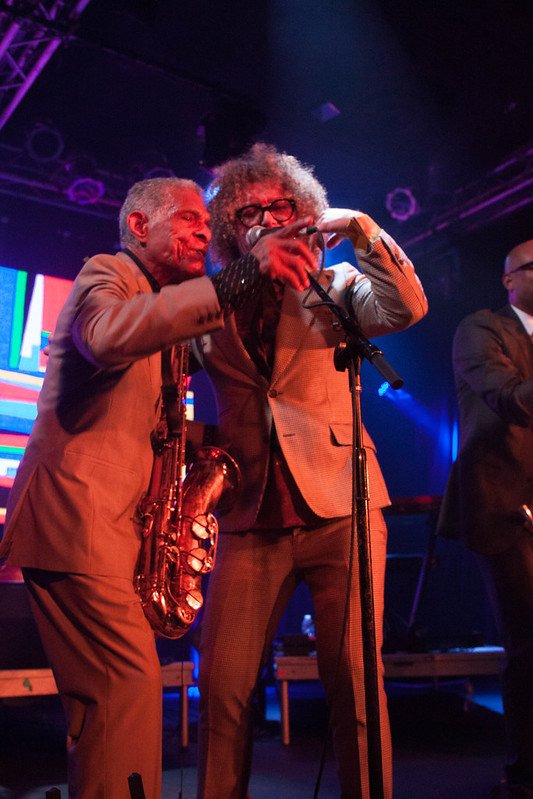
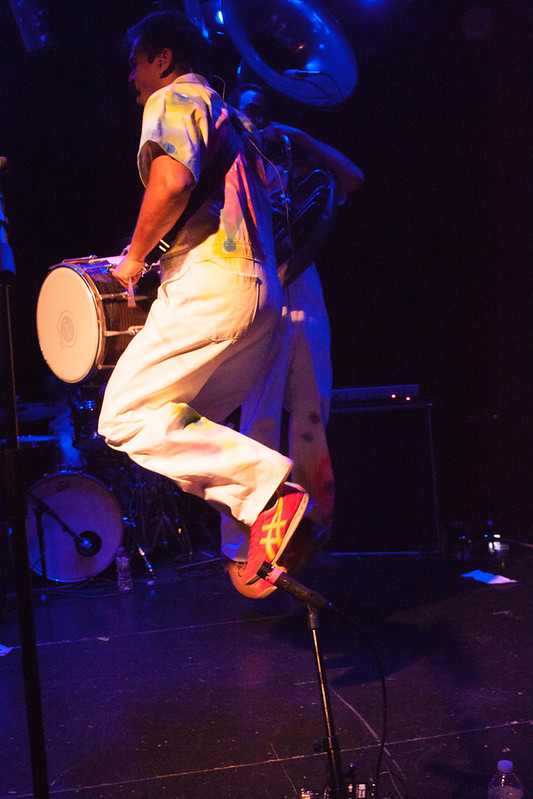
In the years after Hurricane Katrina devastated one of the world’s great musical cities, Preservation Hall Jazz Band, now lead by Allan Jaffe’s son Ben have continued their mission of promoting and preserving New Orleans’ jazz sound and culture — but with a decidedly modern take. Now, as you may know, Preservation Hall Jazz Band was recently in town to support the release of their second full-length album of original material So It Is with a packed house at Highline Ballroom and an appearance on Late Show with Stephen Colbert where they played the album’s fiery lead single “Santiago” with Jon Baptiste and his Late Show Band — and special guest, Dave Grohl, who was on the show to promote his new book with his mom, From Cradle to Stage.
Allan Jaffe founded Preservation Hall Jazz Band in 1961 with a vital and critical mission: promoting and preserving New Orleans‘ jazz and its jazz culture with the authenticity that it deserved. And although most of the act’s first lineup is no longer with us, the act has continued on its mission with a variety of different lineups, recording over 30 studio albums, a live album, and a touring schedule that has included collaborating with a number of renowned popular acts at festivals and concerts, helping to introduce and re-popularize the New Orleans jazz sound to concertgoers and music fans across the world.
With the act celebrating its 50th anniversary earlier this decade, the milestone left its current creative director Ben Jaffe, the son of the act’s legendary and beloved founder, and its current members with a couple of deeply existential and important questions: First, how does an institution based on early 20th century musical culture survive and prosper in the early 21st century? And second, how do they do that while continuing to preserve and honor New Orleans’ musical culture and sound? Interestingly, the answer Jaffe and company came up with was that they needed to reinvent themselves and their sound by looking at the future, but with a loving and kind gaze at what inspired and influenced them, and at their previous history. Or in other words, with the band’s first 50 years being focused on the sounds and styles of the past, Jaffe and company felt it was necessary to make the institution’s next 50 years about how they can modernize without forgetting or losing the vital connection to the past.
Jaffe and the members of the band decided that the best way to look towards the future would be to write and record new, original material — including the band’s first album of originals, the boisterous and joyous That’s It!, which included album title track “That’s It,” “Dear Lord (Give Me The Strength)” and “Rattling Bones” among others. April 21, 2017 will mark the release of the Dave Sitek-produced So It Is, the septet’s second album of original material — and the album’s material finds the band mining fresh influences, including their 2015 life-changing trip to Cuba. As the band’s leader, arranger, composer and multi-instrumentalist Ben Jaffe explains in press notes, “In Cuba, all of a sudden we were face-to-face with our musical counterparts. There’s been a connection between Cuba and New Orleans since day one — we’re family. A gigantic light bulb went off and we realized that New Orleans music is not just a thing by itself; it’s part of something much bigger. It was almost like having a religious epiphany.”
Featuring compositions and songs largely penned by Jaffe and 84 year-old saxophonist and clarinetist Charlie Gabriel in collaboration with the members of the band, the material ties the New Orleans jazz sound to the larger African Diaspora, in particular with the Afro-Caribbean and Afro-Cuban sound through the common sonic and aesthetic linkages — in particular Fela Kuti, Pharaoh Sanders and John Coltrane. Of course, the material also draws from the continuing post-Katrina rebuilding of New Orleans that has forced all locally-based artists to consider what the city’s sound and culture means and should be in 2017 and onwards. And lastly, the material draws from their collaborations with the likes of Stevie Wonder, Elvis Costello, The Grateful Dead, My Morning Jacket, Arcade Fire and The Black Keys.
As I mentioned earlier, Dave Sitek was enlisted to produce So It is. Sitek, best known as a founding member of TV on the Radio and a go-to producer, who has worked with Kelis, Yeah Yeah Yeahs, Santigold and others, also offered a modern perspective and a profound respect for the band’s history. In fact, as Sitek recalls upon his arrival in New Orleans to meet Jaffe and the members of the septet, he and Jaffe had randomly stumbled into one of the second-line parades, which New Orleans has long been known for. “I was struck by the visceral energy of the live music all around, this spontaneous joy, everything so immediately,” Sitek said in press notes. “I knew I had to make sure that feeling came out of the studio. It needed to be alive. It needed to sound dangerous.”
“Santiago,” So It Is’ first single bares a clear resemblance to the material on its predecessor as it possesses a boisterous, riotous joy; but unlike any of their previously released material, the composition is a difficult to pigeonhole melange of influences and sounds that features a propulsive rhythm section that seemingly draws from Cuban son, meringue and salsa, Afrobeat, and big band jazz paired with a bold, bright, swaggering horn lines familiar to New Orleans brass band and jazz. Interestingly, the composition possesses a loose and completely improvisational feel, as the musicians in the band catch a groove and ride it; but there’s also enough room for the members of the band to play strutting and swaggering solos. Simply put the band and this particular composition radiate an indefatigable joy — and if you don’t immediately start to dance as soon as you hear it, there’s something deeply wrong with you.
Now, if you’ve been frequenting this site for a while. you’d know that I have a profound love of the New Orleans sound, have written about the legendary Preservation Jazz Hall Band and have even caught them live a couple of years back, when they stopped at Brooklyn Bowl for an incredibly fun Christmastime show. The recently released video for “Santiago” captures the band at their best — live. And it shouldn’t be surprising that the video captures the song’s explosive and swaggering energy; but it should remind you that jazz while jazz over the past 50 or 60 years has been reduced to “classy” establishments, jazz has long been the sound of rebellion, of ebullient and frenetic joy, of passionate, seductive danger.
Allan Jaffe founded Preservation Hall Jazz Band in 1961 with a vital and critical mission: promoting and preserving New Orleans’ jazz and its jazz culture with the authenticity that it deserved. And although most of the act’s first lineup is no longer with us, the act has continued on its mission with a variety of different lineups, recording over 30 studio albums, a live album, and a touring schedule that has included collaborating with a number of renowned popular acts at festivals and concerts, helping to introduce and re-popularize the New Orleans jazz sound to concertgoers and music fans across the world.
With the act celebrating its 50th anniversary earlier this decade, the milestone left its current creative director Ben Jaffe, the son of the act’s legendary and beloved founder, and its current members with a couple of deeply existential and important questions: First, how does an institution based on early 20th century musical culture survive and prosper in the early 21st century? And second, how do they do that while continuing to preserve and honor New Orleans’ musical culture and sound? Interestingly, the answer Jaffe and company came up with was that they needed to reinvent themselves and their sound by looking at the future, but with a loving and kind gaze at what inspired and influenced them, and at their previous history. Or in other words, with the band’s first 50 years being focused on the sounds and styles of the past, Jaffe and company felt it was necessary to make the institution’s next 50 years about how they can modernize without forgetting or losing the vital connection to the past.
Jaffe and the members of the band decided that the best way to look towards the future would be to write and record new, original material — including the band’s first album of originals, the boisterous and joyous That’s It!, which included album title track “That’s It,” “Dear Lord (Give Me The Strength)” and “Rattling Bones” among others. April 21, 2017 will mark the release of the Dave Sitek-produced So It Is, the septet’s second album of original material — and the album’s material finds the band mining fresh influences, including their 2015 life-changing trip to Cuba. As the band’s leader, arranger, composer and multi-instrumentalist Ben Jaffe explains in press notes, “In Cuba, all of a sudden we were face-to-face with our musical counterparts. There’s been a connection between Cuba and New Orleans since day one — we’re family. A gigantic light bulb went off and we realized that New Orleans music is not just a thing by itself; it’s part of something much bigger. It was almost like having a religious epiphany.”
Featuring compositions and songs largely penned by Jaffe and 84 year-old saxophonist and clarinetist Charlie Gabriel in collaboration with the members of the band, the material ties the New Orleans jazz sound to the larger African Diaspora, in particular with the Afro-Caribbean and Afro-Cuban sound through the common sonic and aesthetic linkages — in particular Fela Kuti, Pharaoh Sanders and John Coltrane. Of course, the material also draws from the continuing post-Katrina rebuilding of New Orleans that has forced all locally-based artists to consider what the city’s sound and culture means and should be in 2017 and onwards. And lastly, the material draws from their collaborations with the likes of Stevie Wonder, Elvis Costello, The Grateful Dead, My Morning Jacket, Arcade Fire and The Black Keys.
As I mentioned earlier, Dave Sitek was enlisted to produce So It is. Sitek, best known as a founding member of TV on the Radio and a go-to producer, who has worked with Kelis, Yeah Yeah Yeahs, Santigold and others, also offered a modern perspective and a profound respect for the band’s history. In fact, as Sitek recalls upon his arrival in New Orleans to meet Jaffe and the members of the septet, he and Jaffe had randomly stumbled into one of the second-line parades, which New Orleans has long been known for. “I was struck by the visceral energy of the live music all around, this spontaneous joy, everything so immediately,” Sitek said in press notes. “I knew I had to make sure that feeling came out of the studio. It needed to be alive. It needed to sound dangerous.”
“Santiago,” So It Is’ first single bares a clear resemblance to the material on its predecessor as it possesses a boisterous, riotous joy; but unlike any of their previously released material, the composition is a difficult to pigeonhole melange of influences and sounds that features a propulsive rhythm section that seemingly draws from Cuban son, meringue and salsa, Afrobeat, and big band jazz paired with a bold, bright, swaggering horn lines familiar to New Orleans brass band and jazz. Interestingly, the composition possesses a loose and completely improvisational feel, as the musicians in the band catch a groove and ride it; but there’s also enough room for the members of the band to play strutting and swaggering solos. Simply put the band and this particular composition radiate an indefatigable joy — and if you don’t immediately start to dance as soon as you hear it, there’s something deeply wrong with you.