Tag: Nils Frahm

New Video: London Duo Tullamarine Releases a Haunting and meditative Visual for “Then Billy Said”/”What Billy Said Next”

London-based electronic duo, Tullamarine — British-born writer/producer Adam Young and Kiwi-born, London-based writer/producer Joss Arrmitage — features two accomplished artists, who have been friends for over 20 years, but who have long created separately — until 2015 when the duo formed their latest, collaborative project through the fog of late-night conversations and half-formed ideas.

Inspired by Brian Eno’s Oblique Strategies, the duo’s initial idea behind the project was to creatively push each other through experimentation and remote collaboration, with the hopes of bettering their respective music. Sharing two, four or even eight-bar snippets, and never working physically together in the same studio, the duo saw ideas gradually form and organize themselves into symbiotic designs of experimental production. Interestingly, they had no prearranged agenda, no pre-determined style; they went where each track took them in an intuitive fashion.

The duo’s intuitive process shouldn’t be surprising: Young, who’s an expert int twisting and shaping audio found and Armitage, whose style is defined by a deep and abiding love of synths quickly found a natural fit that came together through a shared production and writing approach. Initially. tracks were guided by Young or Armitage, but rarely both. But by the time the released And So We Followed Her Blindly Into The Sun EP there was a marked shift in their creative process, with the duo collaborating much more while revealing influences from the likes of Nils Frahm, A Winged Victory for the Sullen, Reich’s Music for 18 Musicians and a lot of nights at The Barbican.

With the October 20120 release of the three-song Stratosphere EP, Young and Armitage firmly established their sound, one that’s an assertive, melancholic soundscape. Continuing where Stratosphere EP left off, the emerging British electronic duo’s 17 track album Frequency, allows listeners to further experience their complex and unique soundscape, which evokes memories of clubbing, to more expansive and meditative material, interspersed with beat work that brings 90s alternative hip-hop and IDM. Interestingly, Frequency’s latest single “Then Billy Said”/”What Billy Said” is an expansive track with a meditative piano-led introduction before quickly transforming into a trance-inducing section featuring skittering beats, shimmering synth arpeggios that slowly builds up tempo — but while being an exercise in tense restraint without release. Adding to the eerily cinematic feel of the song, get composition focuses on Billy, a bewildered fictional character, created by the duo’s Joss Armitage, who had conflicted relationships with women since his mother died when he was a young boy.

Directed by WIlliam Glass, the recently released video for “Then Billy Said”/”What Billy Said” is an achingly nostalgic dream that stars Lilly Ashley as a sort of distorted and romanticized image of someone’s late mother. Throughout the video, Ashley’s mother-like figure holds a fish balloon, which the duo and the video’s director explains is meant to embody both the child and childhood. Of course, at some point, the woman eventually decides to let her balloon go. So the video alludes to the innocent and playful mother, and to death — with the tacit understanding that death is a part of it all.
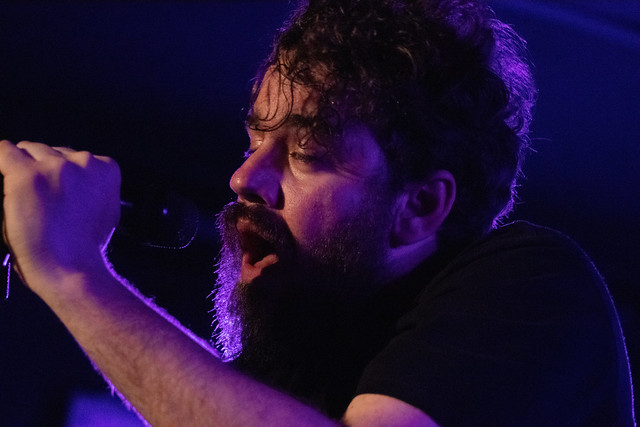
Born in Central Asia, the rising Berlin-based singer/songwriter, multi-hnstrumetnnalist, composer and producer Liam Mour can trace the origins of his music career to when he learned to play the piano at six — and at an early age, he began to record and produce music on mixers and tape machines. Because of his background, Mour was gradually drawn to enhancing his technical skills in music production.

After relocating to Berlin, Mour set up his own studio at Funkhaus Berlin, where he has pursued a number of musical projects, which have allowed him to play with Nils Frahm, tour with Gold Panda and to open for Four Tet and Max Cooper.

Mour’s latest single “Douro” is a slick synthesis of ambient electronics and techno thump that’s centered around layers of chiming percussion, shimmering synth arpeggios, a mournful horn sample and skittering beats. Sonically, the hook-driven track may remind listeners of Bonobo and Octo Octa — but with a subtle darkness just under the shimmering surface.


Theodore is a critically applauded, Athens, Greece-based multi-instrumentalist, singer/songwriter and composer, whose schooling in piano and traditional Greek folk music eventually led to a professional music career in London, where he studied Music Composition in 2011. As a composer and singer/songwriter, Theodore meshes classical compositions and arrangements with subtle electronic production and rock instrumentation to create a sound that’s atmospheric, cinematic that nods at psych rock, prog rock and experimental rock — and it shouldn’t be surprising that the Greek composer, singer/songwriter and multi-instrumentalist cites Sigur Ros, Radiohead, Pink Floyd, Manos Hadjidakis, Vangelis Papathanasiou, Nils Frahm, The National, Olafur Arnalds and Max Richter as being major influences on his work and sound. “I like a composer or a band because when I listen to the music or attend a concert I am just getting lost in the atmosphere,” Theodore explains in press notes. “I understand that orchestral music is something that I am really into and I will try to test my self in the future.”

Theodore has written compositions for Matina Megla’s Window, Vladan Nikolic’s film Bourek and he was commissioned to write a new, live score for Buster Keaton’s classic, 1928 silent comedy The Cameraman, which he and his band performed during  a screening at the Temple of Zeus. But interestingly enough, his sophomore album It Is But It’s Not, which was performed live at London’s Abbey Road Studio 2 has been his breakthrough effort as the accompanying performance video has amassed more than 2 million YouTube views — and as a result, the Greek composer, singer/songwriter and multi-instrumentalist has played sets at some of the world’s biggest festivals, including Reeperhbahn Festival, Eurosonic Nooderslag, Release Festival and SXSW. Adding to a growing profile, he has opened for Sigur Ros and DIIV, and has received praise from a number of major media outlets, including Clash Magazine, Music WeekTsugi, FGUK, Gaffa and Szene, as well as airplay from BBC Radio 6 Music’s Lauren Laverne. Oh, and I must add that “Towards (for what is to come)” is currently playlisted on NPR’s All Songs 24/7 and Germany’s Flux Passport Approved.

Theodore’s third, full-length album Inner Dynamics is slated for a November 2, 2018 release and the album finds him thematically looking inward to examine the dichotomies (and dualities) of his identity in order to seek new creative potential. “On It Is But It’s Not, I tried to explore how the opposite elements in the universe interact, how they fight and how without the one you can’t have the other.” Theodore says, adding, “For Inner Dynamics, I was trying to express my urge to connect the conscious and subconscious part of myself so I can be creative. It’s an understanding that humans are not just one thing, and they shouldn’t try to hide certain elements of their personality because society likes to put labels of who we are. It’s the different sides of my self that makes who I am.” Inner Dynamics‘ third and latest single “Disorientation” clocks in at a little over 6 minutes, and it finds Theodore’s sound nodding at dramatic film scores, Kid A and Amnesiac-era Radiohead-like atmospherics, Pink Floyd’s Wish You Were Here and Rush-like prog rock expansiveness, centered around Theodore’s yearning vocals and slick production.