Tag: singer/songwriters

Now if you had been frequenting this site over the last few months of 2016, you’d recall that with the release of “Help Yourself” and several other singles the Welsh-born, London-based singer/songwriter and guitarist Sarah Howells, best known as Bryde quickly exploded into both the British and international scene as she received praise from Nylon, The Line of Best Fit and Earmilk and airplay from BBC Radio 6, BBC Radio Wales, Radio X and Huw Stephens’ BBC Radio 1 show for a sound that’s been compared to the likes of Jeff Buckley, Sharon Van Etten, Ben Howard and London Grammar while thematically focusing on complex, ambivalent and hopelessly entangled relationships.

Howells’ previous single and her JOVM debut,  “Wouldn’t That Make You Feel Good” was a boozy and woozy dirge in which the Welsh-born, London-based singer/songwriter and guitarist’s aching vocals are paired with bluesy yet shoegazer-leaning power chords reminiscent of  PJ Harvey, in a song that built up into a cathartic and explosive bridge before gently fading out.  Howells’ latest single “Less” continues her successful collaboration with producer Bill Ryder-Jones and it’s a viscerally forceful 90s alt rock-leaning track featuring an alternating quiet, loud, quiet song structure with an anthemic and cathartic hook. And while still channeling PJ Harvey, the song also manages to nod at Liz Phair, Hole and others, complete with an unflinching honesty and vulnerability.


Now if you’ve been frequenting this site for a while, you’d know that the past couple of years have been incredibly productive and prolific for the critically applauded and renowned bassist, vocalist and JOVM mainstay artist Stephen “Thundercat” Bruner as he made guest appearances on two critically and commercially successful albums  — Kendrick Lamar‘s Grammy Award-winning album, To Pimp A Butterfly and  Brainfeeder Records labelmate, Kamasi Washington’s The Epic, and arguably one of of 2015’s best albums, The Beyond/Where the Giants Roam, an effort which further cemented Bruner’s reputation for being  a dexterous bassist and mischievous songwriter, as the material off that album possessed a retro-futuristic sound that nodded at Steve Wonder‘s legendary 1970s output, complete with wobbling and propulsive bass lines, arpeggio synths and Bruner’s sultry and plaintive falsetto.

Bruner’s third, full-length effort Drunk is slated for a February 24, 2017 release through Brainfeeder and the album will be an epic 23 track journey into the bizarre, hilarious and sometimes dark mind of the singer/songwriter and bassist — and the effort finds him collaborating with an All-Star list of collaborators including frequent collaborators and friends Kamasi Washington, Kendrick Lamar, Wiz Khalifa and Pharrell Williams, along with Michael McDonald and Kenny Loggins. While the album will feature fan favorites “Bus In These Streets” and “Them Changes,” one of my favorite tracks off The Beyond/Where The Giants Roam, Drunk’s first single “Show You The Way” was a soulful, 1970s jazz fusion-leaning track in which shimmering arpeggio synth lines, stuttering drums, Bruner’s incredible bass work and sultry falsetto with the legendary vocal work of Kenny Loggins and Michael McDonald that interestingly enough reminded me of  Michael McDonald’s “I Keep Forgettin’ (Every Time You’re Near).”

Although Valentine’s Day has passed, Drunk‘s latest single is an Anti-Valentine’s Day anthem in which the song’s narrator complains about a love interest, who has not only friend zoned him, but continually plays games with him and his feelings. And throughout the song, the song’s narrator builds up the courage to tell the object of his attention that he’s had enough of having his emotions and heart fucked with — and instead of being friend zoned by an asshole, he would be better off by himself. Sonically, the song continues along a similar vein of the album’s preceding single as shimmering, arpeggio synth lines, a wobbling and propulsive bass line and four-on-the-floor drums paired with Bruner’s dreamy falsetto; however, unlike “Show You The Way,” “Friend Zone” is full of the bitter recriminations and frustrations of cruelly unrequited love.


Best known as one-half of the renowned New York party and record label Mister Saturday Night, Justin Carter spent the past five years writing and recording in the stolen days and weeks here and there in various studios across the country. His full-length debut album The Leaves Fall is slated for a February 24, 2017 release through Mister Saturday Night Records, and features guest spots from Jason Lindner (piano), who played on Bowie‘s Blackstar, Archie Pelago’s Greg Hefferman (cello), programming by LIES and Trilogy Tapes producer Marcos Cabral. And as you’ll hear on the album’s third and latest single “With the Old Breed,” Carter pairs his tender and plaintive falsetto with a minimalist and spectral production featuring plinking vibraphone, big 808-like beats, shimmering synths and hi hat with swirling electronics to evoke the strange sensation of one’s ghosts being both distant yet extremely present, as they always are — while possessing a deeply pensive, soul-baring, confessional intimacy.


New Video: The Swooning and Heartbreaking Visuals of From Indian Lake’s “Blank Tapes”

Joey Vannucchi is an Indian Lakes, CA-bssed singer/songwriter and multi-instrumentalist whose solo recording project From Indian Lakes derives its name from the small community near Yosemite National Park where he grew up on 40 acres of land with virtually no electricity, aside from a sparely used generator. His latest effort Everything Feels Better Now can trace its origins to when Vannucchi recorded the skeletons of tracks for the album in the cheaply rented basement of a coffeeshop. He then traveled to Fairfax Studios in Los Angeles, where producer Kevin Augunus, who has worked with Delta Spirit and Cold War Kids and and engineer Gavin Paddock assisted Vannucchi in slowly stripping way tracks that needed to be replaced from the basement and home studio recordings and fleshing out material where necessary.

As for the completed album, it was released earlier this year to critical praise from the likes of Consequence of Sound and NPR Music for the “rawness of its emotions” and its “moody indie rock songs that look to the terse internal monologues of Now, Now and the atmospheric pop of Mew.” Vannucchi’s latest single “Blank Tapes” consists of lushly chiming and shimmering guitar chords, propulsive and rolling drumming and anthemic hook paired with Vannucchi’s plaintive falsetto vocals — and while the comparisons to Now, Now and Mew seem sensible to me, it doesn’t quite capture the swooning Romanticism at the core of the song or the fact that sonically speaking that this particular single manages to nod at both Silversun Pickups and classic shoegaze.

Directed by Joshua Hailing, the recently released video for “Blank Tapes” follows two young lovers and captures the ecstatic joy and heartbreaking agony of a relationship, and in some way the video is meant to be an allegory for more than the typical ups and downs of young love — hell, of any love, really. “I wanted to create an isolated world,” Hailing explains in press notes. “Everyone has their own ‘Sarah,” he continues. “They find themselves in this euphoric site with the idea of either someone, something or themselves. We become intoxicated with this image of how we wish things could be, and use it as a scapegoat to hide away from our own confusion, frustrations and denial.” And the video subtly reminds the viewer that love can often be a heartbreaking and confusing business, resulting in the endlessly lingering ghosts of our lives.

New Video: The Moody Art Film Visuals for Gothic Tropic’s “How Life Goes”

Now, if you had been frequenting this site over the last few months of 2016, you’ve likely come across “Stronger,” the first single from Los Angeles, CA-based guitarist and vocalist Cecilia Della Peruti’s solo recording project, Gothic Tropic. Arguably best known as a touring and session guitarist for Charli XCX and BØRNS, Gothic Tropic possesses a decidedly New Wave/post-punk-leaning sound; in fact, the aforementioned “Stronger” sounded — to my ears, at least — as though it owed a debt to Go-Gos, The B52s and Too True-era Dum Dum Girls. However, “How Life Goes” Peruti’s second single is a much more atmospheric and lush track in which plaintive harmonies are paired with shimmering guitar chords played through reverb and delay pedal, a propulsive and driving rhythm section, gently buzzing synths, a bluesy guitar solo and an anthemic hook.

Lyrically, the song focuses on heartbreak — in this particular instance, the song’s narrator finds herself beginning for forgiveness, understanding and a second chance for a slight — whether real or not is another issue — that has added a bit of ambivalence into the relationship; the sort of ambivalence that can make a potentially good relationship turn especially bad.

The recently released video for the song possesses an art film vibe as it begins with a woman creating a time capsule for 1968 that the video’s present protagonist finds buried in the woods — and while being a bit revelatory, the package manages to also be a bit deceptive. Trippy, eh?

New Audio: Nick Hakim Returns with His Spectral Take on Singer/Songwriter Soul

With the release of Where Will We Go Part 1 and Where Will We Go Part 2, the Washington, DC-born, Brooklyn-based singer/songwriter Nick Hakim quickly established a national and international profile for a sound that effortlessly blurs genres as it possesses elements of classic soul, the blues, the soulful troubadour tradition of Van Morrison and others with hauntingly spectral electronic production and a soul-bearing, confessional intimacy.

Now, it’s been some time since I’ve written about him; however, Hakim has been busy writing and recording the material that would eventually comprise his forthcoming full-length debut Green Twins, which is slated for a May 19, 2017 release through ATO Records. Interestingly, Hakim can trace the origins of Green Twins’ material to when armed with the masters for Where Will We Go Part 1 and Where Will We Go Part 2, the Washington, DC-born singer/songwriter relocated from Boston to where he was based at the time to Brooklyn. And as soon as he moved, he spent his time fleshing out incomplete songs, writing and recording sketches and lyrics on voice memos and a four-track cassette recorder. The Washington, DC-born, Brooklyn-based singer/songwriter then took his demo’d material to studios in NYC, Philadelphia and London and built upon them with a number of engineers, including Andrew Sarlo (bass, engineering and production), who were tasked with keeping the original spirit and essence of the songs intact. As Sarlo explained in press notes, for many artists, a demo usually serves as a rough sketch of what the song could eventually become; however, for Hakim, the feeling is that the demos are much more like creating a temple — and as a result, you simply clean, furnish and prepare entrants for a profoundly religious experience.

Thematically speaking, the material on the album focuses on particular aspects o this life. As Hakim mentions in press notes, a lot of the material is based on what he was thinking at that very moment, and in many ways the album consists of a series of self-portraits. “I also felt the need to push my creativity in a different way than I had on the EPs,” Hakim says in press notes. “The record draws from influences spanning Robert Wyatt, Marvin Gaye and Shuggie Otis to My Bloody Valentine. We wanted to imagine what it would have sounded like if RZA had produced a Portishead album. We experimented with engineering techniques from Phil Spector and Al Green’s Back Up Train, drum programming from RZA and Outkast, and we were listening to a lot of The Impressions, John Lennon, Wu-Tang, Madlib and Screamin’ Jay Hawkins.” And as soon as you hear the album’s first single “Bet She Looks Like You,” the confessional and intimate songwriting remains, as it’s soul-bearing to a point of being heartbreakingly visceral; but it manages to be a subtle expansion upon his sound — the song manages to remain hauntingly spectral while possessing an equally subtle, bluesy swagger.

New Video: Introducing the Classic Country and Early Rock-Inspired Sound of Laura Jean Anderson

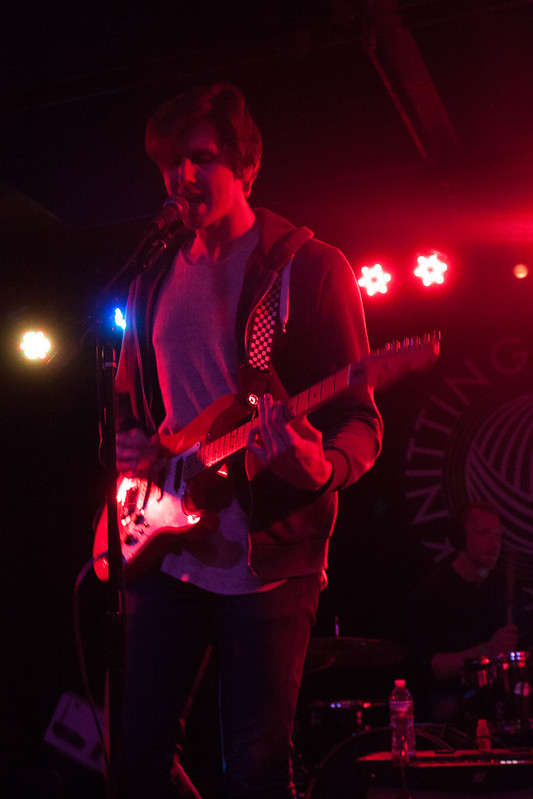
Laura Jean Anderson is an Olympia, WA-born, Los Angeles, CA-based singer/songwriter and guitarist who has started to receive attention for a sound and aesthetic that draws from classic country, 40s-50s blues and garage rock but with a subtly modern take, serving as a gentle reminder that earnest and personal songwriting may be more necessary than ever in the dark days that seem to be ahead of us. Anderson’s latest single “Won’t Give Up” features the Los Angeles, CA-based singer/songwriter’s gorgeous and expressive Patsy Cline/June Carter Cash-like vocals paired in a relatively simple arrangement of Anderson’s gently strummed electric guitar, and the addition of a gently propulsive rhythm section, which enters for the song’s anthemic and soaring hook. And although the song sounds as though it could have been released in 1956 or so, the Olympia, WA-born, Los Angeles-based singer/songwriter explains in press notes, a “response to what’s going on in the political and social climate.” She goes on to say that she wanted to release the song “as fuel to the belief that you can’t give up on other people, just because they give up on you. It’s a deeply personal song, but I believe more than ever that the personal is political!”

Certainly, the song should remind the listener of the cliched adage that “no man is an island” and that most importantly, in these strange times, the universe can create some rather strange bedfellows. We’re going to have to rely on each other more than ever. So don’t give up; the fight is going to be long and tiring, but worthwhile in the end.

The past two years were incredibly productive and prolific years for the critically applauded and rewound bassist, vocalist and JOVM mainstay  Stephen “Thundercat” Bruner as he made guest appearances on two critically and commercially successful albums — Kendrick Lamar‘s Grammy Award-winning album, To Pimp A Butterfly and  Brainfeeder Records labelmate, Kamasi Washington’s The Epic, as well as one of 2015’s best albums, The Beyond/Where the Giants Roam, which further cemented his reputation as a dexterous and playful bassist and songwriter, with material that sonically channeled Stevie Wonder’s incredible 70s output, as it possessed a retro-futuristic sound as wobbling and propulsive bass lines were paired with arpeggio synths and Bruner’s sultry and plaintive falsetto.

Now, as you may remember last year, I wrote about “Bus In These Streets,” the first bit of music from the renowned bassist and vocalist in over a year, and the single was a comedic and playful ode to our reliance and dependence on technology in which Thundercat’s dexterous and sinuous bass lines with Louis Cole (keys, drums and programming) contributing shimmering and twinkling keys and propulsive drum programming and frequent collaborator Flying Lotus contributing more programming and editing in a song that evokes a dreamy, distracted  self-absorption as the song’s narrator spends their time staring at their smartphone, not noticing the world pass him by — or the inherent danger he might be walking into as he stupidly stares into his phone.

Bruner’s third, full-length effort Drunk is slated for a February 24, 2017 release through Brainfeeder and the album will be an epic 23 track journey into the bizarre, hilarious and sometimes dark mind of the singer/songwriter and bassist — and the effort finds him collaborating with an All-Star list of collaborators including frequent collaborators and friends Kamasi Washington (a Brainfeeder labelmate), Kendrick Lamar, Wiz Khalifa and Pharrell Williams, along with Michael McDonald and Kenny Loggins. While the album will feature fan favorites “Bus In These Streets” and “Them Changes,” one of my favorite tracks off The Beyond/Where The Giants Roam, Drunk‘s first single “Show You The Way” is a sleek and soulful jazzy  track in which shimmering arpeggio cascades of synths, stuttering drums, Bruner’s imitable bass lines are paired in an incredible collaboration that features Bruner’s sultry falsetto with the imitable vocals of Kenny Loggins and Micheal McDonald. Sonically speaking the song is an uncanny synthesis of Michael McDonald’s “I Keep Forgettin’ (Every Time You’re Near)” and Bruner’s signature funky, retro-futuristic jazz fusion.

So how did such a high-powered collaboration come about? Thundercat has publicly mentioned his love of Loggins and his work during interviews to promote both The Beyond and the tour for the album — and it lead to his keyboardist Dennis Hamm introducing Bruner to Loggins. According to both Bruner and Hamm, Loggins then suggested bringing in Michael McDonald on the track. And as Bruner adds in press notes “I think one of the most beautiful moments of it was realizing how amazing Michael McDonald was. He would go through so many ideas and have so much to offer.” As for the song, Bruner says “That song to me is about going down the rabbit hole, taking you to another place . . . On the edge of dark, there’s the brightest light. It means a lot to me in the sense of . . .the experience that I’ve had growing up with friends and people that I’ve been around where it’s inventing them into where I come from emotionally. Sometimes it’s a pretty intense thing. The point is how weird things can get. ”


With the release of her first two, critically applauded full-length efforts, her 2011 full-length debut and its highly anticipated follow-up Perfect Storm, which was produced by Johannes Berglund, who has worked with internationally acclaimed acts The Knife and I Break Horses, the Stockholm, Sweden-based singer/songwriter and electronic pop artist Ester Ideskog, best known as Vanbot quickly established a reputation for crafting ethereal, hook-driven and deeply thoughtful pop.

“Collide (Krasnoyarsk), ” the first single off her third full-length effort Siberia, which is slated for an April release through Sony Music Sweden and the single while continuing her ongoing collaboration with Johannes Berglund also manages to be a subtle change in in sonic direction as the track possesses a brooding and atmospheric air paired with thumping beats, shimmering synths that twist themselves around Ideskog’s ethereal vocals, and some industrial clang and clatter — and in some way, the song sonically reminds me quite a bit of Niki and the Dove, Moonbabies and others, thanks in part to its hook-driven nature and moody feel. But it’s core is a raw heartache that’s deeply visceral.

As Ideskog explains in press notes, “‘Collide (Krasnoyarsk)’ was written after four days on the Trans-Siberian Railway, traveling through the deepest parts of Siberia. The temperature was just above zero, it was raining and we were passing through small villages and old industrial communities. It describes the collisions and the attractions in relationships, and having no choice but to accept the raw and un-retouched feelings. You know, it’s like the poem of David Jones: ‘It’s both a blessing and a curse to feel everything so very deeply.’”


New Video: The Trippy Visuals for Up-and-Coming Australian Pop Act Darling James’ Latest Single “God’s Graffiti”

Arguably best known as the frontman of renowned Melbourne, Australia-based act Boat People, multi-instrumentalist and singer/songwriter James O’Brien’s solo recording project Darling James has developed a reputation for locally and nationally for crafting thoughtful and sophisticated pop — with the first three singles off his recently released Theory of Mind EP receiving airplay from Triple J and Double J. And as you’ll hear on the EP’s latest single “God’s Graffiti,” O’Brien pairs tight and infectious pop hooks with thoughtful, metaphysical-leaning lyrics and a slick and atmospheric production that features cascades of twinkling synths and propulsive drum programming — and while sonically being reminiscent of Reptile Youth’s Away EP, the song manages to possess an earnest yearning for meaning, for more.

Directed by Luke Constable, the recently released music video initially had a completely different concept — but ended with Constable placing a camera atop an unnamed car rolling down a slight incline. And as they were shooting, the pair spent a great deal of time leaping into the moving car to prevent it from rolling onto bike paths and train tracks.

Sarah Beatty is a Hamilton, ON-based singer/songwriter, who cites a rather diverse array of influences including Hank WIlliams III, Billie Holiday, Janis Joplin, Johnny Cash, Sarah Harmer, Sue Foley, The Beastie Boys, G. Love and Special Sauce, Chopin, Led Zeppelin, Sinead O’Connor, Ani DiFranco, Loudon Wainwright III, The Grateful Dead, The Flaming Lips, Handel, Tony Rice and Doc Watson, among a lengthy list. Her forthcoming sophomore full-length effort Bandit Queen is slated for release on February 3, and the album is a connect album based around the life of a renowned 19th century bank robber and horse thief Belle Starr. As Beatty explains in press notes: ” “When I read about Belle Starr, the fabled bank heist mastermind turned horse thief, she grabbed my attention immediately. And from that original inspiration, I began imagining and contemplating all kinds of stories that rarely get told about women, even in the 21st century. Each of the songs on this record tells a different story, and as a collection they become the spine of a whole other adventure.”

While Beatty’s vocals remind me a bit of a more soulful Joni Mitchell, the song possesses a quiet, self-assured swagger, while portraying its subject with a profound understanding and empathy; in some way, the Bandit Queen at the core of the song is seen as a post-modern hero. As Beatty explained about the song  “There are all kinds of mythologies telling people who they are and who they aren’t. With this song, I wanted to invite the dark parts into the storyline and inspire listeners to be their whole, real, bodacious, outlawed selves” — or perhaps to be embrace their inner “Nasty Woman.” And in many ways, it’s a subtly punk leaning version of contemporary folk. In this incredibly fraught and uncertain political environment such a message seems particular fitting.