Tag: Snoop Dogg

Musings: A Decade of JOVM

I started this site 10 years ago today. . .

There aren’t many things in my life that I’ve done for every single day for a decade that I’ve loved as much as this very unique little corner of the blogosphere. When I started this site, I  didn’t — and couldn’t — imagine actually having readers, let alone readers across the US, Canada, the UK, the European Union, Australia and elsewhere. After all, this sort of work is deeply rewarding and yet strangely isolating.

I couldn’t have imagined the over 1,000 shows I’ve covered all across the New York Metropolitan area. I definitely couldn’t have imagined it being possible for be to cover shows for JOVM in Chicago while on a business trip for a day job; nor would I have dreamed of the possibility of covering M for Montreal last fall.

I couldn’t have imagined being a panelist on a Mondo.NYC Festival panel on PR and promotion for indie artists.

I couldn’t have imagined having a cameo in a JOVM mainstay’s video several years ago. (It’s a noticeable and prominent spot towards the end of the video, too. No one has called me up for acting gigs, so I may need more work on that. Or I need to stick to the writing and photography!)

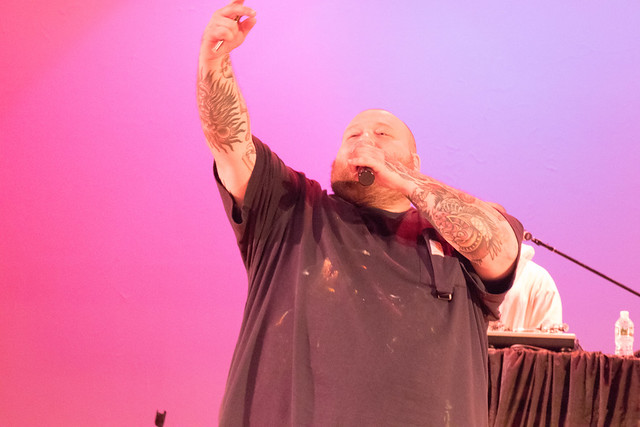
I couldn’t have imagined photographing Patti LaBelle, Snoop Dogg, Charles Bradley  Sharon Jones, Nile Rodgers, Roky Erickson, Philip Bailey and so many others, as well as this site’s countless mainstays.

What will the next decade hold? I don’t know. If you asked me that question last November, I’d probably discuss my the very real possibility of repeated visits to Canada for festivals like Canadian Music Week, Montreal Jazz Fest and M for Montreal — with the hopes of building a deeper Canadian audience. I’d talk about my interest in music from across the African Diaspora. I’d spend time talking about my interest in covering acts outside the US. I’d also speak about my interest in wanting to cover more artists across the diverse LGQBTIA+ community  — particularly those of color. I’d probably also mention my deep and abiding interest in covering women artists and women led acts.

Live music won’t be a thing for quite some time to come. And whenever it does, the landscape will be different — and something we’ve yet to envision. So far, beloved venues have been forced to close because of economics. That will continue for the foreseeable future. What will happen to bands, who no longer have a place to play, where they can hone their sound and their live show? Who knows? After watching an industry-based panel, I don’t feel particularly optimistic about things in the short term. Some of us will figure out a way to adapt and survive; others sadly, won’t.

But in the meantime, JOVM will continue. It’s only the first decade, as far as I’m concerned!

**

I also wanted to talk a bit about some of my favorite albums of the past decade. This is by no means a comprehensive list; but I think that they might give some insight into the inner world of JOVM. And

Montreal-based DJ, production and electronic music artist duo The Beat Escape — Addy Weitzman and Patrick A. Boivin — can trace the project’s origins back to a short film they collaborated on when they were both in college. “We made a short oddball work; a video piece that followed two characters through a psychedelic waking dream,” the Montreal-based said of their initial collaboration together in press notes. Interestingly, since that collaboration, Weitzman and Boivin have continued working together on a series of creative endeavors that have combined their interests in music and visual art, including a lengthy local DJ gig, which eventually led to the creation of The Beat Escape.

Released in early 2018, the Montreal-based duo’s full-length debut Life Is Short The Answer’s Long thematically and sonically found the duo returning to their origins — somnambulant, atmospheric art that feels like a half-remembered waking dream. Personally, the album’s material evokes a weird two-and-year period of international and domestic travel, in which I’d wake up in a hotel room and briefly wonder where I was, what time zone I was in and if I was even in the right place. Additionally, it evokes that weird sensation of everything being the fundamentally the same, yet different. If I’m in Grand Central Terminal, I think of Frankfurt-am-Main Hauptbahnhof and of Amsterdam Centraal Station. If I’m traveling underneath an elevated train, I’m reminded of the Chicago loop and so on.

I obsessively played Life Is Short The Answer’s Short through my time in Montreal. And now whenever I play it, I can picture specific locations, specific paths I took to get there, certain Metro stations with an uncanny precision.

Throughout the course of the site’s decade history, I’ve written quite a bit about Superhuman Happiness. The act has managed to survive through a number of different lineup changes and sonic departures necessitated by those lineup changes — and from the act’s core members following wherever their muses took them, Hands though is a joyous, mischievous yet deeply intelligent work that will make you shout and dance. Considering the bleakness of our world, this album may be much more needed than they ever anticipated.

Deriving their name from a Vladimir Nabokov short story about a traveler, who finds a place so beautiful that he wants to spend his life then but who cruelly  gets dragged back to brutal reality, the Dublin, Ireland-based act Cloud Castle Lake — currently Daniel McAuley (vocals, synths), Brendan William Jenkinson (guitar, piano), Rory O’Connor (bass), Brendan Doherty (drums), and a rotating cast of collaborators, friends and associates — received attention with 2014’s self-released debut EP Dandelion, an effort that firmly established the act’s uniquely sound: deeply influenced by and indebted to  Alice Coltrane and Pharaoh Sanders, the Irish act pairs McAuley’s tender and soaring falsetto with cinematic arrangements and expansive song structur es.

Released in 2018, the act’s Rob Kirwan-produced debut Malingerer is an ambitious, challenging and breathtakingly beautiful work that’s part film score and part cosmic meditation, full of aching yearning.

A couple of years ago, I caught the Irish act play at Rockwood Music Hall, as part of the Lower East Side venue’s monthly Communion showcase — and their set was met with awed and reverential silence.

Stockholm, Sweden-based garage punk outfit Sudakistan — Michell Serrano (vocals), Maikel Gonzalez (bass), Carlos Amigo (percussion) Juan Jose Espindola (drums) and Arvid Sjöö (guitar) — have one of the most unique and perhaps most 21st Century backstories of any band I’ve ever written about: four of the band’s five members emigrated to Sweden from South America with the remaining member being the band’s only native Swede. With the release of their debut album, 2015’s Caballo Negro, the members of Sudakistan received attention across Scandinavia and elsewhere for crafting material that draws from Latin-tinged garage punk rock with lyrics sung in English, Spanish and Swedish. Interestingly, the alum is arguably hardest and most mosh pit friendly of the band’s albums to date, the album’s material found the band expanding their sound through the incorporation of non-traditional punk rock instruments — seemingly inspired by the band’s desire to make each of their individual roles to be much more fluid. . “It was much more of a collaboration between the five of us,” the band’s Michell Serrano explains in press notes. . “Things flowed differently. Carlos sings on two or three songs, and Mikael sings on one. We swapped instruments quite a lot, and because we had access to everything in the studio, we were able to use some piano, some acoustic guitar and some mandolin, too.”

Additionally, the album’s lyrical and thematic concerns draws from the band members’ everyday reality with each individual member contributing lyrical ideas. “Our first album was made over five years, rather than five months, so the themes on it weren’t as heavy as this. Now, we’re talking about a lot of the things that we’ve gone through together since we started the band, as well as personal things – like, why do I keep repeating the same mistakes. We talk about pursuing our own Swedish reality, but that’s just because we’re living in Sweden – it’s relatable in any other country, I think,” Maikel Gonzalez says in press notes.

The album’s material resonates in an age of divisiveness, xenophobia, fear mongering and strife because its an urgent and passionate reminder of what’s possible with cultural exchange, empathy and curiosity —  bold new ideas, new takes on the familiar, as well as equality for all with everyone’s story behind heard, understood and championed. One day that will happen but we will have to work our asses off to get there.

Throughout this site’s nine year history, I’ve spilled quite a bit of virtual ink covering the ridiculously prolific, New York-based producer, DJ, remixer and JOVM mainstay Rhythm Scholar. And as you may recall, the New York-based JOVM mainstay has received attention from this site and elsewhere for funky, slinky produced and crowd-pleasing remixes and mashups of classic soul, funk. hip-hop and New Wave.

Over the past few months, Rhythm Scholar has released a kaleidoscopic remix of Snoop Dogg and Pharrell Williams‘ smash hit collaboration “Drop It Like It’s Hot” and a propulsive, house music-leaning remix of one of my favorite Tears for Fears tracks “Head Over Heels.” Interestingly, the New York-based mainstay’s latest remix finds him creating a swaggering and strutting 70s soul and funk-inspired mashup of Warren G.’s and Nate Dogg’s “Regulate” that features loving homages to Edwin Starr, The Blackbyrds, Kurtis Blow, Michael Jackson, Billy Joel, some explosive scratching and an extensive nod at Stevie Wonder‘s “Superstition” — all while retaining the noir-ish feel of the original.


New Audio: Rhythm Scholar Releases a Club Friendly Remix of Tears for Fears’ “Head Over Heels”

Throughout the course of this site’s nine year history, I’ve spilled quite a bit of virtual ink over the ridiculously prolific, New York-based producer, DJ, remixer and JOVM mainstay Rhythm Scholar. The New York-based JOVM mainstay has received attention from this site and elsewhere for funky and slickly produced, crowd-pleasing mashups of classic soul, funk, hip-hop and New Wave. 

Last month, Rhythm Scholar released a kaleidoscopic remix of Snoop Dogg and Pharrell Williams‘ smash hit collaboration “Drop It Like It’s Hot.” Interestingly, the longtime JOVM mainstay returns with a propulsive, house music-influenced remix of one of my favorite Tears for Fears tracks “Head Over Heels.”The Rhythm Scholar remix pushes the tempo up towards the club friendly area, while still retaining the song’s familiar and beloved melody, and urgently swooning quality. Interestingly, the remix does two very important things: it reminds listeners that well-crafted and well-written songs manage to stand up to the test of time — and provides a unique and modern take on a smash hit that most of us intimately know. 

Throughout the course of this site’s almost nine year history, I’ve spilled quite a bit of virtual ink on the ridiculously prolific New York-based producer, DJ, remixer and JOVM mainstay Rhythm Scholar. Now, as you may recall, the New York-based JOVM mainstay has received attention from this site and elsewhere for a slickly produced, funky, crowd-pleasing mashups and remixes of classic soul, funk, soul, hip-hop and New Wave. Interestingly, over the past year or so, Rhythm Scholar has enlisted a backing band featuring frequent collaborators Jason Spillman (bass) and Marcus Horndt (Rhodes) and Big Once (turntables), all of whom have helped the JOVM mainstay move towards an increasingly organic take on his work.

Rhythm Scholar’s latest remix finds him taking on Snoop Dogg and Pharrell Williams‘ smash hit collaboration “Drop It Like It’s Hot.” And while retaining Snoop’s imitable and effortlessly smooth flow, the JOVM’s mainstay’s kaleidoscopic remix recalls both Dr. Dre-inspired G Funk-era production and cinematic 70s soul, as the track feature samples from four classic blaxploitation films, 1973’s The Mack, 1973’s Magnum Force, 1975’s Rollerball and 1976’s Car Wash and is centered around twinkling Rhodes, a propulsive, disco-like bass line, fluttering electronics, congos and some much-needed, old school turntablism. Simply put, it’s a lysergic yet funky strutting take on a beloved banger.


Born in the early 70s, the Pasadena, CA-born, Los Angeles, CA-based multi-instrumentalist, composer, singer/songwriter and producer Damon Garrett Riddick, best known as JOVM mainstay Dam-Funk came of age during the heyday of acts like Uncle Jamm’s Army and Egyptian Lover, two of the area’s pioneers of electro hip-hop and what would become West Coast hip-hop — and of course, the legendary Prince.

Riddick’s parents encouraged and nurtured his interest in music: he learned drums and then drum machine. A chance encounter led to an apprenticeship under funk songwriter/producer Leon Sylvers III, and by the mid-90s, the height of West Coast, G-funk hip-hop, Riddick was a highly-sought, local session musician, playing on tracks by Mack 10 and MC Eiht. “Everybody was trying to do the live instrumentation thing, so then you got cats like me playing on records,” Dam-Funk explained on his Stones Throw Records artist bio.

Sideman status wasn’t enough for him though. While watching gold plaques be handed out to everyone but him, Riddick decided that it was time to go “full-funk” and make a do-or-die try to become an artist on his own terms. In 2006, he and a few friends launched the popular Funkmosphere party. Around then, the Pasadena-born, Los Angeles multi-instrumentalist, composer, singer/songwriter and producer caught the attention of Stones Throw Records. Unsurprisingly, the label related to Riddick’s insistence that funk needed to be saved from cartoonish and devilish caricature — and that funk was a way of life.

Stones Throw Records released his first two full-length albums — 2009’s Toeachizown and 2015’s Invite the Light, as well as a  compilation of his early production, 2010’s Adolescent Funk. 2013 was a big year for the Pasadena-born, Los Angeles-based JOVM mainstay — his collaboration with Steve Arrington Higher was released that year, and he teamed up with Snoop Dogg in the funk and hip-hop act 7 Days of Funk, who also released their debut album that year.

Each of those releases helped to establish Dam-Funk’s signature sound and aesthetic — synth-based funk that draws from G-Funk era hip-hop and 80s synth funk. However, over the past couple of years, Riddick has been experimenting with the warmer sides of deep house and techno with material released through his own imprint Glydezone Recordings while spending time DJ’ing, and working on remixes and mixes.

Slated for release next week through his own label, the Pasadena-born, Los Angeles-based JOVM mainstay’s forthcoming effort STFU II while being a follow-up to last year’s Architecture II is reportedly a gradual return to his old-school funk roots — and a long-awaited sequel to 2015’s free all-instrumental EP STFU. Now, as you may recall, clocking in at over 7 minutes, the EP’s first track, the strutting EP closer “On Code.” Centered by tweeter and woofer rocking beats, layers of arpeggiated bass synths, keytar and atmospheric electronics that gave the affair a subtle cosmic glow.

“Compos Mentis,” the EP’s second and latest single is centered around a lush and jazz-tinged funk arrangement featuring arpeggiated bass synths, atmospheric electronics, tweeter and woofer rocking beats and twinkling keys — and much like its immediate predecessor, the track possesses a similar, subtle cosmic glow and an deep melodic sensibility.


Born in the early 70s, the Pasadena, CA-born, Los Angeles, CA-based multi-instrumentalist, composer, singer/songwriter and producer Damon Garrett Riddick, best known as JOVM mainstay Dam-Funk came of age during the heyday of acts like Uncle Jamm’s Army and Egyptian Lover, two of the area’s pioneers of electro hip-hop and what would become West Coast hip-hop — and of course, the legendary Prince.

Riddick’s parents encouraged and nurtured his interest in music: he learned drums and then drum machine. A chance encounter led to an apprenticeship under funk songwriter/producer Leon Sylvers III, and by the mid-90s, the height of West Coast, G-funk hip-hop, Riddick was a highly-sought, local session musician, playing on tracks by Mack 10 and MC Eiht. “Everybody was trying to do the live instrumentation thing, so then you got cats like me playing on records,” Dam explained on his Stones Throw Records artist bio.

Sideman status wasn’t enough for him though. While watching gold plaques be handed out to everyone but him, Riddick decided that it was time to go “full-funk” and make a do-or-die try to become an artist on his own terms. In 2006, he and a few friends launched the popular Funkmosphere party. Around then, the Pasadena-born, Los Angeles multi-instrumentalist, composer, singer/songwriter and producer caught the attention of Stones Throw Records. Unsurprisingly, the label related to Riddick’s insistence that funk needed to be saved from cartoonish and devilish caricature — and that funk was a way of life.

Stones Throw Records released his two full-length albums — 2009’s Toeachizown and 2015’s Invite the Light, a compilation of his early production, 2010’s Adolescent Funk. 2013 was a big year for the Pasadena-born, Los Angeles-based JOVM mainstay — his collaboration with Steve Arrington Higher was released that year, and he teamed up with Snoop Dogg in the funk and hip-hop act 7 Days of Funk, who also released their debut album that year. Each of those early releases helped to establish Dam-Funk’s signature sound and aesthetic — synth-based funk that draws from G-Funk era hip-hop and 80s synth funk. However, Riddick has spent the past couple of years experimenting with the warmer sides of deep house and techno with material released through his own imprint Glydezone Recordings while spending time DJ’ing, and working on remixes and mixes.

Slated for a May 17, 2019 release through his own label, Dam-Funk’s forthcoming effort STFU II reportedly is a gradual return to his old-school funk roots while serving as a both a follow up to last year’s Architecture II EP and along-awaited sequel to 2015’s free, all-instrumental EP STFU. Continuing in the vein of its sonic predecessor, the EP’s first track, the strutting EP closer “On Code” clocks in at just under seven minutes and is centered by thumping, tweeter and woofer rocking beats, layers of arpeggiated bass synths and keytar and atmospheric electronics. And although the material is lovingly indebted to the period that influenced it, the song possesses a subtle cosmic glow — all while reminding the listener of Dam-Funk’s innate melodicism.


F

New Video: Stone Mecca’s Politically Charged and Heartfelt Visuals for “Boogeyman”

Stone Mecca is a Los Angeles, CA-based producer, singer/songwriter and self-taught multi-instrumentalist, who honed his own craft by listening to Jimi Hendrix, BB King, Parliament Funkadelic, Al Green, Prince, and Earth, Wind and Fire — and as a producer and musician, the Los Angeles-based producer and musician has played live with the aforementioned Earth, Wind and Fire, George Clinton, Wu-Tang Clan and RZA. Developing a reputation for easily navigating through a diverse array of musical genres and styles, Stone Mecca has contributed to the soundtracks for Django Unchained, The Main with the Iron First, Friday, Blade: Trinity, Soul Plane, Repo Men, Afro Samurai and Afro Samurai Resurrection. The Los Angeles-based producer and multi-instrumentalist has also appeared on albums by Wu-Tang Clan, RZA, Kanye West, Ice Cube and Snoop Dogg. And as a solo artist, Stone Mecca’s 2007 full-length debut First Contact featured the critically acclaimed song “A Walk,” a track that OkayPlayer said “in a fair world, music like this would be present all the tim eon prime time rotation in various radio markets.” 

Stone Mecca’s latest album Alienman was released last November, and the album finds the Los Angeles-based producer and multi-instrumentalist stripping down his sound to the rawest form possible — and while pairing tweeter and woofer rocking hip hop beats, funky bass lines, bluesy guitars and soulful melodies, his sound generally blurs the lines between hip-hop, soul, blues, funk and roots rock. Alienman’s latest single is the sultry and swaggering “Boogeyman.” Centered around thumping beats, some blazing guitar work and a G-funk era bass line, the track features some politically charged and righteous lyrics that subtly recall the great Curtis Mayfield and JOVM mainstay Cody ChesnutT, as the song touches upon hypocrisy and challenges media-driven fear-mongering, stereotyping and racism. 

Directed by Alex Von Kurkendall and based on a concept by Stone Mecca and Von Kurkendall, the recently released video further emphasizes the politically charged nature of the song as it reminds the viewer that with every group there are villains and heroes — and that most important, we live in a society in which the dignity and decency of entire groups of people are being ignored. 

New Audio: Acclaimed Duo Silk City Team Up with Dua Lipa on a Sultry Classic Chicago House-Inspired Banger

Born Thomas Wesley Pentz, Diplo is a prolific and acclaimed Los Angeles-based producer, DJ and electronic music artist. As a solo artist, he’s managed to see a fair degree of commercial success with 2013’s Revolution EP, which debuted at #68 on the US Billboard 200 — and the EP’s title track was later featured in a Hyundai ad campaign and on the WWE 2K16 soundtrack. Diplo is also known as the co-founder and lead member of the electronic dancehall project Major Lazer, and one-half of electronic music production and artist duo Jack U with Skrillex. And as a producer, the Los Angeles-based producer, DJ and electronic music artist has collaborated with M.I.A., Gwen Stefani, Die Antwoord, Britney Spears, Madonna, Shakira, Beyonce, No Doubt, Justin Bieber, Usher, Snoop Dogg, Trippie Redd, Chris Brown, CL, and G-Dragon. 

Mark Ronson is a London-born and-based multi-instrumentalist, DJ, singer/songwriter and producer and although his debut effort, 2003’s Here Comes the Fuzz failed to make the charts, his sophomore effort, 2007’s Version landed at number 2 on the UK charts, thanks to the fact that the album had three Top 10 singles — and as a result, he won a Brit Award for Best British Male Solo Artist. Building upon a growing profile, 2010’s Record Collection peaked at #2 on the UK Charts.

Ronson also won Grammy Awards for Producer of the Year, Non Classical, Best Pop Album and Record of the Year for his work on Amy Winehouse’s “Rehab” and Back to Black. He also produced “Cold Shoulder,” off Adele’s critically applauded and commercially successful debut 19. And unless you’ve been living in a remote Tibetan monastery in the Himalayas, Ronson’s first UK and US #1 single was his collaboration with Bruno Mars “Uptown Funk,” and as a result of the single’s massive commercial success, Ronson won the Brit Award for British Single of the Year, as well as Grammy Awards for Record of the Year and Best Pop Duo/Group Performance. The London-born and-based producer, DJ, multi-instrumetanlist and singer/songwriter’s fourth full-length album Uptown Special was his first #1 album in the UK and peaked at #5.

Ronson’s and Diplo’s collaboration together Silk City can trace its origins to the duo’s long-time friendship, a friendship that dates back to the early 2000s. Their debut single “Only Can Get Better,” featuring Daniel Merriweather was released earlier this year, ahead of their Governor’s Ball set, and they’ve already made several other appearances across the international festival circuit with sets at Bestival and Treasure Island Music Festival among others.  The duo’s second single “Feel About You,” a collaboration with Mapei was a slickly produced and soulful track with arpeggiated synths that subtly nods at Robin S’s “Show Me Love” — but with a clean, hyper modern sheen. The acclaimed duo’s latest single “Electricity” find them collaborating with multi-Brit Award-winning Albanian-British singer/songwriter and model Dua Lipa, and The xx’s Romy Madley-Croft and Diana Gordon, who co-wrote and contributed lyrics and melodies, and much like it’s predecessors, “Electricity” is a slickly produced, anthemic banger. However, the piano-led, hook-driven track draws from classic Chicago house, complete with an irresistible sensual ecstasy at its core.

Directed by production duo Bradley and Pablo, the recently released video for “Electricity” is set during the Blackout of 2003 and stars Dua Lipa, who hosts a loft party that contains so much sexual energy that it keeps the lights on in the apartment. Of course, two of the guests — guess who, y’all? — wind up being stuck in an elevator and completely missing the party. 
 

New Video: Evidence Teams Up with Atmosphere’s Slug and Catero on a Soulful and Earnest Single Paired with Gorgeous and Surreal Visuals

Born Michael Taylor Perretta, Evidence is a Los Angeles, CA-based emcee and producer, best known as a member of the renowned hip-hop act Dilated Peoples with whom he has released four full-length albums. As a producer, Perretta has collaborated with the likes of Beastie Boys, Linkin Park, Swollen Members, Defari, Planet Asia and a co-production credit on Kanye West’s Grammy-winning, full-length debut The College Dropout.

The Los Angeles, CA-based emcee and producer’s 2007 full-length debut, The Weatherman, which was released by ABB Records, the long-time label home of Dilated Peoples featured tracks produced by Perretta, The Alchemist, Sid Roams (the production team of Joey Chavez and Tavish “Bravo” Graham), Jake One, DJ Babu, and DJ Khalil, as well as collaborations with the Dilated Peoples crew. By 2009 Evidence signed with Minneapolis, MN-based hip-hip label Rhymesayers Entertainment, who released his 2011 sophomore effort Cats & Dogs, an album that wound up being among his most commercially successful as it landed at #64 on the Billboard 200.

Evidence’s four full-length album Weather or Not was released earlier this year through Rhymesayers, and the the album is the  first batch of new material since 2014’s The Alchemist-produced Lord Steppington, and as you may remember, the album’s third single “10,000 Hours” found the Los Angeles, CA-based producer and emcee further cementing his reputation as an incredibly dexterous and criminally unheralded emcee, who has ridiculous rhyme schemes — all while discussing ho much time he spent practicing, refining and developing his skills over a swaggering DJ Premier production featuring squiggly synths, boom bap beats, a forceful bass line, samples from Snoop Dogg, Dr. Dre and GURU that managed to be anamalgamation of strutting West Coast hip-hop and stomping, menacing, old school East Coast hip-hop.

Weather or Not’s latest single “Powder Cocaine” is a collaboration between Evidence and Atmosphere’s Slug that features an atmospheric The Alchemist production that consists of tweeter and woofer rocking boom bap beats, a subtly chopped up choral vocal sample and warm blasts of bluesy guitar paired with a soaring hook sung by Catero that’s the emotional and metaphorical underpinning of the song. In fact, as the story goes, after enlisting Catero to write the song’s hook. the vocalist came back with a verse that ended with “but everything’s fine if I try to remain like powder cocaine . . .”  Understandably, the line stuck with both Rhymesayer labelmates, and it opened the doors for the duo to write rhymes full of diverse metaphors and descriptive symbolism. Yet, despite the song’s title, Evidence has never used the drug. “I’m like the only person in Los Angeles, who didn’t do cocaine, and Alchemist, too,” Evidence says in press notes. “We made a pact, you know, when friends are young and we actually stuck to it. The song is not a pro-cocaine song, but rather just using the saying as an expression of being all good.” 

Directed by Jason Goldwatch, the recently released video for “Powder Cocaine,” is actually influenced by Evidence, a passionate shutterbug — and as a result, the video is full of gorgeous and surreal visuals that employ a photographer’s sense of composition and framing to emphasize very specific things. 

New Video: Evidence Takes You on a Gritty Tour of Los Angeles in Visuals for “10,000 Hours”

Born Michael Taylor Perretta, Evidence is a Los Angeles, CA-based emcee and producer, best known as a member of the renowned hip-hop act Dilated Peoples with whom he has released four full-length albums. As a producer, Perretta has collaborated with the likes of Beastie Boys, Linkin Park, Swollen Members, Defari, Planet Asia and a co-production credit on Kanye West’s Grammy-winning, full-length debut The College Dropout.

The Los Angeles, CA-based emcee and producer’s 2007 full-length debut, The Weatherman, which was released by ABB Records, the long-time label home of Dilated Peoples featured tracks produced by Perretta, The Alchemist, Sid Roams (the production team of Joey Chavez and Tavish “Bravo” Graham), Jake One, DJ Babu, and DJ Khalil, as well as collaborations with the Dilated Peoples crew. However, by 2009 Evidence signed with Minneapolis, MN-based hip-hip label Rhymesayers Entertainment, who released his 2011 sophomore effort Cats & Dogs, an album that wound up being among his most commercially successful as it landed at #64 on the Billboard 200.

Evidence’s soon-to-be released fourth, full-length album Weather or Not is slated for a January 26, 2018 release through Rhymesayers is the first batch of new material since 2014’s The Alchemist-produced Lord Steppington, and with the release of the album’s third single “10,000 Hours” Evidence further cements his reputation as an incredibly dexterous and criminally unheralded emcee with the rhyme scheme in this particular track being ridiculous — all while discussing about how he spent time developing his own unique flow. With Evidence spitting over a swaggering DJ Premier production featuring squiggly synths, boom bap beats, a forceful bass line, samples from Snoop Dogg, Dr. Dre and GURU, the track manages to be a amalgamation of strutting West Coast hip-hop and stomping, menacing, old school East Coast hip-hop. But just as important, as I’ve relentlessly reminded readers of this site, real hip-hop, and not that prepackaged bullshit on your multinational conglomerate propaganda and advertising radio, is still out there if you’re willing to look for it.

Filmed and directed by Stephen Vanasco, the recently released video for “10,000 Hours” is a lush and cinematically shot black and white video in a number of gritty and underground Los Angeles sights before meeting with the legendary DJ Preemo.


Comprised of Posdnuos, Dave and Maseo, De La Soul is arguably one of hip-hop’s most beloved and influential acts. thanks in part to their use of incredibly clever and quirky word play, innovative and soulful sampling and hilarious skits; in fact, perhaps unsurprisingly, Mos Def has openly cited them as a major influence on the early part of his career. And although their seminal debut 3 Feet High Rising may be their most commercially successful release – perhaps in part to the success of singles like “Me, Myself, and I,” which employed the use of a sample from Parliament’s “Not Just Knee Deep” and the Native Tongues anthem “Buddy” – they’ve managed to release a number of critically applauded albums including De La Soul Is Dead, Buhloone Mindstate and Stakes Is High among others.

I caught the legendary hip-hop trio at The Meadows Festival earlier this year, and they were among one of the festival’s most memorable and most fun  career spanning sets featuring songs off  3 Feet High Rising, De La Soul Is Dead, Buhloone Mindstate and Stakes Is High and their critically applauded  . . . And the Anonymous Nobody, which was released last year. Album single “Pain,” a collaboration with Snoop Dogg featured some of the most incredible bars in recent memory over a soulful, Roy Ayers-like production featuring twinkling keys paired with thumping, tweeter and woofer rocking beats.

Recently the JOVM mainstay artist Rhythm Scholar  remixed De La’s “Pain” with his imitable and effortless mashup/remix that retains the song’s woozy, soulful vibe but further emphasizes it with samples from Oliver  “Heart Attack,” feat the aforementioned De La Soul,The CommodoresI Like What You Do” and “Brick House” — with Keith Holden (bass), and Mr. Fender Rhodes (Fender Rhodes). And although the Rhythm Scholar remix turns the song into a 70s disco-inspired club banger, complete with explosive horns. Interestingly, the Rhythm Scholar doesn’t include Snoop’s verse — and the remix is so slick that you don’t notice it.


New Video: Renowned French Electronic Act KCPK Releases a Cinematic and Surreal Video Focusing on the Tumult of Early Adulthood

KCPK is a French production and electronic music trio comprised of Alexandre Brovelli, Fabrice Brovelli and Christophe Caurret, best known as pioneers of the Rémoise electronic music scene with the likes of  Yuksek, Brodinski and The Shoes; for creating PANIK, a club night known for hosting Groove Armada, Laurent Garnier and Amon Tobin; for collaborating with Woodkid, The Chemical Brothers and Two Door Cinema Club; and lastly for their work in advertising as creative directors of renowned firm BETC. And if you were frequenting this site last year, you’d recall that “Who Wants It,” their collaboration with Philadelphia, PA-based emcee STS managed to bridge enormous, festival friendly, tweeter and woofer rocking house music with swaggering, braggadocio-fueled trap-like hip-hop in a way that felt mischievous and fresh. 
Along with that, the Nicolas Davenel-produced video was featured on The Creator’s Project, was nominated for Best International Urban Video at the UK Music Video Awards and was featured as the racing for Louis De Caunes’ video for Yves Saint Laurent’s Black Opium digital campaign. 

The French trio’s latest single “The End” is a propulsive and dare I say, arguably the most sensual and dance floor friendly songs they’ve released to date as it features razor sharp arpeggiated synths, a rousingly anthemic hook and breathily cooed vocals — and interestingly enough, the song and its production sounds as though it owes a debt to Giorgio Moroder, The Man Machine-era Kraftwerk and Daft Punk but with a hyper modern touch. 

Directed by Luc Besson’s former Steadicam operator Andrieu and Director of Photography, Nicolas Loir, who has worked with Woodkid, Ghostpoet and Snoop Dogg, the recently released video for “The End” is a cinematically shot one, that focuses on the tumultuous psyche of a teenaged girl as she struggles with a dysfunctional relationship with her mother and an unreciprocated romantic obsession, capturing the uneasy yet profound transition towards adulthood. Interestingly, the  video pays homage to several 90s coming of age movies through its use of props, fashion design and art direction — with live action footage meshed with visual effects by David Danesi. As the video’s director explains in press notes. “It’s a coming of age snapshot. At this stage, the rules get rewritten. Your eyes open to what lies beyond family and school. It is the first time you’re seeing yourself in the world, but emotional reactions overwhelm your ability to understand and cope. This is the end of innocence.”