Tag: Stockholm Sweden

Now, if you’ve been frequenting this site over the past 12-18 months or so, you’d be fairly familiar with Stockholm, Sweden-based multi-instrumentalist, producer, Labrador Records label head and electronic music artist Johan Angergård, who’s best known for his work as a member of Club 8. 2017 has been a rather busy year for the renowned producer, electronic music artist and label head, as his solo project The Legends recently released a new album earlier this month and his project with American pop artist and vocalist Rose Suau, Djustin will be releasing their long-anticipated full-length debut Voyagers on May 5, 2017.  And with Voyager‘s first single “Illumination,” Angergård further cements his rapidly growing profile for slickly produced, retro-futuristic, 80s-inspired synth pop — along the lines of Giorgio Moroder, John Carpenter and others — with a nod towards propulsive, dance floor friendly house music. In fact, Suau’s vocals add a plaintive and urgent need to the song.


Now, if you’ve been frequenting this site over the course of the past year, you may recall that although Johan Angergård may be best known as a member of renowned Swedish electro pop acts Djustin, Club 8 and Acid House Kings, as well as the founder and heard of renowned  Stockholm, Sweden-based electro pop label Labrador Records. But interestingly enough, Angergård has had an accomplished solo career, as he’s released several albums with his solo recording project  The Legends — including 2009’s noise pop-leaning self-titled effort and 2015’s It’s Love, which featured lead single “Keep Him.” Last year was an extremely busy year for Angergård as Djustin and Club 8 released long-awaited albums and he released two original singles “Cocaine” feat. Maria Usbeck, “Summer In The City (Living Is For Somebody Else)” and a cover of The Chainsmokers smash-hit “Roses” feat. Rozes with his solo recording project. Those first three tracks wound up revealing a decided change of sonic direction for him and The Legends as his sound went towards a swaggering, neon-colored, retro-futuristic sound reminiscent of 80s Giorgio MoroderComputerworld-era Kraftwerk, early house and Holy Ghost!’s Crime Cutz as heavily vocoder-processed vocals are paired with tweeter and woofer rocking 808s, processed cowbell and layers of arpeggio synths; and in fact, the cocksure “Cash” and the dance floor and boom-box rocking “In Love With Myself,” the two most recently released singles off his recently released album Nightshift. 

“Riding The Wave,” is the latest single off Nightshift and sonically speaking, while the song continues the neon-colored, retro-futuristic vibe of the preceding singles, “Riding The Wave” manages to sound like a Giorgio Moroder-leaning take on Harold Faltermeyer‘s “Axel F,” and as a result, the song possesses a late night, coke and strobe-like fueled sensuality.


Perhaps best known as the frontman of British-based indie act Kins, the Australian-born and now, Stockholm, Sweden-based singer/songwriter, multi-instrumentalist, producer and alt pop artist Thomas Savage’s latest, solo recording project Vilde reportedly draws influence from Radiohead, Wild Beasts, TV on the Radio, BØRNS  and Tim Hecker — but with a uniquely atmospheric yet warm take that he’s dubbed “study-dance.”

Savage plans to release the material off his debut full-length album with a new single every month — in a similar fashion to The Raveonettes and others. The album’s latest single “Maintain” is reportedly a bit more of an uptempo release featuring cascading arpeggio synth chords, chilly and swirling electronics with bleeps and bloops and a propulsive rhythm section and anthemic hooks paired with Savage’s plaintive falsetto vocals floating over the chilly mix. And while sonically being reminiscent of a slightly more uptempo take on Radiohead’s “Everything In Its Right Place,” the song thematically as Savage explains “is somewhat of a crammed amalgamation of ideas. Part inspired by the film Ace in the Hole, where a news reporter begins to twist events in a dark way to gain fame through his portrayal of the story. There’s some pretty bleak imagery in the lyrics yet bits of optimism seep through too, provoking a sense of solitude, release and calm.” But just under the surface is a urgent and visceral yearning.


Lyric Video: The Legends’ Boom Box Rocking Single “In Love With Myself”

Although Johan Angergård may be best known as a member of renowned Swedish electro pop acts Djustin, Club 8 and Acid House Kings, and the head of Stockholm, Sweden-based electro pop label Labrador Records, he’s also had an accomplished solo career, releasing several albums as The Legends — including 2009’s noise pop-leaning self-titled effort and 2015’s It’s Love, which featured lead single “Keep Him.” Now, if you’ve been frequenting this site for some time, you may recall that last year wound up being a rather prolific and busy year for Angergård as Djustin and Club 8 released long-awaited albums, and he released two original singles as The Legends, “Cocaine” feat. Maria Usbeck, “Summer In The City (Living Is For Somebody Else)” and a cover of The Chainsmokers smash-hit “Roses” feat. Rozes — and interestingly those three tracks wound up reflecting a change in sonic direction for him, as he developed a decidedly swaggering, neon-colored, retro-futuristic sound that nods at early 80s Giorgio Moroder, Computerworld-era Kraftwerk, early house and Holy Ghost!’s Crime Cutz as heavily vocoder-processed vocals are paired with tweeter and woofer rocking 808s, processed cowbell and layers of arpeggio synths as you would have heard on the cocksure “Cash” off his soon-to-be released The Legends album Nightshift.

Nightshift’s latest single “In Love With Myself” features guest vocals from Elin Berlin and while continuing with the swaggering, cocksure vibe of its preceding singles while arguably being the most straightforward, dance floor friendly song off the album, as Berlin and Angergård’s breathily cooed vocals float over a slick, retro-futuristic production consisting of shimmering synths, stuttering drum programming, and boom bap beats. In some way, the song sounds as though it were subtly modern take on the boom box rocking sound of the 80s.

With the release of her Johannes Berglund-prodcued, 2011 full-length debut and 2015’s Perfect Storm, the Stockholm, Sweden-based singer/songwriter and electronic pop artist Ester Ideskog, best known as Vanbot quickly established a reputation for crafting ethereal, hook-driven and deeply thoughtful synth-based pop. Ideskog’s soon-to-be released third, full-length effort Siberia will continue her ongoing collaboration with Berglund, who’s best known for his work with The Knife and I Break Horses while being a subtle change in sonic and thematic direction, influenced by a train trip through the Siberian tundra, a trip that was meant to free her and Berglund from the endless choices that the modern recording studio frequently provides, the curiosity of seeing what happens with your songwriting process when you change the patterns you’ve developed. But it may have also been fueled by a desire to escape the mundane, to be in motion and to upset the status quo — even if in a subtle fashion.

Now, if you’ve been frequenting this site over the past couple of months, you may recall that I wrote about Siberia‘s first single “Collide (Krasnoyarsk),” a brooding, Kate Bush-like atmospheric pop track featuring thumping beats, shimmering arpeggio synths and industrial clang and clatter within an infectious, hook-driven song that reminded me of Niki and the Dove and Moonbabies. The album’s third single “Close Enough (Ulan Bator)” pairs Ideskog’s ethereal and plaintive vocals with a slick, dance floor-friendly production featuring twinkling synths, electronic bleeps and bloops, stuttering drum programming and a soaring hook to create a sound that manages to nod a bit at Kraftwerk‘s Trans Europe Express with the beats mimicking both the sound of metal on metal and the propulsive motion of the train; but paired with intimate and confessional lyrics focusing on an almost insatiable desire to love and to be loved in return.


Best known as a member of renowned Swedish, electro pop acts Djustin, Club 8 and Acid House Kings and as the head of Stockholm, Sweden-based electro pop label Labrador Records, Johan Angergård has released two full-length solo albums under the moniker The Legends — 2009’s noise pop-leaning self-titled debut and 2015’s It’s Love, which featured lead single “Keep Him.” Interestingly, last year was a prolific and very busy year for Angergård as Djustin and Club 8 released albums — and he released two singles, “Cocaine” feat. Maria Usbeck, “Summer In The City (Living Is For Somebody Else)” and a cover of The Chainsmokers smash-hit “Roses” feat. Rozes which not only reflect a decided change in sonic direction for the Stockholm-based label head, producer and electronic music artist but are also marked the first three singles off his sixth, full-length effort as The Legends, Nightshift,  and with those early singles, Angergård  has developed a decidedly swaggering, neon colored, retro-futuristic sound and aesthetic that channels early 80s Giorgio Moroder, The Man Machine and Computerworld-era Kraftwerk, classic house and Holy Ghost!’s Crime Cutz as heavily vocoder-processed vocals are paired with tweeter and woofer rocking 808s, processed cowbell and layers of arpeggio synths.

Unsurprisingly, Nightshift‘s fourth and latest single “Cash” continues on a similar vein, complete with a cocksure, infectious hook straight out of 1983 and a boom box meets dance floor friendly sound.  And in some way, the song should serve as a reminder that even in our incredibly difficult sociopolitical times, that sometimes you need to have some mindless fun on the dance floor — and that there’s absolutely nothing wrong with it.


.”


New Video: Swedish Synth Pop Artist Vanbot Visually Explores the Conflicting and Confusing Emotions at the Heart of Most Human Relationships

With the release of her first two, critically applauded full-length efforts, her 2011 full-length debut and its follow-up Perfect Storm, both of which were produced by Johannes Berglund, who has worked with internationally acclaimed acts The Knife and I Break Horses, the Stockholm, Sweden-based singer/songwriter and electronic pop artist Ester Ideskog, best known as Vanbot quickly established a reputation for crafting ethereal, hook-driven and deeply thoughtful synth-based pop.

The first single off Ideskog’s forthcoming, third album Siberia, “Collide (Krasnoyarsk),” continues her ongoing collaboration with Johannes Berglund while also being a subtle change in sonic direction for the Stockholm-based pop artist, as the track possesses a Kate Bush-like brooding yet atmospheric air; but paired with thumping beats, shimmering arpeggio synths and industrial clang and clatter. Now, to my ears, the song reminds me quite a bit of Niki and the Dove, Moonbabies and others, thanks in part to its hook-driven nature and moody feel but at its core is a raw, visceral heartache. As Ideskog explains in press notes, “‘Collide (Krasnoyarsk)’ was written after four days on the Trans-Siberian Railway, traveling through the deepest parts of Siberia. The temperature was just above zero, it was raining and we were passing through small villages and old industrial communities. It describes the collisions and the attractions in relationships, and having no choice but to accept the raw and un-retouched feelings. You know, it’s like the poem of David Jones: ‘It’s both a blessing and a curse to feel everything so very deeply.’”

Directed by Mats Udd, the recently released music video for the song features two dancers — a male and female dancer — in a narrow, industrial hallway, and the dancers’ movements symbolize the unseen and impossible to comprehend forces that pull, tug and push you towards or away from another. In some way, the video further emphasizes the conflicting feelings of hurt, confusion, longing and disgust within the song.

New Video: The Ironic Visuals for Honeymilk’s “The Nothing New”

Currently, Admund and Nyberg are working on the much-anticipated follow-up to Lean on the Sun — but in the meantime, the duo’s latest single “The Nothing New” is as the band says “could be about finding yourself in an age and situation where the demands that hunt you are increasing; the same that it takes more alcohol to get drunk, it takes great and greater everyday explosions for the static line that life has graduated turned into to be moved. It could also be a pretentious and unclear salute to both Samuel Beckett’s book Murphy or Spacemen 3. Or it could be a very good pop song that means nothing.” Sonically, the song is a breezy and jangling bit of pop that meshes elements of 60s psych pop with Brit Pop (thanks to angular guitars and undulating synths) with an infectious and anthemic hook and ironic lyrics while being both radio and arena rock-friendly.

The recently released music video features the duo of Admund and Nyberg as though they were on a cooking show — but a cooking show in which they spend a great deal of time hanging out and goofing off, before inviting a couple of studio-manufactured, casting call guests to their place. It’s an unusual take on the song but it still manages to capture the irony within the song; however, in this case, the irony seems to be that in a post-modern world everything that possesses earnestness may also be manufactured for you.

Over the past couple of months  Stockholm, Sweden-based indie electro pop act Red Sleeping Beauty have added themselves to a growing list of JOVM mainstay artists. Initially comprised of Kristina Borg (vocalist), Niklas Angergård (guitar, vocals) of Acid House Kings, Mikael Matsson (guitar), of The Shermans and Carl–Johan Näsström (bass), the quartet originally formed in 1989 and with the release of two full-length albums Bedroom and Soundtrack, a number of EPs and singles, the Swedish pop quartet received both national and international attention before the quartet split up. After almost two decades of the renowned Swedish pop act’s members pursuing other creative and pursuits, the members of the band reunited as a trio featuring Angergård, Matsson and Näsström — with an occasional contribution from Borg, who was battling cancer during part of the band’s hiatus.

The reunited band quickly recorded a cover of Alpaca Sports song “Just For Fun” and “Merry Christmas, Marie,” a holiday-themed track, which caught the attention of fans and critics, who had been desperately awaiting both a reunion and new material from the act. Continuing upon the buzz, the act followed up with the release of the  “Always” 7 inch and “Mi Amor,” the first song the band recorded with a chorus completely sung in Spanish, as well as a live set at Madrid Pop Fest. And adding to the growing attention over the course of 2016, the band released their first full-length album in 19 years, Kristina, an album written as a sort of tribute to their friend and bandmate Kristina Borg. Now you may recall that I wrote about two of the album’s singles, “If You Want Affection” an 80s synth pop channeling single which had the band pairing a motorik groove with shimmering synth cascades, an infectious hook and chilly yet plaintive vocals while quietly undulating with an urgent, almost frantic need and “Cheryl, Cheryl, Bye,” a slow-burning, contemplative song in which the band paired layers of bass synth and shimmering keys with plaintive and aching vocals. And while both songs tackle slightly different themes — they do so with a


Interestingly, the album’s second and latest single “Cheryl, Cheryl, Bye” is a slow-burning , atmospheric and contemplative song in which the band pairs layers of bass synth and shimmering keys with plaintive and aching vocals; of course, that shouldn’t be surprising as the song is one part bitter farewell and one acceptance of a truth that the narrator doesn’t want to completely accept. After all, life pushes us forward no matter how much we want to deny it. In some way, sonically the song sounds as though it draws equally from Roxy Music — think of “Avalon” and “More Than This” in particular — as it does from Pet Shop Boys.

Initially comprised of founding members Marcus Admund (vocals) and Albin Wesley (bass), along with Nikki Nyberg (guitar) and Erik Fritz (drums), the Stockholm, Sweden-based quartet Honeymilk can trace their origins to the formation and eventual breakup of Urmas Planet, a band that featured several members of Honeymilk. And with the release of the Linus Larsson-produced single “It Might Be,” the band quickly received both praise across the blogosphere and radio airplay on several radio stations including Amazing Radio and Oxford College Radio. However, after “It Might Be,” the members of Honeymilk decided to go the DIY route, recording their critically applauded full-length debut effort Lean on the Sun.

Now, if you’ve been frequenting this site over the past few years, you may recall that I’ve written about the band on a couple of occasions including their Brit pop and psych rock-channeling single “A Scene in Between.” Sometime after that single and its subsequent recorded efforts, the band went through a massive lineup change in which the band went from a quartet to a duo featuring the band’s co-founder Marcus Admund (vocals) and Nikki Nyberg (guitar). And with such a massive lineup change, the band went through a radical change of sonic direction as you would hear on their breezy, Vampire Weekend-like synth-based single “Time Will Kill You,” a single that received quite a bit of buzz across the blogosphere and over 140,000 streams on Spotify.

Currently, Admund and Nyberg are working on the much-anticipated follow-up to Lean on the Sun — but in the meantime, the duo’s latest single “The Nothing New” is as the band says “could be about finding yourself in an age and situation where the demands that hunt you are increasing; the same that it takes more alcohol to get drunk, it takes great and greater everyday explosions for the static line that life has graduated turned into to be moved. It could also be a pretentious and unclear salute to both Samuel Beckett’s book Murphy or Spacemen 3. Or it could be a very good pop song that means nothing.” Sonically, the song is a breezy and jangling bit of pop that meshes elements of 60s psych pop with  Brit Pop (thanks to angular guitars and undulating synths) with an infectious and anthemic hook and ironic lyrics while being both radio and arena rock-friendly.


Although the famed duo of Richard Rodgers and Lorenz Hart wrote “Blue Moon” in 1934, while commissioned to write music for MGM Studios, the old standard has an unusual history in which the familiar melody was paired with different sets of lyrics  — including a version sung by Jean Harlow in the 1933 film, Hollywood Party, another version titled “It’s Just That Kind of Play” was recorded and filmed for the 1934 film Manhattan Melodrama before being cut and then revised for a nightclub scene, sung by Shirley Ross. After Manhattan Melodrama was released Jack Robbins, the head of MGM’s publishing company decided that the tune was well suited for commercial release but needed more romantic lyrics and a punchier title. As the story goes, Hart was initially reluctant to write another set of lyrics for the same song but he was persuaded and he eventually wrote one of the more beloved and oft-covered pop standards of the past 100 years; in fact, the song was a hit twice in 1949 with Billy Eckstine and Mel Torme recording versions of the song.  And over the years, the song has been covered by an impressive array of beloved artists including Billie Holiday, Elvis Presley, The Mavericks, Elkie Brooks, Rod Stewart and Eric Clapton — with the arguably the most famous version being The Marcels’ doo wop version, which hit number 1 on the Billboard Hot 100 charts and the UK Singles chart.

It’s rare that I’ll write about or mention pop standards in any fashion, but bear with me here, there’s a reason. Matilda Mård is a Swedish singer/songwriter, who spent several years writing and performing under her name in Stockholm, Sweden before relocating to the small industrial town of Borlänge as an escape from Stockholm’s busier pace and as a way to rejuvenate and revitalize her approach to music somewhere with far less distractions. And as the story goes, Mård found her creative liberation in a rather unlikely place — a Borlänge karaoke bar. The karaoke bar became a “free zone,” Mård explains in press notes, “far away from my own self doubts and prestige about music.” After several years of piling up songs without releasing them, the Swedish singer/songwriter felt relieved of the pressure she had long felt towards her own original material and began again under the moniker Many Voices Speak. Her debut EP as Many Voices Speak Away For All Time is slated for an October 28, 2016 through Hit City USA Records and the EP’s latest single is a gorgeous and atmospheric rendition of “Blue Moon” in which Mård’s tender and aching vocals glide over a sparse arrangement of shimmering guitar chords and swirling feedback — and as a result, Mård’s rendition adds a bitter and aching sense of regret and nostalgia to the song, while retaining the familiar and beloved melody.


With the release of “Swedish Guns,” off their soon-to-be released fourth, full-length album Running Out of Love, Stockholm, Sweden-based electro pop production and artist duo The Radio Dept. received quite a bit of attention across the blogosphere, and as a result the track shot up the Hype Machine charts, landing at number 1. Running Out of Love‘s second and latest single “We Got Game” will further cement the duo’s burgeoning international reputation for crafting slickly produced electro pop that channels mid 80s New Order and classic house but paired with socio-politically charged lyrics. Interestingly, the Swedish electro pop duo’s fourth album focuses on how life in their homeland seems to be quickly moving backwards politically, intellectually, socially — and about how a sense of impatience and privilege has lead to anger, hate and apathy. Sounds familiar doesn’t it?

Check out the song’s lyrics below:


There’s a choice to be made
We never used to blindly disobey
But now, make some noise
Never fade
Retrace the steps of millions before us
What is fair to get ahead?
It’s not an even game if you can’t bid
They don’t care
Never did
If we want it we will have to take it from the overfed

We got game
And we were put to shame
Acting kind
So we came to speak our minds
And what else?
What else?
What else could we do?
Jumpcut
Horses
Riots

You keep talking middle ground
So sick of hearing about that middle ground
This is it, you can’t go ’round
There’s just no other middle to be found
Like with this bunch of racist loons
The kind of guys you wouldn’t like to spoon
If in power
One whisky sour
And everyone I love would be jailed within the hour
So…

We got game
And we were put to shame
Acting kind
So we have changed our minds
And now what?
Now what?
Now what will they do?
Jumpcut
Horses
Riots
Is it true?
Laser beam
Swat team
Not a dream

I believe Paris Grey
Singing “the sun will chase the clouds away”
I believe what she say
Because I want and have to believe that way

Is it true?
Paycuts
Gunshots
Riots
Yes it’s true
It is true
Mind you
It’s true


The band will be embarking on a North American tour next winter and it includes two NYC are dates — March 8, 2016 at Bowery Ballroom and March 9, 2016 at Music Hall of Williamsburg. Check out the rest of the tour dates below.


North American Tour Dates

Feb 14 – Philadelphia, PA @ Union Transfer
Feb 15 – Washington, DC @ Black Cat
Feb 16 – Carrboro, NC @ Cat’s Cradle
Feb 17 – Atlanta, GA @ The Earl
Feb 18 – New Orleans, LA @ Gasa Gasa
Feb 19 – Houston, TX @ White Oak Music Hall
Feb 20 – Austin, TX @ Barracuda
Feb 22 – Phoenix, AZ @ Crescent Ballroom
Feb 24 – Los Angeles, CA @ El Rey Theatre
Feb 27 – Portland, OR @ Doug Fir Lounge
Feb 28 – Vancouver, BC @ Biltmore Cabaret
Mar 1 – Seattle, WA @ Neumos
Mar 3 – Minneapolis, MN @ Triple Rock Social Club
Mar 4 – Chicago, IL @ Thalia Hall
Mar 5 – Toronto, ON @ The Mod Club
Mar 6 – Montreal, QC @ Théâtre Fairmount
Mar 7 – Boston, MA @ Brighton Music Hall
Mar 8 – New York, NY @ Bowery Ballroom
Mar 9 – Brooklyn, NY @ Music Hall of Williamsburg

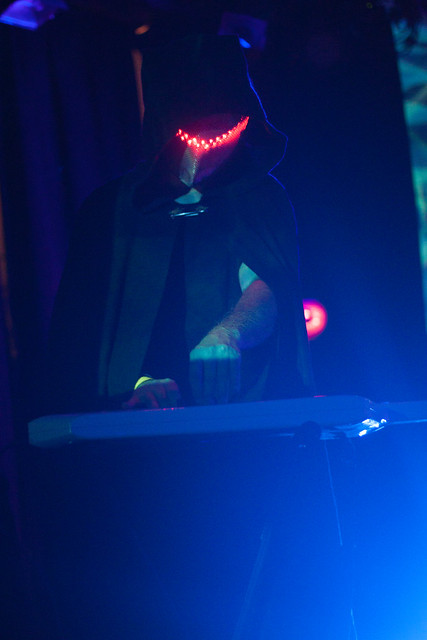
Comprised of Phenomenal Handclap Band‘s Daniel Collas (keyboards, production) and Morgen Phalen (vocals guitar) and members of Stockholm, Sweden-based bands Dungen and The Amazing, indie psych pop act Drakkar Nowhere can trace their origins to when Collas and Phalen had been making music in the kitchen of a rented apartment in Stockholm. And in a relatively short period of time, Collas and Phalen’s kitchen-based music project caught the attention of the members of Dragen and The Amazing, who then joined the project to flesh out its sound, a sound that’s largely influenced by cosmic jazz, soul, jazz fusion, prog rock and psych pop among others — and by their direct surroundings, including the forests that surround the Bagarmossen and Midsommarkransen neighborhoods of Stockholm.

Now you may recall that I wrote about “How Could That Be Why,” the first single off the band’s forthcoming self-titled debut, and the shuffling and trippy single has the band pairing twisting and turning synths and keys, a sinuous bass line and an infectious sense of melody to craft a song that sounds as though it could have been released in 1973. The album’s second and latest single “The Line” continues on a similar vein although it has the band pairing slow burning psych pop and psych rock with 70s AM rock — and in a fashion that nods at America‘s “Horse With No Name” and Dark Side of the Moon and Wish You Were Here-era Pink Floyd but with a plaintive ache just under the song’s cosmic glow. Interestingly, the song may arguably the prettiest song the band has released to date.


Comprised of Phenomenal Handclap Band‘s Daniel Collas (keyboards, production) and Morgen Phalen (vocals guitar) and members of Stockholm, Sweden-based bands Dungen and The Amazing, indie psych pop act Drakkar Nowhere can trace their origins to when Collas and Phalen had been making music in the kitchen of a rented apartment in Stockholm. And in a relatively short period of time, Collas and Phalen’s kitchen-based music project caught the attention of the members of Dragen and The Amazing, who then joined the project to flesh out its sound, a sound that’s largely influenced by cosmic jazz, soul, jazz fusion, prog rock and psych pop among others — while being influenced by their direct surroundings, including the forests that surround the Bagarmossen and Midsommarkransen neighborhoods of Stockholm.

“How Could That Be Why?,” is the first single off the band’s forthcoming self-titled effort slated for a September 23, 2016 release through Beyond Beyond Is Beyond Records — and the shuffling and trippy single has the band pairing twisting and turning synths and keyboards, a sinuous bass line, an infectious sense of melody  to craft a song that sounds as though it could have been released in 1973. And in some way, the song naturally reminds me a bit of Collas and Phalen’s work with Phenomenal Handclap Band as well as Shawn Lee‘s collaborations with AM and Tim “Love” Lee with a subtle nod to Afrobeat — but with a subtle, cosmic glow at its core.