Interestingly, Tinariwen’s forthcoming full-length effort Elwan (which translates into English as The Elephants) is slated for a February 10, 2017 release, and the album thematically focuses both on the disappearing traditions of the Tuareg people and of being forced into exile — oddly enough as the members of the band were touring the world. And the album’s gorgeous first single “Tenere Taqqal” possesses an understated longing for a way of life and for a home, which as Thomas Wolfe wisely suggested they can never return to and will never get back. And yet there’s a tacit acknowledgment that life must continue onward and that they have a profoundly important duty of ensuring that something of the old traditions can be preserved and passed on to future generations. As a result, the single while being slow-burning and brooding also manages to possess an understated, quiet urgency — all while feeling older than time itself. Every time, I’ve listened to this track I can picture sitting among the Tuareg or the Bedouins at a campfire, as they tell tales of creation or of the great mystics and teachers, who have led flocks of faithful . .
The recently released animated video was directed by Axel Digoix and it vividly depicts the desert’s harshness, cruelty and beauty, and the profound spiritual and physical connection that the Tuareg people have towards it, while pointing out that their traditions and their world is being violently torn apart.
Now, if you’ve been frequenting this site over the past couple of years, you’ve come across a few posts on NYC-based electro funk/neo disco production and artist duo Holy Ghost!, comprised of Alex Frankel and Nicholas Millhiser. And with the release of their 2011 self-titled debut, 2013’s Dynamics through renowned indie dance label DFA Records and their self-released remix album Work For Hire, the duo quickly earned a national and international profile; in fact, as a result, the duo have remixed the work of Katy Perry, LCD Soundsystem, Moby and a lengthy list of others; made national TV appearances on Jimmy Kimmel Live!and The Late Show with David Letterman;toured with the legendary New Order; and played sets at some of this country’s and the world’s biggest festivals including Coachella, Outside Lands, Primavera Sound and Bonnaroo.
Earlier this year, the duo released their Crime Cutz Ep and from the EP’s first single and title track, “Crime Cutz,” the material further cemented the duo’s burgeoning reputation as artists for crafting slickly produced, retro-futuristic electro funk as Frankel and Millhauser paired shimmering synths, 808-like breakbeats, 8b it electronics and a sinuous bass line with sensually cooed vocals. And as I said of the song at the time, “Sonically, the song seems to draws so much influence from Herbie Hancock’s ‘Rockit,’ that it sounds as though it could have been easily released back in 1983″
Recently, Frankel quietly released his solo debut EP Negative Space, an effort that was mixed and mastered by the renowned, super-producer and electronic music Alex Epton, who has worked with and/or remixed the work of Bjork, TV on the Radio, FKA Twigs, Spank Rock and others, and interestingly enough, the EP was released to praise from the likes of Stereogum. Interestingly, the EP’s second and latest single “Get Back” will further Frankel’s reputation for crafting retro-futuristic electro funk as the single pairs Frankel’s sensual cooing with enormous, tweeter and woofer rocking 808-like beats, cascading layers of shimmering synths and Nile Rodgers-like guitar in a swaggering, dance floor friendly song that sounds as though it could have been released in the early 80s.
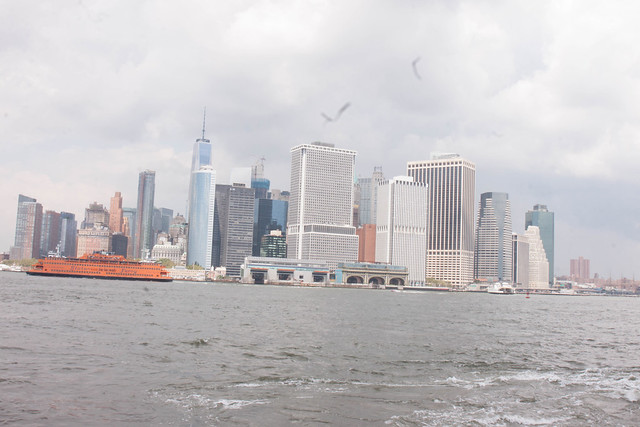
Matte Projects is a creative production company that focuses on the conception, production and promotion of music-related events, perhaps more famously known here in New York for creating the Full Moon Festival six years ago, a carefully curated festival and dance party, largely inspired by Thailand’s world-renowned full moon parties. And although it’s been a couple of years since JOVM has covered the Full Moon Festival, its sixth year marks a return to Governor’s Island for two days of partying, art installations, and dancing from early afternoon to late in the night with one of the most enviably gorgeous views of Lower Manhattan and the Statue of Liberty around – and under this month’s blue moon, no less.
Culinary Delights
Although I’m a music blogger and journalist first and foremost, I fucking love food – I mean, who doesn’t right? – and when I covered the festival back in 2014, one of the best food highlights was The Brooklyn Star’s fried chicken waffle cone. Picture a waffle cone stuffed with popcorn fried chicken on top, mashed potatoes and coleslaw and topped with your choice of honey sriracha sauce (which was frankly the best thing I’ve ever had) or a ranch-based sauce.
Two years later and I’m still talking about it; that’s how fucking good it was – and I might kill someone to have another one.
(Photo Caption: Brooklyn’s fried chicken waffle cone may be the reason the terrorists hate us. And the person who came up with it is a genius.)
This year will continue the festival’s reputation for culinary delight as Matcha Bar, Mile End, Best Pizza, Pokito, Pig and Khao, Clean Shave Ice and Chalk Point Kitchen will all host pop-up stands throughout the festival. I’m starting to salivate over the possibility of some pork belly Adobo, pastrami sandwiches, pizza – well, all the food, really. And whatever weight you put on, you can sweat it off dancing all night.
Music
Full Moon Festival’s sixth edition may arguably have one of the most musically diverse lineups in its history and some of the must see sets will include the following:
Day 1, August 20, 2016
Led by its creative mastermind, producer and electronic music artist Aaron Jerome, SBTRKT(pronounced as “Subtract”) has developed an internationally renowned reputation for remixing the work of M.I.A., Radiohead, Modeselektor, Basement Jaxx, Mark Ronson and Underworld, and for releasing two critically applauded full-length albums, a few EPs and a number of singles – all of which have either received airplay or have been playlisted by BBC Radio 1 and BBC Radio 6. Interestingly, throughout his recording and performing career Jerome has preferred to be as anonymous as humanly possible and during live shows he’s been known to perform wearing modern interpretations of native and indigenous society ceremonial masks designed by A Hidden Place, as well as performing with frequent collaborator Sampha.
Earlier this year, Jerome announced a new project that he described as a “non album,” a collection of songs specifically designed to be an ongoing listening experience, while bringing new music to fans in a faster fashion than the traditional album cycle.
Born Terrence Thornton, Norfolk, VA-based emcee Pusha Tis perhaps best known as one-half of critically applauded and commercially successful hip-hop duo Clipse, with his brother Gene “No Malice” Thornton. And with the help of their friend, Norfolk, VA-born producer, multi-instrumentalist and eventual mega-hit artist Pharrell Williams, the duo quickly exploded into the national scene with the release of their 1997 full-length debut Exclusive Audio Footage. And as a result, Pusha T has made a number of guest spots over the years including on Kelis’ “Good Stuff,” Nivea’s “Run Away (I Wanna Be With You),” all while recording three more albums as a member of Clipse, including the duo’s critically applauded and commercially successful third album Hell Hath No Fury. After the duo’s fourth album, they announced that Clipse would be on hiatus while each individual member would pursue solo projects and other creative endeavors.
In 2010 Pusha T was signed to Kanye West’s GOOD Music and made guest appearances on a number of labelmates’ releases including “Runaway” off West’s My Beautiful Dark Twisted Fantasy and West’s GOOD Fridays singles series and as a solo artist Thornton has collaborated with an increasingly lengthy list of artists and producers including Swizz Beatz’s Monster Mondays series, Lloyd Banks’ H.F.M. 2 (Hunger For More 2), Future, Tyler the Creator, Jay Z and others. Interestingly, over the last few years Thornton has been incredibly prolific, releasing a handful of mixtapes and his solo debut, My Name Is My Name. Adding to a growing profile, last year Kanye West personally appointed Pusha T to take over the reins at GOOD Music. And we should be expecting a full-length in the near future.
Born Nkosinathi Maphumulo, the internationally acclaimed, eThekwini, South Africa-born and Johannesburg, South Africa-based producer and DJ Black Coffee can trace the origins of his recording and performing career to when he majored in Jazz Studies at Technikon Natal. While as a student there, he worked as a backup singer for Madale Kunene before forming an Afro-pop act S.H.A.N.A (short for Simply Hot and Naturally African) with classmates Mnqobi Mdabe (Shota) and Thandukwazi Sikhosana (Demor). The somewhat short lived act was signed to Melt 2000; however, his DJ and production career explored when he was selected as one of two South African participants during 2003’s Red Bull Music Academy – and with an increased buzz around him, he released “Happiness,” which was featured on the DJs at Work compilation; in fact, by the release of his sophomore effort, Have Another One, Black Coffee had become a household name in South African electronic circles for a propulsive, forceful tribal sound and for putting on locally-based artists and producers, all of whom have started to receive attention across Africa, Europe and elsewhere.
Adding to a rapidly growing international profile, Black Coffee has played at some of the world’s biggest and most renowned clubs and stages including Southport Weekender, Panorama Bar, Circo Loco and Boiler Room and has made appearnaces at a number of music festivals including SummerStage, ADE and Red Bull Music Academy in his hometown of Johannesburg, Coachella, Ultra Music Fesitval and others. I’ve seen the brother do his thing live and he’s arguably one of the best electronic music arists, producers and DJs in the entire world. And as much as I want to see some of the other acts on the bill – i.e., Marcus Marr, Santigold and others – I think that Black Coffee may well be worth the price of admission.
Day 2, August 21, 2016
Largely influenced by James Brown, Aretha Franklin, Devo, reggae, Fela Kuti and a ton of Nigerian music, Philadelphia, PA-born singer/songwriter and producer Santi White is best known under the monikers Santogold (which she performed under between 2003-2009) and Santigold has throughout the course of three full-length albums Santogold, Master of My Make-Believe and her most recent effort, 99¢ has developed a reputation for a sound that has at times been compared favorably to the likes of M.I.A. as her work sonically manages to blur, mesh and completely destroy genre lines as you’ll hear elements of techno, house music, dub, reggae, alt rock and others while ironically commenting on our sociopolitical zeitgeist. Interesting, as the result of a growing national and international profile, White has collaborated with an equally impressive list of artists and producers including Diplo, Jonnie “Most” Davis, Yeah Yeah Yeahs’ Karen O., Switch, Q-Tip, TV on the Radio’s Dave Sitek, has opened for the likes of Jay Z and Kanye West during their co-headlining tour, Beastie Boys, Red Hot Chili Peppers, the aforementioned M.I.A., Bjork and has a number of singles make prominent appearances in ad campaigns, including a 2013 campaign for Honda Civic among others.
Comprised of Matthew Correia (drums), Spencer Dunham (bass), Miles Michaud (vocals, guitar) and Pedrum Siadatian (guitar), Los Angeles-based indie rock sensations Allah-Lascan trace their origins to when three of the four band members worked at renowned record store Amoeba Music. Formed back in 2008, the Southern California-based have received both local and national attention for a sound that draws entirely from the 60s and includes elements of folk rock, psych rock, surfer rock and garage rock – while firmly establishing themselves as part of a burgeoning retro/garage rock scene that includes The Mystery Lights, The Black Angels, Raccoon Fighter and others.
London, UK-based producer, electronic music artist, multi-instrumentalist and DJ Dhas received international attention over the last few years for a number of critically acclaimed singles released through renowned dance pop/electro pop label; in fact, “Brown Sauce” was mentioned in Pitchfork’s Tracks while “The Music,” appeared in the major motion picture Pusher and landed at number 3 on Spin Magazine’s Best Dance singles in 2013. And if you were frequenting this site over the course of 2015 you might recall that Marr collaborated with internationally acclaimed indie pop artist Chet Faker on an EP that featured the slickly produced Daft Punk and Off the Wall-era Michael Jackson leaning track “The Trouble With Us.”
Now if you’ve been frequenting this site over the course of its six-year history, you’d know that the New York-based neo-disco/electronic dance music/funk collective ESCORThave been mainstay artists. And over that same period of time, the collective founded by producers Eugene Cho and Dan Balls featuring frontperson Adeline Michele as members of a core group of five that frequently expands to 17 for live shows has received local and national attention for an incredible live show of funky, danceable tunes, their two full-length albums and for their frontperson’s incredible stage presence, cementing their reputation as a must-see live act.
Tickets are still available — and for a two day festival out on gorgeous Governor’s Island, the tickets are pretty affordable. [Purchase Tickets]
JOVM will be there to cover the festival. Expect some live tweeting, a lot of Instagram and more. And if you weren’t following me, here are the socials:
Last month, I wrote two rather lengthy posts on the pioneering Raleigh, NC/NYC-based shoegaze quintet The Veldt. Currently comprised of founding members and identical twin brothers Daniel Chavis (vocals, guitar) and Danny Chavis (guitar) along with […]
Earlier, I wrote a lengthy post about pioneering Raleigh, NC/NYC-based shoegaze quintet The Veldt. Currently comprised of founding members and identical twin brothers Daniel Chavis (vocals, guitar) and Danny Chavis (guitar) along with Hayato Nakao (bass), Frank Olsen (guitar), and Martin Levi (drums), the quintet can trace their origins to the vital and quirky Chapel Hill, NC music scene of the late 80s and early 90s — a scene that featured Superchunk (perhaps, the best known out of that entire scene), Polvo, Dillon Fence and others. Initially featuring the Chavis Brothers and Levi along with Joseph “Hue” Boyle (bass) and later David Burris, The Veldt managed to be a rather extreme rarity as shoegaze act prominently featuring black men in a genre, as well as a place and time in which it was considered highly unusual — and honestly still is; however, despite how unusual it seemed, the then-Chapel Hill, NC-based band quickly attained “must-see” status in their home city and a rapidly growing national profile with the release of their debut effort Marigolds.
Their 1994 Ray Shulman-produced sophomore effort Afrodisiac propelled the band towards international recognition and the band wound up opening and touring with the likes of The Jesus and Mary Chain, Lush, Oasis, Cocteau Twins, Pixies, Fishbone, Corrosion of Conformity and others. Unfortunately, throughout their initial run together, the members of the band found with their management and labels who found them “too difficult to market” as their sound meshed elements of old school soul and shoegaze. And unsurprisingly, the band got dropped from their label. Struggling to fund writing, recording, releasing and marketing their work and touring, the band went through several lineup changes before officially going on hiatus in 1998.
Several years later, the Chavis Brothers had relocated to New York and started their post The Veldt project, Apollo Heights, which received quite a bit of buzz locally for a sound that added trip-hop and electronica to their previous mix of shoegaze and soul. In fact, I can clearly remember reading a raving and informative profile of the band in the old New York Press, a few years before I started to write for the publication. And honestly, it shouldn’t be surprising that critics and journalists were raving about the band — their 2007 Apollo Heights debut White Music For Black People was produced by Cocteau Twins’ Robin Guthrie and featured guest spots from Guthrie on guitar, Mos Def, Lady Kier of Deee- Lite, TV on the Radio‘s Dave Sitek, and Mike Ladd.
Sadly, despite their early successes the Chavis Brothers work have been reduced to largely cult-favorite status; but interestingly enough, their work in The Veldt and Apollo Heights has managed to quietly reverberate and influence some highly regarded contemporary musicians — the members of Bloc Party and TV on the Radio’s Dave Sitek have publicly claimed The Veldt as influences on their work and sound, which has proven that the Chavis Brothers had the somewhat bitter misfortunate of being about 20 years ahead of their time; however, with the forthcoming release of The Shocking Fuzz of Your Electric Fur: The Drake Equation Mixtape, their first batch of original material in almost 20 years, the members of the reformed band seek to firmly establish their claim as the forebears and pioneers of a sound and aesthetic that has captured the blogosphere and fans by storm. And interestingly enough, they hop they do so in a similar fashion to the incredible renaissance that the members of Detroit-based proto-punk/proto-metal band Death has seen over the past few years.
“Sanctified,” the first single off The Shocking Fuzz reveals how deeply indebted TV on the Radio’s sound is to The Veldt as towering squalls of guitar chords played through gentle amounts of reverb paired with skittering yet propulsive drum programming and Danny Chavis’ soulful crooning in a tender and swooning song that evokes the feeling of being desperately, madly, stupidly in love — in a way that nods at subtly cosmic version of The Jesus and Mary Chain, if they had been influenced by Fishbone , Marvin Gaye and Prince; in other words, it’s shoegaze that manages to be irresistibly sexy.
Founded by Ibrahim Ag Alhabib, Tinariwen can trace their origins back to the mid and late 1970s when Alhabib, who had been inspired to learn the guitar from an old Western film, in which a cowboy played a guitar, joined other Tuareg rebels living in refugee camps in Libya and Algeria, who were exploring the radical chaabi protest music of Moroccan groups like Nass El Ghiwane and Jil Jilala; Algerian pop rai; and western artists like Elvis Presley, Led Zeppelin, Carlos Santana, Dire Straits, Jimi Hendrix, Boney M, and Bob Marley.
While in Tamanrasset, Algeria, Ag Alhabib started a band with Alhassane Ag Touhami and brothers Inteyeden Ag Ablil and Liya Ag Ablil, and they began playing the traditional sounds of the Taureg people at weddings and parties across Algeria and Libya. Interestingly, when they started, the band had no official name but people began calling them Kel Tinariwen, which in the Tamashek language translates roughly as “The People of the Deserts” or “The Desert Boys.”
In 1980, Libyan dictator, Muammar Gaddafi released a decree inviting all young Tuareg men, who were living illegally in Libya to receive full military training, as part of his dream of forming a Saharan regiment, comprised of the best young Tuareg fighters to further his territorial ambitions in Chad, Niger, and elsewhere across Northern Africa. Al Alhabib and his bandmates answered the call and received military training. They answered a similar call in 1985, by leaders of the Libyan Tuareg movement and wound up meeting fellow musicians Keddou Ag Ossade, Mohammed Ag Itlale (aka “Japonais”), Sweiloum Ag Alhousseyni, Abouhadid Ag Alhousseyni, and Abdallah Ag Alhousseyni — all who had sang and played guitar. The musicians joined together in a collective — now known across the world as Tinariwen — in order to write songs about the issues facing their people, built a makeshift stood and vowed to record music for free for anyone who supplied a blank cassette tape. And naturally, as a result their homemade cassette tape series were highly sought after, and were traded throughout Saharan Africa. (It’s also incredibly punk — perhaps more punk, than anything most Western artists could ever come up with.)
In 1989. the members of the collective had left Libya and relocated to Ag Alhabib’s birthplace of Tessalit, Mali; however, by the next year Mail’s Tuareg population revolted against the Malian government, with some members of the collective participating as rebel fighters. After a peace agreement known as the Tamanrasset Accords were reached in early 1991, the members of Tinariwen left the military and devoted themselves to music full-time — and by 1992, some of the members of the collective were to Abidjan, Ivory Coast to record a cassette at JBZ Studios, and they occasionally played gigs for far-flung Tuareg communities throughout Saharan Africa, which helped the band gain word-of-mouth popularity among their people.
Tinariwen started to receive international attention after they had began collaborating with the renowned French world music ensemble Lo’Jo — with the result being the highly acclaimed 2001 Festival au Desert in Essakane, Mali. Greater attention came to the band when the play their first UK performance at that country’s largest, free African festival, Africa Oye. And the year was topped by the release of their full-length debut, The Radio Tisdas Sessions, their first recording to be released outside of their native Northern Africa. Coincidentally, this has gone on as the collective has gone through some lineup changes, incorporating a younger generation of Tuareg musicians, musicians who didn’t live during some of the military conflicts of the older generation, including bassist Eyadou Ag Leche, percussionist Said Ag Ayad, guitarist Elaga Ag Hamid, guitarist Abdallah Ag Lamida, and vocalists Wonou Walet Sidati and the Walet Oumar sisters.
As the collective has started to see greater international attention, they’ve toured regularly across the European Union, North America, Japan and Australia, often playing at some of the world’s biggest and highly renowend music festivals including Glastonbury, Coachella, Roskilde, Les Vieilles Charrues, WOMAD, FMM Sines and Printemps de Bourges. And they’ve won over an incredible list of celebrity fans and champions including Carlos Santana, Led Zeppelin’s Robert Plant, U2‘s Bono and The Edge, Radiohead‘s Thom Yorke, Coldplay‘s Chris Martin, Henry Rollins, Brian Eno, and TV on the Radio, among others. And it shouldn’t be surprising because of their hauntingly gorgeous music rooted in the poetry and traditions of the tough, rebellious people of Northern Africa — and in some way, the material captures the vast expanse of the desert as their sound seems to arch heavenward . . .
At the end of last year, the members of Tinariwen played a show in Paris and invited the legendary grand dame of Tamashek culture, Lalla Badi, one of Tuareg culture’s beloved master of the tinde, which is both a percussive instrument covered by taut goatskin, played by women and a poetic repertoire sung at ceremonies and special and intimate occasions. Not only is she considered the paradigm of Tuareg femininity, she has also long been an outspoken advocate for Tuareg culture and causes, as well as being a mentor to the members of Tinariwen in their early incarnation. The end result was a live recording of their Paris show, Live in Paris slated for a November 20 release through Anti- Records.
The first single off the live album “Tinde Final Tinariwen” is a hauntingly gorgeous track that begins with droning guitar chords, propulsive percussion and a collection of male vocals crying and chanting before Badi’s regal vocals joining in on a composition that marries ancient traditions with contemporary sound. Indeed, there’s a forcefulness to the composition but it arches heavenward with lilting, trance inducing beauty that’s awe-inspiring.
Motel Pools is a garage rock recording project formed by its creative mastermind, the San Francisco-based Chiara Angelicola, best known in indie rock circles for her work in Bird Call and features the backing work of […]
Comprised of Taigen Kawabe (bass/ vocals), Yuki Tsujii (guitar), Kohhei Matsuda (guitar) and Monchan Monna (drums), Bo Ningen is a Japanese-born, London-based quartet that has gained an international following for a psychedelic sound that’s decidedly […]
Admittedly when I stared JOVM a little over four years ago, I never intended the site or its content to be overtly political; however, political and social issues frequently influences the artists and art that […]
If you’ve been following this site since the beginning, you would have come across several posts about the Brooklyn-based ensemble, Superhuman Happiness. Led by the boyishly mischievous Stuart Bogie, the band was originally comprised of a septet […]