Category: instrumental

New Video: Up-and-Coming Finnish Electronic Music Producer and Artist NightStop Releases Creepy Visuals for Brooding Album Single “Under the Killing Moon”

Last month, I wrote about the  Jyväskylä, Finland-born and-based, up-and-coming Finnish electronic music producer and artist Ere Ek, who started the 80s cyberpunk soundtrack-inspired project NightStop back in 2012. Since then, Ek has seen a growing profile across Europe and Russia’s tight-knit DIY scene, steadily touring and releasing both cassette and vinyl releases. Now, the Chicago, IL-based label No Trend Records, the label home of Ganser, Absolutely Not and others will be releasing a vinyl edition of NightStop’s most recent effort, Dancing Killer on March 30, 2018 — and as you may recall, although the album has already seen a digital release, Ek included a pulsating John Carpenter meets Umberto-like single “Phantasmagoria,” as a bonus digital track for the album. Interestingly, while that track cemented his reputation for crafting brooding and cinematic retro-futuristic electro pop; however, it may arguably be one of the most dance floor friendly tracks he’s released to date. 

Building upon the buzz surrounding the vinyl release of Dancing Killer, the up-and-coming Finnish electronic music producer and artist recently released the incredibly creepy, stop animation based video for “Under the Killer Moon,” by Tommi Niukkanen. As far as the single, it’s a retro-futuristic and broodingly cinematic track featuring layers of shimmering, arpeggiated synths and thumping beats — and while clearly being indebted to the aforementioned John Carpenter and Umberto, it may also be the most menacing track of the entire album. 

New Video: Acclaimed Instrumental Canadian Act Shooting Guns Release Gorgeous Visuals for Atmospheric Album Single “Vampires of Industry”

With the release of their six full-length albums, the Saskatoon, Saskatchewan, Canada-based instrumental psych rock/heavy psych/heavy metal act Shooting Guns have developed a reputation as a critically applauded, multi-award nominated act, known for work that’s largely inspired by Black Sabbath, Spacemen 3, Pink Floyd and others — and for touring over 60,000 miles across their native Canada without international touring.

While their previously released material was the sort of heavy and saturated sounds that was well-suited for horror-comedy files, Flavour Country, the Saskatoon-based instrumental act’s sixth and latest album  which was produced and recorded but the members of the band at their own Pre-Rock Studios features arguably some of the band’s fastest, heaviest and most visceral material they’ve written, recorded and released, as well as some of their most atmospheric; in fact, the album’s latest single “Vampires of Industry” consists of a slow-burning and moody drone paired with twangy and shimmering guitar chords that immediately bring to mind Black Sabbath’s “Planet Caravan,” Directions to See a Ghost-era The Black Angels, and the Silber Records catalog — but with a cinematic, sweep.

Directed by Parker Thiessen, the recently released video for “Vampires of Industry” features a flowing and shimmering, metallic piece of cloth, overtaking  the surrounding forest in a way that evokes the creeping of industrialization over nature in a way that’s gorgeous, surreal and unsettling.

New Video: French Instrumental Trio Jean Jean Releases Creepy Yet Cinematic Visuals for Anxious and Dread-Filled Album Single “Anada”

Currently comprised of Edouard Lebrun (drums, samples), Sebastien Torregrossa (guitar) and their newest member multi-instrumentalist Gregory Hoepffner, the Paris-based instrumental space rock/math rock/experimental rock trio Jean Jean began as a solo recording project before expanding into a duo — and as a duo the project released their 2010 self-titled debut EP, and their 2013 full-length debut Symmetry, which they supported with hundreds of live shows across the European Union, Japan and the States; but as the story goes, the then-duo wrote and recorded a follow up EP that they scrapped because something — or someone — was missing. Lebrun and Torregrossa were initially unsuccessful in their search for a third musician to further flesh out their sound, until their longtime friend Hoepffner, who had been responsible for the band’s visuals signed up to join the band, and as the band’s Lebrun recalls in press notes, things clicked right away. “He [Hoepffner] brought this glue linking the drums and the guitars, adding another level,” Lebrun says.

The band’s recently released album Froidpierre is the first featuring the band as a newly constituted trio, and the album, which was recorded in a cabin named Froidspierre (or cold stone) in the French Alps is reportedly a marked departure from their previously released work. “We were tired of complex and festive tracks; we wanted to avoid over-doing things, to stop doing patchwork and have proper songs with real hindsight. The songs are shorter because they were composed with a sense of urgency.” And while these were all very conscious decisions, it was also driven by a sense of urgency as the band’s Lebrun frequently had to take the first night bus from the suburban studio to his home in Paris. Interestingly enough, as the band notes as they were writing and recording the material that would eventually comprise their latest effort, each member of the band while being aware of the fact that they all had great creative chemistry and something musically powerful was happening, something in the air just wasn’t right.

During the third day of the recording sessions Torregrossa went out on the balcony to smoke a cigarette and suddenly he felt an uncontrollable sense of fear throughout his own body. With a racing heart, he rushed back inside without looking band. The next day, Lebrun managed to be in the exact same spot and he couldn’t shake the persistent feeling that there was a presence behind him. Just as he turned around, he caught what looked like a ghost out of the corner of his eye. Frozen in fear, he stared at this presence and got lost in its inverted human-like silhouette. As Lebrun recalls, it felt as though he were slowly sinking into quicksand until somehow he managed to get away; but he felt unsettled and uneasy throughout the rest of the night. Hoepffner felt a strong sense of discomfort as he was sitting in the studio’s kitchen — so much so that, after a few days, he made sure to never enter a room on his own. At night, he someone or something whispering his name. And while he spent time trying to convince himself that someone was trying to play an elaborate prank on him, Hoepffner couldn’t shake having impressions of a wasted life, without any rational explanation. The band’s friend and photographer Maxime slept in a room that was made entirely of stones and was once a former stable, and one night he heard a woman’s voice calling his name, and felt something lean on him, and a cold sensation overtake his entire body.

Sometimes, they all would hear strange noises and banging on the walls that kept them awake most of the night. They  all spoke about something with a beastly scream and of objects suddenly and unexpectedly being knocked down. Although it was only until after the recording sessions were complete that the members of the band shared their own experiences, the sensation of anxious, uncertain dread and fear, of being on the edge, of not being able to trust your senses and your reason. Album single “Anada” is centered around a thunderous drumming, shimmering and gently undulating synths and guitar — and while being reminiscent of JOVM mainstays Mogwai, The Octopus Project and Remember Remember, the composition evokes an unshakeable, dark, menacing and inexplicable presence that’s lurking behind you, felt but unseen. And as a result, the incredibly cinematic track feels and sounds as though it should be included as part of the soundtrack of a psychological thriller that would capture the anxious dread of our current sociopolitical moment.

Filmed by  Maxime Leyravaud and the members of Jean Jean, and edited by the band’s Gregory Hoepffner, the recently released video features some almost Stanley Kubrick-esque like footage shot during the band’s Fall 2017 Japan tour that’s split between the band capturing portions of everyday Japanese life with a surrealistic touch and the band performing live.

New Audio: The Death Wheelers Release a Sleazy and Ass Kicking Single

Comprised of Max “The Axe” Tremblay, Richard “The Bastard” Turcotte, Sy “Wild Rye” Tremblay and Hugo “Red Beard” Bertacchi, the members of  Canadian band The Death Wheelers have been largely inspired by the aesthetics and ethos of bikesploitation movies such as The Wild Angels, Werewolves on Wheels and Psychomania, as well as Davie Allen, The Cramps, Motorhead, The Stooges and Grand Funk Railroad — with the result being sleazy, primal and bruising, jam-based instrumental rock ‘n’ roll.  

Slated for a May 11, 2018 release through RidingEasy Records, the band’s forthcoming I Tread On Your Grave is an album devised to serve as the soundtrack for an imaginary B-movie with an incredible plot: Decimated in 1972 by local authorities, all members of The Death Wheelers, a notorious motorcycle club, have been buried at the Surrey cemetery. But the time has come and they have risen for their last ride. They’re back from the grave and they’re hungry for blood! Nothing can stop this gang of living dead from recruiting new members as they travel coast to coast to find the filthiest, nastiest, trashiest individuals to join their ranks. Their goal, assemble a legion of 13 “discycles” (disciples+cycles) to seek revenge on the pigs that dismantled the club and send them to their graves. The cycle of violence continues . . . ”

 
I Tread On Your Grave’s latest single “Black Crack” is a raw, swampy, bluesy track that sounds as though it were inspired by ZZ Top, Howlin’ Wolf and Portland’s R.I.P. as it features enormous power chords with some boozy guitar pyrotechnics, thundering drumming paired with a jam-band “you-are-there-in-the-room” immediacy and swagger, while evoking a sense of primal lust and danger — and holy shit, does it kick ass.

New Audio: Rafiq Bhatia’s Atmospheric and Soulful New Single

Rafiq Bhatia is a Hickory, NC-born, New York-based composter, guitarist and producer of East African Indian descent. Before joining Ryan Lott and Ian Chang to expand renowned indie act Son Lux from a solo recording project to a fully fleshed out band, Bhatia released two critically applauded solo efforts — 2012’s Yes It Will and Strata. As a guitarist and producer, Bhatia has worked with an impressive and diverse array of artists including Olga Bell, Sam Dew, Marcus Gilmore, Billy Hart, Heems, Helado Negro, Vijay Iyer, Glenn Kotche, Valegir Sigurðsson, Moses Sumney, David Virelles, Lorde, Sufjan Stevens and others. Adding to a growing profile, he’s recored with the chamber ensembles International Contemporary Ensemble, JACK Quartet and Alarm Will Sound, and he’s had work appear on the soundtracks for the major motion pictures The Disappearance of Eleanor Rigby, Air, and Afflicted.  

Bhatia’s third solo album Breaking English is slated for an April 6, 2018 release through ANTI- Records, and the album reportedly finds the renowned composer, producer and guitarist, who has long been influenced by Jimi Hendrix, John Coltrane, Madlib, as well as mentors and collaborators Vijay Iyer and Billy Hart, meshing avant-garde jazz with textured and sculptured electronic composition and production. Because of his experience as a first-generation son of East African-born, Indian Muslim immigrant parents, who can trace their ancestry back to India, and the influence of mentors like Vijay Iyer and Billy Hart, Bhatia sees music as a way to actively shape and represent his own identity, not limited by anyone else’s prescribed perspective.  Interestingly, the album’s overall theme and its title were inspired by a 2008 trip to India that Bhatia took with his sister and parents — the first time he had ever seen the ancestral homeland. “We were driving towards the Taj Mahal, and noticed as we approached that there was an alarming number of signs advertising ‘Shooting Ranges.’ We grew increasingly curious and concerned about why these signs, which were written in English, were so prevalent — could they be targeted towards American tourists and their obsession with guns?” Bhatia recalled in press notes. “But eventually, we realized that ‘shooting’ was intended in the photographic sense. We had a good laugh about it, but then my dad turned to me quite seriously and asked ‘Eventually there will be likely more English speakers out here than there are in the West. At that point, who will get to decide what constitutes a proper use of English?'”

“’Breaking English’ is a ceremony of a song,” Bhatia continues. “Its central theme revealed itself to me in an improvised performance, fully formed, as though it had always existed. The cyclical form of the piece allows it to shed its skin and present itself anew in successive iterations, even as the core idea — or problem, or experience — stubbornly persists.”

Breaking English’s latest single, album title track, the atmospheric and soulful “Breaking English” which features skittering drums, a sinuous bass line, blasts of bluesy guitar and a wailing chorus — and in some way, the composition nods at an incredible synthesis of the work of JOVM mainstay Nick Hakim, J. Dilla and Flying Lotus but with a soulful weariness and ache.

Currently comprised of founding duo Soulive‘s Alan Evans (drums) and The New Mastersounds’ Eddie Roberts (guitar), along with Chris Spies (keys), Kevin Scott (bass), who’s a member of Jimmy Herring‘s backing band, Adyron de Leon (vocals) and Pimps of Joytime’s Kimberly Dawson, Matador! Soul Sounds can trace their origins to when Evans and Roberts were touring together with their respective main gigs, and as Roberts explains in press notes, “The idea came about one night while we were drinking wine in a bar in DC, when I turned to Alan and asked ‘can we start a band together?’ Alan obviously shared the same sentiment, as we are here today launching the debut album!”

Interestingly, the band is loosely centered around the concept of Spanish bullfighting. A common American misconception of bullfighting is that it’s the feat off one man versus one bull; but rather, bullfighting is largely a team effort in which the matter is backed by his cuadrilla, his team, his corner — and its actually much more like boxing. Additionally, the band’s name is partially a nod at Grant Green’s Matador, which both Evans and Roberts had liked immensely. Sonically, Matador! Soul Sounds approach draws from its founders shared musical passions including jazz, funk and soul, but in a subtly different fashion than the individual band leader’s previous work.

The act’s latest single  “Theme for a Private Investigator” finds the act drawing from crispy, Southern fried funk, soul and blues in a way that may remind some listeners of Matthew Stubbs and the Antiguas, as Matador! Soul Sounds nods at the work of Booker T and the MG’s, as well as Muscle Shoals and The Meters while possessing an incredibly cinematic, 70s TV theme song like quality; in fact, you can probably picture the show’s protagonist and his wise-cracking sidekick strutting to their badass car, fighting bad guys, saving the girl and what not to the song, and it makes perfect sense.

The All-Star act’s full-length debut Get Ready is slated for release next week — both digitally and on vinyl, and they’ll be embarking on a national tour to support the album, which will include a March 17, 2018 stop at Brooklyn Bowl. Check out the rest of the tour dates below.
Tour Dates
3/15 @ Rex Theatre – Pittsburgh, PA – tix
3/16 @ Union Stage – Washington, DC – tix
3/17 @ [Pacifico Presents] Brooklyn Bowl – Brooklyn, NY – tix
3/18 @ Fairfield Theatre Company – Fairfield, CT – tix
3/19 @ Brighton Music Hall – Boston, MA – tix
3/21 @ The Ardmore Music Hall – Ardmore, PA – tix
3/22 @ Martyr’s – Chicago, IL – tix – tix
3/23 @ Cervantes’ Other Side – Denver, CO – tix
3/24 @ Fox Theatre – Boulder, CO – tix
3/26 @ Great American Music Hall – San Francisco, CA – tix
3/28 @ Jack London Revue – Portland, OR – tix
3/29 @ Nectar Lounge – Seattle, WA – tix

New Video: Matthew Stubbs and the Antiguas Release Surreal and Psychedelic Visuals for “Bastille Day”

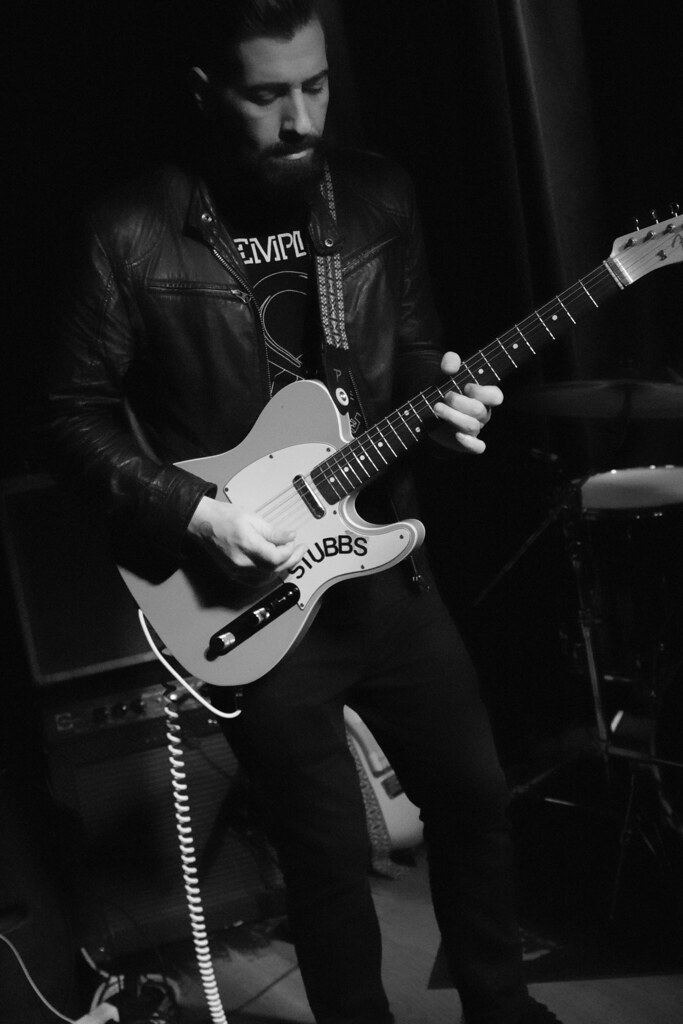
Now, if you’ve been frequenting this site over the past few months, I’ve written a couple of posts on the Boston, MA-based guitarist and songwriter/composer and bandleader Matthew Stubbs. And as you may recall, Stubbs, has split his time as a member of Charlie Musselwhite’s touring band and as a solo artist, who has released two solo, instrumental albums — 2008’s Soulbender released through Vizztone Records and 2010’s Medford and Main released through Chicago, IL-based Blue Bella Records that drew from the  Memphis, TN soul/blues sound. In 2016 Stubbs added bandleader to his resume, with his backing band The Antiguas, which feature Just Lopes (organ), Chris Rivelli (drums) and Marc Hickox (bass)  — and while continuing with the instrumental composition approach of his previously released work, his newest project is influenced by the work of Duane Eddy, Link Wray, and Booker T but meshed with elements of garage rock, B movie soundtracks and Afrobeat, while focusing on putting the energy and vibe of their live sets on wax.

The band’s self-titled debut was released earlier and this year, and as you may recall album singles “Death Grip” and ” Unwinder,” possessed a decidedly retro feel, bringing to mind late 60s and early 70s B movie soumdtracks, complete with a tight groove —with Death Grip” being inspired by the wild, chase scenes in the cult, car racing movies of the 70s while “Unwinder,” found Stubbs and his Antiguas drawing from 60s psych rock and surfer rock and blues, complete with an organ sequence that brings to mind The Castaways’“Liar Liar.” The album’s latest single “Bastille Day” is a greasy and downright funky track that draws from the blues, Afrobeat, dub and rock within what sounds to my ears like a 12 bar blues — and while expanding upon the sound that has caught attention, the composition will further Stubbs’ reputation for crafting slick and trippy hooks.

Directed and edited by Jack LeMay, the recently released video was shot at the Yawkey T stop in the Boston area, and stars Stubbs, waiting for a train when he encounters the absolutely radiant Monishita Ray, dressed in traditional Indian garb. The video turns into a psychedelic experience when the two look into each other — and the rest of the video splits between following Ray as she dances around the train station, Stubbs’ and company’s rehearsal space and other industrial-like locales, adding a surreal sense of beauty to everything in her path, and Stubbs playing the song’s main riff, before getting even trippier.

NightStop is the attention grabbing brainchild of its Jyväskylä, Finland-born and-based mastermind, the up-and-coming Finnish electronic music producer and artist Ere Ek, who started the 80s cyberpunk soundtrack-inspired project in 2012. And since then, Ek has seen a growing profile across Europe and Russia’s tight-knit DIY scene, steadily touring and releasing both cassette and vinyl releases. Interesting Chicago, IL-based label No Trend Records, the label home of Ganser, Absolutely Not and others, recently announced that they will be releasing a vinyl edition of NightStop’s most recent effort, Dancing Killer on March 30, 2018.

Although the album has already seen a digital release, Ek has included a pulsating John Carpenter meets Umberto-like single “Phantasmagoria,” as a bonus digital track for the album — and interestingly, while cementing his reputation for crafting brooding yet cinematic, retro-furturistic electro pop, the track may also be among the most decidedly dance floor ready track he’s released to date. (As a side note, the track derives its name from Roberta Williams’ 1995 horror adventure game Phantasmagoria.)


New Video: Soulive Returns With Soulful and Psychedelic Genre-Defying Composition from Forthcoming Film Soundtrack-Inspired EP

Consisting of Eric Krasno (guitar) and siblings Alan Evans (drums) and Neal Evans (Hammond B3 organ, bass keys, clavinet), the renowned genre-defying funk/jazz New York-based trio Soulive can trace their origins back to when the Evans Brothers began performing in a number of regionally known acts including the jam band Moon Boot Lover and a brief stint with rap act The Elements, which featured Edreys, a.k.a. Billy Drease Williams before they began looking to start a traditional jazz organ trio. And as the story goes, in March 1999, the Evans Brothers invited their high school pay Eric Krasno to jam and record some tracks with them at their home studio in Woodstock, NY, and those sessions wound up comprising their debut EP Get Down! 

Shortly after the release of Get Down! the newly formed band hit the road touring to support it. During that first tour, the trio recorded their full-length debut Turn It Out and the effort, which was released in 2000 through Velour Recordings featured and impressive array of guest musicians including renowned jazz guitarist John Scofield, multi-instrumentalist Oteil Burnbridge, best known for a lengthy stint in the Allman Brothers Band, and saxophonist Sam Kininger, who has collaborated with Lettuce, Dave Matthews Band and others. For an independent act, their full-length debut went on to sell over 65,000 copies, which quickly established the members of Soulive as one of contemporary jazz and funk’s most exciting, new acts. By the fall of 2000, Soulive had signed a record deal with Blue Note Records, with whom they released their sophomore effort Doin’ Something, which featured horn arrangements by the legendary Fred Wesley; their third, full-length album Next, which featured guest spots from Dave Matthews, Amel Larrieux, Talib Kweli and Black Thought. They also collaborated with singer/songwriter Goapele Mohlabane.
Building upon a growing profile, Soulive went on five national tours over the next three years, opening for The Rolling Stones, Dave Matthews Band, The Roots, Common, John Mayer and others, while making appearances at Monterey Jazz Festival and Bonaroo, as well as tours across Japan and the European Union; in fact, one of their Japanese tours wound up becoming their eponymous and highly acclaimed, self-titled live album, released in 2003. And before leaving Blue Note Records, the members of Soulive released the Turn It Out Remixed album, which featured Jurassic 5, DJ Spinna, DJ Krush, J-Live, Wordsworth and The Beatnuts.

2005’s Break Out, the New York-based jazz/funk act’s first album with new label Concord Music Group found the band experimenting with their sound and approach, as they eschewed extended and free-flowing jams for beat-driven instrumentals; but along with that, they collaborated with the legendary Chaka Khan, Ivan Neville, Living Colour’s Corey Glover, Robert Randolph and comedian and multi-instrumentalist Reggie Watts. 2006’s Stewart Lerman-produced No Place Like Soul featured Boston, MA-based reggae/soul artist Toussaint as their lead vocalist; however, after that tour the band decided to return to being a trio. In fact, 2009’s Up Here was something of a return to form for the band with the material mainly being instrumentals with the members of Soulive collaborated with The Shady Horns — the aforementioned Sam Kininger (alto sax) and Rashawn Ross (trumpet) — and Nigel Hall.

Now, I personally became familiar with Soulive with 2010’s Rubber Soulive, an effort that comprised of jazz and funk-inspired renditions of the Beatles catalog — and their annual multi-week residency Bowlive, which featured the band collaborating with an incredibly diverse and dynamic array of artists. Interestingly, the members of the band have been busy with their respective projects — in particular Soulive’s Eric Krasno has been with Lettuce, an increasing production load and his own solo work; however, the members of the band reconvened at Alan Evans’ Iron Wax Studios in late 2017 with a few loosely-sketched ideas and no overarching concept in mind, and began fleshing out ideas as a band. “We trust each other to bring our voices to each other’s ideas,” says Alan Evans, while Krasno adds, “I think Soulive creates our best material using that method.”

The end result is the trio’s long-awaited Cinematics, Vol. 1 EP, which the band will be releasing through their own label Soulive Music on February 23, 2018. Although it’s the first new material from the renowned act in over six years, as you’ll hear on the EP’s first single “Kings March,” Soulive further cements their reputation for a genre-defying sound — in this particular case, the composition draws from 60s funk, psych pop, psych rock, hip-hop and jazz and it finds the band doing so in a fashion reminiscent of El Michels Affair and Wu Tang Clan; but with an incredibly cinematic fashion, as though it could have been part of the soundtrack of a rainy, spy thriller set in Eastern Europe and Miami.

Reportedly, the cinematic quality of the music arose from the trio’s collective instincts writing and recording together. “We didn’t have to talk about anything,” Alan says. “It all unfolded as we were working on it; one song influences the direction of the next, and soon you find yourself going down this path. We want this music to take people on a little journey.” Adds, Eric Krasno, “A cinematic piece of music creates a mood. Film composers like Jerry Goldsmith, David Axelrod, Ennio Morricone and Melvin Van Peebles were all influential in the concept for Cinematics. The idea is to use soundscape and melodic interplay to enhance the feeling and sentiment of a visual and to amplify the emotion that it’s relating.”

The recently released video features rather black and white intimate footage of the band, along with some appropriately psychedelic imagery. 

Currently comprised of founding members Willy Vlautin (vocals, acoustic guitar and electric guitar) and Dave Harding (bass, backing vocals), along with Sean Oldham (drums, percussion, vibes and backing vocals), Dan Eccles (guitar) and Paul Brainard (pedal steel, piano, acoustic guitar, trumpet, backing vocals), the Portland, OR-based alt country quintet Richmond Fontaine can trace its origins back to 1994 when the band’s founding duo met at  Portland Meadows Racetrack, where they bonded over betting on the ponies and their mutual love of Husker Du, Willie Nelson, X, The Blasters and The Replacements, and they quickly decided to collaborate together. After a lineup change with the band expanding to a quintet, they developed  reputation for a sounda that frequently meshed elements of rock, country, punk, folk and Americana paired with Vlautin’s narrative-like songwriting, which resulted in praise from the likes of nationally and internationally recognized media outlets including Uncut, Q Magazine, Mojo, The Independent, The Sun and others.

Interestingly, over the past decade, the band’s Vlautin has developed a reputation as a critically applauded and commercially successful novelist with his debut novel The Motel Life winning a Silver Pen Award from the State of Nevada and landed on the The Washington Post’s Top 25 Books of 2007 — and later, the book was adapted into the critically acclaimed motion picture, The Motel Life which starred Emile Hirsch, Stephen Dorff, Dakota Fanning and Kris Kristofferson.  Vlautin’s 2008 sophomore novel, Northline was a San Francisco Chronicle Top Ten Bestseller. 2010’s Lean on Pete won the Ken Kesey Award for Fiction and was named Hot Press’ book of the year. 2014’s The Free continued an incredible run of prolificacy which included the band’s 9 preceding full-length albums, an instrumental soundtrack for Northline, two live albums and an EP.

After a three year hiatus from recording, the  members of Richmond Fontaine returned to the studio with their long-time producer and collaborator John Askew to write and record, 2016’s You Can’t Go Back If There’s Nothing To Go Back To, which was released by one of my favorite labels, Fluff and Gravy Records across North America and Decor Records across Europe. And if you’ve been frequenting this site over the past couple of years, you may recall that I wrote about album single “Wake Up Ray,” a jangling bit of old school country-influenced alt country with Vlautin’s novelistic attention to detail, which managed to created a very real, lived in world in which the song’s characters wake up every single day to a lonely life and an even lonelier house that they’ve learned to hate — and yet they’re aware that because of the choices they made, that their position (if not, their very fate) is largely inescapable. But underneath the surface, is a wistful and mournful recognition of life and love’s impermanence.

Following the release of You Can’t Go Back If There’s Nothing To Go Back To, the members of the band formally announced that it would be their final traditional album and tour; however, as the band’s Vlautin was putting the finishing touches on his fifth novel, Don’t Skip Out on Me which is slated for a February 13, 2018 release through HarperCollins, he was able to round up the band to record an instrumental, companion soundtrack, and while a digital download of the soundtrack will be bundled with the book, Richmond Fontaine’s long-time label home felt that it deserved it’s own release — February 16, 2018 with an extremely limited vinyl release both in the States and in Europe, through Decor Records.

Soundtrack single “Horace And The Trophy” while clearly nodding to classic, 60s and 70s Renegade Country, 70s AM rock possesses an obvious cinematic quality, as though it should be part of the soundtrack of a deliberate, thoughtful road trip movies, featuring rugged, heartbroken and rootless loners crisscrossing the continent, fleeing a troubled past or an uncertain future.


With the release of their critically acclaimed full-length debut La Allianza Profana and its follow-up, Serpiente Dorada, the Lima, Peru-based electronic production and artist duo Dengue Dengue Dengue, comprised of Rafael Pereira and Felipe Salmon quickly received attention for a sound that possesses elements of traditional cumbia, dub, dancehall and techno — and for being at the forefront of an expanding electronic cumbia movement.

Now, if you’ve been frequenting this site throughout the course of its eight year history, you may have come across a couple of posts featuring the Peruvian electronic production and music duo  — in particular Siete Raices‘ album singles, “Guarida,” a hauntingly ambient track that meshed ancient and traditional Peruvian sounds with contemporary, electronic production in a timeless fashion, and “The Enemy,” a glitchy and percussive track that nodded at El Dusty‘s club-banging, nu-cumbia but with a subtly menacing and uneasy vibe.

The Lima, Peru-based duo’s latest album Son de Los Diablos (which translates into English as Sound of the Devils) derives its name from a traditional dance that was brought to Peru by the Spanish conquistadors, which consists of a procession of dancers and musicians taking to the streets wearing devil masks. By enlisting Lima’s sizable African slave population, this procession increasingly incorporated the rhythms and dance styles that would eventually become known as Afro Peruvian — one of the main elements of modern Peruvian music and culture, which also informs Dengue Dengue Dengue’s sound. Interestingly, Son de Los Diablos‘ latest single “Cobre” features breezy and minimalist production consisting of looped woodwind instruments and stuttering African percussion. While the song  evokes a slow procession of marchers stomping to a throbbing beat, it possesses a murky and menacing undercurrent.


New Audio: Introducing the Hypnotic and Cinematic Sounds of Nova Flares

Jason Wagers is a Berea, KY-born, Louisville, KY-based multi-instrumentalist and producer whose solo bedroom recording project Nova Flares is influenced by shoegaze and psych rock acts including Black Market Karma, Mystic Braves, Holy Wave, The Brian Jonestown Massacre, My Bloody Valentine and others — although interestingly enough, Wagers’ current project can actually trace its origins back to when he turned 18 and the Berea, KY-born multi-instrumentalist relocated to Louisville, KY with his previous band, The Corridors. And while in Louisville, the members of the band developed a reputation for crafting eclectic rock before releasing their full-length debut. Unfortunately, after the release of their debut effort, the members of The Corridors received a cease and desist letter from a British record label claiming to represent a band with the same name. 

Perhaps as a result of the crushing legal issues he had faced paired with a desire to start a project that was in a completely different direction, Wagers started his solo project — with a specific atmosphere and sound that he’s dubbed “surfgaze.” As Wagers explains in press notes, “The songs I create through Nova Flares are supposed to be very cinematic and capture memories and feelings from situations I’d experienced in my childhood and adult life, but these songs are also meant to be left open ended so that the listener could have their own personal sensory experience as well.”

Wagers goes on to say that the project is a next step up musically, as he sees the project as a way to further develop his skills as a multi-instrumentalist, composer and songwriter. His Nova Flares debut Gut Splinter is slated for a March 9, 2018 release, and the album’s first single sonically meshes jangling, guitar rock and shimmering, hypnotic shoegaze, complete with a sweeping, cinematic quality. In fact, the recently released music video further emphasizes the song’s hypnotic vibes as it features Wagers playing several different instruments superimposed over footage of birds flying and clouds in different color negative treatments and so on.

New Video: The Lush and Meditative Visuals for Rich Aucoin’s “Release”

Rich Aucoin is a Halifax, Nova Scotia-born and based electronic music artist and indie rock artist, known as a collaborator and guest musician of his older brother Paul Aucoin’s band Hylozoists and as an solo artist. His debut effort, 2007’s Personal Publication EP was conceptualized as an alternative soundtrack to How the Grinch Stole Christmas and he supported the release by going on a cross-Canada tour entirely by bicycle to raise money for Childhood Cancer Canada. When he was finished with his solo tour, he joined Hylozoists on a tour, but after a sudden shift from regular exercise to visually no exercise at all, Aucoin suffered with an iron deficiency; however, after recuperating, he went on a solo tour, running partial marathons between stops to raise money for the Canadian Cancer Society. 

During both of his early solo tours, the Halifax, Nova Scotia-based musician recorded the material, which would comprise his 2011 full-length effort, We’re All Dying to Live, an album that featured over 500 guest musicians, including Sloan’s Jay Ferguson, You Say Party’s Becky Ninkovic, The Meligrove Band’s Michael Small and Rae Spoon. The album was long-listed as a nominee for the 2012 Polaris Music Prize, with the music video for “Brian Wilson is A.L.I.V.E.” winning a Prism Prize in 2013. Building upon a rapidly growing profile, Aucoin released his critically applauded, 2014 effort Ephemeral. 

Slated for a March 16, 2018 release, Hold EP is Aucoin’s first batch of new, recorded material in over 4 years, and the EP’s first single “Release” which, features live drumming from Broken Social Scene’s Justin Peroff is a sprawling yet propulsive, club banger centered around layers of arpeggiated synths and thumping beats. Interestingly, the track finds Aucoin drawing from house music, and boom bap-era hip-hop in a way that’s reminiscent of The Chemical Brothers, The Crystal Method and others — but underneath the club banging swagger, there’s a zen-like tranquility.

Directed by Dave Hung, who may arguably be best known for his work on Kanye West’s “Famous,” the recently released video for “Release,” was filmed on four separate occasions off the coast of Nova Scotia, and features a suit-wearing Aucoin laying in the water, repeating the mantra of there being no shark attacks in Nova Scotia — while the video crew flew drones overhead, safely on shore. Primarily based around one, long and deeply meditative, photographic shot, the video manages to posses a creepy air as it forces to viewer to wonder if the video’s protagonist was at peace — or if he were dead.