Category: World Music

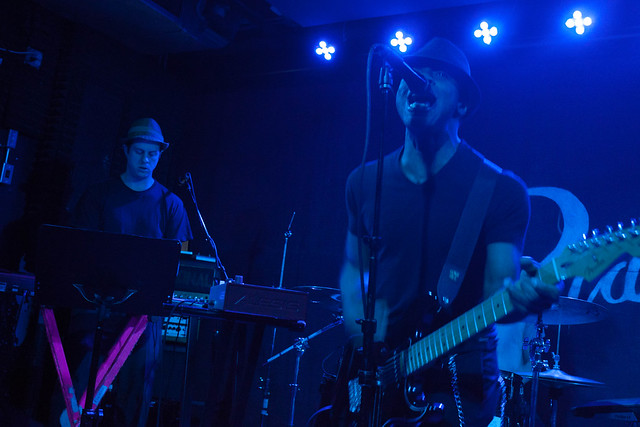
Perhaps best known as a touring and session guitarist for Charli XCX and BØRNS, Los Angeles, CA-based guitarist and vocalist Cecilia Della Peruti is also the creative mastermind behind up-and-coming act Gothic Tropic, a band whose New Wave-leaning sound is indebted to the likes of the Go-Gos The B52s and others as angular and punchy guitar chords are paired with a propulsive rhythm section, Peruti’s sultry vocals and an infectious hook as you’ll hear on their latest single “Stronger.”


Next year will mark the 20th anniversary of Afrobeat godfather and pioneer Fela Kuti‘s tragic and untimely death from AIDS, and in that time Kuti’s influence has managed to loom rather largely over contemporary music from Africa and elsewhere as countless bands have expanded upon the sound and aesthetic that the influential and controversial Nigerian created. And I suspect that if Kuti were alive today, the 78 year old would likely be amazed at the diverse nationalities and ethnicities, who have adopted his sound, aesthetic and message to their own particular situations, while picking up on the larger, global context that Kuti always managed to write about. But if there’s one thing I’m certain that Fela would never have imagined actually existing it would be this — Swedish Afrobeat.

Comprised of Frida Eleonore Winlöf (trumpet),  Christopher Ali Thorén (tenor sax), Jonas ‘Finland’ Rönnqvist (alto sax), Fredrik Brändström (keys), Jesper Lundquist (guitar), Tobias Alpadie (guitar), Vilhelm Bromander (bass), Wille Alin (drums), Celso Paco (congas and vocals), Jon Olofsson (percussion), and Mattias Hidemo (claves, fiddle), the twelve-member Stockholm, Sweden-based collective Music is the Weapon may arguably be Sweden’s best (and seemingly only) Afrobeat outfit. Although Sweden isn’t particularly known for a funk scene, as the band’s co-founder Christopher Ali Thorén explains in press notes “We’re not fighting the same fight in Sweden as Fela did in Nigeria, of course, but I feel that in some way it’s political to play this kind of music in clubs here. We give people the experience of big live band playing raw funk. For me it’s an act of resistance all its own.” Of course, as Thorén and   the rest of the band have also discovered, their fellow countrymen are starving for Kuti’s particular brand of funk.

The Stockholm-based collective’s latest full-length effort Sweet Choral Motion was released through Fashionpolice Records and from the album’s opening track “Black Hole,” the Swedish collective reveals an inventive take on Fela’s signature sound as the composition employs the use of complex polyrhythm that sounds as though it owes a debt to the Caribbean, enormous horns and an equally complex song structure that would make the legendary Nigerian godfather of the genre proud while gently expanding what contemporary Afrobeat can sound like, as the Swedish act’s sound also seems to employ elements of hip-hop and cosmic funk to the mix.



Holy Bouncer is a Barcelona, Spain-based indie rock quintet, who will be releasing their full-length debut later this year, and from the album’s second and latest single “Hippie Girl Lover,” the band specializes in a sound that clearly draws from early era The Doors (their self-titled album in particular), Steppenwolf‘s “Magic Carpet Ride” and the incredible Brown Acid proto-metal/proto-stoner rock compilations released by the folks at RidingEasy Records, complete with a gritty, primal, and grungy self-assuredness. Certainly, if it wasn’t for the subtle, contemporary production sheen — you’ll notice it with a pair of good headphones or a good speaker — the song sounds as though it could have been released in 1966, and some devoted record collector or blogger stumbled upon this one in a dusty, used record store in Milwaukee or Albany. But perhaps much more important, is that Holy Bouncer along with Madrid‘s The Parrots should prove that Spain has a vital and burgeoning indie rock scene that’s worthy of international attention.

New Video: The Gorgeous, Surreal and Ancient Mythology-based Visuals for Dengue Dengue Dengue’s “Guarida”

With the release of their critically acclaimed full-length debut La Allianza Profana and its follow-up, Serpiente Dorada through Enchufada Records, Peruvian electronic duo Dengue Dengue Dengue quickly received international attention for a sound that possessed elements of traditional […]

Live Footage: Joe Driscoll and Sekou Kouyate Performing “Tokira” on KEXP

Over the last couple of years, Syracuse, NY-born and UK-based singer/songwriter and beatboxer Joe Driscoll and Sekou Kouyate, the Guinea-born kora player have become JOVM mainstay artists for a sound that effortlessly meshes elements of traditional Western […]

Comprised of Keko (vocals), Oscar Poncell (vocals, tiple), Robert Douglas Sola (bass), Lazaro Ernesto Pompa (bass), Lachlan McLean (sax), Jethro Negron (drums), Nick Ryan Glennie (trumpet), and Marcelo La Greca (guiro and vocals), Melbourne, Australia-based Latin music nonet San Lazaro features bandmembers, who claim heritage from all over the Spanish speaking world — including Chile, Cuba, Catalonia and elsewhere. And as a result, the Australian act have developed a reputation for a sound that draws from reggaeton, salsa, Cuban son, 70s New York salsa, 60s Peruvian cumbia and seamlessly meshes them in a way that feels and sounds both familiar and alien. In fact, the act have developed a reputation for being one of Melbourne’s preeminent Latin music acts, as the band’s 2012 release Clave contra Clave helped the band win Best Australian Latin Band, and their single “Muchacho Tranquilo” was included on the 2014 Rough Guide to Psychedelic Salsa compilation.

The band’s latest effort La Despedida (translated from Spanish to English as “The Farewell”) thematically focuses on breakups, loss, insomnia, protests and more,  and interestingly enough, the band has broken up and reconvened several times, which gives the material a deeper, more personal weight.  La Despedida’s latest single “Amor De Despedida” is a propulsive song that swoons with heartache while being a bit of a kiss of towards a partner, who the narrator is glad to see leave. But most important, the band plays with a cool, self-assuredness through a song that structurally goes through a trippy tempo change at its bridge before returning to its dance floor-ready sound.


New Audio: El Dusty’s Anthemic and Club Banging, Cinco De Mayo-Inspired, New Single

Corpus Christi, TX-based producer, DJ and electronic music artist, Horacio Olivera, best known as  El Dusty has a long-held reputation as the pioneer of a revolutionary, new subgenre that he’s dubbed “nu-cumbia” as it possesses elements of […]


Although they’ve been cloaked in a degree of mystery, Acid Arab is a Paris, France-based electronic music collective that has been receiving quite a bit of attention across the European Union and elsewhere for a sound that meshes Western electronic music, namely house and acid house, with Middle Eastern sounds and vocals; in fact, as a result of their crowd pleasing genre meshing sound, the collective has primarily made a name for themselves playing the European festival and club circuit over the past few years and for the release of several EPs through French label Versatile Records.

The collective’s much-anticipated full-length debut album is slated for an October release through Crammed Discs and the album’s first single “La Hafla” (which translates into English as “The Party”) features almost hip-hop-like vocals from Algerian vocalist Sofiane Saidi and pairs them with Middle Eastern instrumentation, wobbling and tumbling synths and enormous woofer rock beats that remind me quite a bit of the work of Omar Souleyman — but with a swaggering, club banging feel.


In 1967 While the States and the rest of the Western world was in the height of “Flower Power,” “The Age of Aquarius,” and people were out protesting against the Vietnam War and for civil rights for people of people of color, women and the LGBTQ community, Nigeria had descended into a brutal and bloody civil war. Interestingly, the rock scene that developed during three years of bloodshed and destruction helped heal and unite the country, propagate a brand new ideal of the “modern” Nigerian and eventually helped propel Fela Kuti to international stardom.

Earlier this year, Now-Again Records released volume one of a two volume compilation Wake Up You!: The Rise and Fall of Nigerian Rock. A companion book featured research from renowned musicologist Uchenna Ikonne and an incredible array of never-seen photos that will tell the stories of some of Nigeria’s long-forgotten but best rock bands — bands that specialized in a sound that meshed funk, psych rock and rock in a way that was unique and particularly Nigerian, while being remarkably familiar to Western ears. Volume 1’s first single Ify Jerry Krusade’s “Everybody Likes Something Good,” sounded deeply indebted to James Brown, Jefferson Airplane, Booker T and the MGs and others as heavily wah-wah pedaled guitar, soaring organ chords, sinuous and throbbing bass lines, layers of percussion were paired with call and response vocals in a way that seemed to nod towards Fela Kuti’s earliest releases. Volume 2’s first single Waves’ “Wake You Up” is a shaggy, garage rock and psych rock jam that sounds as though it drew from early Rolling Stones, The Who, The Animals and others while managing sounding as though it were the forebear of Pazy and the Black Hippies psychedelic take on Afrobeat and funk.