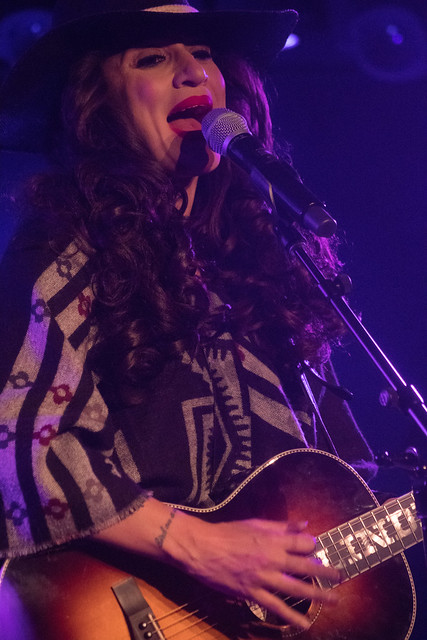
Over the past couple of years, I’ve written a bit about the acclaimed Toronto, Ontario, Canada-based singer/songwriter, guitarist and producer Charlotte Day Wilson. And as you may recall, Wilson’s musical career started in earnest with a stint as the frontwoman of the equally acclaimed jazz, funk and soul act The Wayo; but with the release of her debut single “After All,” the Canadian singer/songwriter, producer and guitarist quickly emerged as an up-and-coming solo talent within her hometown’s scene, eventually beginning ongoing collaborations with BADBADNOTGOOD and River Tiber.
2016’s CDW featured critically acclaimed singles “Work” “Find You,” and the aforementioned “After All,” and unsurprisingly, the album found Wilson further establishing herself as an artist, who crafted deeply personal songs with an wisdom, insight and honesty that betrayed her relatives youth — paired with sleek, minimalist, electronic production. Interestingly, this past year may arguably be one of biggest years of her career: Stone Woman, Wilson’s sophomore effort is a decided and self-assured change in sonic direction in which Wilson paired her effortlessly soulful vocals with neo-soul, soul and jazz-leaning production in which organic arrangements are meshed with subtle electronic production. Since its releasee earlier this year, Stone Woman has amassed over 30 million streams across all screaming platforms. Wilson was nominated for a Polaris Music Prize — and the video for “Work” was awarded a Prism Prize for best Canadian music video. Wilson and the video’s directed Fantavious Frtiz used the prize money to create the Work Film Grant, a fund that awarded $10,000 to emerging female and non-binary directors.
Additionally, Wilson toured with longtime collaborators BADBADNOTGOOD, which included an incredible BRIC Celebrate Brooklyn! Festival at the Prospect Park Bandshell stop back in August. The acclaimed Canadian artist ends a big 2018 with two Spotify singles recorded at Toronto’s HOB Studios– “Doubt,” the first single off Stone Woman is a slow-burning and soulful ballad featuring a production that recalls Bilal, Erykah Badu and others; but more important, the song is centered around a heartbreaking emotional honesty in which, the song’s narrator expresses a deep, crippling uncertainty over her own worthiness. The Spotify singles version possesses a “you-were-there-in-the-room” immediacy that gives the song’s an emotional punch.
The second track is Wilson’s cover Dolly Parton‘s “Here You Come Again” centered around a sparse arrangement featuring the Canadian singer/songwriter, producer and guitarist’s soulful vocals, shimmering guitars, twinkling keys — and although Wilson’s version is a slow-burning and atmospheric take, the track maintains the song’s ache, reminding contemporary listeners of what an under appreciated songwriter Parton is.
Over the past few months, I’ve written a bit about Lafayette, CA-born, Nashville, TN-based singer/songwriter and guitarist Nicki Bluhm, and although she began her career as a solo artist releasing two albums, 2008’s Toby’s Song and 2011’s Driftwood (which was re-released a year later), Bluhm may be best known for a six year stint as the frontwoman of Nicki Blum and The Gramblers, an act that included her ex-husband Tim Bluhm, with whom she also released a duet album, aptly titled Duets in 2011. Interestingly, Bluhm’s Matt Ross-Spang-produced full-length effort To Rise You GottaFall was released earlier this year, and the album, which is her first solo album in over six years was primarily written in and influenced by one of the most difficult and life-altering experiences of her life — a period in which she got divorced and her band went on hiatus. She then followed that with a seemingly spur of the moment move to Nashville.
Bluhm, who has frequented Music City for a number of songwriting sessions was deeply inspired by her time in the city, and how could she or any songwriter not be? After all Johnny Cash,Willie Nelson, Waylon Jennings, Reba McEntire, Townes Van Zandt and dizzying list of songwriters have all claimed Nashville as a homebase at some point or another. “When I could come to Nashville on writing trips, it was just percolating . . . it was intoxicating,” Bluhm says in press notes. Around the same time, Bluhm met renowned producer, engineer and mixer Matt Ross-Spang, who was in town working on another album, and as the story goes, Ross-Spang and Bluhm quickly hit it off. “I really needed someone who was going to take the reins and have a vision for the album and he really did,” Bluhm says of meeting Ross-Spang. “My ex-husband had been my musical director, co-writer, and producer on all my records except one and I was looking for someone to step into that leadership roll, which Matt did very gracefully. I was looking for a clean slate; the only baggage I wanted to bring into the studio were the words to the songs I was singing. I wanted it to be a fresh experience; I didn’t want to even have history with anyone in the room that would pull me into old habits or ways of thinking. So we agreed we’d record in Memphis.”
Photo Credit: Noah Abrams
Photo Credit: Noah Abrams
Recorded at Sam Phillips Recording, the Rise You Gotta Fall sessions were primarily centered around the live tracking of a backing band of accomplished musicians that included Will Sexton (guitar), Ross-Spang (guitar), Ken Coomer (drums, percussion), Al Gamble (Hammond B3), Rick Steff (piano), Dave Smith (bass), Reba Russell (backing vocals), Susan Marshall (backing vocals), Sam Shoup (string arrangements) and a number of special guests. “We really just recorded live and we didn’t do that many takes of each song,” Bluhm says of the sessions. “The final versions we ended up with were all one take. It was really refreshing to go analog. It minimized over thinking and second-guessing; forced us all to stay in the moment and play from the heart. . . Throughout the session there was a lot of listening and trusting. Matt really spends time curating his sessions and who he decides to bring in; he knows how to keep the vibe right. What you are hearing is, as Jerry Phillips would say, ‘not perfection but captured moments in time.’” Bluhm adds, “These songs are quite personal. They are the conversations I never got to have, the words I never had the chance to say, and the catharsis I wouldn’t have survived without.”
“I had lost my partner in so many ways,” Bluhm recalls in press notes, “my musical partner, my life partner, my creative partner, and all of a sudden I was left on my own, to start my own engine. It was really intimidating and scary,” she says “but I had support from my management, my agent, my friends and family, and ultimately I just had this guttural drive that I didn’t even know I had in me. I was on auto-pilot, ready to move forward and take the steps I had to take to keep moving forward.” Unsurprisingly, album title track, “To Rise You Gotta Fall” is an effortlessly self-assured track that’s indebted to Memphis and Muscle Shoals-era soul, and as a result the single reminded me quite a bit of Nicole Atkins‘ Goodnight Rhonda Lee and Natalie Prass, thanks to a “you-are-there-in-that moment” immediacy and a fully-fleshed out narrator, who has the resiliency and determination that comes from living a complex, messy life, full of struggles, heartbreak, setbacks, small victories and crushing losses. And as the song points out, life will find a way to kick your ass in ways both large and small — and yet, you’ll always wind up in the exact place you needed to be at that particular moment.
To Rise You Gotta Fall‘s second single is the aching ballad “Battlechain Rose,” which was co-written by renowned singer/songwriter Ryan Adams and as Bluhm told American Songwriter, the song was inspired by a restless night in which her mind wouldn’t stop turning with thoughts of the past, of what she could have and should have done differently, of her inability to move forward and of her despair of knowing that relationship has become a phantom limb of regret and heartache. Coming from such a personal place, the album’s material thematically and lyrically focuses on the aftermath of the messy dissolution of a longtime relationship — there’s hurt, accusations, betrayal, anger, hatred and foolishness and yet, the album’s narrator won’t let an embittering situation change her, her outlook or anything about who she essentially is. It’s the strength and wisdom I’ve seen primarily in women, who after a breakup with someone can say “Yes, it hurts. I will cry until my heart burst — and then I’ll cry a bit more. But I’ll be okay. I’ve seen better and I’ve seen worse; but goddamn it, I won’t be fooled like that again.”
I recently spoke to Nicki Bluhm via email for this Q&A, and in typical fashion we chatted about a number of subjects — from how she got into music, her influences, how her creative process has changed with her latest album, how the writing of the album has been necessary for her mental health, writing with Ryan Adams, her tour earlier this year with The Wood Brothers and much more. But before we get to that, I will remind you that Bluhm has been touring with a backing band to support To Rise You Gotta Fall and the tour includes a July 25, 2018 stop at the Bowery Ballroom. Check out the remaining tour dates below — and then one of the most fun and honest interviews I’ve done in some time after the jump.
Tour Dates
July 13 – Atlanta, GA @ Atlanta Botanical Gardens
July 14 – Charlotte, NC @ Knight Theater
July 19 – Scranton, PA @ Peach Music Festival
July 20 – Alexandria, VA @ Hamilton
July 22 – Cambridge, MA @ The Sinclair
July 25 – Floyd, VA @ FloydFest
July 25 – New York, NY @ Bowery Ballroom
July 26 – Philadelphia, PA @ The Foundry
July 29 – Nashville, TN @ 3rd & Lindsley
___
WRH: How did you get into music — and when did you know it was your calling?
Nicki Bluhm: I started singing in the shower at a very early age…for my goldfish Ginger who lived in the bathroom. She had the pleasure of hearing me perfect ‘The Star Spangled Banner’ over many years of steamy rehearsals. Beyond that it was a very organic pathway. In my twenties I was encouraged to sing by a man I admired and respected musically and that encouragement brought me to where I am today; writing, singing and performing my songs. The sheer joy and catharsis that singing brings me is enough to know that it’s what I’m meant to be doing right now.
WRH: Who are your influences?
NB: There are so many. As a young girl growing up on 80’s radio, Whitney Houston‘s voice made a big impression and mesmerized me like no other. I studied every note she sang. As I got older I was turned on to other musicians like Bonnie Raitt,Joni Mitchell, Linda Ronstadt and Sandy Denny (to name a few.) I have so much admiration for these women and the mark they have left and continue to leave on me.
WRH: Who are you listening to now?
NB: I have a habit of listening to the same records over and over and over. I started collecting vinyl in my late teens and 20’s and bought a lot of cheap records which turned out to be mostly records recorded pre 1970. I could listen to JJ Cale non-stop for the rest of my life and be satisfied. That said, I am trying to listen to more contemporary music. Some of my favorite artists right now are Mapache, Khruangbin, and Hiss Golden Messenger.
WRH: You spent a lengthy stint with your ex-husband in The Gramblers and To Rise You Gotta Fall is your first solo album in about 7 years or so. Hopefully, it’s the first of many, many, many more. How has your creative process changed since then?
NB: For the first time I went outside my comfort zone in all ways imaginable. I co-wrote with strangers in Nashville, recorded with a new producer (Matt Ross-Spang) and musicians I had never met in Memphis and basically forced myself to let go of anything familiar so I could invite new energy into what I was doing.
WRH: I’ve listened to this album quite a bit — maybe 15-16 times since its release, and what I find remarkable is that there’s an unmistakable simpatico between you, the session players and the backing vocalists. I know you had met producer and guitarist Matt Ross-Spang before the sessions but curiously, did you know any of the session players before that?
NB: First of all, THANK YOU! It’s funny, I felt that same “simpatico” right off the bat with the musicians and strangely enough I had never met them. Sometimes the stars align and fate brings you exactly what you need. That’s how I felt about this recording session and everyone involved. There is no denying it was meant to be.
WRH: Part of the album is influenced by your relocation to Nashville. How has Nashville treated you?
NB: What I love about Nashville is that you don’t have to explain what it is you do to anybody. Everyone just gets it. That has been a nice shift for me. The only downside is that because everyone is in the industry it’s tough to develop friendships because we’re all gone on tour all the time!
WRH: Nashville has had a long and rich history of some incredible songwriters who have lived there at some point. I can’t imagine any songwriter not being in awe of the fact that Johnny Cash, Willie Nelson, Dolly Parton, Waylon Jennings walked down some of the streets they did or drank in some of their favorite bars. The city is also the home of JOVM mainstay Nicole Atkins, Ron Gallo and a long list of contemporary artists — but I was curious: are there any Nashville-based artists that the rest of the country should know but hasn’t yet?
NB: Funny you mention Nicole…we are actually texting right now…haha. There are SO many incredibly talented artists in Nashville. In my short time here I have barely scratched the surface. I was lucky enough to co-write with an incredible songwriter Simon Gugala. Writing with him has been a highlight for me here so far. I also love going to Santa’s Pub for the Sunday night country set that is put on by Carter Brallier. He had a gal by the name of Emily Nenni who just put out a record called Hell of a Woman. I haven’t listened to the record yet but her live performance was impressive and I dug her voice and vibe.
WRH: The album is deeply influenced by one of the most difficult periods of your life — with the songs detailing the sense of loss, hatred, betrayal, regret and heartache that often come about after the bitter end of a long term and significant romantic relationship, and the resolve to move on as best as you could. To me, there’s a bit of a hopeful undertone — that the song’s narrators will do more than just survive, that she’d be the type to thrive no matter what. While the album is centered within personal, it’s a universal experience. Curiously, was there any point when you were writing the album, that you may have been like “wait, maybe this is TMI?” or said “I can’t wait until that SOB hears this!”?
NB: Honestly, writing these songs saved me. I can’t tell you how important it was for me to get these ruminating thoughts out of my head. It was something I needed to do for my mental health. People have different ways of coping with trauma; what helps me is writing. I had no intention of being spiteful in the process but I had to speak my truth and remain authentic to myself and my experience. Music has helped me get through so many difficult periods of my life, it’s made me feel less alone in my struggles. This record and these songs are my contribution to that sentiment. If hearing what I went through brings someone comfort, I have accomplished what I set out to do.
WRH: The album features two co-writes with Ryan Adams, if I remember it correctly. How did that come about? How was like to work with him?
NB: We became friends through mutual admiration and began working together on some stuff. There is no rhyme or reason to the way Ryan operates. Our time together was spontaneous and could never be repeated but I am forever grateful for the songs that came out of our time together. He has a way of pulling words from the ether like no one I’ve ever known before.
WRH: “Battlechain Rose,” is one of those Ryan Adams co-writes. How did the concept for the video come about?
NB: My dear friend and neighbor Scot Sax is also an incredible singer/songwriter, video producer, and everything else creative (if there is such a thing as artistic ADD he has it) and when I played him the song his wheels started turning. When Scot has a vision he executes it and that’s what he did for the music video. We were exploring the dimensions between reality and dream realms; past and future; knowing and the unknown. The contrast of color and black and white was a way to address this dynamic. The younger heart being guided and nurtured by her predecessor. here is a lot of symbolism that is left to be interpreted by the viewer.
WRH: I saw you open for The Wood Brothers at The Vic Theatre in Chicagoback in April. That was a fantastic show, too. You played a solo set in which you accompanied yourself on guitar with stripped down versions of much of the album’s material before touring with a live, backing band throughout the summer. Was it particularly difficult to re-arrange songs in such a stripped down fashion from their recorded fashion? And after playing with a backing band for many years, was it nerve wracking to be out on a stage on your own?
NB: Yes! I could sing in front of thousands of people and not bat an eye but put a guitar in my hands and I become a deer in headlights. It was something I needed to get over; something I needed to prove to myself I could do alone. It was important for me to face that fear and get past it. I’m a pretty big proponent of doing things that scare you; I’ve been scaring myself a lot these past few years. But once you’re on the other side of fear and you see that something wasn’t so scary after all, you’re motivated to keep striving and putting yourself out there. Growing is hard and painful…not much different than the physical growing pains you had as a kid. Growing pains as an adult are more emotional but none the less real!
WRH: “Things I’ve Done” is a one of my favorite songs on the album. To my ears, it sounds as though it were influenced by Bonnie Raitt in some way — I think of “Something to Talk About,” in particular. Did her work influence anything on the album?
NB: That was a song I co-wrote with Scot Sax (mentioned earlier) and Steve Poltz (both my neighbors in Nashville.) Bonnie Raitt is certainly a huge influence on me but interestingly enough was not on my mind during the creation process of this song. Perhaps she was subconsciously…the subconscious is powerful. What I love about her is the ease and naturalness she brings to whatever she does. It’s possible that Scot was channeling her but you’d have to ask him about that.
WRH: How was it like to tour and play with The Wood Brothers?
NB: Aside from being incredible musicians, The Wood Brothers are some of the kindest musicians I have met in the business. They took such great care of me when I was out with them and every night they invited me out on stage to sing with them which was a true honor. They are such humble and relatable humans, I feel so grateful to call them friends.
WRH: What’s next for you?
NB: Touring my ass off! It’s time to take these songs on the road and share them with the world. We’re doing extensive touring this summer in the US and will be going overseas this fall. All the while writing new songs as I continue to feel all the feels life has to offer me at this stage in my life. I’m curious to see what songs come out of me next!
Emma Topolski is a London-based singer/songwriter and keyboardist, who’s best known as a member of Laura Marling‘s backing band, a band that’s collaborated with HAIM, Dolly Parton and Marika Hackman, for playing keys and singing background vocals for renowned British emcee Ghostpoet, and as a member of British indie rock Childcare; however, she’s also begun to receive attention with her solo recording project Saint Clair — and with her latest single “Human Touch,” off her forthcoming Ben Raffertie co-produced EP D2, Topolski has begun to cement a growing reputation for crafting slow-burning, sinuous and soulful electro pop with boom bap drum programming and arpeggio synths paired with earnest, thoughtful lyrics conveying the awkward push and pull when suddenly encountering an old flame in a random fashion.
As Topolski explains in press notes, her latest song is inspired by a real-life, personal experience, “‘Human Touch’ is a straight-up break-up anthem. I was in emotional limbo when an ex suddenly appeared at the back of a venue I was playing at, and it completely off-guard. The song is an exploration of that push and pull between resisting the past and moving on for good.”
Born in Ogidi, a small village in Eastern Nigeria, as the youngest of 10 sons in a traditional Igbo family, Charleston Okafor moved to the US in 1985 with the intention of becoming a doctor and enrolled as a pre-med student at Western Kentucky University — although he had long dreamt of pursuing a musical career. In fact, some of his earliest memories involved longing to be involved in the traditional church naming and death ceremonies that his mother, Christina Akuadi Okafor led as a musical director of the woman’s acapella church group. As Okafor fondly recounts in press notes “As was the case in those days, and still is with the youths in my village today, young boys like me longed for the days when we could participate in our own masquerade or nkpokiti dance groups.”
While studying at Western Kentucky University, Okafor had two experiences that altered the course of his adult life — he discovered MTV and began two, deeply influential and lifelong musical friendships with bassist Bryan House, who has worked with Robert Plant’s backing band Band of Joy, Emmylou Harris, Sam Bush and Dolly Parton and engineer Bill Bitner, the first engineer to work with Okafor. The Nigerian-born singer/songwriter’s friendships with House and Bitner helped him begin his pursuit of a musical career — and interestingly enough paved the road for Okafor to eventually collaborate with renowned producers like Ticlah, who has worked with Easy Star All-Stars, Antibalas and Amy Winehouse and DJ Spooky, both of whom have also remixed some of Okafor’s work.
Some 11 years after moving to the States, Okafar began his musical career in earnest as the frontperson and musical director of the Cleveland, OH-based collective Asante Groove, a project that featured a rotating cast of friends and collaborators that received attention locally and regionally for a sound that possessed elements of dancehall reggae and smooth jazz. He’s also received attention for his WCSB radio program African Abstract, which started in 1992 and is one of Cleveland’s longest running radio shows, as well as a staple of WCSB’s Sunday afternoon programming. Interestingly, Asante Groove along with Okafor’s current backing band Hybrid Shakedown have opened for many of the acts he’s played on his radio program including The Meditations, Chaka Demus and Pliers, Black Uhuru’s Michael Rose, Oliver Mtukudzi and others. Oh and I must add that Okafor is also a high-school math teacher, which may arguably make him both the coolest math teacher you’ve ever heard of, as well as an extremely busy man.
Adding to the Nigerian-born, Cleveland-based singer/songwriter’s unusual background and career trajectory, instead of going about the prototypical music industry route of following a release of original material with a remix album, he recently released the remix EP in advance of his second album America, an album that thematically focuses on power and oppression, love and partnership while looking at his adopted homeland with a sense of promise and hope — even in light of one of the bitterest and most divisive election cycles in recent memory.
For the remix album, Okafor turned to some old friends — Dub Trio founder Joe Tomino, who Okafar has known since the late 90s; Dubmatrix, who Okafor has long supported on his radio show and was a dear friend of Okafor’s producer Ecodek; and Ray Lugo and Kokolo Afrobeat Orchestra’s Jake Fader, who recently started their own project together Los Terrificos. The album’s first single is Dubmatrix’s skittering and subtly psychedelic yet dance-floor friendly remix of “Rama Rama.”
The recently released music video for the Dubmatrix remix manages to be both psychedelic and flirtatious — all while capturing the infectious joy that Okafor seems to spread far and wide. Lord knows, in this world, we definitely need it.
Initially begun as a solo side project from her time with Vivian Girls and All Saints Day, Katy Goodman’s current musical project La Sera developed a national profile with the release of three critically applauded albums — the project’s self-titled debut, Sees […]
The Prettiots came about when vocalist Kay Kasparhauser enlisted her friend, summer Rachel Trachtenberg, of Trachtenberg Family Slideshow Players fame and Supercute!, and bassist Lulu Prat, of Tangiers to flesh out the material Kasperhauser had […]
Interestingly, some of the songs that manage to resonate across countless generations have a tendency to have apocryphal origins that become the stuff of legends. “In the Pines,” also known as “Black Girl” and “Where […]