Tag: Portland OR

Earlier this year, I wrote about J. Hacha De Zola, Rahway, NJ-born, Jersey City, NJ-based singer/songwriter and musician, who became a scientist and musician because of his father’s massive influence on his life. About a year within his Biochemistry, Ph.D. program, Hacha De Zola’s father died. Unfortunately, he had to quit school in order to support his mother and the rest of his family, but the situation presented him an opportunity to pursue his life long passion — music.

With the release of 2016’s Picaro Obscuro, the second of his two “urban junkyard” albums of that year, Hacha De Zola publicly insinuated that he might not continue on to make a third and that if he did, his plan was to “lighten up” the sound that he has previously described on some occasions as “boozegaze.” 2017’s Antipatico was the third album Hacha De Zola and his backing band had written and recorded in over two years — and with each successive album, Hacha De Zola increasingly found his own voice.

Hacha De Zola’s  John Agnello-produced fourth full-length album Icaro Nouveau is slated for a March 29, 2019 release through Caballo Negro Records and much like his previously released material, the New Jersey-born and-based singer/songwriter and his backing band employ his “reductive synthesis” method which involves,  “shooting the arrow and painting the bullseye around it.” Interestingly, the album’s material is also deeply influenced by the life and death of longtime collaborator, Ralph Carney, a saxophonist best known for working with the legendary Tom Waits. Carney not only served as a player but a spiritual guide and mentor for Hacha de Zola. “He was an integral part of this sound. He was my secret weapon,” Hacha de Zola says. “His horns were ever–present, as was his input. Not having him around for Icaro Nouveau was unsettling for me.”

Now, as you may recall, “On A Saturday,” found Hacha De Zola and his backing band drawing from old school barrio salsa but with a drunken wobble. Interestingly, Icaro Nouveau‘s latest single is the boozy and slow-burning blues, “Super Squeaky,” a track that sounds deeply indebted to Tom Waits and Bob Dylan among others.

I recently chatted with the Rahway-born, Jersey City-based singer/songwriter in an extensive and thoughtful email exchange about his science background, his eclectic influences, the “Urban Junkyard” sound, Ralph Carney’s influence on him and his work, the new single and much more. Check it out. 


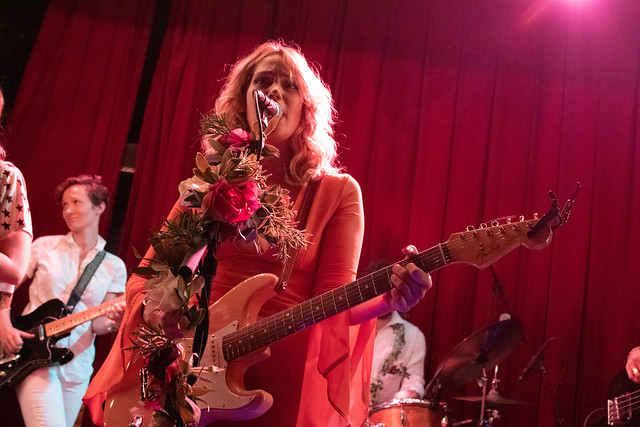
jhachadezola-in-2.jpg

Photo Credit: Robin Souma

___________

WRH: If I remember it correctly, your father had a massive impact on your life, as he had a key role influencing your decision to study Biochemistry – and that music has been a lifelong passion for you. Have your studies influenced your work and approach at all? How?

J. Hacha De Zola: My old man was both a terrifying and wonderful kinda guy. He inspired a lot of different vibes in me – some good – some not so good. But a couple of the core values he instilled in me as part of living an “observed life” is to be informed and always ask questions. To observe, learn and question everything. To think critically about things that matter to you such art, music, science, life, etc. To me these things are all part of the same cloth; the arts and sciences. Music is truly a science in of itself. The opposite is also true; science can be quite musical, particularly biochemistry, where you have this orchestrated dance of biomolecules, such as helicases, polymerases and ligases as in the example of DNA replication, all working together in a very methodical way, every component doing its own part for the benefit of the whole – in a way that’s very musical. While my music may seem to be fairly chaotic at times, there is a real methodical approach that I follow to create it. It’s the same way with approaching any kind of science where you have an idea or a question you want to flesh out, so you follow a thought-out plan to execute it as elegantly as possible. It’s a bit like playing chess at times, the fewer moves you make to reach a checkmate, and then the more elegant you are in your methods.

 WRH: Who are your influences?

Hacha De Zola: I love everything – I have spent a life time studying and listening to everything that has ever passed by my ears. I felt I had to truly understand music, its place in time, and where I could possibly take it with my own approach. To me everything is relevant and possibly even useful to me in terms of musical ideas I may want to pursue. I don’t like to limit myself in any way in terms of musical styles so I have always kept my ears open to new experiences. However, the first music I ever heard as a child was Latin music, particularly Afro-Cuban music, guys like Perez Prado, Benny More, and Arsenio Rodriquez. At one point as I grew older, I started to listening to what most teens who wanted nothing to do with their parents, would listen to; rock, punk, pop, or even metal which I eventually grew out of as I wanted to learn more about music itself. I wanted to understand the most fundamental roots of all those forms and arrived at the blues. I started out as a guitar player with no interest in being a “vocalist” at all. I started lifting licks off guys like Lightnin’ Hopkins, Mississippi John Hurt, Junior Kimbrough and others. From there I started getting into R&B (Marvin Gaye, Otis Redding, Ruby & the Romantics), soul music (Al Green, Sam Cooke, Donny Hathaway), funk (Sly Stone, Parliament Funkadelic) and eventually jazz (Miles Davis, John Coltrane, Moondog, etc). Later on in life, as in most recently, I have started noticed the Latin music influence on just about every genre of music today, and this has bought me back to appreciate the music of my parents, the first music I have ever heard. Taken all together, I feel that in not limiting my musical tastes has led me to be a better songwriter, musician and artist as a whole. As a vocalist and/or performer, I have some very specific influences or folks that I admire and incorporate a bit of who they are into what I do. Folks like Screamin’ Jay Hawkins, Captain Beefheart, Nick Cave, Eric Burdon, Lee Hazlewood, Serge Gainsbourg, Leonard Cohen and of course, Tom Waits. The guys are all very strong leading men. I hope to be one as well one day when I grow up! (ha!). Lyrically I borrow (or steal) from the greats! Poets and writers like Arthur Rimbaud, Charles Baudelaire, Samuel Coleridge, Daniil Kharms, William S, Burroughs, H.P. Lovecraft, and so many others… 

WRH: Who are you listening to right now?

Hacha De Zola: Let’s see what’s on my record player at the moment…

Just last night it was: Lucha Reyes, Stelvio Cipriani, Juan d’Arienzo, Kris Kristofferson – Oh and Princess Nokia – I love her – I think She’s great….

WRH: Over the course of a couple of albums and EPs, you’ve established a sound that you’ve dubbed “Urban Junkyard.” How would you describe that sound to someone, who’s completely unaware of you and your work?

Hacha De Zola: I feel fortunate to have been born and raised in a very diverse urban environment where I was exposed to many cultures and musical traditions/styles. Growing up in an “Urban” environment has enriched my life as an artist and has been a huge part of my musical journey. Cities, at least in my experience, are the most diverse of places where many different cultures, art, music and food collide to weave a truly rich tapestry. “Junkyard” because I am often selecting utilitarian forms or fragments or bits of music and disrupting them and re-constituting them in some way. Kind of like what Marcel Duchamp did with his “ready-mades” where an ordinary object is taken, reconfigured and elevated to the dignity of a work of art by the mere choice of an artist. These are composite structures or as in my case, musical compositions derived from existing musical forms – hence “Urban Junkyard.”

I like to think Urban Junkyard as my own musical movement. It’s a deconstructionist approach to not just music but also of poetry and lyricism, where I draw from the past, from existing musical or even lyrical forms, and then blow them up or break them down to their most basic forms. The resulting fragments are allowed to spontaneously or semi spontaneously re-form in order to create my own musical language. The result hopefully has a vibe, a look, a sound and a feeling that hopefully sounds uniquely like me. It’s a feeling that I have built “brick by brick”. On Icaro Nouveau, you may hear a Cha-Cha-Cha track at one moment and then a Spaghetti western-ish track to a bolero in the next. I am more interested in musical ideas than merely musical genres. This “Urban Junkyard” approach creates a new vocabulary from an older one which has lead me to another way to make records. I have always wanted to dismantle any excessive loyalty to any particular musical idea and look for the more fundamental or primal aspects that might lie just below the surface – to me that’s what “Urban Junkyard” is all about.


WRH: For the bulk of your Urban Junkyard work, you collaborated with the late Ralph Carney. How did that come about? How influential was he on you and your work? Was it difficult to continue without someone who played such a massive role in your creative process?


Hacha De Zola: I love and miss Ralph…

It was just after the release of my first record Escape From Fat Kat City, when I found myself writing furiously, losing my mind and holed up in some downtown Los Angeles motel for several weeks. The plan was to do all the writing in LA, and then meet up with a bunch of friends up in Portland, Oregon to start recording the new record which would become Picaro Obscuro. I had recently read that Ralph had just moved to PDX at the time and I thought “let me shoot him an email!” I grew up listening to Ralph’s playing, particularly on the Tom Waits records he played on, namely Rain Dogs. I also had Big Time on [a] cassette tape which I had absolutely worn out. I wanted to send him a well-placed, polite email in hopes he would actually work with me. I knew that Ralph had a particular love for bass saxophone which was all over several choice cuts on my first record. I had sent him one of those tracks to which he immediately responded via email with a single line “Is that a bass sax?!” – It was at that point I knew I had Ralph’s attention and before long we were in correspondence back and forth. A couple of weeks later, I found myself in a studio with Ralph and another longtime Tom Waits collaborator, musical saw player/multi-instrumentalist David Coulter. I was totally star struck by the experience and got a little “fanboy-ish” on Ralph who instantly made fun of me for it! Ralph didn’t like anyone making a fuss over him – He was so down to Earth and was always quick with a joke and a laugh. It was great fun meeting, working and hanging out with two brilliant musicians like Ralph and David. Ralph and I continued to become friends and got to know each other, talking online, writing and trading tracks via email over the course of the next few years. We would share a lot of our personal woes and artistic/musical frustrations. He became a bit of a mentor to me and I would always go to him when I was stuck or unsure about a particular piece of music. Ralph was my secret weapon. I could always trust him to take a track up a quantum level. I never told him what to do, he immediately knew what the track needed to truly elevate the music. There were many moments where my confidence was shaken, and Ralph would always be there to remind me to trust my instincts. “When the going gets weird – the WEIRDO gets WEIRDER!” which was something he would always tell me. He bought the best out of me and would always tell me to never be afraid of being who I am. He loved what I was trying to accomplish with this whole “Urban Junkyard” thing, he understood it and he was truly at the core of helping me develop what that idea means to me and its overall sound. I was absolutely devastated and heartbroken when I heard of his untimely passing. I lost my dear friend, collaborator and mentor. It was unsettling for me to even attempt to make a new record without his guidance. There were moments in the studio when I felt uneasy, shaken, and unsure but then I could feel him in the room. I could hear him in my head saying “Dude! Don’t be afraid to be weird! Just be yourself and the rest will come!” – The last thing he told me the last time we spoke was “Keep working on your bad self, never stop. Good things will come if you let it, keep showing up and keep doing the work! I love you Brother!” – I love Ralph, I’ll never forget him, and I think of him every day.

 WRH: Your forthcoming album Icaro Nouveau finds you working with acclaimed producer John Agnello. How did that come about? How was it like to work with him?

Hacha De Zola: Oh, John’s a local guy! He’s originally a Bensonhurst, Brooklyn guy, but transplanted himself and the family over in Jersey City many years ago. The Jersey City arts and music community/scene is very close knit. Everyone knows each other, parties, and hangs out together fairly often. I remember seeing John around many of the art events in town but was always a little too shy to say hello. After my third LP, Antipatico, I wanted step up the effort production wise and thought to myself “Hell! Let’s write “Don Angello” a nice email and see if he would be interested in sitting in the producers chair for this next one!” which would eventually become this record “Icaro Nouveau”. I figured what do I have to lose? What’s the worst he could say?! No!? – To my delight, John hit me right back and was so generous with his “Sure – let’s talk!” response! John Agnello is a lovely wonderful man, to know John is to love him. He’s a real community guy, always there to lend a hand or sage advice or even rattle your cage a bit if ya need to get it together! I was pretty floored to think that the same guy who produced so many of my favorite records that I listened to during my formative years as a kid, is now producing my new record!Working with John was great! His attention to detail is amazing, I remember laying down some vocals for a particular track and he was in the control room writing down all the lyrics just for the sake of trying to get the best performance out of me as possible. He would really push me to work hard as well as all of the session guys in order to get the best out of us. He motivated us big time and in a way, you really wanted to give John the best because of the kind way he would motivate you – ya just didn’t want to let him down. After seeing the way he ran the sessions, I knew without a doubt that we were going to walk away with something truly special. Working with him was so much fun – there was never a dull moment! We have become really good friends since and go bowling on a fairly regular basis! I love the guy and lemme tell ya, the dude can roll!!


WRH: You have a unique songwriting process that you’ve referred to “reductive synthesis” in which songs aren’t fully written before you and your backing band arrive at the studio; instead, there seems to be a lot of improvisation and you kind of let the tape run, allowing the musicians (and presumably yourself) quite a bit of creative leeway. You go on to say that you’ll then peel back the various layers to fashion a song from what was recorded. How do you know when you have a finished song? And considering the unique creative process, how do you recreate that live?

Hacha De Zola: I like to inject a certain amount of uncertainty into my song writing process which can be a little risky at times because you never know what you are going to end up with. I never sit down and tell myself, “I’m going to write a song about this” or “I’m going to write a rock or a folk song.” That sort of approach bores me to be quite frank. I am more interested in musical concepts or ideas. I would rather borrow or steal a structure from an existing musical form of interest, break it up and then recombine it. I’ll sit at the board next to a producer like John Agnello and then bring in my cabal of musical associates. I honestly let the session players do whatever they want over these structures and just have them all throw the kitchen sink at it. Allow them to take ownership of the track for a moment. I am an enabler and enjoy that role! Maybe I’ll have a Jazz bebop trumpet player come in, I’ll have a Bulgarian folk music player or tuba player or a rock guitarist come in and just let ‘em go for it. While it may not sound like the most efficient way to run a recording session, efficiency is not what I’m worried about here. I never know what we will end up with and that’s part of the “voodoo” behind this approach. Sometimes you just might stumble across something special that was totally unexpected. So how is it a “reductive synthesis”? Once everyone is finished recording their parts, I’ll go back and listen. It is said that sculpture is a reductive art form where a large mass of stone is reduced or carved down to form a structure or form that is aesthetically pleasing. “I saw the angle in the marble and carved until I set her free” – I use a very similar approach when forming the “music” that will make up the “song”. Somewhere in that tangled mass of tracks, I will hear a song that wants to be set free. I don’t get to decide when a song is “done” but rather the song itself will tell me exactly what it needs – it tells me when its done. I never write a song about a subject but rather, the song itself tells me what it’s about. I will take a raw track, just full of noise and sound, and peel away the layers until the song is free to take on a life of its own. The music gets put together first, then the lyrics are completed next. I usually form the words to the harmony and melody later. In terms of the live show, most bands or musicians often have a set- live repertoire of songs that they have been playing for a long time that eventually will be taken into the studio to be recorded. I actually work in the opposite direction, the songs are formed in the studio first and from there the finished, “freed” song is then charted out and handed over to the folks in the band for the live show. I have developed two different kinds of the “live” show, solo J Hacha, which is an acoustic solo type thing performing songs that lend themselves to that kind of format, and then there’s the theatrical, full big band live show, complete with horn sections, percussive elements, live singers, etc.

 WRH: Icaro Nouveau’s latest single is this slow-burning Bob Dylan meets Tom Waits-like “Super Squeaky.” Can you tell us a bit about what inspired the song and what it’s about?

Hacha De Zola: To be honest, I am never really sure what a song is about going in. I only get to know what a song is about once I begin to write it which is when it tells me what it is about. As far as im concerned, songs should always be open to interpretation. But if I had to take a guess, this is a song about being at the end of your rope. It’s about being resigned to one’s fate for better or worse. It’s a song about compunction, owning up to your own hubris, and about coming “clean” hence the title “Super Squeaky”. I have suffered a number of failed bad relationships perhaps (story of my life). I’ll go ahead and say I’m likely to blame for all of it. Ok I’m definitely to blame for all of it (lol). This song contains many of those kind of themes — heartbreak, hangovers, loss, moving on and hopefully redemption.

WRH: What’s next for you?

Hacha De Zola: I’ll never know! I take it day by day mostly! But I must say that it will likely involve developing this “Urban Junkyard” thing even further- perfecting it – honing it. I have so many artistic aspirations that I would love to explore. Some of these include film, theatre, and performance art. The music will always play a central role which comes first and foremost but I would like to do more. I am constantly writing new songs and thinking of new directions to take the music. Not too long ago I released a synthy- All Spanish dream-pop EP Syn Illusión. Maybe I’ll make a mumble rap-trap EP (lol) next or maybe even a reggaeton record (???). One of the best things about being an independent artist is that I can do whatever I damn well please! Not everyone will understand it but I’m ok with that! After the last few years, making these records and meeting so many spectacular players and artists, I have been really blessed with so many opportunities to take the art up to a new level. I would really love to take the live show on the big road, develop it further and make it as theatrical as possible. I would love to write an opera or a play/theatre piece. I would love to direct or have a hand in directing a film.  As an artist, the sky is the limit, I love pushing boundaries and will keep doing so till I can’t anymore. All I can say is that I am excited about art, music and what is to come. Life is good and I’m blessed to be able to be doing this right now. Thank you!
 

New Audio: Haiku Hands Release an Infectious Club Banger

Featuring a core trio comprised of Claire Nakazawa, Beatrice Lewis and Mie Nakazawa, the Australian indie electro pop act Haiku Hands is split between Melbourne and Sydney, and together the members of the act who are influenced by hip-hop, pop, electro pop dance music and more, curate, perform and work as part of a larger collective that engages with and explores social norms with their lyrical, musical and visual content. Interestingly, last year was a big year for the Aussie electro pop act as their previously released, high-energy bangers “Squat,” “Jupiter,” and “Not About You” amassed over 3.5 million streams — and as a result, each single landed spots on iTunes charts across the globe; in fact, “Jupiter” was included on Matt Wilkinson’s Best Songs of 2018 So Far list, and received airplay on BBC Radio 1 and Radio X. 

Building upon a rapidly growing national and international profile, the Aussie electro pop act are about to embark on a month-long tour of North America with CHAI that features stops in San Francisco, Los Angeles, Seattle, Portland and the Market Hotel, as well as an opening date for Cupcake in Chicago. (You can check out the tour dates below.) They’re also making appearances at several SXSW showcases. But in the meantime, their latest single, the brash and infectious “Dare You Not To Dance,” will further cement their reputation for crafting club bangers that mesh elements of riot grrl punk, hip-hop, house music, drum ‘n’ bass, EDM and trap music with enormous, shout along worthy hooks in a way that brings M.I.A. and Gwen Stefani to mind. 

SXSW APPEARANCES
03/12 – Roologic Records / CS Disco at The Main @ 12:00 AM
03/13 – Ladiez Showcase at Scoot Inn @ 5:00 PM
03/13 – DIY Magazine showcase at Swan Dive @ 12:00 AM
03/14 – Aussie BBQ at Australia House @ 5:15 PM
03/15 – Panache showcase at Hotel Vegas @ 9:00 PM
03/16 – Do512’s The Big One at Barracuda @ 2:30 PM

Tour Dates
03/12 – Roologic Records / CS Disco at The Main @ 12:00 AM $
03/13 – Ladiez Showcase at Scoot Inn @ 5:00 PM $
03/13 – DIY Magazine showcase at Swan Dive @ 12:00 AM $
03/14 – Aussie BBQ at Australia House @ 5:15 PM $
03/15 – Panache showcase at Hotel Vegas @ 9:00 PM $
03/16 – Do512’s The Big One at Barracuda @ 2:30 PM $
03/18 – DC9, Washington DC *
03/19 – Market Hotel, Brooklyn *
03/20 – Velvet Underground, Toronto *
03/21 – Thalia Hall, Chicago #
03/25 – Moroccan Lounge, LA *
03/27 – Rickshaw Stop, SF *
03/29 – Vera Project, Seattle *
03/30 – Holocene, Portland *
04/26 – 05/11 – Groovin the Moo Festival, AUS

$ = SXSW
* = supporting CHAI
# = supporting Cupcakke

New Video: Acclaimed Act Shook Twins Release a Disco-Influenced Take on Folk Paired with Trippy Visuals

Sandpoint, ID-born, Portland, OR-based identical twin sisters Katelyn Shook (vocals, guitar, banjo, mandolin, ukulele, glockenspiel and telephone microphone) and Laurie Shook (banjo, upright bass, djembe, ocarina flute, tambourine, giant golden egg, vocals) formed the acclaimed folk duo Shook Twins back in 2004, and since their formation they’ve developed a reputation for a unique and quirky take on folk that’s centered around unusual instrumentation, the Shook Sisters’ harmonizing, Laurie Shook’s beatboxing a looping machine and a telephone microphone to create a sound that draws from folk, Americana, electro pop and hip hop. They’re also known for adding choruses or lines from other contemporary and well-known songs as a sort of remix-like style. 

And with the release of their first three albums — 2011’s Window, 2008’s You Can Have The Rest, and 2014’s What We Do, and a handful of EPs, the Shook Sisters have built a growing national profile as they’ve performed with or opened for the likes of Ryan Adams, Mason Jennings, Carolina Chocolate Drops, Sarah Jarosz, Laura Veirs, Trace Bundy, Jonatha Brooke, Michelle Shocked, Crooked Still, Jason Webley, John Craigie, Elephant Revival, The Head and the Heart and others. And adding to that, they’ve played sets across the country’s music festival circuit including High Sierra Music Festival, Suwannee Hulaween, Summer Camp Festival, Electric Forest Festival, Lightning in a Bottle, Joshua Tree Music Festival, Arise Music Festival, Four Corners Folk Festival, Fayetteville Roots Festival and others. 

The act’s long-awaited fourth full, length album Some Good Lives is slated for a February 15, 2019 release through Dutch Records and the album which features a backing band consisting of Niko Slice (guitar, mandolin), Barra Brown (drums) and Sydney Nash (bass) finds them paying homage to the loved ones, friends and mentors, who have had a massive influence and impact on their lives from a late grandpa and godfather to Bernie Sanders and a host of others. “We realized there was a theme,” Katelyn Shook explains in press notes. “Even though our minds are mostly on the women of today and wanting the matriarchy to rise up, we have several men in our lives who have been such positive forces. We wanted to thank them and honor the good guys who showed us the beauty in this crazy world we live in. So, it’s an album for Some Good Lives that have crossed paths with ours—and to them, we are grateful.” Laurie Shook adds “It’s also an acknowledgment of our thankfulness of the good life that we get to live.”

During 2016, the Shook Sisters planted the seeds for what would become Some Good Lives by thinking bigger — they began intermittently recording at Hallowed Halls, an old library building, which felt full of stories. And with their backing band, they expanded upon the sound that first won them attention. “It took us a long time to find the band that we wanted to record these songs with and for the songs to fully mature,” admits Laurie. “Once Barra, Sydney, and Niko joined us, we really started to explore what our music could be. These amazing players helped us realize that we could be more than just ‘folk pop’. We started adding other genres to the word like ‘disco,’‘psychedelic,’‘funk,’ and ‘soul. We really honed in on a new sound.”

Some Good Lives‘ funky latest single “Stay Wild” single begins with shimmering guitars and features a propulsive, dance floor friendly groove, complete with a sinuous bass line paired with the Shook Sisters’ gorgeous harmonizing — and it finds the act’s sound meshing old school folk, deliberate attention to craft, psych pop and electro pop in a heady yet accessible fashion; in fact, in some way, it’s an almost Giorgio Moroder-like take on folk. 

Directed by Kristen Mico of Brave Alive Productions, edited by the band’s Laurie Shook and Kristen Mico and featuring effects by Willie Witte, the recently released video stars the Shook Sisters along with Barra Brown and Niko Slice. The video initially begins with a frustrated and stressed out businesswoman, completely in black and white. The brief blasts of color that come into her world revolve around the creative spirts and world of Shook Twins — including the entire band ice skating at a local rink. It’s a goofy and trippy visual that captures the spirit and feel of the song. 

New Video: Aesop Rock and Tobacco Collaboration Release a Thumping Anti-Social Anthem

Born Ian Matthais Bavitz in Syosset, NY, the Portland, OR-based emcee and producer Aesop Rock was at the forefront of a collection of underground and alt hip-hop acts that emerged during the late 1990s and early 2000s with his most boundary pushing work being released through El-P‘s Definitive Jux Records. Aesop Rock has also developed a reputation for being a go-to collaborator, as he is the member of a number of different musical projects including The WeathermenHail Mary Mallon with Rob Sonic and DJ Big Wiz, The Uncluded with Kimya Dawson and Two of Every Animal with Cage. Throughout his career, the Syosset-born, Portland-based emcee and producer has been largely considered one of the more verbose emcees, known for a flow that’s centered by dense and abstract wordplay and incredibly complex rhyme schemes.

Over the past decade, the Pittsburgh-born and based producer, multi-instrumentalist and singer/songwriter TOBACCO (born Thomas Fec) as a solo artist and as the frontman and primary songwriter of Black Moth Super Rainbow has used analog synths and tape machines to record material that rapidly alternates between absurdly bright beauty and the murderously sinister in a way that evokes a woozy and uneasy intertwining of tension, anxiety, bemusement and pleasure. Interestingly, the duo’s collaboration Malibu Ken can trace its origins back to when TOBACCO and Aesop Rock toured together over a decade ago. “I find his production to be something special, and always wanted to see what I could bring to it,” Aesop Rock says in press notes. ” We recently found time to record some songs, and Malibu Ken was born. I brought a few stories to the table, but also did my best to let the production dictate the subject matter throughout. We hope you like the soup.” Rhymesayers Entertainment will be releasing the duo’s self-titled, full-length debut on January 18, 2019, and as you may recall, the self-titled album’s first single “Acid King” was arguably one of the most forward-thinking, strangest, boundary pushing hip-hop tracks I’ve heard in some time. Sonically, Aesop Rock spit a series of dense, mind-spinning bars full of absurd and gory imagery, betrayals and heartbreaks over a woozy and menacing retro-futuristic production centered around layers of shimmering and arpeggiated synths.  

“Corn Maze,” the album’s second and latest single is centered around a dense and junky, retro-futuristic production featuring layers of fluttering, shimmering and woozily whirring synths, thumping beats and anthemic hooks — while Aesop Rock spits dense bars with odd, novelistic detail, describing a narrator who’s an anti-social and paranoid fuck-up. And as a result, the song evokes a sweaty, half-remembered insomniac dream that’s managed to linger. 

The recently released video, directed by frequent Aesop Rock collaborator Rob Shaw, depicts Aesop Rock in an insomniac daze in which the late night Japanimation-inspired cartoons he starts watching seem to suddenly become self-aware, commenting on the ridiculousness of their situation. It’s a trippy mix of live action, cheap animation and 80s animation that further emphasizes the song’s junky, retro-futurism. 

New Video: Portland’s Shadowgraphs Release a Hallucinogenic Take Down of the Record Industry for Album Title Track “Another Time”

Shadowgraphs is a Portland, OR-based psych rock/psych pop duo consisting of Bryan Olson and Charles Glade. After a month-long tour last summer, the duo returned home in a different state of mind. Olson and Glade had experienced some profound emotional ups and downs in their personal lives, and they were forced to make some heartbreaking decisions — all while writing, recording the new batch of material that would eventually comprise their latest album, Another Time. 

The  album which was initially self-recorded in North Carolina with Ethan Ricks (bass) and Shaun Olson (drums) reflects what was a difficult and crazy time for Olson and Glade. Glade’s vocal takes were recorded later on in Portland. The completed album was mixed at Chase Park Transduction in Athens, GA by Drew Vandenberg and mastered at Telegraph Mastering with Adam Gonsalves. Interestingly, the album’s latest single, album title track “Another Time” is centered around big, arena rock friendly hooks, shimmering reverb-drenched guitars, ethereal vocals, a propulsive groove and a scorching, trippy guitar solo — and as a result it manages to recall 60s psych rock, 90s shoegaze and Brit Pop simultaneously with a sunny, laid back air.  I was immediately reminded of the likes of JOVM mainstays Elephant Stone, Secret Colours and others. 

Directed by Cory Ring and the band’s Charles Glade, the video stars the band’s Bryan Olson as a bored and disaffected A&R guy, who initially seems completely unimpressed with the band who’s playing their new video in their office, before getting completely getting into it and rocking out hard at the video’s most hallucinogenic moments. The video ends with Olson shaking hands with a member of the band, presumably giving them a record deal. It’s a playful yet incisive look at the record industry. 

New Video: Aesop Rock and TOBACCO Collaboration Malibu Ken Releases Trippy and Menacing “Acid King”

Born Ian Matthais Bavitz in Syosset, NY, the Portland, OR-based emcee and producer Aesop Rock was at the forefront of a collection of underground and alt hip-hop acts that emerged during the late 1990s and early 2000s with his most boundary pushing work being released through El-P’s Definitive Jux Records. Aesop Rock has also developed a reputation for being a go-to collaborator, as he is the member of a number of different musical projects including The Weathermen, Hail Mary Mallon with Rob Sonic and DJ Big Wiz, The Uncluded with Kimya Dawson and Two of Every Animal with Cage. Throughout his career, the Syosset-born, Portland-based emcee and producer has been largely considered one of the more verbose emcees, known for flow that’s centered by dense and abstract wordplay and rhyme schemes. 

Over the past decade, the Pittsburgh-born and based producer, multi-instrumentalist and singer/songwriter TOBACCO (born Thomas Fec) as a solo artist and as the frontman and primary songwriter of Black Moth Super Rainbow has used analog synths and tape machines to record material that rapidly alternates between absurdly bright beauty and the murderous sinister in a way that evokes a woozy and uneasy intertwining of tension, anxiety, bemusement and pleasure. 

The duo’s collaboration Malibu Ken can trace its origins back to when TOBACCO and Aesop Rock toured together over a decade ago. “I find his production to be something special, and always wanted to see what I could bring to it,” Aesop Rock says in press notes. ” We recently found time to record some songs, and Malibu Ken was born. I brought a few stories to the table, but also did my best to let the production dictate the subject matter throughout. We hope you like the soup.” Rhymesayers Entertainment will be releasing the duo’s self-titled, full-length debut on January 18, 2019, and the album’s first single “Acid King” may arguably be one of the most forward-thinking, strangest and boundary pushing hip-hop tracks I’ve heard in some time. Sonically, Aesop Rock spits a series of dense, heady bars full of absurd and gory imagery over an woozy, eerie and menacing retro-futuristic production centered around shimmering and arpeggiated synths. 

Directed by long-time Aesop Rock collaborator Rob Shaw, the recently released animated music video is a fittingly fucked up, psychedelic nightmare centered around the decay and melting of its protagonist’s face — in real time. 

Comprised of Henry Hill Kammerer (guitar, vocals) and John Johnson (drums, percussion), the Portland, OR-based folk and blues duo Hillstomp have received attention regionally and nationally for a gritty and sincere,  rock ‘n’ roll-take on Americana/roots music that draws from hill country blues stomp, North Mississippi trance blues, Appalachian folk and blues, rockabilly and punkabiliy played on a drum kit made from assorted buckets, cans, BBQ lids and other ephemera and slide guitar. And over their 17 years together, the duo have toured with Reverend Horton Heat, JOVM mainstays The Devil Makes Three, and Southern Culture on the Skids among others.

Slated for an October 19, 2018 release through their longtime label home Fluff and Gravy Records, Kammerer and Johnson’s sixth full-length Hillstomp album Monster Receiver was recorded by Juniana Lanning and John Shepski with mixing engineer john Askew — and the album finds the band pushing their sound and songwriting into even more experimental territory with the album’s material seamlessly flowing from grungy folk, garage rock and intimate and tender ballads while featuring guest spots from Anna Tivel (violin), Hook & Anchor‘s Eric Clampitt (pedal steel) and I Can Lick Any Son of a Bitch in the House’s David Lipkind (harmonica). Interestingly, the album’s first single “Hagler,” is a grimy, psych blues stomp centered around shuffling drumming, chugging guitar and an explosive guitar solo that recalls the North Mississippi All Stars and fellow labelmate Drunken Prayer as its full of piss, vinegar and whiskey.

New Video: Girl Skin Releases a Moving and Mediative Ballad

A day after covering OctFest and I somehow feel almost every single second of my age. Everything hurts — and in completely different ways: my ankles and feet feel as though they’re on file while my left shoulder throbs and so on. But I had some fantastic international beers, ate a lot of good food, saw some great music, stood in the rain for hours on end and photographed a ton of stuff; so it was worth it in the end. But let’s get to business, eh? 

Led by singer/songwriter and creative mastermind Sid Simons, the Brooklyn-based collective Girl Skin features a rotating cast of collaborators that includes Bailey Blu (drums, piano, vocals), Sophie Cozine (vocals), Al Nardo (bass), Stan Simons (vocals) and Ruby Wang (violin), the act meshes elements of folk and art rock in what the band describes as “lemon pop” — with the material thematically and emotionally drawing from Simons’ personal experiences: Simons was born in Portland, spent his childhood in Australia and New York, his teens in Shanghai, China — and instead of finishing high school, he went on a rambling cross country road trip of the States. 

The band’s latest effort, LoveMore EP was released earlier this year, and it found Sid Simons and company collaborating with his lover and muse Foster James. Reportedly, the band is currently working on a full-length album that is tentatively slated for release early next year; but in the meantime, the band’s latest single “Bite Real Hard” is a moody and slow-burning ballad with a rousingly anthemic hook that recalls Psychic Ills and The Rolling Stones as it shifts from slow-burning ballad to power chord-fueled, arena rock ballad, complete with the bittersweet air that comes from lived-in experience. As Girl Skin’s Sid Simons explains. ” When I was 19, I skipped school and took my Chevy Astro van on a 22 State, 12,000 mile odyssey around the USA. While I was out there, meandering around the back roads of America, I learned my Uncle, who had given me my first lessons on the guitar, had become sick with cancer. There I was searching for stories, looking for songs and myself, and one came right up and found me. Bite Real Hard is my song of respect, hope and an offer of strength to one of the most important people in my life.”

Directed by  Idle House, the recently released video begins with Simons walking through marsh before he encounters his bandmates — with each bandmate handing Simons something: the first hands him a cowboy hat, the second a lit cigarette, the last member a handful of flower before walking together to the shore; but at the shore, the bandmates pick up their respective instruments while Simons continues to walk onward into the sea, where he casually drops the things his bandmates hand him. It’s a remarkably pensive and moody video that emphasizes the song’s moody vibe. 

Ezza Rose is a Julian, CA-born, Portland, OR-based singer/songwriter and guitarist, who can trace the origins of her musical career to being a small child, playing tambourine along with her father’s band. Shortly after, she found a CB drum set under the Christmas tree — and unsurprisingly, the young Rose became the only female punk rock drummer in her town of about 1,500. When she went to college, the drum set didn’t fit in her dorm room, so she picked up a guitar and began writing songs of her own. As the story goes, during a holiday break from her performing arts conservatory, Rose and a friend hitchhiked to Portland to check out the city’s arts scene, and the trip inspired her to eventually relocate.

Bandmate Craig Rupert relocated to Portland roughly a year later with the members of an East coast roots rock band. Rupert met Rose and her bandmate Ray Johnson, who was playing in Winterhaven while they were all playing on the same bill.  Soon all three were playing in Winterhaven, and after the band split up, Rose asked her former bandmates to play in a new project bearing her name. Interestingly, with 2015’s When The Water’s Hot was a sonic departure for the band, as it found them moving from the acoustic folk of their previous efforts and back towards Rose’s roots in rock, fueled by the frustrations of an unjust social climate.

The band’s fourth full-length album No Means No is slated for a September 21, 2018 release through Culture Collide Records, and the album finds the band encompassing the widest and most diverse array of sound and styles they’ve ever recorded — while being centered around a deep well of a lifetime of things silenced and buried within. “Baby Come Down,” No Means No‘s latest single is a slow-burning pop ballad that recalls 50s and 60s country and pop — The Hollies, Roy Orbison, Patsy Cline and others immediately come to mind with this stripped down song, while being a wistful observation over how society is now perpetually distracted from even the most important, intimate moments of our lives.


New Video: Kind of Rider’s Elegiac and Atmospheric Ode to Loss and Hope

Initially formed in  Tulsa, OK, the indie act No Kind of Rider, which is comprised of  Sam Alexander, Wes Johnson, Jeremy Louis, Joe Page and Jon Van Patten has developed a reputation for a genre-defying sound that draws from indie rock, shoegaze, R&B, indie rock and electro pop. Currently, the band has members split between Portland, OR and Brooklyn but before that the members of the band spent several years writing, playing an hustling hard, hoping for a moment. “Working like that can break your heart,” the band’s frontman Sam Alexander says in a lengthy statement written by him and his bandmates.

Interestingly, the Portland and Brooklyn-based act’s recently released full-length debut Savage Coast draws from several years of difficult, life-altering experiences. As the band says, “there are things we have been during to say, and this record is a release emotionally for us. Both musically and lyrically we focus on ‘change’ a lot in this record.We use as many synthesizers and electronic samples as we do guitars and drums.  We want the listener to both feel comfortable and continuously be surprised.”  In fact, that sense of change throughout the album was inspired by the life altering transitions within the individual band member’s personal lives: Joe Page’s father suddenly died two years before the band entered the studio to write and record the material that would eventually comprise their full-length debut. And as Sam Alexander notes, the year that Page’s father died, was the same year he had gotten married. This was followed by the sudden death of Wes Johnson’s father, Jon Van Patten’s relocation to Brooklyn and Alexander’s own father suffering a stroke. “There’s been so may times in the last few years where I got stuck in my head: ‘Do other artists go through all this while making a record? Is this some kind of curse?’ For a long time I used to think of music as my path out of a difficult reality. I don’t anymore. Now, writing music is what keeps me rooted in my reality, it’s what lets me live with more presence and attention,” Alexander says.

“This isn’t a concept album,” Alexander and his bandmates continues. “But it does tell a story. We want the listener to uncover that story for themselves. However, a part of it is our story. Our loves, our friendships, our triumph, our losses. The story wouldn’t have happened without our move from Oklahoma to Oregon. We slept on friends floors and rehearsed in basements. I have over 300 hours of voice memos from our rehearsals down there!  Even though we recorded at incredible studios with talented friends, when I listen: I somehow still hear us in that moldy basement. I still hear the first time we pulled over on hwy 101 and saw the jagged wounds of the Pacific coastline.  Creatively, Joe actually drove out to Haystack Rock on the coast with a tape recorded – he designed new sounds and he embedded them into the tracks, so some of that is the actual article.  Most of it is just in the way that the music feels to me.” Unsurprisingly, the album thematically deals with loss, frustration and resiliency through love, friendship and music and of holding on to hope in the most difficult of times. Certainly, while deeply personal, the album will resonate on a universal and personal level to the listener, especially through the transitions that come about as we get older, and in these increasingly desperate and frightening times. From personal experience, I’ve learned that sometimes when things are so unmooring, so painfully difficult, so utterly confusing and uncertain that all anyone can cling to is the small things, the tiny and fleeting joys of life — a kind word or a smile shared among friends, the touch of a lover, the simple presence of a beloved family member, your favorite album, the thin soup of hope that sustains you for another few moments or a few days.

Last month, I wrote about “Sophia,” a song that Alexander noted was recored with the quintet facing each other and playing in the same room, and much like The Verve‘s Urban Hymns, there’s a vital and urgent “you-are-there-in-the-room” feel to the song while sonically the song — to my ears at least — brought JOVM mainstays TV on the Radio and The Veldt to mind. The album’s latest single “Autumn” is an elegiac and atmospheric track centered around a production featuring fuzzily distorted boom bap-like beats, shimmering and arpeggiated synths, equally shimmering guitar chords and Alexander’s plaintive vocals — all of which evoke the ache of loss, the recognition of its permanence, and the hope that there’s something better beyond this mortal realm. 

Directed by Parker Hill, the recently released video for the song is a cinematic and hallucinogenic fever dream full of the familiar lingering ghosts of regret, of things unsaid that should have been said, of time’s endless passing as it follows the band’s lead singer dealing with the loss of a loved one as he returns to a familiar place without him — and throughout there’s the palpable sense that one can never really return home. As the video’s director says in a statement:

“When I first heard Autumn, I immediately felt the song’s sense of complex loss and the possibility of renewal.  We wanted the video to reflect a person’s experiences before they let themselves begin grieving.

It was a dream to shoot with No Kind of Rider in their home city of Portland, OR because I knew the vast and almost eerie pacific northwest setting would help communicate much of the story we wanted to tell.

We crafted the video to be about Sam’s (lead singer) journey of saying goodbye to a loved one as he returns to a familiar place, alone for the first time.

Shooting on the foggy roads leading out to the coast, flanked by looming evergreen trees, we captured Sam amidst a cathartic release as he arrives at the monumental Canon Beach.  The sheer magnitude of nature that he is set against only further reveals the size of his loss.”

Earlier this month, I wrote about the Portland, OR-based indie rock quintet King Who, and as you may recall, the band, comprised of  Michael Young, Ryan Hayes, Ryan Cross, Glen Scheidt and Travis Girton will be releasing their Hutch Harris-produced sophomore full-length album Giant Eye through SELF Group on August 17, 2018. Reportedly, the album finds the band expanding upon their sound as they increasingly incorporate elements of New Wave, post-punk and dream pop  while retaining the heavy bass of their full-length debut Us Lights; in fact, Giant Eye‘s first single, the slow-burning “Ice Cream” sonically finds the band drawing from shoegaze and dream pop as the song is centered around shimmering guitar chords, a propulsive rhythm section, a soaring hook and Micheal Young’s plaintive falsetto, sounding though as it were recorded during the era of 120 Minutes-era alt rock.

Interestingly, Giant Eye‘s second and latest single, “Crying Shame” is centered around a motorik-like groove, four-on-the-floor drumming and Young’s plaintive falsetto, and as a result the song may arguably be the most New Wave-inspired song off the album, sounding as though it were drawing from Heaven Up Here-era Echo and the BunnymenEvil Heat-era Primal Scream and Luminous-era The Horrors, thanks to one of the funkiest rock bass lines I’ve heard this year.


New Video: Blackwater Holylight Releases Dark and Creepy Visuals for Anthemic “Wave of Conscience”

Over the past few months, I’ve written a bit about Portland, OR-based rock act Blackwater Holylight, and as you may recall, the band which is comprised of founding member Allison “Sunny” Faris (vocals, bass) with Laura Hopkins (guitar, vocals), Cat Hoch (drums) and Sarah McKenna (synth) can actually trace it origins to when a previous band that Faris was in broke up, and she felt the n could to begin experimenting with what her own version of “heavy” should and could be both sonically and emotionally — all while celebrating vulnerability in all of its forms. Faris adds that because she had long been the only female in many of her bands, she wanted to see how songwriting and vulnerability could glow once they take the drivers seat within a band, and how it is was to work exclusively with women.

The band’s self-titled full-length debut was released earlier this year, and the album’s second single is the Led Zeppelin and Black Sabbath power chord-based dirge and strident, feminist anthem “Wave of Conscience,” that finds the band at their most expansive and forcefully self-assured — but while centered around ethereal harmonizing. Interestingly, the recently released video for “Wave of Conscience” is based around found and stock footage of black widow spiders, cartoons, animated movies, and other creepy crawlies attacking and fighting each other. Yes, it’s dark as fuck — and fittingly so.

Comprised of Michael Young, Ryan Hayes, Ryan Cross, Glen Scheidt and Travis Girton, the Portland, OR-based indie rock quintet King Who will be releasing their Hutch Harris-produced sophomore full-length album Giant Eye through SELF Group on August 17, 2018 — and reportedly, the album finds the up-and-coming quintet expanding upon their sound as they increasingly incorporate elements of New Wave, post-punk and dream pop  while retaining the heavy bass of their full-length debut Us Lights. Interestingly, Giant Eye‘s first single, the slow-burning “Ice Cream” sonically finds the band drawing from shoegaze and dream pop as the song is centered around shimmering guitar chords, a propulsive rhythm section, a soaring hook and Micheal Young’s plaintive falsetto — and while the song draws from 120 Minutes-era all rock, it has a clean, modern production sheen that makes the song a bit anachronistic.