Category: singer/songwriters


If you’ve been frequenting this site over the past year, you may have stumbled across a post on recent JOVM mainstay, Copenhagen-born, London-based vocalist and electro pop artist Marie Dahlstrøm— and in fact, you might recall that I’ve recently written about her collaborative project with Canadian producer Mwahs — Hans Island. However, Dahlstrom, a three-time Scandinavian Soul Award winner has developed a reputation as an up-and-coming solo artist, who has received attention across both Scandinavia and the European Union for her silky smooth, effortlessly soulful vocals with covers of Phil Collins, Chris Brown and Rihanna, as well as her debut EP, Feelings. 

2016 looks to be a big year for the Danish-born, London-based artist as the follow-up to Feelings is slated to be released later this year. Now you might recall that early last year I wrote about  the EP’s first single “Look the Other Way.” Produced by DK The Punisher, who’s best known for his work with Justin Beiber on Beibers’s “All That Matters, the track had Dahlstrøm teaming up with Brighton, UK-based vocalist Sophie Faith in a song that thematically nodded at Brandy and Monica’s 1998 duet/battle “The Boy Is Mine” as the single has Dahlstrøm and Faith alternating vocal responsibilities on each verse and teaming up on the chorus, as the song’s dueling narrators openly question the state of their romantic relationships with the love interest at the center of the song. Sonically speaking, the song paired Faith’s equally effortless soulful vocals and Dahlstrøm’s cooing with icily cascading and twinkling synths and hip-hop influenced beats.

Produced by Joe Garrett, who has worked on Zayn Malik‘s “Pillowtalk,” the EP’s second single and latest single “Crashing Down” is a gauzy, Quiet Storm-inspired yet contemporary track that paris Dahlstrøm’s silky smooth vocals with swirling electronics, Mary J. Blige What’s the 411? inspired hip-hop soul beats and stuttering percussion. As Dahlstrøm explained in press notes the song “is about the feeling of always searching, instead of being present in the moment. It’s about giving in and realizing that you’re exactly where you need to be.” Truer words have yet to be spoken this year at least, and the fact that the Copenhagen-born, London-based artist’s material is presumably based around lived-in experience sets her apart from countless soulless and prepackaged contemporary pop artists.
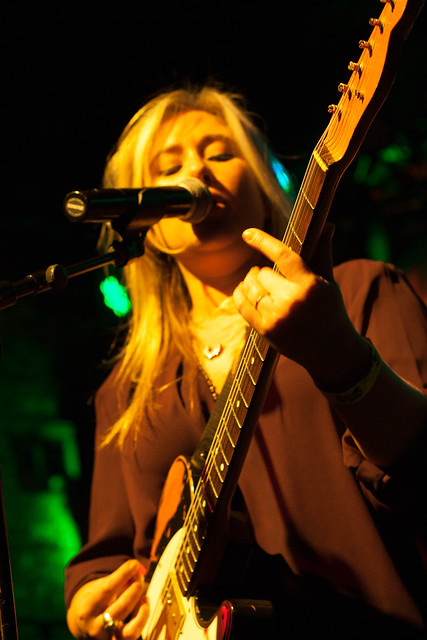
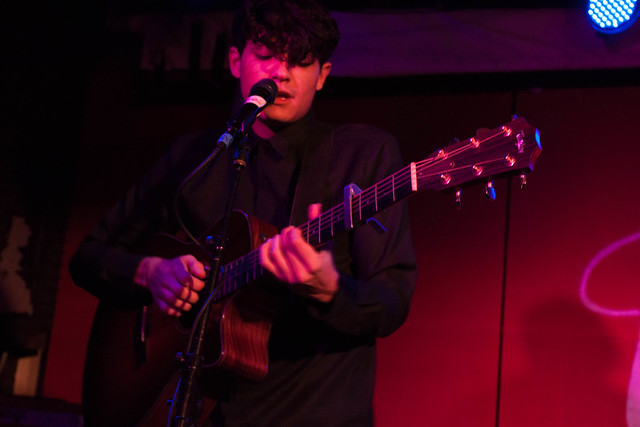


Last December, I wrote about Sophie Stern, the Los Angeles-based creative mastermind behind the (mostly) solo recording project Sophie and the Bom Boms. Initially, Stern’s career began behind the scenes as a songwriter, who was signed to mega-hit producer and songwriter Dr. Luke’s camp. After spending couple of years as a go-to songwriter, Stern decided that it was time for her to go out on her own as a solo artist.


Inspired by a diverse array of artists including diverse array of artists including Erykah BaduTom Tom Club and a lengthy list of others, Stern began collaborating with two rather renowned producers, David Elevator, who won 3 Grammys for his work on Beck‘s Morning Phase and Dan Dare, who’s best known his work with Marina and the DiamondsCharli XCX and M.I.A. for her debut EP. The EP’s first single “Big Girls” was a breezy and infectious pop confection that paired big boom-bap beats, cascading synths, anthemic hooks and Stern’s effortlessly soulful vocals in a way that was reminiscent of Nu Shooz‘s “I Can’t Wait” while sounding remarkably contemporary.

The EP’s second and latests single “Appetite” will further cement Stern’s reputation for crafting incredibly infectious, breezy and anthemic pop as you’ll hear boom bap beats, handclaps, twinkling synths and an anthemic, hashtag worthy hook paired with Stern’s ballsy and bratty vocals in a song that’s a tell off to fuckboys, deadbeats, drama kings and queens and parasites everywhere — with the sort of sense of humor that would likely remind you of things you may have heard or said back in the schoolyard.

Sonically and thematically speaking the song manages to nod at Australian-born, Berlin-based indie pop artist Phia, Gwen Stefani‘s “Ain’t No Holla Back Girl,” and TLC‘s “No Scrubs” as it possesses the same “girl power/girl, drop that loser/girl, drop that deadbeat friend” air but backed by slick, modern production techniques.


New Video: The Rollicking and Playful New Video for Reed Turner’s “I Got Love”

With the release of his 2013 full-length debut effort to critical acclaim, Ghosts In The Attic, Austin, TX-based indie folk singer/songwriter Reed Turner exploded on to the national map. As a result of the attention on the album, Turner wound […]


If you’ve been frequenting JOVM over the past couple of years, you may know that the Swedish cities of Umea, Sweden’s third (and most Northern) and Malmo, Sweden’s twelfth (and most Southern) have emerged with reputations as being Sweden and Scandinavia’s newest, most exciting creative hotbeds as an increasing number of artists and bands from both cities have started to receive international recognition — including the likes of JOVM mainstays Moonbabies, Cajsa Siik, Frida Selander and YAST and others.  I have to add to that list, Umea, Sweden-bornsinger/songwriter, producer and sound designer Catharina Jaunviksna, who splits time between her home country, Italy and Ireland and who has received attention with her solo recording project Badlands. With the release of 2012’s Battles Within EP and single “Tutu,” Jaunviksna’s Badlands project received attention from the likes of The 405 and Under the Radar for a sound that many of my colleagues have described as possessing elements of trip-hop and experimental pop.

April will mark the release of her forthcoming full-length effort Locus and album’s first single “Echo” reveals yet another change in sonic direction for Jaunviksna, as the single is a dance floor-ready song consisting of layers of staccato synth stabs and layers of cascading and twinkling synths, swirling electronics and an infectious hook paired with Jaunviksna’s ethereal coos bubbling and floating over the mix’s hazy surface, which give the song an eerie and spectral undercurrent.  Thematically and lyrically the song reportedly discusses self-censorship and the inherent dangers self-censorship can entail. As Jaunviksna explained in press notes “Even though the first intentions might be good, it always ends as a witch hunt and nobody daring to speak their mind.” But sonically speaking to my years, the song channels the likes of Depeche Mode, Still Corners and others as the song possess a captivating pull, begging the listener to come up closer.


New Video: Check Out the Sci-Fi, Country-Western Video for La Sera’s “High Notes”

Initially begun as a solo side project from her time with Vivian Girls and All Saints Day, Katy Goodman’s current musical project La Sera developed a national profile with the release of three critically applauded albums — the project’s self-titled debut, Sees […]


Initially starting her career as the frontwoman of Toronto, ON-based band The Wayo, Charlotte Day Wilson is a 23 year old classically trained singer, producer and multi-instrumentalist, who has since emerged out of her hometown’s  jazz, soul, and R&B as a solo artist of note, adding herself to a list of growing artists including friends and collaborators BADBADNOTGOOD and River Tiber. Wilson’s debut single “After All” is reportedly about re-socializing after spending some time inside cocooning while also suggesting the freedom of embarking towards new endeavors, and sonically the song pairs Wilson’s husky and effortlessly soulful vocals with an ethereal production — which consists of staccato stabs of organ, warm blasts of horn, skittering drum programming, gently swirling electronics. Interestingly, Wilson’s vocals and the song reminds me quite a bit of The Brand New HeaviesNever Stop” but breezier and moodier.


Perhaps best known for this time spent in New England-based psych rock band MMOSS, singer/songwriter and multi-instrumentalist Doug Tuttle had developed a reputation as a artist of his own right with the release of his solo debut, an effort that had been praised for possessing a jittery, love-lorn anxiety paired with Tuttle’s dexterous guitar work and his carefully crafted psychedelic-tinged pop. Tuttle’s forthcoming sophomore effort, It Calls On Me, slated for a February 26 release through renowned indie label Trouble In Mind Records will further cement the New Hampshire-born singer/songwriter and multi-instrumentalist’s reputation for crafted psych pop while revealing a subtle yet marked change in sonic direction as the material is dreamier and more ethereal, as you’ll hear on the album’s latest single and album title track “It Calls On Me.” Thanks to some impressive guitar licks played through a variety of effects pedals, paired with cymbal-led propulsive percussion, an equally propulsive bass line, Tuttle’s lilting and cooed vocals, the song sounds as though it could have been released sometime between 1963-1969 as the guitar solo reminds me quite a bit of Robby Kreiger’s expressive and expansive solo in The Doors‘ “Light My Fire,” while the song manages to be subtly modern as it channels contemporary acts such as Raccoon Fighter.

Tuttle and his touring band will play a number of dates throughout February and March to support the new album and it includes a stop in Brooklyn. Check out tour dates below.

Tour Dates

2/17: Detroit, MI –  Marble Bar
2/18: Chicago, IL – The Owl #
2/19: Cleveland, OH – Happy Dog #
2/20: Cincinnati, OH – The Comet #
2/21: Nashville, TN- East Room #
2/22: Atlanta, GA- 529 #
2/23: Chapel Hill, NC – Local 506
2/24: Richmond, VA – TBA
2/25: Brooklyn, NY – Rough Trade
2/26: Providence, RI – AS220 ^
2/27: Boston, MA – Lillypad ^
2/28: Portsmouth, NH – 3S Artspace ^
# – w/ Paperhead
^ – w/ Herbcraft


Born in Reno, NV and currently based in Nashville, TN, alt rock/blues rock artist Jack Berry can trace the origins of his recording career to when he wrote and recorded his first album while studying in Los Angeles. Berry then worked and performed along the West Coast as one half a of a duo before before he decided that it was time to go solo. Relocating to Nashville, Berry spent several months couch-surfing and writing and recording material with the hopes that he could catch the attention of that city’s local press.

Eventually, Berry began receiving praise from outlets both locally and nationally from the likes of Nashville SceneThe Deli MagazineBlues Rock Review and others, which resulted in slots at Toronto‘s North by Northeast (NXNE), CMJ and SXSW‘s Red Gorilla Festival. Since then, Berry has played a number of venues between his home base and NYC; however, 2016 may be his breakthrough year with the Spring 2016 release of his latest album, Mean Machine. 

“The Bull,” Mean Machine‘s first single is a sultry and bluesy single that pairs arena rock friendly power chords, propulsive and carefully syncopated drumming, an anthemic hook and Berry’s seductive crooning and howling that sonically seems to draw from Soundgarden (think of “Mailman” “Spoonman,”and “Fell on Black Days” off Superunknown) as it does from old-school blues and contemporary rock.

Ursa Major is a 19 year-old Toronto, ON-based singer/songwriter, multi-instrumentalist and producer, who describes his work and sound as Psychedelic R&B as he claims that his sound manages to fit in a comfortable middle ground between the sounds of the past and the contemporary electronic production — although to my ears, the Canadian producer’s debut single “Dusk” bears an uncanny resemblance to JOVM mainstay act, Gosh Pith as the song pairs rumbling and wobbling low end, skittering drum programming and soulful vocals in a song that focuses on lust, loneliness and desperate longing. That shouldn’t be surprising as the young and super talented Canadian artist has noted that his early work focuses on past loves, a fear and inability to move forward, and the complicated and heartbreaking process of falling in and out of love repeatedly. And if you remember anything about being 19 it seems that love was a fickle and ridiculous thing.


If you’ve been frequenting this site over the past few months, you may recall that I’ve written about San Francisco, CA and Big Sur, CA-based singer/songwriter, guitarist and producer Jenny Gillespie. Gillespie can trace her musical career to he childhood — during drives to and from the Springfield, IL area, where she was born and raised, she spent quite a bit of time harmonizing in the backseat with her sister, who is a gifted and renowned pianist. When the San Francisco and Big Sur-based singer/songwriter was 13, she picked up her mother’s Martin guitar and began putting the poems she had been writing to her own original music. Gillespie’s life was further changed when a local record store clerk gave her album from three of the 90s most renowned singer/songwriters Tori AmosSarah McLachlan and Shawn Colvin — all of whom quickly became major influences on Gillespie’s music and songwriting.

After stints living in Virginia, Paris and Texas, Gillespie relocated to Chicago, where she self-produced and then released her sophomore album, Light Year, a folk and alt-country album that received quite a bit of praise. And as a result the attention Light Year received, Gillespie met Darwin Smith, an Austin, TX-based multi-instrumentalist, with whom she wrote her third full-length effort, Kindred, a sparse, experimental, electronica-based effort recorded in an old house in Wilmette, IL with contributions from Steve Moore, who has worked with Tift Merritt and Laura Veirs and Dony Wynn, who has worked with the legendary Robert Plant.

Inspired by a volunteer trip to Kenya that led her to an African fingerpicking class at the Old Town School of Folk Music and studying for an MFA in Poetry at North Carolina’s Warren Wilson College, Gillespie found her sound and songwriting approach expanding and becoming more refined. By the fall of 2011, she traveled to NYC to record the EP Belita with Shazard Ismaily, a multi-instrumentalist who has worked with Lou ReedBonnie Prince Billy, and St. Vincent. Interestingly, that effort possesses elements of pop, folk music, African and Asian rhythms and tones.

Featuring contributions from Emmett Kelly (Bonnie Prince Billy) on guitar and Joe Adamik (CalifoneIron and Wine) on drums, her last full-length effort Chamma was released to critical praise, including landing on Billboard Magazines Top 25 Albums of 2014 List. Naturally, that has seen Gillespie’s profile grow nationally — and continuing on that buzz, the singer/songwriter is set to release Chamma‘s follow-up, Cure for Dreaming through Narooma Records at the end of the month.  Recorded over the past couple of months and featuring contributions from Paul Bryan (Aimee Mann), drummer Jay Bellerose (Robert Plant and Allison Krauss’ Raising Sand), guitarist Chris Bruce (Meshell Ndgeocello), guitarist Gerry Leonard (David Bowie), and pedal steel player Greg Leisz (Lucinda WilliamsBon Iver), the album  reportedly possesses elements of folk, progressive jazz, and 60s and 70s AM pop.

The album’s first single “No Stone” paired Gillespie’s unhurried and husky vocals with a spacious and subtly jazz-like arrangement of keys, guitar, bass, gently buzzing electronics and hushed drumming in a song that felt as intimate as a lover whispering sweet nothings in your ear. And at the song’s core was a conversational lyricism that possessed a novelist’s attention to detail — both physical and psychological — as you can picture a woman who hides her face by the ocean, cherry blossoms in bloom, and someone peering through a keyhole to see a depressed woman struggling to just start her day. And as a result the song’s narrator feels like a fully-fleshed out person, desperately struggling to push forward.
The album’s second and latest single “Part Potawatomi” pairs Gillespie’s unhurried and ethereal vocals with a hummable melody, a deceptively simple arrangement of guitar, drums, bass and ambient electronics that sonically bears a resemblance to Junip — and their frontman, Jose Gonzalez‘s solo work.  And much like much like the album’s first single “No Stone,” “Part Potawatomi” reveals a Gillespie’s remarkable attention to detail, as the song frankly discusses the slow and seemingly inevitable dissolution of a romantic relationship metaphorically described as a storm brewing over the shore. The song’s narrator seems to evoke the sensation of being trapped in a relationship that’s going nowhere out of familial and moral obligation — and as a result, the song possesses a subtle yet increasing feeling of frustration and regret, while being one of the more beautiful songs I’ve heard in the past 10 days.