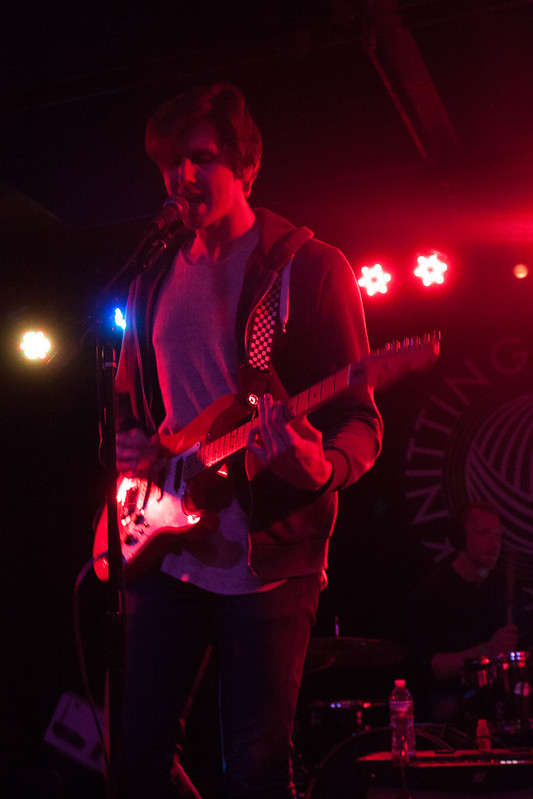
Category: Synth Pop

Comprised of Christie Simpson, Sam Perry, Charlie Ryder, Josh Burgess, Yumi Zouma have developed an international profile for crafting breezy and infectious, 80s-inspired synth pop. Recently, the folks at Turntable Kitchen invited the band to take part of their monthly vinyl subscription series Sounds Delicious, in which bands cover any full-length album they love, and reimagine it from front to back. Interestingly, the quartet decided on Oasis‘ 1995 full-length effort, (What’s the Story) Morning Glory?

As the band’s Charlie Ryder told Gorilla Vs. Bear in an interview “Even when we realized that an Oasis album could potentially be an option in terms of something we could actually do in a Yumi Zouma way, we weren’t 100% sure where it would just sound totally ridiculous or not. It wasn’t until we tried the first song we had an initial idea for — ‘Champagne Supernova’ — that we knew we had finally settled on something rad.  Yumi Zouma’s cover turns the anthemic, Brit Pop classic into a mid-tempo, buoyant and ethereal synth pop track with a subtle Tropicalia vibe that retains the original’s anthemic hook and trippy vibe.


Featuring frontwoman Mindy Jones, who has collaborated with Moby and electronic music artist and producer Luke Top, the Los Angeles, CA-based electro pop duo ADLT VDEO has received attention for a shimmering and infectious pop sound that’s completely different than the sounds of each member’s individual recorded efforts with Jones and Top actively pushing themselves in new directions creatively — and subtly complex and challenging song structures and soaring, St. Lucia-like hooks. And with their latest, breezy and summery, 80s synth pop-inspired single “Start Over,” as the duo’s Mindy Jones describes in press notes “has a tropical bounce with an R&B swagger that works to prop up the lyrical theme of renewal. Especially in light of the tense era we find ourselves in, there’s some comfort in the idea that no matter how bad it gets, there’s always an opportunity to move towards a better horizon.”

New Audio: Goldfrapp’s Latest Single Reveals Both a Return to Form and an Improvisational Feel

Now, with the release of 2013’s Tales of Us, Goldfrapp — comprised of Alison Goldfrapp and Will Gregory —released what was arguably one of their most cinematic, hauntingly and lushly gorgeous efforts, as the album’s material paired Goldfrapp’s arresting vocals with classical-leaning arrangements featuring piano, a soaring string section, acoustic guitar with some electronic flourishes here and there. Interestingly, with the release of “Anymore,” the first single off the band’s soon-to-be released and much-anticipated follow up to Tales of Us, Silver Eye revealed a bit of a return to form for the duo as the single features a slick production consisting of enormous, thumping 808-like beats, layers of buzzing and undulating synths paired with Goldfrapp’s sultry vocals, expressing a tense impatience and longing with a tougher, more abrasive sound while buzzing with a restless, creative energy and sense of experimentation, which stems from the recording sessions with Grammy-wining producer John Congleton, who has worked with St. Vincent, John Grant and Wild Beasts; as well as collaborations with electronic composer Bobby Krlic, best known as The Haxan Cloak and Leo Abrahams, a guitarist, who has collaborated with Brian Eno contributed abstract guitar textures. And lastly, the album was mixed by David Wrench, who has worked with The xx, FKA Twigs and Caribou.

Much like the previously released singles, “Ocean” reveals an abrasive sound featuring layers of arpeggio synths, tribal like drumming, enormous, thundering beats, and ominously swirling electronics within a fairly minimalist-inspired production that allows Goldfrapp’s expressive vocals room to express anger, disgust and frustration. As the duo explained to the folks at Billboard the song was created during a morning writing and recording session and was originally built from what Goldfrapp called a “a very small improvisation.” “I remember coming into the studio one morning and I think we just had a few drums going and it was really basic,” Goldfrapp recalled. “Will said ‘Do you fancy doing some vocals this morning?’ So I was like, ‘Alright then’ and slightly reluctantly, i went into the vocal both and the words just came out.” And as a result, the song manages to bristle with a wild, unpredictability unlike any of their previously released material.

New Video: The Bold International Women’s Day-Themed Visuals for Sofi Tukker’s “Johnny”

As I mentioned in a previous post, with today being International Women’s Day, it’s necessary and appropriate to spend some portion of the day both here and on Twitter honoring the female artists, musicians and producers that have inhabited the JOVM universe — and of course, to continuing to cover both new and sometimes established female artists, producers and musicians throughout the day as much as humanly possible.

Now, as you may recall over the past couple of years, the New York-based, Grammy-nominated electro pop duo Sofi Tukker have become JOVM mainstay artists while simultaneously seeing both critical and astronomical, commercial success with the release of the duo’s debut EP, Soft Animals. “Johnny,” off their critically applauded and commercially successful debut features a slick and sensual production featuring a looped sample of a sinuously languid guitar line, propulsive handclaps, boom bap-like beats and Hawley-Weld singing with a languorous and sultry Spanish accent. And while further cementing the duo’s reputation for crafting world music-inspired, accessible, dance floor-friendly pop, “Johnny” manages to arguably be their most seductive and boldly self-assured song off the EP.

The accompanying video, released in time for International Women’s Day features a trio of unapologetically bold women expressing themselves and their individuality — and having a shit ton of fun for not giving a single fuck about what anyone thinks of them; but importantly, these young ladies radiate with an infectious and undeniable vivaciousness

Live Footage: Rachel K. Collier Performs New Single “Paper Tiger”

With today being International Women’s Day, I felt it was appropriate and necessary to spend some portion of the day both here and on Twitter honoring the female artists, musicians and producers I’ve written about throughout the site’s history and to writing about new (and sometimes, firmly established) female artists, producers throughout the day as much as humanly possible.

Rachel K. Collier is a accomplished Swansea, Wales, UK-born, London-based singer/songwriter and producer, who has quickly achieved both commercial and critical success across the UK. Collier is credited as a co-writer or producer or several chart-topping, smash hits including Ray Foxx’s “Boom Boom (Heartbeat),” which peaked at nubmer 12 on the UK Singles chart back in 2013; Mat Zo’s Grammy-nomiated album Damage Control, which peaked at number 1 on the iTunes Dance Album charts; and on legendary garage producer Wookie’s comeback single “2 Us.” As a solo artist, she recorded a cover of Jimmy Cliff’s “Hard Road to Travel,” which landed at number 79 on the UK Singles chart, and her debut original single “Predictions” was named Sarah Jane Crawford’s “Smash of the Week” on the radio personality’s BBC Radio 1Xtra show. Collier has also received airplay and praise from the likes of Annie Nightingale, Capitol Xtra, Tiësto and Oliver Heldons.

Building upon a growing national profile, Collier released her self-produced, debut EP Words You Never Heard through Love and Other records in late 2015 and followed that up with “Ships,” a single she released during the last few months of 2016. “Paper Tiger,” Collier’s first single of 2017 and the single features a slick yet unfussy, dance floor-friendly production consisting of wobbling low end, twinkling synths and stuttering drum programming, enormous tweeter and woofer rocking beats, and a chopped up vocal sample paired with a rousingly anthemic hook; but interestingly, Collier’s production manages to be roomy enough for her swaggering, cocky vocals.

New Video: Miles Francis Releases Infectious Darkly, Ironic Experimental Pop Single

Miles Francis’ solo debut single “You’re a Star” employs mischievously complex and propulsive polyrhythm, bursts of jerky and motwinkling 8 bit Nintendo-like synths, a breezy and infectious hook wrapped around hushed and whispered vocals. And while clearly drawing from Afropop and Afrobeat, the song also seems to draw from Fear of Music and Remain in Light-era Talking Heads, as well as contemporaries like Rubblebucket and others, “You’re a Star” sound like a bit of departure from Arntzen’s previously recorded work as the material possesses a darker and more ironic tone, as the song’s narrator is desperate for the greater validation that he may never actually see. In some way, it pokes fun at the musician’s life, darkly suggesting that maybe part of the endeavor is pointless and ridiculous.

Directed by Charles Billot, and featuring the Star Dancers, comprised of Magdalen Segale, Colin Fuller, Ashton Muniz, Matilda Nakamoto and Taner Van Kuren, as well as the Miles Francis backing band, comprised of Katherine Lieberson and Lizzie Lieberson, the recently released music video has the pop artist in a white, linen suit as he goes through a series of surreal, dream-like situations — including sitting in sparsely furnished apartment and on a beach with brightly costumed dancers moving to the song’s jerky instrumentation. And it ends with Miles Francis in the ocean, being overtaken by the waves. While being gorgeous, it’s surreal and is rife with several levels of symbolism left for the viewer to interpret in any way they felt fit.

If you’ve been frequenting this site over the past few years, you’ve likely come across Brooklyn-based indie dance pop act Body Language. Currently comprised of founding members Matthew Young and Grant Wheeler, along with Ian Chang and vocalist Angelica Bess, the Brooklyn-based act can trace its origins to when its founding duo had began crafting their own mixes and relies at a weekly party they curated and DJ’d while they were both living in Hartford, CT. And as the story goes, shortly after they had started their party, they met and recruited Angelica Bees, with whom they began writing their own original material, material that wound up comprising their debut effort Speaks. 

Interestingly, once the trio of Young, Wheeler and Bees began working on their sophomore EP Social Studies, they had hooked up with Theophilus London on an album — and during those sessions, they met the band’s fourth member Ian Chang who contributes to the band’s latest effort, 2016’s Mythos.  Now, if you had stumbled across JOVM during the course of last year, you might have come across a post on “Addicted,” the first single off Mythos — and the single revealed that the quartet went through a subtle change of sonic direction as the single found the act drawing from New Jack Swing and classic house.

Recently, the Brooklyn-based dance act shared Mythos‘ closing track, “Free,” a sensual and shimmering, classic house-inspired track featuring arpeggio synths, Bees’ sultry vocals a chopped up vocal sample and propulsive drum programming to create a song that sounds as though it drew influence from Crystal Waters‘ house music classic “Gypsy Woman (She’s Homeless).” But along with “Free,” the dance pop act released previously unreleased remixes of “Free” by Wrestlers and the album’s lead single “Addicted,” by Memoryy.

The Wrestlers remix of “Free,” begins with an introduction reminiscent of the introduction of Chaka Khan and Rufus‘ “Ain’t Nobody” before pairing Bees’ sultry vocals with a slick production that balances a retro-futuristic vibe with hyper contemporary recording techniques as it featuring wobbling and distorted arpeggio synths and chopped up vocal sample — and while still retaining the dance floor vibe of the original, the remix manages to push the song in a contemporary direction.

Closing out the singles package is Memoryy’s remix of “Addicted” pushes the song towards goth and industrial-leaning electronica  as tense and wobbling, arpeggio synths are paired with cowbell-led percussion and tweeter and woofer rocking beats. And in some way the remix manages to put an accessible spin on an industrial-like production, retaining the dance floor-friendliness and infectious hooks of the original.

Comprised of two childhood friends, who discovered that they had independently embark on electronic music careers while in college, the mysterious, Chicago-based electronic production and artist duo The White Panda have dominated the electronic music blogosphere with the release of five, critically applauded full-length albums — all of which have resulted in 35 #1 singles on Hype Machine, over 60 million SoundCloud streams and 25 million YouTube plays while being dubbed “the mash-up kings” by Vibe Magazine, and “a veritable party-mashup machine” by Entertainment Weekly. (At one point, The White Panda was one of SoundCloud’s top five most played artists — ever.)

Adding to an already immense and growing national profile, the duo has headlined several US tours, have played some of the country’s largest festivals including LollapaloozaFireflyElectric Zoo, and Bamboozle, and have opened for the likes of Flo RidaWale, NellyTwenty One PilotsDispatchSteve Aoki, TiestoMac MillerMike Posner, Benny BenassiMGMT and others. And while working on their own original production work, the duo had also spent their time working on and releasing a number of remixes including a gigantic, festival rocking rework of Powers‘ “Beat of My Drum,” that I wrote about a couple of years ago. Now, it’s been some time since I’ve personally written about them; however, the Chicago-based duo have been rather prolific since then, including their latest single, a sultry, club-rocking and anthemic cover/re-work of The 1975‘s “Somebody Else,” that features a guest spot from Brooklyn-based singer/songwriter Verite — and while being a bold, tweeter and woofer rocking rework, the cover manages to retain the atmospheric original’s ache and longing.


Initially formed as a quartet, comprised of founding member, Benjamin Plant (production),  along with Josh Moriarty (vocals, guitar), Aaron Shanahan (guitar, vocals and production) and Daniel Whitechuch (bass, keyboards and guitar), the Melbourne, Australia-based indie electro pop act Miami Horror quickly received national and international attention with their 2010 debut Illumination, an effort that was praised for a sound that drew from fellow countrymen Cut Copy, as well as New OrderPrinceMichael JacksonE.L.O. and others.

The then-quartet spent the next three years shuttling back and forth between their hometown of Melbourne, Australia, Los Angeles and Paris writing and recording the material that would comprise their critically praised 2013 sophomore effort, All Possible Futures, a breezy and summery, dance floor-friendly effort that was deeply inspired by the time the band spent writing and recording in Southern California and drew from 80s synth pop, classic house and 60s pop. Building upon their rapidly growing profile, the members of the act have extensively toured the globe — and along with the aforementioned Cut Copy, and fellow Australians Total Giovanni and others, have put their hometown on the international map for a unique yet approachable electro pop sound and approach.

Now, it’s been a few years since the blogosphere has heard from Miami Horror, as the act’s Benjamin Plant has been busy co-writing tracks with Client Liaison and Roland Tings and writing new Miami Horror material, while the act has gone through a lineup change that has them writing and recording as a trio. But interestingly enough, their soon-to-be released conceptual EP, The Shapes finds the band further exploring and expanding upon their sound, as the material draws from art pop, Talking Heads, Caribbean funk and African beats among other things while retaining elements of the sound that won them international attention. And as you’ll hear on the EP’s upbeat, dance floor-friendly first single “Leila,” the song nods at Tom Tom Club, Fear of Music and Remain in Light-era Talking Heads, 80s synth pop  as the act pairs a buoyant and rousing hook, plaintive vocals, shimmering synths, African percussion, and an incredibly funky bass line with Moriarty’s plaintive vocals.  Interestingly, in some way, the song teases at something like a return to the sound of Illumination — but in a deceptive fashion says “well, not quite” as the material manages to possesses a boldly neon colored sheen while being a dance-floor friendly anthem.


New Video: The 80s MTV-Inspired Visuals and Sounds of Rudie Edwards’ “Lover Like You”

Rudie Edwards is an up-and-coming Dover, UK-born, Kent, UK-based singer/songwriter and producer, who has been influenced by a wide range of music including disco, Joy Division, gospel, Ray Charles and others. And like a lot of musically obsessed kids, living in small towns, Edwards realized that she had to leave her small town to make something of herself. “I knew I had to move out of there,” Edwards says in press notes. “Music was the easiest way for me to escape. My sisters and I were the only mixed race kids at school. It’s a beautiful place, but i knew it wasn’t where i was going to be spend the rest of my life. I was bursting at the seams. I needed more. I wanted more. I was longing for the stage. I had to get to London.”

Edwards eventually relocated to London, where she attended the renowned BRIT School, the alma mater of Adele, Amy Winehouse, Imogen Heap and others. By 2012, Edwards’ music career had started in earnest as she was splitting her time between Los Angeles and London, writing for CeeLo Green, Erik Hassle, Beatrice Eli and others. And with her later single “Lover Like You,” Edwards reveals that as a solo artist, her material is fueled by a sensual, bold confidence and a sassiness that’s reminiscent of I Feel For You-era Chaka Khan while simultaneously drawing from 80s synth pop, disco, soul and contemporary synth pop in a similar fashion to Escort’s Adeline Michele. Sonically the song reveals a slick and seductive production featuring layers of arpeggio synths, electronic bleeps and bloops, a sinuous bass line, a blistering 80s guitar solo, stomping beats and a rousingly anthemic hook to give it all a shimmering, club rocking feel. And in some way, the song sounds as though it’s the sort of song you’d expect people to shout along with lustily at the club as soon as they hear it.

The recently released video manages to visually draw from 80s synth pop and pop videos while being shot through a slightly faded VHS meets Instagram filter with a fittingly coquettish, fun-loving air.

New Video: The Strikingly Surreal Visuals for Sylvan Esso’s “Die Young”

Comprised of Mountain Man’s Amelia Heath (vocals, synths) and Megafaun’s Nick Sanborn (synths, programming, production), the renowned indie electro pop electro pop duo Sylvan Esso have become JOVM mainstays and have dominated the rest of the blogosphere for a sound that’s radical departure for fans of Heath’s and Sanborn’s previous projects, as the duo have received attention for pairing Heath’s coquettish vocals with Sanborn’s slick, minimalist production featuring propulsive and undulating grooves, shimmering arpeggio synths and enormous, tweeter and woofer rocker beats.

If you had been frequenting this site around the end of last year, you’d likely recall that the duo released their “Radio”/”Jump Kick Start” single. “Radio,” a staple of their live sets and a fan favorite, revealed a brash, refinement of their sound as Heath has increasingly taken on a pop star persona — and as a result, her vocals contain a self-assured sultriness paired with Sanborn’s production taking on more of a dance floor/club-banger sound as arpeggio synths, wobbling low end and stuttering dum programming. “Jump Kick Start” the B side of the “Radio”/”Jump Kick Start” continues on a similar vein as the preceding single as Heath’s self-assured coos are paired with a stuttering and shuffling production featuring electronic bleeps and bloops, twinkling synths and analog crackling in what may be one of their most radio and dance floor-ready songs they’ve released to date. Interestingly, the “Radio”/”Jump” also managed to be a be a bit of a teaser for the sound fans and critics should expect to hear off the band’s highly-anticipated sophomore effort What Now.

Thematically, the album focuses on a critical question: where do we go now, as a culture when it feels as though everyone is standing at a precipice? And from the “Radio”/”Jump Kick Start” single, which interestingly enough are What Now’s first two singles, the material manages to possess the sort of urgency that many of us feel at this particular historical moment. Now, the album’s third and latest single “Die Young” is a moody, mid-tempo track that finds Heath’s self-assured vocals paired with a Sanborn production featuring enormous 808-style beats, stuttering drum programming, chopped and distorted vocal samples, swirling and ambient electronics in what may arguably be one of the duo’s more sobering songs; in fact, at various points, the song focuses on depression and uncertainty, the sense of every meaningful thing being fleeting and impermanent, that underneath every moment of short-lived joy, there’s a longer sense of anxiety over when that joy may end — or even if that moment of joy is worth it. It’s very much an adult song, grappling with the fact that life is usually complex, uncertain, confusing but in a moment in which everything feels upside down, backwards and reversed of not having a fucking clue as to what’s next; but knowing that you have to respond to the best of your abilities.

The recently released video follows the duo’s Amelia Heath stealing a distracted police officer’s car for a joy ride through the desert, where the video’s protagonist leaps off a cliff, presumably to kill herself — because she’s hopeless? because she’s lost her mind? The video leaves that interpretation up and what happens to our protagonist up to you.

New Video: Atlanta-born Artist Fusilier Releases Politically Charged Visuals for His Sultry Club Banger “Make You”

Starting his musical career as the bassist for the Boston-based indie rock band RIBS, an act that quickly rose to national prominence and opened for The Joy Formidable and Queens of the Stone Age, the Atlanta-born multi-instrumentalist, singer/songwriter and producer Blake Fusilier grew up having a similar experience that I did as a child, teenager and young adult — of not quite fitting in with your contemporaries. As a teenager while many of his peers aspired to sign to LaFace Records and SoSoDef Records, Fusilier picked up the violin, dreamt of being the black Itzhak Perlman and was obsessed with the work of Edgar Allen Poe. And of course, like odd teenagers everywhere — especially very odd, black teenagers — Fusilier quickly learned that when you’re a square peg, you can be equally hated and ridiculed. Around that time, the Atlanta-born multi-instrumentalist, singer/songwriter and producer had begun writing his own material.

As RIBS started to achieve national attention, someone asked Fusilier about his experience being black and gay, and at the time, the Atlanta-born artist began to realize two very important personal truths — that he had been running away from those questions for most of his adult life, and that the world’s perceptions and assumptions of him and about him were spiritually and emotionally exhausting. And from that point forward, Fusilier decided that he wanted and needed to make music that would not only drain those questions about his experience and those of others of their power, but to also make them permanently irrelevant. As Fusilier explained in press notes, “I have this theory that if people knew who we really were in their minds, we probably would all have a lot more respect for one another. This applies to everyone: friends and acquaintances and bandmates. I think it’s our duty to ourselves to make sure that those around us have a chance to allow others to see our glorious, true selves. I finally feel like I’m beginning to live by those words. The songs I’m wrapping up have been floating around for years. I had been anticipating the moment when people could actually hear even 20 seconds of my potential.”

The early response so far to Fusilier’s work has been wildly positive with one critic describing his sound as being a synthesis of James Brown and Nine Inch Nails — although his latest single “Make You,” immediately brings to mind the work of Prince, Jef Barbara, Boulevards, and Gordon Voidwell as Fusilier pairs his sultry and sensual cooing with a slick, hyper modern production featuring a sinuous and propulsive bass line, tambourine-led percussion bolstered by stuttering drum programming, arpeggio synth chords, a funky brass sample and a deeply infectious hook. And while being a sultry, club banger the song possesses an ironic and withering sociopolitical commentary that ridicules and obliterates racial stereotypes in a fashion similar to Sly and the Family Stone’s “Don’t Call Me Nigger, Whitey.”

Certainly, when we have a presidential administration that has emboldened supremacist and racist groups to flourish and be as hateful as they once were, having a wider variety of black voices, frankly discussing their unique experiences — and helping to tear down racist assumptions. But it also should serve as a powerful reminder that pop, dance music and funk have long been full of sociopolitical messages; after all, music, art and comedy are some of the best weapons against autocratic, power hungry governments.

As for the video, the Atlanta-born multi-instrumentalist, producer and singer/songwriter explains “I look at my body and what little I know of my family’s story and can’t help but think that I am a most American thing. I’m talking about the mixture of marriages and what I can only assume to be rapes amongst oppressors, the enslaved and the original inhabitants that gave me my coarse hair, jawline and skin and this name, ‘Fusilier.’ The ‘Make You’ video is a very public exorcism of my inner turmoil knowing that people will always see in me themselves and the other, friend and enemy, lust and aversion.”

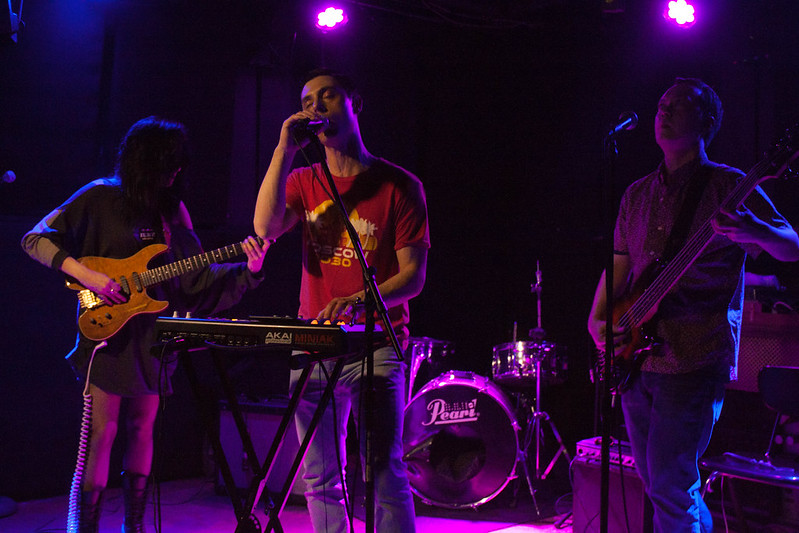
New Video: JOVM Mainstays The Penelopes Return with an 80s New Wave and Synth Pop Inspired New Single

Comprised of Paris-born, London-based duo Axel Basquiat (composer, vocals, bass) and Vincent T. (production, sound engineering and keys), The Penelopes are an indie electro pop act, production and DJ duo who have developed a reputation for propulsive, Giorgio Moroder-like remixes of Lana Del Ray, Pet Shop Boys, We Have Band, Night Drive, The Ting Tings, Alt J and others, and for their own original material, which critics have compared favorably to the likes of Daft Punk, M83 and Air. Now, if you’ve been frequenting this site over the past 3 years or so, you may have come across posts on their remixes of The Ting Tings “Do It Again,” Alt J’s “Hunger of the Pine” and an anthemic, club-banging cover of Depeche Mode’s “Never Let Me Down Again” that managed to retain the song’s sense of longing.

The duo released a new single package featuring their cover of Bowie’s “This Is Not America,” which received airplay on KCRW, along with several remixes, including Miguel Campbell’s remix, which received airplay on Nemone’s BBC 6 show, and a new, original song “Tina.” The duo’s latest single “Tina” manages to be a decided refinement of the sound that captured both the site’s attention and the rest of the blogosphere; in fact, while retaining a dance floor friendly feel, the song manages to decidedly leans in the direction of 80s New Wave and synth pop — in particular, I’m reminded a bit of Simple Mind’s “Don’t You Forget About Me,” as “Tina” possesses an rousingly anthemic nature that belies a swooning Romantic nature.

The recently released video cuts between footage from Asia Argento’s directorial feature film Misunderstood, starring Charlotte Gainsbourg and footage of the band performing the song in a studio, shot in a striking, film noir-like black and white.