Tag: CMJ

A Q&A with Hayley Thompson-King

Several months ago, I was invited to be a panelist on a Baby Robot Media hosted panel titled “Your First PR Campaign” at this year’s Mondo.NYC conference in Lower Manhattan, a conference created by some of the original organizers of the beloved and sadly defunct CMJ Marathon. In fact, after speaking at the panel, I along with several colleagues went to a nearby bar, where I watched my beloved Yankees lose a confounding and infuriating heartbreaking Game 2 of the American League Division series against the then-defending League Champion Cleveland Indians. At some point, I went from networking and mingling mode to yelling and cursing at the TV – and I couldn’t tell if these people, who I had worked with in some capacity for  much of JOVM’s history were amused, knowing how much of a Yankee fan I am or if they were horrified. But the postseason when your team is in it is another thing altogether. I’ve frequently told a story about sitting in Clem’s with my dear friend and colleague Natalie Hamingson after watching the New York Rangers lose Game 7 of that year’s Conference Finals to the Tampa Bay Lightning at home, in which I went into a furious 45 minute, expletive laced tirade. About half way through, the bartender at the time said to Natalie, “I don’t think I’ve seen him that angry before.” In my mind, I thought “if I was at home, I would be throwing things at my TV,” but that’s another issue altogether.

Thanks in part to built-in travel days within the postseason schedule, and the weather actually holding up in early October, I was able to squeeze in some live music coverage at this year’s Mondo.NYC. Because I had spoken at Baby Robot Media’s PR campaign panel and worked with them for a good 6-7 years or so, the company’s co-founders had personally invited me to come out to the showcases they were hosting at Piano’s during the weekend. Admittedly, I just wasn’t able to do any research prior to the actual live music, so I went into everything with no expectations and a clear mind as to what I might be seeing – and interestingly enough, I wound up being pleasantly surprised by the variety of the acts I caught throughout that particular weekend. However, in a weekend with several impressive acts – including British folk singer/songwriter Hannah Scott, New York-based Americana singer/songwriter Mieka Pauley, Austin, TX-based Americana act Fairbanks and the Lonesome Light and Kellindo Parker, best known as Janelle Monae’s sideman, there was one decidedly clear champion of the weekend, the classically trained, Sebastian, FL-born, Somerville, MA-based singer/songwriter Hayley Thompson-King.

Thompson-King’s solo debut album Psychotic Melancholia was released earlier this year through Hard to Kill Records, and the album is a “Sodom and Gomorrah concept album” that in some way is an amalgamation of several different sources and wildly disparate sources. The overall concept of the album is largely influenced by her childhood obsession with the stories of the so-called wicked women in the Bible.  “I was the skeptical kid with her hand up in Sunday school,” Thompson-King recalls in press notes. “Also, I spent weekends performing with my church youth group called Clowns for Christ. I guess you could say I was obsessed with getting to the bottom of what exactly would send one to hell. I consider myself agnostic at this point, but I’m still inspired by the questions I had as a kid about disobedience, and about the characters I was taught to believe were evil, like Lot’s Wife and Judas and Lucifer. Upon revisiting these stories, I was inspired by their questioning. I thought they were strong and exciting, and I could put myself in their shoes.” Along with that, the album’s material draws from the Sebastian, FL-born, Somerville, MA-based singer/songwriter and guitarist’s small. Southern town upbringing, in which her father was a team-roper and trained cutting horses, and she grew up riding and showing American Quarter horses. “I spent a lot of time in the dually listening to country music,” Hayley Thompson-King recalls. “And then I went to opera school.” And lastly, the material which references Romantic period art also draws from her classical training at the New England Conservatory of Music, where she earned a Master’s in Operatic Performance.

And while having an operatic sweep with seemingly larger than life characters with oversized emotions, the album’s songs interestingly enough manage to possess a deeply personal and introspective nature. “I write about real things that have happened in my life,” Thompson-King says in press notes. “My relationships, like with my folks, the people I love, but using the landscape and stories of outside characters. They’re all about me, I guess, but it’s easier to write if I’m looking at a third party. So I look at myself as another character.” But perhaps more important, that voice, man; while there have been some comparisons to operatically trained vocalists like Pat Benatar and Heart‘s Ann Wilson, as well as Linda Ronstadt, which are all pretty damn reasonable, Thompson-King’s vocals throughout the album switch from feral howls and yelps, the sort of defiant, and self-contained resiliency and pride that only women possess, a world weary ache from a messy life, full of bad (if not completely fucked up) decisions, dysfunctional relationships with shitty, irresponsible lovers and good, decent ones – before ending with a gorgeous and sparse rendition of Schumann’s “Wehmut,” which translates in English to “Melancholy” and features Thompson-King singing in operatic German “Ich kann wohl manchmal singen / als ob ich fröhlich sei / Doch heimlich Tränen dringen / Da wird das Herz mir frei” (“Sometimes I may be singing as if I were full of joy, But secretly the tears are flowing and then my heart feels free”).

Hayley Thompson-King [Simon Sinard].jpg
Photo by Simon Sinard. Styled by Rachel Rule Walker. 
Front Cover, Final.jpg

Simply put, it’s a powerful and incredibly self-assured debut but it’s arguably among my favorites released this year. Now, as you can imagine this year has been incredibly busy as I’ve had to manage the responsibilities of an involved day job with that of this blog, but several weeks ago I spoke to the incredibly thoughtful and charming Hayley Thompson-King via email about Psychotic Melancholy, her classical training and how it’s influenced her own creative work, how much the Sun Records sound has influenced her on this album and more in a rather revealing interview. Check it out below.

 __________

WRH: You grew up in the tiny town of Sebastian, Florida near Melbourne and Vero Beach, and as the impressively detailed press notes I was provided mentioned, you spent great deal of your youth riding and showing American Quarter horses and your father was a team roper, who trained cutting horses. It’s understandable that you would have grown up listening to a helluva lot of country music; but I understand that you’re a classically trained opera singer, who went to opera school, which defies the stereotype of the country singer/songwriter. How did you get into opera? Did you have any of your friends or others make fun of you for singing classical opera?  How has your classical training influenced you and your work? When did you realize that you needed to write for yourself? 

Hayley Thompson-King: I’ve always had classical leanings…When I was about 12, I basically woke up one day and my voice had changed…like I hit puberty and all of a sudden I had a ton of vibrato and could speak Italian (just kidding about the second part 🙂  But, ya, it was very natural for me to sing classical music.  No one made fun of me!  (…to my face…At least not for that!)  I feel grateful that I had the opportunity to attend college and then graduate school.  I think besides being able to control my voice and all it’s little nuances, the training has helped me to be able to analyze music.  To dig into what the composer and lyricist are trying to convey and then honoring that…which is great for country music because it’s tradition to sing other people’s songs.  I take every note and every lyric very seriously and when I break from that, it’s intentional…  As a songwriter, it’s sort of a blessing and a curse…it takes me a long time to compose the “right” song because every note and every word have to serve the plot…It’s challenging for me to rattle off something visceral like Louie Louie (one of the greatest songs of all time, in my opinion).

Realizing I wanted to go down this path- what feels like performance art; using my brain, my feelings, experiences, and my body to express something- came about 7 years ago.  I became tired of waiting for someone else to tell me when or whether or not I could make art.  So, I wrote, produced and released my first record (an entirely analog production) called Save The Rats; it was the first release on my label, Hard To Kill Records.

WRH: Who are your influences? 

HTK: Lou Reed, Robert Schumann, Greg Cartwright, Iggy Pop, Waylon [Jennings], Willie [Nelson], Garth Brooks, Patti Smith, Smog, Francisco Goya, Lightnin’ Hopkins….

WRH: Who are you listening to right now?

HTK: Please don’t judge me, but I am LOCKED on Traditional Holiday Favorites: Christmas Music of the 40’s, 50’s and 60’s on Sirius XM…I have no excuse.

WRH: How would you describe your sound to those unfamiliar with you and your work? 

HTK: I like to say it’s Psychedelic Country or Alt-Classical.  Some folks have said Garage Country or even Riot Girl.

WRH: Earlier this year, I stopped by both of Baby Robot Media’s Mondo.NYC Showcases at Piano’s without any expectations of anything and honestly without researching any of the artists or anything, and out of all of the very talented artists, you and your backing band blew me away. I’m a jaded New York-based music journalist, so I don’t say that often! One of the things that I noticed that you and your backing band seemed incredibly road tested. How did you meet your backing band and how long have you been playing together? 

HTK: Oh, that is very kind of you to say!  I have about 5 musicians who I work with regularly (2 guitarists, 1 drummer and 2 bass players). Everyone who plays with me has one instruction from me: serve the song.  I don’t need them to be perfect or play it like the record, I just want to play together in the moment and serve the song.

That show, I had my original bass player (who played on the record) Chris Maclachlan. Chris is a classically trained singer and bassist for seminal Boston band from the 80’s called Human Sexual Response.  He’s been with me the longest…we started as a duo and that was when we began incorporating classical repertoire.  I had Rob Motes on drums and Nick Mercado on guitar.  My other Bass player Ben Voskeritchian is in a band along with Rob and Nick called These Wild Plains from Boston. Their whole band approached me with the idea to go on the road opening me and then backing me up. They are fantastic musicians, they listen to everything I do and respond…I feel really lucky to have them in the band.  And my other guitar player (who played on the record and also engineered and co-produced) is Pete Weiss.

WRH: I’ve listened the album a number of times and sonically it’s like you and your backing band manage to bridge honky tonk country with the Sun Records/early rock sound — I can’t help but think of Elvis Presley, Johnny Cash, Roy Orbison, Jerry Lee Lewis, and so on because the album’s material has this raw, feral quality to me. Was that intentional? And how much has that particular period influenced you? 

HTK: It’s funny you bring that up…and I’m so glad you pulled that thread.  I’m also a college professor on the side 🙂  And I’m preparing for a course right now in Rock and Roll History so listening to A LOT of Elvis.  I think ‘feral’ is the perfect term.  That music was highly intelligent the way Nature is… and I think results from a feeling of being bound.  There is a release and it doesn’t feel contrived, but rather instinctive.  AND, most exciting, the audience was effected that way!  In my music, I’m working completely instinct-driven, so, yes, I’d say those artists have influenced me.

WRH: The album reportedly stems from your childhood obsessions with the Bible’s wicked women, doubters and questioners, questioning what exactly made them “evil,” and in some way viewing them in a very different, empathetic prism in which you put yourself in the shoes of Lot’s wife, Judas and Luficer among others while tying that together with your own personal experiences. When I read that in the very detailed press notes about you and the album, my immediate thought was “holy shit, that’s pretty heady — for anything these days.” When you began writing the material for the album, did you begin with that overarching theme, crafting material so that it would hew to it — or was it something that came about subconsciously and organically as you were writing?  

HTK: As far as the concept for the record, one day as Pete (Weiss) and I were working on pre-production, he said jokingly, “this sounds like a Sodom and Gommorah concept album”. So, that kind of stuck because it was a way to talk to people about what the hell is going on in this body of work.  But, truly this was not something that I was in control of… I was guided and sensed it was divine intervention.  My entire life, I’ve been haunted by these characters because, it seems to me, they were pawns in a game… Isn’t Judas the real martyr? I realize that this might come across as blaspheme, but I’m resigned to burning in whatever hell being a reasonable person gets you sent to.

WRH: You and your backing band spent the closing months of 2016 and the early months of this year writing and then obsessively revising and then recording the material that wound up comprising Psychotic Melancholia. How much revising and tweaking went into the writing sessions? And when did you know that you had finished, fully-fleshed out songs?

HTK: Pete (Weiss) and I got together in little pre-production sessions before we went into the studio and tweaked some of the songs… those sessions involved adding a chord here or there, some arrangement choices, and our plan of attack for mic-ing/live recording/vocals.  Most of the songs were fully formed at that point. Then we went to the studio and a lot of what you hear is live with some minimal editing/overdubs. BUT, a couple of the more kinetic pieces (Lot’s Wife and No Room) needed to be played live in order for us to get the feel… so we booked a couple things and then went back and recorded those… they are mainly live, but what you are hearing is probably the 3rd version of both of those.  I just get a feeling when something is right and the band trusts that… so that’s how we work.

“Dopesick,” and “Old Flames” are among my favorite songs on the album. What can I say, a sad song sometimes just works, you know? In any case, there’s a deep and visceral ache to them that comes from very real, lived-in experience, while drawing from some of the country songs I’d expect to hear while in some beer and whiskey soaked honky tonk. What is the story behind those two? 

HTK: “Old Flames” is actually a cover song.  It was written around 1978 by Hugh Moffatt and Pebe Sebert (Sebert is the mother of Ke$ha!).  I only add a cover if I feel a deep connection to it and if I feel I can bring something new to the table…for that one, I had been trying to write about being in love with my partner…I found it VERY challenging to write about joy.  I started playing that song and it said the things that I wanted to say about my love.  (I’m still trying to write originals about this topic and getting much better at expressing this these days)

“Dopesick” is an old song.  I probably wrote it about 5 years ago.  It’s also about someone very close to me who was struggling…but, in hindsight, it’s also about me.  It’s my favorite song.

WRH: I’ve mentioned this to a number of artists I’ve interviewed but I think that the one of the keys to an exceptional album is when the song order is so perfect that it creates a very specific mood, and if you were to rearrange the songs, it would be a different album with a wildly different mood — closing the album with a rendition of Schumann’s “Wehmut” is an eccentric yet gorgeous and fitting way to close out an album with a huge, operatic sensibility. Did you have any difficulties in arranging the material as it appears on the album or was it something that you always knew? 

HTK: It took me about 3 days to do the song order…which, to me, felt long.  I was taking into consideration the tempi, flow of the keys and lyrical arch…but really, this was the only way it could be.  On the vinyl (which I’m planning to release this spring, but am hoping to get some label support for), each side will end with a Schumann piece….I think the whole thing works beautifully for a record where you listen to one side and then flip:


Side A:

Large Hall, Slow Decay

Dopesick

No Room For Jesus

Soul Kisser

Mondnacht (music -Schumann / poem – Eichendorff)


Mondnacht (Moon Night):

It seemed as if the sky

Had silently kissed the earth,

That she in the shimmer of blossoms

Could only dream of him.

The breeze blew over the fields,

The grain stalks gently surged,

The forests rustled softly,

So starbright was the night.

And my soul unfolded

It’s pinions so wide,

Flew over the silent lands,

As if it were flying home


Side B:

Lot’s Wife

Melencolia I

Teratoma

Old Flames

Wehmut


Wehmut (Melancholy):

Sometimes I may be singing

As if I were full of joy,

But secretly tears are flowing,

And then my heart feels free.

The nightingales will sing,

When spring breezes play outside,

Their melody of yearning

Out of their prison’s tomb.

Then all the hearts are listening,

And everyone is glad,

But none can feel the sorrows,

The bitter grief in song.

WRH: What’s next for you?

Well, we are home working on a couple videos and doing some writing and light recording in January…and teaching my R&R History course at the college of course.  We’ll be doing about 3 weeks east of the Rockies in March.  I turn in my grades for \ on May 14 and on May 15 we leave for a month long tour in Scandinavia which ends at the Stockholm Americana Festival.  I’m pretty excited about spring.  I’m hoping to get back to NYC a few times in the next couple months…we’ve had such exciting crowds there (including yourself 🙂  It feels like the audiences really get what we’re doing and like the artistic aspect of it.  So, that’s the plan.
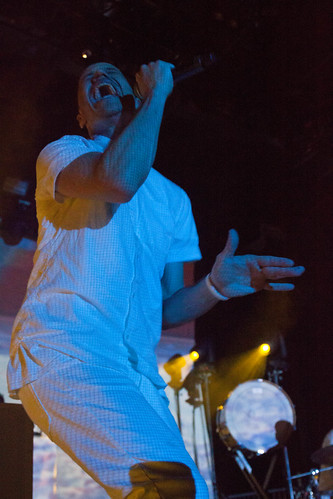
 

Live Footage: The Brian Jonestown Massacre’s Anton Newcombe Leads Pure Ensemble 6 at Space Fest 2016

Created by Nasiono Association, Space Fest is annual Gdansk, Poland-based festival of shoegaze, space-rock and alternative rock that features the prerequisite live music, but much like CMJ, Mondo.NYC, Northside Festival and others also features meet-and-greets with legendary and renowned artists, workshops for Polish and other internationally-based musicians, a battle of the bands-like competition for young, up-and-coming bands and more. As an annual celebration of all things psych rock and space rock-inspired, Space Fest in his almost seven year history has gradually become a scrappy yet internationally recognized festival with an increasingly diverse lineup of bands from across the European Union, Poland, the US, Canada and elsewhere. 

One of the festival’s standout highlights over the course of its history is the Pure Phase Ensemble, a collaborative collective that features one permanent member, Karol Schwarz (KSAS), who also manages Nasiono Records, and every year Schwartz is joined by a rotating cast of local musicians and at least one internationally recognized musician, who acts as a guest musical director, mentor and collaborator through a series of workshops and joint songwriting that culminates with the group performing their new material during the final night of the festival. 

Now, if you’ve been frequenting JOVM over the past couple of years, you may recall that during the course of the Festival’s history, they’ve invited the likes of  Spiritualized’s Ray Dickaty, Stereolab’s Laetitia Sadier, Placebo’s Steve Hewitt, Marion’s Jamie Harding, Six by Seven’s Chris Olley, The Bad Seeds and The True Spirit’s Hugo Race and RIDE’s Mark Gardener. Last year, The Brian Jonestown Massacre’s legendary frontman and founding member Anton Newcombe led Pure Phase Ensemble 6 with Serena Maneesh’s Emil Nikolaisen, and the collective managed to impress festivalgoers with a live set that included “God Drugs” a menacing, droning, and murky dirge, consisting of layers fuzzy and distorted power chords, thundering drumming and an almost mosh pit-friendly hook over which Newcombe laconically delivers his lyrics. While forceful, the song manages a lysergic haze. 

Also, every year the organizers create a documentary of the festival and the documentary features brief interviews and live footage with festival organizers, Anton Newcombe, who says that his appearance at last year’s Space Fest was a way to convince and entice establish artists that it’s a serious and growing festival; the UK’s MDME SPKR, Italy’s Be Forest, Germany’s Camera, the Icelandic-German act The Third Sound, Poland’s Wild Books, Lonker See, The Fruitcakes, Rosa Vertov and The Czech Republic’s DIV I DED. Additionally, the video features impromptu interviews with thrilled festivalgoers and more. The documentary offers a glimpse of a rarely seen Gdansk, a city with a burgeoning music, arts and nightlife scene, full of hungry, young creatives  — a marked departure from the city’s long-held reputation as a grim Soviet satellite city. 

Interestingly, the videos serve as a teaser for this year’s Space Fest, which take place the weekend of December 1 – December 2 and will feature Maciej Cieslak of renowned Polish shoegazers Scianka, leading Pure Phase Ensemble 7, Italy’s New Candys, Portugal’s 10,000 Russos, Mugstar, Switzerland’s Blind Butcher, Germany’s Odd Couple, Mexico’s Tajak, the UK’s Dead Rabbits and up-and-coming local acts 30 kilo slonca, and Wilcze Jagondy. 

New Video: Teeth & Tongue’s Jess Cornelius Releases Haunting Visuals for “Jealousy” Off Her Forthcoming Solo Debut

Over the past year, I had written a bit about the critically acclaimed, Melbourne, Australia-based indie rock/indie pop act Teeth & Tongue. Comprised of New Zealand-born, Melbourne, Australia-based singer/songwriter and guitarist Jess Cornelius, guitarist Marc Regueiro-McKelvie, bassist Damian Sullivan and drummer James Harvey, the quartet initially began as a solo recording project of its founding member Jess Cornelius, and over the course of the four albums, the band developed a reputation for restless experimentation with their sound morphing from an ambient and textured sound to a wiry, dance floor-friendly post-punk inspired by Yeah Yeah Yeahs‘ It’s Blitz!, as you would hear on Give Up on Your Health, an album that received attention both nationally and internationally — it was nominated for a J Award and the Australian Music Prize, named Album of the Week on 3RRR and Featured Album on Double J, as well as features in Rolling Stone, The Fader and Lena Dunham’s Lenny Letter.

Adding to a growing profile, Cornelius has played at some of the her adopted homeland’s and the world’s major music festivals including Laneway Festival, Meredith Music Festival, Falls Festival, Boogie Woogie Festival, SXSW, CMJ, Perth International Arts Festival and Darwin Festival, toured with acclaimed singer/songwriter Courtney Barnett and Vance Joy, opened for J. Mascis, Sons & Daughters, EMA, Juana Molina, The Dodos, The Mountain Goats, The Drones and Laura Marling, as well performed as a musical guest on several episodes of SBS‘ Rockwiz.
 
After several years as a frontperson, Cornelius decided it was time to focus on creating music under her own name, and as a result, Cornelius relocated to Los Angeles to write, and record new material, which included “Jealousy,” the first single off her forthcoming debut EP Nothing Is Lost. And from the single, the New Zealand-born singer/songwriter’s solo work is a marked departure from her work with Teeth & Tongue, as  the material is stripped down to a sparse arrangement of Cornelius’ dynamic, PJ Harvey-like vocals, accompanied by her strummed guitar, dramatic drumming and backing vocals. With a strip down approach of songwriter, vocals, guitar and drums, the listener must not only pay attention to the songwriter’s vocals but to the lyrics as well — and in this case, “Jealousy,” a song based on one of the most hideous yet common human emotions may arguably be some of the more direct, empathetic writing of her career.  You can practically feel the bile and resentment of the song’s narrator, who focuses on what she lacks and what others have; however, the song should serve both as a reminder and warning — after all, you don’t know what someone else had to sacrifice to be in the situation they’re in now, and if you did, you might not have done so.
 
 
Directed by Thomas Hyland at Clones and Clones, the recently released video for “Jealousy” employs a relatively simple yet haunting concept: we follow Cornelius as rides a bike through a suburban development at night. And in some way, the treatment emphasizes the bitter loneliness and spite of its narrator, whose jealousy and resentments seem to fuel her through something that’s both endless and pointless.
 

Now, if you’ve been frequenting this site throughout the course of its seven year history, you may have come across a post or two featuring the up-and-coming New York-born and now Los Angeles-based pop artist and multi-instrumentalist  Beca. Receiving classical training at Juilliard, the New York-born, Los Angeles, CA-based pop artist forged her own path away from her formal training as she sought out opportunities to explore avant garde electronic music, compose for amplified string instruments and NYC’s underground club culture — all of which had been influences on her and her later work.

Since 2012, Beca has released two EPs through British label This Is Music Music, Ltd., self-released her full-length debut Ecliptic in 2015 and worked with Midnight Magic‘s Morgan Wiley. Beca has received praise from the likes of Flaunt, Galore Magazine, Lucky Magazine, received airplay from over 50 stations nationally including NPR’s “The Essentials” and KCRW, and she’s had her work remixed by the likes of Ashley Beedle, Klic, Night Drive and others.  Along with that, Beca was once a finalist in the International Songwriting Competition and the John Lennon Songwriting Contest. And adding to a growing profile, the up-and-coming artist has played at CMJ, SXSW, Miami Fashion Week, Sundance Film Festival, POP Montreal and NXNE and she’s toured across the US, Europe and Mexico.

Beca’s latest effort, the Blake Robin and Fabian Ordorica-produced, six song EP, In Deep Love is slated for release on September 15, 2017 and the album finds the up-and-coming New York-born, Los Angeles-based artist further cementing her reputation for crafting material that draws from 80s and 90s synth pop paired with lyrics influenced by mythology, classical music, film, art, romantic stories and her own personal life. EP title track and lead single “In Deep Love” is a shimmering and propulsive, club-banger that sonically seems indebted to Giorgio Moroder-era disco and 80s freestyle but while dance floor friendly, the song is under-pinned by a bitter heartbreak — the realization that you may have to let go of someone you love and accept the idea that there won’t be a future with that person. And while it may be painful, it’s the best thing for both people involved.


Last year, I wrote a bit about the critically acclaimed, Melbourne, Australia-based indie rock/indie pop act Teeth & Tongue. Comprised of New Zealand-born, Melbourne, Australia-based singer/songwriter and guitarist Jess Cornelius, guitarist Marc Regueiro-McKelvie, bassist Damian Sullivan and drummer James Harvey, the quartet initially began as a solo recording project of its founding member Jess Cornelius, and over the course of the four albums, the band developed a reputation for restless experimentation with their sound morphing from an ambient and textured sound to a wiry, dance floor-friendly post-punk inspired by Yeah Yeah Yeahs‘ It’s Blitz!, as you would hear on Give Up on Your Health, an album that received attention both nationally and internationally — it was nominated for a J Award and the Australian Music Prize, named Album of the Week on 3RRR and Featured Album on Double J, as well as features in Rolling StoneThe Fader and Lena Dunham’s Lenny Letter.

Along with that, Cornelius has played at some of the her adopted homeland’s and the world’s major music festivals including Laneway Festival, Meredith Music Festival, Falls Festival, Boogie Woogie Festival, SXSW, CMJ, Perth International Arts Festival and Darwin Festival, toured with acclaimed singer/songwriter Courtney Barnett and Vance Joy, opened for J. Mascis, Sons & Daughters, EMA, Juana Molina, The Dodos, The Mountain Goats, The Drones and Laura Marling, as well performed as a musical guest on several episodes of SBS‘ Rockwiz.
After several years as a frontperson, Cornelius decided it was time to focus on creating music under her own name, and as you’ll hear on her solo debut single “Jealousy,” her solo work is a marked departure from her critically applauded work in Teeth & Tongue, as the material is stripped down to a sparse arrangement of Cornelius’ dynamic, PJ Harvey-like vocals, accompanied by her strummed guitar, dramatic drumming and backing vocals. And by stripping down the material to its bare essence of songwriter, vocals, guitar and drums, the listener must not only pay attention to the songwriter’s vocals but to the lyrics as well — and in this case, “Jealousy,” a song based on one of the most hideous yet common human emotions may arguably be some of the more direct, empathetic writing of her career.  You can practically feel the bile and resentment of the song’s narrator, who focuses on what she lacks and what others have; however, the song should serve both as a reminder and warning — after all, you don’t know what someone else had to sacrifice to be in the situation they’re in now, and if you did, you might not have done so.
Cornelius’ solo EP is slated for release later this year, but along with the release of “Jealousy,” she announced a handful of solo dates in Los Angeles and New York, along with a series of dates opening for Paul Kelly. Check out the tour dates below.
 
Tour Dates 
* without Paul Kelly
08/23: Hush Club at Hyperion – Los Angeles, CA*
09/08: Pianos – New York, NY*
09/13: Arlene’s Grocery – New York, NY*
09/15: Rockwood Music Hall – New York, NY*
09/17: The Hamilton – Washington, DC
09/19: Virgin Mobile Mod Club – Toronto, ON
09/20: Petit Campus, Montréal, QC
09/22: Brighton Music Hall – Allston, MA
09/23: Highline Ballroom – New York, NY
09/24: Sellersville Theater – Sellersville, PA
09/26: Stag’s Head Music Hall – Raleigh, NC
09/27: City Winery – Atlanta, GA
09/29: Sons of Hermann Hall – Dallas, TX
09/30: 3TEN Austin City Limits Live – Austin, TX
10/02: Main Street Crossing – Tomball, TX
10/04: City Winery – Nashville, TN
10/05: Zanzabar – Louisville, KY
10/07: The Magic Bag – Ferndale, MI
10/08: The Clay Center – Charleston, WV
10/10: SPACE – Evanston, IL
10/11: The Cedar Cultural Center – Minneapolis, MN
10/13: Daniels Hall @ Swallow Hill – Denver, CO
10/14: The State Room – Salt Lake City, UT
10/16: Imperial – Vancouver, BC
10/17: Doug Fir Lounge – Portland, OR
10/18: The Crocodile – Seattle, WA
10/20: Slim’s – San Francisco, CA
10/22: The Roxy Theatre – Los Angeles, CA

If you’ve been frequenting this site over the past 12-15 months or so, you’ve likely come across a couple of posts on the Brampton, ON-born, Toronto, ON-based DJ, violinist, singer/songwriter and indie pop artist Maya Killtron. And as you may recall, Killtron first came to attention both nationally and Stateside with the 2012 release of her debut EP Hipster/Gangsta, and as a result of the attention she received, Killtron wound up making the rounds across the North American festival circuit with stops Miami’s Winter Music ConferencePride TorontoThe Halifax Jazz Festival and CMJ. And adding to a growing profile, her collaboration with NYC-based production duo Love Taps “Back For More” received attention from the likes of Stereogum and Huffington Post for a sound that meshed moomba and R&B – and for visuals that showcased a sadly bygone NYC. Additionally, Smalltown DJs, The Slow WavesEyes Everywhere, Brothers In Arms and City Kid Soul have all have remixed “Back For More” — with the City Kid Soul remix being named in the Top 5 at Toronto’s Bestival.

Bad Decisions,” which I wrote about while in Amsterdam, The Netherlands earlier this year, was a written as a review of some of Killton’s best and worst decisions when it came to affairs of the heart paired with a sound that nodded at 80s synth funk and early 80s disco in a fashion reminiscent of JOVM mainstay act Escort; in fact, that shouldn’t be surprising as Killtron explained in an email to me,  “With ‘Bad Decisions,’ as well as my first single ‘Never Dance Alone,’ I wanted to pay tribute to; but not copy my heroes — Teena Marie, Prince, and The Gap Band.”

“Whiplash,” the third and latest single off Killtron’s Never Dance Alone EP is influenced by a childhood memory of a young Killtron listening to Michael Jackson‘s “PYT‘ for the very first time. “It was my driveway one July and my dad let me take our little radio outside while I washed the car, ” the Brampton-born, Toronto, ON-based pop artist explains. “‘PYT’ jumped out of the speakers and pretty much changed my ears forever. I never listened to the music the same way again.” Sonically, Killtron describes the song as having touches of elastic funk, roller rink dance, New Jack Swing and candy-coated pop paired with modern electronic production — and while that may be true, the song reminds me of Morris Day and The Time‘s “Jungle Love,” The Gap Band’s “You Dropped a Bomb on Me,” Cherelle‘s “Saturday Love,” Chaka Khan‘s “I Feel For You” and others as it features a sinuous bass line and a stomping groove; however, Killton’s latest single is at a much faster BPM than the sources that inspired it. Of course, much like the preceding singles, “Whiplash” is a love song — this time focusing on the sort of swooning love that comes about suddenly and feels so right, even if it’s just for the moment.


If you’ve been frequenting this site over the past few years, you may have come across a couple of posts featuring the Dublin, Ireland-born, Brooklyn-based singer/songwriter and electro pop artist Sorcha Richardson. Initially relocating to the States to study, Richardson quickly developed a number of close relationships within Brooklyn’s underground electro pop/electronic music scene that wound up influencing the sonic direction of the material she had started to write and record; in fact, the Dublin-born, Brooklyn-based pop artist first caught the attention of the blogosphere with CON VOS, a musical project that received praise from Nylon, Pigeons & Planes, and Indie Shuffle.

Richardson quickly followed that up with her bedroom recorded debut EP Sleep Will Set Me Free EP, which received 200,000 Soundcloud streams and caught the attention of Crosswalk Records/Delicieuse Musique, who released the Last Train EP. Adding to a rapidly growing profile, Richardson has played sets at Northside Festival and CMJ, and several other festivals, as well as a number of headlining shows. Now, it’s been some time since I’ve personally written about the Dublin-born, Brooklyn-based singer/songwriter and pop artist, but she’s been rather busy writing and recording a number of singles that have further cemented her reputation for crafting deeply introspective pop, including her latest single, “4AM,” single in which the song’s narrator muses about her current love prospects — with recognition of two things: that if things go wrong in a prospective relationship, it’s not always your fault — and the narrator proudly recognizes that being alone is perfectly fine to want to be alone and unbothered by someone else’s baggage and bullshit. Reportedly, the song, which is by far the most brooding in Richardson’s growing catalog, finds her pairing a sparse, Dido-like arrangement of dramatic piano chords with a soaring, radio-friendly hook with a club-leaning production featuring enormous tweeter and woofer rocking beats, swooning synths and Richardson’s ethereal yet achingly earnest croon. The song manages to walk a careful tightrope between late night, lonely regret over a relationship that has gone wrong and the pride of moving forward as quickly as possible from a flaming disaster — and it’s done with an honesty that comes from personal experience.


Founded by Captured Tracks‘ label head and founder Mike Sniper, Omnian Music Group is a label group, whose goal is to further develop and strengthen its pre-existing imprints (Body Double Records, Fantasy Memory Records and Squirrel Thing Recordings) and partnerships (with New Zealand’s Flying Nun Records) of Captured Tracks, while seeking out innovative labels, who would benefit from the larger Omnian Music Group structure to partner with, and creating new and distinct labels. Since its formation, Omnian has also partnered with Australia’s Dot Dash Records, New York’s Sing Sing Records, and created three new labels — Sinderlyn, 2MR Records, a dance music label founded by Italians Do It Better‘s Mike Simonetta and Captured Tracks’ Sniper, and Manufactured Recordings, a label that specializes in re-issues across a wide variety of genres.

Manufactured Recordings has developed a Shoegaze Archive Series, a re-issue series that focuses on under-appreciated and/or overlooked shoegaze and noise rock bands. On May 19, 2017 the re-issue arm of Omnian Music Group will be releasing re-issues of three largely overlooked shoegazer rock bands of the 90s — Alison’s Halo’s 1998 release Eyedazzler, a compilation of singles that the band wrote between 1992 and 1996; KG’s Come Closer, We’re Cool, a compilation featuring early tracks, unreleased material and material from a shelved Slumberland Records effort; and lastly, Bethany Curve’s mid 1990s debut, Mee-Eaux.

Originally formed by the husband and wife duo Catherine Cooper (vocals, guitar) and Adam Cooper (guitar) along with Lynn Anderson (bass), the Tempe, AZ-based shoegazer trio Alison’s Halo derived their name from the name that had given their drum machine — Alison. As The Big Takeover‘s Jack Rabid noted “Alison’s Halo trafficked in spectacular, effects-laden, ethereal guitar majesties, but were distinguished by Catherine’s lovely vocals as their six-string melanges.” And as a result, the band found themselves opening for internationally known acts including Ultra Vivid Scene, Curve, The Verve, The Boo Radleys, Bailter Space, and Stereophonics, and played at several music festivals including SXSW and CMJ. As a trio, the band recorded two demo cassettes Slug and Halo, but before the recording sessions for their debut single “Dozen,” the band recruited Thomas Lanser (drums), expanding the band to a quartet; however, before the release of 1998’s debut effort, Eyedazzler 1992-1996, a compilation of singles written and recorded between 1992 and 1996 the band went through several lineup changes. After the band’s breakup in the late 90s, the members of the band went on to other creative pursuits — for several years the duo of Catherine Cooper and Adam Cooper spent several years writing and recording Burt Bacharach-inspired pop under a number of names, and Adam Cooper has also released a solo album of ambient music. In 2009, the Coopers resurrected Alison’s Halo and released several digital compilations of old material through their website, including three live albums and the The Jetpacks for Julian demos EP, and “Dozen,” the band’s debut single was included in 2016’s Still in a Dream: A Story of Shoegaze 1988-1995 box set compilation. They also released a digital 7 inch “Some Heaven”/”The Hardest Part” from the Eyedazzler demos.

Naturally, it shouldn’t be surprising that “Dozen” is the first single off the Eyedazzler re-issue and the single should immediately bring memories of 120 Minutes-era MTV as the rousingly anthemic yet dreamy song features Catherine Cooper’s ethereal vocals floating over shimmering power chords and a propulsive rhythm section consisting of thundering drumming and a gently throbbing bass line. Interestingly, while clearly sounding of its time, being reminiscent of A Storm in Heaven and A Northern Soul-era The Verve and My Bloody Valentine, the band’s sound also nods at contemporaries like Overlake and others.


Deriving their name from street sign, near the cliffs of Monterrey Bay, the Santa Cruz, CA-based space rock/shogeazer trio Bethany Curve — comprised of Richard Millang (vocals, guitar), Nathan Guevara (guitar) and David Mac Wha (drums) — are part of a second, somewhat more American-leaning wave of shoegaze and noise rock, forming in 1994, around the same time time that a number of the British shoegazer pioneers including Slowdive, My Bloody Valentine, Lush and others had split up. The band has developed a reputation for crating dark, moody space rock-leaning shoegaze full of shimmering guitar chords led through tons of delay pedal and throbbing, tweeter and woofer rocking bass — or as they’ve dubbed their approach “Atmosphere | Arrangement | Sound | Layering | Noise,” which they’ve used on the band’s four full-length releases, 1994’s Mee-Eaux, 1996’s Skies Crossed a Sky, 1998’s Gold and 2001’s You Brought Us Here and their 2013 EP Flaxen. Along with that, the band released a cover of Cocteau Twins‘ “Ivo,” which appeared on Dewdrop Records’ 2002 compilation Half Gifts: A Tribute To The Cocteau Twins. And much like Alison’s Halo’s “Dozen,” “Mey Voy,” Mee-Eaux‘s final track was also featured on 2016’s Still In A Dream: A Story Of Shoegaze 1988-1995 box set compilation.

For Manufactured Recordings reissue of Mee-Eaux, the first single is the slow-burning, brooding and cosmic instrumental “Out of the Curve” which features a dreamy and shimmering guitar melody paired with propulsive drumming and droning vocals — and while being atmospheric and ethereal, the song possesses a forceful, enveloping character.


Initially started as a bedroom-based solo recording project of the Mulhouse, France-born, Strasbourg, France-based multi-instrumentalist Remy Bux in 1988, the project involved Bux’s early experimentation with a two-track recorder, a rigged synthesizer and a great deal of ingenuity. Eventually purchasing a four-track recorder, Bux took writing and recording much more seriously. And after a 1991 relocation to Strasbourg, where he studied musicology, Bux recorded the KG debut 7 inch featuring a full band at Downtown Studio in 1993. The same lineup followed that up with a 1996 single co-released by Lo-Fi Records and Orgasm Records — and their Manufactured Recordings re-issue, Come Closer, We’re Cool is a compilation of their early singles, and tracks from a shelved Slumberland Records full-length effort. Interestingly their output has been compared to Isn’t Anything-era My Bloody Valentine and Psychocandy-era The Jesus and Mary Chain but with the immediacy and minimalism of punk, and as you’ll hear on “Love Me Forever,” an anthemic track that features a quiet, loud, quiet structure in which strummed acoustic guitar is paired with blistering power chords. And while clearly nodding at The Jesus and Mary Chain, the song also reminds me of early Blur.


Ward White is a Los Angeles, CA-based singer/songwriter and guitarist, who is arguably best known for his work as one-half of the critically applauded chamber pop duo McGinty and White, which features Joe McGinty, a former member of Psychedelic Furs, and the creator of The Loser’s Lounge tribute series; in fact, the duo’s debut effort together received praise from  The New Yorker and The New York Press.  And while a member of McGinty and White, White has quietly developed a reputation as a solo artist of note as 2013’s Bob and 2015’s Ward White is the Matador were released to critical praise from iTunesNew York Magazine, Magnet Magazine and CMJ for a songwriting approach and sound that has been compared favorably to Scott Walker (one of the great and sadly under-appreciated songwriters of the past 50 years or so), 1970s  David Bowie, T. Rex and others.


Now, if you’ve been frequenting this site over the course of 2015, you may recall that I had written about White’s Ward White is the Matador, an album that while clearly drawing from 70s classic rock and AM rock, also possessed an experimental art rock sheen. And while unquestionably, a very New York rock sound, at points the material lyrically and thematically covered things that we become conscious of as we get older — that life is increasingly about a series of loss; that most relationships throughout one’s life will inevitably end; and of a rapidly disappearing New York into eccentrics and lunatics, and improbable situations.

It’s been a while since I’ve written about White, and as it turns out, White has been rather busy. Over the past couple of years, Ward has relocated from Brooklyn to Los Angeles — and his soon-to-be released tenth full-length album As Consolation chronicles his relocation to the West Coast; in fact, the album’s first single “Dude” will further cement his reputation for crafting 70s AM radio friendly rock in the veins of the aforementioned Scott Walker, David Bowie, T. Rex and Roxy Music — with a winking and witty irony; but under the surface is the hazy confusion of being disconnected, of being a stranger in an even stranger place that you can’t quite figure out with people who seem completely alien to you. And as a result, the song evokes the recognition of not fitting in — while wondering if people are looking at you with disapproval and disdain because you can’t quite tell.


Currently comprised of founding member Alexander Pavlich, Andrew Murray, Stian Aasen, Christian Balvig, Teodor Dysthe Lyngstad, and Martin Kaasa, Lovespeake is a Sandivka, Norway-based indie electro pop act that with the release of their debut album DNA received international attention — with radio airplay and additions to a variety of Spotify playlists across North America, the UK, the EU, Asia and Scandinavia. Adding to a growing national and international profile, in a relatively short period of time, the Norwegian pop sextet have received more than a million streams across the major streaming services and they were playlisted on Norway’s biggest radio station P3 for 16 consecutive weeks. Along with that, the band had songs featured on several influential Spotify playlists in North America, the UK, the EU, Asia and Scandinavia — an their debut charted highly on CMJ’s college radio charts here in the States. And most recently, they were selected as Tidal Rising Artist.

“Novocaine,” the Sandivska, Norway-based sextet’s sinuous, first single of 2017 is a collaboration with Max Frost that will further cement their growing reputation for crafting slick, hook-laden electro pop that possesses elements of psych pop, dream pop and funk that reminds me quite a bit of Tuxedo, Dam-Funk, Blood Orange and Tame Impala in the sense that while clearly drawing from brightly colored, 80s synth pop and funk, much like those renowned acts, Lovespeake’s sound manages to be a subtly contemporary take on something familiar; however, in the case of the Norwegian act, there’s an underlying quirkiness that manages to set it apart.