Tag: Grammy Award

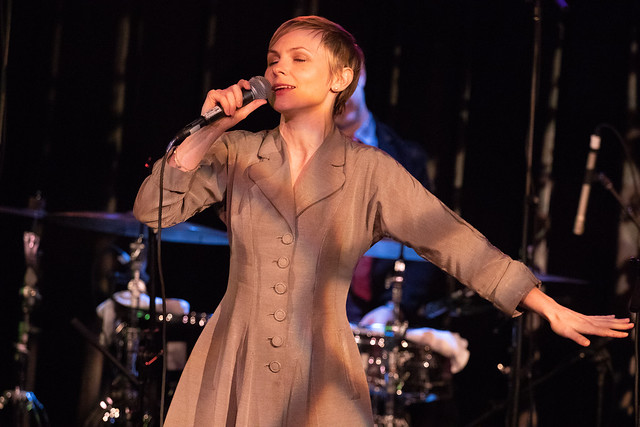
Currently comprised of founding members Alexis Taylor and Joe Goddard, along with Owen Clarke, Al Doyle, and Felix Martin, the critically applauded, Grammy Award-nominated, London-based electro pop act Hot Chip can trace its origins back to when its founding duo of Taylor and Goddard met while studying at Elliot School, Putney. Bonding over a shared love of R&B and house music, Hot Chip’s founding duo started collaborating together musically as early as 1998.

After releasing 2001’s Mexico EP, 2002’s San Frandisco EP and a handful of other material through small labels and independently, the act caught the attention of Moshi Moshi Records, who signed the band in 2003 and subsequently released their full-length debut, 2004’s Coming on Strong. Interestingly around this time, the project expanded to a full-fledged band with the additions of Owen Clarke, Felix Martin and Al Doyle. And with their new lineup, the act began working on their sophomore album The Warning while signing a UK and US record deal with DFA Records and EMI Records, which resulted in Astralwerks releasing their full-length debut in the States in 2005.

Released in 2006, The Warning earned the band a more mainstream following while being critically applauded — the album featured two UK Top 40 singles  “Over and Over” and “Boy from School,” before eventually being shortlisted for that year’s Mercury Prize and Mixmag‘s Album of the Year. Adding to a growing national profile. “Over and Over” was named the best single of that year by NME.

The acclaimed London-based electro pop act’s third, full-length album, 2008’s Made in the Dark featured “Ready for the Floor,” which peaked at #6 on the UK charts. Building upon the buzz the single received, the band made appearances on Friday Night with Jonathan RossJimmy Kimmel Live! and Last Call with Carson Daly — with the song receiving a Grammy nod for “Best Dance Recording,” eventually losing out to Daft Punk’s “Harder Better, Faster, Stronger (Alive 2007).

After completing a lengthy world tour to support Made in the Dark, the members of Hot Chip returned to London and began writing and recording their fourth full-length album, 2010’s disco and early house music influenced One Life Stand, which found the band collaborating with This Heat‘s and Camberwell Now’s Charles Hayward, The Invisible’s Leo Taylor and Trinidadian steel panist Fimber Bravo.

Since then the band released two more albums: their fifth album, 2012’s In Our Heads, an album that the band’s Alexis Taylor said was written and recorded in a speedier fashion with less pressure and more fun — and 2015’s Why Make Sense, which featured album single “Huarache Lights.”

Hot Chip’s seventh full-length album A Bath Full of Ecstasy is slated for a June 21, 2019 release through Domino Records — and while being their third album for Domino, the album reportedly finds the band firmly cementing the sound they’ve been celebrated for — bringing euphoria and melancholy with breezy and colorful melodies, plaintive vocals and propulsive beats. Interestingly, the album which was recorded in Paris and London finds the act opening themselves up to a more adventurous and collaborative songwriting process, choosing to work with outside producers for the first time in their history —Cassius‘ Philippe Zdar, who has worked with Phoenix and Rodaidh McDonald, who has worked with the likes of The xx, David Byrne, Sampha and others.

Clocking in at 6 minutes, the album’s first single  “Hungry Child” is centered around glistening synths, tweeter and woofer rocking beats, finger snaps, plaintive vocals, an anthemic hook and a motorik-like groove — and while clearly being indebted to classic house and sultry French electronica, the track also subtly recalls JOVM mainstay Beacon. And as a result, it has a bittersweet air; the sort that comes from the recognition that joy is often paired with pain.
2019 will also see the members of Hot Chip embarking on what may arguably be the biggest tour of their entire history with a number of club shows during the Spring across Europe and North America, including a sold out April 29, 2019 stop at Elsewhere — before making stops across the European festival circuit. They return to New York in the fall with two dates — September 3, 2019 and September 4, 2019 at Brooklyn Steel. Check out the tour dates below.
Tour Dates
4/4 – London @ Village Underground SOLD OUT
4/5 – Brighton @ Concorde 2 SOLD OUT
4/6 – Bristol @ Trinity SOLD OUT
4/8 – Paris @ Trabendo SOLD OUT
4/9 – Brussels @ Botanique Orangerie SOLD OUT
4/11 – Cologne @ Luxor SOLD OUT
4/12 – Hamburg @ Mojo SOLD OUT
4/13 – Berlin @ Columbia Theatre SOLD OUT
4/14 – Amsterdam @ Paradiso Noord SOLD OUT
4/29 – Brooklyn, NY @ Elsewhere SOLD OUT
5/1 – Los Angeles, CA @ El Rey Theatre SOLD OUT
5/2 – Pioneertown, CA @ Pappy and Harriet’s SOLD OUT
5/4 –  San Francisco, CA @ August Hall SOLD OUT
5/24 – London @ All Points East Festival
6/1 – Egeskov Castle, Denmark @ Heartland Festival
6/8 – Helsinki, Finland @ Sideways Festival
6/14 – 6/18 – Mannheim, Germany @ Maifeld Derby Festival
6/28 – 6/30 – Somerset @ Glastonbury Festival
6/4 – Catalonia Spain @ Vida Festival
6/5 – Six-Fours-les-Plages, France @ Pointu Festival
6/11 – Lisbon, Portugal @ NOS Alive Festival
6/11 – 6/13 – Bilbao, Spain @ Bilbao Live Festival
6/19 – 6/21 – Jodrell Bank, Macclesfield @ Bluedot Festival
6/19 – 6/21 – Biarritz, France @ Biarritz en été Festival
6/26 – Aulnoye-Aimeries, France @ Les Nuits Secrètes Festival
8/2 – 8/4 – Waterford, Ireland @ All Together Now Festival
8/4 – Glasgow @ Playground of Sound Festival
8/16 – St Malo, France @ La Route du Rock Festival
8/16 – 8/18 – Hasselt, Belgium @ Pukkelpop Festival
8/30 – Vlieland, Netherlands @ Into The Great Wide Open Festival
Autumn 2019 headline tour
9/3 – Brooklyn, NY @ Brooklyn Steel
9/4 – Brooklyn, NY @ Brooklyn Steel,
9/7 – Washington, DC @ 9:30 Club
9/8 – Philadelphia, PA @ Union Transfer
9/9 – Boston, MA @ Royale
9/10 – Montreal, QC @ MTELUS
9/12 – Toronto, ON @ Phoenix Concert Theatre
9/13 – Chicago, IL @ Riviera Theatre
9/14 – Minneapolis, MN @ First Avenue
9/17 – Vancouver, BC @ Vogue Theatre
9/18 – Seattle, WA @ The Showbox
9/19 – Seattle, WA @ The Showbox
9/20 – Portland, OR @ Roseland Theater,
9/24 – Santa Cruz, CA @ The Catalyst
9/25 – Oakland, CA @ Fox Theater
9/27 – Los Angeles, CA @ Shrine Auditorium
10/17 – Dublin @ Olympia
10/18 – Birmingham @ O2 Institute 1
10/21 – Bristol @ O2 Academy
10/22 – Nottingham @ Rock City
10/24 – Norwich @ LCR
11/30 – Milan @ Alcatraz
12/2 – Amsterdam @ Melkweg
12/3 – Berlin @ Columbiahalle
12/4 – Luxembourg @ den Atelier
12/5 – Lausanne @ Les Docks
12/7 – Paris, @ Elysée Montmartre
12/11- Hamburg @ Docks
12/14 – Stockholm @ Vasateatern
12/15 – Oslo @ Rockefeller

Live Footage: Tame Impala Performs on “Saturday Night Live”

With the release of his first two albums, Innerspeaker and Lonerism, the Perth, Australia-born and-based singer/songwriter, multi-instrumentalist and producer Kevin Parker quickly received national and international attention for his psych pop solo recording project Tame Impala. 2015’s Currents though, was a commercial and critical breakthrough: the Grammy-nominated, RIAA Gold-Certified album reflected a decided change in songwriting that resulted in some of his most emotionally direct lyrics paired with a more nuanced, textured sound that drew from psych rock, psych pop, synth pop, prog rock and R&B.

“Patience” is the first bit of new, solo material from Parker in a few years, and the mid-tempo track is a seamless synthesis of classic 90s house music and 70s funk, soul and disco that features shimmering and arpeggiated synths, piano jabs, a motorik groove, congo-led percussion and a soaring and rousingly anthemic hook paired with Parker’s imitable, falsetto croon. And while being a decidedly upbeat banger, the song is centered by a thoughtful meditation on the cycles and phases of life, in which the song’s narrator makes peace with the fact that everything and everyone is transient.

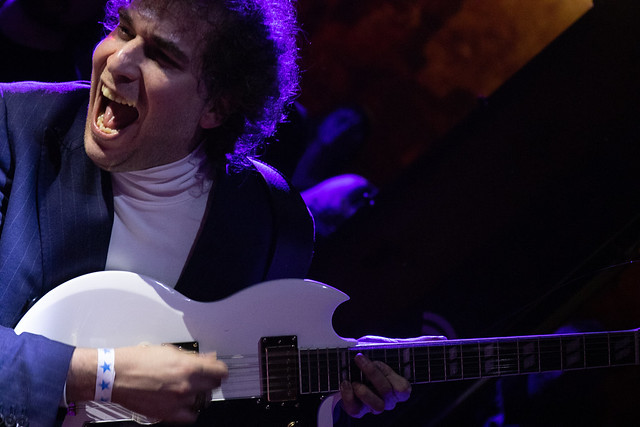
Parker made his Saturday Night Live debut last Saturday, and his appearance featured a live performance of “Patience” and a new track, “Borderline,” a shimmering mid-tempo track centered around arpeggiated synths, Parker’s plaintive falsetto crooning and a soaring hook that recalls 70s AM rock meshed with synth pop and psych pop

New Video: Swervedriver’s Murky Yet Anthemic “Space Oddity”-like “Mary Winter”

Over the past few months, I’ve written a bit about the renowned, Oxford, UK-based alt rock/shoegazer act Swervedriver, and as you may recall, the act which is primarily centered around their founding duo Adam Franklin (vocals, guitar) and Jimmy Hartridge (guitar, vocals) along with Mikey Jones (drums, vibes) and revolving bassists Mick Quinn and Ben Ellis can trace their origins back to 1989. During their initial run from their founding until 1998, the band released four full-length albums — 1991’s Raise, 1993’s Mezcal Head, 1995’s Ejector Seat Reservation and 1998’s 99th Dream — while going through a number of lineup changes, management changes and different labels. 

By 1993, Franklin and Hartridge teamed up with Jef Hindmarsh (drums) and Steve George (bass) and with that lineup, they developed a reputation for a heavier rock sound than their shoegazer counterparts — but over their last five years together, their sound slowly evolved to include elements of psych rock, pop and indie rock. And although Franklin, Hartdige, Hindmarsh and George were the longest tenured lineup in the band’s history, they went on a lengthy hiatus in 1998, in which the individual members went on to pursue a variety of professional and creative pursuits. Franklin embarked on a solo career that would rival Swervedriver’s creative output, including a stint fronting the experimental electro pop/electro folk act Toshack Highway, whose releases ranged from sextet ensemble works to four-track bedroom recordings and then with the more traditionally guitar rock-driven Adam Franklin & Bolts of Melody. Hartridge founded a distribution company. Hindmarsh founded Badearth Management, a music management company that eventually managed Scottish rock act Terra Diablo and others.

In early 2005, Franklin, Hartrdige, Hindmarsh and George reconvened to collaborate with Castle Music to choose songs on what would be a two disc anthology Juggernaut Rides ’89-’98, a compilation that included 33 tracks remastered from the originals DATs. Half of those tracks were non-album tracks, along with four previously unreleased tracks — including the last recordings the band worked on in 1998, “Just Sometimes” and “Neon Lights Glow.” Released to critical applause, Juggernaut Rides ’89 – ’98 helped build up growing interest in the shoegazer pioneers’ work. 

2006 was a rather busy year for the members of the band’s longest tenured lineup. Franklin began collaborating with Interpol‘s Sam Fogarino in Magnetic Morning. Hindmarsh went on to publish Rider, which chronicled his experiences and observations on the road touring with the band between 1992 and 1998. Somewhat inspired by the wildly successful 2004 reunion tour of the Pixies, the band reunited for a world tour in 2008 that garnered the attention and acclaim that largely evaded them a decade earlier. 

2015’s I Wasn’t Born to Lose You was the first album of new, original material from the band in 17 years, and although they’ve managed to be consistent in their second run, they’ve gone through a series of lineup changes between the 2008 reunion tour and the release of I Wasn’t Born to Lose You. 

Now, as you may recall, the band’s second reunion-era album and their sixth altogether, Future Ruins was released earlier this year through Dangerbird Records. Future Ruins’ predecessor, was written and recorded immediately after an Australian tour and inspired by the results, the members of the pioneering shoegazer act decided to repeat the process after a lengthy Stateside tour in which they played Raise and Mezcal Head in their entirety. “That’s a good way to record,” Franklin says in press notes, “because you’ve literally just seen the whites of the audience’s eyes and you’re thinking, ‘If that audience from last night were here now…’ You can’t get too mellow. We came home with 30 different songs.” 10 more days of vocals and overdubs at Brighton UK‘s Seaside Studios with Grammy Award-winning engineer TJ Doherty quickly followed.

The material on Future Ruins finds the band retaining the escapist vibes that they’ve long been known for — but while generally being inspired by the uneasy tension and anxiety of our ongoing sociopolitical moment. Interestingly, the album’s second single “Drone Lover” actually predates the I Wasn’t Born recording sessions. As the band’s Adam Franklin explained in press notes, at the time, ““I have no recollection of where this tune came from. It’s a song that’s been knocking around for a few years, but for some reason had never been presented to anyone until we were in the studio this time and I clicked play on the demo while searching for something else. TJ and Mikey both went ‘what’s this?’ and then ‘so why aren’t we recording it?’ – and so we recorded it. The lyric mentions love but it’s really about war – remote war and killing from a distance whilst chomping on last night’s leftover pizza or something.”  The album’s third single, was the shimmering and wistful “The Lonely Crowd Fades In The Air.” As Franklin admits, the band was thinking of The Clash, “even though it doesn’t sound anything like them, but it’s like a punch on the nose from a velvet glove.” Oddly, as I have a day left of my 30s, the song seems to hit me in a personal way, as the song’s narrator thinks about all the directions his life may have taken, if he made different decisions at key points in his life. 

The members of Swervedriver are currently on a co-headlining tour with Failure that includes a Friday night stop at Warsaw. You can check out the remaining tour dates below — but I thought I should talk about the album’s first single, album opener “Mary Winter.” Arguably, the darkest single of the three they’ve released, the song is centered around fuzzy and jangling power chords, thunderous drumming and an anthemic hook — and despite the fact that the song sounds as though it could have been released in 1994, the song evokes an uneasy sense of foreboding while lyrically the song sounds indebted to David Bowie’s “Space Oddity,” as the song’s narrator is a space traveler, hurtling away from the world. Whether the narrator is escaping willfully or not, is left for us to decide. In the meantime, everything is fucked up — and while it may seem hopeless, we can’t just escape the planet. So maybe we should start asking ourselves, “What can we do to make it right?” Fittingly, the video employs the use of old space imagery, helping to emphasize a sense of weightlessness and helplessness. 

Despite his relative youth, 20 year-old  Bay Area-based singer/songwriter and guitarist Simon Lunche has actually had a rather lengthy musical career that he can trace back to when he was a small child: he took up guitar when he was 5, eventually becoming one of the youngest endorsed artists in the history of Gibson Guitars; but he’s best known as the creative mastermind and frontman of The Blondies, an act that formed when he was just nine. The Blondies acclaimed album Just Another Evening was released in June 2016, right as Lunch was about to graduate high school.

While several of the older band members decided to focus on finishing college, Lunche opted to forego school and pursue music full-time. And although Lunche had written The Blondies four, full-length albums on his own, the Bay Area-based singer/songwriter and guitarist found that working as a solo artist added a much greater degree of creative freedom — and as a result was an unexpected evolution in his sound and songwriting approach. “As I started working on my new music, I rediscovered the reason why I picked up guitar in the first place,” Lunche says in press notes. Expanding on the technique he’d developed and sharpened since he was a child, he advanced from his former role as a rhythm guitarist and started crafting more intricate and richly textured guitar lines. “I don’t go for that shred-happy stuff that’s going to blow the roof off,” he says. “For me, it’s more about slower, smoother playing and more melodic lines that really stay with you in a special way.”

Lunche’s forthcoming solo debut, was mixed by Grammy Award-winning engineer Dave Reitzas, who’s worked a wide array of artists from Barbra Streisand to The Weeknd, and the album reportedly draws from the Bay Area-based singer/songwriter and guitarist’s longtime love of Van Morrison and Leonard Cohen with a natural soulfulness and thoughtfulness. “I think as you get older, you start to appreciate these little moments in time in a way you maybe never had before,” Lunche says. “A lot of what I’m writing right now is about dealing with change and trying to move forward, but still holding onto some reminiscence of the past.”

“Cherry Wine,” the first single off Lunche’s forthcoming solo album is an effortlessly soulful yet lush and carefully crafted take on pop that draws from 60s and 70s songwriter-centered soul and Northern soul, with a loose, bluesy guitar line. To my ears,  the song reminds me a bit of Simply Red‘s  “Holding Back the Years” and “If You Don’t Know Me By Now,” complete with a soaring, gospel-inspired backing vocal section — and a wistful and heartache-filled nostalgia. The new single finds the young singer/songwriter writing and singing from a perspective that belies his relative youth while aiming at something timeless.


New Video: JOVM Mainstays White Lies Release Anthemic New Single Paired with Gorgeous and Cinematic Visuals

London-based indie trio White Lies’s aptly titled, fifth, full-length album Five is slated for a February 1, 2019 release through [PIAS] Recordings, and while marking the trio’s tenth anniversary together, the album reportedly finds the British pop trio pushing their sound in new and adventurous directions paired with arguably some of the most deeply personal and intimate lyrics of the band’s entire catalog. Unlike its predecessors, the writing and recording process was Transatlantic, and included a trip to Los Angeles, where they worked on new material with Ed Bueller, who produced the band’s chart-topping debut To Lose My Life and their third album Big TV. Throughout the process, the band enlisted past associates and collaborators to assist on the proceedings including engineer James Brown, who has worked with Arctic Monkeys and Foo Fighters; the renowned producer Flood, who contributes synths and keys on a couple of tracks; and Grammy Award-winning Alan Moulder, who has worked with Smashing Pumpkins, Nine Inch Nails and The Killers to mix the album.

Now, as you may recall, the Snow Patrol-like album single “Time to Give,” was an ambitious song that clocked in at a little over 7 and a half minutes, and was centered around a lush yet moody arrangement of shimmering synths, a propulsive motorik groove, Harry McVeigh’s sonorous baritone and an arena rock-friendly hook — but underneath the enormous hooks was a song that focuses on a dysfunctional and abusive relationship from a real and lived-in place. In fact, the song feels so lived-in that it bristles with the bitterness and hurt that comes from being in a relationship in which you’ve left broken, fucked up and confused. “Believe It,” continued in a similar vein as its immediate predecessor as it’s full of enormous, arena rock friendly hooks while bearing a resemblance to Pet Shop Boys, Tears for Fears, Jef Barbara and Joy Division/New Order.

“Tokyo,” Five’s latest single continues a run of rousingly anthemic singles centered around enormous hooks, arpeggiated synths, razor sharp grooves and McVeigh’s inimitable vocals. And while the song reminds me of Tears For Fears’ “Shout,” “Change” and “Everybody Wants to Rule The World,” the song will remind the listener, that the British trio have an unerring and uncanny ability to write a triumphant, arena rock-like song. 

The recently released, gorgeously shot video for “Tokyo” was directed by long-time visual collaborator David Pablos and was shot back-to-back with the video for previously released single “Believe It,” in Tijuana, Mexico late last year. As the band explains in press notes “Once again we were lucky to work with David in Tijuana to create what is our best video since ‘Death’. His unique knowledge of the area affording us access into some of the city’s most stunning and bizarre locations helps bring to life his vision of stories of love and loss. Where in the world would you be able to film a scene of the band sat on a 4-story high nude woman? Tijuana, that’s where apparently and resulted in our favourite collaboration with him yet.”

Pablos adds  “As soon as I heard the song I knew I wanted to shoot the video during night time. Everything starts with us seeing scenes of life through windows from the outside, but once we go inside we discover nothing is exactly what it looks like or what it appears to be. Each window is a metaphor; more than a real space it is a representation of a mental state. But more than portraying the city, what was important was the human face and to capture the personalities of each one of the characters.”

New Video: Visuals for Rocky Dawuni’s “Let’s Go” Offer a Small Slice of Daily Ghanian Life

Rocky Dawuni is an acclaimed Grammy Award-nominated, Ghanian singer/songwriter and guitarist, humanitarian and activist, who was once  named one of Africa’s Top 10 Global Stars by CNN and a UN Ambassador. As a singer/songwriter and guitarist, Dawuni’s specializes in a crowd pleasing sound and songwriting approach that features elements of roots reggae, soul, pop, Afropop and Afrobeat in a warmly familiar yet unique fashion. And naturally, Dawuni’s sound has proven to be immensely popular; in fact, he’s performed with the likes of Peter Gabriel, Stevie Wonder, Bono, Janelle Monae, Jason Mraz, John Legend, and a lengthy list of others.

Although, it’s been several years since I’ve personally written about him, Dawuni has been rather busy. His forthcoming and highly-anticipated seventh full-length album Beats of Zion is slated for a March 8, 2019 release through Six Degrees Distribution, and the album reportedly finds Dawuni expanding upon his self-dubbed Afro Roots sound to include the diversity of the contemporary Ghanian music scene, as well as a deeper global perspective inspired by his travels around the world. “Beats of Zion was born out of my desire to use my diverse global musical influences and exposure to various traditions to paint a multi-cultural musical vision of the world that I perceive,” Dawuni says in press notes. “The beginning of the year saw me visit Ethiopia and India. In Ethiopia, I visited Lalibela, witnessing ancient Christian rites and my journeys in India also exposed me to its diverse spiritual culture and the shared similarities I saw to Africa.” He adds, “The title Beats of Zion is inspired by a vision of the drumbeat of awareness and elevation of consciousness; a musical call to arms for my audience to be proactive in this day and age as to each person’s responsibility to be an active instrument for positive change.”

Written and recorded over a two year span in various studios in Accra, Ghana, Nairobi, Kenya and Los Angeles. Several songs being recorded at Village Studios, where Bob Dylan, Elton John, The Rolling Stones, John Lennon and Fleetwood Mac recorded albums — with Dawuni recording in the same room that Fleetwood Mac once used. As he was working on the album, Dawuni found out that Fleetwood Mac was among a group of American rock bands that visited Ghana in the 70s, making the experience much more special to him. 

Beats of Zion’s latest single is the breezy and uplifting “Let’s Go.” And while clearly sounding as though it were inspired by Bob Marley  (“Three Little Birds” and “One Love”  immediately come to mind), it focuses on a small yet wonderful pleasure — riding a bike with a friend and having the wind blow through your hair. The recently released 360º video finds Dawuni teaming up with Cadbury Bicycle Factory to celebrate a decade of turning long walks to school into shorter bike riders — and unsurprisingly, the video which is set in Ghanian countryside follows local students riding from home to school. From watching the video, it should serve as a reminder that kids everywhere are essentially the same; in fact the video reminds me of seeing kids riding bikes to school in Dordrecht and Amsterdam, as well as kids in my own neighborhood. 

New Video: Swervedriver Returns with the Wistful and Nostalgic “The Lonely Crowd Fades Into The Air”

Primarily centered around founding and core members Adam Franklin (vocals, guitar) and Jimmy Hartridge (guitar, vocals) and currently featuring Mikey Jones (drums, vibes) and revolving bassists Mick Quinn and Ben Ellis, the renowned Oxford, UK-based alt rock/shoegazer act Swervedriver formed back in 1989. And during their initial run between 1989 and 1998, the band released four full-length albums — 1991’s Raise, 1993’s Mezcal Head, 1995’s Ejector Seat Reservation and 1998’s 99th Dream — while going through a number of lineup changes, management changes and different labels.

Interestingly by 1993, the band’s lineup settled to include Franklin, Hartridge, Jez Hindmarsh (drums) and Steve George (bass), and with that lineup they developed a reputation for having a much heavier sound than their shoegazer contemporaries — although over the last five years of the band’s initial run, their sound eventually evolved to include elements of psychedelia, pop and indie rock. 

The members of Swervedriver’s longest tenured lineup went on a lengthy hiatus in 1998 in which the individual members went on to pursue a variety of professional and creative pursuits. Franklin embarked on a solo career that would rival Swervedriver’s creative output, first fronting he experimental electro pop/electro folk act Toshack Highway, whose releases ranged from sextet ensemble works to four-track bedroom recordings and then with the more traditionally guitar rock-driven Adam Franklin & Bolts of Melody. Hartridge founded a distribution company. Hindmarsh founded Badearth Management, eventually managing Scottish rock act Terra Diablo and others. Interestingly, in early 2005, Franklin, Hartridge, Hindmarsh and George reconvened to collaborate with Castle Music to choose songs on what would be a two disc anthology Juggernaut Rides ’89-’98, which featured 33 tracks remastered from the original DATs. Half of those tracks were non-album tracks  along with four previously unreleased tracks — Shake Appeal’s “Son of  Mustang Ford” demo and the remainder of Swervedriver’s recordings during 1998, which included “Just Sometimes” and “Neon Lights Glow.” The compilation was critically applauded and in some way, it helped to build up interest in the shoegaze pioneers’ work.

2006 was a busy year for the members of Swervedriver — Franklin began collaborating with Interpol‘s Sam Fogarino in Magnetic Morning. Hindmarsh went on to publish Rider, which chronicled his experiences and observations on the road touring with the band between 1992 and 1998. Somewhat inspired by the successful 2004 reunion of the Pixies, Franklin, Hartridge and Hindmarsh went on an international reunion tour in 2008, garnering the attention and acclaim that evaded them a decade earlier. 2015’s I Wasn’t Born To Lose You was the first album of original material from the band in 17 years — although they managed to remain consistent, as they went through another series of lineup changes between the reunion tour and Born.

Swervedriver’s sixth full-length album and second of their reunion, Future Ruins is slated for a January 25, 2019 release through Dangerbird Records. Having written and recorded  I Wasn’t Born To Lose You immediately after their

Australian tour, the band decided to repeat the process after a lengthy Stateside tour, playing Raise and Mezcal Head in their entirety. That’s a good way to record,” Franklin says in press notes, “because you’ve literally just seen the whites of the audience’s eyes and you’re thinking, ‘If that audience from last night were here now…’ You can’t get too mellow. We came home with 30 different songs.” 10 more days of vocals and overdubs at Brighton UK‘s Seaside Studios with Grammy Award-winning engineer TJ Doherty quickly followed.

The album’s 10 tracks were mixed earlier this year, as the band was touring across Europe. And while the material finds the band retaining the escapist vibes that they’ve been long known for, the album’s material is centered around an uneasy tension, inspired by our current sociopolitical moment. Now, as you may recall, Future Ruins second single “Drone Lover,” actually predated the Future Ruins sessions. Although interestingly enough, as the band’s Adam Franklin explained in press notes, “I have no recollection of where this tune came from. It’s a song that’s been knocking around for a few years, but for some reason had never been presented to anyone until we were in the studio this time and I clicked play on the demo while searching for something else. TJ and Mikey both went “what’s this?” and then “so why aren’t we recording it?” – and so we recorded it. The lyric mentions love but it’s really about war – remote war and killing from a distance whilst chomping on last night’s leftover pizza or something.” Obviously, it’s an incisive commentary on the  depersonalized nature of 21st Century techno-warfare — including some hellish and fucked up imagery of bombs falling from the air, and neighborhoods in flames; but centered around buzzing power chords, a steady and propulsive backbeat and an infectious hook that brings an updated take on the beloved 120Minutes alt rock sound.

Future Ruins‘  latest single is the shimmering “The Lonely Crowd Fades In The Air,” a track that Franklin admits found the band thinking of The Clash, “even though it doesn’t sound anything like them, but it’s like a punch on the nose from a velvet glove.” Franklin goes on to say that “the title came from a misheard Supremes lyric and the words came out of that.” Centered around shimmering and fuzzy power chords, the track may arguably be the most nostalgic and wistful track on the album, with the song’s narrator thinking about all the directions his life may have taken, if he made a different decision at some key point in his life. Continuing the album’s overall vibe and feel, there are references to weapons — of one “choosing their weapons wisely” — and a begrudging acceptance of the world being fucked up and broken, it’s a heartbroken sigh. 

Dedicated to Buzzcocks‘ Pete Shelley, the recently released video is a mix of footage shot on glitchy VHS camera, and archival footage, which emphasizes the heartache at the core of the song. 

New Audio: Acclaimed British Act White Lines Release an Earnest Power Ballad

Five, the acclaimed London-based indie trio White Lies’s forthcoming, fifth full-length album is slated for a February 1, 2019 release through [PIAS] Recordings, and the album marks their tenth anniversary together — and instead of resting on their laurels, the members of the trio decided that it was the perfect time to push their sound and aesthetic in new and adventurous directions. Along with that, the trio’s bassist and primary lyricist Charles Cave wrote what may arguably be the most deeply personal and intimate lyrics of the band’s entire catalog. 

Unlike its predecessors, the writing and recording process was Transatlantic, and included a trip to Los Angeles, where they worked on new material with Ed Bueller, who produced the band’s chart-topping debut To Lose My Life and their third album Big TV. Throughout the process, the band enlisted past associates and collaborators to assist on the proceedings including engineer James Brown, who has worked with Arctic Monkeys and Foo Fighters; the renowned producer Flood, who contributes synths and keys on a couple of tracks; and Grammy Award-winning Alan Moulder, who has worked with Smashing PumpkinsNine Inch Nails and The Killers to mix the album.

Now, as you may recall, the Snow Patrol-like album single “Time to Give,” was an ambitious song that clocked in at a little over 7 and a half minutes, and was centered around a lush yet moody arrangement of shimmering synths, a propulsive motorik groove, Harry McVeigh’s sonorous baritone and an arena rock-friendly hook — but underneath the enormous hooks was a song that focuses on a dysfunctional and abusive relationship from a real and lived-in place; so real, that the song bristles with the bitterness, confusion and hurt that comes from being in a relationship that leaves you fucked up and broken. Believe It” continued in a similar vein as its immediate predecessor  — full of the enormous, arena rock friendly hooks that have won them acclaim; but sonically speaking, it manages to bear a resemblance to Pet Shop Boys, Tears for FearsJef Barbara and Joy Division/New Order, as the song is centered around big power chords, shimmering and twinkling synths, a forcefully propulsive rhythm section and McVeigh’s baritone.

“Finish Line,” Five‘s latest single is a slow-burning, power ballad featuring an ambitious and expansive song structure with the song moving from Roxy Music-like atmospherics to big power ballad and arena rock-friendly hooks bolstered by powerfully earnest sentiment. But at its core, the song is about a young couple’s breakup negotiations, complete with bitter accusations and recriminations, regret, heartache and uncertainty. Interestingly, the song is a band favorite and as the band’s Charles Cave mentions in press notes. We are all hugely attached to this song, and really excited to share it prior to the album being released. Much like album-opener ‘Time To Give’, the track has an ambitious structure – one emanating from our love of Prog. At its heart, it’s a simple song about a young couple’s break-up negotiations, I like to hope the music itself takes the listener through the emotional ups and downs. It’s up there as one our best songs and we hope our fans think so too

New Video: Renowned Shoegazers Swervedriver Release Trippy Visuals for One of Their Most Incisive Singles to Date

Primarily centered around founding and core members Adam Franklin (vocals, guitar) and Jimmy Hartridge (guitar, vocals) and currently featuring Mikey Jones (drums, vibes) and revolving bassists Mick Quinn and Ben Ellis, the renowned Oxford, UK-based alt rock/shoegazer act Swervedriver formed back in 1989. And during their initial run between 1989 and 1998, the band released four full-length albums — 1991’s Raise, 1993’s Mezcal Head, 1995’s Ejector Seat Reservation and 1998’s 99th Dream — while going through a number of lineup changes, management changes and different labels. Interestingly by 1993, the band’s lineup had settled to include Franklin, Hartridge, Jez Hindmarsh (drums) and Steve George (bass), and with that lineup they developed a reputation for a heavier rock sound than their shoegazer contemporaries; but over the last five years of their initial run, their sound evolved to include elements of psychedelia, pop and indie rock. 

The members of Swervedriver’s longest tenured lineup went on a lengthy hiatus in 1998 in which the individual members went on to pursue a variety of professional and creative pursuits. Franklin embarked on a solo career that would rival Swervedriver’s creative output, first fronting he experimental electro pop/electro folk act Toshack Highway, whose releases ranged from sextet ensemble works to four-track bedroom recordings and then with the more traditionally guitar rock-driven Adam Franklin & Bolts of Melody. Hartridge founded a distribution company. Hindmarsh founded Badearth Management, eventually managing Scottish rock act Terra Diablo and others. Interestingly, in early 2005, Franklin, Hartridge, Hindmarsh and George reconvened to collaborate with Castle Music to choose songs on what would be a two disc anthology Juggernaut Rides ’89-’98, which featured 33 tracks remastered from the original DATs. Half of those tracks were non-album tracks  along with four previously unreleased tracks — Shake Appeal’s “Son of  Mustang Ford: demo, the remainder of Swervedriver’s recordings during 1998, which included “Just Sometimes” and “Neon Lights Glow.” The compilation was critically applauded and in some way, it helped to build up interest in the shoegaze pioneers’ work. 

2006 was a busy year for the members of Swervedriver — Franklin began collaborating with Interpol’s Sam Fogarino in Magnetic Morning. Hindmarsh went on to publish Rider, which chronicled his experiences and observations on the road touring with the band between 1992 and 1998. Somewhat inspired by the successful 2004 reunion of the Pixies, Franklin, Hartridge and Hindmarsh went on an international reunion tour in 2008, garnering the attention and acclaim that evaded them a decade earlier. 2015’s I Wasn’t Born To Lose You was the first album of original material from the band in 17 years — although they managed to remain consistent, as they went through another series of lineup changes between the reunion tour and Born.

Swervedriver’s sixth full-length album and second of their reunion, Future Ruins is slated for a January 25, 2019 release through Dangerbird Records. Having written and recorded  I Wasn’t Born To Lose You immediately after Australian tour, the band decided to repeat the process after a lengthy Stateside tour, playing Raise and Mezcal Head in their entirety. “That’s a good way to record,” Franklin says in press notes, “because you’ve literally just seen the whites of the audience’s eyes and you’re thinking, ‘If that audience from last night were here now…’ You can’t get too mellow. We came home with 30 different songs.” 10 more days of vocals and overdubs at Brighton UK’s Seaside Studios with Grammy Award-winning engineer TJ Doherty quickly followed. 

The album’s 10 tracks were mixed earlier this year, as the band was touring across Europe. And while the material finds the band retaining the escapist vibes that they’ve been long known for, the album’s material is centered around an uneasy tension, inspired by our current sociopolitical moment. However, Future Ruins’ second and latest single “Drone Lover” actually predates the Born. As the band’s Adam Franklin explains in press notes. “I have no recollection of where this tune came from. It’s a song that’s been knocking around for a few years, but for some reason had never been presented to anyone until we were in the studio this time and I clicked play on the demo while searching for something else. TJ and Mikey both went “what’s this?” and then “so why aren’t we recording it?” – and so we recorded it. The lyric mentions love but it’s really about war – remote war and killing from a distance whilst chomping on last night’s leftover pizza or something.” Obviously, it’s an incisive commentary on the depersonalized nature of 21st Century techno-warfare — including some hellish and fucked up imagery of bombs falling from the air, and neighborhoods in flames; but centered around buzzing power chords, a steady and propulsive backbeat and an infectious hook that brings an updated take on the beloved 120 Minutes alt rock sound.  

The recently released video for “Drone Lover” is an appropriately psychedelic mashup of Ralph Bakshi’s 1973 film Heavy Traffic, Polaroids by Charlie Miller, grainy VHS footage of the band, footage of bombing raids and other detritus. It evokes, the very end of the world as we know it, and no one really giving a fuck because we’re busying looking at porn on our phones. 


Throughout the course of this site’s eight-plus year history, I’ve written quite a bit about the Los Angeles-based singer/songwriter, bassist and JOVM mainstay Stephen “Thundercat” Bruner, and as you may recall Thundercat has developed a reputation as a highly-desired collaborator and a critically applauded solo artist; in fact, he has collaborated with Kendrick Lamar  on Lamar’s Grammy Award-winning album, To Pimp A Butterfly and  Brainfeeder Records labelmate, Kamasi Washington’s The Epic, which he promptly followed up with one of my favorite releases of 2015, the mini-album The Beyond/Where the Giants Roam. 2017’s Drunk, Bruner’s critically applauded third full-length album was written as an epic journey into the bizarre, hilarious and sometimes dark mind of the singer/songwriter and bassist, and it featured an All-Star list of collaborators including some of his go-to collaborators Kamasi Washington, Kendrick Lamar, Wiz Khalifa and Pharrell Williams, along with Michael McDonald and Kenny Loggins.

Currently comprised of founding members Matthew Tavares (keys), Chester Hansen (bass), and Alexander Sowinski (drums) with newest member Leland Whitty (saxophone), the Toronto, Ontario, Canada instrumental act BADBADNOTGOOD derive their name from an abandoned comedy TV project that Tavares was working on before the band formed – and whether as trio or a quartet, the band has developed a reputation for a sound and compositional approach that draws from hip-hop, electronica, jazz, prog rock; but they’re perhaps best known for their jazz-based interpretation of hip-hop tracks, which have allowed them to collaborate with Kendrick Lamar, Tyler The Creator, Earl Sweatshirt, Denzel Curry, Danny Brown, Mick Jenkins, Ghostface Killah and others. Interestingly, the band can trace its origins to when the band’s founding trio bonding over a mutual love of hip-hop – in particular MF Doom and Odd Future.

As the story goes, the then-trio played a piece based on Odd Future’s music for a panel of their jazz performance instructors, who didn’t believe it had much musical value – but interestingly enough, after they released the track as “The Odd Future Sessions, Part 1,” the track caught the attention of Tyler The Creator, who helped the video go viral. The Canadian act followed that up with the 2011 release of their full-length debut BBNG, which featured interpretations of A Tribe Called Quest, Waka Flocka Flame and Odd Future. Building upon a growing profile, the members of BADBADNOTGOOD recorded a live jam session with Tyler The Creator in Sowinski’s basement, with videos from the session amassing more than a million views each.

2012’s sophomore effort BBNG2 was recorded over the course of a ten-hour studio session and featured Leland Whitty (saxophone) and Luan Phung (electric guitar) and featured their own original material, as well as renditions of songs by Kanye West, My Bloody Valentine, James Blake, Earl Sweatshirt and Feist. That year, the band was the official Coachella Festival house band, backing Frank Ocean and Odd Future over the course of its two weekends.

2013 saw the release of III, which featured “Hedron,” a track that was also featured on the compilation album Late Night Tales: Bonobo; “CS60” and “Can’t Leave the Night,” which was released with the B-side “Sustain,” and they were involved on the soundtrack for The Man with the Iron Fists, assisting with the production and composition.

2015’s fourth, full-length album Sour Soul, found them collaborating with Ghostface Killah – and interestingly, the album is more of a hip-hop album that nods at (and is largely influenced by) jazz. They ended the year with covers of a handful of holiday standards, including “Christmas Time Is Here” with Choir! Choir! Choir!

Leland Whitty joined the band as a full-time member in early 2016, and they followed that up with producing “Hoarse” off Earl Sweatshirt’s full-length debut Doris and “GUV’NOR,” a remix, which appeared on JJ DOOM’s Keys to the Kuffs (Butter Edition). By the middle of that year, BADBADNOTGOOD released their fifth full-length album IV, an album that featured guest spots from Future Islands’ Sam Herring, Colin Stetson, Kaytranada,Mick Jenkins and Charlotte Day Wilson, and was named BBC Radio 6’s #1 album of the year.

Interestingly, Thundercat and BADBADNOTGOOD have collaborated on what may arguably be one of the most hotly-anticipated collaborations in recent memory, “King of the Hill,” a track that’s a seamless meshing of Bruner’s soulful and dreamy falsetto with his dexterous bass work, a swaggering, boom-bap like backbeat from BADBADNOTGOOD and an atmospheric and shimmering production from Flying Lotus — and as a result, the track manages to be a soulful yet psychedelic take on jazz fusion that’s retro-futuristic yet incredibly contemporary.

Look for the track to be featured on Brainfeeder Records’ forthcoming 36 track Brainfeeder X compilation, and the compilation which is is slated for a November 16, 2018 release will celebrate the label’s decade of releasing the work of fearless and uncompromisingly forward-looking artists that will be split into volumes — a retrospective of their critically applauded releases and the other featuring even more forward-thinking work and collaborations.


New Audio: London’s White Lies Returns with a Rousingly Anthemic Single from Their Forthcoming New Album

Five, the acclaimed London-based indie trio White Lies’s forthcoming, fifth full-length album is slated for a February 1, 2019 release through [PIAS] Recordings, and the album marks the band’s tenth anniversary while finding them pushing their sound and aesthetic in new and adventurous directions, paired with deeply personal and intimate lyrics written by the trio’s Charles Cave. Unlike its predecessors, the writing and recording process was Transatlantic, and included a trip to Los Angeles, where they worked on new material with Ed Bueller, who produced the band’s chart-topping debut To Lose My Life and their third album Big TV. Throughout the process, the band enlisted past associates and collaborators to assist on the proceedings including engineer James Brown, who has worked with Arctic Monkeysand Foo Fighters; the renowned producer Flood, who contributes synths and keys on a couple of tracks; and Grammy Award-winning Alan Moulder, who has worked with Smashing Pumpkins, Nine Inch Nails and The Killers to mix the album.

Now, as you may recall, the Snow Patrol-like album single “Time to Give,” was an ambitious song that clocked in at a little over 7 and a half minutes, and was centered around a lush yet moody arrangement of shimmering synths, a propulsive motorik groove, Harry McVeigh’s sonorous baritone and an arena rock-friendly hook — but underneath the enormous hooks was a song that focuses on a dysfunctional and abusive relationship from a real and lived-in place; so real, that the song bristles with the bitterness, confusion and hurt that comes from being in a relationship that leaves you fucked up and broken. Five’s latest single “Believe It” continues in a similar vein as its immediate predecessor as it’s full of enormous, arena rock friendly hooks — but it manages to bear a resemblance to Pet Shop Boys, Tears for Fears, Jef Barbara and Joy Division/New Order, as the song is centered around big power chords, shimmering and twinkling synths, a forcefully propulsive rhythm section and McVeigh’s baritone. 

Interestingly, as the band explains, the song is “about types of therapy, seen from a shifting perceptive of those passionate towards it, those skeptical of it, and those out to make money from it. We wrote it mid-way through the sessions and it became an instant favourite of ours. It’s a four-minute ‘no-nonsense’ singalong with lots of ingredients we’ve used before so we hope our fans will love it.” 

New Video: Marfa, Texas’ Wilderman Releases Trippy, Random Generated Visuals for Polyrhythmic, Hook Driven New Single

Marfa, Texas is a small and extremely remote Western Texas town, a short distance from the American-Mexican border, and unsurprisingly the town is about as far as one can get  — both metaphorically and literally — from the costal tech capitals. Singer/songwriter Rob Gugnor and his partner Simone Rubi relocated to Marfa in 2013, where the y started a decidedly lo-fi cafe Do Your Thing, where the patient customer will reportedly be rewarded with some of the finest coffee in the Southwest; but perhaps more important to this site, Gugnor is known as the creative mastermind of the Marfa-based recording project Wilderman. 

Ironically, despite Gugnor’s  geographical and physical remove from the major tech capitals, his recently released Wilderman album Artifice deals with the increasing and confusing rift between lived experience and its digital approximation. As Gugnor explains at length in press notes:

“I started this record 5 years ago, seeking to explore the impact of technology on our psyche and the new human experience. Since beginning this process, I’ve found more value in the time away from screens, but I’m starting to view it as a luxury. Screen time is unavoidable now. Social media numbers are important. We can’t opt out of the game. In this time span, we’ve seen how information can be manipulated for our feeds. Digital perception has relativized everything to the point of insanity. Empathy is nearly impossible. K*vanaugh, Tr*mp, Milo Whatever His Name Was, digital bullying, flat-earthers. Life is now lived in the digital space. Identity and truth are shapeshifting and amorphous.

I would like to say that I found some hope in digging deep into the digital, but I’ve actually become complacent, and I think we all have. I was hoping to be a whistleblower, but it will mostly fall on deaf ears. We are in a stadium full of people, screaming to be heard. And yet everyone has headphones on and screens up, filtering through the noise to only consume the content they curate for themselves. Art is content. Tragedy is content.

But I still dream that we can remember ourselves, empathy, the human touch – it’s in the songs.

I hope that this album will somehow lead the listener back to a version of themselves that’s in the here and now, without comparison to others, without self-judgment.

It’s a mirror that can also be a gateway to another reality, the one we used to live in.”

Gungor and a backing band featuring some of Marfa’s best musicians — Wye Oak’s Andy Stack, The Brilliance’s John Arndt, Gungor’s Grammy-nominated brother Michael, Midlake’s McKenzie Smith Jeremy Harris, and Andrew McGuire, along with engineer Hugo Nicholson, who has worked with Radiohead, Father John Misty and Primal Scream decamped to Sonic Ranch, a studio in the Chihuahuan Desert, just outside the border town of Tornillo, to start the jam sessions that would eventually turn into the material on Artifice. Chosen in part, because important records by Animal Collective, Beach House, The Mountain Goats, Swans and others were recorded on their premises, the album sonically is influenced by the work of David Byrne and Talking Heads, Brian Eno, Paul Simon’s Graceland and Donald Judd’s permanently installed works. Unsurprisingly, Remain in Light and Graceland were used as a blueprint with live improvised material being recorded with the idea that Gugnor would later recombine and rearrange these sounds into fleshed out songs. It’s a decided and radical change in sound and songwriting approach from his 2013 Wilderman debut Learn to Feel, which was recorded completely in an analog fashion.  

The album’s latest single “Cog” is a funky, polyrhythmic, sinuous hook-driven jam centered around a looped, shimmering guitar line, a buoyant bass line, shimmering and sharply arpeggiated synths — and while recalling Fear of Music and Remain in Light-era Talking Heads, Peter Gabriel 3, Security and So-era Peter Gabriel, the song is rooted in the current sociopolitical moment, suggesting that technology has caused us to lose our humanity to the point that we’re cogs in a larger, economically driven machine that will destroy us all. But throughout the song’s narrator is demanding that we resist it, that we remember and honor the individual moving to the beat of their own drum.

The accompanying visuals are the result of a new training methodology for generative adversarial networks — in this case, a random number generator came up with imaginary celebrities that look like real ones. What’s real and what’s digitally generated? Is it your memory or a distortion? It’s trippy and disconcerting. 

New Video: Everlast’s Searing Indicment of Instagram Culture

Born Erik Francis Schrody, the Valley Stream, NY-born, Los Angeles, CA-based singer/songwriter, guitarist and emcee Everlast is a multi-Grammy Award-winning and multi-platinum selling artist. best known for as being the frontman and co-founder of House of Pain, a member of hip-hop supergroup La Coka Nostra, which featured members of House of Pain and others, and for an lengthy solo career that he can trace back to the late 80s as a member of Ice T’s Rhyme Syndicate collective; but he’s probably best known for his critically and commercially successful sophomore album Whitey Ford Sings the Blues, which featured smash hits “What It’s Like” and “Ends,” and for his Grammy Award-winning collaboration with Carlos Santana “Put Your Lights On.” 

Everlast’s seventh full-length album Whitey Ford’s House of Pain was released last month through the Valley Stream-born, Los Angeles-based artist’s own label Martyr-Inc.. The album is the first batch of new material since 2011’s Songs of the Ungrateful Living and the album’s latest single “Don’t Complain” is centered by his imitable gruff and raspy vocals and a bluesy production featuring strummed acoustic guitar and boom bap drumming — and much like the bulk of his solo catalog, the single is a searing indictment of the phoniness and douchebaggery of Instagram culture, in which everyone hides their misery and discontent with all the cool shit they’re doing, all the cool shit they own and so on.  As Everlast says in press notes,  the song is “about some Hollywood cats I find humorously douchey,”

The recently released video follows a greedy and cynical talent agency, who picks a homeless man off the street to make him famous, only to drop him back on the street a few months later. Throughout the video subtly points at what happens to this man’s soul as he’s becomes a celebrity of sorts, drinking, drugging and womanizing with some influence and power — to cruelly lose it.