Tag: singer/songwriter

Earlier this year, I wrote about the Amsterdam, The Netherlands-based singer/songwriter, multi-instrumentalist, producer and multi-disciplinary artist, Tessa Rose Jackson, who’s perhaps best known for her solo recording project Someone. Now, as you may recall, her debut EP Chain Reaction was an ambitious and creative undertaking that involved an accompanying short film. Unsurprisingly, the Amsterdam-based singer/songwriter, multi-instrumentalist, producer and multi-disciplinary artist’s forthcoming sophomore EP, Orbit may arguably be her most ambitious undertaking yet:  the material finds Jackson exploring the intensity with which art and music can be fused and how they can fully enhanced.

Thematically, the material incisively comments on our overstimulated digital age, suggesting that we spend so much time on our phones and on social media being exposed to external distractions that we’re essentially orbiting  around each other and our passions, rarely touching, resting or even focusing long enough to truly connect to anything or anyone.  Jackson also created an interactive augmented reality exhibition that combines her music with cutting edge technology and hypnotic art, which employs elements reminiscent of space and planets, with the exhibition being presented in gallery spaces in Amsterdam, London, Berlin, and Paris.

When viewed through a tablet or a smartphone, the artwork comes to life, and the song linked to that particular piece will be played through the viewer’s headphones. The artworks each react differently and react to the music, dynamically building as the songs progress. They will also react to touch from the viewer on their tablet screens, allowing full interaction and immersion. Trippy, huh?

Orbit‘s first single, the dreamy and ethereal “Get It Together” was centered by shimmering and arpeggiated synths, thumping beats, buzzing power chords and a soaring hook that in some way brought Tame Impala and Air to mind. Centered around an infectious groove, shimmering guitars, four-on-the-floor like beats, the EP’s latest single “I Can’t Remember How To Talk To You” will further Jackson’s growing reputation for crafting breezy and buoyant hooks.

Orbit EP will see a May 1, 2019 release through [PIAS] Recordings.


New Video: Up-and-Coming Singer/Songwriter Minke Releases an Emotionally Honest Visual for Anthemic “Too Late”

Over the past year or so, I’ve written a bit about the London-born and-based based singer/songwriter and musician Minke (pronounced as to rhyme with the word “link”), and as you may recall with the release of singles “Gold Angel” and “Armour,” the British singer/songwriter and pop artist quickly became a buzz-worthy artist: “Gold Angel” received airplay on Zane Lowe’s Beats 1 Radio show, was featured on Spotify‘s New Music Friday and Pop Rising playlists and was a Hype Machine #1  — within a two week period. The Line of Best Fit  praised “Gold Angel” for its “elements of pop, rock, soul and R&B,” and “guitar riffs mingled with understated vocals like curls of smoke in a darkened bar” — while “Armour” was praised by Billboard, who said the song was “a female empowerment anthem about letting go of your defenses and learning how to be vulnerable, especially with those closest to you.”

Minke released her highly-anticipated debut EP The Tearoom last month, and from the soulful and self-assured “Maybe 25,” the up-and-coming British singer/songwriter revealed an uncanny ability to powerfully heartfelt and emotionally honest songs with soaring and anthemic hook. Continuing in a similar vein, The Tearoom’s second later single “Too Late” is centered around an enormous, shout along worthy hook and an unvarnished, lived-in emotional honesty — in particular, the bitter pettiness, ambivalent feelings and fury that’s inherent in a dysfunctional relationship and a nasty, heart wrenching breakup. 

“This was a moment after a bad breakup that I needed to get out of my system,” the up-and-coming British singer/songwriter and musician explains in press notes. “I was trying to rationalize it and take the high road but knew what had happened was wrong, so I was annoyed and reveling in the petty, just for a second. Thank you, next.”

Directed by actress, comedian and director Aisha Taylor, the recently released video stars Minke and Baby Daddy star Jean-Luc Bilodeau as a couple waiting for a train in a metro station, and the video manages to capture the ambivalence, bitterness, confusion and pettiness at the heart of the song.  As Minke says of the video “The ‘Too Late’ video was a joy to be a part of, mainly due to the limitless talents of Aisha who thought of the concept, directed and edited the video,” she gushes. “I couldn’t have asked for a more talented and supportive screen partner in Jean Luc to bring this broken relationship alive and I’m proud of the end result. It feels wholly representative of the song as it captures the dizzy confusion I was feeling at the time when I wrote it and I can’t wait for people to see it!” Adds, director, Aisha Tyler, “Minke is a stunningly evocative songwriter. Her music is visceral and emotionally intoxicating — dreamlike melodies encircling a razor’s edge. ‘Too Late’ is so intensely captivating that coming up with a visual language for the video was a delight — all I had to do was let her creativity and rock star quality shine through. We had an absolute blast filming a relatively unseen part of Los Angeles; I can’t wait to do it again in the future.”

Live Footage: Tame Impala Performs on “Saturday Night Live”

With the release of his first two albums, Innerspeaker and Lonerism, the Perth, Australia-born and-based singer/songwriter, multi-instrumentalist and producer Kevin Parker quickly received national and international attention for his psych pop solo recording project Tame Impala. 2015’s Currents though, was a commercial and critical breakthrough: the Grammy-nominated, RIAA Gold-Certified album reflected a decided change in songwriting that resulted in some of his most emotionally direct lyrics paired with a more nuanced, textured sound that drew from psych rock, psych pop, synth pop, prog rock and R&B.

“Patience” is the first bit of new, solo material from Parker in a few years, and the mid-tempo track is a seamless synthesis of classic 90s house music and 70s funk, soul and disco that features shimmering and arpeggiated synths, piano jabs, a motorik groove, congo-led percussion and a soaring and rousingly anthemic hook paired with Parker’s imitable, falsetto croon. And while being a decidedly upbeat banger, the song is centered by a thoughtful meditation on the cycles and phases of life, in which the song’s narrator makes peace with the fact that everything and everyone is transient.

Parker made his Saturday Night Live debut last Saturday, and his appearance featured a live performance of “Patience” and a new track, “Borderline,” a shimmering mid-tempo track centered around arpeggiated synths, Parker’s plaintive falsetto crooning and a soaring hook that recalls 70s AM rock meshed with synth pop and psych pop


With the release of his first two albums, Innerspeaker and Lonerism, the Perth, Australia-born and-based singer/songwriter, multi-instrumentalist and producer Kevin Parker quickly received national and international attention for his psych pop solo recording project Tame Impala. 2015’s Currents though, was a commercial and critical breakthrough: the Grammy-nominated, RIAA Gold-Certified album reflected a decided change in songwriting that resulted in some of his most emotionally direct lyrics paired with a more nuanced, textured sound that drew from psych rock, psych pop, synth pop, prog rock and R&B.

“Patience” is the first bit of new, solo material from Parker in a few years, and the mid-tempo track is a seamless synthesis of classic 90s house music and 70s funk, soul and disco that features shimmering and arpeggiated synths, piano jabs, a motorik groove, congo-led percussion and a soaring and rousingly anthemic hook paired with Parker’s imitable, falsetto croon. And while being a decidedly upbeat banger, the song is centered by a thoughtful meditation on the cycles and phases of life, in which the song’s narrator makes peace with the fact that everything and everyone is transient.

Parker will be making his Saturday Night Live debut tonight, which he’ll follow up with some extensive touring across the international festival circuit that will include stops at Coachella Festival, Shaky Knees Festival, Corona Capital Festival, Boston Calling, Primavera Sound Festival, Glastonbury Festival, Lollapalooza with more dates to come. Check out the tour dates below.

TOUR DATES
April 13 – Coachella Valley Music & Arts Festival – Indio, CA
April 20 – Coachella Valley Music & Arts Festival – Indio,CA
May 02 – Ascend Amphitheatre – Nashville, TN
May 03 – ExploreAsheville.com Arena – Asheville, NC
May 05 – Shaky Knees Music Festival – Atlanta, GA
May 06 – St. Augustine Amphitheater – St. Augustine, FL
May 07 – Fillmore Miami Beach at the Jackie Gleason Theater – Miami Beach FL
May 11 – Corona Capital Festival – Guadalajara, MEXICO
May 25 – Boston Calling Festival – Boston, MA
May 31 – Primavera Festival – Barcelona, SPAIN
June 01 – We Love Green – Paris, FRANCE
June 05 – Garden – Gotenberg, SWEDEN
June 06 – NorthSide – Aarhus, DENMARK
June 21 – Hurricane Festival – Sheebel, GERMANY
June 22 – Southside Festival – Neuhausen ob eck, GERMANY
June 26 – Glasonbury – Pilton, ENGLAND
August 01-04 – Lollapalooza – Chicago, IL
August 09 – Flow Festival – Helsinki, FINLAND
August 14 – Pukkelpop – Hasselt, BELGIUM
August 15 – La Route Du Rock – Rennes, FRANCE
August 16 – Lowlands Festival – Walibi Holland, NETHERLANDS

Earlier this year, I wrote about J. Hacha De Zola, Rahway, NJ-born, Jersey City, NJ-based singer/songwriter and musician, who became a scientist and musician because of his father’s massive influence on his life. About a year within his Biochemistry, Ph.D. program, Hacha De Zola’s father died. Unfortunately, he had to quit school in order to support his mother and the rest of his family, but the situation presented him an opportunity to pursue his life long passion — music.

With the release of 2016’s Picaro Obscuro, the second of his two “urban junkyard” albums of that year, Hacha De Zola publicly insinuated that he might not continue on to make a third and that if he did, his plan was to “lighten up” the sound that he has previously described on some occasions as “boozegaze.” 2017’s Antipatico was the third album Hacha De Zola and his backing band had written and recorded in over two years — and with each successive album, Hacha De Zola increasingly found his own voice.

Hacha De Zola’s  John Agnello-produced fourth full-length album Icaro Nouveau is slated for a March 29, 2019 release through Caballo Negro Records and much like his previously released material, the New Jersey-born and-based singer/songwriter and his backing band employ his “reductive synthesis” method which involves,  “shooting the arrow and painting the bullseye around it.” Interestingly, the album’s material is also deeply influenced by the life and death of longtime collaborator, Ralph Carney, a saxophonist best known for working with the legendary Tom Waits. Carney not only served as a player but a spiritual guide and mentor for Hacha de Zola. “He was an integral part of this sound. He was my secret weapon,” Hacha de Zola says. “His horns were ever–present, as was his input. Not having him around for Icaro Nouveau was unsettling for me.”

Now, as you may recall, “On A Saturday,” found Hacha De Zola and his backing band drawing from old school barrio salsa but with a drunken wobble. Interestingly, Icaro Nouveau‘s latest single is the boozy and slow-burning blues, “Super Squeaky,” a track that sounds deeply indebted to Tom Waits and Bob Dylan among others.

I recently chatted with the Rahway-born, Jersey City-based singer/songwriter in an extensive and thoughtful email exchange about his science background, his eclectic influences, the “Urban Junkyard” sound, Ralph Carney’s influence on him and his work, the new single and much more. Check it out. 


jhachadezola-in-2.jpg

Photo Credit: Robin Souma

___________

WRH: If I remember it correctly, your father had a massive impact on your life, as he had a key role influencing your decision to study Biochemistry – and that music has been a lifelong passion for you. Have your studies influenced your work and approach at all? How?

J. Hacha De Zola: My old man was both a terrifying and wonderful kinda guy. He inspired a lot of different vibes in me – some good – some not so good. But a couple of the core values he instilled in me as part of living an “observed life” is to be informed and always ask questions. To observe, learn and question everything. To think critically about things that matter to you such art, music, science, life, etc. To me these things are all part of the same cloth; the arts and sciences. Music is truly a science in of itself. The opposite is also true; science can be quite musical, particularly biochemistry, where you have this orchestrated dance of biomolecules, such as helicases, polymerases and ligases as in the example of DNA replication, all working together in a very methodical way, every component doing its own part for the benefit of the whole – in a way that’s very musical. While my music may seem to be fairly chaotic at times, there is a real methodical approach that I follow to create it. It’s the same way with approaching any kind of science where you have an idea or a question you want to flesh out, so you follow a thought-out plan to execute it as elegantly as possible. It’s a bit like playing chess at times, the fewer moves you make to reach a checkmate, and then the more elegant you are in your methods.

 WRH: Who are your influences?

Hacha De Zola: I love everything – I have spent a life time studying and listening to everything that has ever passed by my ears. I felt I had to truly understand music, its place in time, and where I could possibly take it with my own approach. To me everything is relevant and possibly even useful to me in terms of musical ideas I may want to pursue. I don’t like to limit myself in any way in terms of musical styles so I have always kept my ears open to new experiences. However, the first music I ever heard as a child was Latin music, particularly Afro-Cuban music, guys like Perez Prado, Benny More, and Arsenio Rodriquez. At one point as I grew older, I started to listening to what most teens who wanted nothing to do with their parents, would listen to; rock, punk, pop, or even metal which I eventually grew out of as I wanted to learn more about music itself. I wanted to understand the most fundamental roots of all those forms and arrived at the blues. I started out as a guitar player with no interest in being a “vocalist” at all. I started lifting licks off guys like Lightnin’ Hopkins, Mississippi John Hurt, Junior Kimbrough and others. From there I started getting into R&B (Marvin Gaye, Otis Redding, Ruby & the Romantics), soul music (Al Green, Sam Cooke, Donny Hathaway), funk (Sly Stone, Parliament Funkadelic) and eventually jazz (Miles Davis, John Coltrane, Moondog, etc). Later on in life, as in most recently, I have started noticed the Latin music influence on just about every genre of music today, and this has bought me back to appreciate the music of my parents, the first music I have ever heard. Taken all together, I feel that in not limiting my musical tastes has led me to be a better songwriter, musician and artist as a whole. As a vocalist and/or performer, I have some very specific influences or folks that I admire and incorporate a bit of who they are into what I do. Folks like Screamin’ Jay Hawkins, Captain Beefheart, Nick Cave, Eric Burdon, Lee Hazlewood, Serge Gainsbourg, Leonard Cohen and of course, Tom Waits. The guys are all very strong leading men. I hope to be one as well one day when I grow up! (ha!). Lyrically I borrow (or steal) from the greats! Poets and writers like Arthur Rimbaud, Charles Baudelaire, Samuel Coleridge, Daniil Kharms, William S, Burroughs, H.P. Lovecraft, and so many others… 

WRH: Who are you listening to right now?

Hacha De Zola: Let’s see what’s on my record player at the moment…

Just last night it was: Lucha Reyes, Stelvio Cipriani, Juan d’Arienzo, Kris Kristofferson – Oh and Princess Nokia – I love her – I think She’s great….

WRH: Over the course of a couple of albums and EPs, you’ve established a sound that you’ve dubbed “Urban Junkyard.” How would you describe that sound to someone, who’s completely unaware of you and your work?

Hacha De Zola: I feel fortunate to have been born and raised in a very diverse urban environment where I was exposed to many cultures and musical traditions/styles. Growing up in an “Urban” environment has enriched my life as an artist and has been a huge part of my musical journey. Cities, at least in my experience, are the most diverse of places where many different cultures, art, music and food collide to weave a truly rich tapestry. “Junkyard” because I am often selecting utilitarian forms or fragments or bits of music and disrupting them and re-constituting them in some way. Kind of like what Marcel Duchamp did with his “ready-mades” where an ordinary object is taken, reconfigured and elevated to the dignity of a work of art by the mere choice of an artist. These are composite structures or as in my case, musical compositions derived from existing musical forms – hence “Urban Junkyard.”

I like to think Urban Junkyard as my own musical movement. It’s a deconstructionist approach to not just music but also of poetry and lyricism, where I draw from the past, from existing musical or even lyrical forms, and then blow them up or break them down to their most basic forms. The resulting fragments are allowed to spontaneously or semi spontaneously re-form in order to create my own musical language. The result hopefully has a vibe, a look, a sound and a feeling that hopefully sounds uniquely like me. It’s a feeling that I have built “brick by brick”. On Icaro Nouveau, you may hear a Cha-Cha-Cha track at one moment and then a Spaghetti western-ish track to a bolero in the next. I am more interested in musical ideas than merely musical genres. This “Urban Junkyard” approach creates a new vocabulary from an older one which has lead me to another way to make records. I have always wanted to dismantle any excessive loyalty to any particular musical idea and look for the more fundamental or primal aspects that might lie just below the surface – to me that’s what “Urban Junkyard” is all about.


WRH: For the bulk of your Urban Junkyard work, you collaborated with the late Ralph Carney. How did that come about? How influential was he on you and your work? Was it difficult to continue without someone who played such a massive role in your creative process?


Hacha De Zola: I love and miss Ralph…

It was just after the release of my first record Escape From Fat Kat City, when I found myself writing furiously, losing my mind and holed up in some downtown Los Angeles motel for several weeks. The plan was to do all the writing in LA, and then meet up with a bunch of friends up in Portland, Oregon to start recording the new record which would become Picaro Obscuro. I had recently read that Ralph had just moved to PDX at the time and I thought “let me shoot him an email!” I grew up listening to Ralph’s playing, particularly on the Tom Waits records he played on, namely Rain Dogs. I also had Big Time on [a] cassette tape which I had absolutely worn out. I wanted to send him a well-placed, polite email in hopes he would actually work with me. I knew that Ralph had a particular love for bass saxophone which was all over several choice cuts on my first record. I had sent him one of those tracks to which he immediately responded via email with a single line “Is that a bass sax?!” – It was at that point I knew I had Ralph’s attention and before long we were in correspondence back and forth. A couple of weeks later, I found myself in a studio with Ralph and another longtime Tom Waits collaborator, musical saw player/multi-instrumentalist David Coulter. I was totally star struck by the experience and got a little “fanboy-ish” on Ralph who instantly made fun of me for it! Ralph didn’t like anyone making a fuss over him – He was so down to Earth and was always quick with a joke and a laugh. It was great fun meeting, working and hanging out with two brilliant musicians like Ralph and David. Ralph and I continued to become friends and got to know each other, talking online, writing and trading tracks via email over the course of the next few years. We would share a lot of our personal woes and artistic/musical frustrations. He became a bit of a mentor to me and I would always go to him when I was stuck or unsure about a particular piece of music. Ralph was my secret weapon. I could always trust him to take a track up a quantum level. I never told him what to do, he immediately knew what the track needed to truly elevate the music. There were many moments where my confidence was shaken, and Ralph would always be there to remind me to trust my instincts. “When the going gets weird – the WEIRDO gets WEIRDER!” which was something he would always tell me. He bought the best out of me and would always tell me to never be afraid of being who I am. He loved what I was trying to accomplish with this whole “Urban Junkyard” thing, he understood it and he was truly at the core of helping me develop what that idea means to me and its overall sound. I was absolutely devastated and heartbroken when I heard of his untimely passing. I lost my dear friend, collaborator and mentor. It was unsettling for me to even attempt to make a new record without his guidance. There were moments in the studio when I felt uneasy, shaken, and unsure but then I could feel him in the room. I could hear him in my head saying “Dude! Don’t be afraid to be weird! Just be yourself and the rest will come!” – The last thing he told me the last time we spoke was “Keep working on your bad self, never stop. Good things will come if you let it, keep showing up and keep doing the work! I love you Brother!” – I love Ralph, I’ll never forget him, and I think of him every day.

 WRH: Your forthcoming album Icaro Nouveau finds you working with acclaimed producer John Agnello. How did that come about? How was it like to work with him?

Hacha De Zola: Oh, John’s a local guy! He’s originally a Bensonhurst, Brooklyn guy, but transplanted himself and the family over in Jersey City many years ago. The Jersey City arts and music community/scene is very close knit. Everyone knows each other, parties, and hangs out together fairly often. I remember seeing John around many of the art events in town but was always a little too shy to say hello. After my third LP, Antipatico, I wanted step up the effort production wise and thought to myself “Hell! Let’s write “Don Angello” a nice email and see if he would be interested in sitting in the producers chair for this next one!” which would eventually become this record “Icaro Nouveau”. I figured what do I have to lose? What’s the worst he could say?! No!? – To my delight, John hit me right back and was so generous with his “Sure – let’s talk!” response! John Agnello is a lovely wonderful man, to know John is to love him. He’s a real community guy, always there to lend a hand or sage advice or even rattle your cage a bit if ya need to get it together! I was pretty floored to think that the same guy who produced so many of my favorite records that I listened to during my formative years as a kid, is now producing my new record!Working with John was great! His attention to detail is amazing, I remember laying down some vocals for a particular track and he was in the control room writing down all the lyrics just for the sake of trying to get the best performance out of me as possible. He would really push me to work hard as well as all of the session guys in order to get the best out of us. He motivated us big time and in a way, you really wanted to give John the best because of the kind way he would motivate you – ya just didn’t want to let him down. After seeing the way he ran the sessions, I knew without a doubt that we were going to walk away with something truly special. Working with him was so much fun – there was never a dull moment! We have become really good friends since and go bowling on a fairly regular basis! I love the guy and lemme tell ya, the dude can roll!!


WRH: You have a unique songwriting process that you’ve referred to “reductive synthesis” in which songs aren’t fully written before you and your backing band arrive at the studio; instead, there seems to be a lot of improvisation and you kind of let the tape run, allowing the musicians (and presumably yourself) quite a bit of creative leeway. You go on to say that you’ll then peel back the various layers to fashion a song from what was recorded. How do you know when you have a finished song? And considering the unique creative process, how do you recreate that live?

Hacha De Zola: I like to inject a certain amount of uncertainty into my song writing process which can be a little risky at times because you never know what you are going to end up with. I never sit down and tell myself, “I’m going to write a song about this” or “I’m going to write a rock or a folk song.” That sort of approach bores me to be quite frank. I am more interested in musical concepts or ideas. I would rather borrow or steal a structure from an existing musical form of interest, break it up and then recombine it. I’ll sit at the board next to a producer like John Agnello and then bring in my cabal of musical associates. I honestly let the session players do whatever they want over these structures and just have them all throw the kitchen sink at it. Allow them to take ownership of the track for a moment. I am an enabler and enjoy that role! Maybe I’ll have a Jazz bebop trumpet player come in, I’ll have a Bulgarian folk music player or tuba player or a rock guitarist come in and just let ‘em go for it. While it may not sound like the most efficient way to run a recording session, efficiency is not what I’m worried about here. I never know what we will end up with and that’s part of the “voodoo” behind this approach. Sometimes you just might stumble across something special that was totally unexpected. So how is it a “reductive synthesis”? Once everyone is finished recording their parts, I’ll go back and listen. It is said that sculpture is a reductive art form where a large mass of stone is reduced or carved down to form a structure or form that is aesthetically pleasing. “I saw the angle in the marble and carved until I set her free” – I use a very similar approach when forming the “music” that will make up the “song”. Somewhere in that tangled mass of tracks, I will hear a song that wants to be set free. I don’t get to decide when a song is “done” but rather the song itself will tell me exactly what it needs – it tells me when its done. I never write a song about a subject but rather, the song itself tells me what it’s about. I will take a raw track, just full of noise and sound, and peel away the layers until the song is free to take on a life of its own. The music gets put together first, then the lyrics are completed next. I usually form the words to the harmony and melody later. In terms of the live show, most bands or musicians often have a set- live repertoire of songs that they have been playing for a long time that eventually will be taken into the studio to be recorded. I actually work in the opposite direction, the songs are formed in the studio first and from there the finished, “freed” song is then charted out and handed over to the folks in the band for the live show. I have developed two different kinds of the “live” show, solo J Hacha, which is an acoustic solo type thing performing songs that lend themselves to that kind of format, and then there’s the theatrical, full big band live show, complete with horn sections, percussive elements, live singers, etc.

 WRH: Icaro Nouveau’s latest single is this slow-burning Bob Dylan meets Tom Waits-like “Super Squeaky.” Can you tell us a bit about what inspired the song and what it’s about?

Hacha De Zola: To be honest, I am never really sure what a song is about going in. I only get to know what a song is about once I begin to write it which is when it tells me what it is about. As far as im concerned, songs should always be open to interpretation. But if I had to take a guess, this is a song about being at the end of your rope. It’s about being resigned to one’s fate for better or worse. It’s a song about compunction, owning up to your own hubris, and about coming “clean” hence the title “Super Squeaky”. I have suffered a number of failed bad relationships perhaps (story of my life). I’ll go ahead and say I’m likely to blame for all of it. Ok I’m definitely to blame for all of it (lol). This song contains many of those kind of themes — heartbreak, hangovers, loss, moving on and hopefully redemption.

WRH: What’s next for you?

Hacha De Zola: I’ll never know! I take it day by day mostly! But I must say that it will likely involve developing this “Urban Junkyard” thing even further- perfecting it – honing it. I have so many artistic aspirations that I would love to explore. Some of these include film, theatre, and performance art. The music will always play a central role which comes first and foremost but I would like to do more. I am constantly writing new songs and thinking of new directions to take the music. Not too long ago I released a synthy- All Spanish dream-pop EP Syn Illusión. Maybe I’ll make a mumble rap-trap EP (lol) next or maybe even a reggaeton record (???). One of the best things about being an independent artist is that I can do whatever I damn well please! Not everyone will understand it but I’m ok with that! After the last few years, making these records and meeting so many spectacular players and artists, I have been really blessed with so many opportunities to take the art up to a new level. I would really love to take the live show on the big road, develop it further and make it as theatrical as possible. I would love to write an opera or a play/theatre piece. I would love to direct or have a hand in directing a film.  As an artist, the sky is the limit, I love pushing boundaries and will keep doing so till I can’t anymore. All I can say is that I am excited about art, music and what is to come. Life is good and I’m blessed to be able to be doing this right now. Thank you!

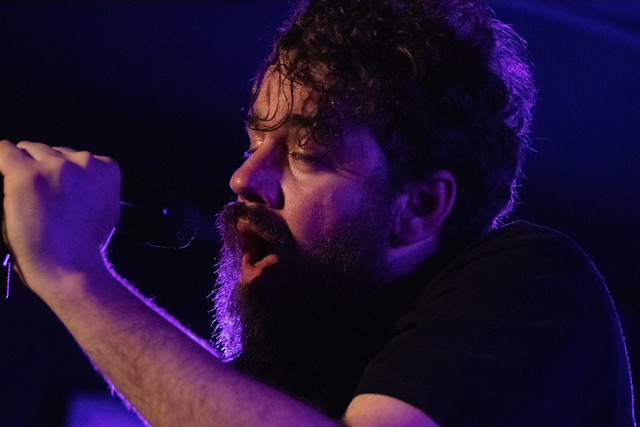


Bobby Oroza is a Helsinki, Finland-born and-based, Bolivian-Finnish singer/songwriter, producer and percussionist, who was raised by a family of musicians and artists. And as a result, a young Oroza was exposed to a wide range of music.  Family parties and get togethers frequently featured his Bolivian-born grandfather playing Latin and Cuban classics on his guitar or his parents playing album from their eclectic and diverse record collection, a collection that included early jazz and blues, Motown, gospel, doo-wop, soul, as well as Brazilian, African, North American and South American folk, and Nuyroican salsa, all of which influenced the music he began writing and working on.

Before completing high school, Oroza decided that he needed to experience and soak up the rhythmic source that inspired him the most, so he would up traveling to Santiago de Cuba, where he intensively studied percussion and singing. Since returning to Finland, the Bolivian-Finnish singer/songwriter, producer and percussionist has been busy producing, recording and performing music to make a living. He eventually teamed with Timmion Records‘ house band/production duo Jukka Sarapää and Sami Kantelinen, best known as Cold Diamond & Mink, along with guitarist/composer Seppo Salmi, who have helped achieve his artistic vision — smokey, late night, lo-fi soul paired with Oroza’s plaintive tenor crooning over the mix.

The Bolivian-Finnish singer/songwriter’s full-length debut This Love is slated for a May 3, 2019 release through Big Crown Records, the label home of Lee Fields & The Expressions,  The Shacks and El Michels Affair. The album’s latest single is the slow-burning and aching ballad “Deja Vu,” a deceptively anachronistic track that sounds as though it could have been released sometime between 1971 and 1974. Interestingly, the song tells the story of the moment when romantically, you’re in a repetitious rut, and when you realize that you and your relationship are at a fork in the road and sometimes in that moment, there comes a fundamental and painful understanding about yourself and your partner.


Perhaps best known as the frontwoman of defunct, Denver, CO-based indie rock/synth-wave/chill-wave act Ending People, Fort Collins, CO-based singer/songwriter and multi-instrumentalist Erin Roberts’ current project Porolo can trace its origins back to when Roberts started it as a solo recording project back in 2002. Over the next decade and a half, the solo recording project evolved into a collaborative project featuring a rotating cast of friends and associates, influenced by the dramatic landscapes of her home state and the even more dramatic personalities she has encountered.

Last year, I wrote about “Wasting Time” off the band’s James Barone-produced Awards EP and building upon the attention that the EP received, the band’s first single of 2019 is the anthemic 60s jangling pop “I Quit,” a track inspired by Roberts quitting her full-time career earlier this year. Reminiscent of Johnny Paycheck‘s classic, smash hit “Take This Job and Shove It,” the track captures the shimmering resentment of someone, who has finally reached their breaking point with dead-end, soul-crushing and demoralizing jobs with dehumanizing and offensive bosses, class ceilings, blind eyed-HR departments, asshole coworkers, pointless and endless meetings, casual racism and casual sexism and low pay — and out of the blue decides to quit, surprising themselves and everyone around them. As Roberts says of the song, “Singing this song puts power back in my hands when the going gets rough. I’ve used it as [a] mantra to sing repeatedly to myself when faced with tough situations. Dehumanizing bosses, turgid gatekeepers, class ceilings, blind eyes. Sometimes when there’s nothing nice left to say, you can just say “I quit.'”

The band is currently in the studio with James Barone, working on their latest full-length, which is slated for an October 2019 release.


New Video: An Intimate Look at Life on the Road in New Visuals for Daniel Norgren’s Latest Single “Let Love Run The Game”

Daniel Norgren is a Boras, Sweden-born blues/roots music singer/songwriter and multi-instrumentalist — and with the release of his full-length debut, 2007’s Kerosene Dream, which was mostly recorded on mostly homemade instruments and 2008’s Outskirt, the Boras, Sweden-born multi-instrumentalist amassed a growing profile across Europe; in fact, the success of his first two albums led to eventual touring across Europe. 2010’s acclaimed, full-length effort Horrifying Deatheating Bloodspider was nominated in the Singer/Songwriter Album of the Year category at the annual Manifestgalen. 

Building upon a rapidly growing profile, Norgren followed his acclaimed Horrifying Deatheating Bloodspider with 2011’s Black Vultures EP, which featured “Going Home Finally,” a track featured on the BBC Radio show God’s Jukebox. 2013’s Buck was mostly recorded in Norgren’s home on a 4 channel cassette portages studio with studio recordings like “Whatever Turns You On,” a song that was tracked and filmed at Algorhythm Sound Studios and quickly became a viral hit on YouTube, as well as a live version of “Moonshine Got Me,” which was recorded during a Scandinavian tour. 

2015’s Alabursy was recorded in a similar fashion as its predecessor — at home on Norgren’s 4-channel cassette porta studio. The album was followed by another European tour. 

Slated for an April 19, 2019 release through his longtime label home Superpuma Records,  Norgren’s forthcoming album Wooh Dang will be the acclaimed Swedish singer/songwriter and multi-instrumentalist’s first album to see a worldwide release.  Self-produced by Norgren and engineered bu his longtime collaborator and Superpuma Records founder Pelle Nyhage, Wooh Dang was recorded last fall in a single room of a 19th-century textile farmhouse in the woods, near Norgren’s home. “The interior looked it hadn’t been touched for the past 80 years,” Norgren recalls in press notes. “I moved a lamp and it left a dark red ring on the pink tablecloth underneath…goldmine! The house was huge, full of good, inspiring mustiness, creaking wooden floors, scary old portrait paintings on the walls, and an old, black German piano which I used in all the songs.” Recorded live to tape on a 16 track analog rig, the album finds Norgren mixing live performance and rural field recordings — while capturing the simpatico and energy between him and his backing band, which features old friends and longtime collaborators Andres Grahn (bass), Erik Berntsson (drums) and Andreas Filipsson (guitar, banjo).

The album’s latest single, the defiantly hopeful “Let Love Run The Game,”  meshes twangy Americana, Southern fried rock, psychedelia and blues that to my ears reminds me of The Band (in particular, “Up on Cripple Creek”), Otis Redding and King Bee-era Muddy Waters. Interestingly, as a result of the song’s production, it manages to sound as though it could have been recorded in 1965 or so — while capturing the urgency of three like-minded musicians and longtime friends jamming over the course of an afternoon.  

Featuring footage shot by Petra Wester Norgren,  Daniel Norgren, Anders Engström, Ida Brogren, Pelle Nyhage,  Erik Berntsson, Jean Millet, Sandra Filipsson, Drew Hanson,  Nathan Von Brown, and Edward Hill, the recently released video for “Let Love Run The Game,” intimately captures life on the road, from playing large venues in front of thousands of fans, to playing smaller venues with maybe a hundred people, the endless stretches of blacktop and gorgeous scenery that one would never dreamt to see, the band and crew goofing off — or just exhausted and sleeping whenever and wherever they could. And yet all of it is treated like wonder and joy, with the tacit acknowledgement that you gotta take it all in stride. 

Over the past few years, I’ve written quite a bit about the Brampton, ON-born, Toronto, ON-based DJ, violinist, singer/songwriter, sync pop artist and JOVM mainstay Maya Killtron. Now, as you may recall, Killtron received national and international attention with the release of her debut EP, 2012’s Hipster/Gangsta, and as a result of the surrounding buzz around the EP, Killtron made appearances across the North American festival circuit, including appearances at Miami’s Winter Music Conference, Pride Toronto, The Halifax Jazz Festival and CMJ. Adding to a growing profile,  “Back For More,” her collaboration with New York-based production duo Love Taps received praise from Stereogum and Huffington Post for a sound that possessed elements of moomba and R&B. The equally attention-grabbing video showcased a sadly bygone New York. “Back For More” also received the remix treatment from  Smalltown DJs, The Slow Waves, Eyes Everywhere, Brothers In Arms and City Kid Soul — with the City Kid Soul remix being named in the Top 5 at Toronto’s Bestival.

Killtron’s latest full-length effort, Never Dance Alone is slated for a March 22, 2019 release, and the album reportedly was made specifically for dancing through your problems. The album’s latest single “Red Dress” continues a strong run of 80s synth funk/80s R&B-inspired club bangers as it’s centered around layers of arpeggiated synths, thumping, tweeter and woofer rocking beats, an anthemic hook and Killtron’s sultry pop belter vocals  — and while much like its predecessors, the track will bring I Feel for You-era Chaka Khan to mind, the track features a disco-inspired string arrangement that hints at JOVM mainstays Escort. Interestingly, the song is an uplifting, feminist anthem, complete with a much-needed “go out and get it, girl,” vibe.


Born Julia van der Torn, the up-and-coming singer/songwriter Julia Zahra was born in Indianapolis and raised in The Netherlands. In 2013, Zahra auditioned for the fourth season of The Voice of Holland with an acoustic cover of Britney Spears‘ “Oops I Did It Again” that has since amassed over 6 million steams of Spotify; as a result of the popularity of her cover, an 18 year-old Zahra became one of the show’s youngest winners to date.

After winning The Voice of Holland, Zahra released her full-length debut. The following year, Zahra competed in the Dutch TV singing competition show, The Best Singers of The Netherlands, a show in which each artist performs covers of each competing artist’s material — and she wound up winning that show. “Just an Illusion,” which she sang on the show shot up the Dutch iTunes charts in 2015, and by 2016 the song was picked up in Fiji, where it’s still a Top 10 song, and eventually across much of the Pacific. Recently, the song was played on radio stations in Los Angeles, San Francisco and parts of Canada, amassing over 4 million Spotify streams. Building upon a growing international profile. Zahra spent 2 months touring the Pacific including Fiji’s Vodafone Arena and a sold-out Club Royalz show in Auckland, New Zealand.

Last year, the American-born, Dutch-based singer/songwriter released the Something New EP, a collection of stripped down, acoustic versions of her previously released material. And since the release of Something New, Zahra has been busy playing sold-out live dates across Holland while gearing up to release new material, including her latest single, the empowered, “I ain’t taking your shit anymore” anthem “Do You.” Centered around a slick production that pairs looping acoustic guitar with thumping electro pop, a rousing hook and Zahra’s emotional, pop belter-like vocals, the song is about recognizing when you can’t trust someone you’ve been involved with, trusting your own instincts and doing what’s necessary to move on.


Live Footage: Sam Fender Performs “Hypersonic Missiles” on “Jimmy Kimmel Live”

Newcastle, UK-based singer/songwriter and guitarist Sam Fender has received attention both nationally and internationally over the past couple of years for crafting rousingly anthemic, arena rock-like material that broadly focuses on hard-hitting social issues and draws from his own experiences growing up in Northeastern England.

Last year was a big year for the Newcastle-based Fender, as she was featured on BBC Sound of 2018‘s shortlist, which he promptly followed up with a sold-out headlining UK tour. Building upon a rapidly growing profile, Fender ended 2018 with the release of the Dead Boys EP, an effort that featured the attention-grabbing “That Sound,” a power chord-based arena rock friendly track that featured enormous raise-your-beer-in-the-air-and-shout-along worth hooks, soulful vocals and a bluesy vibe that brought  The Black Keys, Slaves, Royal Blood and others to mind — and “Play God,” a politically-charged song that openly talked about how special interests and the 1% really control the world as we know it, paired with an self-assured, ambitious bit of songwriting.

Interestingly, the rousing, Springsteen meets Modern English‘s “Melt With You“-like “Hypersonic Missiles” is the JOVM mainstay’s first bit of original music this year, and while centered around arena rock and classic rock-inspired hooks, reverb-drenched power chords, thunderous drumming and Fender’s urgent and impassioned vocals, the song is an unconventional love song about two star-crossed lovers making the best of whatever time they have left while the world burns down — and an incisive commentary on our apathy and confusion in the face of our self-destruction that cries to the listener “hey man, wake the fuck up and do something!”

“This song started out when I saw the term ‘Hypersonic Missiles’ in a newspaper. It’s a newly developed Russian missile that travels at something like nine times the speed of sound, which is essentially unstoppable,” Fender explains in press notes about the song’s inspiration. “America currently has no defence against such a weapon, they would be helpless in the wake of an attack, as you have roughly six minutes from the time it is launched to the time it strikes.

“In many ways, Hypersonic Missiles is an unorthodox love song. It’s main focus is on the world around the narrator, who is a complete tin foil hatter. They are convinced the world is on its last legs; they know that it is rife with injustice but feel completely helpless and lacking the necessary intelligence to change it while remaining hopelessly addicted to the fruits of consumerism.

“Amongst all the chaos is love and celebration, there is this glimmer of hope that runs through the song, a little notion that no matter what happens, these two people are gonna have a fucking good time regardless of the tyrants that run their world, and regardless of the imminent doom from these ‘Hypersonic Missiles.’”

2019 looks to be a breakthrough year for the Newcastle-based singer/songwriter and guitarist — he recently made his US network TV debut, performing “Hypersonic Missiles” on Jimmy Kimmel Live! and he will be playing his first North American headline shows with stops in Toronto, Los Angeles — and a sold out Rough Trade show on March 20, 2019.  (You can check out tour dates below.) Fender will also be playing several sets at this year’s SXSW, which I’m sure will catch quite a bit of attention across the blogosphere. 

Born in Nashville, the acclaimed, Los Angeles-based indie pop artist Meg Myers spent her formative years in a devoted Jehovah’s Witness household, in which a young Myers dealt with strict restrictions on what she was allowed to listen to. After her parents divorced, her mother married a comic book artist, who moved the family to Ohio, where her mother and stepfather ran a cleaning business. When she was 12, her family moved to Florida, where she spent the bulk of her teen years — and during that period, Myers began singing and writing songs on keyboard, eventually teaching herself guitar. She also played bass in a band that she started with her brother, Feeling Numb.

A few days shy of her 20th birthday, Myers moved to Los Angeles to pursue a career in music. Living in a studio apartment with her then-boyfriend, the Nashville-born, Los Angeles-based singer/songwriter and multi-instrumentalist worked as a waitress at a Hollywood coffee shop and played show whenever she could land them. Although her romantic relationship ended, Myers met Doctor Rosen Rosen, who signed her to his production company. Rosen and Myers began writing songs together, including the material that comprised her first two EPs Daughter in the Choir and Make a Shadow and her 2015 full-length debut Sorry, which featured a number of Top 15 and Top 20 alternative radio hits.

Building up on a rapidly growing profile, Myers’ sophomore album, last year’s Take Me To The Disco debuted at #5 on the Current Alternative Charts and received praise from a number of media outlets including The New York Times, the Associated Press, NPR Music, Stereogum, Billboard and a lengthy list of others.  The acclaimed Nashville-born, Los Angeles-based singer/songwriter recently played an NPR Tiny Desk session that included a fairly straightforward yet intense cover of Kate Bush‘s “Running Up That Hill (A Deal With God)” that brings the song to 21st Century listeners, who may have been previously unfamiliar with one of the great, dramatic pop songs of the 80s.

“Growing up, I was never really interested in covering other artist’s music.” Meg explains, “I always wanted to write my own songs because I knew I could only sing music and lyrics that were truly authentic, from my heart (and also would have to make sense with my deep voice). Well, then I discovered Kate Bush’s ‘Running up that Hill,’ which for years has resonated with my soul like nothing ever before. What if we could experience role reversal? What would it be like living in each other’s shoes? I think we would find a lot more compassion for one another and a passion for kindness and truth. This song to me, represents an opening of our hearts and a possibility of acceptance for all. And to me, this is an important message for the world we are living in right now.​​​​​​​”


Newcastle, UK-based singer/songwriter and guitarist Sam Fender has received attention both nationally and internationally over the past couple of years for crafting rousingly anthemic, arena rock-like material that broadly focuses on hard-hitting social issues and draws from his own experiences growing up in Northeastern England.

Last year was a big year for the Newcastle-based Fender, as she was featured on BBC Sound of 2018‘s shortlist, which he promptly followed up with a sold-out headlining UK tour. Building upon a rapidly growing profile, Fender ended 2018 with the release of the Dead Boys EP, an effort that featured the attention-grabbing “That Sound,” a power chord-based arena rock friendly track that featured enormous raise-your-beer-in-the-air-and-shout-along worth hooks, soulful vocals and a bluesy vibe that brought  The Black Keys, Slaves, Royal Blood and others to mind — and “Play God,” a politically-charged song that openly talked about how special interests and the 1% really control the world as we know it, paired with an self-assured, ambitious bit of songwriting.

However, 2019 may be the Newcastle-based singer/songwriter and guitarist’s breakthrough year: Fender will make his US network TV debut with an appearance on Jimmy Kimmel Live!, his SXSW debut and North American headline shows in Toronto, Los Angeles — and a sold out Rough Trade show on March 20, 2019.  (You can check out tour dates below.)

Interestingly, the rousing, Springsteen meets Modern English‘s “Melt With You“-like “Hypersonic Missiles” is the JOVM mainstay’s first bit of original music this year, and while centered around arena rock and classic rock-inspired hooks, reverb-drenched power chords, thunderous drumming and Fender’s urgent and impassioned vocals, the song is an unconventional love song about two star-crossed lovers making the best of whatever time they have left while the world burns down — and an incisive commentary on our apathy and confusion in the face of our self-destruction that cries to the listener “hey man, wake the fuck up and do something!”

“This song started out when I saw the term ‘Hypersonic Missiles’ in a newspaper. It’s a newly developed Russian missile that travels at something like nine times the speed of sound, which is essentially unstoppable,” Fender explains in press notes about the song’s inspiration. “America currently has no defence against such a weapon, they would be helpless in the wake of an attack, as you have roughly six minutes from the time it is launched to the time it strikes.

“In many ways, Hypersonic Missiles is an unorthodox love song. It’s main focus is on the world around the narrator, who is a complete tin foil hatter. They are convinced the world is on its last legs; they know that it is rife with injustice but feel completely helpless and lacking the necessary intelligence to change it while remaining hopelessly addicted to the fruits of consumerism.

“Amongst all the chaos is love and celebration, there is this glimmer of hope that runs through the song, a little notion that no matter what happens, these two people are gonna have a fucking good time regardless of the tyrants that run their world, and regardless of the imminent doom from these ‘Hypersonic Missiles.’”

Tour Dates:
March 11 – The Moroccan Lounge, Los Angeles
March 12 – 16– SXSW, Austin Texas
3/13- KGSR Radio Performance
3/13- Vevo Showcase
3/13- British Embassy Showcase
3/14- KROX Radio Performance
3/14- KRBZ Radio Performance
3/14- Bud Light Dive Bar Performance
3/14- Fender Showcase
3/15- KCMP Showcase
3/15- Secret Sounds Showcase
March 18 – Horseshoe Tavern, Toronto
March 20 – Rough Trade, New York SOLD OUT
April 17 – Badaboum, Paris
April 18 – Doornroosje, Nijmegen
April 20 – Tivoliredenburg, Utrecht
April 22 – Luxor, Cologne
April 24 – Columbia Theater, Berlin
April 25 – Strom, Munchen
April 26 – Papiersaal, Zurich
April 28 – Orangerie, Brussels
April 29 – Melkweg, Amsterdam
May 2 – Ritz, Manchester SOLD OUT
May 3 – QMU, Glasgow SOLD OUT
May 4 – Live at Leeds *NEW DATE*
May 6 – Shepherds Bush Empire, London SOLD OUT
May 7 – Shepherds Bush Empire, London SOLD OUT
May 10 – O2 Academy, Birmingham SOLD OUT
May 12 – Lemon Grove, Exeter SOLD OUT
May 13 – SWX, Bristol SOLD OUT
May 26 – Neighbourhood Weekender, Warrington *NEW DATE*
July 11 – Tynemouth Castle, North Shields SOLD OUT