Tag: singer/songwriter

Jackson Dyer is an Sydney, Australia-born, Berlin, Germany-based singer/songwriter and is part of a growing number of Australians who have relocated to the Germany city for a creative and personal renewal and to advance their careers; in fact, since Dyer relocated to Berlin three years ago, he has opened for Grammy-nominated acts and countrymen Hiatus Kaiyote and Hozier, and has extensively toured throughout the European Union with Berlin, Germany-based indie folk act Mighty Oaks and Jamie Cullum. Adding to a growing profile, the Sydney, Australia-born, Berlin, Germany-based singer/songwriter has played at several European festivals.

Dyer’s third EP, Compartments was released earlier this year to critical praise, as the effort thematically and lyrically may arguably be one of the most personal efforts he’s released to date. And as Dyer explains in press notes, “Compartments is an EP of self-­reflection that I wrote at a time when I faced a lot of uncertainty and questions about my place in the world. Far away from home, often spending long hours in my studio on the industrial outskirts of Berlin, it was a period of introspection when I experimented with production and songwriting. In this space, I wrestled with many of my misgivings about the music industry, the nature of humanity and my own personal motivations. The title Compartments refers to the lyrics in “Pariahs,” which is about how close many people live to each other in cities and apartment blocks, but still lead very enclosed lives, unwilling to engage with even their neighbours. Ironically, I spent a long time in my own ‘compartment’ writing these songs and it wasn’t until I collaborated with others that they really came alive.”

Compartments’ second and latest single is EP opening track “The Absolute” and sonically speaking the track nods at the work of renowned Swedish singer/songwriter Jose Gonzalez and his work both as a solo artist and with Junip, as the song has Dyer pairing bluesy guitar chords played through generous amounts of reverb, swirling electronics, glitchy and stuttering drum programming with his soulful vocals to create a song that’s deeply introspective and achingly earnest; in fact, the song captures and evokes a narrator, who feels profoundly lost and alone and wrestling with the sort of existential questions that don’t have an easy answer. And while capturing someone at perhaps one of their darkest periods, the song manages to possess a resoluteness that suggests while many answers won’t come quickly, the song’s narrator will move forward and many of life’s most difficult questions will resolve themselves accordingly.
Arguably best known as a member of Sons of an Illustrious Father, with whom she’s toured with since she was 17, Lilah Larson is embarking on a solo career with the release of her full-length solo debut Pentimento slated for release in early 2017. Recorded at Montreal‘s Hotel2Tango Studios with Howard Bilerman, who has worked with Arcade Fire, Godspeed You! Black Emperor and Vic Chesnutt, the album is reportedly comprised of intimate meditations on deeply conflicted and confusing love, relationships long since failed and their lingering ghosts of ache and regret, in which Larson accompanies her vocals with drums, guitar, and a 19th century pump organ. Pentimento‘s first single “tbh” is a bittersweet yet ambivalent lament in which the song’s conflicted narrator misses and longs for a lover, who simultaneously makes her feel miserable and uncertain, and it evokes a dysfunctional relationship in which there’s an equally ambivalent and maddening push and pull — the sort of push and pull that’s better and maybe more exciting than a relationship that just peters out to its inevitable and crushing conclusion.

While featuring a sparse arrangement of Larson her vocals with strummed acoustic guitar, the focus is squarely on the singer/songwriter’s aching yet proud vocals singing heartbreakingly honest lyrics that expresses the wounded and confused psyche of someone desperately in love and yet kind of hates every single moment of it.


With the release of his debut single “Care Less, Love Less,” Hartlepool, UK-based singer/songwriter James Leonard Hewitson received attention in his native England for a sound that draws from Parquet Courts, The Walkmen and others paired with snarling and ironic lyrics and his latest single “The Screen” will further his reputation for his noisy, frenetic and anxious take on slacker pop — while making a pointed comment on the use of social media and how it impacts our lives. As Hewitson explained to Dork Mag “’The Screen’ is a song about the overuse of social media in our functioning daily lives, and the social illusions it creates as a result i.e. affirmation in picture likes, sociopolitical ideas derived from meme logic, or going for a meal with someone yet constantly checking your phone.”

Throughout the song, Hewitson describes the constant need to reaffirm oneself through social media as a disease that actually isolates you from people and from actually doing anything about changing the world, besides confirming their own biases and political opinions.


With the release of his critically praised 2002 debut, The Headphone Masterpiece, singer/songwriter Cody ChesnuTT was universally hailed as a modern-day soul troubadour with many critics comparing his early work to the likes of Marvin Gaye, Curtis Mayfield and Stevie Wonder, thanks in part for frank and socially conscious rumination on modern Black life. Interestingly, ChesnuTT’s rise to critical and commercial acclaim came about as part of a particularly conscious neo-soul movement that included Erykah Badu, Jill Scott, The Roots and others, proving that artists can release work that’s important, relevant and necessary — and be fairly commercially successful. But after a meteoric rise that included a collaboration with The Roots, ChesnuTT abruptly disappeared from public view for the better part of a decade. And in that decade period, ChesnuTT went through a period of deep, personal reflection and observation and raised a family — and those experiences informed and influenced his 2012 sophomore effort Landing on a Hundred, an effort linked contemporary Black music to the classic, singer/songwriter soul of Marvin Gaye, Bill Withers, Stevie Wonder, Curtis Mayfield and others while pointing out that the hopes, frustrations, loves, and struggles that those legendary artists spoke about then have remained unchanging.

After touring to support Landing on a Hundred, ChesnuTT had been pretty busy, contributing to the soundtracks for the Oscar Award-winning major motion pictures 12 Years A Slave and Idris Elba Presents Mi Mandela, as well as working on the material that will comprise his forthcoming, third, full-length effort My Love Divine Degree, slated for a February 2017 release.  Produced by Anthony “The Twilight Tone” Khan, a BMI Award, Grammy-nominated producer, songwriter and DJ, who has worked with Kanye West, Common, John Legend and Pusha T., the album will reportedly further cement ChesnuTT’s reputation for writing frank and earnest observations of modern Black life, while pushing the boundaries of what contemporary R&B and soul can sound like. Interestingly, the album’s second and latest single “I Stay Ready” is according to ChesnuTT is a call to arms for positivity in the face of adversity. As the singer/songwriter explains in press notes “In a time of global economic uncertainty, it is an uplifting charge to use one’s natural talents and gifts of creativity to forge ahead positively into purpose and economic well being.

The feeling of this track is rooted in one of the most beautiful guitar riffs I’ve ever been given…a gem that found me ‪around 4AM. Accompanied by the exciting drum breaks programmed by legendary Chicago DJ Anthony ‘The Twilight Tone’ Kahn, the energy and sentiment of the song for me, is a pure shot of life.”

Sonically speaking, the song finds ChesnuTT’s silky smooth vocals paired with big, 808-like breakbeats, layers of buzzing synths, sinuous bursts of guitar and distorted vocal samples in a swaggering and cocksure song that may arguably be one of the most upbeat, “we can do this” songs he’s released to date.


New Video: Introducing the Classic Soul Channeling Sound of Nottingham UK’s Georgie

Influenced by Fleetwood Mac, Carole King, Janis Joplin, The Pretenders, Crosby Stills and Nash, Carly Simon, The Mamas and the Papas and First Aid Kit, Georgie is a 21 year-old, up-and-coming, Nottingham, UK-based singer/songwriter, who caught the attention of the folks at Spacebomb Records — the label home of Natalie Prass and Julien Baker — for a vocal style that sounds straight out of the mid 1960s and for a lyrical bent that belies her years. Her debut single “Company of Thieves” pairs her husky and soulful vocals with a wah-wah pedaled guitar, a strutting horn arrangement, a sinuous bass line, a steady backbeat and an infectious hook in a carefully crafted song that will remind most listeners of Amy Winehouse, Nancy Sinatra and others.

Earlier this month, I had written about California-born, New York-based singer/songwriter and guitarist Shana Falana. Before relocating to New York in 2006, Falana had spent time in San Francisco‘s D.I.Y. scene in a number of projects and and in a Bulgarian women’s choir. By the time Falana had relocated, the California-born singer/songwriter and guitarist had been struggling through both debilitating drug addiction and money woes, when she had lost part of her index finger in a work-related accident.  And while under most normal circumstances such an event may be considered extremely unlucky, the settlement money the California-born, New York-based singer/songwriter received actually provided her a period of financial stability that allowed her the much needed time and space she needed to overcome her addictions and find a new focus in her life and music.

Reportedly, much of the music on Falana’s much-anticipated sophomore full-length effort Here Comes the Wave was conceptualized both during one of the most difficult periods of her life and in the subsequent years that followed, and has been continually refined over the the years. And as result the album thematically is centered around one of the most common dualities of all of our lives, “then and now” or better yet, who we thought we were then and who we were then, who we think we are now and who we are now — and how emotional turmoil can influence our continuous transformation. Interestingly, as Falana has mentioned in press notes on the new album, “Somehow, I knew those songs would serve me well later,” and at least one of Here Comes the Wave‘s songs reportedly foreshadows its creator’s eventual sobriety while other songs reportedly accept the passing of youth, the death of her father and other themes that come up as one gets older.

Interestingly, Here Comes the Wave also manages to be the second collaboration with producer D. James Goodwin, best known for his work with Bob Weir, Whitney and Kevin Morby and with her long-time partner, collaborator and drummer Mike Amari. And the album has Goodwin and Amari playing much larger roles than on Falana’s debut as the collaborative trio went for audacious sounds and heightened moments — and for being bold as possible.  Last month, I wrote about the album’s first single “Lie 2 Me,” a single that had Falana and Amari pairing enormous and buzzing power chord-heavy riffs and thunderous drumming with Falana’s anguished howls before ending with an explosive blast of feedback before slowly fading out. Lyrically, the song is full of bitter recrimination, accusation, self-doubt, self-flagellation and dysfunction -–and as a result, the song feels bilious and fucked up while sonically nodding at L7, PJ Harvey and others.

Here Comes The Wave‘s second and latest single “Cloudbeats,” is a gauzy and hopeful bit of shoegaze that sonically nods at A Storm in Heaven-era The Verve, as underneath its shimmering surface is an array of conflicting emotion: the song’s narrator has the wherewithal to look at a future in which she’s sober and has her life together, while openly suggesting to herself, “it’ll get better, trust me — but with the acknowledgement that in order to get there, sometimes one has to go through the sturm und rang of life first. By far, the song manages to be the most viscerally honest and heartfelt portrayal of booth addition and recovery I’ve heard in some time.

New Video: The Darkly Comic Visuals for Bridgit Mendler’s Blogosphere Dominating Single “Atlantis”

The slow-burning song pairs Mendler’s breathy coos with a slick, hyper modern production featuring stuttering drum programming, vocoder fed vocals, glitchy electronics, various bleeps, bloops and blips and twinkling synths and a flirtatious verse from Kaiydo. Sonically, the song is reminiscent of Abby Diamond’s “Love to Watch You Leave” while nodding at Timbaland’s revolutionary production — in other words, stuttering and bizarre angles while being airy and coquettish but underneath there’s an aching vulnerability.

The video was produced by Allie Avital, who has produced videos for Chairlift, The Knocks and Autre Ne Veut, and as Bridgit Mendler explains in press notes “We found a concept that has both dark satirical and heart-aching moments. I break into my ex’s house and try to recreate our lost love while he is passed out. Even in the midst of fun and light moments in life, my heart is limp as his hand hits my knee while we dance in the kitchen. I’m a huge fan of Allie’s work but in addition to that, she is a smart and warm-hearted person that went above and beyond to make this project what it is.”

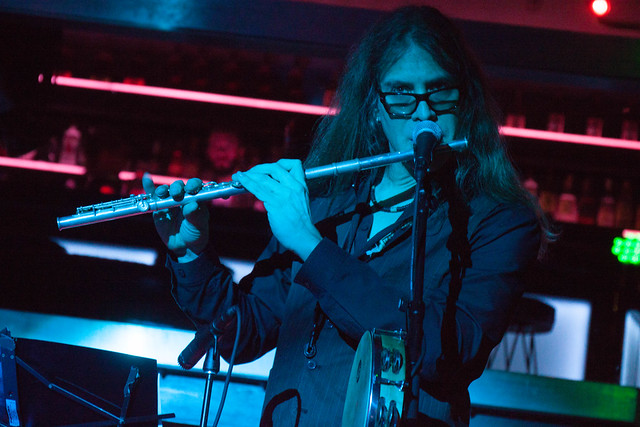
Kadhja Bonet is a Los Angeles, CA-based singer/songwriter and classically trained multi-instrumentalist — she plays guitar, flute, violin and viola — who has at the start of her recording career has been both private and mysterious, insisting that her audience convene with her on imaginative and musical planes instead of through associations with any particular scene, venue or sound. And in fact, “Nobody Other,” the first single off her forthcoming full-length debut The Visitor sounds as though it were quietly released in the late 60s or early 1970s as Bonet accompanies her stunningly gorgeous vocals with gently strummed guitar, an ethereal flute line along with soaring organs in a sweet love song that evokes walking hand-in-hand with a lover through a fall leaf strewn park and waking from a pleasant dream while nodding at folk, psych folk and jazz. Sonically, the song features an uncommonly unfussy and unadorned production that puts the focus on an elegantly simple arrangement and Bonet’s gorgeous vocals.


If you’ve been frequenting this site for the past couple of years, you’ve likely come across a  handful of posts about renowned violinist, vocalist, composer and producer K. Ishibashi and his solo recording project Kishi Bashi. And with the release of two critically applauded full-length efforts  — 151a and Lighght — Ishibashi has developed a reputation for decidedly crafted and swooning orchestral pop in which he employed the use of samplers, looping machines and other electronics for a lush and densely layered sound. Ishibashi’s third, full length effort Sonderlust was produced by Grizzly Bear‘s Chris Taylor, engineered by Pat Dillet, who has worked with Angelique Kidjo and David Byrne, and features the contributions of drummer Matt Chamberlain, who has been in the backing bands of Morrissey and Fiona Apple, as well as having a stint in of Montreal, and the album is a radical sonic departure from the sound that first caught the attention of the blogosphere as the material leans heavily towards hook-laden, electro pop as you would have heard on Sonderlust‘s earliest released single “Say Yeah.” Interestingly, this massive change in sonic direction came about from two different sources — the first being that Sonderlust‘s material didn’t come immediately or through his usual creative processes.  “As I sat down to write songs last summer, I went to all my usual conduits of creation: violin loops, guitar, piano and I came up with the musical equivalent of fumes,” Ishibashi explained in press notes. “I tried to create orchestral pop recordings that I assume were my forte, and in turn, I found myself standing in front of a creative wall of frightening heights.” Second was that along with a period of creative uncertainty, Ishibashi also faced faced significant changes in his personal life, the sort of changes that had him questioning everything he thought he knew about being in love, loving another and desiring another. And as a result, the album’s material focuses on heartbreak, the difficult struggle to move forward and the how that heartache influences every subsequent relationship.

The album’s latest single “Can’t Let Go, Juno,” is comprised of shimmering and cascading layers of synths, a gorgeous and soaring string arrangement, Ishibashi’s aching and plaintive vocals, propulsive, four-on-the-floor like drums in what may arguably be some of Ishibashi’s most danceable, seemingly straightforward and hook-laden pop-leaning material he’s released to date. However, lyrically speaking, “Can’t Let Go, Juno” focuses on the lingering ghosts of a past relationship that has haunted the song’s narrator, a narrator who recognizes that he’s had a difficult time letting go and moving forward — and as a result, the song possesses a bittersweet sense of unfinished business, all while sounding as though it drew from New Order and Cut Copy.

You can catch Kish Bashi on a lengthy North American tour this fall, and it includes an October 2, 2016 stop at Webster Hall. Check out tour dates and ticket information below.

Tour Dates
9/27: Athens, GA @ Georgia Theatre (tickets)*
9/28: Charlotte, NC @ Visulite (tickets)*
9/30: Carrboro, NC @ Cat’s Cradle (tickets)*
10/1: Silver Spring, MD @ The Fillmore – Silver Spring (tickets)*
10/2: New York, NY @ Webster Hall (tickets)*
10/3: Boston, MA @ Royale (tickets)*
10/4: Philadelphia, PA @ Union Transfer (tickets)*
10/6: Toronto, ON @ MOD Club (tickets)*
10/8: Cleveland, OH @ Beachland Ballroom & Tavern (tickets)*
10/9: Pontiac, MI @ Crofoot Ballroom (tickets)*
10/10: Chicago, IL @ Vic Theatre (tickets)*
10/11: St. Louis, MO @ Delmar Hall (tickets)*
10/12: Minneapolis, MN @ First Avenue Mainroom (tickets)*
10/14: Omaha, NE @ Slowdown (tickets)^
10/15: Englewood, CO @ Gothic Theatre (tickets)^ 
10/16: Salt Lake City, UT @ Urban Lounge (tickets)^
10/18: Seattle, WA @ The Showbox (tickets)^
10/19: Vancouver, BC @ The Fox Cabaret (tickets)^
10/20: Portland, OR @ Wonder Ballroom (tickets)^
10/21: San Francisco, CA @ The Masonic (tickets)^
10/22: Santa Cruz, CA @ The Catalyst Atrium (tickets)^
10/23: San Diego, CA @ Irenic (tickets)^ 
10/24: Los Angeles, CA @ The Belasco Theater (tickets)^ 
10/26: Tucson, AZ @ Club Congress (tickets)+
10/28: San Antonio, TX @ Paper Tiger (tickets)+
10/29: Austin, TX @ Mohawk (tickets)+ 
10/30: Houston, TX @ White Oak Music Hall (tickets)+
11/1: New Orleans, LA @ One Eyed Jacks (tickets)+
11/2: Atlanta, GA @ Variety Playhouse (tickets)+
*  w/ Twain
^  w/ Busman’s Holiday
+  w/ Laura Gibson

With the release her sultry and bluesy debut single “Keep Lying,” New Jersey-born pop artist Donna Missal first captured the attention of listeners and the blogosphere, and she followed that up with a soulful and jazzy single “The Keeper,” and a bluesy take on Drake‘s mega-hit “Hotline Bling,” that turned up the vulnerable and urgent need of the original. Now, it’s been a little bit since I’ve personally written about Missal; however, her latest single “Slide” was written as a reminder for Missal “to relax and not take everything so seriously and personally. ” And as Missal explains “I would say that I’m very passionate and can get all in my feelings. When anyone listens to this little jam, I hope it makes them feel good. Sometimes the best thing you can do for yourself is throw up your hands, breathe, brush your shoulders off and remember that it’s ok to have fun — no mater how imperfect the circumstances around you.” Sonically, the song consists Missal’s sultry and self-assured vocals with a production that nods at 90s hip-hop infused R&B as a looped horn sample paired with twinkling keys and atmospheric electronics and stuttering drum programming in a silky smooth, sensual and slow-burning song.


Led by frontman Bradford Bucknum, Philadelphia, PA-based indie rock quartet Oldermost’s debut single “Honey With Tea” which I wrote about last month, managed to sound as though it were indebted to Nick Drake, Wish You Were Here-era Pink Floyd and 70s AM radio friendly rock as layers of twangy pedal guitar, shimmering electric guitar chords, propulsive drumming, a lush and shimmering string arrangement are paired with Bucknam’s plaintive and tender crooning and up-and-coming Philadelphia-based singer/songwriter Rosali’s ethereal yet tender backing vocals in one of the prettier songs I’ve heard this year. But just underneath its psych country leanings was a world weariness that evoked life’s bitter recognitions, uneasy compromises and uncertainties — and how frequently we have to grit our teeth and accept what is and move forward. The band’s latest single “Finally Unsure” is a hazy yet propulsive song that feels like a half-remembered dream mixed with bitter regret while further cementing the band’s burgeoning reputation for carefully crafting psych-country/70s AM radio-leaning indie rock. Lyrically, “Finally Unsure” focuses on an intimate relationship and its innermost workings as perceived by the song’s narrator, and in some way it suggests that a part of any relationship is honestly assessing and then overcoming your own shortcomings and hang ups. That is of course, easier said than done; but it’s in the effort that helps up honestly connect with someone else.


Growing up in Atlanta, Blake Fusilier didn’t quite fit in with his contemporaries — while many of his peers aspired to sign to LaFace Records and SoSoDef Records, as a teenager Fusilier picked up the violin, dreamt of being the black Itzhak Perlman and was obsessed with the work of Edgar Allen Poe. And much like odd teenagers — especially odd black teenagers —  a young Fusilier learned that sometimes when you’re extremely different, you can be hated and ridiculed, and around that time he began writing his own music. By the time, he relocated to Boston for college, Fusilier had learned to play the bass and was a member of moody rock band RIBS, which eventually rose to national prominence; in fact, they’ve opened for The Joy Formidable and Queens of the Stone Age, and have been written about across the blogosphere. 

As the story goes, as the band was achieving quite a bit of success, someone asked Fusilier about being black and gay, and the singer/songwriter, multi-instrumentalist and producer began to realize that running away from those questions and the world’s perceptions of him was spiritually and emotionally exhausting. From that point forward, he wanted to make music that would not only drain those questions of their power but to make them permanently irrelevant. As Fusilier says in press notes, “I have this theory that if people knew who we really were in their minds, we probably would all have a lot more respect for one another. This applies to everyone: friends and acquaintances and bandmates. I think it’s our duty to ourselves to make sure that those around us have a chance to allow others to see our glorious, true selves. I finally feel like I’m beginning to live by those words. The songs I’m wrapping up have been floating around for years. I had been anticipating the moment when people could actually hear even 20 seconds of my potential.” 

So far the response from the blogosphere and music critics has been wildly positive with one critic in particular describing Fusilier’s sound as being a synthesis of James Brown and Nine Inch Nails — although as soon as I heard his latest single “Make You,” I immediately heard Prince, Jef Barbara, Boulevards, Gordon Voidwell and quite a bit of contemporary electro pop as the former RIBS bassist’s sultry and sensual cooing is paired with a slick, hyper modern production consisting of a sinuous bass line, propulsive drum programming led by finger snaps, layers of buzzing synths and electronics, and an incredibly infectious hook in a club banging song that possess an unresolved sexual tension and a sly and ironic commentary on racial and sexual identity. And it all should be a reminder that you can pair some deeply personal and political messages in dance music — and the most important that music can be one of the most powerful weapons imaginable.  


Congolese-born, Minneapolis, MN-based guitarist, singer/songwriter and composer Siama Matuzungidi has had a lengthy, decades long prolific career that began in earnest when he left his home in rural Democratic Republic of the Congo, then Zaire with a guitar strapped to his back. He then travelled to Kinshasa and Uganda before eventually landing in Nairobi, Kenya. And during those travels a young Matuzungidi was a studio musician, songwriter and or cowriter with some of soukous’ biggest and brightest names including Kanda Bongo Man, Sam Mangwana, Moni Mambo with Shika Shika, Lovy Longomba, Tshala Muana and Samba Mapangala with Virunga; in fact, Matuzungidi has played on more than 100 singles, including some of soukous’ most beloved radio hits while developing a reputation for material based around tales of love, desire and betrayal paired with catchy hooks and a wry and ironic sense of humor — although on many of those songs he wasn’t officially credited.


As a result of his prolific songwriting and incredible guitar work, Matuzungidi became considered one of soukous’ legends — and in a highly competitive genre in which writing catchy song just wasn’t enough to stay relevant. During the genre’s golden age during the 70s and 8os, it took more than writing a catchy song to keep listeners ears and fans buying albums, and the genre’s songwriters and musicians began writing songs with a deeper complexity and nuance, so you’d hear intricate hooks, complex scales an more. And interestingly enough, that period of experimentation may arguably have prepared and influenced the Congolese soukous legend’s future interest in experimenting with his sound.

Now as the story goes, after spending time performing in Japan and Dubai, Matuzungidi relocated to Minneapolis, the soukous legend quickly realized that he was in for a rather big professional and personal change — “for the first time there wasn’t anyone to play soukous with. I was worried I might have to stop playing but another voice told me to try new things,” Matuzungidi explains in press notes. So the Congolese singer/songwriter and guitarist decided to invite a number of local and locally-based emigre musicians to collaborate with him including Carnatic Indian singer and veena virtuoso Nirmala Rajasekar, renowned gospel singer JD Steele, master Tibetan multi-instrumentalist Tenzen Ngawang, classical cellist Jacqueline Ultan and Joe Savage on pedal steel. As Matuzungidi continues “I invited musicians to share what they feel when they hear my music. I didn’t tell them what to play. I just encouraged them to express themselves in their own way. The music still sounds like home but they’ve added so many cool ideas to it.”

And as a result Matuzungidi’s recently released full-length Rivers is a bit of a modern and highly global take on traditional Congolese music. I have the unique privilege of premiering Rivers‘ opening single, the upbeat 6/8 “Jungle Zombie” which pairs a twisting and looping guitar line with bright blasts of horn, playful polyrhythm and a jazz-leaning bridge in a loose composition that allows room for each of the musicians a few brilliant moments to show off in a brilliant solos, along with call and response vocals. Reportedly, the song is loosely inspired by and is meant to channel the imagery of Matuzungidi and his family walking through the bush to get to their farm, where they grew their own food. Interestingly, as the press notes mention the song’s lyrics translated from Lingala simply say “Bring me water. Bring me food . . ” But the main thing is that the song is so joyous, so fun that you can’t help but want to dance along.


New Video: Pop Star Nicole Wray Returns with a 90s Hip-Hop Soul and Classic Soul Channeling and Deeply Personal, New Single

Queen Alone may be Nicole Wray’s first full-length effort in some time; however, Wray is reunited with the original backing band from Lady Wray’s early days, along with Big Crown Records’ Leon Michels and Daptone Records Tom Brenneck handling production and as Wray explains in press notes the album is a “reflection of my soul. It’s who I am today. ” And as a result, the material on the album is inspired by the singer/songwriter’s life. The album’s latest single “Do It Again” is reportedly is a story about a failed relationship, as well as the story of a cherished and revered intimacy that the song’s narrator is desperate to re-enter regardless of the consequences on her heart and soul. Sonically speaking the song manages to channel What’s the 411 and My Life-era Mary J. Blige and bolstered by the Daptone Records famed horn section paired with silky smooth vocals.