Category: African Music

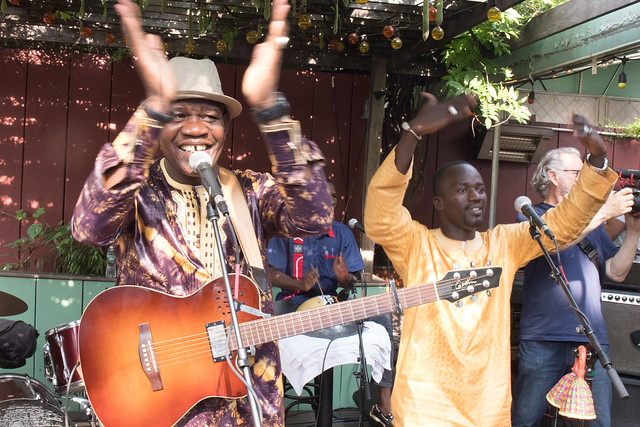
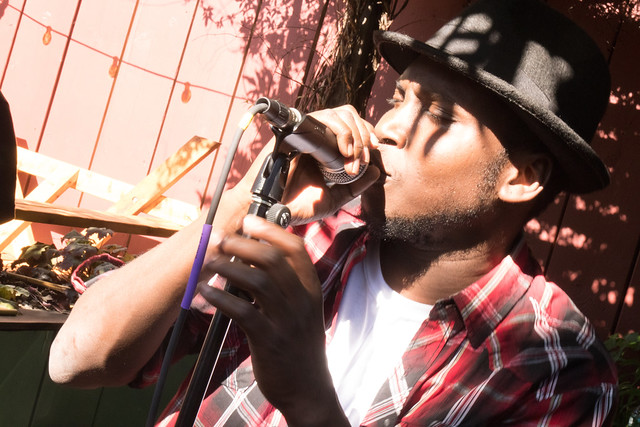
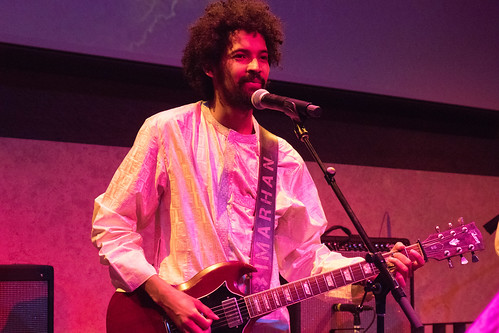
Centered around the collaboration between core duo Martin Kuphukusi (vocals, lyrics) and Pitor Dang (electronics, sampler, production, mixing, lyrics, bass) Owls Are Not are an international collaboration primarily based in Warsaw, Poland that specializes in a minimal Afro funk/electro pop/electro punk that at points draws from footwork and dub, and live, organic Eastern African rhythms.

The act’s latest effort, Radio Tree released through the non-profit label 1000Herz Records is the result of several months of ethnomusicological research in Malawi and Tanzania. Adding to the Pan African and international flavor of the album, four of the album’s six songs were written with Eastern African vocalists, including Tonga Boys‘ Peter Kaunda, appearing as Certifyd, Sehno‘s Masaya Hijikata and Martin Kaphux Kaphukusi, the choir conductor of Christ Church of Malawi. Additionally, newspaperflyhunting and Vendrae Vendarum’s Michal Pawlowksi contributes guitar on a song.

Radio Tree‘s latest single is the thumping, club friendly “Asali.” Centered around arpeggiated synths and an infectious hook, the song manages to recall dancehall with a distinctly African flair. Thematically, the song like much of the album’s material focuses on love — and in a way that feels endearing and almost old school.


i


New Video: Acclaimed Singer/Songwriter Gerald Toto Releases a Cinematic and Symbolic Visual for “Away Alive”

Last year, I wrote about the acclaimed trio of Toto Bona Lokua, comprised of French-Antillean singer/songwriter Gerald Toto, Cameroonian jazz musician Richard Bona and Congolese singer/songwriter Lokua Kanza, and as you might recall, with the release of  2004’s, critically applauded sophomore effort Totobonalokua, the pan-African act received attention across world music circles for a sound and aesthetic that effortlessly blended several different traditions, cultures and languages; in fact, the album was a commercial success in France, despite very little promotion and no touring.

Since the release of Totobonalokua, the members of the trio have pursued a series of diverse solo projects, which kept them incredibly busy. Of course, because of the success of their sophomore album, the individual members of the trio would frequently be asked by fans and the press if they would be reuniting to write and record new material — or if they had any plans to tentatively do so. Although the individual member of the trio’s paths seldom crossed, they managed to stay in touch, and as the story goes Gerald Toto suggested that it might be time to reconvene the trio and try to write new material. Bona and Kanza quickly agreed and while it took some time to synchronize the schedules of three extremely prolific and busy artists, they found time to write and record their third full-length album Bondeko, which was released earlier this year through French record label Nø Førmat. (By the way, the album’s title is derived from the Lingala word for  “friendship” or “fraternity.”)

This year has been a very busy one for Gerald Toto, as he followed the release of Toto Bona Lokua’s third album with his latest solo album Sway, and from the album’s first single “Away Alive,” Toto will further cement his reputation for crafting infectious and breezy pop that’s mischievously difficult to categorize. In fact, “Away Alive” is centered around a languid and tropical groove, featuring gently strummed guitar, brief bursts of arpeggiated synths and an infectious hook paired with Toto’s yearning falsetto. Sonically the song hints at Tropicalia, Bossa nova, 70s soul, Afro pop, French pop and folk while not being one thing in particular; but perhaps more important, the song encouragers the listener to slow down and pay close attention to gentle sway of life’s rhythms every now and then. 

Produced by Paris-baed company La Sucrerie and directed by R&D, the recently released — and incredibly cinematic — video follows Toto as he wanders about the desert. Speaking about the video, Toto says “The desert is an allegorical dream. An inner space where one seems initially lost, without reference or bearings, before finding, within, an anchor point from which to walk. With a heart open to all encounters.”


Led by Makara Bianco and featuring production from prolific French producer débruit, KOKOKO! is a pioneering Kinshasa, Democratic Republic of the Congo-based DIY electronic collective inspired by a growing spirit of protest and unrest among Kinshasa’s young people. Unsurprisingly, these young people, much like young people everywhere have begun to openly question centuries-old norms and taboos, and have openly begun to denounce a society that they’ve perceived as being paralyzed by fear — namely, the fear of inclusiveness and change. And they’ve begun to do so with an fearless, in-your-face, almost punk rock-like attitude. In fact, the collective’s name literally means KNOCK KNOCK KNOCK! with the collective viewing themselves as the sound of a new generation boldly, loudly and defiantly banging on the doors and walls, yelling “OUR TIME IS NOW!”

I’ve written quite a bit about the collective, and as you may know, the collective’s members operate in a wildly inventive DIY fashion, creating self-designed and self-made instruments from recycled junk, flotsam and jetsam and claptrap. They even built a recording studio out of old mattresses, found wound and a ping pong table. Fueled by the underlying notion that desperate survival fuels creativity, the collective exploded into the international scene with their debut EP Tokoliana an urgent, forward-thinking, avant-grade-like effort centered around a sound that nods at disco, post-punk, hip-hop, reggae, retro-futuristic funk, Afro-futurism and traditional regional music — from a sweaty and grimy, post-apocalyptic future in which the ghetto and club are one and the same. It was arguably one of the most unique and exciting debuts I’ve come across in some time and unsurprisingly as a result, EP single and title track “Tokoliana” was one of my favorite singles last year.

Building upon a rapidly growing profile, the Congolese collective’s TONGOS’A EP was released last year, and the EP found the members of the collective further exploring themes of survival within the desperate and uneasy sociopolitical climate of their homeland — sometimes being forced to focused on small, deeply human pleasures and concerns. TONGOS’A‘s first single, EP title track “Tongos’a” (which translates roughly into “’til the morning light” in English)” was a sweaty, sultry and raunchy banger, centered around skittering drum programming and African percussion which helped to further cement the song’s overall theme — the necessity of getting good sex.

“Azo Toke,” the Congolese collective’s first single of 2018 features a production consisting of explosive blasts of static and feedback, tribal percussion, thumping and stuttering, tweeter and woofer beats, glitchy bursts of synth, throbbing low end, call and response vocals and subtly shifting moods and tempos — and while seemingly post apocalyptic, the track will further cement the act’s inventive approach to dance music, in which they seamlessly mesh African traditions with forward-thinking, hyper modern production.


New Video: Introducing the Genre Defying Globalist Sounds of Ekiti Sound

Leke a.k.a CHif is a Lagos -born, London-based multi-instrumentalist, producer and singer/songwriter, who has carefully honed his skills with a variety of artists and producers both in Europe and Africa, and briefly as a sound designer in Nollywood — and unsurprisingly, all of Leke’s experiences have influenced his solo recording project Ekiti Sound, a project that finds him adding his name to a growing list of genre-blurring artists that draw from an eclectic array of sources — while being undeniably Nigerian; in fact,  the slickly produced “Ife,” Leke’s latest single off his forthcoming Ekiti Sound debut Abe No Vex pairs thumping tweeter and woofer rocking Chicago house music, African polyrhythm, arpeggiated synths and an anthemic, club rocking hook with shouted traditional lyrics by frequent collaborator Prince G, creating a seamless (but incredibly subtle) synthesis across the African Diaspora. As Leke explains “Ife” in Yoruba means “the greatest love,” and the swaggering club banger manages to gently swoon a bit at its core, as it promotes the sort of love that should unify all creatures on this planet.

Directed by Sam Campbell, the recently released video for “Ife,” was shot on location in Ikeja, the capital of Lagos State and features three beautiful. traditional Nigerian dancers, who do some of the traditional dances of the Yoruba, Ibo and Hausa tribes with an infectious and life affirming energy.


New Video: French Electro Pop Duo Synapson Teams Up with Sengalese Singer/Songwriter Lass on a Breezy and Genre-Defying Single

Synapson is a French electronic music production and artist duo, comprised of Alexandre Chiere (keys, saxophone, beats, vocals) and Paul Cucuron (drums, turntables, production and mixing) and since their formation in 2009, the duo have been critically and commercially successful — they’ve sold over 150,000 physical copies and have amassed over 100 million streams; however, they may be best known for their remake/re-work of Burkinabe singer/songwriter and musician Victor Deme’s “Djon’maya,” which they renamed “Djon Maya Mai,” and their original track “All In You,” featuring Anna Kova. Both tracks were smash hits in the duo’s native France, as they charted at #12 and #10 respectively. 

The duo’s soon-to-be released album Super 8 will further cement their reputation for a sound that possesses elements of nu-disco, deep house but it finds them at their most ambitious, as they collaborate with a diverse, international cast including French act M83’s Mai-Lan,  Archive’s Holly, Kaleem Taylor, L. Marshall, Idyllwild’s Casey Abrams, Miami-born, Paris-based rapper Beat Assailant, Jamaica-born, London-based Taneisha lJackson, Tim Dup, Haute’s Tessa B. and Blasé, Sengalese singer/songwriter Lass and a list of others. 

Super 8’s latest single “Souba” synthesis of French electro pop, house music and Afropop as its centered around a slick yet soulful production featuring a looped, shimmering guitar line, a sinuous bass line, thumping beats and a club rocking and radio friendly hook. And unsurprisingly, the two step inducing track will remind the listener that electronic dance music translates language and culture, and that perhaps most important, it’s music that’s always a beneficial unifying force. Additionally, the track will establish the duo on a growing list of French electronic music acts that blur genre lines with a globe spanning bent. 

The recently released video employs a simple but endearing concept — we see Lass and the members of Synapson hanging out in and around a prototypical European car. At points the videos features the members of the trio brooding, but for the most part they’re hanging out and enjoying each other’s company. 

New Video: Introducing the Global, Genre- Blurring Sound of Up-and-Coming Benin-born, New York Artist Shirazee

Shirazee is  Benin-born, New York-based Afrosoul artist and singer/songwriter, who studied in Ghana, overcame homelessness and after spending a stint in Atlanta, relocated to New York to pursue his dream of being a performer and singer/songwriter. Since then, Shirazee has written for and collaborated with Afrojack, Sting, Ty Dolla $ign and Kiesza — and as a solo artist, the Benin-born, New York-based artist has received attention from Wonderland, OkayAfrica and Hunger Magazine, as well as millions of streams across Spotify and Apple Music for a sound that draws from Afropop, American hip-hop and contemporary electronic music paired with songs that possess underlying personal narratives.

The up-and-coming Benin-born, New York-based Afrosoul artist’s debut EP Make Wild finds him collaborating with the Brooklyn-born and-based hip-hop artist and producer SAINt JHN — and as the Brooklyn-based artist and producer says of their collaboration, “he’s a friend first and a rising star in his own right second. When he heard me playing Juju in Toronto and asked to jump on it, I thought he was kidding, until he insisted, ‘Juju issa vibe!’”

“Make Wild,” the EP title track and latest single is a breezy and summery track featuring thumping, tweeter and woofer rocking beats, shimmering and looping guitar lines, and a sinuous and infectious hook — and while managing to be a slickly produced amalgam of African pop, Afrobeat, American electro pop and soul, the up-and-coming Benin-born, New York-based artist manages to do so in an incredibly accessible, crowd pleasing fashion.

Produced by WOVE, the recently released video employs the use of incredibly vibrant video, full of colors meant to evoke sunset over the Sahara Desert as Shirazae sings to a gorgeous woman just out of his reach. 

New Video: JOVM Mainstays Tinariwen Return with a Mournful Meditation on Time, Friendship, and the Tuareg Way of Life in Visuals for Album Single “Nannuflay”

Over the past few years, I’ve written quite a bit about the internationally renowned Algerian Tuareg pioneers of the Desert Blues, Tinariwen, and as you may recall the act can trace their origins back to the late 1970s when the band’s founding member, guitarist Ibrahim Ag Alhabib, joined a small group of Tuareg rebels living in refugee camps in Libya and Algeria. The group of rebels Ag Alhabib hooked up with had been influenced by radical chaabi protest music of Moroccan groups like Nass El Ghiwane and Jil Jilala, Algerian pop rai, and western artists like Elvis Presley, Led Zeppelin, Carlos Santana, Dire Straits, Jimi Hendrix, Boney M, and Bob Marley  — and they started writing music that meshed the traditional folk music of their people with Western rock, reggae and blues-leaning arrangements. Upon relocating to Tamanrasset, Algeria, Ag Alhabib started a band with Alhassane Ag Touhami and brothers Inteyeden Ag Ablil and Liya Ag Ablil that had played traditional Taureg music at various weddings, parties and other occasions across both Algeria and Libya. Interestingly, as the story goes, when the quartet had started, they didn’t have a name; but people across the region, who had seen them play had begun calling them Kel Tinariwen, which in the Tamashek language (the tongue of the Taureg people) translates roughly as “The People of the Deserts” or “The Desert Boys.”

In 1980, Libyan dictator, Muammar Gaddafi issued a decree inviting all young Tuareg men, who were living illegally in Libya to receive full military training, as part of his dream of forming a Saharan regiment, comprised of the best young Tuareg fighters to further his territorial ambitions in Chad, Niger, and elsewhere across Northern Africa. Al Alhabib and his bandmates answered the call and received military training. Whether or not the founding members of the band truly believed in Gaddafi’s military ambitions would be difficult to say — but on a practical level, a steady paycheck to support yourself and your family certainly is an enticement. Five years later, Ag Alhabib, Ag Touhami and the Ag Ablil brothers answered a similar call by leaders of the Libyan Tuareg movement, who desired an autonomous homeland for their people, and wound up meeting fellow musicians Keddou Ag Ossade, Mohammed Ag Itlale (a.k.a “Japonais”), Sweiloum Ag Alhousseyni, Abouhadid Ag Alhousseyni, and Abdallah Ag Alhousseyni — all who had sang and played guitar. At this point, the lineup of Tinariwen was completed and the members of the collective began writing songs about the issues and concerns of their people.

The members of the band built a makeshift studio and then vowed to record and distribute music for free for anyone who supplied them a blank cassette tape. And within a short period of time, their cassettes were a highly sought-after item, and were traded throughout Saharan Africa.

In 1989 the collective had left Libya and relocated to Ag Alhabib’s birthplace of Tessalit, Mali; but by the next year, Mail’s Tuareg population revolted against the Malian government — with some members of the collective participating as rebel fighters in that conflict. After the Tamanrasset Accords were reached and agreed upon in early 1991, the members of Tinariwen, who had fought in the conflict had left the military and devoted themselves to their music full-time. By 1992, some of the members of the band went to Abidjan, Ivory Coast to record a cassette at JBZ Studios, which they followed up with extensive gigs for their fellow Tuaregs across Saharan Africa, which helped furthered the reputation they had developed primarily by word-of-mouth.

A collaboration with renowned French, world music ensemble Lo’Jo helped the members of Tinariwen receive a growing international profile, which included their a live set at  Africa Oye, one of the UK’s largest African music/African Diaspora festival. Building on the increasing buzz, the band released their full-length debut The Radio Tisdas Sessions, which was their first recorded effort to be released outside of Saharan Africa. Since their formation, the collective has gone through a series of lineup changes, incorporating a younger generation of Tuareg musicians, who haven’t fought during the military conflicts of the elders, including bassist Eyadou Ag Leche, percussionist Said Ag Ayad, guitarist Elaga Ag Hamid, guitarist Abdallah Ag Lamida, and vocalists Wonou Walet Sidati and the Walet Oumar sisters.

Despite their lineup changes, Tinariwen has received international acclaim, particularly over the past decade, as they’ve regularly toured across the European Union, North America, Japan and Australia, frequently playing sets at some of the world’s biggest music festivals — including Glastonbury, Coachella, Roskilde, Les Vieilles Charrues, WOMAD, FMM Sines,  Printemps de Bourges and others, as well as some of the world’s best known music venues, as they continued with a sound that evokes the harsh and surreal beauty of their homeland, centered around the poetry and wisdom of a rough and tumble, proud and rebellious people, whose old-fashioned way of life is rapidly disappearing as a result of technology and encroaching Westernization. Along with that, a bloody and contentious series of religious and ethnic wars have splintered several nations across the region — including most recently Mali and Libya, where members of Tinariwen have proudly called home at various points of the band’s existence.  Unsurprisingly, Tinariwen’s latest album Elwan (which translates into English as The Elephants) thematically focuses on the impact of Westernization and technology has had on their people, the band’s life of forced exile, and their longing for their ancestral homeland.

Elwan’s latest single “Nannuflay” is an atmospheric and shuffling blues centered around a hypnotic groove and a gorgeous, looping guitar line that features the renowned pioneers of the Desert Blues collaborating with guitar god Kurt Vile and the imitable, grunge rock pioneer Mark Lanegan, that manages to be a powerful connection between Saharan Africa and the West, and a mournful longing for a past that the song’s narrator knows he cannot have back; but along with that, there’s a tacit acknowledgement that time is passing by — sometimes faster than anyone wants to admit.

Directed by Axel Digoix, the animated video for “Nannuflay” follows an older Tuareg man, who returns to the camp where he grew up for a party. The man remembers both the joys and torments of the nomadic life, he once lived with a friend, who has since died, including childhood memories of life in the sand dunes, the adventures they had as teenagers, the fights, dramas and responsibilities of their adult lives. Throughout the video, the two men’s friendship details the lives of the Tauregs and the duty and obligation they feel towards each other and to passing along as much of the old traditions as humanly possible.

New Video: Congolese DIY Collective KOKOKO! Returns with a Raunchy Club Banger

Bordered by Central African Republic and South Sudan to its north; Uganda, Rwanda, Burundi and Tanzania to its east; Zambia and Angola to the south; the Republic of the Congo to its west; and the Atlantic Ocean to its southwest, the Democratic Republic of the Congo is the second largest country by area in Africa and the eleventh largest by area in the entire world — and by with a population of 78 million people, the most populated officially Francophone country in the entire world, the fourth most populated nation in African and the seventeenth most populated country in the world.

Humans first settled within the expansive territory of the Democratic Republic of the Congo roughly 90,000 years ago, although various Bantu speaking tribes began migrating into the region in the 5th century and again in the 10th century. From the 14th to the 19th century, the territory was split into three different territories — to the West, the Kingdom of Kongo ruled for close to 500 years; while the central and Eastern sections were ruled by the Luba and Lunda kingdoms, which ruled from roughly the 16th century to the 19th century.

In the 1870s, European exploration of the Congo region was first carried out and led by Henry Morton Stanley, who was sponsored by King Leopold II of Belgium and by 1885, Leopold had formally acquired the rights to the Congo territory, making the land his private property. Ironically naming the territory the Congo Free State, the colonial military unit the Force Publique forced much of the local population into producing rubber and from 1885-1908 millions of Congolese died from exploitation and disease. Despite initial reluctance, the Belgian government formally annexed the Free State and the territory became the Belgian Congo.

Between the late 1950s and mid 1960s, revolutionary movements swept much of Africa, reshaping the map; in fact, The Democratic Republic of the Congo achieved independence in June 1960 as the Republic of the Congo, with Patrice Lumumba, a Congolese nationalist, becoming the country’s first Prime Minister and Joseph Kasa-Vubu, becoming the country’s first president. Within a few months, the provinces of Katanga, Moise-Tshombe and South Kasai attempted to secede and by September 1960, Lumumba was dismissed from office by Kasa-Vubu with encouragement by the US and Belgium after Lumumba sought assistance from the Soviet Union with what has since been known as the Congo Crisis. By mid September of that year, Lumumba was arrested by forces loyal to Army Chief of Staff Joseph-Desire Mobutu, who gained de facto control of the country through a coup d’etat. By early 1961 Lumumba was executed by Belgian-led Katangese forces.

In 1965 Mobutu, who later renamed himself Mobutu Sese Seko, officially came into power through a second coup d’etat, running the country, which he renamed as Zaire as a one-party state, with his Popular Movement of the Revolution as the country’s sole legal party for more than 30 years. By the early 1990s, Sese Seko’s government had begun to weaken and by the middle of the decade, growing disenfranchisement among the country’s eastern Congolese Tutsi population led to Zaire’s invasion by their Tutsi-ruled neighbor Rwanda, which began the First Congo War and eventually led to the end of Mobutu Sese Seko’s 32 year stranglehold on the country.

In May 1997, Laurent-Desire Kabila, a leader of South Kivu province-based Tutsi forces became President of the country and reverted the nation’s name to the Democratic Republic of the Congo. Unfortunately, tensions between Kabila and the Rwandan and Tutsi presence led to the Second Congo War from 1998-2003, which involved nine different African nations and 20 different armed groups and eventually resulted in the deaths of 5.4 million people. Naturally, the decade long period of civil war and instability devastated the country and the larger region. And if you add several centuries of commercial and colonial exploitation, which continues to this very day, extreme poverty, inequality and inequity and a lack of infrastructure, you understandably wind up with a population that’s desperate and struggling to survive.

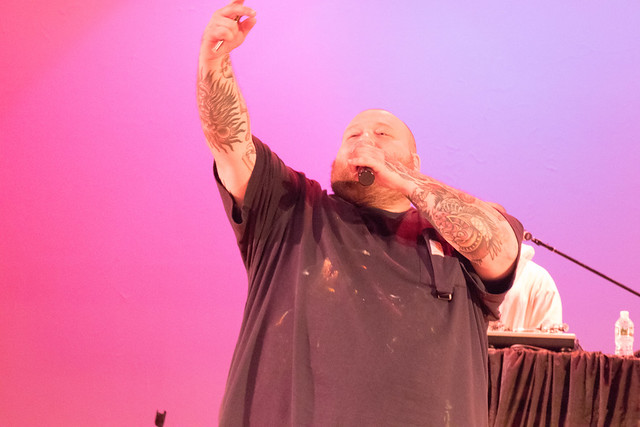
Led by Makara Bianco and featuring production from prolific French producer débruit, KOKOKO! is a pioneering Kinshasa, Democratic Republic of the Congo-based DIY electronic collective inspired by a growing spirit of protest and unrest among Kinshasa’s young people, who have begun to both openly question centuries-old norms and taboos and or openly denounce a society that they perceived as paralyzed by fear. In fact, the collective’s name literally means KNOCK KNOCK KNOCK! with the collective viewing themselves as the sound of a new generation boldly, loudly and defiantly banging on the doors and walls, yelling “OUR TIME IS NOW!” The members of the collective operate in a wildly inventive DIY fashion, creating self-designed and self-made instruments from recycled junk and claptrap — and they built a recording studio out of old mattresses, found wood and a ping pong table. (If that isn’t punk as fuck, I don’t know what is.) Fueled by the underlying notion that desperate survival fuels creativity, the collective received international attention with their Tokoliana EP, an urgent, forward-thinking, way out in left field effort featuring a sound that nodded at disco, post-punk, hip-hop, reggae, retro-futuristic funk, Afro-futurism and traditional regional music — but from a sweaty, grimy, post-apocalyptic future in which the ghetto and club are one and the same. 

ICI released the Congolese collective’s second EP TONGOS’A late last year, and the EP finds the collective further exploring themes of survival in the desperate and uneasy political and social climate of their homeland — sometimes focusing on small, deeply human pleasures and concerns; in fact, the EP’s first track, title track “Tongos’a (which translates roughly into ’til the morning light”) is a sweaty and raunchy club banger on the necessity of getting laid properly, rooted around skittering drum programming, thumping beats and a looped guitar and bass line that’s derived from the Mongo tribe repertoire, making the song a mischievous mix of the old and the new. 

Directed by débruit, Markus Hofko, Renaud Barret, the recently released video for “Tongos’a” stars a local dance act “l’homme capote” comprised of Mbuyi Tickson, Makoka, and Riyana sweaty and grinding seductively to the song, capturing the song’s raunchy, club-friendly vibe. 

New Audio: Sampha Shimmering, Dance Floor Friendly Remix of Legendary Malian Vocalist Oumou Sangare’s “Minata Waraba”

Oumou Sangare is a Bamako, Mail-born and-based, Grammy Award-winning,  singer/songwriter and musician, who comes from a deeply musical family, as her mother, Aminata Diakite was a renowned singer. When Sangare was young, her father had abandoned the family, and she helped her mother feed the family by singing; in fact, by the time she had turned five, Sangare had been well known as a highly gifted singer. After making it to the finals of a nursery school talent show, a very young Sangare performed in front of a crowd of 6,000 at Omnisport Stadium — and by the time she was 16, she had gone on tour with a nationally known percussion act, Djoliba.

Sangare’s 1989 debut effort, Moussoulou (which translates into English as “Women”) was recorded with renowned Malian music master Amadou Ba Guindo, and was a commercial success across Africa, as it sold over 200,000 copies. With the help of the world renowned Malian singer/songwriter and multi-instrumentalist Ali Farka Toure, the father of Vieux Farka Toure, Sangare signed with English record label World Circuit — and by the time she turned 21, she had received an internationally known profile. Interestingly, Sangare is considered both an ambassador of Mali and the Wassoulou region of the country, just south of the Niger River, lovingly referred to as “The Songbird of Wassoulou,” as her music draws from the music and traditional dances of the region while lyrically her work has been full of social criticism, focusing on the low status of women within Malian society and elsewhere, and the desire to have freedom of choice in all matters of one’s life, from who they can marry to being financially independent.

Interestingly, since 1990 Sangare has performed at some of the world’s most important venues and festivals including the Melbourne Opera, Roskilde Festival, Gnaoua World Music Festival, WOMAD, Oslo World Music Festival and the Opera de la Monnaie, while releasing several albums including — 1993’s Ko Sira, 1996’s Worotan and 2004’s 2 CD compilation Oumou. Adding to a growing profile, Sangare has toured with Baaba Mal, Femi Kuti and Boukman Eksperyans, and she has been named a Commander of the Order of Arts and Letters in 1998, won the UNESCO Prize in 2001 and was named an ambassador of the FAO in 2003.

Mogoya which translates into English as “People Today,” was Sangare’s first full-length effort in over 22 years, and it was released to critical praise from the likes of Dazed, The Fader, The Guardian while making the Best of 2017 Lists of Mojo, the BBC, the aforementioned The Guardian as well as Gilles Peterson — and the album found the renowned Malian artist collaboration with the legendary Tony Allen and French production team A.L.B.E.R.T. and pushing her sound in a new, direction; in fact album single “Minata Waraba” features  Sangare’s gorgeous and expressive voice with shimmering African instrumentation paired with a slick and hyper modern production that emphasizes a sinuous, electric bass line and shuffling, complex polyrhythm that reminds me of a 2013 Fela Kuti tribute compilation, Red Hot + Fela, which featured contemporary artists re-imagining some of the Afrobeat creator’s signature tunes.

Sangare will be releasing the Mogoya Remixed album through Nø Førmat Records today, and the album features remixes of the album’s material by contemporary artists and producers, who have been high profile fans of her work; in fact the album’s latest single is from the British-born and based producer and artist Sampha. Sampha has split his time between solo and collaborative work, and has worked with the likes of SBTRKT, FKA Twigs, Jesse Ware, Drake, Beyonce, Kanye West, Solange and Frank Ocean. His full-length debut Process won the Mercury Music Prize last year, and earned him a 2018 BRIT Award nomination for Best British Breakthrough.

Sampha has publicly mentioned his love of Oumou Sangare’s music, explain in press notes, “My dad had a copy of Oumou’s album Worotan and no other album has spoken to me quite like that. Her music has been a huge inspiration ever since and it’s a real honour to have remixed some of her music.” Sampha’s remix retains Sangare’s crystalline vocals but pairs it with a thumping production, featuring tribal house like beats and shimmering arpeggiated synths that while modern, still keeps the song rooted to Africa. Interestingly, Sangare has mentioned being bowled over by Sampha’s remix, saying  “When I first heard Sampha’s remix, I was amazed at the beat. Our rhythmic patterns are not always easy for Western people. But, wow, Sampha’s beat is definitely African, definitely. Listening to it I can tell that Sampha has African blood in his veins. I am really excited by this version, I play it again and again.”

New Video: Imarhan Releases Hallucinogenic Visuals for the Funky Disco Groove-based single “Ehad Wa Dagh”

Comprised of Iyad Moussa “Sadam” Ben Abderahmane, Tahar Khaldi, Hicham Bouhasse, Abdelkader Ourzig and Haiballah Akhamouk, the Tamanrasset, Algeria-based quintet Imarhan formed back in 2008 and are among a newer generation of Tuareg musicians that haven’t fought in the armed conflicts that have devastated Saharan Africa over the past 3 or 4 decades. Unsurprisingly, the members of Imarhan have been mentored by members of the internationally renowned Tuareg collective Tinariwen, while developing their own reputation across both the Tuareg world and elsewhere for pairing the ancestral tamashek poetry and rhythms of their elders with the contemporary sounds that reflect their urban upbringings, listening to a wide variety of music from across the globe.
 
With the 2016 release of the Algerian quintet’s critically applauded, self-titled debut album, they quickly became a buzz-worthy act with a growing internationally recognized profile which found them opening for a number internationally renowned touring acts including Kurt Vile, the aforementioned Tinariwen, Songhoy Blues and Mdou Moctor at venues across the US, the European Union and China. Imarhan’s highly-anticipated sophomore album Temet officially drops today and the Patrick Votan and Eyadou Ag Leche-produced album derives its name from the Tamashek word for “connections,” — and interestingly enough, the album reportedly is meant as an urgent wake up call to the listener, reminding them (and us, of course) that we are all deeply connected and without unity and understanding, we will never solve the world’s most urgent and pressing problems — i.e., environmental destruction, inequality, racism, growing strife and conflict, etc. As the band’s Ben Abderahmane said in press notes some time ago, “People should love each other. They need to know each other, we need to know each other, everyone should get to know their neighbor. We need to have the same approach as our elders,” he continues. “You will stumble across an old man who knows the world and will hand down his knowledge to his children.”
 
Now, if you’ve been frequenting this site over the past few months, you may recall that the album’s first single “Azzaman” was a meditative, hypnotic yet subtly contemporary take on the region’s desert blues sound that nods at psych rock — while thematically the song focuses on the passing of time and the handing over of a heritage and traditions by each successive generation, and the importance of leaving the right legacy. But along with that, the song makes a point of connecting different cultures of mixing the old and the new in a sensible way. Temet‘s second single “Tamudre” consists of a hypnotic and downright propulsive groove, punctuated with layers of percussion (both drumming and handclaps), call and response vocals and some impressive guitar work. Naturally, the song manages to remind me quite a bit of Tinariwen’s “Sustanaqqam” and “Adounia Ti Chidjret” but with a loose, bluesy vibe.
 
Temet’s latest single “Ehad Wa Dagh” features a stomping, dance floor-friendly, trance inducing, disco-like groove paired with some incredibly dexterous guitar pyrotechnics, making the song a funky and bold modernization of the desert blues that finds the band retaining familiar elements — the call and response vocals and the propulsive rhythms.
 
Directed by Visions Particulières, the recently released neon colored video focuses on Tamanrasset’s nightlife with members of the band arriving at a local nightclub to play a show — throughout it’s an explosion of colors, lights, and superimposed footage of the band members playing over an overhead of Tamanrasset. It’s a fitting psychedelic stomp.