
Influenced by Fleetwood Mac, Carole King, Janis Joplin, The Pretenders, Crosby Stills and Nash, Carly Simon, The Mamas and the Papas and First Aid Kit, Georgie is a 21 year-old, up-and-coming, Nottingham, UK-based singer/songwriter, who caught the attention of the folks at Spacebomb Records — the label home of Natalie Prass and Julien Baker — for a vocal style that sounds straight out of the mid 1960s and for a lyrical bent that belies her years. Her debut single “Company of Thieves” pairs her husky and soulful vocals with a wah-wah pedaled guitar, a strutting horn arrangement, a sinuous bass line, a steady backbeat and an infectious hook in a carefully crafted song that will remind most listeners of Amy Winehouse, Nancy Sinatra and others.
Category: Indie Pop
If you’ve been frequenting this site over the past year, you’d likely be familiar with Sunderland, UK-based indie electro pop act Field Music. Comprised of creative masterminds and primary members, sibling duo Peter and David Brewis and featuring contributions from Kev Dosdale, Andrew Lowther, Ian Black, Liz Corney, Andrew Moore, Damo Waters and a rotating cast of other musicians and friends, the British pop act have developed an internationally recognized profile for a sound that’s comprised of the siblings interwoven harmonies, off kilter chord progressions and a quirkily yet approachable sensibility wrapped with infectiously catchy hooks.
Earlier this year, the duo released Commontime, the first new bit of material from Field Music in several years, and the material was written and recorded over spontaneous bursts over a six month period in their Wearside, UK-based studio. And interestingly enough, the material which embraces a collaborative spirit thematically focused on the passing of time — acquaintances coming and going, friendships drifting and diffusing over time, random snippets of the every day and real-life conversations between friends and acquaintances being endlessly replayed.
Since the release of Commontime, the duo have hosted a Spotify radio show Commontime Extra Time in which the duo celebrate the influences behind the album’s material. And during the latest episode of their show, the Brewis brothers shared a previously unreleased single “How We Gonna Get There Now,” that was recorded during the sessions for 2012’s Plumb because the duo felt it sounded a bit too much like Todd Rundgren — although to my ears, the song sounds as though the duo were nodding at Steely Dan‘s “Reeling In The Years,” and “Peg“as the song begins with gentle percussion, twinkling keys, strummed guitars and an arena rock-friendly hook an alternating loud and quiet sections — but at its core a deeply British irony. A bluesy guitar solo holds a carefully crafted yet off kilter bit of pop confection.
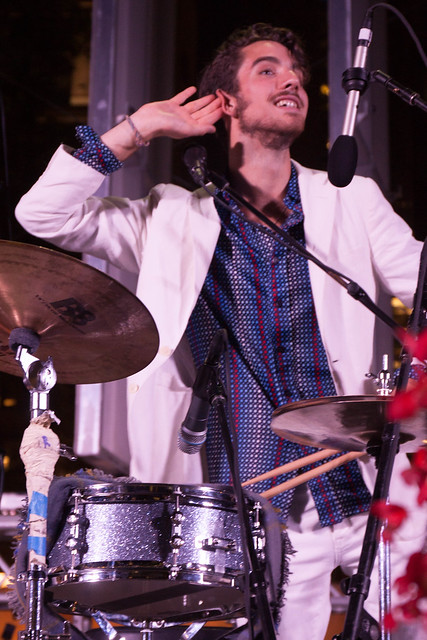
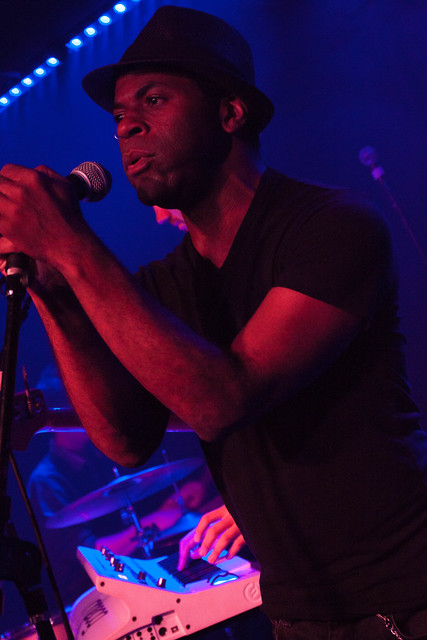
Initially beginning his recording career as a member of Regina Spektor‘s and Sondre Lerche‘s backing bands, as well as a co-producer and full-time member of critically acclaimed indie act of Montreal, violinist, vocalist, composer, and producer K. Ishibashi through the release of critically applauded two full-length efforts — 151a and Lighght — with his solo recording project Kishi Bashi has developed a reputation for decidedly crafted and swooning orchestral pop with a subtly modern take, as K. Ishibashi would frequently use looping machines and samplers for a lush, layered sound.
Produced by Grizzly Bear‘s Chris Taylor and engineered by Pat Dillet, who has worked with Angelique Kidjo and David Byrne, and drummer Matt Chamberlain, who has been a member of Morrissey‘s and Fiona Apple‘s backing band, as well as being a member of Montreal, Ishibashi’s third full-lenght effort Sonderlust reportedly finds the renowned composer and vocalist expanding upon the sound that first captured the attention of the blogosphere. Interestingly, Ishibashi has publicly mentioned that Sonderlust‘s material didn’t come immediately or through his usual creative process. “As I sat down to write songs last summer, I went to all my usual conduits of creation: violin loops, guitar, piano and I came up with the musical equivalent of fumes,” Ishibashi explains. “I tried to create orchestral pop recordings that I assume were my forte, and in turn, I found myself standing in front of a creative wall of frightening heights.” This period of creative uncertainly, along with significant changes in his personal life, led the composer, violinist, vocalist and producer to experiment with a new musical direction. “I questioned everything about what it means to love and desire…the difference between loving someone and being in love,” Ishibashi explained.
The album’s first single “Say Yeah” has Ishibashi pairing twinkling and shimmering synths, lush string and wind arrangements, propulsive drum programming, an incredibly infectious hook and the renowned violinist, vocalist and producer’s tender and aching falsetto in a swooning yet dance-floor friendly song that interestingly enough sounds as though it were indebted to disco and both 80s and contemporary electro pop — all while still possessing a swooning Romanticism. Lyrically, the song is a plaintive and urgent plea to a lover to stay and try to make it work because the narrator can’t just bear to be without his love.
You can catch Kish Bashi on a lengthy North American tour this fall, and it includes an October 2, 2016 stop at Webster Hall. Check out tour dates and ticket information below.
Tour Dates:
9/27: Athens, GA @ Georgia Theatre (tickets)
9/28: Charlotte, NC @ Visulite (tickets)
9/30: Carrboro, NC @ Cat’s Cradle (tickets)
10/1: Silver Spring, MD @ The Fillmore – Silver Spring (tickets)
10/2: New York, NY @ Webster Hall (tickets)
10/3: Boston, MA @ Royale (tickets)
10/4: Philadelphia, PA @ Union Transfer (tickets)
10/6: Toronto, ON @ MOD Club (tickets)
10/8: Cleveland, OH @ Beachland Ballroom & Tavern (tickets)
10/9: Pontiac, MI @ Crofoot Ballroom (tickets)
10/10: Chicago, IL @ Vic Theatre (tickets)
10/11: St. Louis, MO @ Delmar Hall (tickets)
10/12: Minneapolis, MN @ First Avenue Mainroom (tickets)
10/14: Omaha, NE @ Slowdown (tickets)
10/15: Englewood, CO @ Gothic Theatre (tickets)
10/16: Salt Lake City, UT @ Urban Lounge (tickets)
10/18: Seattle, WA @ The Showbox (tickets)
10/19: Vancouver, BC @ The Fox Cabaret (tickets)
10/20: Portland, OR @ Wonder Ballroom (tickets)
10/21: San Francisco, CA @ The Masonic (tickets)
10/22: Santa Cruz, CA @ The Catalyst Atrium (tickets)
10/23: San Diego, CA @ Irenic (tickets)
10/24: Los Angeles, CA @ The Belasco Theater (tickets)
10/26: Tucson, AZ @ Club Congress (tickets)
10/28: San Antonio, TX @ Paper Tiger (tickets)
10/29: Austin, TX @ Mohawk (tickets)
10/30: Houston, TX @ White Oak Music Hall (tickets)
11/1: New Orleans, LA @ One Eyed Jacks (tickets)
11/2: Atlanta, GA @ Variety Playhouse (tickets)
New Video: The Swooning and Heartbreaking Visuals and Sounds of Charlotte Cardin’s Latest “Like It Doesn’t Hurt”
Big Boy’s latest single “Like It Doesn’t Hurt” will further cement Cardin’s burgeoning reputation for aching jazz/soul and pop vocals — and in this case paired with a sparse yet extremely contemporary production featuring twinkling and moody keys, undulating synths and electronics and stuttering boom bap-like drum programming and a guest spot from Montreal-based emcee Husser; while lyrically, the song describes a turbulent and dysfunctional relationship full of ecstatic highs, crushing lows, bitter and aching separations. And as a result of both Cardin’s vocals and the production, the song possesses a swooning almost drunken urgency — and it should remind the listener of young, foolish, passionate, heartbreaking love.
Directed by Kristof Brandl, the recently released video for “Like It Doesn’t Hurt” features the song’s collaborators Charlotte Cardin and Husser as the video’s central couple and with a series of frenetic cuts and flashbacks, the video emphasizes the turbulent and tumultuous relationship at the core of the song as you’ll see a couple who fight and love passionately and are separated after a violent incident, which has Husser arrested and sent to jail.
Over the past few years renowned indie labels Slumberland Records and Fortuna POP! Records have collaborated on a number of releases — as Slumberland Records has released the work of Fortuna POP! artists across North America; and Fortuna POP! releasing the work of Slumberland Records’ artists elsewhere. And August 26, the two labels continue their fruitful collaboration with the release of the Continental Drift compilation, which features 8 songs from four of this year’s most buzz worthy indie rock/pop acts across both North America and Europe — and naturally, both labels believe the bands on the compilation are set to be breakout stars.
Comprised of members of Literature, Little Big League and Pet Milk, the members of Philadelphia, PA-based act Mercury Girls have received quite a bit of buzz with the release of “Arianna” for a jangling post-punk sound, complete with a soaring and anthemic hook and a gorgeous harmonies; and while, their latest single “Holly,” which is featured on the Continental Drift compilation will further cement their burgeoning reputation for shimmering and jangling post-punk that sounds deeply indebted to The Smiths — while also possibly reminding some listeners of the likes of Veronica Falls and several others.
The members of Mercury Girls will be hitting the road throughout October and November with Balance and Composure and Foxing and it includes a November stop at Warsaw. Check out tour dates below.
Tour Dates:
(All dates w/ Balance & Composure and Foxing)
Thu-Oct-13 – Richmond, VA – – Broadberry
Fri-Oct-14 – Chapel Hill, NC – Cat’s Cradle
Sat-Oct-15 – Atlanta, GA – Masquerade – Hell
Sun-Oct-16 – Jacksonville, FL – 1904 Music Hall
Tue-Oct-18 – Lake Park, FL – Kelsey Theatre
Wed-Oct-19 – Orlando, FL – The Social
Fri-Oct-21 – Houston, TX – White Oak Music Hall
Sat-Oct-22 – Austin, TX – Mohawk
Sun-Oct-23 – Dallas, TX – Club Dada (So What?! Music Festival)
Tue-Oct-25 – Phoenix, AZ – The Nile
Thu-Oct-27 – San Diego, CA – Observatory North Park
Fri-Oct-28 – Los Angeles, CA – Regent
Sat-Oct-29 – Santa Cruz, CA – The Catalyst Atrium
Sun-Oct-30 – San Francisco, CA – Great American Music Hall
Tue-Nov-01 – Portland, OR – Hawthorne Theatre
Wed-Nov-02 – Seattle, WA – Crocodile
Fri-Nov-04 – Salt Lake City, UT – Complex
Sat-Nov-05 – Denver, CO – Marquis
Sun-Nov-06 – Lawrence, KS – Granada
Thu-Nov-10 – Cleveland, OH – Beachland Ballroom
Fri-Nov-11 – Detroit, MI – St. Andrews
Sat-Nov-12 – Toronto, ON – Opera House
Mon-Nov-14 – Boston, MA – Royale
Tue-Nov-15 – Portland, ME – Port City Music Hall
Wed-Nov-16 – New Haven, CT – College Street Music Hall
Thu-Nov-17 – Brooklyn, NY – Warsaw
Fri-Nov-18 – Philadelphia, PA – Union Transfer
Sat-Nov-19 – Baltimore, MD – Baltimore Soundstage
Fri-Oct-14 – Chapel Hill, NC – Cat’s Cradle
Sat-Oct-15 – Atlanta, GA – Masquerade – Hell
Sun-Oct-16 – Jacksonville, FL – 1904 Music Hall
Tue-Oct-18 – Lake Park, FL – Kelsey Theatre
Wed-Oct-19 – Orlando, FL – The Social
Fri-Oct-21 – Houston, TX – White Oak Music Hall
Sat-Oct-22 – Austin, TX – Mohawk
Sun-Oct-23 – Dallas, TX – Club Dada (So What?! Music Festival)
Tue-Oct-25 – Phoenix, AZ – The Nile
Thu-Oct-27 – San Diego, CA – Observatory North Park
Fri-Oct-28 – Los Angeles, CA – Regent
Sat-Oct-29 – Santa Cruz, CA – The Catalyst Atrium
Sun-Oct-30 – San Francisco, CA – Great American Music Hall
Tue-Nov-01 – Portland, OR – Hawthorne Theatre
Wed-Nov-02 – Seattle, WA – Crocodile
Fri-Nov-04 – Salt Lake City, UT – Complex
Sat-Nov-05 – Denver, CO – Marquis
Sun-Nov-06 – Lawrence, KS – Granada
Thu-Nov-10 – Cleveland, OH – Beachland Ballroom
Fri-Nov-11 – Detroit, MI – St. Andrews
Sat-Nov-12 – Toronto, ON – Opera House
Mon-Nov-14 – Boston, MA – Royale
Tue-Nov-15 – Portland, ME – Port City Music Hall
Wed-Nov-16 – New Haven, CT – College Street Music Hall
Thu-Nov-17 – Brooklyn, NY – Warsaw
Fri-Nov-18 – Philadelphia, PA – Union Transfer
Sat-Nov-19 – Baltimore, MD – Baltimore Soundstage
New Video: The Gorgeously Cinematic and Symbolic Video for Joseph’s “White Flag”
Now, as you may remember “White Flag” is the first single off the trio’s forthcoming full-length debut I’m Alone, No You’re Not, which is slated for an August 26, 2016 release. And as you’ll hear the song pairs an ambient and gently undulating production consisting of swirling and ambient electronics, handclap-led percussion and folky guitar chords, a rousingly cathartic and anthemic hook and the Closner Sisters’ gorgeous vocals in a song that sonically reminds me of Pearl and the Beard and Lucius, complete with the same earnest urgency. While lyrically, the song possesses a powerfully positive message — that despite what everyone around you may tell you about your dreams and desires that you should never give up if it’s what you desperately feel that it’s what you must be doing.
The recently released music video for the song is a gorgeously cinematic video that features the Closner sisters in what appears to be the Oregon woods, building a bonfire to set a white flag on fire — and as a result the video manages to be both literal and symbolic.
Live Footage: Check Out a Gorgeous and Aching, Acoustic Version of “Hurts Like Hell”
Building on the buzz of her critically praised and commercially successful EP Arrows, the Nashville-based singer/songwriter release “Hurts Like Hell, ” last year, and the single was featured on MTV’s Scream. Recently the folks at OurVinyl TV invited Straham in for an acoustic single and the first released bit of footage from that session is a gorgeous and stripped down rendition of “Hurts Like Hell” that features Straham accompanying herself on piano.
Lyrically, the song focuses on the conflicting feelings in the aftermath of a breakup — loss, longing, emptiness, heartache and self doubt, along with the sensations of self-reflection, of finality and of one’s life being altered in ways that are frequently beyond your own control and influence. And if you’ve been through a particularly messy and disastrous breakup the song should feel deeply familiar.
New Video: The Wistful and Gorgeous Visuals for Charlotte Cardin’s “Faufile”
Cardin’s latest single “Faufile,” which translates into English as “to slip or sneak away” features Cardin’s gorgeous and aching vocals paired with the singer/songwriter accompanied by a sparse yet eerie piano accompaniment, and the single will further cement the French Canadian singer/songwriter’s growing reputation for crafting hauntingly eerie pop that owes a debt to jazz. And hot on the heels of the release of “Faufile,” comes the wistful music video, which features a brooding and seemingly heartbroken on the rooftops and streets of what appears to be Montreal after a devastating breakup.
New Video: The Breezy Visuals and Sounds of Quebec City’s Men I Trust
With the release of their sophomore full-length effort Headroom, the newly constituted quartet began receiving international attention as their material landed on Hype Machine’s charts, as well as several Spotify and SoundCloud playlists. Building on the increasing buzz around the Quebec City-based quartet, their first single of 2016, “Humming man” was released to critical praise across the blogosphere; however, I suspect that the act’s latest single “Lauren” may arguably be their breakout single as the band pairs a sinuous and sleek bass line, shimmering guitar chords and skittering drum programming with hauntingly ethereal vocal melodies to craft a song that sounds as though it were equally influenced by 70s funk and R&B, 80s synth pop and contemporary electro pop. Interestingly enough, the song sounds as though it should have been released through Cascine Records, a label that specializes in releasing silky smooth and breezy 70s and 80s inspired pop while being the sort of song you’d do a little two step to in the club.
The recently released music video follows an extremely fair skinned woman bicycling down a country road while hinting at the follow-the -bouncing ball/karaoke-styled video which fits the song’s breezy yet sensual air.
Up-and-coming Quebec-born vocalist Charlotte Cardin initially received attention as a model, who once worked for renowned Elite Model Management before deciding to commit to music full-time when she signed with Montreal indie label Cult Nation. Now, if you’ve been frequenting this site over the past year, you may recall that I wrote about “Big Boy,” the first single off Cardin’s recently released debut EP, Big Boy. Interestingly, that single revealed that Cardin specialized in meshing contemporary electronic production with jazz, pop and soul vocal stylings reminiscent of Amy Winehouse and Melanie De BIasio; in fact, that single also revealed that Cardin’s effortlessly soulful vocals possesses a profound ache.
The EP’s latest single “Faufile,” which translates into English as “to slip or sneak away” features Cardin’s gorgeous and aching vocals paired with the singer/songwriter accompanied by a sparse yet eerie piano accompaniment, and the single will further cement the French Canadian singer/songwriter’s growing reputation for crafting hauntingly eerie pop that owes a debt to jazz.
Los Angeles, CA-based quintet Hunny specialize in an infectious, hook-laden party rock/dance rock sound/pop sound that seems to channel several contemporary acts including Hands, St. Lucia, Phoenix and others — while subtly nodding at early 80s New Wave. And the act’s latest single “Vowels (and The Importance of Being Me) will further cement the act’s burgeoning reputation for hook-laden summertime anthems as the band pairs soaring synths, four-on-the floor drumming, shimmering and angular chords and an undulating bass line with deeply earnest vocals singing lyrics about ridiculously passionate, confusing and urgent, young love. Certainly, in an age of sneering cynicism and disbelief, such earnestness is a breath of fresh air; but perhaps more important, thanks to a larger-than-life anthemic hook, I can imagine a packed club full of young people singing lustily along to the song.
The band will be on a lengthy tour throughout July and August, which also will include an August 5, 2016 stop at The Knitting Factory.
New Video: The 80s Public TV-Inspired Visuals for Bad Sounds’ “Avalanche”
“Avalanche,” Bad Sound’s latest single was co-produced by Duncan Mills, and on the single the band pairs fuzzy guitar chords, angular bass chords, electronic bleeps and bloops, a motorik-like groove, and a rousingly infectious hook in a song that sounds as though it was indebted to Damon Albarn’s work with Blur and Gorillaz, complete with a particularly British sense of humor — wryly ironic and self-effacing; but while possessing a subtly contemporary take on a very familiar and beloved sound.
The recently released video is a glorious and ridiculous take on 80s educational TV — think of the counting and reading segments on Sesame Street, The Electric Company, 3-2-1- Contact and Jamiroquai’s “Virtual Insanity” complete with psychedelic interludes and cheesy 80s graphics.
Comprised of Natalie Closner and her two younger twin sisters Meegan and Allison, Portland, OR-based pop trio Joseph derive their name from their grandfather Jo and the tiny Oregon town in which he lived, Joseph, OR. And although the Closners grew up in a musical household, the sibling trio hadn’t sung together until a few years ago when Natalie Closner, seeking a creative jolt asked her twin sisters if they’d like to form a band together — and they quickly discovered that they had an immediate simpatico and began writing songs together, based around a use of three part harmony.
“White Flag,” the first single off the trio’s forthcoming full-length debut I’m Alone, No You’re Not employs the use of the Closner’s gorgeous harmonies, swirling and ambient electronics and handclap-led percussion in a song that quickly builds up to an anthemic and cathartic hook while pairing them with a powerful message — that one should never give up to attain what they desire. Sonically, the Portland-based sibling trio’s sound reminds me quite a bit of Pearl and the Beard and Lucius as the Closners’ latest single possesses a swooning and forceful urgency.
The Closner sisters will be embarking on a lengthy tour that includes a September stop at Radio City Music Hall. Check out tour dates below.
TOUR DATES:
6.9 – Manchester, TN – Bonnaroo
6.22 – Bristol, UK – Summer Series – Harbourside *
6.24 – Somerset, UK – Glastonbury Festival
6.27 – Luxembourg, LUX – Rackhal *
6.29 – Munich, GE – Toll wood Festival *
7.1 – Nr. Brandon, Suffolk, UK – Thetford Forest (Forest Live) *
7.6 – Manchester, UK – Castle Field Bowl *
7.8 – Cannock, UK – Cannock Chase Forest *
7.12 – Scarborough, UK – Scarborough Open Air Theater *
7.14-17 – Beccles, UK – Latitude Festival
7.17 – Dublin, IE – Longtitude Festival
7.18 – London, UK – St. Pancras Old Church
7.20 – Hamburg, GE – Knust Acoustic Session
7.22 – Berlin, GE – Berghain Kantine
7.23 – Haldern, GE – Haldern Pop Bar
7.24 – Nurnberg, GE – Fold Im Park
7.29 – Los Angeles, CA – FIG at 7th // Arts Brookfield Series
8.5-7 – Happy Valley, OR – Pickathon
8.10 – Boulder, CO – The Fox – Triple A Summit
9.19 – Orlando, FL – Hard Rock Live *
9.21 – Miami Beach, FL – The Fillmore Miami at Gleason Theater *
9.23-24 – Nashville, TN – Ryman Auditorium *
9.25 – Charlotte, NC – The Fillmore Charlotte *
9.27 – Richmond, VA – The National *
9.28 – Pittsburgh, PA – Stage AE *
9.30 – New York, NY – Radio City Music Hall *
10.1 – Boston, MA – Blue Hills Bank Pavilion *
10.3 – Cleveland, OH – Agora Theater *
10.4 – Detroit, MI – The Fillmore Detroit *
10.6 – Milwaukee, WI – The Rave / Eagles Ballroom *
10.7 – Saint Louis, MO – The Pageant *
10.8 – Kansas City, MO – Arrest Bank Theatre at The Midland *
11.3 – Antwerp, BE – Trix Hall #
11.5 – Copenhagen, DK – DR Koncerthuset #
11.6 – Oslo, NO – Folketeateret #
11.9 – Berlin, DE – Postbahnhof #
11.10 – Munich, DE – Technikum #
11.11 – Zurich, CH – Kaufleuten #
11.13 – Milan, IT – Fabrique Milano #
11.14 – Montpellier, FR – Le Rockstore #
11.16 – Barcelona, ES – Bikini Barcelona #
11.18 – Bardeaux, FR – Rock School Barbey #
11.20 – Lyon, FR – Epicerie Moderne #
11.21 – Stasbourg, FR – La Laiterie #
11.22 – Cologne, DE – Kantine #
* Supporting James Bay
# Supporting Michael Kiwanuka